

Broadway Theaters NYC:
Map, Tickets, Seating & Venue Guides
Explore all 41 Broadway theaters in New York City — where they are, how to find ticket and box-office information, and which seating chart or venue guide to use before you book.
Broadway has 41 theaters, almost all of them packed into a compact stretch of Midtown Manhattan — close enough together that you could trace most of them on a single broadway theater map without much walking. From the outside, they can look interchangeable — marquee lights, ticket windows, crowds on the sidewalk. From the inside, they’re completely different buildings. The Gershwin holds nearly 1,933 people and was designed for productions that fill every cubic foot of a cavernous stage. The Hayes holds 597 and puts the audience close enough to see every expression on an actor’s face. The experience of seeing a show in one versus the other isn’t just different in scale — it’s a fundamentally different kind of night.
This is the starting point for a proper broadway theaters nyc guide: what each building is like to sit in, which sections deliver value, what the neighborhood experience is around it, and what to know before you go. Individual theater guides go deeper on each one — think of this page as the nyc theatre guide that organizes all of them in one place.
Broadway Theater Map NYC: Where the 41 Theaters Are
Broadway’s 41 theaters are all in Manhattan, with most packed into the Theater District between roughly West 41st and West 54th Streets. The major exception is the Vivian Beaumont Theater at Lincoln Center on West 65th Street. If you’re searching for a Broadway theater map or Broadway theater map NYC, the easiest way to orient yourself is by street corridor: several blocks contain multiple houses within a few minutes’ walk of one another.
Nederlander, New Amsterdam, Todd Haimes, Stephen Sondheim and Lyric — the southern edge of the Broadway district and easiest cluster from Times Square–42nd Street.
Belasco, Broadhurst, Hayes, Hudson, Majestic, Shubert and St. James — one of Broadway’s densest historic theater corridors.
Al Hirschfeld, Bernard B. Jacobs, Booth, Gerald Schoenfeld, Imperial, John Golden, Lyceum, Minskoff and Music Box — a major center of the Theater District.
Richard Rodgers, Lunt-Fontanne, Lena Horne, Ethel Barrymore, James Earl Jones, Longacre, Walter Kerr, Ambassador and Eugene O’Neill.
Winter Garden, Circle in the Square, Gershwin, August Wilson, Neil Simon, Broadway Theatre and Studio 54 — including several of Broadway’s largest houses.
The Vivian Beaumont Theater at 150 West 65th Street sits outside the main Times Square cluster and is its own distinct Broadway night-out location.
The directory below links to every Broadway house. Use the individual venue page for address, current production, ticket and box-office information; use the dedicated seating guide for the seating chart, best seats, sightlines, accessibility and sections to avoid.
Broadway Theater Tickets & Box Offices: Find the Venue Before You Buy
The phrase Broadway theater tickets can mean two different things: tickets to Broadway shows generally, or tickets connected to a specific Broadway venue. This page handles the second job. Once you know the theater, open its venue guide for the current show, official ticket source, box-office location and hours, address, transit and other house-specific details. If you are still choosing a production rather than a venue, start with the Broadway shows guide instead.
Tickets & Box Office
Use the main theater guide when your search is about a specific venue: ticket source, box office, current show, address, access and planning.
Choose a Broadway Theater →Seating Chart & Best Seats
Use the theater-specific seating guide when you’re comparing orchestra vs mezzanine, best seats, actual sightline factors, partial views or accessibility.
Find a Seating Guide →Show Tickets & Production Details
Use the show guide for production-specific tickets, cast, runtime, lottery or rush information, reviews and who the show is best for.
Browse Broadway Shows →That separation matters. A search for Gershwin Theatre tickets belongs on the Gershwin venue guide; a search for Gershwin Theatre seating chart belongs on its seating guide; and a search for Wicked Broadway tickets belongs on the Wicked show page. This pillar connects those paths without forcing all three intents onto one page.
Broadway Theater Seating Charts & Best Seats
There is no single Broadway seating chart because every Broadway theater is a different building. Orchestra depth, mezzanine rake, balconies, boxes, overhangs, aisle breaks and accessible locations vary house by house. Broadway theater seats that look equivalent on a ticket map can deliver very different views in different houses, which is why a generic recommendation like “buy orchestra” is often less useful than opening the Broadway theater seating chart for the exact venue you’re visiting.
For general strategy — orchestra vs mezzanine, premium seats, value zones and restricted-view basics — use the Broadway seating guide. Once you know the theater, use its dedicated seating page for the actual layout, best seats, seat-view issues and production-specific advice.
Gershwin Theatre Seating Chart
Best seats for Wicked, orchestra vs mezzanine, side-angle warnings and value picks in Broadway’s largest house.
Open Gershwin Seating Guide →Minskoff Theatre Seating Chart
Best seats for The Lion King, mezzanine views, sections to avoid and how the wide room changes the seat decision.
Open Minskoff Seating Guide →Broadway Theatre Seating Chart
Orchestra vs front mezzanine vs rear mezzanine, best seats and value strategy in the 1,763-seat Broadway Theatre.
Open Broadway Theatre Seating Guide →Richard Rodgers Seating Guide
Center orchestra, front mezzanine and section-by-section advice for one of Broadway’s most searched houses.
Open Richard Rodgers Seating Guide →Neil Simon Theatre Seating Guide
Best seats for choreography, mezzanine-overhang cautions, access notes and value sections for MJ.
Open Neil Simon Seating Guide →New Amsterdam Seating Guide
Orchestra and mezzanine choices, family-seat strategy, accessibility and best views for Aladdin.
Open New Amsterdam Seating Guide →How Broadway Theaters Actually Differ
The most important thing to understand before booking Broadway tickets isn’t the show — it’s the building. Broadway theaters vary in ways that have real consequences for your experience, and the seating chart alone doesn’t tell the full story.
Broadway theater sizes: the first variable that matters
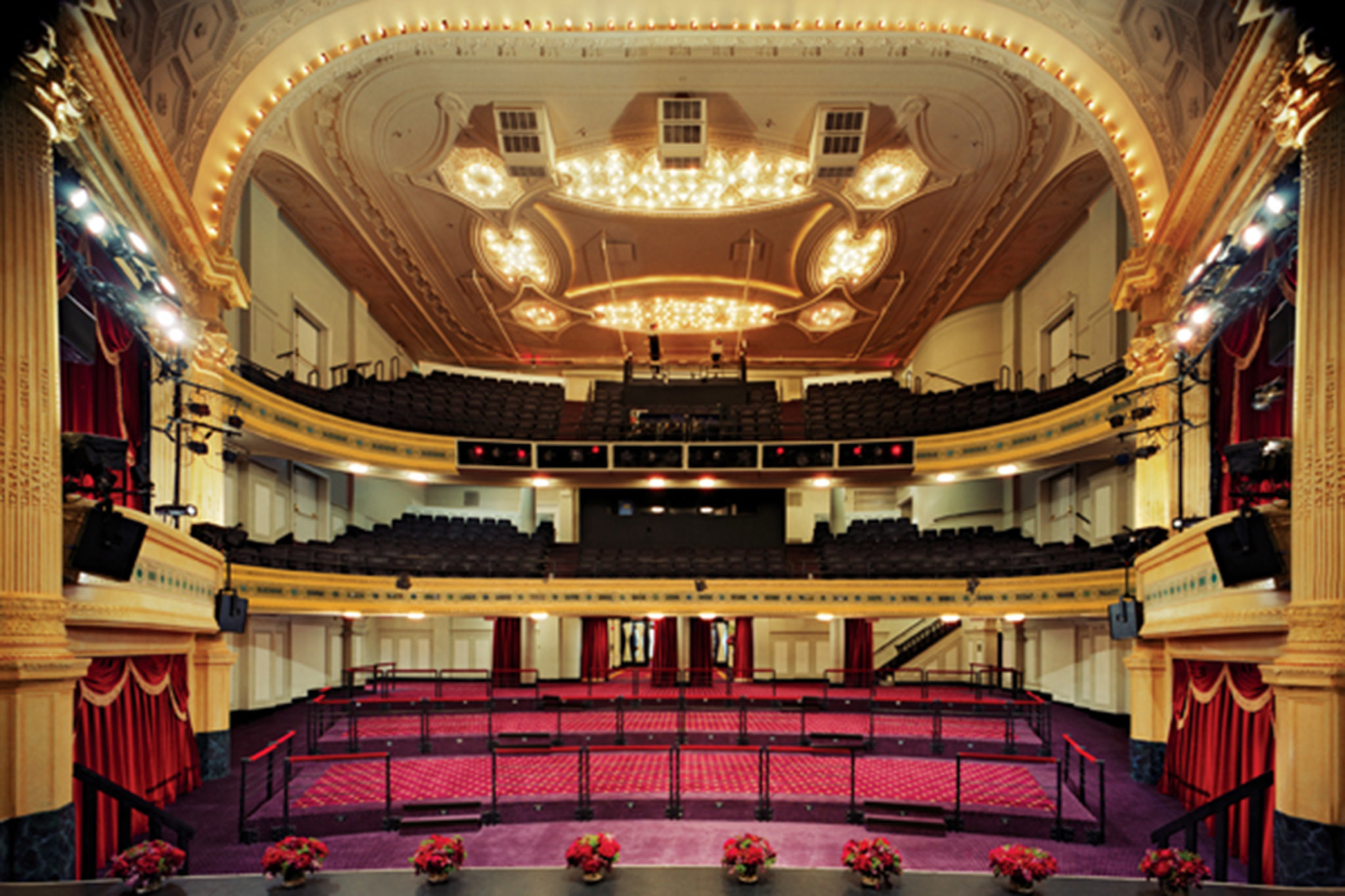
Large houses work best for productions designed to fill them — spectacle musicals with big sets, flying rigs, and effects that need room to breathe. The Gershwin’s cavernous scale is part of why Wicked works there; the production was designed for that space. Intimate houses reward productions that rely on performance rather than spectacle — a well-cast play in the Hayes or the Hudson can feel extraordinary in a way it simply wouldn’t at the Gershwin. Broadway theater sizes vary this much specifically because the buildings were built decades apart for different kinds of productions, not to a single standard template.
Shape determines what a good seat actually means
Some Broadway theaters are wide and shallow — meaning even side orchestra seats stay reasonably close to the stage and sightlines remain workable across most of the house. Others are tall and narrow, with a steep mezzanine that puts the second level surprisingly close to the stage vertically but removes it emotionally. Some houses have excellent acoustics throughout; others have dead spots that even good sound design can’t fully fix. These differences aren’t random — they’re a product of when the theater was built, who designed it, and what it was designed for.
Don’t just look at row and section. Look at the specific theater. A center orchestra seat in row M at the Richard Rodgers is an excellent seat. The same row and section at a wider, shallower house might be even better. At a tall, narrow house it might mean you’re too far back to read facial expressions clearly. The theater guide for each venue tells you exactly where the value sections are.
Featured Broadway Theaters
These are the theaters that most Broadway visitors encounter — either because they house long-running productions, host major new openings, or represent the different scales and experiences Broadway offers. Each one has its own guide covering seating, neighborhood, and planning in full detail.
Broadway’s largest theater and the home of Wicked since 2003. The Gershwin was purpose-built for productions of this scale — a wide orchestra, a steep but workable mezzanine, and a stage designed for flying rigs and large-scale effects. The production of Wicked was specifically designed for this building by scenic designer Eugene Lee, which is part of why it works so well here.
The best seats in the house are center orchestra rows D through M — close enough to see the detail in the production design, far enough back to take in the full stage picture. Front orchestra center is spectacular but can feel overwhelming. The rear mezzanine is where the experience starts to feel distant and the sound loses definition. Avoid the extreme side sections in both orchestra and mezzanine.
A mid-size house designed by Herbert Krapp and opened in 1925, the Richard Rodgers has a well-proportioned layout that works for most productions. The mezzanine here is genuinely good — the rake is steep enough to see over heads clearly and the sound stays strong throughout the level. This is one of the houses where front mezzanine center is legitimately one of the best value seats in the building, often outperforming rear orchestra at a lower price.
Hamilton has been here since 2015 and the production was staged specifically for this house. The sight lines from most orchestra sections are clean; the extreme side orchestra seats are worth avoiding for a show this choreography-heavy. The neighborhood on 46th Street puts you close to a strong concentration of Hell’s Kitchen dining options a short walk west.
Built in 1973 inside the One Astor Plaza office tower, the Minskoff is one of Broadway’s larger modern houses. It’s a wide theater — wider than it is tall — which means side seats stay viable further out than at narrower houses. Julie Taymor’s production of The Lion King has been here since 2006 and uses the full width and height of the stage in ways that reward a center position. The balcony is large and steep — fine for sound, but the emotional distance from the stage becomes real up there.
One of the Broadway houses that actually fronts Broadway itself, the Winter Garden opened in 1911 and has housed some of the most celebrated productions in Broadway history — Funny Girl, West Side Story, Cats. The house is between productions in late September 2026; Much Ado About Nothing begins performances October 31, followed by Evita beginning February 27, 2027. The theater has a wide orchestra and a sweeping mezzanine that provides strong sight lines from centered positions.
A mid-size Shubert-owned house on 44th Street, opened in 1917 and designed by Herbert Krapp. The Broadhurst has a relatively intimate feel for its capacity — the orchestra is well-proportioned and the mezzanine’s front rows are close enough to feel engaged with the stage. Broadway League listings do not show a current production in the house as of September 21, 2026, so use the venue guide for the next announced booking. It remains a strong room for productions that want to feel visceral without requiring an enormous stage.
Broadway’s smallest theater and one of its most distinctive. The Hayes — owned and operated by Second Stage Theater since 2018 — is where serious new plays come when they need a Broadway platform without a Broadway-sized house. At 597 seats, every section feels close to the stage. The building opened in 1912 as the Little Theatre; its current intimate scale makes it genuinely different from everything else in the district. Productions here tend to rely on performance and writing rather than spectacle. If you’re seeing a show at the Hayes, sit anywhere in the orchestra — it’s all good.
Technically a Broadway house now — operated by Roundabout Theatre Company since 2003 — but its nightclub past is still present in the architecture and the energy. The house has an unusual layout born from its conversion: the orchestra rakes steeply and the balcony is close in a way that creates a surprisingly intimate feeling for a 924-seat room. For the current run of The Rocky Horror Show, the venue is arguably the most fitting in the city for it. The neighborhood on 54th Street is slightly north of the main theater district cluster, which makes it easier to navigate and slightly more removed from the Times Square chaos.
Broadway Theaters by Type of Visitor
Both deliver the full Broadway experience — large enough to feel like an event, well-maintained, and currently hosting productions that are ideal starting points. The Gershwin for spectacle; the Richard Rodgers for something with more theatrical craft.
The Lion King at the Minskoff and Aladdin at the New Amsterdam are both well-suited for mixed-age groups. Wide houses with good sight lines from a range of sections, and productions designed to hold a young audience’s attention throughout.
Mid-size or intimate houses with enough personality to feel like a real theatrical event rather than a stadium show. The best date-night choice still depends on the production, but these rooms reward a centered seat and a full evening built around the Theater District.
The more intimate Broadway houses regularly host the plays, revivals and smaller musicals that reward visitors who want actor detail, room character and theatrical craft rather than pure scale.
The Lyceum opened in 1903 and is one of Broadway’s oldest surviving houses. The Booth and the Shubert are landmarked buildings with genuine architectural character. For visitors who want to feel the history of the district, these houses deliver it.
At most mid-size Broadway theaters — the Richard Rodgers, the Shubert, the Imperial — front mezzanine center rows deliver excellent sight lines and strong sound at a meaningful price discount from premium orchestra center. Consistently the best value in the house.
Broadway Seating Tips That Actually Help
A center seat in row L beats a side seat in row D at almost every Broadway theater. Productions are lit, staged, and sound-mixed for the center axis. Sitting off to the side — even close to the stage — means you’re seeing a compromised version of what the production intended. The further off-center, the more the compromise compounds.
At most mid-size Broadway houses, the front mezzanine center section gives you an elevated perspective that lets you see the full stage picture — blocking, choreography, set design — more clearly than you can from the orchestra. The sound at this position is often better calibrated too, since the PA is aimed at this zone. Front-row broadway mezzanine seats are frequently the best seat in the house and rarely the most expensive.
Broadway theaters mark certain seats as “obstructed view” and discount them accordingly. These range from barely noticeable (a column at the far edge of your peripheral vision) to genuinely significant (a structural beam blocking a third of the stage). The discount is not always proportional to the obstruction. Read the specific note for any restricted seat before assuming the savings are worth it.
For a musical, you can sit further back and still have a rich experience — the sound design carries, the visual scale compensates for distance. For a play, especially a smaller or more intimate one, being closer to the action matters more. Facial expressions, vocal nuance, the physical presence of the actors — these things are why people see plays, and they diminish with distance in ways that a musical’s production design can compensate for.
Broadway shows start on time. Arriving 20–25 minutes before curtain gives you time to find your section, settle in, read the program, and get oriented in the space before the lights go down. Rushing in after curtain — which some houses allow, some don’t — means your first few minutes of the show are spent catching your breath rather than watching it.
Before and After: The Neighborhood Around the Theater
Almost all of Broadway’s 41 theaters are within walking distance of each other in Midtown — but the blocks around each one vary in what they offer before and after a show. Knowing which direction to walk for dinner, and which streets to avoid, is part of planning the full evening.
For pre-show dinner: Hell’s Kitchen — running along 9th and 10th Avenues west of the theater district — is the strongest pre-theater dining neighborhood in the city. It’s within walking distance of every Broadway house, significantly less expensive than the Times Square blocks, and full of restaurants that understand the 6:00 dinner, 8:00 curtain timing. The prix-fixe pre-theater menus here are reliably good value.
Avoid Times Square itself for dinner: The immediate Times Square area is tourist pricing with tourist quality. Two blocks in any direction — toward 9th Avenue, or east toward 6th Avenue — and the options improve dramatically. The area between 8th and 9th Avenues from 44th to 52nd Streets is where the practical pre-show dining lives.
For theaters slightly outside the main cluster: Studio 54 on 54th Street sits a bit north of the core; the blocks around 54th and 8th Avenue have solid options. The Todd Haimes Theatre on 42nd Street and the Hudson Theatre on 44th are both close to the main Hell’s Kitchen corridor. The Vivian Beaumont at Lincoln Center is on the Upper West Side — a different evening entirely, with the Columbus and Amsterdam Avenue restaurant scene nearby.
Best restaurants near Broadway theaters →
Theater District neighborhood guide →
All Broadway Theater Guides
Individual guides for every Broadway house — use the venue guide for tickets, box office, current show, address and planning, then open the dedicated seating guide for the seating chart, best seats, sightlines, accessibility and seats to avoid.
Frequently Asked Questions
The Gershwin Theatre at 222 West 51st Street is Broadway’s largest house at 1,933 seats. It has been home to Wicked since 2003. The production was specifically designed for the Gershwin’s cavernous stage by scenic designer Eugene Lee.
The Hayes Theater on West 44th Street is Broadway’s smallest house at 597 seats. Owned and operated by Second Stage Theater since 2018, it hosts intimate new plays and revivals where the small scale is part of the experience rather than a limitation.
There are 41 Broadway theaters in operation in New York. Most are clustered in and around the Theater District in Midtown Manhattan, while the Vivian Beaumont Theater sits at Lincoln Center on West 65th Street. They range in size from the 597-seat Hayes Theater to the 1,933-seat Gershwin Theatre.
Most Broadway theaters are within a few blocks of Times Square, concentrated between 41st and 53rd Streets and between 6th and 8th Avenues. A few sit slightly outside this cluster — Studio 54 is on 54th Street, the Vivian Beaumont is at Lincoln Center on 65th Street, and the Nederlander is at 41st Street near the southern edge of the district.
The Gershwin Theatre (Wicked) and the Richard Rodgers Theatre (Hamilton) are both excellent starting points — well-maintained houses with strong productions that represent what Broadway does at its best. The Minskoff (The Lion King) is the top choice for first-time visitors bringing children.
It depends on the theater. At mid-size houses like the Richard Rodgers, Shubert, and Imperial, front mezzanine center is often the best value seat in the house — elevated enough for clear sight lines, well-positioned for sound. At larger houses like the Gershwin, the rear mezzanine is where the experience starts to feel distant. The specific theater guide will tell you exactly where the mezzanine works and where it doesn’t.
Plan to arrive 20–25 minutes before curtain. This gives you enough time to find your section, settle in, and read the program before the show starts. Broadway shows start on time, and most theaters have policies about seating latecomers only during breaks in the action.
This guide organizes Broadway theaters by their main street corridors from West 41st through West 54th Streets, plus the Vivian Beaumont Theater at Lincoln Center. Use the map section above to orient yourself, then open the individual theater guide for the exact address, subway options, current show and night-out planning.
Start with the individual theater guide for that venue. It routes you to the current production, official ticket source and box-office information. If you are choosing between productions rather than looking for a specific theater, use the Broadway shows guide instead.
Use the theater-specific seating guide for the exact house you are visiting. Each seating guide focuses on that venue’s orchestra, mezzanine or balcony layout, best seats, value sections, sightline issues, accessibility and seats to approach carefully. The general Broadway seating guide explains the principles that apply across multiple theaters.
Know the Theater Before You Book the Seat
The right seat at the wrong theater is still a compromised experience. Broadway’s 41 houses are distinct buildings with distinct layouts, acoustics, and personalities — and knowing which one you’re walking into changes how you book, where you sit, and how you plan the evening around it. Use the theater guides above to understand your specific house before you commit to a section.
And if you haven’t chosen a show yet, the Broadway Shows Guide is the place to start — it organizes current productions by type of visitor and links to the individual show guides from there.
More Broadway Theater Guides
From sightlines and seat strategy to the best houses for your show, neighborhood planning, and the full Broadway night out — everything that turns a theater choice into a great evening.
Broadway NYC — Main Hub
The main Broadway planning hub — shows, theaters, resources, Off-Broadway, and the full Broadway night out.
Back to Broadway →Broadway Shows Guide
Current productions, what’s running now, and show-fit guides by visitor type — the full picture of what’s on Broadway.
Browse Shows →Broadway Resources Hub
Ticket timing, rush and lottery, first-time visitor tips, and everything that shapes a smart Broadway trip.
All Resources →Broadway Seating Guide
Orchestra vs mezzanine, center vs side, close vs elevated — what the sections actually mean and how to choose right.
Read the Guide →