

NYC Concerts:
Shows, Venues & Live Music Guide
Explore concerts in NYC through upcoming show guides, concert venues, ticket and seating resources, transit, and full-night planning across New York.
New York City has always been where the biggest acts play. Madison Square Garden is the most famous arena in the world — not for basketball or hockey, but because of what it means to sell it out. Radio City Music Hall is one of the most beautiful performance spaces in the country. The Beacon Theatre on the Upper West Side is widely considered one of the best mid-size concert venues anywhere. Carnegie Hall has been setting the standard for acoustic performance since 1891. And Barclays Center in Brooklyn has added another major arena to a market that genuinely needed one.
NYC concerts span everything from arena residencies and stadium tours to landmark theaters, classical halls, Brooklyn rooms, and outdoor summer stages. This page is the starting point: use the NYC concert shows hub for upcoming concerts, tonight and weekend discovery; the concert venues hub to compare rooms; and the concert resources hub for tickets, seating, timing, standing-room, seasonal, and practical planning guides.
When a major touring act announces a New York date, it matters which venue they’re playing. The experience of seeing a show at the Garden, the Beacon, or Radio City are three completely different nights — different scale, different energy, different neighborhoods, different logistics. This guide is built to help you understand those differences, plan around them, and make the most of a concert night in the city.
Explore NYC Concerts
Start with the part of the night you are trying to solve. The three core concert hubs below separate show discovery, venue research, and planning resources so you can move deeper without mixing those intents together.
See the current concert lineup, major 2026 dates, what is coming up next, and show-by-show guides for NYC-area concerts worth planning around.
Browse Concert Shows →Compare arenas, theaters, concert halls, stadiums, and outdoor venues by scale, neighborhood, transit, seating, and overall concert experience.
Browse Concert Venues →Ticket strategy, when to buy, last-minute tickets, venue comparisons, standing-room advice, seasonal guides, what to wear, and more.
Browse Concert Resources →Floor vs. lower bowl vs. balcony, where the sound is strongest, what sections deliver value, and what to avoid at major NYC concert venues.
See Seating Guides →Subway and rail routes, parking options, rideshare strategy, and how to time your arrival so logistics do not eat into the show.
Plan Your Journey →Pre-show dinner, post-show drinks, hotels, date-night ideas, and the neighborhood context that turns a ticket into a full New York evening.
Plan the Full Night →Use the NYC Concert Shows hub for upcoming concerts, tonight, today, this weekend, and the current 2026 concert lineup. This main pillar stays focused on the broader NYC concert ecosystem so the live calendar can stay concentrated in one place.
Why the Venue Makes the Concert
Most people research the artist. Fewer research the venue — and that’s where avoidable disappointments come from. A 20,000-seat arena and a 2,900-seat theater deliver fundamentally different versions of the same performance. The artist might be equally great in both. But what you experience as an audience member — how close you feel to the stage, how the sound moves through the room, how the crowd energy builds, what the building itself adds to the night — varies more than most people expect until they’ve been to a few different venues.
In New York specifically, venue choice also shapes the neighborhood experience around the show. A concert at MSG puts you in the middle of Midtown, steps from Penn Station, surrounded by restaurants and bars that run until late. A show at the Beacon places you on the Upper West Side — a slower, more residential energy, great for dinner before, easier to get a cab after. Barclays in Brooklyn has Atlantic Avenue and the Flatbush corridor close by and a crowd that tends to stay in the neighborhood after the show. Knowing these differences before you book makes the whole evening work better.
How NYC concert venues break down by scale
A center seat in the lower bowl at MSG is a better concert experience than a floor seat at the far side of the same arena. A seat in the middle of the Beacon Theatre’s orchestra is better than a front-row seat at a larger venue where the sound system overwhelms at close range. Scale and position both matter — and at every NYC venue, there’s a section that delivers the most value for its price. Our venue guides are built to tell you exactly where that is.
NYC’s Major Concert Venues
New York packs an unusually dense range of major concert venues into a relatively compact area. For major touring acts — arena headliners, residencies, one-night events that sell out in minutes — these are the rooms that matter most. Each one has its own character, its own strengths, and its own set of things worth knowing before you go. Full guides for each venue live in the concert venues section; here’s the essential context.
When MSG is on your ticket, you already know you’re going to something significant. The arena’s reputation for concerts is built on decades of landmark performances — and the building delivers in ways that newer, larger arenas often don’t. The key to MSG is section selection. The lower bowl between sections 101–119 provides the best combination of sightlines and sound for most stage configurations. The floor is electric for the right show but can feel disconnected if you’re toward the back of a deep floor setup. The upper bowl, while high, actually maintains reasonable sight lines — MSG is steeper than most arenas, which helps. Transit is the easy part: the A/C/E and 1/2/3 subway lines stop at 34th Street–Penn Station, while NJ Transit, LIRR, and Amtrak serve Penn Station below the arena.
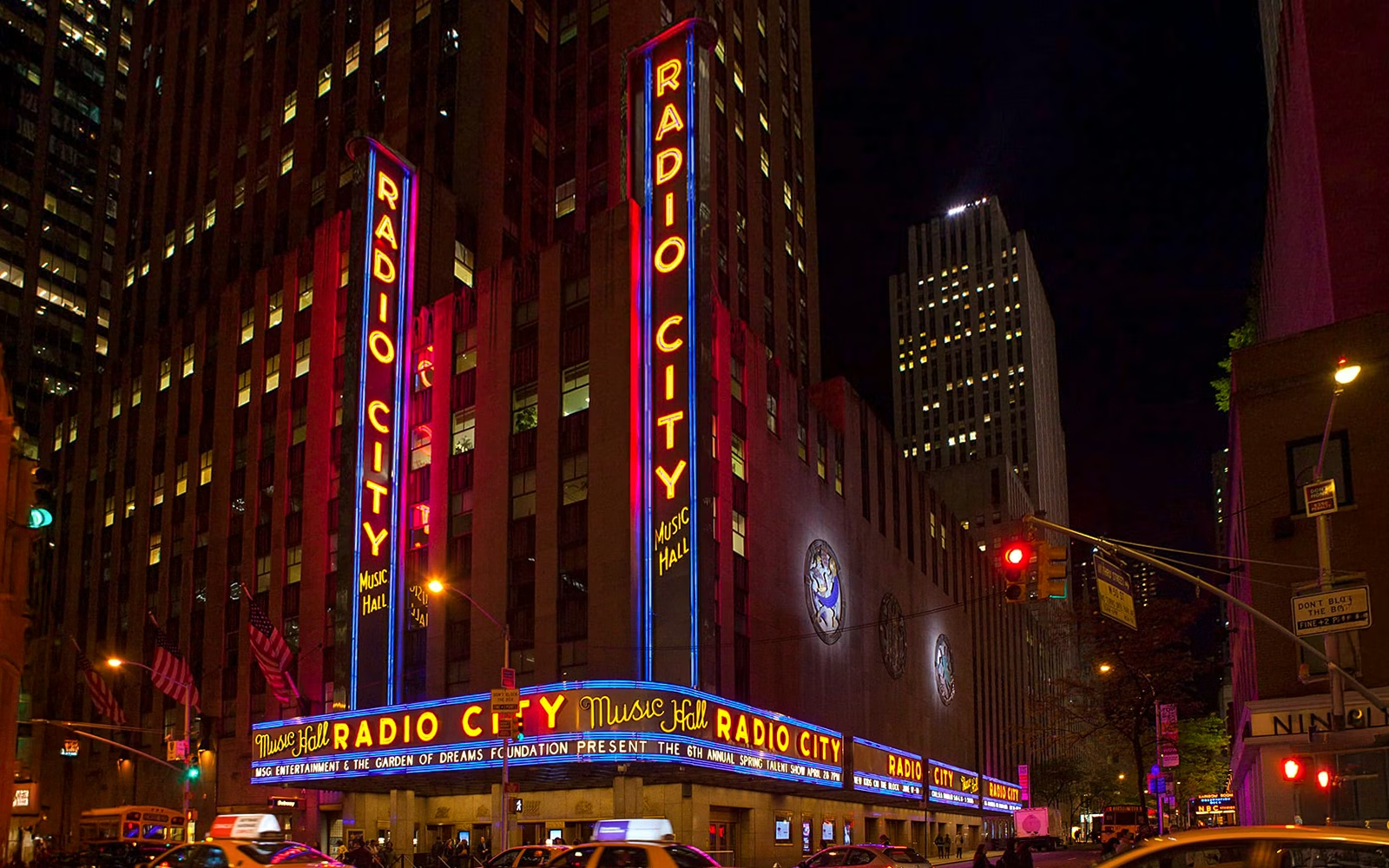
Radio City is one of the most beautiful performance spaces in the world — the Art Deco interior alone justifies the visit. At just under 6,000 seats, it occupies a unique position in New York’s venue landscape: large enough for major acts, intimate enough to feel connected to the stage. The main floor orchestra is excellent throughout. The first mezzanine is arguably the best section in the house — elevated enough for clear sight lines, close enough to feel in the room. The upper mezzanine is where the experience starts to feel distant. The Rockefeller Center neighborhood around it is polished and well-served for pre-show dining; Midtown’s restaurant options are a short walk in any direction.
Ask anyone who has seen a show here and they’ll tell you the same thing: the Beacon might be the best concert venue in the city. The 1929 building has been meticulously restored — ornate without being fussy, intimate at a scale that makes every seat feel connected to what’s happening on stage. The sound is excellent throughout the house, which is rarer than it should be at this capacity. The orchestra delivers a warm, immersive experience; the mezzanine provides a slightly elevated perspective that works beautifully for most shows. The Upper West Side neighborhood rewards an early arrival — there are good dinner options within a few blocks, and the area is genuinely pleasant to walk before a show.
Brooklyn’s major arena has established itself as a legitimate alternative to MSG for major touring acts — and for some shows, it’s the better choice. The bowl is slightly more intimate than MSG at a similar capacity, and the lower bowl provides strong sight lines from a wider range of sections. The transit situation is exceptional: nine subway services converge at Atlantic Avenue, making Barclays among the most accessible large venues in the city from any direction. The neighborhood around the arena has developed significantly since the building opened — Atlantic Avenue and Flatbush Avenue offer real pre- and post-show options that improve every year.
The arena New Yorkers forget is a short train ride away. Prudential Center sits two blocks from Newark Penn Station, which NJ Transit reaches from New York Penn and PATH reaches from World Trade Center, so a Newark show can be easier to get to than some venues inside the city. It opened in 2007 with ten Bon Jovi nights and books a full slate of major tours, sometimes including dates that skip Manhattan and Brooklyn entirely. Lower-level seats facing the stage are the safest pick for most end-stage shows. Pack light: no backpacks of any size, and the arena is cashless. Prudential Center concert guide →
Carnegie Hall is in a category of its own. The Stern Auditorium’s acoustic design is legendary — sound reaches every seat with a clarity and warmth that the best modern halls spend hundreds of millions of dollars trying to replicate. For classical, jazz, and acoustic performances, there is no better room in New York. Practically speaking: the main floor and first tier are the prime sections; the upper tiers are still excellent by any reasonable standard. The 57th Street and 7th Avenue neighborhood has a range of pre-show dining options, and several subway lines stop within a short walk.
See all NYC concert venue guides →
Best Seats at NYC Concert Venues
Seat selection is the single most impactful planning decision you make for a concert — more so than for Broadway shows or sporting events, because acoustic experience varies more dramatically across sections in a concert hall or arena than almost anywhere else. The wrong seat at MSG for a certain stage configuration can mean hearing sound that’s already traveled 200 feet before it reaches you. The right seat at the Beacon means you’re in a room that sounds like it was built specifically for what you’re hearing.
Floor vs. lower bowl vs. upper sections
Floor standing at an arena show puts you in the crowd energy, which for the right performance is exactly what you want. But for seated floor sections toward the back of a deep floor setup, the stage can feel surprisingly distant while the sound system — designed to project forward into the bowl — hits you from an awkward angle. For most MSG configurations, lower bowl center outperforms rear floor for both sight lines and sound quality.
At MSG and Barclays, the lower bowl sections directly facing the stage combine the best sightlines with the most balanced sound. You’re close enough to see the performance clearly, and the PA system is calibrated for this zone. These sections price at a premium, but they usually outperform floor and upper bowl seats at a similar price point on the secondary market.
At Radio City, the Beacon, and similar capacity venues, the first mezzanine center frequently provides the best overall experience — elevated enough to see the full stage picture clearly, with strong sound projection from the PA, and without the neck-crane angle of front orchestra seats. This is a counterintuitive call that pays off consistently at these venues.
Every venue has seats that are technically sold but practically compromised by sight line angles — extreme side sections where you’re watching the back of the stage, or positions where a speaker cluster blocks part of your view. These sections are usually marked “obstructed” or “limited view” and discounted accordingly. Read the specific note on any discounted ticket before assuming it’s a bargain. Sometimes the discount is fair. Sometimes the compromise is real enough to skip.
Full seating guides by venue →
Getting to NYC Concert Venues
Transit is the right answer for almost every NYC concert venue. The city’s subway system reaches all of them — some better than others — and post-show, public transit moves faster than cars, rideshares, or taxis through the concert-night crush. The venues that sit directly above or adjacent to major transit hubs make the logistics almost frictionless. The ones that require a bit more planning are still manageable once you know the route.
MSG sits directly above Penn Station at 34th Street and 7th Avenue. The A, C, E, 1, 2, and 3 subway lines all stop here, along with NJ Transit and LIRR. It’s the most transit-accessible major arena in the country — you can arrive from almost anywhere in the metro area without a car. Post-show, the 1 train uptown and the A/C/E toward Brooklyn both clear out faster than waiting for a rideshare in the 34th Street crush.
The 1, 2, or 3 train to 72nd Street drops you two blocks from the Beacon. From Midtown, that’s a 10-minute ride. The Upper West Side doesn’t have the post-show chaos of Midtown, so getting out after the show is usually easier than you’d expect. If you’re driving from outside the city, parking in the area is difficult on show nights — build in extra time or take the subway from wherever you park in Midtown.
Nine subway services stop at Atlantic Ave–Barclays Center: the B, D, N, Q, R, 2, 3, 4, and 5, with the LIRR at Atlantic Terminal. From Midtown, the 2 or 3 express from Times Square takes about 15 minutes. From Lower Manhattan, the R provides a direct route to Atlantic Avenue. Post-show, the transit options spread the crowd across multiple platforms — it clears faster than MSG despite similar capacities.
From New York Penn Station, NJ Transit Northeast Corridor and North Jersey Coast Line trains stop at Newark Penn. From Lower Manhattan, PATH runs straight from World Trade Center to Newark and runs 24/7. The arena is about a five-minute walk from the station. The trip home is the part to plan: look up your return train before the show, and expect a packed platform right after the encore. How to get to Prudential Center →
If you’re driving to a Midtown concert — MSG or Radio City — plan for $45–$70 in parking plus the time and stress of navigating the post-show traffic. The pre-booked garages on SpotHero or ParkWhiz save money over arriving without a reservation, but the savings don’t change the fundamental calculus: for a single evening out, transit is almost always faster and cheaper. Driving makes more sense if you’re coming from the suburbs or New Jersey and parking is part of a broader night-out plan that includes flexibility on departure time.
Concert Neighborhoods in NYC
Where the venue sits shapes the whole evening — from where you eat dinner to what the walk from the subway feels like to where you end up after the show. New York’s major concert venues are spread across a handful of distinct areas, each with its own character.
The center of the NYC concert universe. Dense with pre-show dining options at every price point. Hell’s Kitchen, just west of 8th Avenue, is the strongest neighborhood for a pre-show dinner — good restaurants, reasonable prices, and easy walking distance to the Garden and Radio City. Post-show, Midtown is busy but navigable. The area around 57th Street near Carnegie Hall is more polished; the blocks around Penn Station are functional rather than charming.
A genuinely pleasant neighborhood for a concert night — residential in feel, good restaurant options along Amsterdam and Columbus Avenues, and a crowd that tends to be more settled than Midtown. The Beacon draws a mix of locals and visitors; Lincoln Center pulls a more classical audience into a neighborhood built around the performing arts complex. Amsterdam Avenue in the low 70s has some of the better pre-show dining near either venue.
The concert scene in Brooklyn has expanded dramatically over the last decade. Barclays anchors a major Atlantic Avenue corridor; Brooklyn Paramount in Downtown Brooklyn and Kings Theatre in Flatbush are separate restored historic theaters, while Brooklyn Steel in Williamsburg covers the mid-size touring market. The neighborhoods around all three offer better post-show options than most arena districts — stay in Brooklyn after a Barclays show rather than rushing back to Manhattan.
UBS Arena at Belmont Park in Elmont hosts major acts in a newer building with excellent sightlines — the LIRR from Penn Station to Belmont Park is the right transit option. Forest Hills Stadium in Queens is a unique outdoor venue that hosts select summer shows in a historic setting. The E/F/M/R to Forest Hills–71st Avenue or the LIRR to Forest Hills are the practical transit options; the neighborhood around the stadium rewards exploration before a show if you arrive early enough.
Downtown Newark is a short walk from Newark Penn Station, and the Ironbound, the city’s Portuguese and Spanish restaurant district, sits just on the other side of the station, which makes it the classic pre-show dinner. Eat before you scan in: the arena has no re-entry. Restaurants near Prudential Center →
Free, Outdoor & Summer Concerts in NYC
Not every great concert night in New York requires a ticket. Each summer, New York adds a second concert ecosystem outdoors: park series, free performances, seasonal stages, and ticketed outdoor venues. Searches around summer concerts NYC, free concerts NYC, and outdoor concerts reflect a real planning need alongside the arena and theater calendar.
SummerStage, the city’s flagship free concert series, runs across multiple park locations from late spring through early fall, with a lineup that regularly includes acts who also play paid arena shows elsewhere in the same season. Checking the current SummerStage schedule during the season is worth the two minutes before you lock in a paid night out — sometimes the same week offers a strong free alternative elsewhere in the city. Central Park hosts the largest concentration of dates, but the series extends into Brooklyn, Queens, and the Bronx as well.
Beyond SummerStage, “free concerts this weekend NYC” is one of the more reliable weekend searches in the city during the warmer months — parks departments, BIDs, and individual venues all run their own free or pay-what-you-can programming, and it shifts week to week. If ny free concerts is what you’re after generally rather than one specific series, the most consistent sources are SummerStage, Bryant Park’s summer series, and the various borough-specific park concerts that run June through September.
See the 2026 summer concerts NYC guide →
Featured Concert Venue Guides
These are a sample of the venue guides available across the site. For the full directory and venue-by-venue discovery experience, use the NYC Concert Venues hub.
Shows Worth Planning Around Right Now
All Concert ShowsA current sample of major concerts still ahead in the NYC area. The full concert shows hub owns the live upcoming calendar; this pillar highlights a few dates worth jumping into from here.
Show pages cover seating, transit, planning, and what to expect at the venue. Updated as new dates are confirmed.
Recently played: Brand New, Phoebe Bridgers, Teddy Swims, The Smashing Pumpkins and Don Omar at Barclays Center, plus AC/DC at MetLife Stadium. See the NYC Concert Shows Archive →
NYC Concert Planning Resources
Beyond venue guides, these planning pages answer the specific questions that come up when you’re deciding on a ticket, choosing between arenas, or planning the night around a standing-room show. Browse the complete NYC concert resources hub for the full library.
Who This NYC Concert Guide Is For
You’re in the city and want to catch a major act at a landmark venue. This guide helps you understand which venue fits which kind of night and how to get the most out of the experience.
A show at the Beacon or Radio City paired with dinner in the right neighborhood is one of the best date nights New York offers. This guide helps you plan the whole evening, not just the ticket.
Same artist, two different venues, very different experiences. If you’re deciding between MSG and Barclays, or trying to figure out the best section at Radio City, the venue guides here are built for exactly that decision.
Getting to a show in New York is straightforward once you know the system. This guide covers every major venue’s transit options so you spend the evening enjoying the city, not figuring it out.
Plan a Better Concert Night in New York
NYC concerts are some of the best live music experiences in the world — but they reward people who plan ahead. The right section makes the sound and the sightlines work. The right neighborhood makes the evening feel complete. The right transit route means you leave the show feeling great instead of fighting for a cab on 34th Street at midnight.
Use the venue guides, seating tips, and neighborhood planning resources here to build a concert night that’s as good around the show as it is during it. That’s what Stage & Street is for.