

Best First Time Concert NYC Guide — How to Choose the Right First Concert
Your best first concert in New York depends less on who is playing and more on the room, the neighborhood, and the kind of night you actually want. Here is how to choose.
New York City runs every kind of concert imaginable, every night of the week, across a range of venues from 1,200-seat theaters to 20,000-seat arenas to outdoor stadiums to neighborhood clubs in Brooklyn. That range is part of what makes the city extraordinary for live music. It is also why “I want to see a concert in New York” is not yet a plan — it is a starting point for a set of decisions that determine whether the night is one you remember for the right reasons.
The first-timer mistake is treating this as a simple artist-and-ticket question. It is not. The venue shapes the experience as much as the music does. A sold-out arena at capacity is physically and sensory intense in a way that a seated concert hall is not. A Brooklyn club on a Saturday night is a different social energy from a Radio City show on a Tuesday. An outdoor summer concert at Forest Hills is not the same kind of plan as a Beacon Theatre evening. These are different nights. They require different choices about where to eat, how to get there, what to wear, and how long the evening runs.
This guide helps first-timers find the right version of a New York concert night for them — not the most famous option, and not the most affordable option, but the one that actually matches how they want to feel.
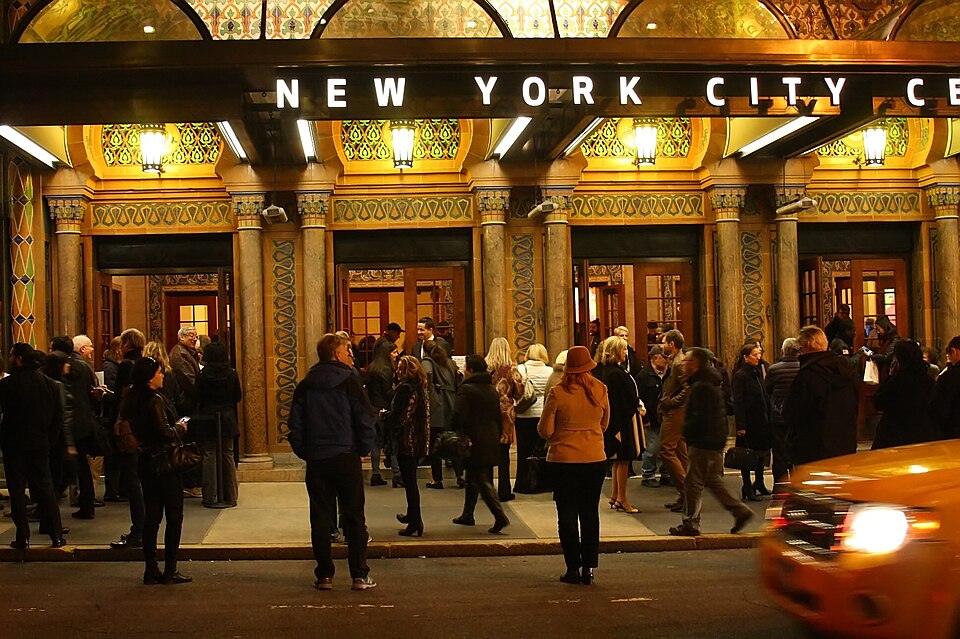
Audience gathering before an evening performance at Radio City Music Hall, one of New York City’s most welcoming and recognizable concert venues for first-time concertgoers.
Why Your First NYC Concert Can Go Very Right or Very Wrong
The best first concerts in New York tend to share a few qualities: the room matched the person’s energy and comfort level, the logistics were handled in advance rather than improvised, the evening included something beyond the show itself — a good dinner, a neighborhood worth being in — and the person arrived prepared rather than surprised. The worst first concerts usually involve one or more of the following: the wrong venue type for the person’s sensory tolerance, a show that ran so late it became a problem, a transit plan that did not account for post-show crowds, or an outfit that made three hours of standing genuinely painful.
None of that is about the music. It is about the planning — and the planning starts with venue type, not artist name.
What changes between venue types
An arena concert at MSG means 15,000–20,000 people in the same building, multiple levels of seating, significant security line and entry time, loud reverberant sound, and a post-show exit that involves significant crowd management. For someone who has never been in a large arena during a sold-out show, this can be overwhelming in a way they did not anticipate — or it can be exactly the electric, communal, larger-than-life experience they were hoping for. Both outcomes are real. The difference is usually whether the person knew which one to expect.
A seated theater concert at the Beacon or Radio City means a room of 2,800 or 6,000 people in assigned seats, better acoustics than most arenas, a quieter and more focused crowd energy, and an easier entry and exit experience. For someone who values comfort and a polished evening more than raw scale, this is consistently the stronger choice for a first concert in New York.
A smaller Brooklyn club means 300–1,500 people in a standing room or mixed venue, a younger and more physically active crowd, louder close-range sound, and a neighborhood that is part of the experience. For someone who wants the feel of discovering New York’s underground music culture, this is the right starting point. For someone who wants a polished, comfortable first concert, it can be too much at once.
The biggest show is not automatically the best first show. For most people new to NYC concerts, the right first experience is the one that produces a feeling of “I want to do this again” — not one that is technically impressive but physically exhausting or logistically stressful. Choosing by room fit is more reliable than choosing by show size.
The Best Types of First NYC Concert by What You Want
If the goal is to feel the specific weight of what it means to see a concert in New York, MSG delivers it better than anywhere. The room has been the site of more landmark performances than any other venue in the country, and being there for the right show at capacity creates a genuine collective energy that smaller venues cannot replicate. The transit logistics are the simplest of any major NYC venue — Penn Station is literally below the building. The trade is scale and intensity: this is a large, loud, demanding room, and it rewards preparation. Not the lowest-stress option, but potentially the most memorable.
For a first concert that feels like a proper New York evening rather than an exercise in crowd management, a seated show at the Beacon Theatre or Radio City Music Hall is the strongest choice in the city. Both venues are architecturally distinctive, seated, and smaller than an arena. The Beacon on the Upper West Side is particularly well-suited to a first-timer — it is beautiful inside, has strong sightlines from most seats, and the neighborhood makes for an easy pre-show dinner and a pleasant post-show walkback. Radio City in Midtown is the slightly grander option, more tourist-adjacent, but genuinely impressive in a way that earns it.
For a first-timer who specifically wants the Brooklyn experience rather than Midtown, the options span from the arena scale of Barclays Center (which pairs the Brooklyn-night feel with a proper arena format) to the neighborhood-embedded club experience of Music Hall of Williamsburg or Brooklyn Steel. Barclays is the more accessible starting point for most first-timers — strong transit connections, a recognizable name, and Fort Greene / Boerum Hill dining around it. The Williamsburg clubs are more adventurous and more fun for the right person, but require more navigation comfort.
A summer evening at Forest Hills Stadium in Queens is a specific kind of New York concert experience that has no indoor equivalent — a historic horseshoe-shaped outdoor stadium in a quiet residential Queens neighborhood, under the sky, for an artist that typically skews toward a devoted audience rather than a massive pop crowd. The logistics require more planning (no parking, E or F train from Manhattan, evening weather layers), but the setting is genuinely unlike anything else available in the city. Worth it for the right summer show and a visitor who is already comfortable with the city.
The best first concert for a date night is one where dinner and the show feel like a continuous, well-paced evening rather than two separate logistics challenges. The Beacon Theatre on the Upper West Side is the strongest option: dinner on Amsterdam or Broadway before the show, easy subway to 72nd Street, a beautiful seated room for the concert, and a walkback through a residential neighborhood at a comfortable pace. Radio City in Midtown pairs equally well with a Hell’s Kitchen or Rockefeller Center dinner, and the Midtown streetscape after the show is active and easy. See the concert date night guide for the full framework.
For a first concert experience that includes children, the right choice is a program designed specifically for the child’s age rather than a general-audience show with children in attendance. The New York Philharmonic’s Young People’s Concerts (ages 6–12) and Very Young People’s Concerts (ages 3–6) are the strongest structured options. Jazz at Lincoln Center’s WeBop Family Jazz Parties (ages 8 months to 8 years) are ideal for very young children and first-time family live music experiences. See the family concerts guide for the full age-specific breakdown.
For a first-timer who specifically wants a low-friction, enjoyable introduction to NYC live music rather than an epic challenge to push through, a mid-size seated theater show is the correct choice. The entry process is straightforward, the venue is not overwhelming, the transit home is manageable, and the seated format removes the physical demand of standing for three hours. The Beacon on the Upper West Side remains the gold standard for this category — clean, easy, and consistently rewarding.
For a first-timer who specifically wants to engage with New York’s deep musical culture rather than pop concert entertainment, Jazz at Lincoln Center’s Rose Theater and the Appel Room — or a Carnegie Hall concert — deliver a genuinely different register. The pay-what-you-choose Appel Room evenings at JALC (floor-to-ceiling Central Park views, intimate room, real jazz) are one of New York’s best cultural bargains. Carnegie Hall on a standard season night is a genuine occasion. Neither requires formal attire; both require genuine interest in the music.
Arena vs Theater vs Club vs Outdoor — The Honest Comparison
Most first-timer advice on NYC concerts defaults to “it depends on your taste” without actually explaining the differences. The differences matter a great deal and are worth being specific about.
Arenas seat 15,000–20,000 people and are designed for spectacle. The sound systems are powerful, the production values on major tours are substantial, and the collective energy of a sold-out arena crowd is genuinely different from any smaller venue. For first-timers who specifically want the feeling of an event rather than a concert, arenas deliver it.
The practical realities: entry lines are longer, security is more thorough, the transit experience after a sold-out show is crowded and occasionally slow, and the food and drink cost inside is significant. Sound quality varies by section — upper bowl sections can feel distant, floor sections can be loud to the point of discomfort for some people. For anyone who has noise or crowd sensitivities, an arena is not the right starting point.
Mid-size to large seated theaters are consistently the most reliable first concert experience in New York. The room is designed for listening, the sightlines are generally strong throughout, the entry and exit processes are straightforward, and the experience of being in a beautiful old concert hall in New York is itself a component of the evening. Acoustics at the Beacon, Radio City, and Carnegie Hall are significantly better than most arenas for any show that is not primarily about spectacle over sound.
For first-timers who want to feel like they had a real New York evening — dinner before, a beautiful room, a show that ends at a reasonable hour, and a comfortable walk or subway home — a seated theater concert is the answer almost every time.
Club-scale venues in New York — typically 300 to 2,500 capacity — offer a different kind of concert experience than arenas or seated theaters. The physical closeness to the stage and other audience members is a genuine advantage for the right artist and the right show. The informality is also an advantage for many people: the social pressure is lower, the crowd tends to be more focused on the music, and the neighborhood around these venues (particularly in Williamsburg) is often part of the whole evening.
The demands are real: most of these venues are primarily standing room, the logistics of getting there and back require more navigation confidence than a Midtown show, and the physical experience of a packed standing room for two hours is genuinely tiring if you are not expecting it. For a first-timer who is already comfortable with the city and specifically wants the music-scene experience, a Williamsburg or Brooklyn club show is the right choice. For a first-timer who is primarily visiting New York and wants a polished concert experience, it is more demanding than necessary.
Outdoor concerts in New York are seasonal — primarily late spring through early fall — and require weather-aware planning that indoor venues do not. The reward is a kind of concert experience that has no indoor equivalent: open air, natural light, and a venue character that is specific to the place rather than the generic interior of a climate-controlled building. Forest Hills Stadium in Queens, in particular, is one of the most atmospheric concert settings available in the New York area — a horseshoe-shaped historic stadium embedded in a residential Queens neighborhood, approximately 13,000 capacity, primarily used for shows that draw serious audiences.
For a first-timer visiting in summer or early fall, a Forest Hills show or a Pier 17 outdoor concert can be the single most memorable concert option in the city for the right artist. The key logistics: no parking at Forest Hills (transit via E/F train), weather layers, and an evening that typically ends by 10 PM due to venue noise ordinance. Plan in advance and check the weather.
Best First NYC Concert by Type of Visitor
For a visitor with one concert night in New York, the choice depends almost entirely on comfort level and what memory you want. For the quintessential “I saw a concert in New York” experience: MSG for any sold-out major-artist show, knowing in advance that it is intense and requires pre-planning. For a more polished and comfortable first night: the Beacon Theatre or Radio City, where the room itself is part of the experience. The Beacon in particular is one of the city’s most rewarding single evenings for a first-time visitor who has never been in an old New York concert hall.
If you are a New Yorker bringing someone to their first concert in the city, the right call is a seated theater show at the Beacon or Radio City rather than defaulting to whatever is playing at MSG. The theater format removes the crowd-management stress and puts the focus on the experience of the evening — dinner before, a beautiful room, a show at a comfortable volume. Your guest will leave having had a wonderful night, not having survived one. Save the arena for their third or fourth show.
The Beacon is the answer for most first-concert date nights. The Upper West Side dinner scene, the 1 train to 72nd Street, the beautiful 1920s theater interior, and the walkback home together after the show constitute one of the best-constructed date nights available in New York. Radio City in Midtown works for couples who are staying nearby or want a slightly grander room. For a more adventurous date-night first concert, the Fort Greene / Boerum Hill dining scene before a Barclays Center show gives the evening a Brooklyn-specific character. See the concert date night guide for the full planning framework.
Solo concert-going in New York is more common and more comfortable than people expect, particularly at seated venues where assigned seats remove the social awkwardness of standing in a crowd without a companion. For a solo first concert, a seated show at the Beacon or Radio City is the easiest entry point — you are in your seat, the music is the focus, and the evening has a clear structure. For a solo visitor who specifically wants the social energy of a larger crowd, an arena show is fine and common for solo attendees; just arrive with a plan for the transit home.
For a first-timer who specifically wants to minimize logistical risk — who cares most about a smooth, well-organized evening — the order of priority is: a seated venue with reserved tickets, a venue near major subway lines (MSG, the Beacon, Radio City), a show that ends before midnight, and dinner booked in the same neighborhood as the venue. All of those conditions are easy to satisfy with a Beacon Theatre show on a Friday or Saturday evening. Book the tickets, book the dinner, look up the subway stop, and arrive 20 minutes early. The evening takes care of itself.
For a first-timer who specifically wants the raw energy of New York’s music culture — who is comfortable in cities, interested in the Brooklyn scene, and less focused on a polished evening than on an authentic one — a Williamsburg venue show or a Barclays concert for a high-energy artist is the right direction. Music Hall of Williamsburg and Brooklyn Steel are the rooms where New York’s active concert culture lives most viscerally. The L train, a dinner in Williamsburg before the show, and a night that runs late in a neighborhood with real after-show energy constitutes a different but equally valid first NYC concert experience.
For a first concert that includes children, the right choice is not a scaled-down version of an adult concert but a program designed for the child’s age. The New York Philharmonic’s Young People’s Concerts (ages 6–12) and Very Young People’s Concerts (ages 3–6) are purpose-built for this. Jazz at Lincoln Center’s WeBop Family Jazz Parties work for ages 8 months to 8 years. See the family concerts guide for a complete breakdown by age and format.
What Matters More Than People Think
Seating vs general admission
The difference between a seated ticket and a general admission standing ticket is larger than most first-timers anticipate. Seated means your position is fixed, you can sit when you need to, you have a defined view, and you are not spending energy managing your position in a crowd. GA means you can potentially get closer to the stage, but you also compete for position, you stand for the entire show (typically two to three hours), and you cannot comfortably put down a bag or take your shoes off if your feet hurt. For a first concert, seated is almost always the better choice unless standing-room proximity is specifically what you want and you have chosen shoes accordingly.
How late the show runs
Concert end times matter for transit, energy, and whether the night feels complete or exhausting. Most NYC arena and theater shows end between 10:30 and 11:30 PM for a standard 8:00 PM start, with openers often starting at 7:30. Shows with no opener can end earlier. Outdoor venues like Forest Hills typically end by 10 PM due to noise ordinances. Knowing when the show is likely to end shapes the dinner plan, the transit plan, and whether you are planning an after-show drink or heading straight home.
The neighborhood the venue is in
The neighborhood around the venue contributes more to the overall experience than most people account for. The Upper West Side around the Beacon has a genuine residential neighborhood character — dinner on Amsterdam Avenue before the show and a walk home after feels like being in New York rather than managing an event. Midtown around Radio City is more tourist-dense but still active and enjoyable for a pre-show dinner in Hell’s Kitchen. Williamsburg has a specific Brooklyn night-out energy that either enhances or complicates the experience depending on your comfort with the borough. The area immediately around MSG (Penn Station/34th Street) is functional and transit-convenient but not a neighborhood you would seek out for dinner — you need to walk a few blocks west to Hell’s Kitchen for the good pre-show dining.
Shoes and bag — the logistics no one tells you
The right concert shoes are comfortable enough for walking 10–15 minutes from the subway, standing in a security line, climbing to your section, and potentially standing for two-plus hours. This is not abstract advice. Bad shoe choice is one of the most common reasons first-timers have a worse night than they should. The right bag is small enough to pass venue bag policies (most NYC venues have size limits; no NYC arena has a bag check service). See the what to wear guide for the full practical breakdown.
Getting home after the show
Post-show logistics are where first-timer nights most often go wrong. Rideshare surge pricing after a sold-out arena show is real and can be substantial. Subway platforms at Penn Station and Atlantic Avenue after a major show are crowded for 20–30 minutes before dispersing. Planning the exit before the show — knowing which train to take, walking a few blocks from the venue before calling a ride if that is the plan — converts the post-show experience from stressful to simply part of the night. See the getting to NYC concert venues guide for venue-specific transit advice.
Common First-Timer Mistakes
Choosing the biggest show rather than the best first room
The sold-out MSG show for the most popular artist currently touring is not necessarily the right first concert for a visitor who has never been in a large American arena, has no plan for dinner or transit, and is trying to decide between seats in the upper bowl and tickets on the resale market. The Beacon Theatre for an artist you genuinely love, with dinner booked beforehand and a clear plan for the 1 train home, will almost always produce a better first evening than an impulsive “biggest show in town” arena decision.
Underestimating how much standing changes the experience
Three hours of standing in a crowded GA section on concrete in shoes you have not broken in is a specific physical experience. It is not just “less comfortable than sitting.” It is meaningfully fatiguing in a way that, for some people, overrides everything positive about being close to the stage. If you do not regularly stand for three hours on concrete — and most people do not — a GA floor ticket at a first arena show deserves more thought than “but I’ll be closer to the stage.”
Not planning dinner until the day of the show
Restaurants near major NYC concert venues on show nights book out days or weeks in advance. A last-minute search for dinner near MSG or near the Beacon on a Friday night with a sold-out show will produce either a long wait or a bad restaurant that was available because no one else wanted it. Book the restaurant when you book the tickets. The whole evening plans better that way. See the restaurants near NYC concert venues guide for area-specific recommendations.
Assuming Brooklyn is inconvenient
The hesitation about going to Barclays or Williamsburg from Manhattan is generally overstated. The 2 or 3 from Penn Station to Atlantic Ave–Barclays Center takes approximately 22 minutes. The L from Union Square to Bedford Avenue in Williamsburg takes about 10. Brooklyn venue nights are genuinely accessible from most of Manhattan and produce a significantly different and often better neighborhood evening than a Midtown arena show. The transit is not the obstacle most people imagine it to be.
Not checking the venue’s bag policy before arriving
Every major NYC concert venue has a bag size limit. Several have stricter policies for specific events. None of the major arenas (MSG, Barclays) offers an onsite bag check. Arriving with a bag that violates the policy means being turned away and having no option to store it at the venue. Check the policy before you leave home, and bring a smaller bag than you think you need.
Waiting to buy tickets until the week of the show
For any sold-out or high-demand show at a major NYC venue, the best available tickets go quickly and resale prices for quality sections rise as the date approaches. Buying tickets when the show is announced — particularly for seated theater shows where section matters — consistently produces better options at better prices than waiting. See the when to buy concert tickets guide for the full timing framework, and the last-minute tickets guide if you are already in that window.
How to Build the Right First Concert Night
A great first NYC concert is not just the show. It is the entire evening — constructed so that each part supports the next rather than competing with it. Here is how to put it together.
Start with the venue, not the artist
Identify which type of venue matches how you want to feel that evening. Polished and comfortable: Beacon or Radio City. Big and electric: MSG or Barclays. Cultural and intimate: Carnegie Hall or Jazz at Lincoln Center. Brooklyn and adventurous: Williamsburg clubs. Once the venue type is clear, find the artist that makes sense in that room.
Book the restaurant in the venue’s neighborhood
Dinner in the same neighborhood as the venue — ideally a 10–15 minute walk away — is the format that produces the smoothest evenings. It removes transit between dinner and the show, it gives you time to walk to the venue after dinner and still arrive early, and it connects you to the neighborhood character rather than just the building. The restaurants near NYC concert venues guide covers the best areas around each major venue. Book the restaurant at the same time as the tickets.
Plan the transit both ways in advance
Look up the subway lines, the stop, and the approximate ride time before the night of the show — not during it. For MSG: 1/2/3 or A/C/E to 34th St–Penn Station. For Barclays: 2/3/4/5 or B/D/N/Q/R to Atlantic Ave–Barclays Center. For the Beacon: 1/2/3 to 72nd Street. For Radio City: B/D/F/M to 47th–50th Sts–Rockefeller Center. Post-show, the subway is almost always faster and less expensive than rideshare, which surges immediately after major shows end. The getting to NYC concert venues guide has full venue-by-venue transit details.
Sort out what to wear and what to bring
Comfortable shoes and a small bag that fits the venue’s size limit are the two items that most affect whether the night is enjoyable or frustrating. Check the bag policy for the specific venue before you leave. Have a light layer for the return trip if it is a cooler evening. The what to wear guide covers this in detail by venue type and season.
If you are staying overnight, book near the venue
For out-of-town visitors building a concert trip, staying within walking distance of the venue removes the late-night transit variable entirely. Near MSG: The New Yorker hotel or the Fairfield Inn at Penn Station. Near Barclays: Hampton Inn Brooklyn Downtown or Hilton Brooklyn. Near the Beacon: Upper West Side hotels on Broadway or Amsterdam. The hotels near NYC concert venues guide covers options near each major venue.
Arrive in the neighborhood 90 minutes before showtime. Dinner nearby at 6:00 or 6:30 for an 8:00 show — booked in advance, same neighborhood as the venue. Walk to the venue 20–25 minutes before doors (not showtime — doors). Enter, find your section, take in the room. See the show. After the last song, let the initial crowd surge pass with a drink inside or a few minutes on your phone before heading for the subway. Take the train home. That is it. The whole thing works when each piece is planned rather than improvised.
Frequently Asked Questions
For most first-timers, the Beacon Theatre on the Upper West Side or Radio City Music Hall in Midtown. Both are seated, architecturally beautiful, mid-size (2,800 and ~6,000 capacity respectively), and produce evenings that feel polished and complete rather than exhausting. For first-timers who specifically want the large-scale arena experience, Madison Square Garden is the most transit-accessible major venue in the city and the one with the most significant historical and cultural weight. The “best” venue depends on what kind of first night you want.
For the right person — yes, it can be the most memorable. MSG is a genuinely great concert venue with strong transit access (Penn Station directly below the building) and an unmatched history. For first-timers who are comfortable with large crowds and want the experience of a sold-out major-artist arena show, MSG is the answer. For first-timers who want a more comfortable, polished, less-intense introduction to NYC live music, a seated theater show at the Beacon or Radio City is usually a better starting point.
For most first-timers, yes. Seated venues remove the physical challenge of extended standing, give you a defined view from an assigned seat, produce better acoustics than most arenas, and make the overall evening easier to manage. The tradeoff is less crowd energy than a GA floor section or a sold-out arena. For a first-timer who is comfortable in large crowds and specifically wants that energy, a seated venue can feel less electric than expected. For everyone else, the comfort and quality of a seated show typically outweighs the energy of a standing section.
Madison Square Garden — Penn Station is directly below the arena. The 1/2/3 and A/C/E subway lines stop there, and the LIRR, NJ Transit, and Amtrak all terminate at Penn Station. For visitors arriving from outside the city by train, MSG is the simplest possible venue: your train arrives below the arena. Barclays Center is a close second, with nine subway lines at Atlantic Ave–Barclays Center and LIRR service at Atlantic Terminal directly across the street.
Barclays Center is excellent for first-timers — strong transit, a recognizable arena format, and a Brooklyn evening that pairs well with dinner in Fort Greene or Boerum Hill. The smaller Williamsburg club venues (Music Hall of Williamsburg, Brooklyn Steel) are better suited to first-timers who are already comfortable with Brooklyn transit and specifically want the more immersive, scene-oriented concert experience. They are not a harder version of an arena show — they are a genuinely different kind of night that suits some first-timers perfectly and feels like too much navigation for others.
Depends on what you want. A theater concert (Beacon, Radio City) delivers a polished, comfortable, aesthetically rewarding experience that is easy to plan and easy to enjoy. A club concert delivers proximity, energy, and the feeling of being inside a music community rather than attending an event. For a first concert with someone who is not yet sure what they prefer in a live music experience, the theater is the safer choice. For a first concert with someone who specifically wants to feel the city’s music culture, a club show is the more authentic introduction.
Comfortable shoes are the most important decision — you will walk from the subway, stand in a security line, and potentially stand or walk during the show. Any shoe you cannot stand in for two hours is the wrong shoe. For a theater show: smart-casual, something you would wear to a nice dinner. For an arena show: comfortable and practical, with a light layer for the temperature variation between the arena floor and upper sections. See the what to wear to a concert in NYC guide for venue-specific advice.
As early as possible for any show with significant demand. For major touring artists at MSG, Barclays, or sold-out theater shows, the best seats sell quickly and resale prices rise as the date approaches. For mid-tier or less heavily trafficked shows, the primary ticketing platforms often have good availability closer to the date. The general rule: buy when you decide you want to go, not after you have finished planning the rest of the evening. See the when to buy concert tickets guide for the full timing framework, and the last-minute tickets guide if you are already in the final days before the show.
The Best First Concert in NYC Is the One That Fits You
The most common piece of advice about first NYC concerts — “just go to MSG” or “go see something at a Brooklyn venue” — skips the question that actually matters: what kind of night do you want? New York has every answer. It has the historic arena that makes you feel like you are at the center of something large and important. It has the beautiful 1920s theater that makes you feel like you are in a real New York evening. It has the Williamsburg club that makes you feel like you are inside the city’s musical culture rather than attending a polished event. It has the outdoor summer stadium in Queens that makes you feel like the city has opened something private to you.
None of these is automatically better than the others. The right first concert is the one that matches your comfort level, your companion (if any), the kind of evening you want to remember, and the amount of planning you are willing to do to make it work smoothly. This guide exists to help you make that match rather than defaulting to whatever is the most discussed show on the calendar.
For everything else that goes into a great NYC concert night — tickets, seating, dinner, transit, hotels, and what to wear — the resources below cover each piece.