

The NYC Concert Seating Guide — Best Seats by Venue, Show Type & Budget
Floor vs. lower bowl. Arena vs. stadium vs. theater. What “best seat” means depends on the show, the room, and what you want from the night. Here is how to decide before you buy.
Every concert venue in New York is different. Madison Square Garden has a different geometry than Barclays Center. A stadium like MetLife plays by rules that neither arena follows. Radio City Music Hall has sightlines that reward certain levels and punish others. And none of that changes the most fundamental variable: the kind of show you are seeing matters as much as the room you are seeing it in.
This guide is about finding the best concert seats before you finalize your purchase — not the broadest possible advice, but the specific thinking that changes whether you come home thrilled with your section or wondering how you spent that much money on the wrong ticket. Buyers searching for the best place to sit at a concert, or just good concert seats generally, are usually asking the same underlying question in different words: which section actually delivers, for this show, in this room. It covers NYC’s major venues, the tradeoffs between floor and bowl and upper level, how the type of concert changes what “best seat” means, and how to avoid the mistakes that are easy to make when buying under pressure.
For a full overview of what is happening in the city, the NYC concerts hub and the venue directory are the right starting points. This page is specifically about where to sit once you have decided to go.
The Real Variables in Concert Seat Selection
Most seat-buying decisions collapse into a single question: how close can I get? Proximity feels like the obvious measure of a good seat. But it is one of five variables that actually determine the quality of a concert experience, and it is not always the most important one — which is exactly why “best concert seats” doesn’t have one universal answer.
A seat 80 feet from the stage at a clean center angle will outperform a seat 40 feet away pressed against the side wall. In arena configurations, the difference between center-oriented and side seating is significant — you are either looking at the stage as designed, or looking at its edge.
The front rows of a floor are not where the mix is best. The soundboard — typically mid-floor or mid-lower-bowl — is where the engineer optimizes the mix. That is the seat that hears the show as it was intended. Not glamorous; consistently excellent acoustically.
Being elevated gives you the full picture — lighting design, stage construction, performers’ movements relative to each other, the crowd as part of the experience. Many seasoned concert-goers consistently prefer a strong lower bowl seat over a floor ticket at similar prices.
A heavily produced pop tour with LED walls and video content reads differently from ten feet versus from a hundred. Sitting too close can mean you are underneath the spectacle rather than inside it. For screen-heavy productions, distance lets you read what the show is actually doing.
Whether you want to be in a standing, moving crowd or a seated, controlled environment shapes where you should be. The floor energy at a rock show is a fundamentally different product from the same floor at a cinematic orchestral performance.
Floor vs. Lower Bowl vs. Upper Level — The Real Tradeoffs
This is the decision most concert-goers face, and where conventional wisdom is most likely to lead you wrong.
When Floor Is Worth It
Floor seating is at its best for shows where physical proximity and crowd energy are the primary experience. Rock concerts, hip-hop shows, any performance where the energy between performer and audience is electric and sightlines are less important than being part of what is happening — the floor delivers something no elevated seat can replicate. Being in the front half of a general admission floor, close enough to see faces, surrounded by people who are equally invested: that is what arena floor seating was built for.
When Floor Is Overrated
Floor tickets are overpriced for shows where the production is large-scale and vertically oriented. When the stage design, lighting rigs, and video walls are the event as much as the performer, sitting in the first ten rows puts you underneath the spectacle rather than inside it. You will see the performers clearly but miss the full picture. This is a meaningful tradeoff at a major arena pop show where the production design was built to be seen at distance.
Floor seats in the rear half of the floor at a large arena or stadium are frequently the worst value in the building. You are far from the stage, at a flat angle, standing in a crowd, and paying premium prices for a “floor” designation that stops delivering at a certain distance. Rear floor at MSG or Barclays can be a genuinely disappointing seat compared to a center lower bowl position that costs meaningfully less.
When Lower Bowl Is the Smartest Choice
Center lower bowl — the first eight to twelve rows of the seated bowl, roughly between the centerline and the nearest flanking sections — is where a well-configured concert experience tends to peak. You are close enough to see faces, elevated enough to see the full stage picture, at an angle that puts you in front of the production rather than underneath it, and in the part of the venue where the sound system is typically aimed.
Front center lower bowl is, for most large-scale shows in most NYC arenas, the strongest combination of sightline, sound, elevation, and production view in the building. It is also not always the most expensive section, because buyers consistently overvalue floor proximity. This is one of the most exploitable inefficiencies in concert ticket pricing.
When Upper Levels Still Work
Upper level seating varies dramatically by venue. In a steeply raked section directly facing the stage, the view can be genuinely strong — you are elevated, see everything, and are in the part of the room where a properly configured sound system projects well. At venues like Radio City or the Beacon Theatre, upper level seating is not a consolation prize; the rooms are compact enough that even the back of the balcony maintains a real relationship to the stage.
At large arenas, side upper level seating is where the experience tends to degrade most significantly. You are at a steep angle, far from the stage, looking across the room at a production designed to face center. Front upper level center — even at MSG or Barclays — can deliver a surprisingly complete experience. The key is center-facing, not upper level per se.
Seating Strategy by Venue Type
End-stage, 360-degree, and runway configurations each change which sections perform best. Confirm the stage setup for your specific show before buying — it determines which sections are premium and which are compromised. This information is usually available before tickets go on sale.
A completely different calculation. Seats that look close on a map may be hundreds of feet from the stage. The screens become your primary window into the performance for most of the show. Optimizing for section quality and angle over raw closeness matters more here than at any other format.
Acoustic design at venues like Radio City typically produces better sound distribution than general-purpose arenas. Mezzanine and loge sections in these rooms often outperform orchestra seats at similar prices because elevation and sightlines are taken seriously in the building’s design.
The quality difference between sections is smaller in intimate rooms. For standing GA shows, arriving early and positioning yourself well is the main variable. For seated shows, center orchestra or front mezzanine is usually strong without requiring premium pricing to get there.
NYC Venue-by-Venue Seating Thinking
Madison Square Garden
MSG is configured end-stage for most concerts, with four levels: floor, lower bowl (100-level), middle level (200s), and upper level (300s). The building is circular, which means side sections get progressively more angled as they move away from center — a significant factor at the 200- and 300-level extremes.
Center lower bowl sections directly facing the stage offer the clearest sightlines, the most direct relationship to the stage, and the best balance of elevation and proximity. Front center floor is strong for shows where energy matters more than overview. The most common MSG mistake: buying rear floor center at premium prices when lower bowl center delivers a better experience at meaningfully lower cost.
The 200-level is MSG’s most variable tier. Center-facing 200-level seats directly above the lower bowl can be strong. Side 200s lose significant value as the angle becomes aggressive. The 300-level is genuinely far from the stage and should be purchased with honest expectations. See the full Madison Square Garden seating guide for more.
Barclays Center
Barclays is slightly more oval than MSG and slightly more compact overall — which means the upper level feels less remote than at MSG. A front upper level center position at Barclays is a more viable concert experience than the equivalent at a larger arena. Center lower bowl sections facing the stage perform similarly to MSG’s equivalent: strong sightlines, good sound, the best combination of factors for most shows. Side sections carry the same angle disadvantages as any arena. See the Barclays Center seating guide for full layout detail.
MetLife Stadium
MetLife requires a different mindset. Field sections directly in front of the stage deliver the festival-adjacent experience. Lower level sections straight ahead of the stage are the strongest bowl positions. Beyond those, you are watching a large event at significant distance — the screens become your primary window into the performance. Adjust expectations to the scale of a 75,000-person event; stadium concerts have their own atmosphere that does not depend entirely on proximity to the stage. The MetLife Stadium seating guide covers planning a full stadium night.
Radio City Music Hall
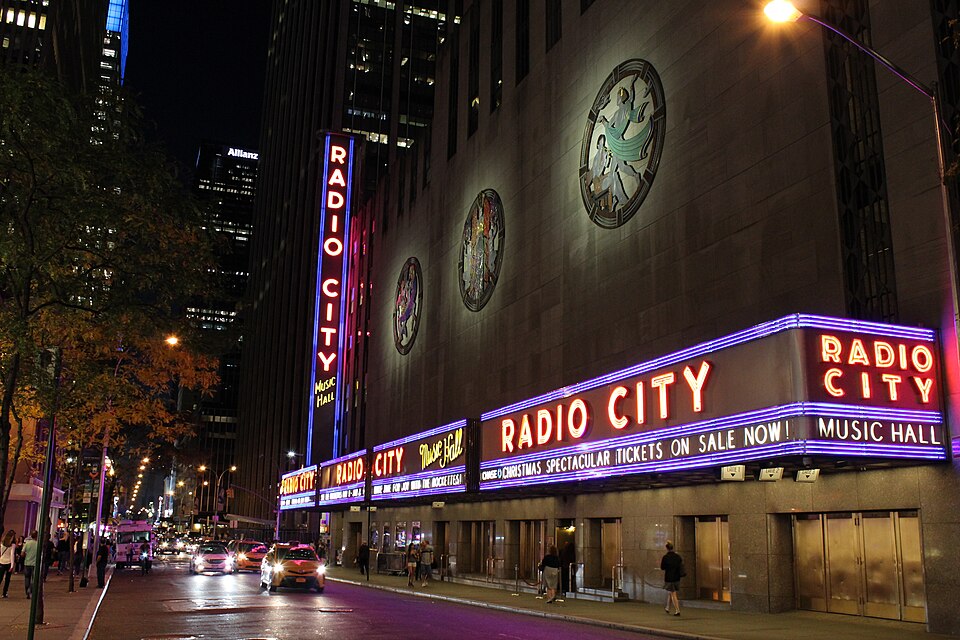
The orchestra at Radio City is not always the best place to be. Because it is a tall, deep room, seats at the back of the orchestra can feel removed from the stage, and looking up at a performer from a flat angle is not ideal. The first mezzanine — particularly center sections in the front rows — provides an elevated, full-picture view of the performer and the production design, and is often better value than rear orchestra tickets at similar or higher prices.
Second mezzanine center is a solid value tier for most shows. Third mezzanine is the furthest from the stage, but for a show you badly want to see, it remains a good room even from the top.
See the full Radio City Music Hall seating guide for detail on what makes this one of New York’s most distinctive concert venues.
Beacon Theatre
The Beacon is one of New York’s most beloved mid-size rooms — intimate by comparison to the arenas, with warm acoustics and sightlines that work from most positions. The loge, an elevated tier above and behind the orchestra, offers a slightly elevated perspective that many prefer to middle or rear orchestra. The Beacon is a room where there are few genuinely bad seats; the decisions are more about what kind of experience you want than about avoiding a poor section. See the Beacon Theatre seating guide for full venue details.
How the Type of Concert Changes the Best Seat
Seat strategy is not venue-only. The same section of the same building can be the right seat for one show and the wrong seat for another. Production design, the artist’s performance style, and the physical format of the show all affect where you should be.
Pop Spectacle Shows
The biggest pop tours — stadium-level productions with enormous LED surfaces, elaborate staging, and video content designed to fill an arena — are best experienced from enough distance to take in the production as a whole. In the first ten rows of the floor, you are underneath the spectacle rather than inside it. Lower bowl center, elevated enough to see both performer and production in full frame, is the preferred position. The screen content is often integral to the show’s storytelling, and you need distance to read it.
Rock Shows
Rock concerts in arenas reward floor proximity more than most other formats. The energy between a rock band and a floor crowd is part of the show, not incidental to it. Floor tickets for rock shows — particularly in the front half — deliver something that cannot be replicated from the bowl. Lower bowl center remains a very strong fallback, but the floor pull is real here in a way it is not for every genre.
Hip-Hop and R&B Shows
Production values vary enormously within hip-hop and R&B touring. Some productions are arena-scale spectacles; others are performer-focused with less elaborate staging. Evaluate the specific production before applying general logic: a heavily produced arena tour benefits from elevated-bowl thinking; a stripped-down performer-first show may reward floor proximity. The floor is often where crowd energy peaks regardless of production scale.
Singer-Songwriter and Vocal-Forward Performances
For intimate, vocal-heavy, or acoustic performances — where the performer is working at reduced staging — the closer-is-better logic applies most directly. You want to see the performer’s face, hear the natural dynamics of the voice, and feel the intimacy of what is happening. Front orchestra or lower bowl center close to the stage are the targets. At the Beacon, front orchestra at full price is usually worth it. The production is not the reason you are there; the performance is.
Orchestral and Cinematic Concert Experiences
Live score concerts, film concerts with orchestra, and classical-adjacent performances depend almost entirely on sound quality and sightline to the full ensemble. Elevated, center-oriented seating — where you can see both conductor and orchestra and where the hall’s acoustics reach you evenly — is the target. First mezzanine center at Radio City is typically the strongest position. Floor seating for orchestral performances can put you at an unflattering angle relative to the ensemble and below the room’s optimal projection zone.
General Admission Standing Shows
GA shows are less about section and more about logistics. Arriving early to position yourself well is the primary variable. In arenas with GA floor configurations, the front half of the floor is where you want to be. In smaller rooms, position relative to the stage and away from speaker stacks shapes the experience most. Know that GA floor at a large arena means standing for several hours; your physical comfort is a real factor in seat selection.
Best Concert Seats by What You’re Prioritizing
Near the soundboard position — mid-floor or mid-lower-bowl center. This is where the engineer optimizes the mix. Every venue, every show. Not glamorous; consistently excellent acoustically.
Lower bowl center, elevated enough to see the full stage picture. Close enough to read the stage; far enough to take in the complete production design simultaneously. This is where large-scale touring productions are designed to be seen.
Front half of the floor — GA if available. The crowd dynamic of a floor show at a rock or high-energy pop concert does not translate to the bowl in the same way. This is the one category where floor beats everything else.
Lower bowl center or front mezzanine center. Comfortable seats, strong sightlines, and the ability to share a moment during a slow passage without navigating a standing crowd.
Front upper level center at arenas, and front mezzanine center at theater venues like Radio City. Both consistently outperform their price relative to rear floor or premium side positions.
Any elevated seated section gives you a sightline over the people in front of you rather than through them. GA standing floors are the hardest configuration. Lower bowl or mezzanine elevation is a meaningful upgrade regardless of venue size.
Floor or low-level bowl seating. Main arena lower bowl and orchestra sections at Radio City keep you at or near stage level. Upper levels at arenas and upper mezzanines at large halls are steep enough that discomfort with heights is a real factor.
Lower bowl center — always. All the proximity benefits of being near the front of the building, none of the pushing, standing, and heat of a GA floor. For shows where the floor is general admission standing, lower bowl seated sections are the clear alternative that still puts you close to the action.
How to Buy Smarter Without Overpaying
Concert ticket pricing reflects demand and perceived prestige more than actual experience quality. That gap is worth understanding before you buy.
The floor premium is inconsistently applied. Front floor center at a rock show that rewards proximity is worth a premium. Rear floor at the same show, priced only slightly less because it carries the “floor” designation, is often worse than a lower bowl seat at meaningfully less cost. When comparing floor and lower bowl options, the question is not which is closer in absolute terms — it is which delivers the better combination of sightline, elevation, and sound for that specific show.
Side sections are the most consistently overpriced areas at arena and stadium shows. They carry the same tier pricing as center sections while delivering significantly worse sightlines. In large arenas, a section at a 45-degree angle from center puts you at a real disadvantage relative to the production’s orientation. The pricing rarely accounts for that accurately.
The front mezzanine at Radio City — particularly center rows — frequently outperforms orchestra tickets at similar or higher prices. Buyers undervalue elevation and sightline clarity; the pricing structure often does not fully reflect how strong the first mezzanine center position actually is at this venue.
For stadium shows, be honest about scale. Upper level at MetLife puts you at a genuine distance from the performance. That can still be worth it for the right artist — stadium-scale shows have an atmosphere that does not depend entirely on proximity. But pricing that distance accurately in your expectations will save real disappointment.
Common Mistakes — and How to Avoid Them
Buying rear floor at arena premium prices
The back half of the floor at a large arena is frequently the worst value in the building. You are far from the stage, at a flat angle, standing in a crowd, and paying for a “floor” designation that stops delivering at a certain distance. Lower bowl center is almost always a better seat at that price range or lower.
Not checking stage configuration before buying
Many tours configure their stages in ways that render specific sections partially obstructed or significantly disadvantaged. End-stage setups turn sections behind the stage into limited-view territory. 360-degree configurations make center floor less critical and give side sections relative value. Check the configuration before buying — this information is usually available from the venue before tickets go on sale.
Choosing aggressive side angles
In arenas and stadiums, sections past a certain angle from center are looking at the side of a production designed to face forward. Side upper level at a large arena for a production-heavy show is a meaningful sacrifice that buyers rarely price into their decision.
Misreading stadium scale
Stadium concerts are genuinely large events. Seats that look close on a seating map may be further from the stage than the entire length of an arena floor. Applying arena seating logic to a 75,000-person configuration produces misaligned expectations and disappointment.
Paying for section labels rather than actual positions
“Pit,” “floor,” “VIP,” and “premium” are marketing designations as much as physical descriptions. What matters is where a seat physically is, at what angle, at what elevation, and with what sightline to the stage. Read the section map; do not buy the label.
Assuming front row is the best seat in the building
For many productions, the front row is a genuinely disadvantaged position — you are looking up at the stage, the lighting rig is above and behind you, screens are too large to read from directly below, and the nearest speaker stack is not delivering the mix the engineer intended. Front row is excellent for certain kinds of shows. It is not the default best seat in the building.
Decision Framework — Where Should You Actually Sit?
Before committing, answer four questions: What kind of show is this? What is the stage configuration? What do you want from the night? What is the honest price-to-experience ratio for the sections you are comparing? Then:
Frequently Asked Questions
For most end-stage concert configurations, center lower bowl sections directly facing the stage deliver the best combination of sightline, sound, and elevation. Front center floor is also very strong for energy-first shows. Rear floor and side upper level sections are the most consistently overvalued. See the Madison Square Garden seating guide for venue-specific layout detail.
It depends on the show and where on the floor the seats are. Front half of the floor for a rock or high-energy performance where crowd proximity matters? Worth it. Rear floor at a production-heavy arena show where the sightline is flat and you are far from the stage? Usually not. Lower bowl center seats at a similar or lower price will outperform rear floor at most large venues for most show types.
For many show types, yes — specifically for production-heavy performances where seeing the full stage picture matters, and for buyers who want the best sound mix rather than the closest physical position. Front center lower bowl is where the production is designed to be seen and heard. It beats rear floor at almost every major NYC arena for most shows. It does not replace the front-of-floor experience at a show where crowd energy is the point.
Center lower bowl sections facing the stage directly are the strongest positions. Barclays is a slightly more compact building than MSG, which makes front upper level center a more viable option. Side sections carry the same angle disadvantages as at any arena. The Barclays Center seating guide covers the building’s specific configuration in detail.
Field sections closest to the stage deliver the most intimate experience. Lower level sections directly facing the stage are the strongest bowl positions. Beyond those sections, you are at significant distance and the screens become your primary view. Adjust expectations to the scale of a 75,000-person event. The MetLife Stadium seating guide has planning details for a full stadium night.
At smaller venues like Radio City or the Beacon Theatre, upper level seats are often a real and strong option — the rooms are compact enough that the upper level remains in a genuine relationship to the stage. At large arenas, upper level center-facing sections are viable for the right show with appropriate expectations. Upper level side sections at large arenas are the seats where the experience is most likely to fall short of what you paid.
Elevated seated sections — lower bowl, loge, or mezzanine — give you a sightline over the people in front of you rather than through them. GA standing floors are the most challenging configuration for shorter concert-goers. Any elevated seated position is a meaningful improvement over a flat floor regardless of venue size.
Front upper level center at large arenas, and front mezzanine center at theater venues like Radio City, are consistently the strongest value propositions. Both deliver good sightlines and real production view at prices below the lower bowl premium. Center lower bowl sections slightly off prime center but still directly facing the stage are also strong value against what floor sections at similar prices typically deliver.
The Short Version
Most concert seat regrets come from one of two places: paying for proximity without thinking about what that proximity actually delivers at that distance in that room, or choosing a section by label rather than by what it looks like in the building. Whether you’d phrase the search as concert best seats or best concert seats, the answer is the same: not always the most expensive one. Good concert seats are the ones where sightline, sound, elevation, and the kind of show you are seeing all converge. If you’re still asking yourself what the best place to sit at a concert actually is, that convergence is the real answer.
For venue-specific detail, the NYC concert venues guide covers the major rooms in full. For what is worth seeing right now, the concerts shows page is the right starting point.