

Getting to Broadway, Concerts & NYC Transportation Guide — Subway, Parking & Transit
Plan the route to Broadway, concerts and NYC games first — then use the matching Stage & Street event guide for current shows, schedules and ticket options.
New York’s transit system is the fastest and cheapest way to get to almost every major event venue in the city — Broadway theaters, Madison Square Garden, Radio City, and beyond are all built around the subway, not around parking lots. The one thing that trips people up isn’t distance; it’s not knowing which line, which stop, and how to time the trip so you’re not standing on a crowded platform after the show lets out. This guide covers the actual logistics — which subway station to use, when driving makes sense, and how to get home without the stress — for the venues where most people need it most.
This is part of Stage & Street’s NYC night out planning hub. For restaurant and hotel planning around the same trip, see the full hub.
Already Know the Event? Use Transportation as the Last Planning Step
Most readers land on a transportation page after they already have a show, concert or game in mind. That means the useful next step is not another generic transit article — it is the matching event guide. Stage & Street keeps those jobs separate: Transportation answers how to get there; Broadway, Concerts and Sports handle the event, schedule, seats and ticket decision.
Use the transit and parking guides to solve the trip into the Theater District, then move to current Broadway shows, last-minute tickets, rush/lottery or when-to-buy guidance.
Current Broadway Shows & Tickets →Last-Minute Broadway Tickets →
Broadway Rush Tickets →
Once the Penn Station route is clear, use the correct MSG event page instead of treating every Garden event as the same ticket search.
MSG Concerts & Concert Tickets →New York Knicks Tickets & Schedule →
Transportation gets you to Atlantic Ave–Barclays Center; the venue/team pages handle the actual event and ticket decision.
Barclays Center Concerts & Tickets →Brooklyn Nets Tickets & Schedule →
Use the stadium transportation pages for the route, then continue to the team page for game dates, matchup context and ticket intent.
Yankees Tickets & Schedule →Mets Tickets & Schedule →
Transit and parking are unusually important at MetLife; after solving that part, use the team or concert page for the event itself.
Giants Tickets & Schedule →Jets Tickets & Schedule →
MetLife Stadium Concert Guide →
Radio City, UBS Arena and other venue transportation pages should hand readers into the matching Concerts venue guide once the route question is solved.
Radio City Concert Guide →UBS Arena Concert Guide →
Getting to Times Square by Subway
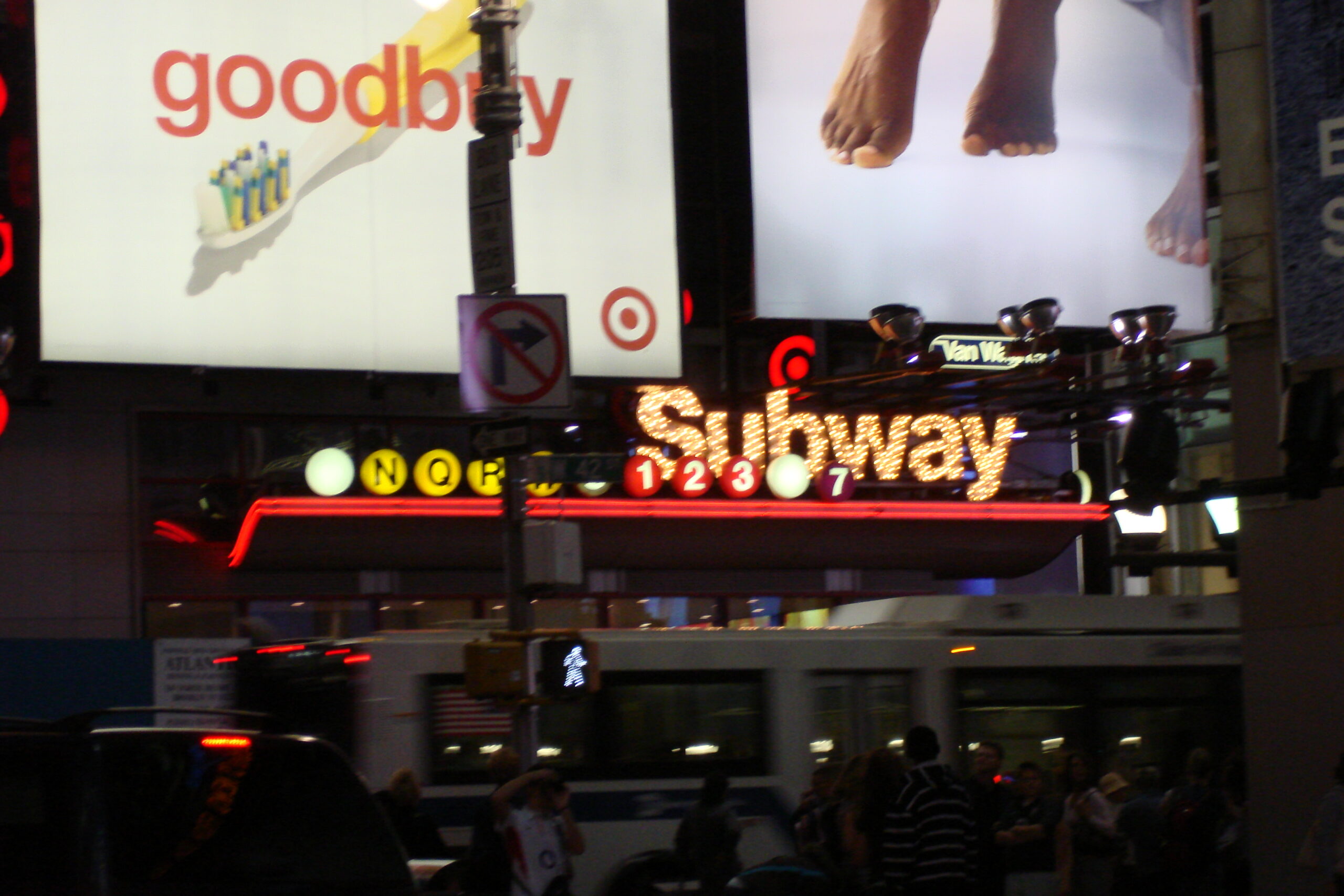
The Times Square 42nd Street station is the busiest subway station in the entire city, and for good reason — it’s the single best-connected stop for reaching Broadway theaters, Midtown hotels, and the surrounding entertainment district. If you’re trying to find the times square metro station or the times square station specifically, this is it: the complex sits directly under 42nd Street between 7th and 8th Avenues, and it connects an unusually large number of lines in one place.
The subway station times square serves the 1, 2, 3, 7, N, Q, R, W, and S (42nd Street Shuttle) trains — nine lines converging in one complex. This single station puts you within a short walk of the large majority of Broadway’s 41 theaters, since almost all of them sit within a ten-block radius of Times Square.
A short walk south connects to the 42nd Street–Bryant Park station, which adds the B, D, F, and M lines — useful if your specific theater sits closer to 6th Avenue than to Broadway itself. Checking your theater’s exact cross streets before you leave tells you which of the two stations is the shorter walk.
Getting off at the right stop for your theater
Not every Broadway theater is equally close to the main Times Square complex. Theaters clustered around 44th–46th Streets are a very short walk from the main station. Theaters further north, closer to 50th–53rd Street, are sometimes just as close to the 50th Street (C, E) or 49th Street (N, R, W) local stops — worth checking before you commit to the busier Times Square exit, especially at rush hour or right before curtain when the main station gets genuinely crowded.
Once you know your station and theater walk, the next decision is the show itself. See current Broadway shows and ticket guides, or use the last-minute Broadway ticket guide and rush-ticket guide if price or same-day availability is the bigger question.
Every Broadway theater except the Vivian Beaumont at Lincoln Center is within easy reach of the Times Square subway complex. For the Vivian Beaumont, take the 1 train to 66th Street–Lincoln Center instead — trying to walk there from Times Square is a genuinely long walk, not a quick one.
Getting to Madison Square Garden
Madison Square Garden sits directly above Penn Station, which makes it one of the single most transit-accessible venues in the country — no separate subway ride required if you’re already coming in on a commuter train. If you’re asking how to get to Madison Square Garden or how do I get to Madison Square Garden from elsewhere in the city, the short answer is almost always: take a train straight into Penn Station and you’re already there.
The A, C, E trains and the 1, 2, 3 trains both stop at 34th Street–Penn Station, which sits directly beneath MSG. Exit toward 7th or 8th Avenue and you’re at the arena entrance within a couple of minutes — no additional walk required. This is the same station used for how to get to Madison Square Garden from Penn Station specifically, since the arena and the station occupy the same building complex.
NJ Transit and LIRR trains from New Jersey and Long Island also arrive directly into Penn Station, which is why MSG is one of the easiest major venues in the country to reach without a car regardless of where you’re starting from in the region. Staying over? See hotels near Penn Station.
Transportation answers how to reach Penn Station. For the actual event, continue to the Madison Square Garden concert guide or the New York Knicks tickets and schedule page.
Parking near Madison Square Garden
Driving to MSG makes the most sense for visitors coming from New Jersey or suburban Long Island without an easy transit option, or for groups where the convenience of a car outweighs Midtown traffic. Madison square garden parking and parking near MSG both run through a cluster of garages in the immediate blocks around Penn Station — pre-booking through SpotHero or ParkWhiz consistently runs cheaper than arriving without a reservation, the same rule that applies at every major Manhattan venue. Parking close to Madison Square Garden fills up fast for sold-out events, so booking ahead matters more here than almost anywhere else in the city given the density of events MSG hosts.
For a full breakdown of specific garages, pricing, and pre-booking strategy, see the dedicated parking near Madison Square Garden guide.
Getting from the Airport to Manhattan
If you’re flying in for a show or a game, the airport transfer is usually the first logistics question — and the answer is different for each of the three major airports. Here’s the real breakdown for JFK, LaGuardia, and Newark, all geared toward getting to the Times Square and Midtown area where most events happen.
JFK is the only NYC airport with a flat taxi fare — a regulated $70 to any point in Manhattan, plus tolls and tip, so getting from JFK to Times Square by cab costs roughly the same as getting to any other Manhattan neighborhood. The AirTrain plus subway combination is the cheapest option at around $11 total, connecting to the A or E train at Howard Beach or Jamaica Station. The LIRR from Jamaica Station into Penn Station is the fastest ground option when timed well. Uber and Lyft are available but run on surge pricing rather than a flat fare, so cost varies more than a taxi’s does.
For a show with a fixed curtain time, build in real buffer — a cab ride from JFK to Times Square can take anywhere from 30 to 90 minutes depending on traffic, and JFK sits roughly 15–17 miles from Midtown.
LaGuardia is closer to Manhattan than JFK, but has no flat taxi rate — fares run on the meter, so cost depends on traffic and route. The M60 SBS bus connects LaGuardia to Manhattan and is the most budget-friendly public transit option, though it takes longer than a direct car ride. For event nights with a fixed start time, a taxi or rideshare is generally the more reliable choice from LaGuardia given the more limited transit connections compared to JFK.
From Newark, the AirTrain connects to Newark Liberty International Airport Station, where NJ Transit trains run directly into Penn Station — genuinely useful if your event is at Madison Square Garden or Broadway, both within walking distance of Penn Station on arrival. This combination is typically the fastest budget option from Newark. Taxis and rideshares are also available but, like LaGuardia, run on metered or surge pricing rather than a flat rate.
Between Transit Hubs — Penn Station & Grand Central to Times Square
If you’re arriving by commuter rail rather than flying in, the next question is usually the short hop from the station to the theater district. Both of Manhattan’s major rail terminals are closer to Times Square than they might seem on a map.
Penn Station to Times Square is a short trip either way — walkable in about ten minutes straight up 7th or 8th Avenue, or a quick ride on the 1, 2, 3, N, Q, R, or W trains if the weather or your schedule calls for it. If you’re arriving by NJ Transit, LIRR, or Amtrak into Penn Station for a Broadway show, walking is often just as fast as finding the right subway platform for one stop. If you’re spending the night, hotels near Penn Station keep the train, MSG and Broadway all within reach.
Grand Central Terminal to Times Square is a two-minute ride on the S shuttle train, which runs back and forth between the two stations continuously and is one of the simplest connections in the entire subway system. This is the route for anyone arriving by Metro-North into Grand Central and heading to a Broadway show or Midtown event. For an overnight, see hotels near Grand Central.
Getting to Other NYC Venues
Outside the Times Square and MSG corridor, most major NYC venues still have a clear best subway route — it just isn’t always as obvious as MSG’s direct Penn Station access.
B, D, F, M to 47–50th Streets–Rockefeller Center puts you directly across the street. One of the simplest subway trips of any major NYC venue. For current concerts and event planning, continue to the Radio City Music Hall concert guide.
1, 2, 3 to 72nd Street, then a short walk. B, C trains at 72nd and Central Park West are the other close option.
Atlantic Avenue–Barclays Center station sits directly beneath the arena, served by multiple subway lines plus nearby LIRR service. For the event itself, use the Barclays Center concert guide or Brooklyn Nets tickets and schedule.
4 and B/D trains to 161st Street–Yankee Stadium stop right at the ballpark gates — one of the most direct stadium subway connections in the city. For game dates and ticket intent, continue to the New York Yankees tickets and schedule page.
Driving & Parking — When It Actually Makes Sense
Transit wins on time and cost for most trips into Manhattan, but driving is the right call for some visitors — particularly those coming from further out in New Jersey or Long Island where a direct transit option doesn’t exist, or groups where the flexibility of a car outweighs the traffic.
SpotHero and ParkWhiz both list garage rates near major venues that are meaningfully cheaper than arriving without a reservation — often the difference between $35–$55 and $65–$80 for the same garage on the same night.
Both sit in the most transit-dense part of Manhattan. Unless you’re coming from an area with no direct train option, transit almost always beats driving on time, cost, and stress for these two specifically.
Yankee Stadium, Citi Field, and UBS Arena all have dedicated venue parking that can make driving genuinely competitive with transit, depending on where you’re starting from.
Featured Transportation Guides
Specific transit and parking guides by venue.
Know the Route Before You Leave
The single best thing you can do before any NYC event is confirm your exact subway route ahead of time — which line, which stop, which exit — rather than figuring it out once you’re already underground. For the vast majority of Broadway shows and Midtown venues, that means the Times Square subway complex. For Madison Square Garden, it’s Penn Station, and you’re already there the moment you arrive.
Get the route right and the rest of the night takes care of itself.
Plan the route around the curtain time, rail station, venue exit, parking garage, hotel base, and way home
NYC event transportation is not one choice. Broadway, MSG, Barclays, Yankee Stadium, Citi Field, Radio City, UBS Arena, MetLife, and smaller concert venues all solve differently. Use these guides to match the event to the subway line, commuter rail route, driving plan, parking strategy, hotel neighborhood, and post-show exit.
Getting to NYC Events
This page is the main transportation routing hub for Broadway, concerts, sports, subway, commuter rail, rideshare, driving, parking, hotel-base decisions, and the late-night way home.
You are hereGetting there is the deadline. Getting home is the trap.
The smartest NYC event plan solves both legs before the night starts — not while everyone else is opening the same rideshare app outside the venue.
How to Get to a Broadway Show
Subway, commuter rail, walking, rideshare, parking, and arrival timing for the Theater District and hard curtain times.
Plan Broadway transit → SubwaySubway to Broadway
Best subway stops, Theater District walk logic, Times Square alternatives, and how to avoid arriving flustered.
Choose subway stop → ParkingParking Near Broadway
When driving makes sense, where to book, why the closest garage can be a bad exit, and how to time arrival.
Plan Broadway parking → After ShowBest Way Home After a Show
The late-night layer: subway, rideshare, walking to hotels, commuter rail, garage exits, and waiting out the surge.
Plan the exit → Subway TipsNYC Subway Tips for Shows and Events
How to use the subway on event nights without overthinking it: apps, service changes, stations, transfers, and timing.
Use the subway smarter → ChoiceUber vs Subway for NYC Nights Out
When a car is worth it, when transit is faster, and how to avoid using rideshare as an expensive panic button.
Compare the choice → ConcertsHow to Get to NYC Concert Venues
The broad concert transit guide for MSG, Barclays, Radio City, Beacon, Terminal 5, Brooklyn rooms, stadiums, and Queens shows.
Plan concert transit → Concert ParkingParking Near NYC Concert Venues
When to drive, when to skip it, how to handle garages, stadium parking, rideshare zones, and post-show exits.
Plan concert parking → MSGHow to Get to Madison Square Garden
Penn Station, subway, LIRR, NJ Transit, Amtrak, rideshare, walking, and driving strategy for MSG nights.
Plan MSG route → MSG ParkingParking Near Madison Square Garden
Garage booking, Penn Station congestion, Midtown exit strategy, and when driving to MSG is worth the friction.
Plan MSG parking → BarclaysHow to Get to Barclays Center
Subway, LIRR, Atlantic Terminal, rideshare, driving, and Brooklyn arrival strategy for concerts and games.
Plan Barclays route → Brooklyn ParkingParking Near Barclays Center
When driving to Barclays works, garage tradeoffs, Atlantic Avenue traffic, and why transit is usually cleaner.
Plan Barclays parking → Radio CityHow to Get to Radio City Music Hall
Rockefeller Center subway access, Midtown walking routes, holiday crowd timing, and arrival strategy around 6th Avenue.
Plan Radio City route → Radio City ParkingParking Near Radio City Music Hall
Midtown garage strategy, holiday-season congestion, arrival buffers, and when subway or walking is smarter.
Plan Radio City parking → BeaconHow to Get to Beacon Theatre
Upper West Side subway, Broadway/Amsterdam arrival logic, rideshare, parking, and post-show neighborhood exits.
Plan Beacon route → Beacon ParkingParking Near Beacon Theatre
Upper West Side garage planning, alternate-side stress, street parking realism, and when not to drive.
Plan Beacon parking → Terminal 5How to Get to Terminal 5
Far West Side transit tradeoffs, rideshare timing, walking from Midtown West, and getting out after a standing-room show.
Plan Terminal 5 route → Terminal 5 ParkingParking Near Terminal 5
Whether to drive to the far West Side, how to think about garages, and when rideshare makes more sense.
Plan Terminal 5 parking → YankeesHow to Get to Yankee Stadium
4/B/D subway access, Metro-North, driving, parking, postgame crowd flow, and game-day arrival timing.
Plan Yankee Stadium route → Yankee ParkingParking Near Yankee Stadium
Official lots, garage strategy, postgame exits, whether driving is worth it, and how to avoid avoidable Bronx traffic.
Plan Yankee parking → Citi FieldHow to Get to Citi Field
7 train, LIRR, parking, rideshare, Flushing-area timing, and event-night planning for Mets games and concerts.
Plan Citi Field route → Citi ParkingParking Near Citi Field
Lot strategy, concert parking, subway-vs-driving tradeoffs, and how to think about the post-event exit.
Plan Citi parking → MetLifeHow to Get to MetLife Stadium
NJ Transit, driving, rideshare, Meadowlands timing, concert exits, football traffic, and city-vs-New Jersey routing.
Plan MetLife route → MetLife ParkingParking Near MetLife Stadium
When driving is the right move, stadium lot strategy, tailgate logic, and the honest post-event exit picture.
Plan MetLife parking → UBS ArenaHow to Get to UBS Arena
LIRR, driving, rideshare, Belmont Park-area timing, Islanders nights, concerts, and what actually works from NYC.
Plan UBS route → UBS ParkingParking Near UBS Arena
Lot selection, driving tradeoffs, LIRR comparison, and when parking is worth it for arena-first trips.
Plan UBS parking → HotelsNYC Hotels Hub
Hotel location is transportation strategy. Use this for Broadway weekends, concert nights, sports trips, and family stays.
Plan the stay → Stay StrategyWhere to Stay for Shows and Events
Choose a neighborhood based on your event mix: Broadway, MSG, Brooklyn, stadiums, Queens, concerts, sports, and rail access.
Choose hotel base → RestaurantsNYC Restaurants Hub
Dinner and transportation are connected. Pick the meal zone that still gets you to the venue without a sprint.
Plan pre-show food → TimingPre-Show Dining Guide
The timing layer for dinner before Broadway, concerts, games, comedy, family outings, and special nights out.
Time dinner right → NeighborhoodsNYC Neighborhoods Hub
Neighborhood choice changes everything: walkability, hotel base, restaurants, subway access, rideshare exits, and post-show ease.
Compare areas → Full NightNYC Night Out Hub
The larger planning hub for restaurants, hotels, transportation, parking, neighborhoods, Broadway, concerts, and sports.
Plan it all →