

Parking Near Citi Field — Concert Guide 2026
Should you drive to a Citi Field concert? Where to park, what’s changed this season, and how to decide whether the car makes the night easier or harder.
Parking near Citi Field for a concert is not the automatic choice it might feel like when you are planning from home. The lots exist, they are walkable to the gates, and for some visitors — particularly those coming from Long Island or New Jersey — driving is genuinely the cleanest option. But for many concertgoers, especially those traveling from within New York City, parking adds friction at both ends of the night without offering much in return. The decision deserves more thought than a quick Google Maps search.
In 2026, the calculus has also shifted. Metropolitan Park construction prep is actively underway on a portion of the parking lots west of the stadium, meaning available spaces are more limited than in previous seasons. The Mets have made pre-paid parking the only reliable way to guarantee a spot — drive-up may not always be available at all. If you are planning to drive, this changes the planning requirements significantly compared to past years.
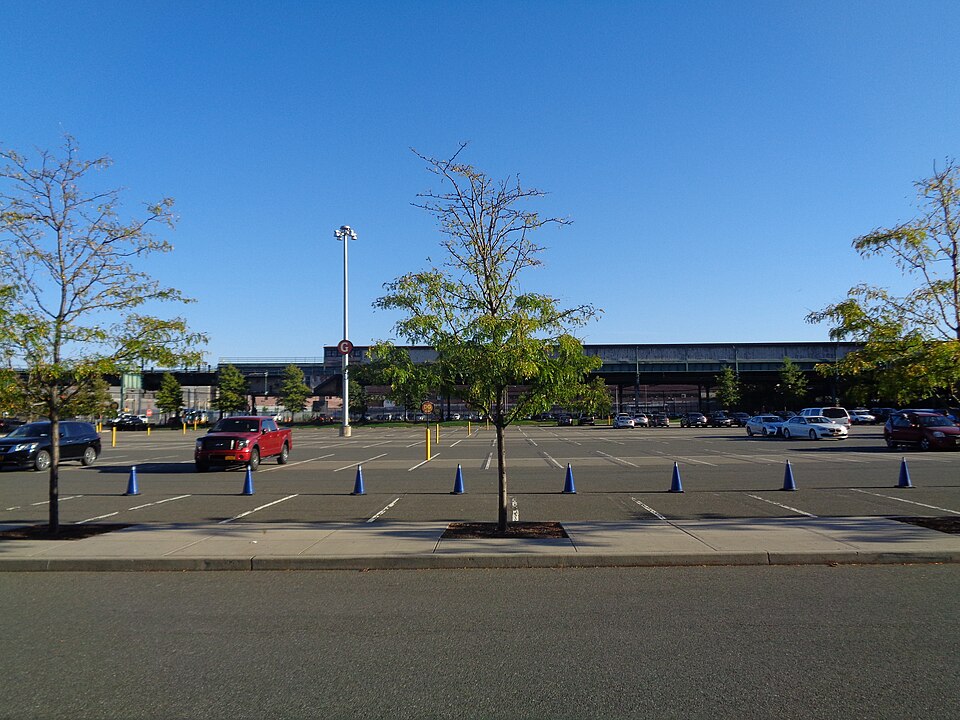
Southern parking lot at Citi Field before an event.
Construction preparation for the $8 billion Metropolitan Park casino and entertainment complex is actively underway on parking lots west of Citi Field. As a result, the Mets have confirmed that parking will be more limited overall this season, and drive-up parking on the day of an event may not always be available. Pre-paid parking at $40 (purchased through the official Mets site before midnight prior to the event) is the only way to guarantee a spot. Drive-up, where available, is $50. All parking is cashless — credit cards, debit cards, Apple Pay, and Google Pay only. If you plan to drive, pre-pay early. Verify lot availability for your specific concert at mlb.com/mets before your visit.
Should You Drive to a Citi Field Concert?
The honest answer is that driving to Citi Field makes genuine sense for a specific subset of visitors and creates unnecessary friction for everyone else. Working out which category you are in before you leave home is the most useful thing this page can help you do.
If reaching Citi Field by transit requires two or three connections, and your group has four or more people sharing the cost, driving often produces a simpler door-to-door experience at a competitive per-person cost — especially if you are coming from areas where the LIRR does not offer a direct connection. Visitors with mobility needs who want a direct route to accessible parking also have a clear case for driving. For everyone else, the calculation is tighter than it looks.
Who is better off skipping the car
Solo visitors and couples coming from Manhattan: the LIRR covers the trip in 19 minutes from Penn Station or Grand Central Madison and costs a fraction of parking plus the driving stress. Groups of two to four from anywhere in the five boroughs: the math rarely favors parking over transit once you add the $40 pre-pay fee plus the post-show lot exit time. Anyone staying at a hotel in Flushing or Long Island City: you are already on the 7 train corridor, and driving from your hotel to the stadium is a worse option than taking the subway one or two stops.
The most common mistake visitors make is treating parking as the default because it feels like the familiar, controllable option. At a Citi Field concert with 40,000 attendees, the parking lot exit is the thing that removes your sense of control entirely — you sit until traffic moves, and traffic moves when it moves. Knowing that upfront changes whether driving feels worth it for your particular night.
Parking Options at Citi Field
Citi Field’s parking is organized into lots within the fence line and additional remote lots outside it. In a normal season, those lots spread across the stadium’s full perimeter. In 2026, construction prep on the western lots has reduced the overall inventory, so the layout and availability will look different from what you may have seen in photos or prior visit writeups. Follow current signage and official guidance on the day rather than relying on older maps.
Multiple lots within and immediately adjacent to the fence line. Pre-paid spots at $40 are the only guaranteed option in 2026 — drive-up at $50 may not be available for all concerts. Lots open approximately one hour before stadium gates open. Preferred/closer lots are prioritized for season ticket holders; general admission lots are the standard option for concert visitors. Follow NYPD and venue signage for lot assignment on arrival.
Additional parking areas around the stadium perimeter, including the Southfield/Commuter Lot on Roosevelt Avenue, Stadium View East and West beneath the Whitestone Parkway overpass, and Marina lots to the north. These are used for general event parking when main lots are at capacity. Note that some remote lots may have reduced availability in 2026 as construction progresses. The Southfield Lot’s discounted commuter rate does not apply to major concerts — full event pricing applies.
More than 350 accessible parking spaces are available across Citi Field lots, primarily in Lots B and F with additional spaces in the Southfield Lot. Requires a valid accessible parking placard or plate along with either a pre-paid parking pass or day-of receipt. Accessible spaces are first-come, first-served and cannot be reserved in advance. For visitors using Access-A-Ride, drop-off and pickup is at the Bullpen Gate on Seaver Way.
Several nearby garages in Flushing — including structures at Flushing Commons, Flushing Plaza, and the SkyView mall — offer pre-bookable parking on event days. The Mets link to some of these on their transportation page, noting they do not control pricing or guarantee availability. These can be worth checking if official lots sell out, but build in extra walking time and verify the actual walking route before booking. A garage in downtown Flushing is a different walk than the stadium lot.
Tailgating is prohibited for concerts at Citi Field. The pre-game lot gathering culture that exists for Mets games does not apply to concert nights. Do not plan a pre-show lot setup — it is not permitted, and it will not happen.
Parking Strategy by Type of Concert Night
Coming from Long Island (west of Woodside)
The LIRR is the better answer for most Long Island visitors, full stop. The Port Washington Branch delivers you to Mets–Willets Point in 17–27 minutes depending on your starting station — faster, cheaper, and requiring no parking decision. Driving from Nassau or Suffolk adds expressway traffic, a $40+ parking cost, and a post-show lot exit to a trip that the train handles cleanly. The only Long Island case for driving is if you are a group of five or six where LIRR fares start to add up, you want to go directly from somewhere the LIRR does not serve, or someone in the group cannot use transit easily.
Coming from New Jersey
Driving is a more reasonable choice for New Jersey visitors than for most other origins. NJ Transit to Penn Station with an LIRR connection is the transit alternative, but that routing involves two systems and two tickets. Groups driving from New Jersey where the George Washington Bridge or Lincoln Tunnel approach makes sense geographically can use parking fairly efficiently — the pre-show approach on Northern Boulevard is straightforward, and they avoid the LIRR complication. Pre-pay parking is essential; do not plan to drive-up in 2026 without a confirmed spot.
Groups of four or more splitting costs
Four people sharing a $40 pre-paid parking pass pay $10 each — comparable to one LIRR fare. At that math, driving starts to look attractive purely on cost, especially if the group is coming from a single origin point without a convenient transit connection. The tradeoff remains the exit: four people in a car are still sitting in the same lot traffic as everyone else. If post-show timing is flexible and the group is comfortable waiting it out, driving can be the right call for larger groups.
Date night — two people from Manhattan or Queens
Two people from Manhattan should take the LIRR or 7 train, not drive. The per-person cost of a $40 parking pass is $20 each — plus driving stress, no drinks at the show, and a guaranteed post-show lot wait. The LIRR runs the trip in 19 minutes and lets both people enjoy the evening. Driving from a Queens hotel to Citi Field is similarly hard to justify when the 7 train covers it in five to twenty minutes depending on your neighborhood.
Visitors with accessibility needs
Driving to accessible parking at Citi Field is the clearest case for the car. More than 350 accessible spaces are distributed across the main lots, and the venue’s accessible gate infrastructure is designed for vehicles rather than transit. The LIRR Mets–Willets Point station is not accessible; the accessible 7 train platform requires specific routing. For visitors whose mobility needs make transit difficult, driving to the accessible lots and entering via the Bullpen Gate on Seaver Way is the right plan.
Visitors staying at a Flushing or Long Island City hotel
Do not drive from your hotel to the concert. If you are staying in Flushing, the 7 train gets you to the stadium in five minutes or you can walk in good weather. If you are in Long Island City, the 7 gets you there in twenty. Taking a car from either of those bases adds parking cost, lot-exit friction, and no meaningful convenience over the train. Leave the car at the hotel if you have one, or skip the rental car entirely for a Citi Field concert night.
Parking vs Transit vs Rideshare — The Honest Comparison
Every transport option to Citi Field has a moment where it is the right call and a moment where it becomes the wrong one. Understanding which is which for your specific night is the planning work this section handles.
When parking is the cleanest option
Driving makes the most practical sense when you are coming from a location where transit would require two or more transfers, when your group is large enough that the parking cost divides into a reasonable per-person figure, when someone in the group cannot use transit comfortably, or when you want to arrive and depart on your own schedule without coordinating around train timetables. For groups from New Jersey, western Nassau County, or other car-dependent origins, a pre-paid spot at $40 can produce a genuinely smooth experience — if you accept that the exit will take time.
When the 7 or LIRR is clearly better
Any origin point with a direct 7 train or LIRR connection strongly favors transit. From Times Square, the local 7 is 45 minutes and $3. From Penn Station or Grand Central, the LIRR is 19 minutes and roughly $6–8. Both options remove parking cost, post-show lot friction, and the designated-driver constraint entirely. For Manhattan-based visitors, solo travelers, and couples where both people want to enjoy the show without logistics overhead, transit wins on nearly every dimension except the feeling of independence that comes with a car.
When rideshare helps and when it complicates things
Pre-show rideshare from nearby Queens hotels or LaGuardia Airport is genuinely useful — the approach along Seaver Way and Roosevelt Avenue is manageable before the crowd arrives. Post-show rideshare is the problem: the pickup area fills quickly, surge pricing is predictable and significant, and wait times immediately after the show can be long. Rideshare works as a planned post-show option only if you are willing to wait 30–45 minutes after the final song before opening the app. Combining rideshare inbound with the 7 train homeward — letting both tools do what they are good at — is often the smartest hybrid for visitors who do not want to drive but also prefer not to navigate the post-show subway crowd immediately.
The Exit — Why This Is the Real Parking Decision
Everything about Citi Field parking is straightforward until the show ends. The approach is managed, the lots are signed, and getting in rarely takes more than twenty minutes even on a busy night. Getting out is the variable that catches drivers off guard every time, and it is the main reason transit is genuinely better for most visitors despite the apparent convenience of having a car.
When a major concert ends and 35,000 to 40,000 people head for the exits simultaneously, the surrounding road network absorbs that load gradually. The parking lot itself does not empty quickly — every row exits sequentially, and the roads outside funnel into a limited number of egress points. On a typical major concert night, drivers should expect to spend 30 to 60 minutes in the lot before they are moving meaningfully. That range is not a worst case — it is the normal range. The night an artist everyone wants to see headlines, it can be longer.
If you are driving and you care deeply about leaving quickly, you have two realistic options: leave 10–15 minutes before the show ends (skip the encore), or accept that you will be in the lot for a while and plan accordingly. Some drivers bring podcasts queued, or deliberately spend 45 minutes at a post-show food spot near the lot before attempting to leave. The visitors who are most frustrated after a Citi Field concert are the ones who expected to leave immediately after the final song and discovered that this is not how stadium parking works.
How this compares to the subway exit
The 7 train platform after a major concert is crowded — there is no pretending otherwise. Trains run frequently and the MTA provides additional service after events, but the platform fills and the first 15–20 minutes of post-show subway experience involve crowds. The meaningful difference is that the subway’s post-show friction is typically over in 30 minutes total: 10–15 minutes waiting on the platform, 20–45 minutes riding back depending on your destination. Parking’s post-show friction is typically 45–75 minutes in the lot before you are actually moving toward wherever you are going next — and then you still have the drive. For most visitors who are not coming from car-dependent origins, the subway exit is still faster overall despite feeling more crowded.
How Parking Affects Dinner and Hotel Decisions
Parking at Citi Field is not just a transportation question — it shapes what the whole evening looks like in ways that are worth thinking through before you commit to driving.
Driving changes where you can eat
If you are driving to the concert, your pre-show dinner needs to be somewhere with parking, which in the Citi Field area means either eating in Flushing (good options, but you are navigating Queens parking before navigating stadium parking) or eating somewhere en route from your origin. Visitors who take transit have access to a much wider set of dinner options — Flushing’s restaurant corridor is walkable from the stadium, and restaurants near the 7 line in Jackson Heights or Woodside are easy stops on the way in. For a full picture of dining options near the venue, the restaurants near Citi Field guide covers the practical pre-show choices.
Driving changes where it makes sense to stay
If you are staying at a hotel in Flushing or Long Island City for the concert, do not rent a car or drive to the show. Those hotel bases are specifically positioned for easy 7 train access to the venue — a car adds nothing. Driving to a Citi Field concert only makes sense for visitors whose hotel base is farther away and whose transportation situation genuinely benefits from the car. See the hotels near Citi Field guide for a full breakdown of which bases pair best with which transport strategies.
Parking removes the drinking decision from the equation — in one direction
If you drive, someone in your group is the designated driver, which means someone is not drinking at a major concert. That is a real trade. For some groups it is obvious and easy; for others it matters more than they admit when planning. It is worth naming explicitly before deciding to drive.
Common Parking Mistakes for Citi Field Concerts
Assuming drive-up parking will be available in 2026
In past years, showing up without a pre-paid pass and paying $50 at the gate was an option. In 2026, the Mets have stated clearly that drive-up parking may not always be available due to reduced lot capacity from Metropolitan Park construction. If you plan to drive, purchase a pre-paid pass at mlb.com/mets before midnight on the day before the event. Do not assume you can arrive and figure it out.
Not accounting for the lot exit when deciding whether to drive
The single most common parking mistake at Citi Field is making the decision to drive based on the ease of the trip in and ignoring what the trip out looks like. The exit takes time — sometimes a lot of it. If you have an early morning the next day, a flight, or a hard deadline, driving to a major concert at Citi Field is a meaningful risk. Factor the exit into the plan, not just the arrival.
Arriving without a cashless payment method
Citi Field parking is entirely cashless. No cash is accepted at any gate. If you arrive with cash only and have not pre-paid, you will be directed to temporarily park in Lot G to use the on-site ATM before re-entering a paid lot. This is not a crisis, but it adds time and inconvenience on a night when you want neither. Have a card or mobile payment ready before you approach the booth.
Driving from a Flushing or Long Island City hotel base
If your hotel is in Flushing or LIC, the 7 train covers the trip in five to twenty minutes. Taking a car from those bases adds $40 in parking, lot-exit time, and no meaningful convenience. The most common version of this mistake involves visitors who rented a car for the broader trip and default to driving everything without thinking about which legs actually benefit from the car.
Booking a third-party lot without verifying the walking route
Third-party parking at nearby Flushing garages can be useful when official lots are sold out, but the walking distance from a garage in central Flushing to the Citi Field gates is real — typically 15–20 minutes on foot depending on the garage. That is fine if you know it going in. It is frustrating if you booked the garage assuming it was similar to on-site parking and arrive to find a longer walk than expected. Always check the actual walking route from any third-party lot before booking.
Frequently Asked Questions
The official pre-paid parking rate is $40 per car, purchased in advance through the Mets website. Drive-up parking, where available, is $50. Oversized vehicles run $80 to $100 or more depending on the event. In 2026, drive-up availability is not guaranteed due to reduced lot capacity from Metropolitan Park construction — pre-paying is the only reliable way to secure a spot. Rates may be higher for premium or sold-out events. Always verify current pricing at mlb.com/mets for your specific concert date.
Official parking is available in the main lots surrounding Citi Field, plus remote lots including Southfield, Stadium View East and West, and Marina areas. In 2026, some western lots are reduced or unavailable due to Metropolitan Park construction. Follow NYPD and venue signage on arrival for current lot assignments. Pre-paid passes must be purchased through mlb.com/mets by midnight the night before the event — purchasing in advance is the safest approach this season. Nearby Flushing garages can be booked through third-party platforms but involve a 15–20 minute walk to the gates.
It depends on where you are coming from and how you weigh the post-show exit. For groups coming from Long Island or New Jersey where transit connections are complex, driving can be the simplest option. For visitors from Manhattan, Queens, or Brooklyn with straightforward transit access, the LIRR or 7 train is almost always faster and less stressful than driving, especially in 2026 when reduced lot capacity makes pre-paid passes essential. The post-show lot exit — typically 30 to 60 minutes on a major concert night — is the main practical reason transit beats driving for many visitors.
No. All Citi Field parking is cashless — only credit cards, debit cards, Mets Gift Cards, Apple Pay, and Google Pay are accepted at the gates. If you arrive with cash only and have not pre-paid, you will be directed to Lot G to use the on-site reverse ATM to load a prepaid card, which you can then use to pay for parking. This works but adds time. Have a payment method ready before arriving.
Yes — Citi Field has more than 350 accessible parking spaces across its lots, primarily in Lots B and F with additional spaces in the Southfield Lot. Accessible parking requires a valid disability placard or plate plus either a pre-paid pass or same-day receipt. Spaces are first-come, first-served and cannot be reserved in advance. Access-A-Ride pickup and drop-off is at the Bullpen Gate on Seaver Way. Confirm current accessible lot availability and entrance procedures for your specific event with the venue before attending.
No. Tailgating is prohibited at Citi Field concerts. This is a firm rule that applies across all lots for concert events — unlike some Mets game days where select lots permit it under strict conditions, concert nights do not allow it at all. Do not plan a pre-show lot setup.
On a typical major concert night, plan for 30 to 60 minutes from when the show ends to when you are moving on the road with normal traffic. The surrounding road network absorbs the post-show load gradually, and lots empty sequentially. If leaving quickly matters, your options are leaving slightly early (before the final song), parking in a lot with better egress positioning, or simply waiting 45–60 minutes after the show at a nearby food or drink spot before returning to your car — by which point traffic is usually largely cleared.
Make the Parking Decision That Fits the Night
Parking near Citi Field for a concert is a genuine option for the right visitor in the right situation — but it is not the default smart move for everyone who has a car. In 2026, reduced lot availability due to Metropolitan Park construction makes advance planning more important than ever. Pre-pay early, have a cashless payment method ready, and go in with a realistic picture of what the post-show exit looks like.
If driving is right for your night, the logistics are straightforward once you have a confirmed spot. If it is not — if you have transit access, a nearby hotel, or a group small enough that parking economics do not favor the car — the 7 train and LIRR cover the trip cleanly, and the evening is simpler without the parking overhead.
For the full picture on getting to and from Citi Field across all options, see the Citi Field concert transportation guide. For the rest of the planning cluster — dining, hotels, and the neighborhood — the links below have you covered.
Make Parking a Strategy, Not a Surprise
Citi Field parking can be the right move for Long Island, New Jersey, larger groups, and accessibility needs — but in 2026 it demands more planning. Use these guides to compare the car against the 7 train and LIRR, pre-pay before lot capacity becomes the problem, plan dinner and hotels around Queens, and avoid letting the post-show exit define the night.
How to Get to Citi Field
Before committing to the car, compare the full route: 7 train, LIRR, rideshare, Flushing hotel stays, Long Island group trips, and post-show return strategy.
Open Transit Guide Build the Queens NightRestaurants Near Citi Field
If you drive, dinner needs to fit the car plan. If you take transit, Flushing and the 7 train corridor become much easier pre-show options.
Plan Food NearbyCore Citi Field Concert Planning
Parking · Transit · VenueHow to Get to Citi Field
7 train, LIRR, rideshare, airport arrivals, hotel bases, and the honest comparison against driving.
Citi Field Concert Venue Guide
Use the main concert venue guide for stadium layout, entrances, Queens context, and event-night feel.
Citi Field Seating Guide
Pair arrival and parking strategy with floor, lower bowl, upper deck, stage setup, and sightline decisions.
Parking Near NYC Concert Venues
Compare Citi Field parking with MSG, Barclays, Radio City, MetLife, Yankee Stadium, and other concert venues.
NYC Transportation Guides
Subway, LIRR, parking, rideshare, walking, commuter rail, and late-night return planning across NYC events.
Citi Field Area Guide
Use the area guide for Flushing, Willets Point, Roosevelt Avenue, hotels, food, and Queens game-night geography.
Build the Queens Night Around the Route
Food · Hotels · NeighborhoodRestaurants Near Citi Field
Flushing food, Queens pre-show options, post-show bite strategy, and when dinner works better with transit than parking.
Hotels Near Citi Field
Flushing, Long Island City, airport-area hotels, and why nearby stays usually make driving to the stadium unnecessary.
Citi Field Neighborhood Guide
Understand the surrounding Queens area, train stations, lot geography, Flushing access, and post-event flow.
Choose the Right Parking Decision
Drive · Transit · ExitConstruction Parking Update
Metropolitan Park construction prep has reduced parking inventory, making pre-paid parking more important this season.
Citi Field Parking Options
Main lots, remote lots, accessible parking, overflow lots, third-party garages, and cashless payment rules.
Best Plan by Concertgoer Type
Long Island, New Jersey, larger groups, date nights, accessible needs, Flushing hotels, and LIC hotel bases.
Parking vs Transit vs Rideshare
When driving wins, when the 7/LIRR wins, and when rideshare helps before the show but hurts after it.
The Post-Show Exit Problem
The real parking decision is not arrival. It is whether you are comfortable waiting 30–60 minutes to leave.
Common Parking Mistakes
Drive-up assumptions, cashless issues, third-party lot walks, hotel-base mistakes, and ignoring the exit.
Baseball & Mets Planning Crossover
Mets · Baseball · QueensNYC Baseball Guide
Use the baseball hub for Yankees, Mets, Subway Series, first-time visitor, family, and tourist planning.
New York Mets Guide
Game-day planning, Citi Field context, Queens routes, family tips, tourist planning, and Mets night-out logic.
Restaurants Near NYC Baseball Venues
Compare food planning around Citi Field and Yankee Stadium when the night is more baseball than concert.
Concert Ticket & Venue Add-Ons
Tickets · Timing · VenuesNYC Concerts Hub
Concert planning, venue guides, date-night picks, family shows, ticket timing, and seating resources.
When to Buy Concert Tickets
For high-demand Citi Field concerts, solve ticket timing and parking timing together before lots tighten up.
Last-Minute Concert Tickets
If tickets come together late, check parking immediately — drive-up is the riskiest version in 2026.