

NYC Uber vs Taxi: When to Use Rideshare, Yellow Cabs or Something Else
Uber and Lyft are useful in New York, but yellow taxis still win in plenty of real situations — especially in Manhattan, hotel zones, airports, and event-heavy areas. This NYC Uber vs taxi guide compares cost, speed, taxi rates, airport rides, post-show pickups, and the moments when subway or walking beats both.
Uber vs taxi in New York is not a loyalty test. It is a location and timing problem. A yellow cab may be the fastest move on Sixth Avenue after dinner. Uber may be better from a Brooklyn restaurant where taxis are scarce. A taxi may beat rideshare after Broadway if you walk to the right avenue. Uber may beat a taxi if you need a specific address in Queens. And after a concert, the best choice may be neither until you move away from the venue crowd.
This guide skips the abstract comparison and focuses on the real situations New Yorkers and visitors actually face — shows, concerts, airports, rain, late nights, families, and the moments when walking or the subway beats both. If you are comparing Uber in New York City with a yellow cab, the useful questions are simple: what will it cost right now, how quickly can you actually get in the vehicle, and is surface traffic going to make both options worse than transit?
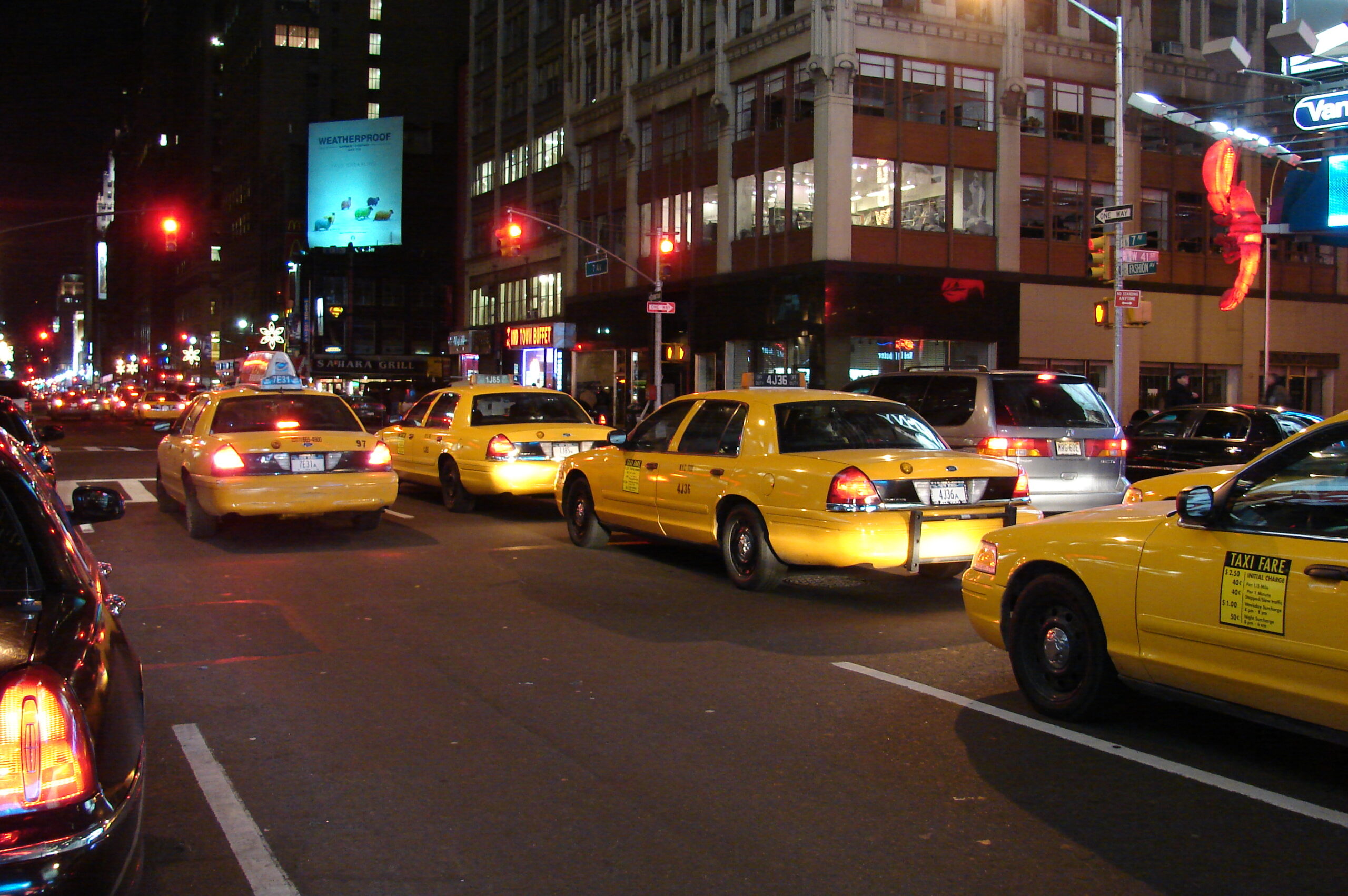
Quick Answer: Uber or Taxi in NYC?
There’s no permanent winner. The right choice depends on the block you’re standing on, the direction you’re going, the crowd around you, the weather, and whether the subway would beat both. Here’s the practical breakdown:
🚕 Yellow Taxi Usually Wins When…
- You’re in Manhattan and see available cabs on the avenue
- Uber/Lyft is surging after a show or event
- You’re leaving a hotel, restaurant, or theater on a busy Midtown street
- You want to get moving immediately — no app wait
- You’re at an official airport taxi line
- Pickup at the venue entrance is too chaotic for rideshare
- Short or medium-distance Manhattan trip
📱 Uber/Lyft Usually Wins When…
- You cannot find a yellow cab
- You’re in Brooklyn, Queens, the Bronx, or Staten Island
- You need a precise address pickup
- You want upfront pricing before committing
- You need a larger vehicle (group, luggage)
- Taxis are scarce in a quieter area or outer neighborhood
- You want app-based driver tracking and details
🚇 Neither May Be Best When…
- The subway route is direct and traffic is bad
- You’re only going a few walkable blocks
- Rideshare is surging and you’re in an event crowd
- Traffic is gridlocked and a train is faster
- Walking to a better pickup point takes two minutes
- Penn Station transit (from MSG) is the smarter move
The Stage & Street Rule
In NYC, don’t choose Uber or taxi by habit. Choose by the block you’re standing on, the direction you’re going, the crowd around you, the weather, and whether the subway would beat both. In many Midtown situations, a yellow cab you can enter immediately beats a rideshare eight minutes away.
Which Is Cheaper: Uber or Taxi in NYC?
There’s no permanent answer, and anyone who gives you one is oversimplifying. Yellow taxi fares in NYC are regulated by the NYC Taxi & Limousine Commission — the meter rate, surcharges, and the process are set. Uber and Lyft prices vary by demand, time of day, traffic, surge, and trip length, which means they can be cheaper or significantly more expensive depending on the moment.
NYC taxi rates: what a yellow cab actually charges
For a standard NYC yellow-taxi street hail, the meter starts at $3.00 and then adds 70 cents per one-fifth mile when moving above 12 mph, or per 60 seconds in slow traffic or while stopped. Current TLC rules also include applicable surcharges such as the $1 overnight surcharge from 8pm to 6am, the $2.50 weekday rush-hour surcharge from 4pm to 8pm, the 50-cent MTA state surcharge, the $1 improvement surcharge, congestion-related charges in parts of Manhattan, plus tolls and tip where applicable.
If you are checking a NYC taxi fare calculator against an Uber or Lyft estimate, treat the taxi number as an estimate rather than a guaranteed total: slow traffic adds meter time, while tolls, surcharges, and tip can change the final amount. The useful comparison is the full taxi cost versus the app’s current upfront quote — not just the advertised base price.
When taxis are cheaper
After Broadway shows, concerts, big events, rain, and holidays, rideshare demand can spike and app prices can rise. A standard street-hailed yellow cab at those moments can be meaningfully cheaper because its regulated meter does not use app-style surge pricing, although slow traffic and normal taxi surcharges still affect the total. For short to medium-distance Midtown trips during normal demand, taxis can be very competitive.
When Uber/Lyft can be cheaper
During non-surge conditions, app prices for certain routes — longer outer-borough trips, less efficient metered routes — can come in lower than a taxi. The upfront estimate lets you know before committing, which has real value. But this advantage disappears during surge.
The hidden costs that matter
Both options carry additional charges beyond the base fare: tolls, tip, congestion-related surcharges, airport fees, waiting time, and in some cases per-trip fees regulated by the city. Always check the full price — including tip — before deciding. For airport trips specifically, official taxi flat rates (where they exist) can simplify the math significantly. Verify current TLC fare rules and airport fee structures through official NYC sources before your trip, as these details change.
Which Is Faster: Uber or Taxi in NYC?
Speed is not just driving time. The real comparison is the full door-to-door experience: wait time, pickup friction, driver access to the curb, traffic, route, and drop-off ease. A taxi you can enter right now almost always beats a rideshare eight minutes away and counting.
The useful mental model is: Total trip time = wait time + pickup confusion + traffic + drop-off. In Manhattan, traffic affects taxis and rideshare equally. The difference is usually in the wait and the pickup — and that’s where knowing your situation matters.
Broadway Exit (10:45pm)
Rideshare pins are inaccurate in the crowd. Drivers can’t reach the theater door easily. If you walk to 8th or 7th Avenue first, a taxi you can hail immediately may board faster than a rideshare you wait 10 minutes for.
Hotel Taxi Line
Major Midtown hotels have dedicated taxi lines with doormen assisting. A taxi from a hotel queue is often the fastest, clearest, and least frictional option available — no app, no pin, no surge.
Brooklyn Restaurant, Midnight
Yellow taxis are scarcer in many Brooklyn neighborhoods late at night. Uber/Lyft with a specific address pickup and tracked driver arrival is usually more reliable than hoping a cab passes.
Midtown to Uptown, Bad Traffic
Traffic gridlock in Midtown and Times Square after shows can make car trips genuinely slow. A direct 1/2/3 or N/Q/R subway run may be faster than sitting in a taxi or rideshare for 25 minutes.
Midtown Avenue After Dinner
Check the app price while scanning for available taxis on the avenue. If a cab is there and the price is similar, take the taxi. If Uber/Lyft is significantly cheaper or no cabs are visible, use the app.
Queens or Staten Island Destination
Yellow taxis are allowed to take passengers anywhere in New York City, but street-hail availability is much thinner in many outer-borough neighborhoods than in Midtown. Uber/Lyft can therefore be easier to summon for these routes, with a precise pickup point, driver tracking, and an upfront price before you commit.
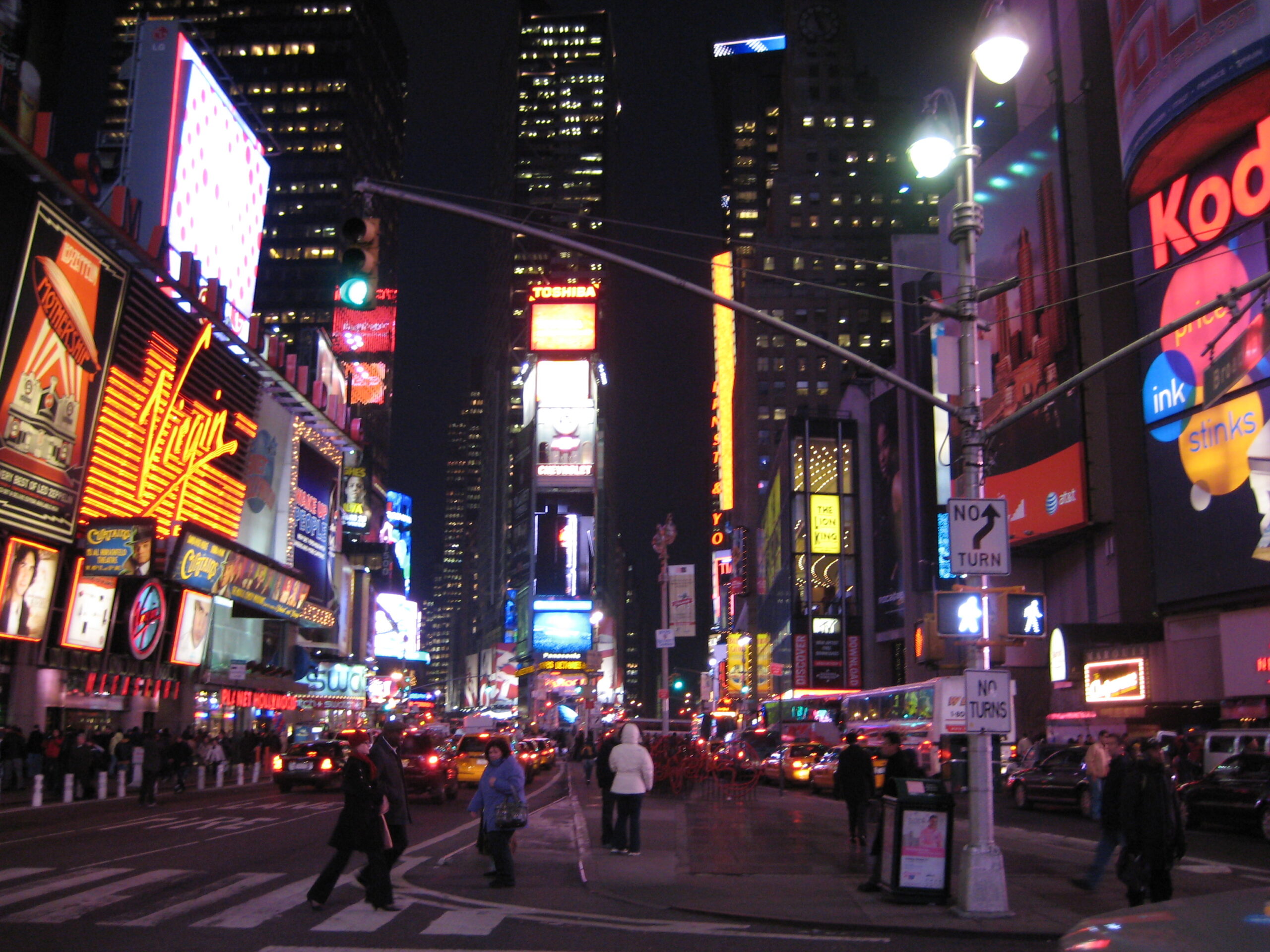
Uber vs Taxi After a Broadway Show
Broadway shows let out between 10:30pm and 11:00pm for evening performances, which puts hundreds or thousands of audience members on the same blocks simultaneously. Times Square pedestrian traffic is heavy. One-way street configurations, police-managed event traffic, and venue curb restrictions can make ride logistics genuinely complicated at this hour.
The most consistent advice: do not request rideshare from the theater door if the block is packed, and do not try to hail a taxi from the most crowded sidewalk. Walk first. The situation improves dramatically two to four blocks away from the theater exit crowd. Sixth Avenue, Eighth Avenue, and the numbered streets one or two blocks from the theater are all better options than the theater’s front door.
After Broadway: situation-by-situation
Hotel near Times Square or Midtown: Walk. A 10–15 minute walk on well-lit avenues is often faster than waiting for any car at this hour. See hotels near Times Square and hotels near Broadway.
Subway route that’s simple and direct: The 1/2/3, A/C/E, and N/Q/R/W all access Times Square and are active after shows. For Manhattan destinations on a direct line, the subway often beats both car options on speed and cost.
Outer borough or Brooklyn destination: Rideshare away from the theater block. Walk 2–3 blocks first, then request.
Tired family with kids: A car is reasonable. Walk to a hotel taxi line or a side-street rideshare pickup rather than fighting the main crowd. See Broadway with kids.
Post-show restaurant plans: Consider eating first and letting the crowd clear. A 15-minute restaurant stop often changes the entire car situation. See best post-show restaurants NYC.
Also see: how to get to a Broadway show · how to get home late night NYC
Uber vs Taxi After Concerts and Big Events
Concert exits have the same crowd-at-the-door problem as Broadway, often amplified. The crowd may be larger, the venue may be in a less taxi-dense area, and the rideshare demand spike at the moment everyone exits simultaneously can be extreme.
Radio City / Rockefeller Center
Taxis can work on 6th or 7th Avenue if you move away from the Radio City exit crowd. Subway (B/D/F/M at 47th–50th St Rockefeller Center) is often the fastest option for many routes. For hotel returns in Midtown: walking may beat everything. See: Radio City guide · restaurants near Rockefeller Center
Madison Square Garden
Penn Station is right there — the 1/2/3 and A/C/E subway lines plus LIRR, NJ Transit, and Amtrak serve the complex; B/D/F/M and N/Q/R/W are nearby at 34 St–Herald Sq. For most destinations, transit can beat a car after MSG. For rideshare: walk east or west before requesting. For taxis: use the same avenue strategy. The curb directly outside MSG after a major event is not where you want to solve this problem. See: MSG guide
Barclays Center
Multiple subway lines converge here. For most returns to Manhattan, the 2/3 or B/D is the simplest move. Taxis are less reliable in this area. For rideshare: walk one block from the arena before requesting — the pickup situation away from the exits is meaningfully better. See: Barclays Center guide
Forest Hills Stadium
Queens residential neighborhood — taxis are not reliably available here after concerts. LIRR is the cleanest option if you planned ahead. For rideshare: walk a block from the stadium before requesting. Know the train schedule before the show. See: Forest Hills Stadium guide
Stadium Venues (MetLife, Yankee, Citi Field, UBS)
Stadium exits are large-scale crowd problems. Rideshare pickup directly outside is often slow and expensive. Taxis at stadiums may not be practical. Official transit — the 4 train from Yankee Stadium, the 7 from Citi Field, LIRR from UBS Arena, NJ Transit from MetLife — is the most reliable non-driving option when planned in advance.
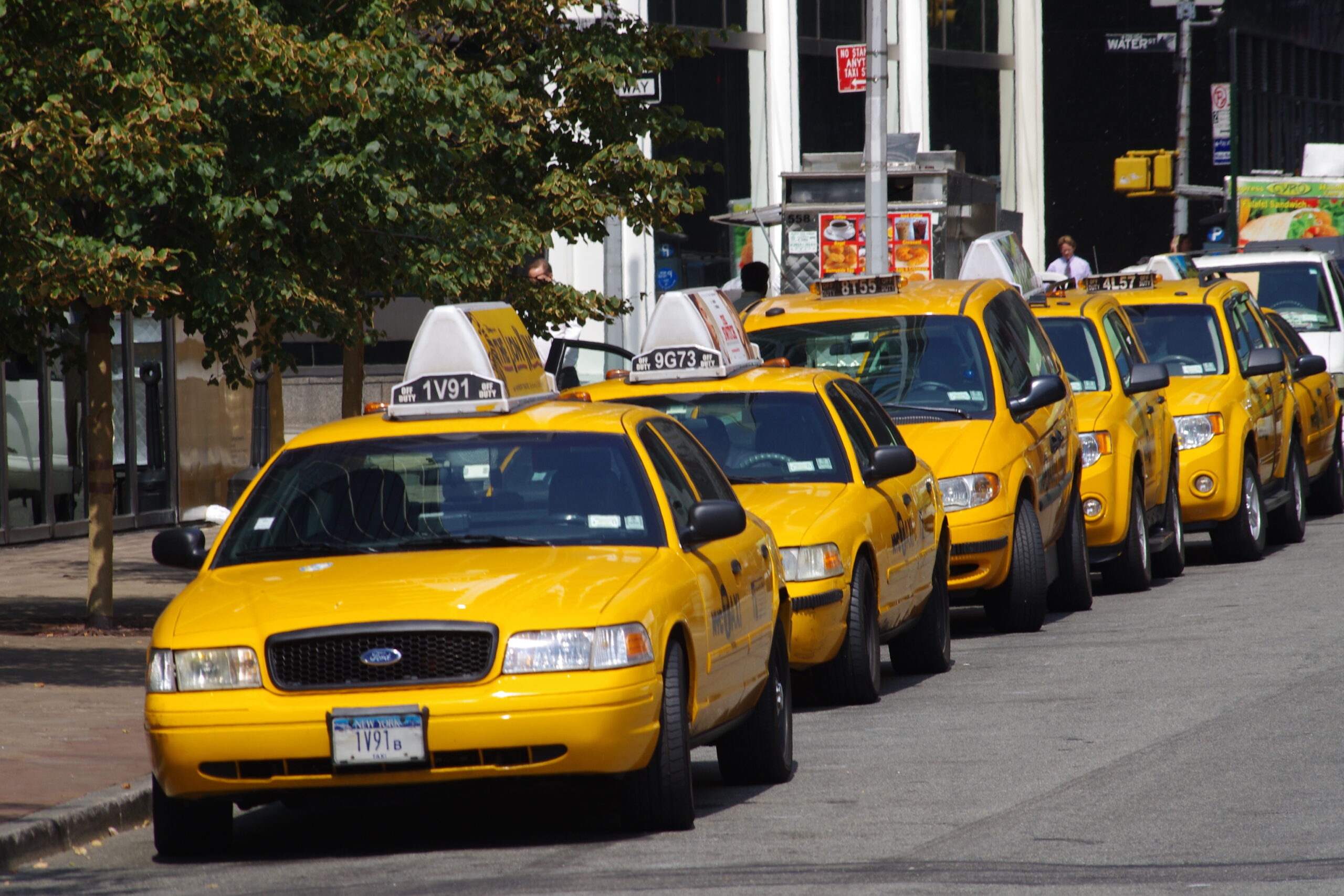
Uber vs Taxi From NYC Airports: JFK, LaGuardia & Newark
Airport transportation in New York is a different problem from in-city rides. The three airports — JFK, LaGuardia, and Newark — each have their own taxi fare rules, rideshare pickup areas, and transit options. Generalizing across them is how people end up standing in the wrong place for 20 minutes.
JFK Airport: Uber From JFK to NYC vs Yellow Taxi
For travelers comparing Uber from JFK to NYC with a yellow taxi, Manhattan has a useful benchmark: the current TLC-regulated yellow-taxi fare between JFK and Manhattan is $70 before applicable surcharges, tolls, and tip. Trips between JFK and other NYC boroughs use the standard metered fare. Uber and Lyft use app-based upfront pricing that varies with destination, traffic, and demand, so check the live quote when you land rather than assuming rideshare will be cheaper.
The official JFK taxi line is staffed and straightforward. Ride-app pickups use designated areas that can change during airport construction, so follow current airport signs and your app rather than relying on an old pickup location. Do not accept rides from people soliciting passengers inside the terminal or on the curb.
LaGuardia Airport
LaGuardia has both official taxi stands and designated ride-app pickup areas. Yellow-taxi trips use the standard city meter plus the current LaGuardia surcharge and applicable fees, while Uber and Lyft use live app pricing. LaGuardia does not have a direct rail connection; public-transit trips use MTA buses that connect to the subway, LIRR, or Metro-North. For Midtown hotels, the official taxi line is simple. For a specific outer-borough destination, rideshare may be easier to coordinate.
Newark Airport (EWR)
Newark is in New Jersey, so its ground-transport rules differ from JFK and LaGuardia. Licensed taxis and Uber/Lyft are available at EWR, with official airport pickup zones and fees. For travelers heading to Manhattan, the AirTrain connection to the Newark Liberty International Airport Train Station plus NJ Transit is often worth comparing with any car option. Construction can affect AirTrain-to-rail connections in 2026, so check Newark Airport’s current service alert before relying on the rail route.
Uber vs Taxi Late at Night in NYC
Late-night ride availability in NYC is generally good in Manhattan and more variable in outer boroughs. Yellow cabs are active in Midtown, Times Square, Chelsea, and along major avenues late at night. In quieter neighborhoods and outer boroughs, rideshare tends to be more reliable because a taxi may simply not pass.
For solo travelers, choose well-lit pickup locations — a hotel entrance, a restaurant exit, a busy corner — rather than standing alone in a side street waiting for a car. For groups, rideshare may allow everyone to travel together in one vehicle rather than splitting across multiple taxis. For destinations requiring a precise address in an outer borough, rideshare wins late at night by a wide margin. See the full guide: how to get home late at night in NYC.
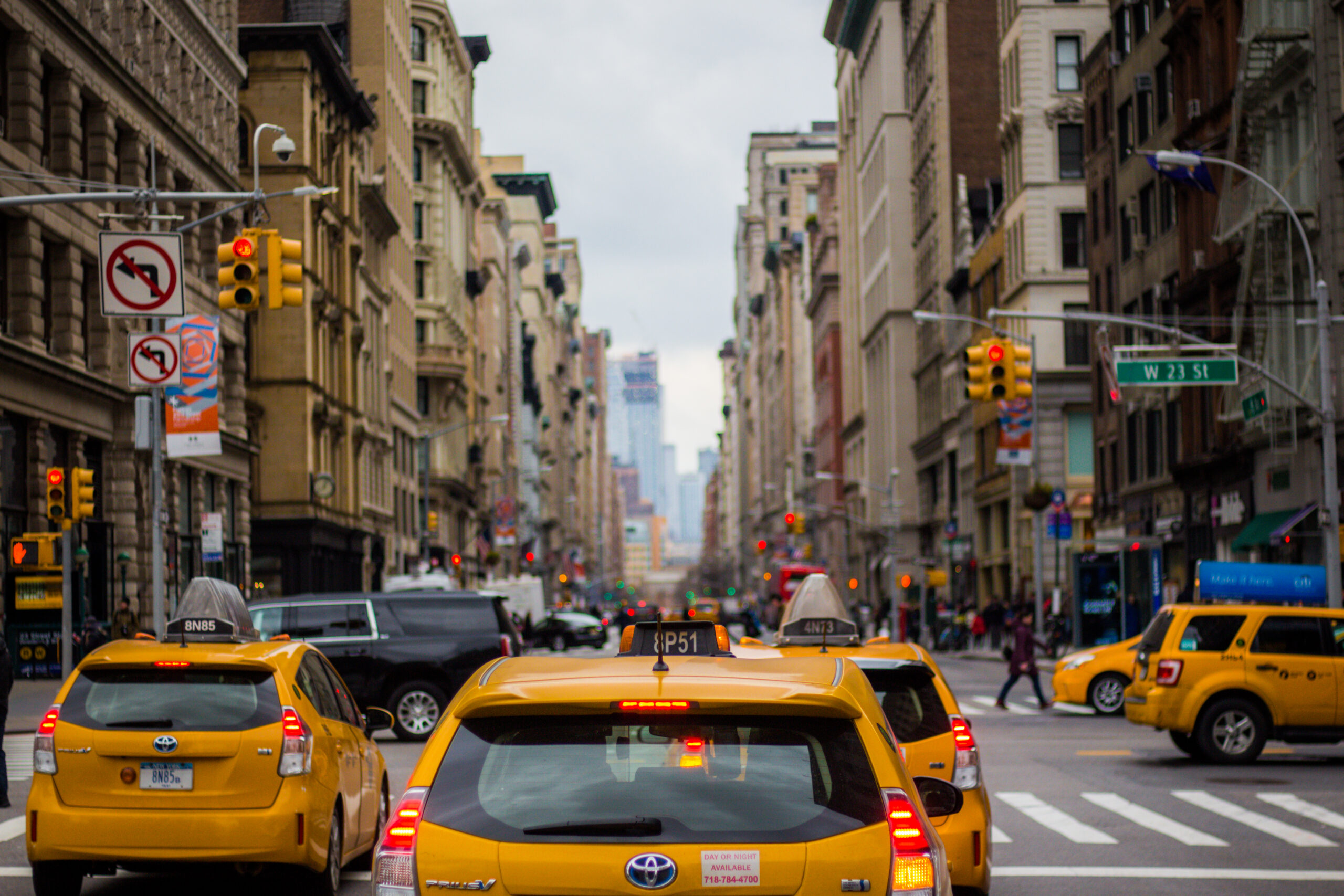
Uber vs Taxi in Rain and Bad Weather
Rain changes the Uber-vs-taxi math fast. Both options become harder to get simultaneously, because everyone else wants a car at the same moment. Rideshare surge pricing typically spikes in rain. Available taxis disappear from the streets quickly. Hotel entrances, restaurant canopies, and building lobbies become genuinely valuable pickup staging points.
The practical rule: if you see a yellow taxi with the light on in the rain, take it. Don’t wait to compare the app price. If there are no taxis visible and the app price is reasonable (or you’re willing to wait), use rideshare but request from inside a lobby, restaurant, or sheltered spot rather than standing wet on a corner. In heavy rain, the subway is often the sanest option for direct routes — it doesn’t care about weather at all. See: rainy day Broadway
Families, Groups, Luggage and Accessibility
With kids, luggage, a stroller, or mobility needs, the cheapest ride is not always the best ride. The fewer curbside decisions at the end of a long evening, the better. A rideshare pre-booked to a specific pickup point with a confirmed larger vehicle may be worth more than the savings from a cheaper taxi that requires hailing on a busy street with a stroller and three bags.
Families with kids
NYC rules treat taxis and for-hire vehicles differently from private cars: a child restraint is not legally required in a taxi or FHV, including app-based rides, although all passengers are required to use seat belts and NYC encourages families to bring an appropriate child seat. Drivers must allow you to install your own car seat. If a child restraint is part of your plan, arrange it before the night rather than assuming the vehicle will provide one. For tired kids after an evening show, a direct rideshare or hotel taxi line can still be simpler than a route that requires multiple late-night decisions.
Groups
A larger rideshare (XL or similar) for a group of five or six can be cheaper and simpler than splitting across two standard taxis. Compare the total cost including tip before deciding. If you’re leaving a hotel with a taxi line, ask the doorman about larger vehicle availability.
Luggage
For airport arrivals with significant luggage, rideshare often allows better vehicle selection (larger SUV options) than hailing a standard yellow sedan. At the airport, if a taxi fits the luggage without issue, the official taxi line removes a lot of friction.
See: family-friendly NYC hotels · Broadway with kids
Decision Cheat Sheet
Use this as a quick reference. The right choice is always situational — this collapses the most common scenarios into usable shorthand.
🚕 Choose Yellow Taxi If…
- You’re in Manhattan and see available cabs
- Uber/Lyft is surging
- Leaving a hotel, restaurant, or theater on a busy avenue
- You want to get moving immediately — no app wait
- At an official airport taxi line
- Pickup at the venue is too chaotic for rideshare
- It’s raining and a cab just appeared
📱 Choose Uber/Lyft If…
- You cannot find a yellow cab
- You’re in Brooklyn, Queens, Bronx, or Staten Island
- You need a precise address or app tracking
- You want upfront pricing before committing
- You need a larger vehicle for group or luggage
- Leaving a quieter area where taxis don’t pass
- Rideshare price is reasonable vs. no cabs visible
🚇 Choose Subway / Walk If…
- The route is direct with no awkward transfers
- Traffic is gridlocked and the train is faster
- Rideshare is surging and you’re in an event crowd
- You’re only going a few blocks
- Penn Station or Atlantic Terminal transit is direct
- Walking to a better pickup point only takes 5 minutes
When the Subway Beats Both
The honest answer to “Uber or taxi?” is sometimes neither. Manhattan traffic during event-heavy evenings can make car travel genuinely slow — a trip that takes 10 minutes in normal conditions can take 35 minutes after a Broadway show in Times Square. The subway, which is indifferent to surface traffic, can win on speed and price in these conditions.
The subway is particularly strong: from Times Square after Broadway (1/2/3 or A/C/E); from Penn Station area after MSG; from Atlantic Avenue-Barclays after concerts; for any simple direct Manhattan route where the stations are close to both origin and destination. For routes requiring multiple transfers late at night, or for families with tired kids, a car may be worth the extra cost and simplicity. See: how to get home late at night in NYC · NYC transportation hub
Common Uber vs Taxi Mistakes in NYC
- Assuming Uber is always betterIn Manhattan, a yellow cab available on the avenue right now often beats a rideshare 8 minutes away during surge conditions.
- Assuming taxis are always cheaperMeter, traffic, surcharges, tolls, and tip all factor in. Compare the actual cost, not the assumption.
- Requesting Uber from the theater doorPickup confusion after Broadway is real. Walk two to four blocks first — the pin accuracy, surge, and driver access all improve.
- Standing on the wrong side of the streetDirection matters for both taxis and rideshare. Cross first if the route or traffic flow makes it easier.
- Ignoring surge pricingAfter shows, concerts, rain, and holidays, rideshare prices can jump significantly. Standard street-hailed yellow-taxi meters do not use app-style surge pricing, although ordinary surcharges and traffic still matter. Check both before committing.
- Not walking to a better pickup pointTwo or three blocks can change the entire ride situation — better surge, clearer pin, more available taxis.
- Taking unofficial airport ridesUse official yellow taxi stands or designated app-based pickup zones. Unofficial ride offers at airports are a tourist trap.
- Using a car when the subway is direct and traffic is badThe subway feels less familiar but often arrives faster when gridlock is real.
- Forgetting luggage or group size needsNot every standard taxi or rideshare can handle large groups or significant luggage. Book a larger vehicle when needed.
- Letting the app pin choose a bad pickup spotMove the rideshare pin to a clearer corner — a hotel entrance, a less-crowded block — when the default location is problematic.
- Not confirming the vehicle before enteringFor rideshare, always check the license plate, driver name, and car model before getting in. For taxis, confirm the meter is running.
- Forgetting rain, weather, and fatigueThe correct choice changes when it’s raining, cold, everyone is tired, or nobody wants to walk. Build weather into the plan before the show starts.
Frequently Asked Questions
Is Uber or taxi better in NYC?
Neither is universally better. Yellow taxis win when you’re in a strong Manhattan cab zone, can hail one quickly, or rideshare is surging. Uber/Lyft wins when taxis are scarce, you’re in an outer borough, you need a specific pickup, or you want upfront pricing. The right choice depends on the block, the time, the weather, and the crowd around you.
Is Uber cheaper than a yellow taxi in NYC?
Not always. During high rideshare demand after Broadway shows, concerts, rain, and major events, a street-hailed yellow taxi can be cheaper because its regulated meter does not use app-style surge pricing. During normal conditions, prices may be comparable for similar trips. Compare the current app quote with the likely taxi meter, applicable surcharges, tolls, and tip before deciding.
Should I take Uber or taxi after a Broadway show?
The most important decision is not Uber vs taxi — it’s where you make the pickup. Don’t request rideshare or try to hail a taxi from the theater door in the thickest crowd. Walk two to four blocks to a calmer avenue or side street first. Then: if a yellow cab is available and rideshare is surging, take the taxi. If you need a specific outer-borough destination or taxis aren’t visible, use rideshare. If your hotel is within 15 minutes walking, walking may beat both.
Are yellow taxis safe in NYC?
Yes. Licensed yellow taxis and green borough taxis are regulated by the NYC Taxi & Limousine Commission and are a normal, widely used part of the city. Confirm the meter is running when the trip starts. Credit cards are accepted in NYC taxis. Keep basic valuables secure as you would in any urban environment.
Should I take Uber or taxi from JFK to Manhattan?
Both are viable. The current TLC-regulated yellow-taxi fare between JFK and Manhattan is $70 before applicable surcharges, tolls, and tip, while Uber/Lyft uses a live upfront quote that varies with demand and destination. Use the official JFK taxi line or the airport’s designated ride-app pickup areas, and ignore unsolicited ride offers. For travelers prioritizing price over door-to-door simplicity, AirTrain plus subway or LIRR is also worth comparing.
Why is Uber so expensive after Broadway shows?
High demand can push rideshare prices up when large numbers of people request cars in the same area at the same time — a common post-show problem. Instead of assuming the first quote is your only option, compare again after the crowd disperses, walk to a clearer pickup block, check a yellow taxi, or use transit when it is direct. Standard street-hailed taxi meters do not use app-style surge pricing, although traffic and normal surcharges still affect the final fare.
Are taxis easy to get in Times Square?
During normal conditions, yes — there are usually taxis moving through Times Square and the surrounding avenues. On event nights, after Broadway curtains, during rain, or during holiday season, available taxis become harder to find because demand spikes. Walking one to two blocks away from the most crowded spots often improves the situation. Major hotels in the Times Square area also have taxi lines that are reliably staffed.
Do NYC taxis take credit cards?
Yes. NYC yellow taxis are required to accept credit and debit card payments. All taxis have card readers in the back seat. Cash is also accepted. Green borough taxis and black cars have similar payment options. You can tip by card in the taxi as well.
Can I use Lyft instead of Uber in NYC?
Yes. Lyft operates in NYC and provides essentially the same service as Uber — app-based rideshare with similar pricing dynamics. Surge pricing applies to Lyft too. Many riders check both apps at the same time after events to compare current pricing and wait times before committing.
When is the subway better than both Uber and taxi?
When the route is direct, traffic is bad, or rideshare is surging. From Times Square after a Broadway show, the 1/2/3 or A/C/E can get you across Manhattan faster than a car stuck in event traffic. From Penn Station after MSG, multiple lines are available. From Barclays after a concert, the subway is usually the fastest option. The subway doesn’t care about surface traffic or surge pricing. See: how to get home late night NYC
What is the best late-night option: Uber, taxi, or subway?
Late at night in active Manhattan areas, all three can work. Yellow taxis are active on Midtown and Upper Manhattan avenues past midnight. Rideshare is more reliable than taxis in outer-borough locations where cabs rarely pass. The subway runs all night but on reduced frequency — a 20-minute wait at 1am is possible. The right choice depends on your specific route, comfort level, and whether a direct subway line is available. Solo travelers should prioritize well-lit pickup locations regardless of which option they choose.
Secondary Keywords: taxi vs Uber NYC · Uber or taxi NYC · taxi or Uber NYC · Uber in New York City · Uber New York · yellow cab NYC · yellow taxi NYC · NYC taxi rates · New York taxi rates · NYC taxi fare calculator · Uber from JFK to NYC · JFK to NYC Uber · Uber from JFK to Manhattan · taxi from JFK to Manhattan · yellow cab vs Uber NYC · Lyft vs taxi NYC
SEO Title: Uber vs Taxi NYC | Costs, Taxi Rates, JFK & Which Is Better?
Meta Description: Compare Uber vs taxi in NYC: yellow-cab rates, rideshare costs, JFK and airport rides, Broadway and concert pickups, late nights, rain, groups, and when the subway wins.
URL: https://stageandstreetnyc.com/night-out/transportation/nyc-uber-vs-taxi/
Excerpt: Uber is not automatically better than a yellow cab in NYC. Compare current taxi-rate rules, rideshare pricing, JFK airport options, pickup speed, post-show crowds, groups, luggage, late-night rides, and when transit beats both.
Quick Facts
Plan the Ride
After the Show
Hotels & Pickups
Broadway & Concert Exits
Save & Share
Plan the Full Ride Home
Uber and taxis are only one part of the night-out plan — the show, hotel, restaurant, subway route, parking garage, venue crowd, and late-night return all affect the smarter ride choice.
How to Get Home Late Night NYC
The full late-night exit strategy — subway, taxi, rideshare, walking, and commuter rail after any NYC event.
How to Get to a Broadway Show
Subway, parking, taxi, and arrival timing for Broadway — the before-show transportation guide.
Parking Near Broadway
When driving to Broadway makes sense — garages, rates, and exit strategy for Theater District parking.
How to Get to Radio City
Subway, transit, and taxi arrival for Radio City Music Hall — and post-concert exit options.
Hotels Near Broadway
Walking-distance Broadway hotels that make post-show taxi and rideshare decisions simpler.
Hotels Near Times Square
When Times Square hotel proximity matters most for avoiding late-night ride chaos.
Hotels Near Radio City
Rockefeller Center and Midtown hotels that make the post-concert return walkable.
Best Post-Show Restaurants NYC
A post-show dinner often beats the surge — where to eat while the ride situation improves.
Best Late-Night Restaurants NYC
Waiting out the surge with a midnight meal — kitchens still running after shows across the city.
Restaurants Near Broadway
Pre- and post-show dining near the Theater District — including options that help beat the post-show rush.
Restaurants Near Radio City
Where to eat before or after Radio City — including late options to wait out the concert exit crowd.
Where to Stay for Shows & Events
Hotel location shapes the ride home — the master guide for matching hotel to venue.