

Parking Near Terminal 5
The honest answer on driving to Terminal 5 — what the real situation is, when a garage strategy makes sense, and when the car should stay home.
The first thing to know about parking near Terminal 5 is that the venue itself has no designated parking. Bowery Presents, which operates Terminal 5, explicitly encourages public transportation and does not offer on-site lots or guaranteed validation arrangements. That is the starting point — not a complaint, just the reality you are working with before you make any decisions about bringing the car.
The more useful question for most visitors is not “where can I park?” but “should I be driving to this at all?” For people coming from within New York City, the answer is often no. For people driving in from outside the city, or those whose circumstances make transit impractical, the answer is more nuanced. This page is built to help you figure out which situation you are actually in — and what the least frustrating path looks like from there.
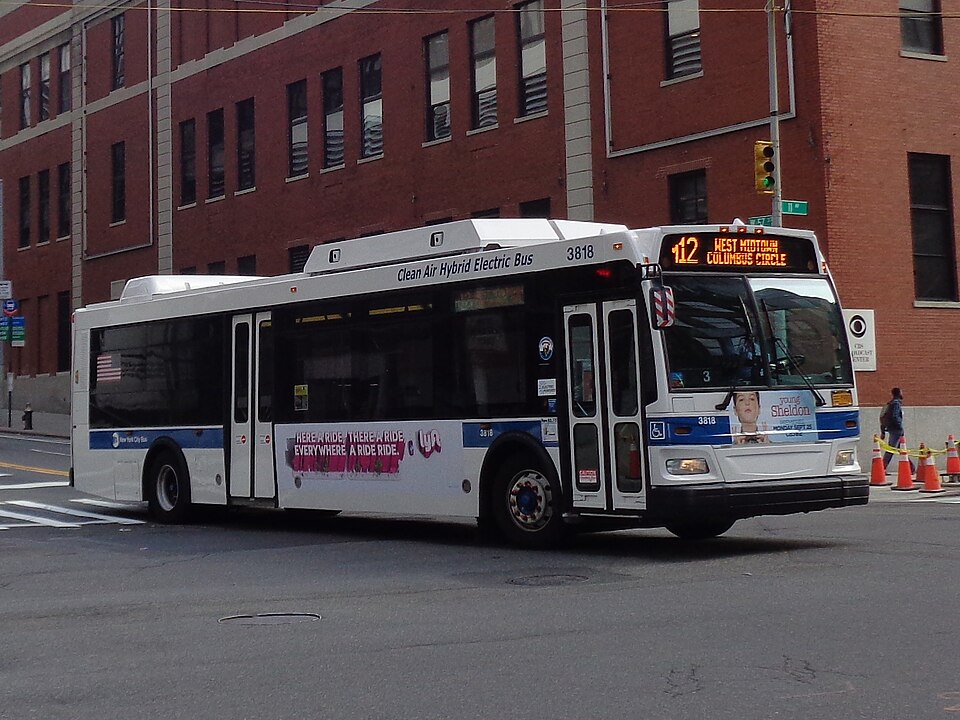
West 57th Street and 11th Avenue in Hell’s Kitchen, the kind of approach readers should picture when deciding whether driving and parking near Terminal 5 are actually worth it.
Is Driving to Terminal 5 Worth It?
Terminal 5 sits at the far western edge of Hell’s Kitchen, close to 11th Avenue and the Hudson River — well off the main grid of Broadway venues, subway lines, and easy garage clusters. It is a neighborhood that works well on foot once you’re in it, but it is not designed around car access the way an arena or suburban amphitheater is. There is no adjacent lot, no official valet arrangement, and no simple park-and-walk situation waiting for you.
Garages exist in the surrounding blocks, and if driving is unavoidable, they are usable. But the honest version of this is: for most New York City residents attending a show at Terminal 5, the car adds cost, logistical overhead, and post-show exit stress without improving the night in any meaningful way. The subway and rideshare options are real, they are well-documented, and they usually work better than circling for a spot before a show starts.
If you are driving in from New Jersey, Westchester, Long Island, or Connecticut and parking is simply part of how you get anywhere, then a garage strategy near Terminal 5 is a reasonable plan. The math works differently for people who drive everywhere — adding the cost of a garage to the cost of the night is a familiar trade, and you know how to manage it. For residents of Manhattan, Brooklyn, or Queens who have transit options available, that calculation rarely comes out in favor of the car.
The post-show exit is the other consideration that often tips the balance. After a show at a 3,000-capacity venue ends, the street around Terminal 5 becomes busy with people trying to leave simultaneously. If you are in a garage, you are waiting with everyone else, then merging onto 11th Avenue in post-concert traffic. If you are on the subway, you are walking to Columbus Circle the same way you arrived. Neither is instant — but one involves a parking bill and a traffic merge, and the other does not.
At a Glance — The Short Answers
Subway to Columbus Circle or rideshare to the door. Both are cleaner than managing parking in this part of Hell’s Kitchen.
Garages on 57th Street near 11th Avenue are the most practical option. Pre-book to lock in a spot and a rate before you leave home.
Street parking near Terminal 5 on a concert night is a gamble. A garage removes that variable even if it costs more.
If you’re eating in Hell’s Kitchen before the show, a single garage for both dinner and concert makes the car more manageable. Otherwise, transit stays simpler.
If your hotel has parking, use it. Walk to Terminal 5 and walk back — no garage errand, no post-show car retrieval.
No designated lot, difficult street parking, post-show congestion, and a usable transit connection all point the same direction.
What the Official Parking Situation Actually Is
Bowery Presents, the operator of Terminal 5, does not provide designated parking at its venues and encourages public transportation when possible. That guidance is consistent across their New York properties and reflects a straightforward reality: these are urban venues, most of their audience arrives by transit or rideshare, and on-site parking is not part of how the venues operate.
There is no on-site lot, no guaranteed validation arrangement, and no official parking partnership specific to Terminal 5. Bowery Presents encourages public transportation when possible. That is the starting point for every parking conversation around this venue — everything else is working around the edges of that reality, not replacing it.
This matters because some venues do have formal arrangements with nearby garages — validation, negotiated rates, reserved sections. Terminal 5 does not offer that in any guaranteed or official form. Nearby garages exist and are usable, but you are booking them as independent commercial parking, not as a venue-affiliated service. Rates, availability, and walking distance are yours to evaluate before you commit.
Garage rates, availability, hours, and any promotional parking arrangements can change between events. Check the venue’s official site at terminal5nyc.com and use a parking aggregator app to compare current options before making driving the plan. Do not assume any specific garage details from this page are current on the night of your show.
If You Must Drive — The Smartest Garage Strategy
If driving is the decision, garages in the surrounding blocks of Hell’s Kitchen — particularly on 57th Street near 11th and 12th Avenues — are the realistic option. The walk from a garage in this area to Terminal 5’s entrance is manageable, typically a few minutes on foot. That walk is easy enough that splitting the difference between proximity and price makes sense: the closest garage is not always the best value, and a garage two blocks further away may charge significantly less for the same evening.
Pre-booking matters more than you might expect
On a busy concert weekend, nearby garages fill up. Pre-booking through a parking aggregator app locks in both a spot and a rate before you leave home, which removes one stressful variable from an already logistically complex night. It is also usually cheaper than showing up and paying the walk-in rate at a garage that knows the venue next door is selling out. If you are driving, pre-booking is worth the ten minutes it takes to do it.
Think about the exit before you book the spot
The garage you choose determines how the night ends as much as how it begins. A garage on 11th or 12th Avenue may look convenient going in but puts you back on the main exit route when the show ends — the same block where rideshare cars are stacking up and the traffic is slowest. A garage one or two blocks east on 10th or 9th Avenue adds a few minutes to the walk in but puts you in a better position for a clean post-show exit. Worth considering when you are evaluating options on a parking app.
Factor the total cost honestly
Midtown garage rates for an evening show — factoring in the hours from when you arrive to when you leave — can add a meaningful amount to the cost of the night. Combined with gas, tolls, and the general friction of driving in Midtown, the car needs to solve a real problem to justify itself. If the alternative is a subway ride that takes roughly the same amount of time, the math rarely favors the car.
Street Parking — What to Expect
Street parking near Terminal 5 on a concert night is difficult. The blocks around the venue in this part of Hell’s Kitchen have a mix of residential permit zones, commercial restrictions, and overnight regulations that change block by block. The most important rule in New York City street parking is also the one most visitors learn the hard way: read every sign on the block, and the most restrictive one applies.
Hunting for curb parking before a show adds time pressure and uncertainty to an evening that does not need either. If you spend 20 minutes circling for a spot and do not find one, you are now late, stressed, and still need a garage. If you do find a spot without reading every sign carefully, there is a real chance you return after the show to find a ticket or, worse, an empty space where your car was.
Street parking in this neighborhood is not impossible on a quiet weeknight, and some people do find spots. But on a busy Friday or Saturday show night, counting on street parking as your plan introduces a level of pre-show stress that a garage removes entirely. If you are driving, committing to a pre-booked garage before you leave home is nearly always the right call over arriving and hoping the street works out.
Drop-Off, Pickup, and Rideshare vs. Parking
There is a meaningful difference between parking and being dropped off — and for a lot of people who think they need to drive, rideshare actually solves the problem better than a garage does. If someone is dropping you off, the venue is accessible by car without any parking overhead. Terminal 5’s block on West 56th Street allows for standard street drop-off; the issue is finding a longer-term spot, not momentary access.
Rideshare to Terminal 5 is straightforward on the way in. Drop-off at the door costs roughly what a subway ride plus a taxi tip would, and it eliminates the garage bill, the post-show retrieval, and the traffic merge on exit. The catch — covered more fully in the how to get to Terminal 5 guide — is that rideshare pickup after the show comes with surge pricing and wait times. If rideshare is the plan for both directions, account for that on the return side before you commit.
The comparison worth making honestly: a garage for a full concert evening in Midtown, plus the friction of parking, often costs more and creates more end-of-night stress than two rideshare trips — one in each direction. That math does not hold for everyone, but it holds for enough people that it is worth running before defaulting to the car.
Parking Strategy by Type of Night
Straight-to-show arrival
If you are coming directly to Terminal 5 with no other stops, the car adds cost and logistics without adding much. Subway to Columbus Circle or rideshare to the door both get you there without the post-show parking retrieval. If driving is unavoidable, pre-book a garage near 57th and 11th before you leave — do not count on street parking on a show night.
Dinner first in Hell’s Kitchen
If you’re driving and doing dinner before the show, the most sensible approach is parking once for both — find a garage near your restaurant, leave the car there, eat, walk to Terminal 5, and return to the same garage at the end of the night. This avoids the separate search for show-adjacent parking and gives you a fixed home base for the evening. Check that the garage’s hours cover the full length of your night before you park. See the restaurants near Terminal 5 guide for options worth building the evening around.
Staying overnight nearby
If your hotel has parking, this is the cleanest version of a driving night at Terminal 5. Park at the hotel when you check in, walk to the venue, walk back. No separate garage transaction, no post-show exit strategy required. The hotels near Terminal 5 guide covers nearby options — when choosing a hotel as a driver, verifying parking availability and cost in advance is worth doing before you book.
Coming from outside the city
For visitors driving in from New Jersey, Long Island, Westchester, or Connecticut, parking is often just part of the plan — you drive everywhere, you know the drill. In that case: pre-book a garage near 57th Street before you leave home, budget 30 to 45 minutes of extra driving time for Midtown traffic on show nights, and think about the exit route before you arrive. Getting out of the 11th Avenue area after a big show takes patience. Knowing that going in makes it less frustrating.
Group outing
Groups that split the garage cost across three or more people change the math meaningfully. If driving is the right call for a group — coming from the same suburban starting point, for example — the per-person parking cost drops to something reasonable. Pre-book, agree on a garage before anyone leaves, and arrange the post-show exit plan before the show starts so no one is standing outside coordinating under surge pricing pressure.
When to Skip Driving Entirely
For most New York City residents, the transit picture around Terminal 5 is good enough that driving rarely improves the night. The A, B, C, D, and 1 trains stop at 59th Street–Columbus Circle — about a 12 to 15 minute walk from the venue, flat the whole way. The C and E at 50th Street are another option depending on your starting point. Rideshare handles door-to-door without any navigation required. Neither involves a garage bill or a post-show traffic merge.
The specific situations where leaving the car at home is the clearly right call: you are coming from Brooklyn, Queens, or downtown Manhattan, where driving to Hell’s Kitchen adds tolls, time, and a parking problem; you are coming with one or two other people where the per-person cost of rideshare is competitive with parking; you are attending on a weekend night when Midtown traffic and garage rates are both at their worst; or you are the kind of person who finds parking stress genuinely corrosive to an otherwise good evening. Any of those describes you? Leave the car.
The full transit and rideshare picture is covered in the how to get to Terminal 5 guide — if you are on the fence about driving, that page will help you think through the alternatives clearly before committing.
Parking near Terminal 5 is possible but not easy, not cheap, and not seamless — especially on a busy show night. For most people attending from within the city, transit or rideshare is simply the better plan. The car is the right tool when it genuinely solves a problem: you’re coming from somewhere transit does not serve well, you are in a large group splitting costs, or you have an overnight stay that puts you within walking distance. When none of those apply, the car is adding friction to a night that works fine without it.
Build the Full Terminal 5 Night
Parking is one piece of a larger evening. The other pieces — where to eat, what the venue itself is like, how to get there if not by car, and what the neighborhood offers — are covered in the rest of the Terminal 5 cluster.
For the transit and rideshare picture, the how to get to Terminal 5 guide covers subway options, rideshare logistics, and arrival strategy by type of night — useful whether or not the car is in the plan. For dinner before the show, the restaurants near Terminal 5 guide covers what is worth walking to in Hell’s Kitchen. And if staying nearby is on the table, the hotels near Terminal 5 guide covers the options that put you within easy walking distance of the venue.
The Hell’s Kitchen neighborhood guide is the right starting point for understanding what the area around the venue is actually like — the neighborhood has a lot to offer before and after a show, and knowing it changes how the whole evening gets built. For the venue itself, the Terminal 5 seating guide covers the floor and level layout so you know where you want to be once you get inside.
Frequently Asked Questions
No. Terminal 5 has no designated on-site parking. Bowery Presents, which operates the venue, does not provide parking at its venues and encourages public transportation when possible. Nearby commercial garages exist in the surrounding Hell’s Kitchen blocks, but these are independent from the venue — there is no official lot or guaranteed validation arrangement.
For most New York City residents, no. The subway and rideshare options are reliable enough that driving adds cost and logistical overhead without improving the evening. Driving makes more sense for visitors coming from outside the city — New Jersey, Long Island, Westchester — where transit is not a practical option. If you are on the fence, run the comparison honestly: subway fare plus a walk versus garage cost plus the post-show exit traffic. That math usually resolves itself.
Yes. Commercial garages exist in the surrounding blocks, particularly near 57th Street and 11th Avenue. They are usable on concert nights, but they are not venue-affiliated. Rates, availability, and exact locations should be verified through a parking aggregator app before you go. Pre-booking is advisable on busy show nights — available spots fill up, and pre-booking usually secures a better rate than the walk-in price.
Difficult and unpredictable on concert nights. This part of Hell’s Kitchen has residential permit zones and commercial restrictions that vary block by block. The standard New York rule applies: read every sign on the block, and the most restrictive one governs. Counting on street parking as your primary plan adds stress and time pressure to the arrival. If driving, a pre-booked garage is the cleaner approach.
For most city residents, yes. Rideshare drops you at the door without parking overhead and is often competitive in cost with a garage once you factor in the full rate for a concert evening. The post-show return involves surge pricing and wait times — that is the main rideshare trade-off. Pre-arranging the pickup or walking a few blocks east before requesting a car helps manage it. See the full comparison in the how to get to Terminal 5 guide.
The A, B, C, D, or 1 train to 59th Street–Columbus Circle, followed by a 12 to 15 minute walk west to the venue. That is the most reliable, lowest-cost option for anyone within range of those lines. Rideshare is the easiest door-to-door alternative if the walk feels like too much or conditions make it less appealing. Both are covered in detail in the how to get to Terminal 5 guide.
Parking Near Terminal 5 — The Short Version
There is no designated parking at Terminal 5 and no official lot arrangement. Commercial garages in the nearby blocks work as a fallback, but they come with Midtown rates, show-night competition for spots, and a post-show exit that requires patience. Street parking on a concert night is unreliable enough to treat as a last resort rather than a plan.
For most visitors coming from within New York City, the car is adding a layer of complexity that the evening does not need. Transit is the venue operator’s official recommendation. Rideshare solves the door-to-door problem without the garage overhead. Driving makes the most sense when you are coming from somewhere transit genuinely does not reach, or when hotel parking puts you within walking distance and removes the problem entirely.
Treat parking as a decision, not an assumption — and the right answer usually becomes clear.
Parking Near Terminal 5 Is Really a Full-Night Decision
Terminal 5 sits far west in Hell’s Kitchen, with no on-site parking and a post-show street scene that can get messy fast. Use these guides to decide whether to drive, where to eat, how to get there, where to stay, and how to make the whole night easier.
How to Get to Terminal 5
Compare the subway walk from Columbus Circle, rideshare drop-off, arrival timing, and the cleaner no-car version of the night.
Open Transport Guide Build the NightRestaurants Near Terminal 5
Turn the west-side trek into an actual night out with dinner in Hell’s Kitchen before the show.
Plan Food NearbyCore Terminal 5 Planning
Parking · Transit · VenueHow to Get to Terminal 5
Subway, rideshare, walking routes, drop-off logic, and the full no-parking arrival strategy.
Terminal 5 Seating Guide
Floor, balconies, levels, sightline tradeoffs, and where to stand once you get inside.
NYC Transportation Hub
Subway, rideshare, parking, walking, and event-night movement across the city.
NYC Concert Venues Guide
Compare Terminal 5 with other concert rooms, halls, clubs, theaters, and arena nights.
Hell’s Kitchen Guide
Food blocks, west-side walking context, neighborhood feel, and how to build the night around the area.
Hotels Near Terminal 5
Hotel bases that can make parking simpler by letting you park once and walk to the venue.
Build the Hell’s Kitchen Night Around the Route
Food · Hotels · NeighborhoodRestaurants Near Terminal 5
Pre-show dinner, casual bites, date-night spots, and walking-friendly options before the concert.
Hotels Near Terminal 5
Stay close enough to skip the garage scramble and make the end of the night easier.
Hell’s Kitchen Neighborhood Guide
Use the neighborhood guide for restaurants, walking context, west-side logistics, and the feel of the area.
Choose the Right Parking Decision
Garage · Street · Skip ItIs Driving Worth It?
The honest comparison between parking, subway, rideshare, hotel walking, and post-show traffic.
Garage Strategy
Why pre-booking matters, how to think about 57th Street garages, and why exit route matters.
Street Parking Reality
Why curb parking is usually too stressful and unreliable to use as the main concert-night plan.
Strategy by Night Type
Straight-to-show, dinner first, overnight stay, group outing, and outside-the-city driving logic.
When Not to Drive
The clean case for subway or rideshare when the car only adds cost, stress, and post-show friction.
Terminal 5 Parking FAQ
Quick answers on garages, street parking, rideshare, transit, driving, and the easiest alternatives.