

Uber vs Subway in NYC: Which Is Better for Nights Out?
A practical guide to choosing between Uber, taxi, subway, walking, and waiting — including the cheapest, fastest, and simplest options after Broadway, concerts, sports, dinner, date nights, and major NYC events.
The question comes up on every NYC night out: Uber or subway? The common answers — “just take the subway” or “just Uber everywhere” — miss the point. The right choice is not the same on a rainy Tuesday after a Midtown dinner as it is on a dry Saturday night after a sold-out concert at MSG. It depends on the venue, the traffic, the route, the group, the weather, and whether you thought about the return before you left.
This guide is not a case for one option over the other. It is a map of when each one actually wins — and how to avoid the bad version of both. If you are trying to decide the best transportation in NYC for a night out, the useful answer is usually not one mode for the whole trip; it is choosing the simplest option for each leg.
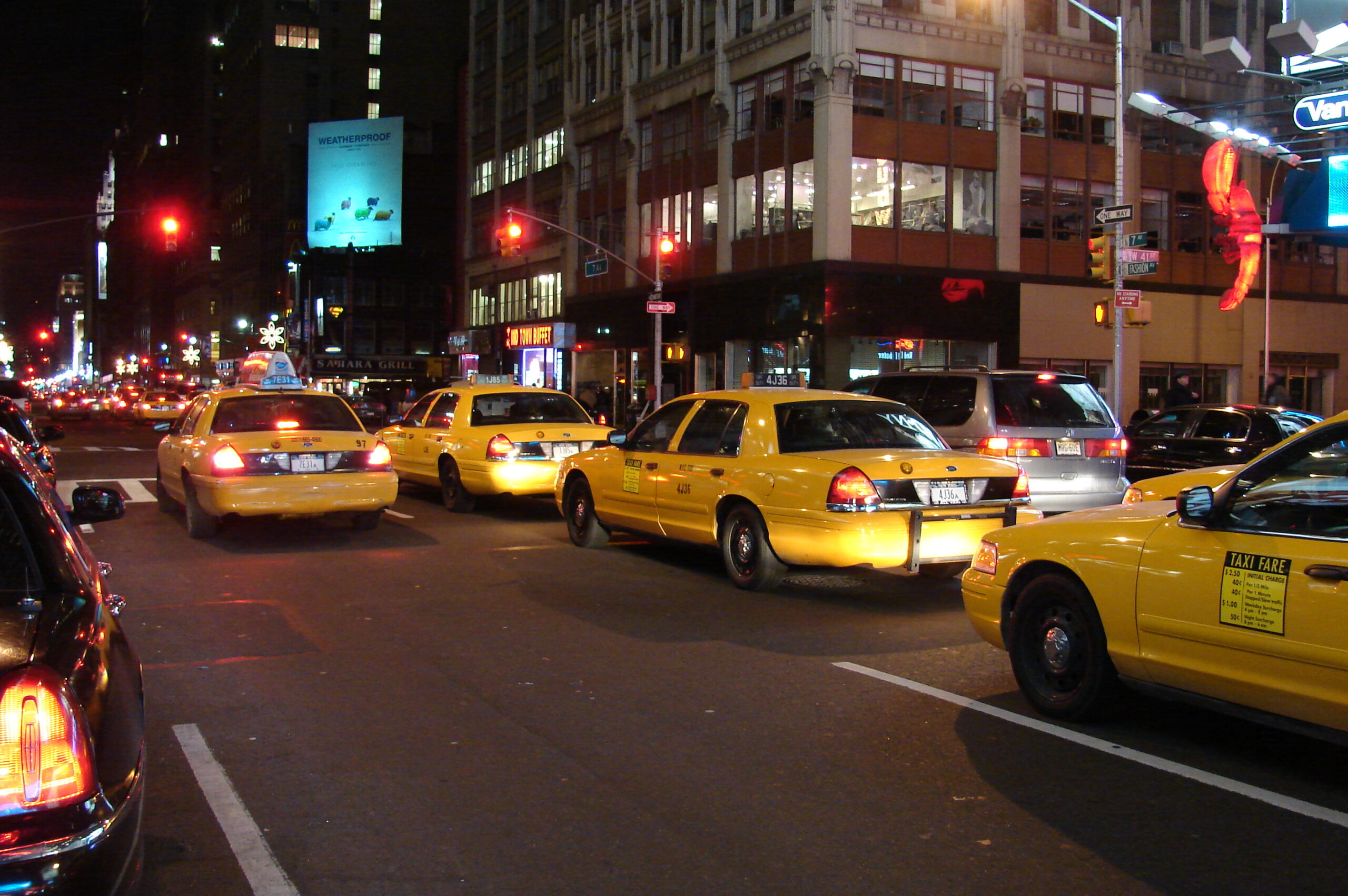
Yellow taxis in Midtown Manhattan at night — the kind of NYC night-out scene where the right choice between rideshare, taxi, subway, walking, or waiting depends on traffic, timing, weather, venue crowds, and hotel location.
Cost, Time, Comfort, and Control
The Uber vs subway debate usually gets framed as safety vs cost, but the actual decision has four dimensions — and the right answer varies on each one depending on the night.
Subway Is Usually Predictable
As of 2026, the NYC subway and local bus base fare is $3 with OMNY, and the fare does not rise because a concert just ended. Rideshare prices can increase when demand concentrates after events or in bad weather. For groups, splitting a short car ride can narrow the per-person gap, but four $3 subway fares are still only $12 — compare the live car quote before assuming rideshare is cheaper.
Depends on Traffic and Route
Subway beats car traffic on direct routes to Broadway, MSG, Barclays, and major Midtown venues during peak times. Cars beat the subway when the route requires multiple transfers or when the venue is not well-served by transit. After major events, both can be slow — the question is which is slower.
Uber Wins on Privacy and Simplicity
A car is door-to-door, climate-controlled, and requires no navigation decision once requested. The subway involves walking to a station, choosing a direction, potentially transferring, and walking from the exit. For tired families, older visitors, dressed-up date nights, or anyone with mobility needs, the comfort gap is real and worth paying for.
Plan Before the Night Starts
The subway gives predictable fare and avoids traffic. Uber gives route simplicity but can fail on driver availability and surge pricing right after an event. Walking gives the most control when distance is reasonable. The least control comes from deciding on the sidewalk with five thousand people doing the same thing at the same moment.
Decide Before You Leave, Not After the Curtain Falls
“The wrong transportation choice is usually the one made in a rush on the sidewalk. Decide your likely return before the night starts — even a loose plan beats no plan when the venue empties at once.”
When the Subway Beats Uber in NYC
Subway Wins When
- Route is one direct line with a short final walk
- Traffic around the venue is heavy — which it usually is after shows and games
- You are comfortable with the direction and know it before entering the station
- Leaving Broadway, MSG, Barclays, Radio City, Beacon, Yankee Stadium, or Citi Field
- Hotel is near a useful subway line
- Rideshare is surging at exactly the moment you want to leave
- You are traveling solo or as a couple on a budget
- The subway exit puts you close to your destination
Subway Loses When
- Route requires two or more transfers, especially late at night
- Accessibility needs require verified elevator access — not guaranteed
- Traveling with tired kids after a late show
- Weather makes the station walk miserable
- You are unsure of direction and phone service is inconsistent along the route
- The station exit puts you on the wrong side of the street in a crowded post-event area
- Late-night frequency has dropped on your specific line
- Venue is UBS Arena or MetLife — not standard subway destinations
The subway’s main advantage on event nights is that it does not sit in surface traffic. After a major concert at MSG or a Broadway show, the blocks around the venue can become slow-moving for cars. When the train route is direct and service is running normally, the subway can be both faster and cheaper than waiting for a car in the same event crowd.
The subway’s main vulnerability is the situation where you do not know the route before you enter the station, or where the route requires a complicated transfer that feels uncertain late at night. Both are fixable with planning before the event rather than figuring it out after.
When Uber or Taxi Beats the Subway
Uber / Taxi Wins When
- Weather is bad — rain, ice, or cold that makes station walks unpleasant
- Traveling with young children who are tired late at night
- Someone in the group has mobility limitations — elevators are not guaranteed
- Hotel is not near a useful subway line
- Route requires multiple transfers with uncertain timing
- Special occasion where door-to-door simplicity is worth the cost
- Dressed up and carrying something that makes subway uncomfortable
- Group size makes splitting a car financially reasonable
- Late-night return where subway frequency has dropped significantly
Uber / Taxi Loses When
- You request directly outside the venue at show end — everyone else is doing the same
- Surge pricing spikes to a level that makes it hard to justify
- The venue’s surrounding streets are closed or jammed post-event
- You have no idea where to tell the driver to pick you up
- Traffic makes a five-minute car ride into a twenty-minute one
- You do not have your hotel address ready when requesting
Taxis deserve more credit than they get in this conversation. In Manhattan particularly, a yellow cab hailed on a nearby avenue can be faster and simpler than waiting for an app-based car during a surge. NYC street-hail taxis use regulated metered fares rather than app-style dynamic surge pricing, although standard surcharges, tolls, waiting time, and tips can still affect the total. After a Broadway show or a Midtown dinner, a nearby available cab can be the cleaner move than waiting for an app car to reach a crowded block.
The general rule for Uber: it works best when you have moved away from the crowd before requesting. The worst version of rideshare is calling a car the second the curtain drops from the exact spot where two hundred other people are doing the same thing. The best version is requesting from a quieter street two blocks away while the first crowd wave disperses.
The Hybrid Move: Walk First, Then Call the Car
One of the most underused NYC night-out strategies is not choosing subway or Uber immediately — it is walking a few blocks away from the venue first, then deciding. This works after Broadway shows, MSG concerts, Barclays events, Radio City shows, crowded Midtown dinners, and almost any major event exit. It is not a compromise; for rideshare users specifically, it is often genuinely better than the direct-from-venue approach.
Sometimes the Best Uber Strategy Is Not Calling Uber Immediately
“Walk two to four blocks away from the venue before opening the app. The pickup is usually easier for the driver to reach, and the live app price may also change as you move away from the highest-demand exit zone.”
Do not stop in the middle of the crowd to open your phone. Walk in a clear direction — toward a wider avenue, a less crowded side street, or a nearby restaurant/hotel lobby.
After Broadway, this means moving toward 8th or 9th Avenue if you were on 45th–52nd, or toward 6th if you were east of Broadway. After MSG, walk toward 6th Ave east or 8th Ave west. After Barclays, walk away from the plaza before requesting.
A hotel entrance, a wider avenue, a well-lit corner with an address you can see. Avoid narrow theater blocks, traffic-stopped streets, and any spot where multiple cars cannot safely pull up.
Know where you are and know where you are going before opening the app. The worst pickup experience starts with a vague pin and the driver unable to find you in a crowd.
Dessert near Broadway, a drink near MSG, food in Fort Greene after Barclays — all of these absorb the worst of the surge window and let the night end properly rather than rushing the exit.
Uber vs Subway by Venue
Broadway is the most common place visitors overthink the Uber vs subway decision. The subway is the right call for most Midtown hotel guests on a direct route — the Theater District has enough line options that most Manhattan hotels have a reasonable subway connection. The mistake is assuming Times Square station is the only option; 49th Street, 50th Street, 7th Av/53 St, and Bryant Park all serve different theater and hotel combinations better.
Uber works well when weather is bad, the hotel is off a convenient line, you are with kids or older visitors, or the occasion calls for a car. The key is not requesting directly on the tightest theater block — walk one avenue over before opening the app. Walking wins entirely for anyone staying in the Theater District, Midtown West, Bryant Park, or Penn Station hotels.
MSG is positioned above Penn Station, which makes subway access exceptional — but also means the post-event Penn Station corridor fills fast. For many Manhattan hotel guests, the 1/2/3 or A/C/E provides the simplest direct return. Walking to Koreatown, Herald Square, or Midtown South hotels can also avoid the first crowd wave. Rideshare directly outside MSG after a sold-out event can be frustrating because demand, traffic, curb access, and pickup congestion all hit at once.
Uber becomes the right call if you are heading somewhere not well-served by the Penn Station lines, if the group is large and can split the cost, or if you grab dinner in Koreatown first and request the car 20 minutes after the event ends when the congestion has cleared.
Barclays Center has one of the strongest post-event transit setups of any major arena. Atlantic Avenue–Barclays Center is served by the 2/3/4/5/B/D/N/Q/R, with LIRR at Atlantic Terminal next door. For many Manhattan-bound visitors, the 2/3 is a simple direct option. For Downtown Brooklyn hotel guests, walking may beat everything.
The Uber case at Barclays is strongest for visitors whose hotel is not well-served by the Atlantic Avenue lines, or who want to avoid the subway entirely. In that case, walk away from the arena before requesting — the plaza exit is the worst pickup zone, not because of surge alone but because drivers have trouble reaching it cleanly right at event end.
Radio City is a Midtown venue where walking, subway, taxi, and rideshare can all make sense — the best answer depends entirely on hotel location. Midtown hotels within a 15-minute walk often make walking the cleanest option. Subway via 47–50 Streets–Rockefeller Center works for hotels on the F/M/B/D corridors. A cab spotted on 6th Avenue beats waiting for a surge-priced app car.
Beacon Theatre on the Upper West Side rewards staying uptown — walk after the show if possible. The 72nd Street subway works for most hotel zones. Uber is useful when returning downtown and the route involves a longer subway transfer. Carnegie Hall visitors in Midtown West hotels can usually walk; taxi from 57th and 7th is an easy alternative.
Both stadium venues have direct subway access — the 4 and D serve 161 St–Yankee Stadium, with B service when scheduled, while the 7 serves Mets–Willets Point for Citi Field. Trying to request rideshare from a stadium exit means competing with stadium-scale traffic and demand at the same moment. For subway riders, follow current MTA service information because event service and planned work can change.
Uber makes sense if returning to somewhere that requires an awkward subway transfer, or if the group has specific mobility or comfort needs. In both cases, walking some distance from the stadium before requesting is the right approach.
UBS Arena and MetLife Stadium require transportation-first planning that is separate from the standard Uber vs subway debate. UBS Arena is served by LIRR via Elmont–UBS Arena, with the exact service pattern depending on the schedule. MetLife Stadium is outside the NYC subway system; for events with rail service, NJ TRANSIT runs Meadowlands trains between Secaucus Junction and the stadium, so New York Penn Station riders transfer at Secaucus rather than taking a direct train to the stadium. Rideshare can work at either venue, but event-specific pickup rules, traffic, and pricing make advance planning important.
For both venues, plan the return as part of the event — LIRR timing from UBS, NJ Transit or rideshare from MetLife — before arriving, not after the show ends.
Date Nights and Special Occasions: Uber vs Subway
For date nights and special occasions, the right transportation choice is the one that keeps the mood intact — which is not always the same as the cheapest or fastest option.
Subway Works for Date Night When
- Route is simple and neither person has to navigate under pressure
- Dinner and venue are near the same line
- Hotel is a short walk from the venue or dinner
- Both people are comfortable and familiar with the route
- The night is casual or the subway ride is part of the experience
Uber / Taxi Earns Its Cost When
- Dressed up — heels, suits, formal wear on subway stairs is not always the vibe
- Weather is bad and the walk to/from the station is long
- Special occasion where door-to-door simplicity is part of the plan
- Late-night return where subway frequency is lower
- The route is awkward and navigating it while dressed up feels like the wrong ending
The hybrid that works extremely well for date nights: take the subway to dinner (simple, inexpensive, easy), walk to the venue if possible, and take a car home at the end of the evening when comfort matters most and the group is tired. This captures the best of both options without overpaying for every leg of the night.
Families, Older Visitors & Groups
Simplicity Over Optimization
- Direct subway works well for matinees and familiar routes
- Uber/taxi can be worth it for late shows with tired kids
- Avoid complicated transfers — one transfer maximum is the practical ceiling
- Know the return plan before the show starts
- Matinee return is consistently easier than late-night show return
- Hotel proximity is the biggest factor for families — closer beats everything
Comfort Over Cost
- Elevator availability can change — check current MTA accessibility status before committing
- Long station walks are real even at “accessible” stops
- Taxi or rideshare may be worth the cost for a comfortable return
- Do not assume a “short walk” is easy if it involves crowded sidewalks and stairs
- Advance planning allows comfort choices rather than last-minute stress
Economics Change at Group Size
- A larger group can narrow the per-person cost gap on short car trips — compare the live quote with the subway fare for each rider
- Multiple subway tickets vs one or two car fares — check the math for your group
- Groups are harder to coordinate on crowded platforms post-event
- Designate a meeting point before the show in case the group splits
- Move away from venue together before requesting any car
Comfort Over Saving a Few Dollars
- Subway is usually the right call when the route is direct and familiar
- Trust your comfort level on late-night returns
- Choose the option you can navigate confidently
- If the route feels uncertain late at night, a car is a reasonable choice
- Do not overcomplicate late-night transfers to save minor amounts
How Hotel Location Changes the Uber vs Subway Answer
Walking beats everything for Broadway. Subway or taxi for MSG and outer venues. Avoid overpaying for rideshare on very short hotel returns from Times Square.
Walk or subway to Broadway, Radio City, MSG. Well-positioned for most Midtown venues. One of the best hotel areas for minimizing the Uber vs subway debate.
Walk to MSG. Subway to Broadway. Strong rail access for UBS Arena. Best hotel zone if MSG is the primary event of the trip.
Walk after Beacon and Lincoln Center. Subway or taxi for Broadway and MSG. The right base for Upper West Side venue trips eliminates most of the transit debate.
Walk from Barclays Center in many cases. Subway to Manhattan for Broadway and MSG. Best post-Barclays hotel choice makes the Uber decision irrelevant.
The whole value of Long Island City as a budget hotel zone is subway access. If you are Ubering back from every event, the savings disappear. Plan subway routes before booking.
Subway works well for direct routes from major venues. Uber may be better late if route requires an awkward transfer. Check in advance.
Right for a MetLife-centered weekend. Genuinely difficult for NYC night-out-first planning — the car or transit back from Broadway or MSG can dominate the evening.
Simple Uber vs Subway Decision Tree
Common Uber vs Subway Mistakes in NYC
Calling Uber at the venue door the moment the show ends
This puts you into the same demand and curb congestion as everyone else leaving the venue. Walk a few blocks first when practical — the pickup is often easier, and you can compare the new app quote against taxi, subway, or walking from a calmer spot.
Assuming subway is always faster
On a direct route during heavy traffic, yes. On a late-night route with multiple transfers and low frequency, no. The subway wins when the route is direct; it loses when it is complicated.
Assuming Uber is always easier
After a sold-out MSG show with heavy Midtown traffic, a direct 1 train to your hotel beats a car sitting in 34th Street congestion by a significant margin. “Easier” depends on the conditions that night, not a general rule.
Not knowing the subway direction before entering the station
Phone service can be inconsistent underground, and a post-show crowd is the wrong moment to figure out uptown vs downtown. Save the route and know the direction before you enter.
Treating UBS Arena or MetLife like a standard Uber vs subway decision
Neither venue is reachable by standard NYC subway. Both require LIRR or NJ Transit planning respectively. Uber from MetLife after a sold-out event can be expensive and slow without advance planning.
Booking a hotel far from transit and defaulting to Uber for everything
The savings from a budget hotel in an inconvenient location disappear quickly if every trip in and out requires rideshare. Hotel proximity to subway is a genuine financial and logistical factor for NYC show trips.
Not checking weekend subway service changes
Weekend maintenance is common and can change which trains run and which stations they stop at. The route that worked Friday may not work Saturday. Check MTA service status before planning a Saturday or Sunday return.
Standing still in the crowd trying to decide
Every second spent stationary in the post-show sidewalk crowd makes every option worse — Uber pickup becomes harder, subway entrance more congested, walking more difficult. Move first, decide while moving.
Safety and Comfort on NYC Night Outs
NYC night-out transportation is easier when the route, pickup point, and fallback option are decided before the crowd starts moving. A few practical points help visitors make better choices:
Know the route before entering the subway. Phone service can be inconsistent underground, so save the route, direction, and destination station before going through the turnstile.
Use official apps or licensed taxis. Do not accept unsolicited ride offers from people approaching you on the street. NYC taxis use regulated metered fares rather than app-style surge pricing, although surcharges and tolls can apply. With app-based rideshare, confirm the license plate, driver, and vehicle before getting in.
Keep the group together. Post-event crowds separate people. Have a designated meeting spot before you go in — a specific corner, a hotel entrance, a named landmark — so the group has a fallback if cell signal is poor.
Avoid empty subway cars late at night. This is a practical preference rather than a safety guarantee. On post-event trains, cars tend to be populated; if one is noticeably empty, move to one with other passengers.
Trust your comfort level. If a route or situation feels off, choose the option that feels comfortable even if it costs a little more. The goal is a good night, not optimizing every dollar.
Frequently Asked Questions
It depends on the situation. The subway is usually better for direct routes during heavy traffic — Broadway, MSG, Barclays, Yankee Stadium, and Citi Field are all strong subway venues. Uber or taxi is usually better when weather is bad, the group includes young children or older visitors, the route requires multiple transfers, or the occasion calls for door-to-door comfort. Neither is universally better; the right choice changes by night, venue, group, and route.
For most Midtown hotel guests, subway or walking. The Theater District has enough line options that direct subway access is realistic for most Manhattan hotels, and walking beats a car stuck in post-show Midtown traffic for anyone staying within 15–20 minutes on foot. Uber makes sense when the hotel is off a useful line, weather is bad, or traveling with kids or older visitors — but request from a block or two away from the theater, not directly at the exit.
Not from the theater door at show end. Requesting rideshare directly outside Broadway theaters right as shows let out is one of the most reliably difficult pickup situations in NYC — prices spike, cars can’t reach tight theater blocks, and hundreds of other people have the same idea. Walk one avenue west or east first, let 10 minutes pass, then request. That version of Uber after Broadway works well. The door-at-show-end version usually does not.
For most major NYC venues — MSG, Barclays, Radio City, Beacon, Yankee Stadium, Citi Field — the subway is often the faster and cheaper option after a concert, especially during the first 20 minutes when rideshare prices are highest. The key is knowing your direction before the show ends and being willing to wait a few minutes for the first crowd wave to clear the platform. For UBS Arena and MetLife Stadium, the standard subway-vs-Uber calculation does not apply — these venues require LIRR and NJ Transit planning respectively.
Subway is usually the right call. Penn Station sits directly below MSG and provides access to multiple subway lines plus LIRR and NJ Transit. Traffic around 34th Street and 7th Avenue can be very heavy on event nights, making cars slow and rideshare pickup frustrating. After the show, the Penn Station subway or a walk to a nearby Midtown hotel beats sitting in post-MSG traffic for most visitors.
Subway is usually the cleaner choice. Atlantic Avenue–Barclays Center is served by the 2/3/4/5/B/D/N/Q/R, with LIRR at Atlantic Terminal next door. Uber makes sense for visitors whose hotel is not well-served by those lines — but even then, requesting after walking away from the arena exit can make the pickup easier than requesting from the plaza entrance.
Sometimes. For a special occasion or when dressed up in bad weather, the door-to-door comfort of a car is genuinely worth it. For a casual date night where the route is easy and the hotel is nearby, subway or walking is simpler and often faster. The hybrid approach often works best: subway to dinner, walk to the venue, and take a car home at the end of the night from a few blocks away from the show.
Yes, on direct routes and for matinees. A direct subway to Broadway, MSG, or Barclays works well for families when the route is simple and departure time is not too late. Uber or taxi becomes the better call for late evening shows when kids are tired, when the return route requires complicated transfers, or when the family has young children who would need a stroller with uncertain elevator access. The cleanest family transportation solution is a hotel close enough to walk to or from.
Post-show trains on the main lines serving Broadway and major arenas can be busy because many eventgoers leave at once. Know the route before entering, check current service, and choose a populated car and the option you feel comfortable navigating. Late at night, service intervals and planned work vary by line, so a car may be worth considering when the subway route becomes slow or transfer-heavy.
It can be. Rideshare prices can rise when many people request cars at the same time after a major event. Instead of assuming the first quote is the best option, compare it with a taxi or subway, walk to a legal and less-congested pickup point when practical, or recheck the app after the first exit wave has dispersed.
Often, yes — when the surrounding streets and your mobility needs make that practical. Walking a few blocks can give the driver a clearer legal pickup point and move you away from the densest exit crowd. It may also change the live app quote, but price reductions are not guaranteed, so compare before booking.
In certain situations, yes. NYC taxis use regulated metered fares rather than app-style dynamic surge pricing, although surcharges, tolls, waiting time, and tips can still affect the total. After a Broadway show or Midtown dinner, an available yellow taxi may be faster and simpler than waiting for an app car. For outer-borough trips or situations where a precise pickup matters, rideshare apps may offer more control. Compare the actual options in front of you.
It depends on the hotel location. For Theater District hotels after Broadway — walk. For Penn Station hotels after MSG — walk or subway. For Downtown Brooklyn hotels after Barclays — walk. For Upper West Side hotels after Beacon — walk or subway. For hotels not near the venue or convenient subway lines — Uber or taxi, after walking away from the immediate venue crowd. The single most impactful decision is booking a hotel close to your main event before the trip.
For most event-night trips, the subway is usually the cheapest motorized option when the route is direct. The 2026 base fare is $3 with OMNY, while taxi and rideshare costs vary by distance, traffic, demand, tolls, and surcharges. Walking is cheaper still when the hotel, restaurant, or venue is close enough. The practical comparison is not “subway or Uber forever” — it is which leg of the night can be handled simply without paying for a car you do not need.
There is no single best mode for every night. Direct subway routes are strong when traffic is heavy; walking is ideal for short Midtown returns; taxis can be convenient when an available cab is already nearby; and rideshare earns its cost when weather, luggage, mobility, group needs, or an awkward route make door-to-door travel more useful. Plan the return before the event and use the simplest complete route.
Not deciding before the show starts. The worst transportation experience comes from everyone improvising at the same moment — standing in the post-show crowd trying to compare Uber prices against a subway route you are not sure about while thousands of other people do the same thing around you. A two-minute decision before the show — subway this direction, or Uber from that block — converts a chaotic exit into a calm one.
More NYC Night Out Transportation
The Right Choice Changes by Night — That Is the Whole Point
Uber and the subway both have a place in a good NYC night out. For visitors comparing the cheapest way to get around NYC with the most comfortable option, the subway is often the low-cost choice on direct routes to Broadway, MSG, Barclays, Yankee Stadium, Citi Field, and major Midtown venues — especially when surface traffic is heavy. Uber or taxi earns its cost for bad weather, tired kids, older visitors, special occasions, awkward routes, or late-night comfort when the route would otherwise feel uncertain.
Walking may beat both when your hotel is close enough that neither option is actually necessary. And waiting — with a snack, a drink, or a few blocks of walking — is often the most underrated move of all. The smartest NYC night-out transportation choice is the one you planned before the show started, not the one you panicked into on the sidewalk when everyone else was doing the same thing at once.
The Best Ride Is the One You Planned Before the Crowd Hit the Sidewalk
Uber, taxi, subway, walking, and waiting all have a place in a smart NYC night out. Use these guides to choose the route before the show, compare venue exits, pick better hotels, and avoid the classic post-event rideshare mess.
NYC Subway Tips for Shows & Events
Know the direction before you enter, avoid bad transfers, and use the subway when it beats post-event traffic.
Open Subway Guide Post-Show PlanBest Way Home After a Show in NYC
Subway, taxi, rideshare, walking, hotel returns, late-night comfort, and what to do when venues empty at once.
Plan the ReturnCore NYC Transportation Planning
Subway · Uber · WalkingNYC Transportation Hub
Subway, rideshare, taxi, parking, walking, rail, and event-night movement across the city.
NYC Subway Tips for Shows & Events
Direct routes, station strategy, direction checks, late-night planning, and event-friendly subway basics.
Best Way Home After a Show
Pick the right return after Broadway, concerts, sports, dinners, late nights, and crowded exits.
Subway to Broadway
Theater District station choices, hotel-area routes, post-show subway logic, and when walking wins.
How to Get to a Broadway Show
Subway, taxi, walking, hotel routes, dinner timing, and better arrival plans for Theater District nights.
How to Get to NYC Concert Venues
Compare subway, rideshare, walking, parking, and venue-specific return strategy across concert nights.
Venue-Specific Exit Guides
MSG · Barclays · StadiumsHow to Get to Madison Square Garden
Penn Station, subway, rail, walking, rideshare, and why the MSG door is a rough pickup zone.
How to Get to Barclays Center
Atlantic Avenue subway lines, rideshare logic, Downtown Brooklyn walks, and plaza exit planning.
How to Get to Yankee Stadium
4 train, D train, Metro-North, driving, rideshare, and when the subway beats the car.
How to Get to Citi Field
7 train, LIRR, rideshare, parking, post-game crowd flow, and Queens return strategy.
How to Get to UBS Arena
Why UBS Arena is a LIRR-first venue, plus rideshare, driving, and post-event return planning.
How to Get to MetLife Stadium
NJ Transit, rideshare, driving, parking, and why MetLife is not a normal subway-vs-Uber decision.
Hotels, Date Nights, Families & Food
Comfort · Proximity · MoodWhere to Stay for Broadway Weekends
Hotel location can make walking, subway, or taxi the obvious choice before the night even starts.
Hotels for Concert Nights in NYC
Choose hotel zones around MSG, Barclays, Radio City, Beacon, UBS Arena, MetLife, and more.
Where to Eat Before a Concert in NYC
Use dinner to wait out surge, walk away from venues, and make the return feel less rushed.
Best Concerts for Date Night in NYC
Special occasion logistics where comfort, walking distance, weather, and door-to-door simplicity matter.
Family-Friendly NYC Hotels
For families, the best transportation plan often starts with staying close enough to reduce late-night stress.
Romantic NYC Hotels
For dressed-up nights, a better hotel base can make taxi, walking, or short rideshare feel effortless.
Choose the Right Move While Reading
On-Page JumpsQuick Answer
The short version on when to subway, Uber, taxi, walk, or wait after NYC events.
The Hybrid Move
Walk two to four blocks, choose a cleaner pickup point, then request the ride if needed.
Uber vs Subway by Venue
Broadway, MSG, Barclays, Radio City, stadiums, UBS Arena, and MetLife verdicts.
Hotel Location Changes Everything
Times Square, Bryant Park, Penn Station, Upper West Side, Downtown Brooklyn, LIC, and more.
Common Mistakes
Calling Uber at the venue door, not knowing subway direction, overpaying for short rides, and bad hotel math.
Uber vs Subway FAQ
Quick answers for Broadway, concerts, MSG, Barclays, date nights, families, safety, and surge pricing.
Broader Planning Hubs
Broadway · Concerts · SportsBroadway — Full Guide
Shows, theaters, hotels, restaurants, transportation, first-time visitor planning, and post-show returns.
NYC Concerts — Full Guide
Venue guides, seating, hotels, restaurants, transportation, ticket timing, and date-night concert planning.
NYC Sports — Full Guide
Stadiums, arenas, baseball, basketball, hockey, football, transit, parking, family guides, and tourist planning.
NYC Night Out Planning Hub
Restaurants, hotels, transportation, neighborhoods, Broadway, concerts, sports, and full-evening planning.
Parking Near Broadway
When driving is worth it, when subway/taxi wins, and how parking compares to rideshare after a show.
Parking Near NYC Concert Venues
Compare garages, venue neighborhoods, rideshare, public transit, and when the car should stay home.