

Best Way to Get Home After a Show in NYC
Leaving a Broadway show, concert, or game does not have to be stressful. Here is how to choose between subway, walking, taxi, rideshare, or waiting — based on where you are and where you need to go.
Most people spend real time planning how to get to a show in NYC. Almost nobody plans how to get home. The result is a predictable scene: the curtain falls, five thousand people hit the sidewalk simultaneously, rideshare prices spike, the nearest subway entrance fills up, and everyone who had a great evening suddenly has a stressful last thirty minutes.
This guide is specifically about the return trip — not how to get there, not which train to take to the show, but what to do after the lights come up. Whether to walk, subway, taxi, rideshare, wait, eat first, or take a different route entirely depends on where you are leaving from, where you are going, who you are with, and whether you thought about it before you walked through the venue doors.
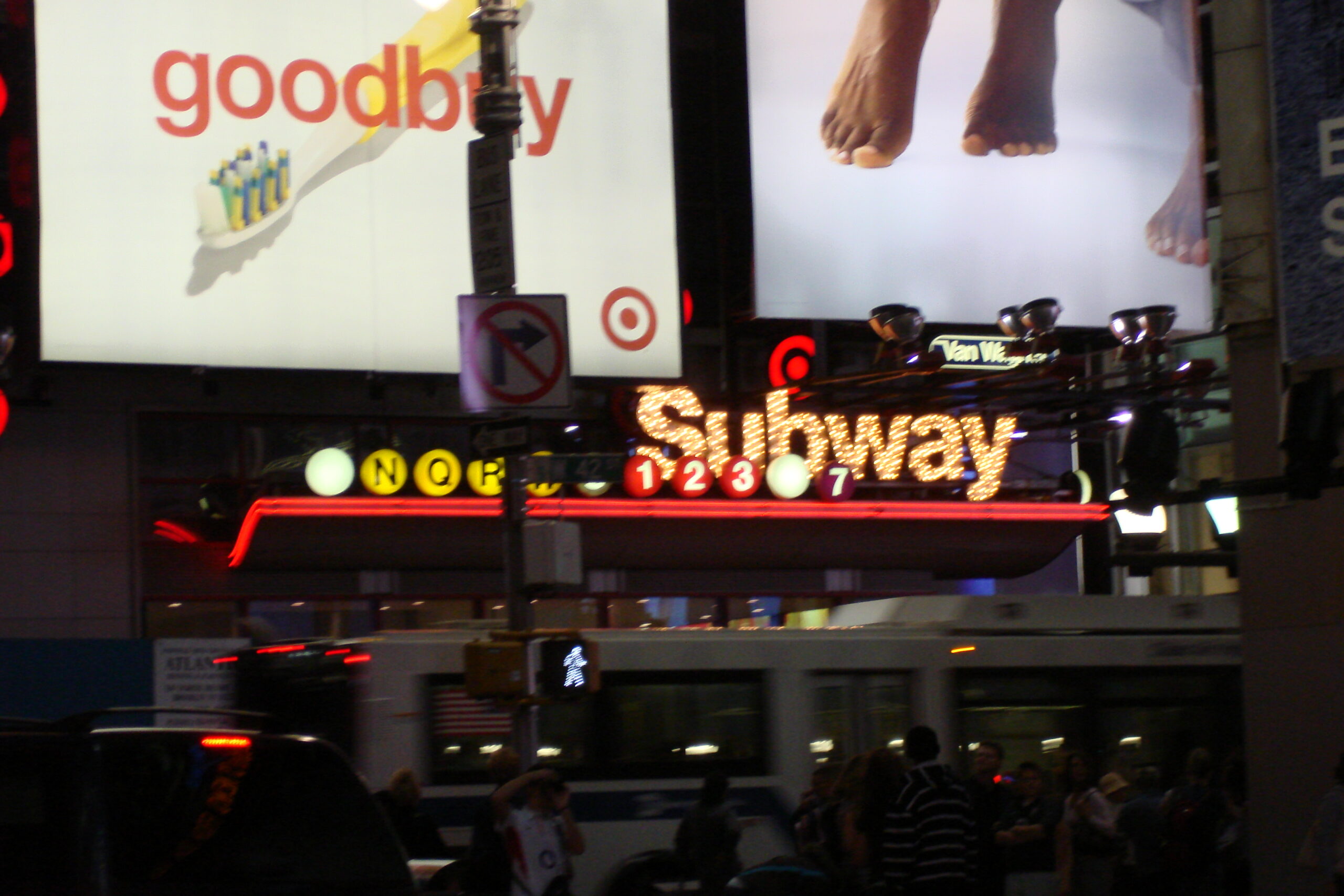
The Times Square–42nd Street subway entrance at night — a fitting post-show NYC scene for planning whether to walk, subway, taxi, rideshare, wait out the crowd, or head back to your hotel after Broadway, concerts, games, and major events.
Plan the Ride Home Before the Show Starts
The exit from a major NYC event is predictable. The show ends, several thousand people leave at the same moment, rideshare prices spike, subway entrances crowd, and the streets directly outside the venue become slow-moving. None of this is a surprise — and yet most visitors experience it as one, because they planned the evening without planning the end of it.
The return plan does not need to be complicated. It just needs to exist before the curtain falls. Which option — subway, walk, car — fits your hotel location, your group, and the venue you are leaving. Which direction is the subway. Where you will request the rideshare if you are driving. Whether you are eating after the show. What the backup is if Plan A is crowded. That is the whole plan.
The Exit Is Part of the Night
“The worst post-show plan is no plan. The second-worst plan is doing exactly what everyone else is doing at the exact same moment.”
Planning the return before the show also changes the whole trip. You choose the right hotel for the venue. You think about whether to eat after the show or before. You decide whether to book something walkable or transit-dependent. The return trip is not an afterthought — it is the last impression of the night.
Walk, Subway, or Car: How to Choose
Best When the Route Is Short and You Know It
Walking beats every other option when your hotel is within a reasonable distance and the route is direct. No wait, no surge, no transfer. For Midtown hotels after Broadway, or Downtown Brooklyn hotels after Barclays, it is often the cleanest move.
Best When the Route Is Direct and You Are Comfortable
The subway wins on most post-show trips when the route is one or two stops without complicated transfers. It beats traffic, beats surge pricing, and at most major NYC venues it is the fastest option back to transit-connected hotels.
Best When Comfort, Weather, or Mobility Calls for It
The right choice when the group includes older visitors or kids, weather is bad, subway transfers are complicated, or you are dressed up for a special occasion. But only if you are requesting from a calmer pickup point, not directly at the venue exit.
Subway After a Show: When It Works Best
Subway Works Well When
- Route is direct — one or two stops, no complex transfer
- Returning to Midtown, Upper West Side, Long Island City, Downtown Brooklyn, Lower Manhattan, or most transit-connected hotel areas
- Leaving Broadway, MSG, Barclays, Radio City, Beacon, Carnegie, or most club venues
- Traffic is heavy and rideshare prices are high
- You are comfortable with the route and know the direction before entering
- You can wait a few minutes for the first crowd surge to pass
Subway Is Less Ideal When
- Route requires multiple transfers late at night
- Traveling with tired kids after a long night
- Accessibility needs require verified elevator access
- You are unsure of the direction and there is no signal underground
- Weather makes the walk to/from station uncomfortable
- The station is so crowded it feels overwhelming
- Returning from UBS Arena or MetLife Stadium — not standard subway venues
The most useful subway tip for post-show returns: do not enter the station the moment the show ends. Waiting five to ten minutes — long enough for the first crowd surge to flow through — converts a packed, slow descent into a normal boarding experience. This works after Broadway, after MSG, after Barclays. Use the bathroom, walk slowly to the entrance, and let the rush go ahead of you.
Always know your return direction — uptown, downtown, toward which borough — before the show ends. Figuring it out underground, with no signal, in a crowded station, is the scenario that turns a great night into a frustrating one.
Walking Back: The Best Option When It Works
Walking after a show is consistently underrated. For visitors staying in the Theater District, Times Square, Midtown West, Bryant Park, Penn District, or any hotel within a fifteen-to-twenty minute walk of their venue, walking can be faster than waiting for the subway to clear, faster than waiting for surge pricing to drop, and considerably more pleasant than standing on a crowded street corner watching the app countdown. After Broadway shows specifically, many Midtown hotels are within a walk that takes less time than getting in a car.
Walk When
- Hotel is within a comfortable distance — 15–20 min or less
- Route is direct and you know it
- Weather is fine
- The group is comfortable and not exhausted
- Staying near Theater District, Penn Station, Downtown Brooklyn, or Upper West Side after the relevant venue
- Streets are active and well-lit
Skip the Walk When
- Route is long, unfamiliar, or involves isolated stretches
- Weather is bad — rain, cold, or icy sidewalks
- Traveling with young children who are tired
- Shoes or outfit make a walk uncomfortable
- Mobility is limited
- You are unsure of the route and have no signal to check it
The practical walking test: if you could walk from the venue to your hotel in Manhattan in under twenty minutes on a normal day, you can probably do it after a show on a fine evening. After Broadway, this includes most of Midtown. After Barclays, this includes most of Downtown Brooklyn and parts of Fort Greene. After Beacon Theatre, much of the Upper West Side. Walking from Radio City to a Midtown hotel is often the smoothest post-show move possible.
If you are considering walking and the hotel is further than you realize, a short subway ride to a station near the hotel — rather than a long walk or a ride from the venue — is often the middle-ground option worth considering.
Best Way Home by Venue
Broadway exits are dense but genuinely manageable. The Theater District is surrounded by hotel clusters — Midtown West, Times Square, Bryant Park, Penn Station, and Hell’s Kitchen — all within walking range of most theaters. For visitors staying in any of these areas, walking is often the cleanest post-show move: no wait, no transfer, no surge pricing.
For the subway, the choice of station matters. Do not automatically follow the crowd into Times Square–42nd Street. Depending on your theater and hotel direction, 49th Street, 50th Street, 7th Av/53 St, or Bryant Park may deposit you closer to your destination with less station congestion. Know the right station for your specific theater address before the show ends.
For rideshare, avoid requesting directly on the theater block. Walk one avenue over — toward 8th or 9th if you were on 45th–52nd, toward 6th if you were east of Broadway — before opening the app. The pickup will be smoother and the price usually lower.
MSG’s greatest asset — Penn Station directly beneath the arena — is also the source of its main post-event challenge. The Penn Station corridor fills rapidly after concerts and games, and the streets around 34th and 7th become slow-moving. Visitors who try to call rideshare directly outside the arena doors are competing with thousands of other people for the same cars in the same congested zone.
The subway is often the right call if you know your direction and line before the show ends. For Manhattan hotel guests, the 1/2/3 moving south or the A/C/E offer direct options to most hotel areas. If the station feels overwhelming immediately after the event, walk a few blocks before entering — south toward 28th Street, or north toward 42nd, depending on your direction.
For rideshare after MSG, walk a block or two east toward 6th Avenue or west toward 8th before requesting. The pickup points on Koreatown’s 32nd Street and the quieter blocks off 7th Avenue work meaningfully better than the arena entrance. Koreatown also provides the useful option of stopping for food while the crowd disperses — a late-night Korean BBQ or snack after a Rangers game is a legitimate post-event strategy, not just a consolation.
Barclays has an advantage that MSG does not: the post-event crowd disperses in multiple directions because the station serves so many different lines. The 2/3 going to Manhattan, the B/D heading to different parts of Brooklyn, the N/Q/R, the 4/5 — each line draws a different portion of the crowd, and the platform fills and empties faster than a single-line station would. Still, the immediate plaza outside the arena can crowd quickly at event end.
For visitors staying in Downtown Brooklyn, Fort Greene, or Boerum Hill, walking after Barclays is often the smartest move. The neighborhoods are active, the hotel stock is good, and a fifteen-minute walk beats a crowded platform. For Manhattan-bound visitors, the 2/3 express from Atlantic Avenue is typically the fastest route back, and knowing which direction before the show ends is the difference between a confident return and a confused one.
LIRR passengers from Long Island should verify current service before the event — some LIRR trains add special event service from Atlantic Terminal, but schedules vary. Check before heading in, not after.
Radio City Music Hall sits in Rockefeller Center with strong Midtown hotel density on all sides. For most Midtown hotel guests, walking is the most practical and pleasant post-show option. If subwaying, the B/D/F/M at 47–50 Streets–Rockefeller Center and the N/Q/R/W at 49th Street are both close. Rideshare works well if you walk a block or two before requesting — the 6th Avenue corridor picks up more easily than the Rockefeller Center plaza.
Carnegie Hall visitors in Midtown West and Central Park South hotels can usually walk. Columbus Circle is right there. The subway at 57th Street/7th Avenue (N/Q/R/W) or 59th Street/Columbus Circle (A/B/C/D/1) covers most other directions.
Beacon Theatre visitors should treat the return as an Upper West Side night. If staying in the neighborhood, walk. If not, the 1/2/3 at 72nd Street is the standard option — and the Upper West Side has enough post-show restaurant and bar options that waiting out the crowd is genuinely pleasant rather than just a strategy.
Both stadiums have direct subway access — the 4/B/D to 161st Street for Yankee Stadium, the 7 to Mets–Willets Point for Citi Field — but post-event crowds at both stations are substantial. The key is patience. Trying to be first on the platform after a sold-out event at either venue is rarely worth the stress; waiting five to ten minutes in the stadium or on the concourse until the first wave clears often converts a long, slow process into a normal train ride.
Know your return direction before the final out or buzzer. For Yankee Stadium, knowing whether you need uptown or downtown from 161st Street, or which transfer gets you where you need to go, is the difference between a confident exit and a confused one. For Citi Field, the 7 train returning to Times Square and points west handles a large post-event volume — consider staying seated for a few minutes rather than rushing the turnstiles.
UBS Arena and MetLife Stadium require transportation-first planning because neither is reachable — or leavable — by standard NYC subway. UBS Arena is served by LIRR from Penn Station, with the return train being the same service in reverse. MetLife Stadium uses NJ Transit bus service from the Port Authority, NJ Transit train to Secaucus Junction, or driving. Both venues have predictable post-event rail crowds — the strategy is the same as any stadium: wait a few minutes before joining the first rush to the platform.
Do not improvise the return from either venue. Know your return train or shuttle option before the event ends, and know the schedule. Missing the first train out of UBS Arena or the first bus from MetLife can add significant time to what should be a clean return trip.
Should You Leave Early to Beat the Crowd?
The honest answer: usually not. Leaving a few minutes before the final curtain or final buzzer can shave time off the subway wait or put you ahead of the main surge, but it also means missing the ending you paid for. And for most venues, waiting five to ten minutes after the show ends achieves the same crowd-reduction effect without sacrificing anything.
Leave Early When
- Catching a specific last train that has no flexibility
- Traveling with young kids who need to be home
- Mobility makes a crowded exit genuinely difficult
- The event is not close and you have seen enough
- Weather is making the return more complicated
Stay for the Full Show When
- The encore, finale, or last few minutes matter
- Waiting 10 minutes after will solve the crowd issue anyway
- Your hotel is close and the return is straightforward
- The night warrants the full experience you paid for
- You have a post-show food plan that handles the timing naturally
The better strategy in almost every case: plan to stay for the full show, and build a ten-to-fifteen minute buffer into the return by grabbing food, using the restroom, or walking slowly toward the exit rather than rushing. The crowd self-disperses faster than it feels in the moment, and the venue vicinity is usually calmer twenty minutes after an event ends than twenty seconds after.
Post-Show Food Strategy: When Waiting Is the Smartest Move
Sometimes the best way home from a show is not going home immediately. A twenty-minute stop for dessert, a drink, or a light snack after the event accomplishes several things at once: rideshare prices normalize, subway platforms clear, street crowds thin, and the night gets a proper ending instead of a harried one. The show becomes part of a full evening rather than the only thing that happened.
This works particularly well in neighborhoods with genuine late-night options. Koreatown on West 32nd Street stays open late and handles the post-MSG crowd well — the Korean BBQ and dessert spots there make a deliberate post-show stop easy rather than a consolation prize. Near Broadway, many restaurants in the Theater District and Hell’s Kitchen serve late. After Barclays, the Fort Greene and Boerum Hill neighborhoods have late-evening options. After Beacon Theatre, the Upper West Side has enough bar and restaurant density that lingering is pleasant.
The practical bar for this strategy: if your hotel is within walking or subway distance and you are not in a hurry, a deliberate twenty-minute food or drink stop after an event at MSG, Barclays, or Broadway consistently improves the return trip. Rideshare surge pricing drops. Platforms clear. The night does not end with stress.
Best Return Strategy by Hotel Area
Walk after Broadway shows. Subway or taxi for MSG, outer venues. Avoid overusing rideshare for very short hotel returns — the congestion around Times Square makes car pickups slow.
Walk or short subway for Broadway, Radio City, and MSG. One of the best hotel zones for multi-event trips — everything is accessible without complicated transfers.
Walk to MSG. Subway to Broadway. Strong transit access for outer venues via Penn Station rail. Best hotel zone for MSG-heavy weekends.
Walk after Beacon and Lincoln Center. Subway to Broadway and MSG. Good base for concert-heavy trips at Upper West Side venues without needing a car after the show.
Walk from Barclays Center in many cases. Subway to Manhattan for Broadway and MSG. The right hotel choice for Barclays-centered trips makes the return trivial.
Subway back from most Manhattan venues. Good value but late-night transfers and less dense walkability means return planning matters more. Verify late-night service before booking.
Direct subway works well for Broadway and MSG depending on line. Walkable after some club shows. Verify late-night service for post-midnight returns.
Right for football and MetLife-centered trips. Not ideal for NYC night-out-first planning — the return to a New Jersey hotel from Broadway or MSG is a real journey.
Family, Older Visitor & Group Return Advice
Simple Routes and Early Decisions
- Choose direct subway or taxi — avoid complicated late transfers
- Build bathroom time into the exit before reaching the station
- Know the backup car plan before the show ends
- Matinees make the return dramatically easier
- Waiting a few minutes after the show clears the crowd for kids too
- Hotel proximity matters more for families than any other group
Minimize Stairs and Transfers
- Avoid routes with multiple underground transfers late at night
- Verify elevator access before committing to subway if needed
- Taxi or rideshare may be worth the cost for a single comfortable return
- Do not rely on “short walk” if the sidewalk includes crowded blocks
- Hotel choice matters — proximity reduces post-show logistics
Decide Before the Show, Not After
- Set a meeting point outside the venue before going in
- Decide subway vs car before leaving — not on the sidewalk
- One person should not manage the whole plan under pressure
- Move away from the crowd before splitting rideshare requests
- Group size may make taxi or rideshare more economical
Comfort Over Optimization
- Know the route before leaving the venue
- Stay in busy, well-lit areas when walking after late shows
- Choose comfort over saving a few dollars if the route feels off
- Avoid complicated late-night transfers alone when a direct car is reasonable
- Have payment ready before entering the subway turnstile
Post-Show Decision Tree
Safety and Comfort After a Show
Post-show NYC is busy, active, and generally well-populated. The main practical concern for visitors is logistics — crowded exits, navigation under pressure, tired kids — rather than the kind of safety concerns that get overstated in travel advice. A few basics that actually help:
Keep your phone charged. The moments after a show are exactly when you need directions, payment, and communication. A dead battery at 11pm outside MSG is avoidable with a portable charger or a full charge before the event.
Do not stop in the middle of the exit crowd to check your map. Step to the side of the sidewalk, into a doorway, or toward a quieter block before looking at your phone. The main bottleneck after big events is often groups standing in the pedestrian flow trying to navigate.
Use official apps and marked taxis. After major events, unsolicited offers of rides are not an appropriate option. Use official rideshare apps or hail marked yellow or green cabs. Do not accept rides from unmarked vehicles regardless of what you are told.
Avoid empty subway cars late at night. Post-show trains on the main lines back from Broadway and arenas are populated. If a car is noticeably empty late at night, move to one with other passengers.
Have a backup payment method. Contactless tap-in is the simplest subway payment option, but having a second card or payment method available avoids the turnstile problem.
Common Post-Show Transportation Mistakes
Not planning the return before the event
The single most preventable cause of post-show stress. A two-minute decision before the show — subway direction, rideshare pickup point, or walking route — converts a chaotic exit into a smooth one.
Calling rideshare at the venue door with everyone else
The combination of surge pricing, crowded pickup zones, and drivers who cannot reach the entrance makes this consistently the worst rideshare move. Walk two to four blocks first.
Not knowing the subway direction before entering the station
Underground with no signal, in a crowd, with a group — this is the worst moment to figure out uptown vs downtown. Know it before you enter.
Treating UBS Arena or MetLife like a standard NYC venue
Neither is reachable by NYC subway for most visitors. Planning the return as if they were like MSG or Barclays creates serious timing and logistics problems.
Not having a group meeting point
Crowds separate people. Cell signal can be slow immediately after big events. A designated meeting spot — “the Duane Reade on the corner of X and Y” — solves this before it happens.
Booking a hotel far from the venue without a clear transit plan
A Long Island City hotel for a Broadway weekend, or a Midtown hotel for a Barclays Center concert, can work — but only if the post-show transit is planned. Hotel location and show choice should be considered together.
Rushing out first and then standing still on the sidewalk
The combination of leaving quickly and then stopping to figure out what to do is the main cause of crowded venue sidewalks. If you do not have a plan, staying seated for five minutes is better than adding to the congestion.
Frequently Asked Questions
It depends on where you are staying and what you are leaving. For Broadway, walking or a direct subway is usually best for Midtown hotel guests. For MSG, Penn Station subway or walk-then-request-rideshare. For Barclays, Brooklyn subway or walk to nearby hotel. For stadiums like Yankee Stadium and Citi Field, plan the subway return before the final out. For UBS Arena and MetLife, follow the pre-planned rail or driving route. The universal answer is: decide before the show, not after.
Yes, for most Midtown hotel guests. The subway is usually the fastest and cheapest option back to transit-connected hotels, and Times Square has enough lines that the right station for your hotel is usually close. The key: know your station and direction before the show ends, and consider waiting five to ten minutes at the exit before joining the first crowd wave at the turnstile.
Not immediately outside the theater. Rideshare prices spike right at curtain, pickup zones on tight theater blocks are congested, and every driver has the same problem reaching the same block. Walk one avenue west (toward 8th or 9th) or east (toward 6th) before requesting. Prices usually normalize within fifteen minutes, and the pickup works significantly better one block away from the theater district foot traffic.
Walk if the hotel is within a comfortable distance and the route is direct. Taxi if the group includes older visitors or kids, weather is bad, or the hotel is not walkable. For many Midtown Broadway visitors, walking genuinely beats a taxi — no wait, no surge, faster than a car in post-show congestion.
It depends on where your hotel is. Theater District and Midtown West hotels: walk. Penn Station / Herald Square hotels: walk or short subway. Hotels in other Midtown areas: direct subway or taxi. Hotels in Brooklyn: subway is usually the right call. The best hotel for a Broadway weekend is one where this question has a simple answer before you book.
For Manhattan hotel guests, the subway from Penn Station is usually the fastest option — the 1/2/3 and A/C/E run from stations directly below and adjacent to the arena. If the Penn Station area feels too crowded right at event end, walk a block or two before descending, or grab food in Koreatown while the crowd disperses. For rideshare, walk east toward 6th Avenue or west toward 8th before requesting.
Atlantic Avenue–Barclays Center serves nine subway lines, and the crowd disperses in multiple directions faster than a single-line station would. For Manhattan-bound visitors, the 2/3 express is usually the fastest return. For guests staying in Downtown Brooklyn, Fort Greene, or Boerum Hill, walking is often the best option. Know your direction before entering the station.
Yes, in most cases. The immediate post-event moment is when surge pricing peaks and driver availability near the venue is worst. Waiting ten to fifteen minutes — long enough to grab dessert, use the restroom, or walk away from the main exit crowd — typically drops prices significantly and makes pickup smoother. The delay is almost always worth it.
Yes, for most NYC venues. The main post-concert subway consideration is crowds at the station entrance immediately after the event. Waiting five to ten minutes, or walking to a slightly less central entrance, converts a crowded, slow experience into a normal one. For UBS Arena and MetLife Stadium, the subway is not the answer — LIRR and NJ Transit respectively are the standard return options.
Prioritize a direct, simple return. Direct subway with no complicated transfer, or taxi/rideshare booked and ready. Know the plan before the show ends so there are no decisions to make with tired kids on a crowded sidewalk. For families, hotel proximity to the venue matters more than almost any other factor — it converts a potentially stressful return into a five-minute walk.
Yes, for the relevant routes. The Theater District, Times Square, and surrounding Midtown streets are busy and well-populated after shows. Walking from a theater to a nearby Midtown hotel on a fine evening is a practical, normal choice. For routes that are longer, less familiar, or involve isolated stretches, subway or taxi is the more comfortable option.
The NYC subway runs 24 hours, but late-night frequency on many lines drops after midnight. A train that runs every 5–7 minutes during the evening may run every 15–20 minutes after midnight. For shows ending at 10:30–11pm, this is usually not a major concern on main lines. For club shows ending at 1am or later, checking the specific line’s late-night schedule before the event is worthwhile.
Not planning the return before the show starts. Everything else — wrong rideshare timing, wrong station entrance, not knowing the direction — flows from that one gap. The return plan does not need to be elaborate. It just needs to exist before the lights come up.
For most venues, yes — hotel proximity is the single most effective way to simplify the post-show return. A hotel within walking distance of your venue turns the return into a non-issue regardless of subway crowds, surge pricing, or weather. It is worth factoring into hotel choice when booking, especially for Broadway weekends, major concerts, and sports nights where the post-event situation is predictably busy.
More NYC Night Out Transportation
The Night Ends Well When the Return Is Part of the Plan
Getting home after a show in NYC is easiest when it is part of the evening from the start. Broadway may be a walk or a direct subway — decide which before you sit down. MSG may be Penn Station, Koreatown first, or a few blocks from the rideshare surge — know which applies to your hotel. Barclays may be a Brooklyn subway return or a short walk — commit to Brooklyn for the whole night. Yankee Stadium and Citi Field require patience at the platform and a direction you already know. UBS Arena and MetLife require transportation-first planning before the event, not after.
The goal is not to escape the crowd first. The goal is to leave with a route that fits your group, your hotel, your comfort level, and the kind of night you actually planned. A great show deserves a calm ending.
Finish the night around the walk-back, subway direction, rideshare pickup, late food stop, hotel base, and venue exit
The show is not really over when the curtain falls. Broadway, MSG, Barclays, Radio City, Beacon, Yankee Stadium, Citi Field, UBS Arena, and MetLife all empty differently. Use these guides to choose the smart way home before the crowd hits the sidewalk.
Best Way to Get Home After a Show in NYC
This is the late-night return guide for walking, subway, taxi, rideshare, hotel returns, families, groups, venue-specific exits, and waiting out the first post-event rush.
You are hereThe best post-show move is usually not the first move everyone else makes.
Walk a few blocks, wait ten minutes, know your train direction, or grab food nearby. A little delay often saves the whole ending.
NYC Transportation Hub
The main hub for subway, commuter rail, parking, rideshare, venue routes, and event-night transportation strategy.
Open transportation hub → SubwayNYC Subway Tips for Shows and Events
Use this when the smart return is transit: station choice, direction, service changes, crowded platforms, and late-night basics.
Ride smarter → Car vs TrainUber vs Subway for NYC Nights Out
Compare when a car is worth it, when the subway wins, and when rideshare is just an expensive way to sit in traffic.
Compare options → Broadway SubwaySubway to Broadway
Best station choices for Theater District shows, including how to avoid the most crowded Times Square entrances after curtain.
Plan Broadway subway → BroadwayHow to Get to a Broadway Show
The full Broadway arrival-and-exit guide for subway, commuter rail, walking, rideshare, parking, and hotel returns.
Plan Broadway route → ParkingParking Near Broadway
Driving to the Theater District only works with a garage and exit strategy already chosen before the curtain goes up.
Plan Broadway parking → ConcertsHow to Get to NYC Concert Venues
Concert venue routing for MSG, Barclays, Radio City, Beacon, Terminal 5, Brooklyn rooms, stadium shows, and Queens venues.
Plan concert route → Concert ParkingParking Near NYC Concert Venues
Use this when driving is on the table and you need garage, stadium lot, or rideshare-zone strategy before the show.
Plan concert parking → MSGHow to Get to Madison Square Garden
Penn Station, subway, rail, walking, rideshare pickup points, and post-event movement around 34th Street.
Plan MSG exit → MSG FoodRestaurants Near Madison Square Garden
Koreatown and nearby late-night food can be the smartest way to let MSG crowds and rideshare surge fade.
Wait it out near MSG → BarclaysHow to Get to Barclays Center
Atlantic Avenue subway lines, Downtown Brooklyn walk-backs, LIRR, rideshare, and game/concert exit strategy.
Plan Barclays exit → Brooklyn FoodRestaurants Near Barclays Center
Fort Greene, Boerum Hill, Prospect Heights, and Downtown Brooklyn food options for waiting out the arena rush.
Find Barclays food → Radio CityHow to Get to Radio City Music Hall
Rockefeller Center subway, Midtown hotel walks, holiday crowd timing, rideshare, and post-show Midtown movement.
Plan Radio City exit → BeaconHow to Get to Beacon Theatre
Upper West Side subway, walking, rideshare, parking, and post-show neighborhood exits after Beacon concerts.
Plan Beacon exit → YankeesHow to Get to Yankee Stadium
4/B/D subway return, Metro-North, parking, postgame crowds, and how to avoid panicking at 161st Street.
Plan Yankee Stadium exit → Citi FieldHow to Get to Citi Field
7 train, LIRR, parking, Flushing food, concert crowds, and the smarter way to leave Mets-Willets Point.
Plan Citi Field exit → UBS ArenaHow to Get to UBS Arena
LIRR, parking, rideshare, Islanders nights, concerts, and why UBS should never be treated like a standard subway venue.
Plan UBS return → MetLifeHow to Get to MetLife Stadium
NJ Transit, driving, shuttles, tailgating, concert exits, football traffic, and the return plan that must be set in advance.
Plan MetLife return → Late FoodBest Post-Show Restaurants in NYC
Use food as a strategy: let surge pricing, subway crowds, and sidewalk chaos fade while the night gets a better ending.
Find post-show food → Broadway FoodRestaurants Near Broadway
Late dinner, dessert, drinks, and walkable food after a Theater District curtain.
Eat near Broadway → Broadway StayWhere to Stay for Broadway Weekends
The easiest post-show trip is often no trip: pick a hotel area that makes walking back realistic.
Choose Broadway base → Concert StayWhere to Stay for Concert Nights
MSG, Barclays, Radio City, UBS, MetLife, Beacon, and stadium shows all reward different hotel choices.
Choose concert base → Walk BackHotels Near Broadway
For Broadway visitors, hotel proximity is the cleanest transportation plan you can buy.
Find Broadway hotels → MSG StayHotels Near Madison Square Garden
Penn Station, Herald Square, Koreatown, and Midtown West hotels that simplify the MSG exit.
Find MSG hotels → Broadway AreaTheater District Guide
Know the blocks, stations, hotel zones, food areas, and post-show flow before you step out of the theater.
Explore Theater District → MSG / BroadwayMidtown West Guide
MSG, Penn Station, Hell’s Kitchen, Broadway crossover, hotels, restaurants, and the best walk-back logic.
Explore Midtown West → Barclays BaseDowntown Brooklyn Guide
Best area guide for Barclays Center walk-backs, Brooklyn hotels, restaurants, and subway exits.
Explore Downtown Brooklyn → Beacon / LincolnUpper West Side Guide
Beacon, Lincoln Center, calm walk-backs, 1/2/3 subway access, neighborhood restaurants, and hotel logic.
Explore Upper West Side → Food HubNYC Restaurants Hub
The main restaurant hub for pre-show, post-show, concert, sports, Broadway, family, date-night, and late food planning.
Open restaurants hub → HotelsNYC Hotels Hub
Hotel area is transportation strategy. The right stay can remove the whole post-show scramble.
Open hotels hub → NeighborhoodsNYC Neighborhoods Hub
Compare the areas that make event nights easier: Theater District, Midtown West, Downtown Brooklyn, Upper West Side, and more.
Compare neighborhoods → Full NightNYC Night Out Hub
The full planning hub for restaurants, hotels, transportation, parking, neighborhoods, Broadway, concerts, and sports.
Plan the whole night →