

Midtown West NYC — Neighborhood Guide
The practical case for Midtown West as your base — why it works better than Times Square for MSG nights, and what the neighborhood is actually like on the ground.
Midtown West is not the neighborhood most people imagine when they picture a memorable Manhattan visit. It does not have the tucked-away character of the West Village or the culinary energy of the East Village. What it has is Penn Station directly below Madison Square Garden, a strong dining block in Koreatown a five-minute walk from the arena, and a hotel corridor that puts you within walking distance of one of the busiest entertainment venues in the world.
For event-focused visits — MSG concerts, Knicks games, Rangers games, or any night where Penn Station is the transportation hub — that combination is genuinely hard to beat. This guide explains what Midtown West is, when it makes sense as a base, and when you might be better served staying somewhere with more character instead.
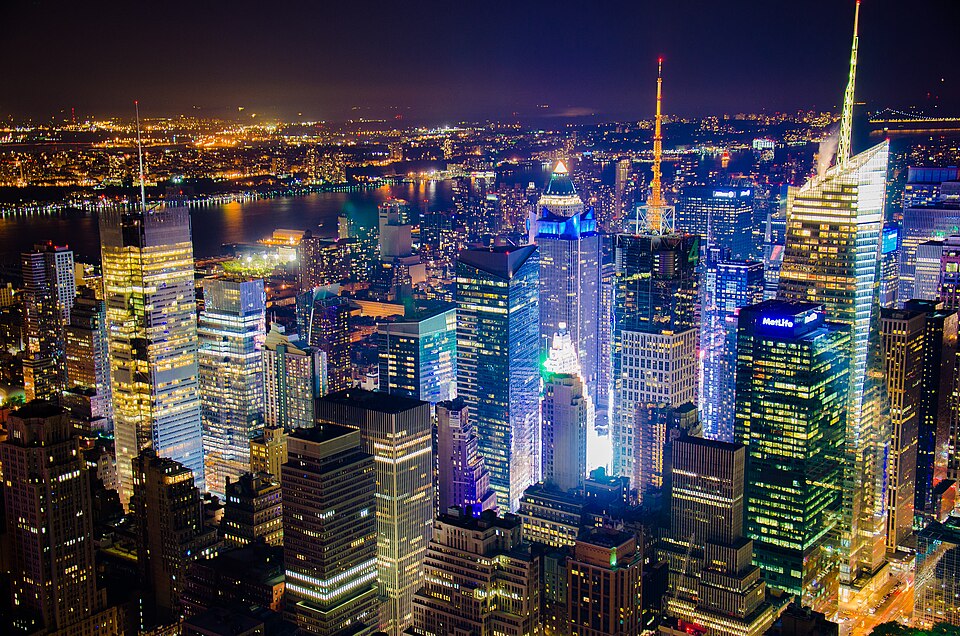
Midtown West in Manhattan, the practical neighborhood base that makes Madison Square Garden, Penn Station, and nearby event-night planning much easier to manage.
What Midtown West Actually Means
Midtown West is a loosely defined area — different sources draw its edges differently. For the purposes of entertainment and event-night planning, the relevant core is the corridor roughly between Penn Station at 34th Street and the upper 40s, west of Fifth Avenue toward Ninth Avenue. This is the area most directly shaped by Penn Station’s presence, MSG’s footprint, and the overflow of the Theater District a few blocks east.
It is worth noting what Midtown West is not, because confusion about this comes up constantly. Hell’s Kitchen — the neighborhood running from roughly 34th to 59th Streets along Ninth and Tenth Avenues — overlaps with what many people call Midtown West but has a genuinely different character: more residential, more dining-forward, more neighborhood-like. The two bleed into each other at the edges, but they are distinct. Koreatown, on 32nd Street between Fifth and Sixth Avenues, sits technically at the southern edge of this corridor and functions as one of its best dining assets despite being technically adjacent rather than interior.
The neighborhood’s core identity, at least from an entertainment-planning perspective, is defined by Penn Station. Everything convenient about this area flows from that one geographic fact: the transit access, the MSG proximity, the commuter rail advantage, and the logic of staying here over staying in Times Square for an event-focused night.
Why Midtown West Is the Natural Base for MSG Nights
The argument for Midtown West as an MSG base is simple and structural, not atmospheric. Madison Square Garden sits above Penn Station, and Penn Station is the heart of this neighborhood. If you are staying in Midtown West — particularly in the Penn Station corridor between 34th and 40th Streets — you are within walking distance of the arena on both ends of the evening. That changes the whole night.
Post-event at MSG, 7th Avenue briefly becomes one of the most congested pedestrian corridors in Midtown. Rideshares surge. Taxis are occupied. Subway platforms fill. The one exit strategy that sidesteps all of it is walking back to a nearby hotel. If you are staying in the Penn Station corridor, that is a 5–15 minute walk — on your own schedule, no app required, no waiting. For family groups, couples on a night out, or anyone who simply wants the evening to end cleanly, this is a meaningful quality-of-life advantage over staying in Times Square or across Midtown East.
The commuter rail advantage compounds this. For visitors arriving from New Jersey or Long Island, Penn Station puts you door-to-door with MSG. NJ Transit and the Long Island Rail Road both terminate at Penn Station, which is directly below the arena. Suburban visitors who stay in the Penn Station corridor get the clearest possible version of the MSG experience: train in, walk up, watch the event, walk back, train home or sleep nearby. No transfers, no rideshare surge, no fifteen-block march across Midtown.
What being close to MSG actually saves you
Avoid post-event surge pricing, packed platforms, and the 7th Avenue gridlock by being close enough to walk. 10–15 minutes on foot beats 30–45 minutes in traffic or a surge-priced Uber.
NJ Transit and LIRR terminate at Penn Station. If you’re arriving from New Jersey or Long Island, this puts you within 5 minutes of MSG the moment you step off the platform.
32nd Street’s Korean restaurant block is among the best value-per-minute pre-show dining in Midtown — open late, moves quickly, and serves food that is considerably more interesting than most arena-adjacent options in any city.
The Midtown West hotel corridor near Penn Station has more options at more price points within walking distance of MSG than any other neighborhood. From mid-range reliable chains to full-service hotels, the concentration is high. See the hotels near MSG guide, or the hotels near Penn Station guide if you are arriving by train.
The Honest Tradeoffs — What Midtown West Is Not
Any useful neighborhood guide has to be honest about what the place is not, and Midtown West has real limitations that are worth knowing before you book.
It is not a neighborhood with strong street-level character
The blocks immediately around Penn Station and 7th Avenue between 31st and 40th Streets are primarily commercial — hotels, office buildings, chain restaurants, transit corridors. They are functional. They are not charming. If you are hoping for a neighborhood that feels lived-in, browsable, and textured in the way that SoHo, the West Village, or even Hell’s Kitchen can feel, this is not that. The trade you make for convenience is a certain amount of atmosphere.
The Penn Station immediate area can feel utilitarian
The blocks directly around Penn Station — particularly 31st and 32nd Streets between 7th and 8th Avenues — are not the most appealing stretch of Midtown on a casual stroll. They are dense, busy, and built around transit rather than leisure. This is worth knowing if you are imagining a walkable, pleasant neighborhood to spend time in before or after an event. Moving a few blocks north toward 38th–42nd Streets, or west toward 9th Avenue, improves the street experience considerably.
Dining outside of Koreatown requires more intentionality
The immediate MSG/Penn Station corridor is not rich in destination restaurants. Koreatown, a five-minute walk on 32nd Street, is genuinely excellent and solves most pre-show dinner needs. Hell’s Kitchen, a few blocks northwest, has the best overall restaurant density for the area. But if you are not steering toward one of those corridors deliberately, the default options around 7th Avenue and Penn Station lean toward chains and hotel restaurants rather than memorable meals.
It is a poor choice if atmosphere is the primary goal
If you are planning a New York City trip where the neighborhood itself is part of what you want to experience — where you want to feel like you are staying somewhere that has character and personality — Midtown West near Penn Station is unlikely to deliver that. It delivers access. For visitors whose primary goal is a specific event at MSG, that access is worth more than atmosphere. For visitors whose goal is a romantic or immersive Manhattan weekend, there are better bases.
Midtown West vs. Times Square, Hell’s Kitchen & Midtown South
The most useful comparison for MSG-focused visitors is not Midtown West against downtown neighborhoods — it is Midtown West against the other Midtown options. Here is how the comparison actually stacks up for event nights.
Closest walk to MSG. Penn Station transit advantage. Koreatown dining. Walk-back post-event. Wide hotel range. Less neighborhood character; more pure logistics value.
Iconic but genuinely more congested. The 1/2/3 subway south to 34th Street is usually faster than walking from a Times Square hotel. More tourist density. The step up in walk time and post-event crowd logistics is real.
More neighborhood character, better restaurant density, and 9th/10th Avenue blocks have genuine energy. Slightly further from MSG. A great base if dining quality matters more than pure arena proximity.
Quieter, more polished feel around 40th–42nd Streets between 5th and 6th Avenues. Good hotel options. Slightly less direct MSG access — a subway stop or a longer walk west. Works if you prefer a calmer base with a short transit hop to MSG. See hotels near Bryant Park.
Why Times Square is often the worse choice for MSG nights
Times Square hotels are frequently the first thing that comes to mind for Midtown Manhattan visits, and they are excellent for Broadway show nights — you are close to most theaters, the energy is high, and the neighborhood is unmistakably New York. For MSG nights, the calculus is different. Times Square hotels sit roughly ten to fifteen blocks north of Madison Square Garden. That is a walk of 15–20 minutes in normal conditions, longer when Midtown is crowded. And it puts you further from Penn Station, which matters both for commuter rail arrivals and for post-event rideshare logistics.
For visitors combining a Broadway show and an MSG event in the same trip, Times Square is still a reasonable compromise base. For visitors whose trip is primarily MSG-focused, the Penn Station corridor is the more efficient answer.
The best neighborhood for any NYC event trip is the one that makes the specific event you are attending easier, not the one that feels most like “staying in New York.” For MSG, that logic points toward Midtown West and Penn Station. For Broadway, it points toward the Theater District. For a general Manhattan exploration trip, a neighborhood with more character — the West Village, SoHo, or the Upper West Side — may serve you better even if it requires a subway ride to the event. Know which type of trip you are taking before you decide where to stay.
Koreatown, Penn Station, and Why This Area Works Better Than It Looks
The immediate MSG corridor can give the wrong impression if you are judging the neighborhood purely by the blocks around 7th Avenue and 33rd Street. Two assets change the picture considerably: Koreatown and Penn Station.
Koreatown — 32nd Street between 5th and 6th Avenues
A five-minute walk from MSG, Koreatown is one of Manhattan’s most reliable pre- and post-show dining corridors. The concentration of Korean restaurants on 32nd Street — Korean BBQ, hot pot, bibimbap, late-night soju bars — is dense, affordable by Midtown standards, and open later than most of the surrounding neighborhood. It moves quickly, which matters when you are trying to eat before a 7:30pm event without rushing. And it stays busy and lively after shows end, which makes it an excellent post-event option for the “wait out the surge, then leave” strategy that works so well on MSG nights.
Koreatown is also the most distinctive dining block in this part of Midtown. In a neighborhood where the default options skew toward chains and hotel restaurants, having a single street of genuinely interesting food within a five-minute walk of both MSG and the Penn Station hotels is a meaningful upgrade to what the area’s dining reputation might suggest.
Penn Station as neighborhood infrastructure
Penn Station is not just transportation infrastructure — it is the reason this neighborhood works as an event base. The direct-to-arena subway (A/C/E and 1/2/3 trains to 34th Street), the NJ Transit connection from across New Jersey, the LIRR from Long Island, and the Amtrak corridor from the Northeast all converge here. That makes Midtown West the easiest Manhattan neighborhood to reach from the widest range of starting points. Visitors from New Jersey or Long Island who might otherwise stay near Times Square are often better served by the Penn Station corridor specifically because it reduces their transit to a single leg each way.
For full transit details, see the how to get to Madison Square Garden guide.
Who Should Stay in Midtown West — and Who Shouldn’t
Midtown West near Penn Station is the right base for a specific type of visitor. It is not the right base for everyone. Here is an honest breakdown.
If your visit is built around a concert, Knicks game, or Rangers game at MSG and you want everything else to be as frictionless as possible, Midtown West near Penn Station is the right call. Walking home after the event is worth more than almost any other neighborhood advantage on an MSG night.
If you are arriving by NJ Transit, LIRR, or Amtrak and want the smoothest possible evening — train in, short walk to hotel, walk to MSG, walk back — this neighborhood is built for exactly that trip. Start with hotels near Penn Station.
A single-night trip built around an MSG event — fly in, check in, see the show, fly out — does not require neighborhood charm. It requires proximity. Midtown West delivers that with the widest range of hotel options in the immediate area.
If your visit includes multiple Midtown destinations — MSG one night, Times Square or Midtown shopping another — the Penn Station corridor is a workable central base, though Times Square hotels may make more sense if Broadway is the primary draw. For a daytime add-on, the Edge observation deck at Hudson Yards is a 10–15 minute walk west of Penn Station.
If what you want from your New York trip is a neighborhood that feels interesting and textured to walk around in, Midtown West near Penn Station is not the answer. Hell’s Kitchen, the West Village, SoHo, or the Upper West Side would serve that goal better — with a subway ride to MSG on event night.
The Penn Station corridor is not romantic. If the trip is primarily about the experience of being in Manhattan — exploring, wandering, discovering — staying here means trading something real. Know what matters more for your specific trip.
Planning a Full MSG Night from Midtown West
The advantage of basing an MSG night in Midtown West is that all the logistics connect cleanly. Here is how the pieces fit together.
A well-planned MSG night from Midtown West typically looks like this: arrive by commuter rail or subway to Penn Station in the afternoon, check in to a hotel within a few blocks, walk to Koreatown for dinner before the show, walk to MSG for the event, and walk back to the hotel when it is done. No transit, no surge pricing, no platform crowds — just a clean loop within fifteen blocks. It is not glamorous as a neighborhood experience, but as a night-out logistics system it is nearly frictionless.
Koreatown solves the pre-show dinner problem well, but if you want more variety or a longer pre-event evening, walking west into Hell’s Kitchen adds ten minutes and opens up one of the better restaurant neighborhoods in the Broadway and entertainment corridor. The 9th Avenue stretch between 44th and 50th Streets has the most concentrated dining options. It is worth the extra walk if you have time before the show.
Frequently Asked Questions
It depends entirely on what your visit is for. If your trip centers on Madison Square Garden — a concert, Knicks game, Rangers game, or another MSG event — Midtown West near Penn Station is one of the most practical bases in the city. If your trip is primarily about exploring New York neighborhoods, dining, and Manhattan atmosphere, there are more rewarding places to stay. Midtown West is strong on logistics and transit; it is not strong on neighborhood character.
For MSG specifically, yes — usually. Hotels in the Midtown West / Penn Station corridor are closer to the arena, give you a direct walk home after the event, and put you next to Penn Station for commuter rail arrivals. Times Square hotels are excellent for Broadway and general Midtown tourism, but they add ten to fifteen blocks of distance to MSG and put you further from the transit advantage that makes this neighborhood particularly efficient for arena nights.
Koreatown on 32nd Street between Fifth and Sixth Avenues — a five-minute walk from MSG — is the standout option. The concentration of Korean restaurants is high, prices are reasonable by Midtown standards, and the block stays open late. Hell’s Kitchen, a short walk northwest on Ninth Avenue, has broader variety and more neighborhood restaurant energy. For specific picks, see the restaurants near Madison Square Garden guide.
Midtown West (as used here) refers to the commercial corridor clustered around Penn Station, MSG, and the lower 30s–40s west of Fifth Avenue. Hell’s Kitchen is the more residential neighborhood running along Ninth and Tenth Avenues from roughly 34th to 59th Streets — with more dining density, more neighborhood character, and a slightly more local feel. They overlap at the edges. For pure MSG logistics, the Penn Station end of Midtown West is the right frame. For dining and atmosphere, Hell’s Kitchen is the stronger option.
The walk from Penn Station at 34th Street to the heart of Times Square at 44th–46th Streets is roughly 10–15 minutes on foot, depending on pace and street-level crowds. The 1/2/3 trains connect both in one or two stops. For visitors who want proximity to both MSG and Times Square/Broadway, the Midtown West corridor is a reasonable compromise base — though visitors whose priority is Times Square may find hotels a few blocks further north more naturally positioned.
Yes. Midtown West, including the blocks around Penn Station and MSG, is a heavily trafficked, well-lit, and commercially active part of Manhattan. The area around Penn Station has historically had more street-level activity than quieter parts of Midtown, but it is not an area that warrants particular safety concern for visitors. Basic urban street awareness applies, as it does anywhere in Midtown Manhattan.
Midtown West — The Short Version
Midtown West near Penn Station is not the Manhattan neighborhood that makes for the best Instagram or the most atmospheric evening walk. It is the neighborhood that makes an MSG night work with the least friction of any option in the city. Penn Station is there. The arena is there. Koreatown is five minutes away. The hotel corridor is deep and well-priced. And when the show ends and thousands of people pour out of MSG simultaneously, you walk back to your hotel instead of standing on a corner waiting for a surge to clear.
That is the value proposition, stated plainly. For visitors whose trip is built around Madison Square Garden, it tends to be the right one. For visitors who want more from their Manhattan neighborhood, the tradeoff is real and worth knowing before you book.
Midtown West Wins When the Night Is Built Around Madison Square Garden
This is the practical Midtown base: Penn Station under the arena, Koreatown five minutes away, hotels within walking distance, and a clean walk-back after concerts, Knicks games, Rangers games, and major MSG nights.
Hotels Near Madison Square Garden
Use this when the biggest win is walking back after the event instead of fighting rideshare surge, packed subway platforms, or Midtown traffic.
Plan the Stay Koreatown Saves DinnerRestaurants Near Madison Square Garden
Koreatown, Hell’s Kitchen, quick bites, pre-show timing, and the smartest food choices around MSG and Penn Station.
Plan the FoodCore Madison Square Garden Planning
Venue · Food · Hotels · TransitMadison Square Garden Guide
Concerts, arena layout, event-night flow, neighborhood context, hotels, restaurants, transit, and MSG planning.
MSG Concert Seating Guide
Floor vs lower bowl, Chase Bridge, side-stage warnings, upper levels, sightlines, and concert setup strategy.
Hotels Near Penn Station
The stay guide for Amtrak, NJ Transit and LIRR arrivals, including the Moynihan Train Hall side of the station.
Hotels Near MSG
Best hotel zones for walking back after the event, Penn Station access, Midtown West stays, and trip style.
How to Get to MSG
Subway, LIRR, NJ Transit, Amtrak, PATH, walking, rideshare, and post-event crowd flow around Penn Station.
Parking Near MSG
Garage strategy, Midtown traffic, event-night pricing, and when driving makes less sense than rail or subway.
Use This Guide While Reading
On-Page JumpsWhat Midtown West Is
Penn Station, MSG, the practical corridor, and how it differs from Hell’s Kitchen, Times Square, and Bryant Park.
Best Base for MSG
Why walking back after MSG changes the whole night and why Penn Station is the area’s real advantage.
Honest Tradeoffs
Functional blocks, limited charm, chain-heavy corridors, and why convenience is the reason to stay here.
vs Nearby Neighborhoods
Midtown West vs Times Square, Hell’s Kitchen, Bryant Park / Midtown South, and Theater District logic.
Koreatown & Penn Station
Why 32nd Street is the best dining asset in the MSG orbit and why Penn Station defines the area.
Who Should Stay Here
MSG-focused trips, commuter rail arrivals, one-night events, and who should choose a more atmospheric base.
MSG Sports, Concerts & Event Extensions
Knicks · Rangers · Concerts · SportsNYC Concerts Hub
Venue guides, seating, hotels, restaurants, transportation, date-night planning, and ticket timing strategy.
Best Concerts for Date Night in NYC
Useful when MSG, Radio City, Beacon, or another Midtown venue becomes the anchor for dinner and drinks.
When to Buy Concert Tickets
Ticket timing strategy for MSG, Radio City, Beacon, Barclays, Forest Hills, stadium shows, and major tours.
NYC Sports Hub
Basketball, hockey, baseball, football, teams, venues, seating, restaurants, transportation, and game-night planning.
New York Knicks Guide
Midtown West is the natural base for Knicks nights because MSG, Penn Station, hotels, and Koreatown connect cleanly.
New York Rangers Guide
Use the same MSG logic for Rangers nights: walkable hotel, food before the game, and no post-event transit scramble.
Compare Midtown West With Nearby Bases
Times Square · Hell’s Kitchen · Theater DistrictKoreatown Guide
The five-minute MSG dining move: Korean BBQ, late food, karaoke, dessert cafes, and post-event crowd strategy.
Hell’s Kitchen Guide
Better restaurant density and neighborhood character than Penn Station, with a slightly longer walk to MSG.
Times Square Guide
Better for Broadway spectacle and first-time tourist energy, but usually less efficient for MSG nights.
Theater District Guide
The better base when Broadway is the primary event and MSG is secondary or not part of the trip.
Bryant Park / Midtown South
A more polished Midtown alternative when you want calmer hotel energy and can handle a longer walk or quick subway hop.
Upper West Side Guide
Better for neighborhood feel, Beacon, Lincoln Center, Central Park, families, and quieter Manhattan stays.
Broader Night-Out Support Hubs
Food · Hotels · Transit · NeighborhoodsNYC Restaurant Guides
Pre-show dinners, post-show food, date-night restaurants, MSG food, Broadway food, and neighborhood dining.
NYC Hotel Guides
Where to stay for concerts, sports, Broadway, romantic trips, families, and transit-friendly weekends.
NYC Transportation Guides
Subway, LIRR, NJ Transit, Penn Station, rideshare, parking, walking, and post-event movement.
Where to Stay for Shows & Events
Compare Midtown West with Times Square, Theater District, Bryant Park, Upper West Side, Brooklyn, Queens, and more.
Hotels Near Bryant Park
A quieter Midtown hotel base one subway stop from Herald Square and MSG.
NYC Night Out Hub
Restaurants, hotels, transportation, neighborhoods, Broadway, concerts, sports, and full-evening planning.