

Times Square NYC: Things to Do, Hotels, Restaurants & Broadway
Explore Times Square NYC with practical guidance on things to do, attractions, Broadway, hotels, restaurants, the subway, Times Square at night, and when a nearby Midtown neighborhood is the smarter choice.
Times Square NYC is one of the most recognizable visitor destinations in New York — and one of the most useful Midtown bases for people planning Broadway, things to do, hotels, restaurants, subway access, and a first NYC trip. The mistake is not using it. The mistake is using it wrong: eating every meal in the immediate core, assuming all nearby restaurants are equal, or staying on the noisiest block when a calmer hotel half a block away would serve the same purpose with far less chaos.
This guide is not here to sell you on Times Square or warn you away from it. It is here to help you use it on purpose — deciding what is actually worth doing in Times Square, choosing the right edge to stay on, finding better dining zones, using the subway efficiently, seeing the area at the right time of day, and knowing when a nearby neighborhood like the Theater District, Hell’s Kitchen, or Bryant Park is actually the smarter call for your specific trip.
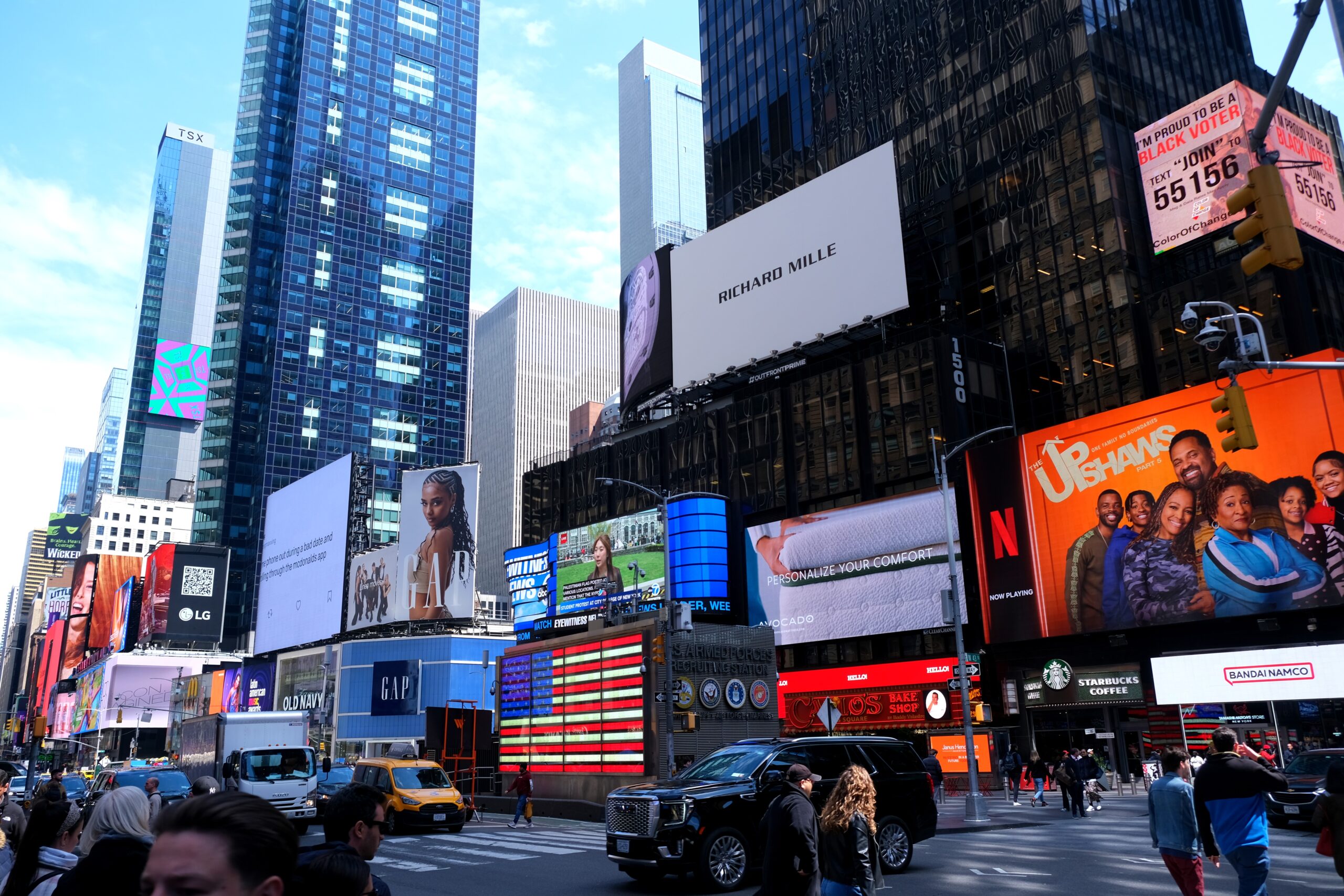
Times Square is one of the most useful places in NYC for first-time visitors, Broadway trips, and hotel convenience — if you know when to use it and when to step into nearby neighborhoods. Photo: Mary and Andrew, via Wikimedia Commons, CC BY 4.0.
Who Times Square Is — and Is Not — Best For
- First-time NYC visitors who want instant orientation
- Broadway visitors who want to walk to theaters
- Families who want simple, bright, busy logistics
- Short trips where convenience beats neighborhood charm
- Visitors who want lots of subway options
- People seeing shows, comedy, and Midtown events
- Hotel stays focused on proximity over atmosphere
- Travelers who genuinely dislike crowds
- Couples looking for a quiet romantic base
- Food-first visitors expecting strong dining options
- People who want a local neighborhood feel
- Anyone driving without a reserved parking spot
- Visitors expecting calm late-night streets
- Repeat visitors who want something different
Where Is Times Square in NYC? Geography, Location & Edges
For most visitors, Times Square means the bright pedestrian core where Broadway and Seventh Avenue converge around 42nd to 47th Streets. The broader Times Square Alliance district extends roughly from 40th to 53rd Streets between Sixth and Eighth Avenues, plus Restaurant Row on West 46th Street between Eighth and Ninth. The visitor experience changes quickly depending on which edge you use, and that direction makes a real difference to which restaurants, hotels, attractions, theaters, and subway lines are most practical.
Times Square is a district rather than a single building, so there is no one universal street address. For navigation, the Times Sq–42 St subway complex is the most useful transit reference point. For the red TKTS steps and Duffy Square, use the Broadway / West 47th Street area.
Closest to Hell’s Kitchen and many Broadway theaters. Best if restaurants and pre-show dining matter as much as the show itself. Quieter hotel options on the western blocks.
Closer to Bryant Park, Midtown South, and the Penn Station corridor. More polished hotel options, calmer streets, and easier access to MSG and Grand Central transit.
Closer to Fifth Avenue, Bryant Park, and Rockefeller Center. Good if Radio City, Midtown shopping, or Grand Central is part of the itinerary. Slightly calmer than the immediate core.
Closest to Columbus Circle, Central Park South, and the Upper West Side. Best if Beacon Theatre, Lincoln Center, or Central Park are on the agenda, or if you want a slightly calmer hotel block.
The best Times Square hotel stay is usually not on the busiest central blocks. A hotel one or two blocks off the main pedestrian plaza — particularly toward Hell’s Kitchen west or Bryant Park south — gives you the same subway and Broadway access with meaningfully less noise and crowd density. Always check the specific block before booking, not just the neighborhood name.
Things to Do in Times Square NYC
Times Square works best when you treat it as a concentrated Midtown experience rather than an all-day destination. The strongest things to do in Times Square combine the public plazas and lights with Broadway, a few specific attractions, and nearby Midtown stops that are easy to reach on foot.
The pedestrianized Broadway plazas through the Times Square core are the simplest way to experience the billboards, crowds, street-level energy, and changing public programming. They are especially striking after dark.
The red steps above the TKTS booth are one of the area’s most recognizable public spaces and a useful place to pause above the crowd. TKTS continues to sell discounted performance tickets, with current availability changing by show and day.
Times Square is the visual center of the Broadway district, while most Broadway theaters sit on the surrounding cross streets. Use the Broadway hub for show planning and the Theater District guide for theater-specific geography.
Madame Tussauds remains one of the major indoor attractions directly in the Times Square zone at 234 West 42nd Street. It is especially useful for families, rainy days, or visitors who want a ticketed attraction between other Midtown plans.
Times Square’s pedestrian plazas regularly host public art and seasonal performances. Programming changes, so check the current Times Square calendar rather than assuming a particular installation or event will be running during your visit.
Bryant Park, Rockefeller Center, Radio City, Fifth Avenue, Hell’s Kitchen, and the Theater District are natural extensions of a Times Square visit. The neighborhood works best when it anchors part of the day rather than swallowing the entire itinerary.
Use the dedicated child guides when your question shifts from neighborhood orientation to hotels, restaurants, Broadway, or transportation.
Times Square and Broadway — How They Connect
Times Square and Broadway are adjacent but not identical. Most Broadway theaters sit between 41st and 54th Streets on the blocks west of Times Square proper — on West 44th, 45th, 46th, 47th, 48th, and 50th Streets, primarily between 7th and 9th Avenues. Times Square is the visual centerpiece of the district, but the theaters themselves are on the calmer cross streets extending westward from it.
For Broadway visitors, this is good news: staying near Times Square puts you within walking distance of virtually every Broadway theater, without requiring you to be directly in the noisiest pedestrian plaza to do it. A hotel on the Theater District edge — the blocks just west and north of the Times Square core — is often the smartest Broadway hotel base.
For a full Broadway planning view — first-timer guides, seating charts, rush and lottery tickets, show recommendations — the Broadway hub is the right starting point. The Theater District neighborhood guide covers the theater-specific street-by-street planning that this page does not duplicate.
Pre-show dining, seating guidance, first-timer resources, and how to get to Broadway shows from your hotel or the subway.
Times Square Hotels — When It Makes Sense to Stay Here
Times Square hotels make the most sense for visitors whose priority is walking distance to Broadway theaters, subway access in multiple directions, and simple first-night orientation. The trade-off is real: these hotels often sit in denser, noisier blocks, tend toward the chain end of the hotel spectrum, and charge a premium for the location that does not always reflect room quality or comfort.
The smarter approach for most visitors is staying on the edge of Times Square rather than in the core of it. Hotels on the Theater District blocks (West 44th–47th, 8th–9th Avenues), on the Hell’s Kitchen side (9th Avenue corridor), or toward Bryant Park / Midtown South (south of 42nd) consistently deliver better room quality, quieter streets, and comparable Broadway access without the busiest-block premium.
Specific hotel options, what to check before booking, and when nearby neighborhood bases are a smarter choice.
What to check before booking a Times Square hotel
Sound insulation — some blocks are significantly louder than others. Room size — Times Square hotels often have smaller rooms than comparable-price options in Midtown South or Midtown West. Exact block location — a hotel on West 45th between 8th and 9th is a very different stay from one on 42nd and Seventh Avenue. Guest reviews specifically mentioning noise and room size are worth reading before committing.
Times Square Restaurants — How to Avoid the Obvious Trap
Times Square has no shortage of restaurants. It does have a shortage of great restaurants relative to the density of options available, and the most visible, most conveniently located options are frequently not the best ones. The tourist-facing chains and high-volume operations in the immediate core tend toward expensive, mediocre, and slow — a combination that ruins pre-show timing and post-show energy.
The better strategy is deliberate and slightly outside the core:
For pre-show dinner: Theater District side streets and Hell’s Kitchen one block west are the strongest zones. Restaurant Row on West 46th Street, the Hell’s Kitchen corridor along 9th Avenue, and the Bryant Park edge all offer better meals at better prices than the Times Square pedestrian plaza core. Book ahead — show nights fill these restaurants fast.
For post-show food: The same zones apply, but kitchen hours matter more than map distance late at night. A restaurant listed as open until midnight may stop taking full dinner orders earlier. See the post-show restaurants guide for what actually works late in this neighborhood.
For date nights: Step outside the immediate Times Square core. Bryant Park / Midtown South, Hell’s Kitchen, and the Theater District edges all have more atmospheric, less chaotic options that serve a date-night dinner better than a tourist-strip chain.
Specific restaurant picks, pre-show dining strategy, post-show options, and date-night guides for the Times Square area.
Times Square Subway, Transit & Getting Around
Times Square is one of the best-served transit hubs in New York City. The Times Square–42nd Street station connects the 1, 2, 3, 7, N, Q, R, W, and S trains. The adjacent 42nd Street–Port Authority station serves the A, C, and E trains. Between these two stations, you can reach virtually every part of Manhattan and the outer boroughs efficiently — which is a major reason Times Square works so well as a hotel base for visitors using public transit.
Port Authority Bus Terminal is on 42nd Street at Eighth Avenue, making Times Square accessible from New Jersey, upstate New York, and a wide range of interstate bus routes. Penn Station and Grand Central — covering NJ Transit, LIRR, Amtrak, and Metro-North — are both accessible by short subway ride or manageable walk.
Rideshare is significantly less practical in the Times Square core than in most other parts of the city. Pedestrian-heavy streets, traffic congestion, and event-night crowds make pickup and drop-off slow and expensive during peak hours. For post-show returns, the subway from Times Square–42nd Street is almost always faster and cheaper than waiting for a car.
Driving into Times Square is rarely the right choice for most visitors. The combination of limited and expensive parking, heavy pedestrian traffic, and unpredictable congestion makes it a plan that adds stress rather than removing it. If driving is necessary, pre-book a garage — see the parking near Times Square guide for current options.
Subway access, parking, and getting to Broadway shows from Times Square.
Times Square Subway Station: Lines & Connections
The Times Sq–42 St station is served by the 1, 2, 3, 7, N, Q, R, W, and S trains. The connected 42 St–Port Authority Bus Terminal station serves the A, C, and E. That combination makes the Times Square subway complex one of the most useful transit hubs in New York for visitors moving between Midtown, Downtown, the Upper West Side, Queens, Brooklyn, and major rail terminals.
From Penn Station, the 1, 2, or 3 reaches Times Sq–42 St in one stop, or the walk is manageable if luggage and weather cooperate. From Grand Central–42 St, the 7 or 42nd Street Shuttle connects directly to Times Square. Service patterns and planned work can change, especially late at night and on weekends, so check the MTA before relying on a specific line.
Times Square at Night: What to Do After Dark
Times Square at night is exactly what most visitors expect: bright, relentless, and genuinely impressive in its scale. The LED screens, pedestrian crowds, theaters, and constant movement make it one of the defining visual experiences of New York City, and most first-time visitors feel something even if that reaction comes with a little sensory overload.
As a planned post-show stop — a walk-through on the way back to the hotel, a place to take the photos, a fifteen-minute detour before a late drink — it works exceptionally well. As a place to linger for dinner or drinks late at night without a plan, it works less well. The energy does not dim much, the crowds do not thin much, and the restaurant options do not improve much at 11 PM compared to 6 PM.
For families, the brightness and activity of Times Square at night can be genuinely fun for younger children, especially if the trip includes a show and the walk-through is part of the event. For couples, the same brightness and activity is usually better appreciated as a backdrop for a photo than as the venue for a long post-show evening.
If the night is meant to end on a dance floor, you do not have to leave Midtown. Nebula, on West 41st Street between Sixth Avenue and Broadway, is one of the few true nightclubs within walking distance of the square, and its events start around 11 PM, which lines up neatly with a Broadway curtain. For bigger-name DJ nights, Marquee and the West Chelsea clubs are a short cab ride south. Our NYC nightclubs guide compares them, including entry, dress codes, and which nights each room is worth it.
Best Times to Use Times Square
Times Square vs Nearby Neighborhoods — How to Choose
The most useful planning decision in this area of Midtown is often not whether to use Times Square, but which edge of it to use — or whether an immediately adjacent neighborhood serves the specific trip better.
Theater-specific planning, Broadway logistics, the specific cross-streets where the shows actually are. More precise for show trips than Times Square proper.
Restaurants, post-show meals, a less tourist-heavy base, and the best pre-show dining density near Broadway. One block west but meaningfully different.
Calmer hotels, polished Midtown dining, and a more balanced base for Broadway plus Radio City plus Grand Central-accessible transit. Less chaotic than the Times Square core.
MSG, Penn Station, Knicks/Rangers, NJ Transit, LIRR, and multi-event trips. The right base when the trip includes concerts or sports at MSG alongside Broadway.
Beacon Theatre, Lincoln Center, Carnegie Hall, families who want Central Park, and visitors who want a calm neighborhood hotel that still connects easily to Broadway via subway.
Late-night dining after MSG concerts and games, or pre-show Korean BBQ. One of the strongest late-kitchen zones in Midtown — worth knowing regardless of where you are staying.
For a full trip-planning comparison of all Midtown hotel zones, the where to stay in NYC for shows and events guide covers the full decision. The best NYC neighborhoods for Broadway guide focuses specifically on the Broadway hotel-base question.
Who Should Stay in Times Square — and Who Should Not
Times Square makes a lot of sense as a first-trip base. The orientation is instant, the subway works in every direction, Broadway is walkable, and the visual experience of Times Square itself is something most first-timers want to have. The edge blocks are better than the core.
Good fit. Walking to the theater, returning to the hotel after the show, and using Times Square subway access for transit all work well. Choose the Theater District edge blocks rather than the busiest 42nd Street core for a better room and quieter street.
Reasonable fit. Times Square is bright, energetic, and easy to navigate — which helps with kids. The simplicity of walking from hotel to theater removes transit complexity. Book a quiet-block hotel specifically and plan restaurants deliberately rather than walking into whatever is closest.
Mixed fit. The lights are impressive and a Broadway show is a great date night — but Times Square itself is not the most romantic base. Bryant Park / Midtown South or Hell’s Kitchen give you the same Broadway access with calmer hotel blocks and better dinner options. If you are in Times Square, stay on the quieter edges.
Often not the best fit. Repeat visitors usually benefit more from a Brooklyn base, Upper West Side, Hell’s Kitchen, or Bryant Park depending on what they are seeing. Times Square is exciting the first time; it becomes a logistics zone on subsequent trips.
Midtown West or Koreatown is usually the better call for MSG-focused trips. Times Square is close but the Penn Station side of Midtown West is more directly useful for MSG logistics, Koreatown dining, and train access.
Best Time to Visit Times Square NYC
The best time to visit Times Square depends entirely on what you want from it. Early morning is generally better for easier photos and less crowd pressure, while after dark delivers the classic bright-screen experience. The Times Square Alliance identifies early-morning and late-night periods as among the quieter windows, while midday and the late-afternoon / early-evening period are typically busier. If your trip includes a Broadway show, arriving in late afternoon lets you see the area before dinner and again with the billboards fully lit after dark.
Seasonally, the best time to visit Time Square for weather and crowd balance is spring (April–May) or fall (September–October) — summer brings oppressive heat radiating off the pavement and the heaviest tourist volume of the year, while winter (outside of the New Year’s Eve crush) is colder but noticeably less crowded on an ordinary weeknight. If your trip includes a Broadway show, arriving in the late afternoon lets you see Times Square at both its calmer daytime version and its lit-up evening version in the same visit, without needing a separate trip just to see it after dark.
Sample Times Square Night Plans
Hotel near Theater District/Times Square edge → early dinner near Theater District or Hell’s Kitchen → Broadway show → walk through Times Square lights → post-show drink or hotel return. The classic first Broadway night plan — and a good one.
Matinee or early dinner → Times Square walk and photos before evening crowds peak → show → simple hotel return. Daytime Times Square is meaningfully easier for families with young children than peak evening hours.
Stay Bryant Park edge or Theater District → upscale dinner slightly outside Times Square core → show → post-show cocktail nearby. The dinner is better one block off the main tourist zone — worth the extra minute of walking.
Times Square hotel base → Broadway one night → Radio City or Bryant Park another night → subway to Downtown or Brooklyn for contrast. Using Times Square as a base and venturing out is the right first-trip strategy.
Stay Midtown West / Times Square edge → MSG concert or game one night → Broadway next night → restaurants planned separately for each evening. The Midtown West side of Times Square covers both without requiring two different hotel bases.
Early dinner in Hell’s Kitchen → Broadway show → a walk through the lights → a club night at Nebula on West 41st, or a cab to Chelsea. Have a ride home planned before you go out. See the nightclubs NYC guide and how to get home late at night.
Common Times Square Mistakes
Booking the cheapest Times Square hotel without checking the specific block and sound reviews. Two hotels that both appear on a map as “Times Square” can have radically different room sizes, noise levels, and quality. Read recent reviews specifically mentioning noise before booking.
Eating at the most visible restaurant because it is close. High visibility and tourist-facing locations in Times Square’s core tend toward expensive and mediocre. Moving one block toward Hell’s Kitchen or Theater District typically yields a better meal at a better price.
Assuming Times Square and the Theater District are exactly the same thing. Times Square is the intersection and plaza; the Theater District is the set of cross streets where the theaters actually sit. The Theater District guide covers the theater-specific geography in detail.
Driving into Times Square without a pre-booked parking spot. Street parking is essentially nonexistent. Garage parking is available but expensive and fills on event nights. If driving is necessary, book a garage in advance through the parking near Times Square guide.
Trying to use rideshare at post-show peak times. After major Broadway shows let out, rideshare surge pricing hits and wait times extend significantly. The subway from Times Square–42nd Street is almost always the faster and cheaper option after a late show.
Never leaving the immediate Times Square core. The best trip uses Times Square as a base and hub — not as the entire destination. Hell’s Kitchen is one block west. Bryant Park is a few blocks south. The Theater District is right next door. Use the area as a launching point, not the whole trip.
Waiting until after a show to find dinner without a plan. Post-show kitchen hours can be tighter than they look. Have a restaurant or a plan before the curtain drops, not after you are already standing on 45th Street at 10:45 PM.
Frequently Asked Questions
It depends on the trip. For first-time visitors, Broadway-focused weekends, families, and short stays, Times Square is a practical and useful hotel base. For visitors who prioritize calm, restaurants, romance, or neighborhood character, the Theater District edge, Hell’s Kitchen, or Bryant Park / Midtown South often serve the same Broadway proximity with a meaningfully better stay. The edge blocks near Times Square are almost always preferable to the busiest central blocks.
Yes — the Broadway theater cluster is within walking distance of Times Square hotels, most shows are on the cross streets extending westward, and the subway access makes it easy to get around the rest of the district. The Theater District guide covers the specific theater-by-theater geography for planning individual shows.
Times Square is the famous intersection and pedestrian plaza centered around 42nd–47th Streets at Broadway and Seventh Avenue. The Theater District refers to the cluster of Broadway theaters on the cross streets just west of Times Square — West 44th, 45th, 46th, 47th, 48th, and nearby blocks between 7th and 9th Avenues. They overlap and blend together, but the theaters themselves are on the calmer side streets rather than the main Times Square plaza.
Some are, but the most visible options in the immediate core tend toward expensive and tourist-facing. Moving one block west into Hell’s Kitchen, or a few blocks south toward Bryant Park, typically yields significantly better meals. The restaurants near Times Square guide covers specific options. The best pre-theater restaurants guide covers the strongest options for Broadway-adjacent dining.
Before a show: Restaurant Row on West 46th Street, Hell’s Kitchen on 9th Avenue, or Bryant Park / Midtown South for a more polished option. After a show: the same zones apply, but verify kitchen hours — some restaurants stop taking full dinner orders earlier than their posted closing time. See the post-show restaurants guide for what actually works late.
Yes, with planning. The brightness and activity can be genuinely fun for kids, especially as part of a Broadway trip. Walk to shows, plan restaurants specifically rather than defaulting to whatever is closest, and choose a hotel on a quieter edge block rather than the noisiest 42nd Street stretch. Matinee-based family trips typically have an easier Times Square experience than late-evening shows.
Times Square can be part of a date night — the visual spectacle is genuinely impressive, and a Broadway show is an excellent date-night activity. The Times Square core itself is not the most romantic restaurant or hotel zone, however. For date-night dining, Hell’s Kitchen one block west, Bryant Park / Midtown South, or the Theater District edges are more atmospheric. See the date night restaurants guide for specific options.
Times Square–42nd Street is served by the 1, 2, 3, 7, N, Q, R, W, and S trains. The adjacent 42nd Street–Port Authority station serves the A, C, and E trains. Between these two stations you can reach virtually every neighborhood in Manhattan and most of the outer boroughs. It is one of the best-served transit hubs in the city. See the how to get to Times Square guide for full details.
Generally no. Street parking is essentially nonexistent. Garage parking is expensive and fills on event nights. Traffic congestion and pedestrian density make driving into this area significantly slower and more expensive than transit. If driving is unavoidable, pre-book a garage through the parking near Times Square guide before arriving.
Bryant Park / Midtown South is the most versatile calmer alternative — still close to Broadway and Radio City, better hotel quality, stronger dining. Hell’s Kitchen is one block west with significantly better restaurants and less tourist density. The Theater District edge (West 44th–47th between 8th and 9th) is Broadway-proximate but calmer than Times Square proper. The Upper West Side is the right answer for Beacon Theatre, Lincoln Center, and Carnegie Hall trips. See the where to stay for shows and events guide for the full comparison.
Times Square is in Midtown Manhattan where Broadway and Seventh Avenue meet. Most visitors think of the pedestrian core from roughly 42nd to 47th Streets, while the broader Times Square district extends farther north and south. The Times Sq–42 St subway complex is the most useful transit reference point.
The strongest first-visit options are walking the Broadway pedestrian plazas, seeing the billboards after dark, stopping at the red TKTS steps in Duffy Square, pairing the area with a Broadway show, visiting a specific indoor attraction such as Madame Tussauds, and using Times Square as a launch point for nearby Midtown stops rather than spending the entire day in the core.
For most first-time New York visitors, yes — especially as a short stop, part of a Broadway night, or an evening walk after dark. It is less compelling as an all-day destination. The best approach is to experience the lights and pedestrian plazas, then use nearby neighborhoods for better dining, calmer hotels, and a broader New York experience.
Early morning is better for lighter crowds and easier photos. After dark is better for the classic Times Square visual experience. Late afternoon can work especially well on a Broadway day because you can see the neighborhood before dinner and then return to the fully lit square after the show.
Times Square is a strong Midtown transit hub, but major landmarks outside Midtown still require a subway ride. Yankee Stadium typically requires a transfer or a short walk to a nearby direct line; the Statue of Liberty ferry terminals are in Lower Manhattan; and the Brooklyn Bridge is best reached by subway to Lower Manhattan before walking to the pedestrian entrances. Check current MTA service before choosing a route.
A few. Nebula, on West 41st Street near Bryant Park, is a full-size nightclub a short walk from the square, with events starting around 11 PM and a weekly Tuesday party. Most of Manhattan’s big clubs, including Marquee, are in West Chelsea and the Meatpacking District, about a 10 to 15 minute cab ride south. Our NYC nightclubs guide covers entry, dress codes, and which nights to go.
Use Times Square on Purpose
Times Square is best when you use it deliberately. It can be a memorable attraction in its own right, the easiest base for a first Broadway trip, the brightest post-show walk in the city, a useful transit hub, and a perfectly functional home base for a short visit. It can also be crowded, overpriced, and exhausting if you treat it as the whole trip rather than one part of it.
Stay on the right edge. Plan the meals carefully. Use the subway well. Let Times Square be the center point — the orientation, the visual moment, the transit anchor — and let the nearby neighborhoods do the work that Times Square cannot: the best dinners, the calmer hotels, the more interesting post-show drinks. That is how a Times Square-based trip actually works well.
The Broadway hub, the full neighborhoods guide, and the restaurant hub all support that planning from their respective angles.
Use Times Square as the Hub, Not the Whole Night
Times Square is the easiest place in Midtown to start from: subway lines in every direction, Broadway a block away and the lights right outside the door. The best trips use it that way, then go a little further for dinner, the hotel and whatever comes after the curtain. Everything you need for that is below.
Broadway From Here
Shows · Tickets · First-timersBroadway in NYC
Shows, theaters, first-timer help and ticket strategy in one place.
Broadway hub →Best Shows for First-Timers
The easiest picks if this is your first Broadway night.
Read the guide →Last-Minute Broadway Tickets
Rush, lottery and same-week buying options, explained.
Ticket guide →Restaurants Near Broadway
Restaurant Row, Hell’s Kitchen and curtain-time dinner picks.
Plan dinner →Hotels Near Broadway
Theater District, Times Square and Hell’s Kitchen stays compared.
Compare hotels →Things to Do Near Times Square
Views · Landmarks · SeasonalThings to Do Near Times Square
How to fill the hours before curtain without wearing yourself out.
Plan the afternoon →Empire State Building
One subway stop south to 34 St–Herald Sq, or a 20-minute walk.
See the guide →Rockefeller Center
The plaza, the rink in winter and the Christmas tree season.
See the guide →Radio City Music Hall
Concerts and the Christmas Spectacular, up Sixth Avenue at 50th.
Venue guide →New Year’s Eve in NYC
The ball drop, where to watch it and the hotels that make it work.
Plan NYE →After the Curtain
Late food · Dancing · Live setsBest Post-Show Restaurants
Where to eat when the curtain comes down around 10pm.
Read the guide →Best Late-Night Restaurants
Kitchens that are still cooking at midnight and later.
Read the guide →Nightclubs NYC
Nebula is a walk from the square; Marquee and the Chelsea clubs are a short cab ride.
Find a club →Getting In, Around & Home
Subway · Parking · RidesHow to Get to Times Square
Subway lines, Port Authority, Penn and Grand Central connections.
Plan the route →Parking Near Times Square
Garages, pre-booking and when driving in is not worth it.
Parking guide →How to Get to a Broadway Show
Timing your arrival so you are seated before the lights go down.
Read the guide →How to Get Home Late at Night
Overnight subway, taxis and rideshare after a late night out.
Plan the ride →NYC Uber vs Taxi
Why a yellow cab a block off the square often beats a rideshare pickup.
Compare rides →When a Nearby Base Is Smarter
Calmer · Better food · Closer to MSGTheater District
The side streets where the theaters actually are, a block or two from the lights.
Neighborhood guide →Hell’s Kitchen
Ninth Avenue restaurants and bars, still a walk to every Broadway house.
Neighborhood guide →Bryant Park / Midtown South
Quieter hotels a few blocks south, with the park on the doorstep.
Neighborhood guide →Midtown West
The better base when the trip includes a show or game at the Garden.
Neighborhood guide →Koreatown
Korean barbecue and karaoke that run late, near Herald Square.
Neighborhood guide →Chelsea & Flatiron
Galleries, the High Line and the West Chelsea club strip.
Neighborhood guide →