

What to Wear to a Concert in NYC — A Practical Guide
The right outfit depends on the venue, the season, how you’re getting there, and the rest of the night. This is the guide that connects all of those things — without the fashion fluff.
There is no single NYC concert outfit. What works for a sweaty Saturday-night arena show at MSG is different from what works for a seated evening at the Beacon Theatre. What is comfortable on the subway to a Williamsburg club in July is different from what you want at an outdoor Forest Hills show in early October when the temperature drops after dark. And none of that accounts for whether you are going straight from dinner, whether you are staying overnight, or whether you are in line for standing room for two hours before doors open.
The page you are reading is not a trend piece. It is a planning guide — built around venue types, transit realities, seasonal weather, bag policies, and the kinds of nights people actually have at NYC concerts. The goal is to help you feel prepared and comfortable, not to tell you what was cool on Instagram this week.
Quick Answer — What Usually Works
Before getting into venue-specific specifics, here is the practical default that works for most NYC concert situations regardless of venue:
You will walk to the subway, walk from the station, stand in line, stand or walk during the show, and walk out through a crowd. Any shoe that is not comfortable for two to three hours of intermittent standing and walking will make itself known by the second set.
Something you feel good in that can survive a crowd, weather, and possibly a drink getting spilled near you. Wearing something you would be upset to have ruined is a bad concert decision regardless of the venue.
Arenas run cold. Outdoor venues get cold after dark. NYC weather is variable in every shoulder-season month. A layer you can tie around your waist or stuff in a bag is almost never a mistake.
Major NYC venues have strict bag size limits — and some have no-bag policies for specific shows. The smaller you go, the easier entry is and the less you carry through a crowd all night. Phone, wallet, keys, and a small water bottle fit in a crossbody or clutch that will clear any venue’s policy.
MSG has no coat check. Most NYC arenas do not. In winter or cold weather, wearing a coat you can stuff in a bag or tie around your waist is better than carrying a heavy outer layer all night. A locker service near the venue is worth it if you need a real coat in January.
No formal dress code at any major NYC concert venue. Barclays Center officially requires shirts and shoes and can deny entry for offensive clothing. MSG has the same practical baseline. These are not restrictions that affect most visitors, but they are in effect.
What to Wear by Venue Type
The venue you’re going to shapes the outfit decision more than any other variable. These are the major concert venue categories in New York and what they mean practically.
Arena concerts in New York are informal events that draw every demographic simultaneously. On any given MSG night you will see people in artist merch, people who came straight from a Midtown dinner in business casual, people in their most casual Saturday clothes, and occasionally people in full costume for a show that warrants it. There is no prevailing aesthetic or pressure to dress at a particular level.
What matters in a large arena is comfort and practicality. You will walk corridors, climb stairs to your section, squeeze past seated neighbors, potentially stand for extended periods in the floor or general admission areas, and exit through a slow-moving crowd of thousands. Tight or restrictive clothing, very high heels, very new shoes being broken in, and anything that requires frequent attention — a slipping strap, a waistband you have to keep adjusting — all make themselves more uncomfortable in this environment than they would anywhere else.
Arenas also vary in temperature. MSG and Barclays are climate-controlled, but floor sections near the stage can warm up significantly from crowd heat during a full show. Upper bowl sections can stay cool regardless of what is happening on the floor. A light layer you can add or remove is useful in either case.
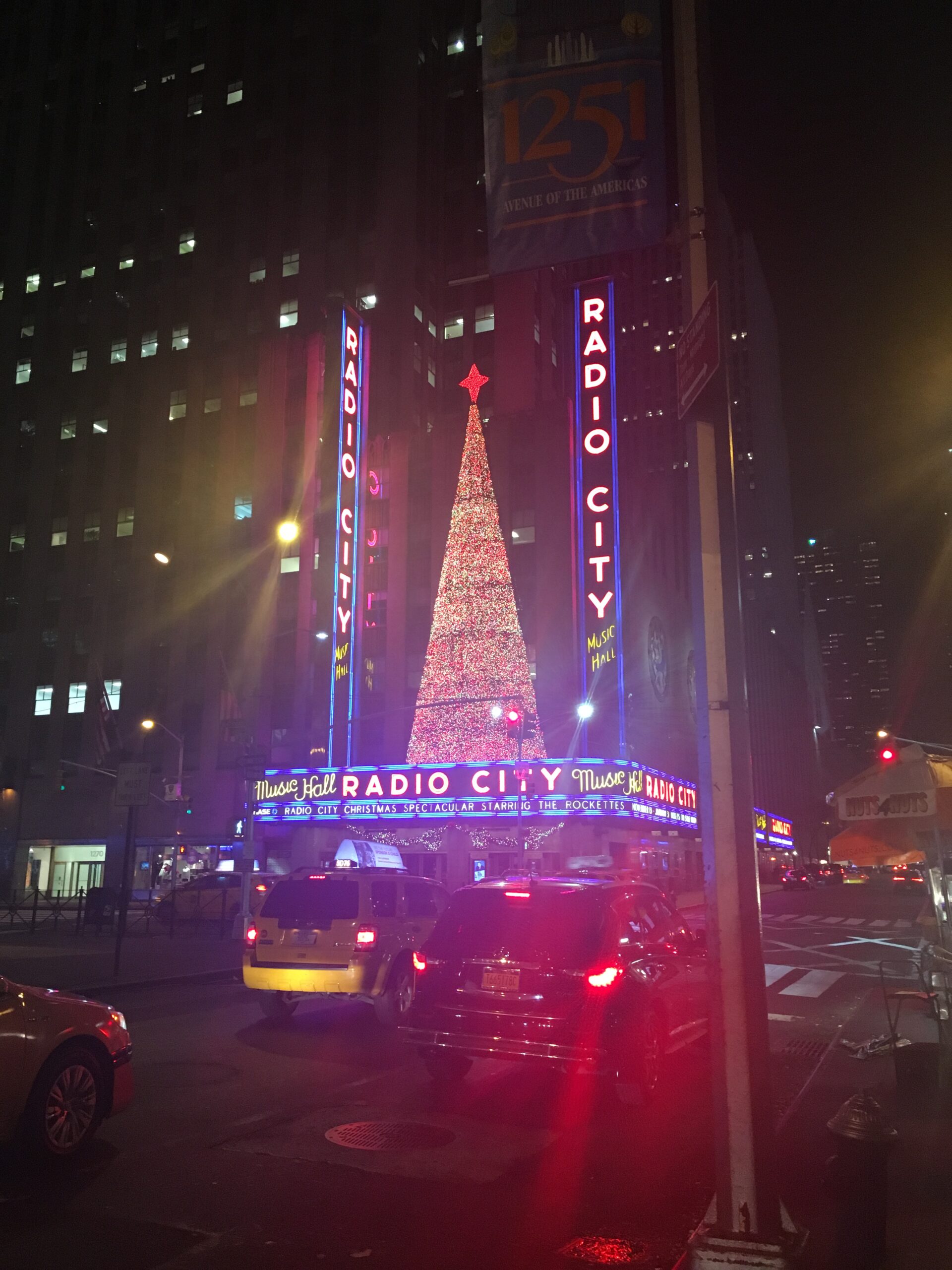
Seated theater-style concerts in New York — the Beacon Theatre, Radio City Music Hall, Carnegie Hall, and similar venues — tend to skew slightly more polished than arena nights without becoming formal. No one is checking outfits at the door, but the room, the lighting, the seated nature of the event, and the audience demographic all nudge toward something a notch above jeans-and-a-t-shirt for most shows.
That said, “a notch above” covers a wide range. At the Beacon, a clean dark jean with a nice blouse or shirt is completely at home. At Carnegie Hall for a classical evening, a simple dress or slacks and a jacket is appropriate without being overdressed. Radio City shows vary enormously based on the artist — the crowd at a Radio City pop show looks nothing like the crowd at a holiday spectacular or a jazz evening, and dressing for the show type makes more sense than dressing for the building alone.
The key practical advantage of theater seating: you are sitting for most of the show, which makes shoe comfort slightly less urgent than at a standing-room arena. But you still walk to the subway, walk from the station, and walk home — so completely impractical footwear is still a bad idea.
Outdoor concerts in New York — Forest Hills Stadium in Queens, Pier 17 in the Seaport, and similar seasonal venues — require the most weather-aware outfit thinking of any concert type. The city’s summer weather spans hot and humid July days to cool September evenings, and temperature at an outdoor venue after dark can drop meaningfully even in August. A Forest Hills show that starts warm at 7 PM can feel noticeably cool by the second encore at 10 PM.
The practical rule for outdoor NYC concerts: dress for the expected daytime temperature minus one layer, and bring the layer. A light jacket tied around your waist or in a bag costs nothing in terms of comfort if you don’t need it, and is invaluable if the temperature drops. Layering that works in both warmth and cold — a linen shirt over a tank, a light zip or denim jacket over a dress — is the right baseline for outdoor summer shows in New York.
Rain is also a real outdoor concert variable. A small compact poncho in the bag costs next to nothing and eliminates the decision you would otherwise be making in a downpour. Check the forecast before you leave, but weather apps are not always right for evening events.
Forest Hills Stadium specifically has a bag-check setup and a long list of prohibited items on its official site — check the current guidance before packing for that show, as the outdoor venue has different logistics than an indoor arena.
Smaller Brooklyn venues — Brooklyn Steel, Music Hall of Williamsburg, and similar club-scale rooms — have a different energy from the arena and theater shows. The crowds tend to be younger and more casually dressed, the rooms are louder and more physically active, and the neighborhood surrounding each venue is part of the evening in a way that the Midtown arena block is not. What feels appropriate at a Williamsburg club is different from what feels appropriate at Carnegie Hall, and in Brooklyn the difference usually resolves in favor of less formality and more personal expression.
Practically, these venues often involve more standing and more movement than seated shows. The logistics of getting there — usually the L train or a walk through Brooklyn streets — favor footwear that handles subway grates, uneven sidewalks, and a lot of standing. The crowds at many Brooklyn shows are physically closer together than at arenas with assigned seating, which means fabrics that breathe and clothes that can survive contact with other people are worth thinking about.
None of this means “dress down.” It means dress in a way that fits the venue and the neighborhood. A well-put-together outfit at a Williamsburg show might be more expressive and more casual than what you would wear to Radio City — and that is entirely appropriate.
Midtown concerts have a practical wardrobe advantage over other NYC concert scenarios: the venues are in the same neighborhood as most Manhattan hotel stays and most pre-show dinner options. A single outfit that works for dinner at 6:30 and the show at 8:00 is entirely achievable without changing — which eliminates the awkward “dressed for dinner but not for standing in a crowd” problem that arises when the restaurant and the venue are in different neighborhoods.
The standard smart-casual Midtown evening outfit — clean dark trousers or dark jeans with a blouse or shirt, finished with ankle boots or dress shoes that are comfortable enough to walk back to the hotel — handles Radio City, Carnegie Hall, and similar venues easily. The Midtown streetscape before and after shows is clean enough and busy enough that whatever you are wearing for a nice dinner is perfectly appropriate for the walk to the venue and back.
Shoes — The Decision That Makes or Breaks the Night
Shoe choice at a NYC concert is a different calculation than shoe choice anywhere else, because the shoe is doing multiple jobs before the night even starts. You are walking to the subway station. You are navigating subway stairs. You are walking several blocks from the station to the venue. You are standing in a security line. You are climbing to your section. You are standing or standing-adjacent for two or more hours. You are exiting through a slow-moving crowd. And then you are doing the whole reverse trip home, usually at midnight or later.
Any shoe that cannot handle that full sequence without causing pain is the wrong shoe for a concert night in New York, regardless of how good it looks.
What actually works
Clean sneakers are the most logistically correct concert shoe for most NYC venues. They handle all of the above without complaint. The fact that they are casual does not make them wrong — they are what a significant portion of the audience is wearing at any major NYC concert, regardless of the price of the tickets or the prestige of the venue.
Ankle boots with a modest heel (under two inches) are a strong middle ground for theater-style and Midtown concert nights — polished enough for a nice dinner, comfortable enough for the walking and standing requirement. Low-heeled loafers and flat dress shoes in the same height range work similarly.
High heels specifically are not wrong at any NYC concert venue — no one is checking footwear at the door and there is no rule against them. The relevant question is purely practical: will you be standing for extended periods, navigating stairs, or walking more than a few blocks? If the answer to any of those is yes, a high heel is a bet on the show being worth the physical cost of wearing it. Sometimes that bet pays off. Sometimes it does not.
Before choosing your concert shoes, ask whether you would choose them for a night that involved walking six blocks, taking two subway trains, standing in line, and walking six blocks home. If the answer is no, they are probably the wrong shoes — not because of the venue’s rules, but because that is the actual physical requirement of a concert night in New York. The outfit can be as polished as you want; the shoes need to survive the city.
Bags, Layers, and Real Venue Policies
The bag question at NYC concerts is not a style question — it is a logistics question with real consequences. The major venues have specific bag policies, and arriving with the wrong bag can mean being denied entry or having to find somewhere to store it before you can go in. Neither outcome is fun at 7:45 PM before an 8:00 show.
Bags must fit under your seat: max 22″×14″×9″. No clear bag required, though clear bags may speed up entry. No bag check at the venue — if your bag is too large, you will be turned away and have no place to store it at MSG. No-Bag express lanes exist for faster entry. Costumes allowed, but no full face paint, large headpieces, or fake weapons. Device-free shows use Yondr pouches for phones.
Shirts and shoes required. Management can deny entry for offensive clothing or text on any item. Bag limit is strict — official guidance states bags larger than 10″×6″×2″ are not permitted for many events (verify current limit on the official Barclays Center website before your visit, as policies can differ by event). No bag check at the venue. Some individual shows impose stricter no-bag policies — check the specific event page before arriving.
Bag check setup available at the venue. Detailed prohibited items list on official Forest Hills Stadium site — review before packing. Flowers prohibited unless specifically allowed by tour production. Large umbrellas prohibited.
Outside food and beverages generally prohibited (exceptions for medical needs). No professional camera equipment with detachable lenses. No selfie sticks. No noisemakers. No laser pointers. Costumes and themed attire generally allowed with restrictions — no full face coverage, no fake weapons. Always check the specific event page for show-by-show rules that may override general venue policy.
The practical bag solution
A small crossbody bag or structured clutch that fits in the 10″×6″ range will clear any major NYC concert venue’s policy, clear security faster, and be significantly less annoying to carry through a crowd than a larger option. Phone, wallet, keys, lip balm, and a small portable charger fit comfortably. A compact folding tote inside the bag handles any merch you pick up during the show without becoming a bag-within-a-bag problem.
Coat and layer logistics
Neither MSG nor most NYC concert venues offer coat check. In winter or cold weather, this creates a real logistical problem with a heavy outer coat. The solutions that actually work: a packable or puffer jacket that compresses into its own pocket and fits inside your bag; a trench or lighter outer layer that can fold over your lap during the show; or, for formal occasions that warrant a real coat, using a nearby luggage storage service before entry. Arriving with an oversized coat and nowhere to put it during a two-hour show is uncomfortable in a way that is entirely avoidable with five minutes of planning.
Venue policies — including bag limits, prohibited items, and costume rules — can change between events and sometimes differ from general venue guidance for specific shows. Always check the official venue website and the specific event page before your visit. This is especially important at Barclays Center, where individual show bag policies have been known to vary from the standard venue policy.
What to Wear by Season
New York summers are humid and warm. Outdoor venues like Forest Hills and Pier 17 require breathable fabrics and a light layer for after dark. Indoor arenas (MSG, Barclays) are aggressively air-conditioned — floor sections warm from crowd heat, but upper bowl sections can be cold in July. Light layers that handle both temperature extremes are smart for any summer concert night.
September can be summer-warm; November is genuinely cold. For outdoor September shows, evening temperature drops of 15–20 degrees from afternoon are common. An outer layer that packs down is essential. For indoor fall shows, the standard layer-plus-packable-jacket approach handles the range. October and November at outdoor venues require treating them as cold-weather events from the outset.
NYC winter concerts are indoor affairs at this point — Forest Hills and Pier 17 are not running in January. The logistical challenge is coat management at venues without coat check. A packable puffer or lighter insulated jacket that fits inside or collapses into your bag is the right solution for winter arena shows. A bulky wool overcoat worn into MSG on a January night with nowhere to put it during the show is a two-hour inconvenience.
Spring weather in New York is genuinely unpredictable. March shows can still require proper winter layering. April can swing warm or cold in the same week. May is usually mild but variable enough to require a layer. The standard spring concert approach: dress for the actual forecast that day, not for what the season “should” feel like, and have a light jacket in the bag regardless.
Indoor concerts remove the rain variable entirely. Outdoor shows — Forest Hills, Pier 17, summer festivals — may continue through light rain. Large umbrellas are prohibited at most outdoor venues. A compact rain poncho that folds into its own pouch and fits in any bag is the right solution: it weighs nothing, costs very little, and converts a miserable wet show night into a fine one.
Even a dry concert night can involve wet sidewalks from earlier rain. Suede shoes, certain white sneakers, and anything that cannot handle a damp NYC sidewalk should be avoided when rain has recently passed through. Leather, rubber-soled, or weatherproof footwear is a quieter advantage in a city where the pavement is frequently wet.
What to Wear by Type of Show
The artist, genre, and energy level of the show affect what the crowd looks like and — for anyone who cares about fitting the room — what feels most natural to wear.
Pop and mainstream arena shows
The most democratic concert category in terms of crowd dress. Every aesthetic is present. Artist merch is extremely common and entirely appropriate. Some audience members are in full themed outfits for an artist with a strong fan culture (Taylor Swift, Beyoncé, Harry Styles-type shows regularly produce coordinated or themed dressing among fans) — this is normal and celebrated, not embarrassing. If themed dressing is not your preference, any comfortable smart-casual outfit is equally appropriate.
Indie, alternative, and rock shows
Typically more casual than arena pop shows, particularly at smaller and Brooklyn venues. Jeans, band tees, comfortable boots, and a jacket cover most of these shows without any thought. The energy in smaller rooms tends to be higher and more physical — comfort and mobility matter more than polish.
Jazz, classical, and seated performances
The one category where erring slightly more formal is appropriate. A Carnegie Hall evening or a jazz performance at a proper jazz club has a different register from a rock show, and the crowd will reflect that. This does not require formal attire — a simple dress, slacks, or smart separates are genuinely right, while jeans and a t-shirt can feel slightly off for the room. Read the specific venue and the specific event to calibrate.
Date night concerts
The outfit that works for dinner before the show should work for the show. For most NYC concert date nights, that means smart-casual — polished enough to feel appropriate at a nice restaurant, comfortable enough for the transit and standing logistics of the show. The Beacon Theatre and Radio City are natural date-night venues where this balance is easy to hit. Barclays and Brooklyn venues lean slightly more casual. See the concert date night guide for full planning context.
First-time NYC concert visitor
If this is your first time seeing a concert in New York, the safest default is exactly what you would wear for a nice casual evening out in your own city — comfortable, put-together, and ready for some walking. Nothing about NYC concerts requires special or expensive clothing. The city’s own aesthetic tends toward dark colors, comfortable footwear, and layers, but those are tendencies rather than rules.
Common Concert Outfit Mistakes
Wearing the wrong shoes for the transit
The single most common and most fixable mistake. The shoes that are wrong for two miles of walking, subway stairs, and extended standing are wrong regardless of how good they look in the mirror at home. A concert night in New York is physically demanding in a way that a drive-to-venue suburban concert is not. The shoes have to do all the work.
Dressing only for photos, not for the night
An outfit chosen to photograph well in front of the venue or during the show is often not the same outfit that is comfortable for three hours of standing and a midnight subway ride. There is usually a version that does both — a polished outfit that is also comfortable — but the calculation has to include the physical reality of the evening, not just the visual one.
Bringing the wrong bag — or a bag that violates venue policy
Arriving at Barclays or MSG with a bag that does not meet the size limit, with no way to store it and no bag check at the venue, is a real problem that creates real friction at exactly the wrong time. Check the venue bag policy before you leave home and bring a bag you know will clear security. The smaller, the better — for logistics, for speed of entry, and for your own comfort in a crowd.
Not accounting for the coat in winter
A full winter coat at a venue with no coat check is an anchor you carry for the entire show. Solve this before you leave: either a packable layer that fits in your bag, a coat that can go over your lap during a seated show, or luggage storage near the venue if you genuinely need a heavy coat for the weather outside.
Not checking the weather for outdoor shows
Forest Hills, Pier 17, and other outdoor NYC venues in the shoulder seasons are at the mercy of variable evening weather. The forecast that looks fine at noon can look very different by 9 PM on a September night. A layer and a small poncho in the bag cost nothing and make the difference between enjoying the last hour of the show and wanting it to end.
Treating all NYC concerts as the same dress situation
A Barclays arena show and a Carnegie Hall evening are not the same room, the same crowd, or the same calibration. The arena show is casual and democratic; the classical or jazz evening benefits from a slightly sharper register. Dressing for the specific venue and show type, rather than applying a single “concert outfit” template to every night out, produces a more comfortable and more contextually appropriate evening.
Frequently Asked Questions
The right answer depends on the venue type and show. For arena concerts (MSG, Barclays), comfortable smart-casual — jeans, broken-in sneakers or boots, a layer you can add or remove. For theater-style concerts (Beacon, Radio City), a notch above casual — dark jeans with a polished top, or simple separates. For outdoor summer shows, layers that handle temperature swings plus a light poncho in the bag. For Brooklyn club venues, whatever you would wear for a comfortable night out in that neighborhood. Shoes that survive walking and standing are the single most important decision for any NYC concert night.
Most are casual to smart-casual, with no formal requirements at any major venue. Arena shows are genuinely casual — the crowd covers every aesthetic simultaneously. Theater-style shows like the Beacon or Carnegie Hall tend to see a somewhat more polished crowd without being formal. Brooklyn club shows skew most casual. The only shows where erring slightly more dressed makes sense are classical or jazz performances at proper concert halls.
Yes — at virtually every NYC concert venue. Clean sneakers are logistically ideal for the walking, subway stairs, and standing that make up a concert night in New York. They are appropriate at arenas, at Brooklyn venues, and even at most theater-style shows. The only setting where they might feel slightly casual is a classical performance at Carnegie Hall or a formal jazz evening — and even there, they are not prohibited.
Layer for the temperature swing between arrival and the end of the show — outdoor NYC venues after dark in the shoulder season can cool significantly. Comfortable flat shoes that handle uneven outdoor surfaces. A light jacket you can tie off or put in your bag. A compact rain poncho if the weather is uncertain. Check the specific venue’s prohibited items list (Forest Hills has a detailed one) for anything you need to leave at home.
Small. A crossbody bag or small structured clutch that fits phone, wallet, and keys clears every major NYC venue’s bag policy and is the most comfortable option in a crowd. MSG requires bags fit under your seat (max 22″×14″×9″). Barclays has a strict small-bag policy (verify current limit on the official Barclays Center website before your visit — individual shows can vary). Avoid oversized totes, backpacks that push against venue limits, and anything hard-sided. Neither MSG nor Barclays offers bag check — if your bag is denied, you have no onsite option.
No formal dress codes at any major NYC concert venue. Barclays Center officially requires shirts and shoes and can deny entry for clothing with offensive text or images — those are the only enforceable clothing standards at any of these venues. MSG has no stated dress code but prohibits full face paint, large headpieces, and fake weapons for guests in costumes. All venues recommend checking event-specific guidance, as individual shows can sometimes impose stricter standards than the general venue policy.
Anything that can handle walking several blocks, navigating a few flights of stairs, and standing in a packed subway car. Shoes are the critical variable — they need to do everything from the apartment to the show and back. A small bag that stays secure on your body (crossbody or small backpack within venue policy limits) is better than a tote that swings and hits people. Layers you can manage without a coat check at the venue are worth thinking through in cold weather.
An outfit that works for both dinner at 6:30 and the show at 8:00 — so you do not need to change between the two. For most Midtown and theater-style date nights, that means dark trousers or clean dark jeans with a nice top, plus ankle boots or low heels that are comfortable for 20–30 minutes of combined walking. A structured jacket or blazer elevates the look without becoming a coat-check problem at the venue. See the concert date night guide for full evening planning.
The Best Concert Outfit in New York
It is the one that fits the venue and the weather, does not fight the transit, works for the rest of the night, and lets you focus on the show rather than managing your feet or your coat or your bag. That is not a particularly high bar — it just requires thinking through the full night rather than just the moment you walk in.
The most useful thing you can do before any NYC concert: check the bag policy on the official venue website, look at the weather forecast, and confirm that your shoes can handle everything from the subway to the last song.
For what else to plan around your concert night — where to eat, how to get there, where to stay — the resources below cover the full picture.