

Marquis Theatre Tickets, Box Office & Broadway NYC Guide
How to buy Marquis Theatre tickets, use the Broadway box office, plan for Stranger Things, reach West 46th Street and navigate the hotel-lobby arrival.
The Marquis Theatre is a large Broadway house of about 1,611 seats on the third floor of the New York Marriott Marquis hotel, at 210 West 46th Street in Times Square. For Marquis Theatre tickets, the official places to start are Broadway Direct and the theater’s street-level box office. Operated by the Nederlander Organization, the venue opened in 1986, and it is the only Broadway theater located entirely inside a hotel, which shapes how you arrive, where the restrooms are and how to plan the evening.
It is home to Stranger Things: The First Shadow, which plays its final performance on January 3, 2027. This guide covers official ticket sources, current shows at the Marquis Theatre, box-office hours, the West 46th Street address and the hotel-lobby arrival.
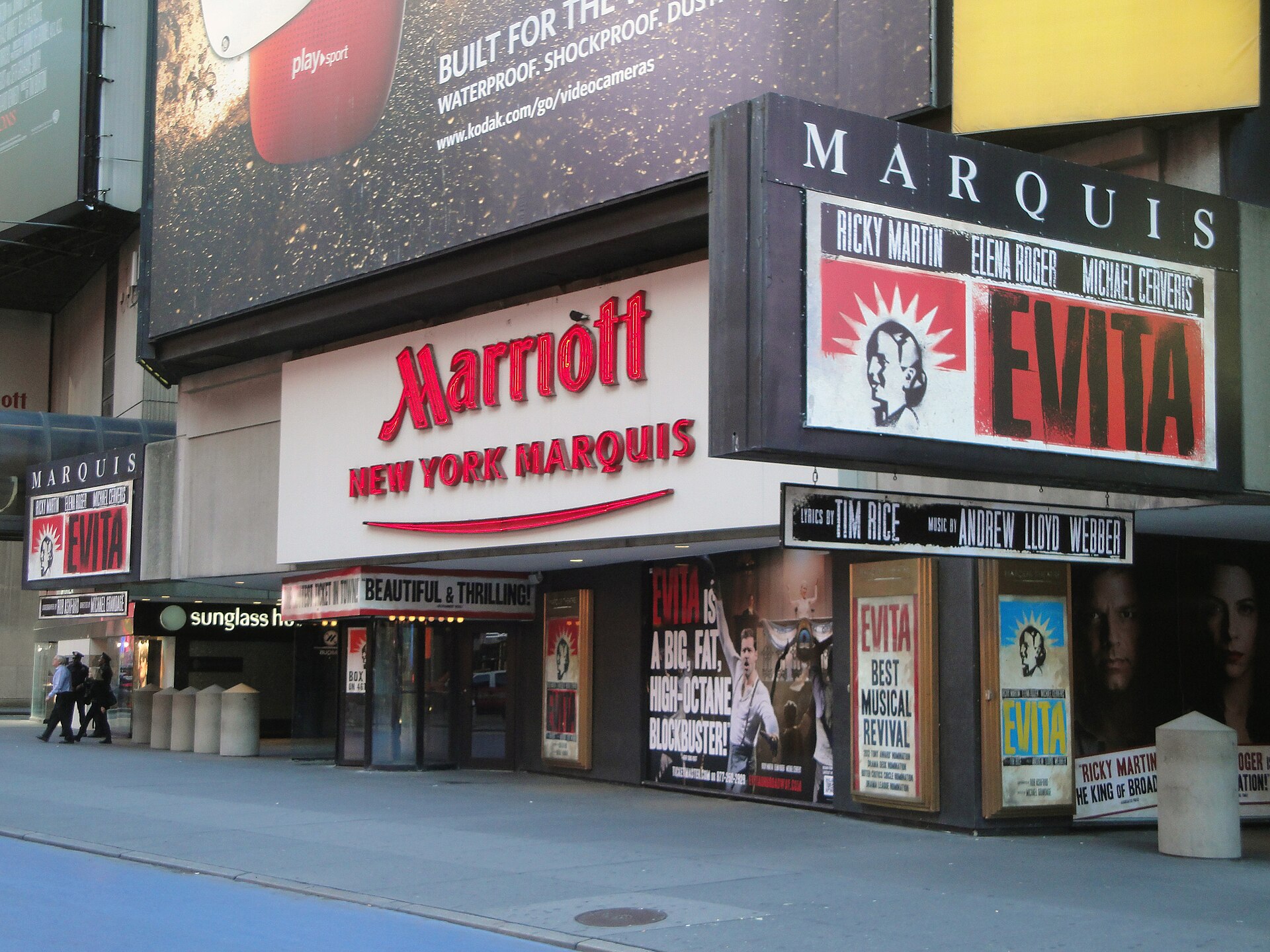
The Marquis Theatre, located inside the New York Marriott Marquis on West 46th Street in Times Square.
Marquis Theatre NYC: Quick Answers
Marquis Theatre Tickets: How They Work
Tickets go on sale production by production, because the Marquis does not run a season of its own, so you buy for a specific show and date, not for the theater. The Nederlander Organization sells official tickets through Broadway Direct and the theater box office. The ticket listings at the bottom of this page come from a third-party marketplace, so prices can run above face value.
Official Marquis Theatre tickets
For face-value tickets, start with Broadway Direct, the Nederlander Organization’s official online seller for the Marquis, or buy directly from the theater box office. Marketplace inventory can be useful when official seats are limited, but prices may be above face value and availability changes by performance.
Marquis Theatre box office
The box office is at street level at 210 W 46th St, on the 46th Street side of the hotel. Broadway Direct currently lists hours of 10 AM to 8 PM Monday through Saturday and noon to 7 PM on Sunday, and they can change, so confirm them before you make a special trip. American Express, Visa and Mastercard are accepted, and all ticket purchases are final.
Marquis Theatre group tickets
Broadway Direct currently handles group sales for parties of 12 or more for Stranger Things: The First Shadow. Groups can book online or call 800-714-8452 for help with dates, price levels and seating; confirm the minimum and current terms before collecting payment.
Buy for the show, then choose the seat
Start with the production and date, then compare sections. Prices vary by seat and performance, so check the face value before you pay a premium. When you are ready to choose, the Marquis Theatre seating guide compares the sections.
Look for rush and lottery options
Many Broadway productions offer day-of rush or lottery tickets, and each production sets its own policy. Our Broadway rush and lottery guide explains how they work, and when to buy Broadway tickets covers timing.
Marquis Theatre Shows: Stranger Things and What Comes Next
Stranger Things: The First Shadow is the current Broadway production at the Marquis Theatre in New York. Its final extension runs through January 3, 2027; the next Marquis booking has not been announced on this page.
The prequel play from the world of the Netflix series began previews on March 28, 2025, opened April 22 and won four Tony Awards, including a special Tony for illusions and technical effects. It plays its final performance on January 3, 2027, after more than 700 performances. Read our Stranger Things: The First Shadow guide.
The Marquis’s booking after January 2027 isn’t confirmed on this page. The Broadway shows hub carries the current lineup.
The play is recommended for ages 12 and up, and children under 5 are not permitted. Check the show’s page for running time, content advisories and the latest dates.
Choosing a Section at the Marquis
The Nederlander Organization lists 1,611 seats, and the Broadway League lists 1,612.
The Marquis is a wide, modern room with an orchestra and an upper level, and every row is on a different step. For a section-by-section comparison, use the Marquis Theatre seating guide.
Marquis Theatre West 46th Street, New York, NY: Getting There
Marquis Theatre, 210 W 46th St, New York, NY 10036
Between Broadway and 8th Avenue. The hotel’s own address is 1535 Broadway.
How the hotel-lobby arrival works
The box office and main entrance are at street level on 46th Street. From there, escalators and elevators take you up to the auditorium on the hotel’s third floor, and there is also a through-way between West 45th and 46th Streets. The Marriott Marquis theater entrance is well signed, but it is still a hotel, so expect crowds in the lobby. Venue guides also note that there is no cloakroom, so large bags and luggage are not allowed in.
Timing your arrival
Aim to arrive 25 to 30 minutes before curtain. Late seating is at management’s discretion.
By subway
The nearest station is Times Square–42nd Street (1, 2, 3, 7, N, Q, R, W, S), a short walk north to 46th Street. The A, C and E stop at 42nd Street–Port Authority on 8th Avenue, and Broadway Direct also points to the N and R at 49th Street and the C and E at 50th Street. Our guide to getting to a Broadway show covers transit, rideshare and timing.
By car
Garages are close by, at the southwest corner of Broadway and 46th Street, the southeast corner of 8th Avenue and 46th Street and the northwest corner of Broadway and 45th Street. See parking near Broadway.
Dinner before the show
Times Square is the densest part of the district, so pick your dinner spot in advance. Restaurant Row, on West 46th Street between 8th and 9th Avenues, is a short walk west. Be seated about 90 minutes before curtain. See the pre-show dining guide, restaurants near Broadway and the best restaurants in the Theater District.
Where to stay
The theater is inside the New York Marriott Marquis, and most Times Square and Midtown hotels are an easy walk. See hotels near Broadway and the Theater District neighborhood guide.
Accessibility, Stairs and Mobility at the Marquis
Wheelchair seating is in the orchestra, reached by elevator from the hotel lobby and a ramp from the theater entrance level. Seating away from the wheelchair locations involves steps, because every row is set on its own step.
Getting in
The theater entrance is on the third floor of the hotel, and there are elevators from the hotel lobby. Contact the box office to arrange wheelchair seating and confirm the current provisions before you visit.
Restrooms and bars
Restrooms are outside the theater lobby in the hotel’s third-floor orchestra-level common area and on the mezzanine level. Broadway Direct lists three bars on the orchestra level and one on the mezzanine, serving alcoholic and nonalcoholic drinks and snacks beginning 30 minutes before the performance.
Assistive listening
Headsets for sound augmentation are available at the theater free of charge, and accessible seats for guests who are blind, have low vision, or are deaf or hard of hearing are in the orchestra.
More on planning
Our Broadway accessibility guide covers what to ask for across Broadway theaters.
Marquis Theatre Broadway History and Notable Productions
The Marquis exists because of what came before it. Building the Marriott Marquis meant demolishing five theaters, including the original Helen Hayes, the Morosco and the Bijou, and city officials let architect John C. Portman Jr. build the hotel only if it included a new theater. It opened on July 9, 1986, and it has been one of the Nederlander Organization’s Broadway houses ever since.
It is a modern room, with high ceilings, wide aisles and a large backstage, and it has favored big musicals.
Marquis Theatre NYC FAQ
The Marquis Theatre is at 210 West 46th Street in Manhattan, between Broadway and 8th Avenue. The full address is Marquis Theatre, 210 W 46th St, New York, NY 10036. Some listings use the hotel’s addresses, 1535 Broadway or 211 West 45th Street, because the theater is on the third floor of the New York Marriott Marquis.
It is a Broadway theater of about 1,611 seats on the third floor of the New York Marriott Marquis hotel in Times Square, operated by the Nederlander Organization. People also search for it as the Marriott Marquis theater. Broadway.com describes it as the only Broadway theater located entirely within a hotel.
Tickets are sold for each production, not for the theater itself. The Nederlander Organization sells official tickets through Broadway Direct and the theater box office at 210 W 46th St, and third-party marketplaces also list Marquis performances at variable prices, so compare against face value before you pay more. Broadway Direct notes that all ticket purchases are final. Our Broadway rush and lottery ticket guide and last-minute ticket guide cover cheaper and later options.
Broadway Direct is the Nederlander Organization’s official online ticket seller for the Marquis Theatre, and face-value tickets are also sold at the theater box office. If another marketplace lists the same performance, compare its total price against Broadway Direct before buying.
Yes. Broadway Direct currently offers group sales for parties of 12 or more for Stranger Things: The First Shadow. Groups can book online or call 800-714-8452 for help with dates, prices and seating. Confirm the current minimum and terms before organizing the group.
The box office is at street level at 210 West 46th Street, on the 46th Street side of the hotel, not on Broadway. Broadway Direct currently lists box office hours of 10 AM to 8 PM Monday through Saturday and noon to 7 PM on Sunday, and hours can change, so confirm them before you make a special trip. American Express, Visa and Mastercard are accepted at the box office.
The box office and main theater entrance are on the 46th Street side of the New York Marriott Marquis, at street level. From there, escalators and elevators take you up to the theater on the hotel’s third floor. There is also a through-way between West 45th and West 46th Streets.
The nearest station is Times Square–42nd Street (1, 2, 3, 7, N, Q, R, W, S), a short walk north to 46th Street. The A, C and E stop at 42nd Street–Port Authority on 8th Avenue, and Broadway Direct also points to the N and R at 49th Street and the C and E at 50th Street. Our guide to getting to a Broadway show covers transit and timing.
Stranger Things: The First Shadow, which began previews on March 28, 2025 and opened on April 22. It will play its final performance on January 3, 2027, after more than 700 performances. Schedules can change, so confirm dates on the show’s official page before you book.
Wheelchair seating is in the orchestra, reached by elevator from the hotel lobby and a ramp from the theater entrance level on the third floor. Every row in the theater is on a different step, so seating away from the wheelchair locations involves steps. Free headsets for sound augmentation are available at the theater. Contact the box office to arrange accessible seating.
Restrooms are outside the theater lobby in the hotel’s third-floor orchestra-level common area and on the mezzanine level. Broadway Direct lists three bars on the orchestra level and one on the mezzanine. Allow extra time at intermission because the facilities sit outside the auditorium.
Aim for 25 to 30 minutes before curtain. You enter at street level, ride escalators or elevators to the third floor, and pass through the hotel, so it takes longer than walking straight off the sidewalk into a traditional Broadway house. Late seating is at the management’s discretion.
The Marquis opened in 1986, and its history includes Me and My Girl, Gypsy, Annie Get Your Gun, Thoroughly Modern Millie and Evita. The most recent production is Stranger Things: The First Shadow, which won four Tony Awards in 2025, including a special Tony for illusions and technical effects.
The Marquis in Brief
The Marquis rewards a little planning: buy for a specific production, leave time for the hotel-lobby arrival, and check the accessibility details if mobility matters. Before you choose seats, compare sections in the Marquis Theatre seating guide.
For the wider picture, see the Broadway theaters guide and the Broadway shows hub.
The Hotel Theater Is Set — Now Pick the Right View
The Marquis is a big modern Broadway room inside the New York Marriott Marquis hotel, which makes seat choice, arrival, and timing more connected than usual. Start with the seating chart, then build the night around Stranger Things, Times Square dining, hotels, subway routes, parking, and nearby Broadway houses.
Marquis Seating Chart & Best Seats
Compare Orchestra, upper-level views, accessibility, hotel-lobby arrival, and the best sightlines for Stranger Things: The First Shadow.
Open Seating Guide Current ShowStranger Things: The First Shadow
Plan around full-stage effects, sound and lighting advisories, age guidance, runtime, and the right Marquis seat perspective.
Open Show GuideBroadway Seating & Ticket Strategy
Seats · Timing · ValueBroadway Seating Guide
Compare Orchestra, Mezzanine, Balcony, Dress Circle, boxes, side seats, premium zones, and obstructed-view listings across Broadway houses.
All Broadway Theater Guides
Browse every Broadway house guide and compare room scale, location, access notes, and seating strategy across the Theater District.
What’s Playing on Broadway
Compare current and upcoming Broadway productions, then connect each show to the right theater, seat choice, and full-night plan.
When to Buy Broadway Tickets
Know when buying early matters, when waiting can work, and how timing changes for weekends, tourists, families, and high-demand seats.
Last-Minute Broadway Tickets
Same-day listings, cancellation movement, rush/lottery context, and practical ways to compare late options without choosing awkward seats blindly.
Broadway Rush and Lottery Tickets
How discount systems work, what tradeoffs to expect, and why cheap seats can be great — or risky — depending on view.
Plan the Marquis Theatre Night
Dinner · Hotels · TransitRestaurants Near Broadway
The Marquis sits directly in the Restaurant Row / Times Square corridor, so dinner timing matters before a longer effects-heavy show.
Restaurants Near Times Square
Useful for visitors staying near Times Square, arriving by subway, or building a classic central Broadway night.
Pre-Show Dining Guide
Plan reservation timing, walking buffer, security, hotel-lobby arrival, intermission expectations, and post-show movement.
Hotels Near Broadway
Compare Theater District, Times Square, Midtown West, and Hell’s Kitchen hotel zones for a Broadway-centered trip.
Hotels Near Times Square
Best for visitors who want the shortest walk, subway access, and an easy post-show return from the Marquis area.
How to Get to a Broadway Show
Subway, walking, rideshare, and arrival timing for Theater District shows, including the Marquis hotel-lobby routing.
How to Get to Times Square
Use the subway, Port Authority, or Midtown walking routes without getting swallowed by the busiest Times Square blocks.
Parking Near Broadway
When driving makes sense, when it does not, and how to avoid turning a Broadway night into a Midtown garage problem.
Best Way Home After a Show
Subway, taxi, rideshare, walking, and hotel return strategy after a busy Times Square performance.
Nearby Neighborhood & Theater Guides
46th Street · Times Square · Nearby HousesTheater District
The practical guide to Broadway’s center: theaters, crowds, hotels, restaurants, walking routes, and first-time visitor logistics.
Times Square
Best when convenience, subway access, hotels, and a classic Broadway visitor base matter most.
Hell’s Kitchen
A stronger pre- and post-show dining base west of the theater cluster, especially for visitors who want less Times Square noise.
Minskoff Theatre Guide
A nearby large Times Square musical house useful for comparing big-room seating, spectacle views, and visitor logistics.
Palace Theatre Guide
A nearby Broadway landmark that helps visitors compare Times Square arrival, large-room feel, and theater-district planning.
Richard Rodgers Theatre Guide
A nearby West 46th Street house useful for comparing musical seating, crowd flow, and pre-show planning on the same block.