

Tribeca NYC Neighborhood Guide: Hotels, Restaurants, Waterfront & Night Out Planning
Tribeca is one of NYC’s best downtown bases for luxury hotels, restaurants, families, date nights, cobblestone streets, and Hudson River Park — but it works best when you understand the zones, subway access, quiet-night tradeoffs, and how far you’ll be from Broadway and Midtown.
The Tribeca neighborhood in Lower Manhattan is a downtown NYC base built around cobblestone streets, loft architecture, destination restaurants, boutique and luxury hotels, bars, and the Hudson River waterfront. If you are comparing Tribeca hotels, Tribeca restaurants, things to do in Tribeca NYC, or simply what the neighborhood feels like after dark, the important distinction is that the neighborhood itself is part of the trip.
Tribeca can be one of the best neighborhoods in New York to stay in if your trip is built around restaurants, quiet luxury, family-friendly waterfront space, downtown walking, design hotels, and a calmer version of Lower Manhattan. It is less ideal if every night is centered on Broadway, Madison Square Garden, uptown museums, or sports venues. The goal of this guide is to help you understand the difference — and choose the right part of Tribeca for the kind of trip you are actually planning.
The neighborhood runs from Canal Street south to Chambers, and from Broadway west to the Hudson River. That’s a relatively small footprint, but the experience changes considerably depending on where within it you land. Where you stay in Tribeca matters as much as whether you stay there.
Why Tribeca Is Different
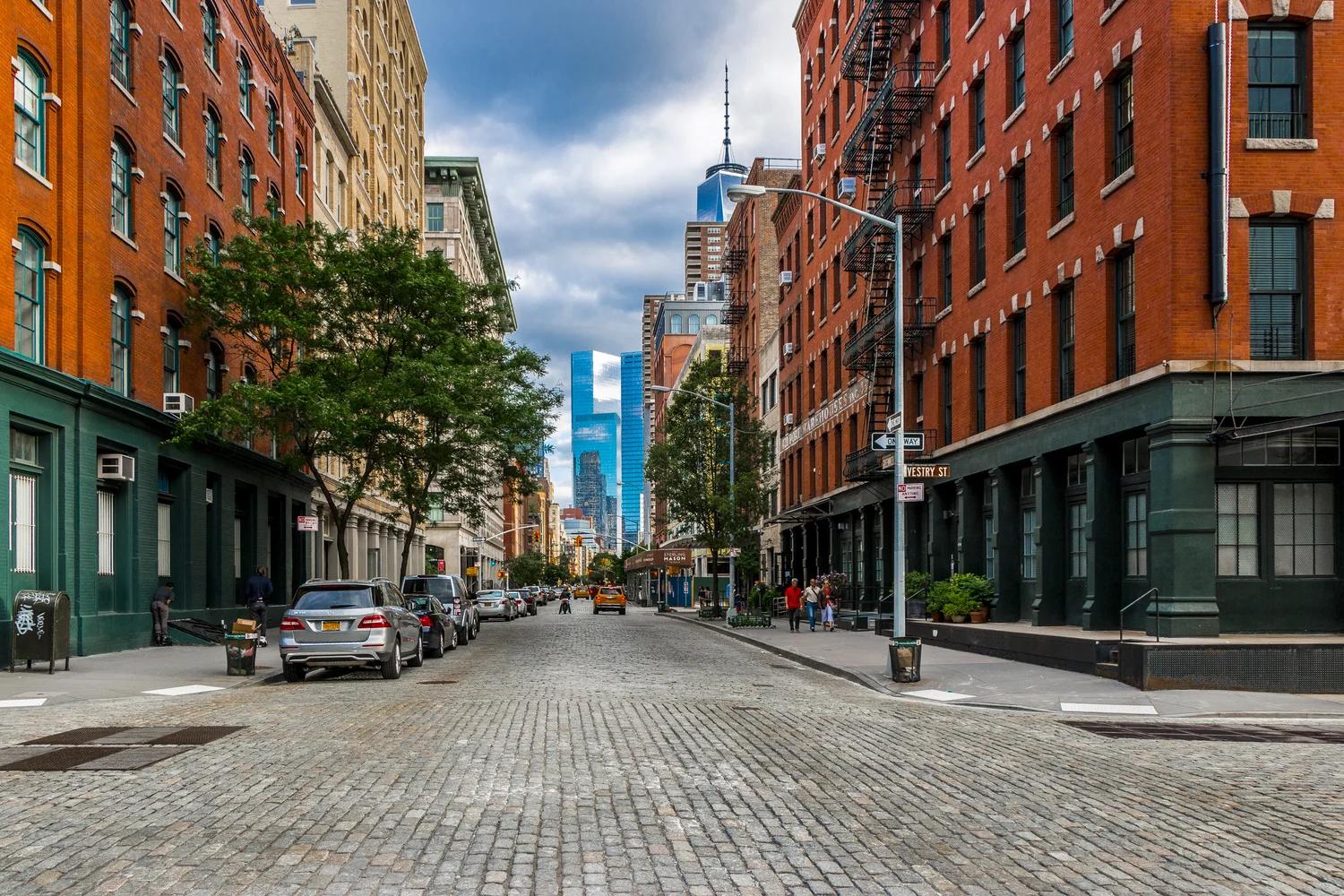
Tribeca — the Triangle Below Canal Street — doesn’t shout. That’s the point. It has long been one of Manhattan’s high-end residential districts, which tells you something about who chooses it and why: people who want space, quiet, design, and access to one of the city’s best restaurant scenes without the chaos that comes with most of that.
For visitors, Tribeca offers something increasingly rare in Manhattan: a downtown neighborhood that feels genuinely residential, with cobblestone streets wide enough to breathe on, cast-iron loft buildings with original character, and a riverfront that’s been transformed into one of the city’s most family-friendly outdoor spaces. It combines luxury hotels, serious restaurants, quieter streets, waterfront access, and easy connections to SoHo, the Financial District, Hudson Square, West Village, and Battery Park City.
What it is not is a universal event base. Tribeca is less about being closest to one venue and more about having a calmer downtown base where the hotel, meal, walk, and riverfront all work together.
Things to Do in Tribeca NYC
The best things to do in Tribeca are less about checking off a long attraction list and more about using the neighborhood well. The strongest visit combines the cobblestone core, Hudson River Park, a serious meal, and one or two nearby Lower Manhattan add-ons. Tribeca attractions are spread across a compact area, so a good plan can move from waterfront to dinner to late drinks without turning the day into a transportation project.
Walk the Cobblestone Core
Start around Greenwich, Hudson, Franklin, North Moore, Duane, and West Broadway for the loft buildings, wider downtown streets, and the version of the Tribeca neighborhood that feels most distinct from SoHo or FiDi.
Spend Time at Pier 25
Pier 25 is the active waterfront stop: mini golf, playground space, sand volleyball, a skatepark, historic vessels, and Grand Banks at the end of the pier.
Explore Pier 26
Pier 26 is the ecological counterpoint, with the Tide Deck, native planting zones, the marine-science playground, lawn space, and seasonal free kayaking through Downtown Boathouse.
Build the Day Around a Restaurant
Tribeca restaurants are a reason to come downtown on their own. A reservation at Frenchette or Locanda Verde, a classic meal at The Odeon, or a neighborhood stop like Walker’s can anchor the entire evening.
Stay for Bars, Jazz & Late Drinks
Tribeca bars skew intimate rather than clubby. The Django brings live jazz beneath The Roxy, while Smith & Mills and Della’s cover cocktails and wine in smaller rooms that fit the neighborhood.
Extend the Walk into Lower Manhattan
World Trade Center, the 9/11 Memorial, Brookfield Place, SoHo, Hudson Square, and Battery Park City all connect naturally to a Tribeca day. The neighborhood works especially well when you explore it as part of a wider downtown loop.
Shopping in Tribeca is more selective than SoHo’s flagship-heavy scene. Expect smaller fashion, design, home, and specialty stops woven into West Broadway and the side streets rather than one concentrated retail corridor. If shopping is the main purpose of the day, SoHo has more density; if it is one part of a restaurant-and-waterfront itinerary, Tribeca’s slower pace works well.
Tribeca in Zones
Five visitor zones shape the Tribeca experience differently. The one you land in determines how your days and nights actually feel.
Hudson River Park / West Street Edge
- Pier 25 and Pier 26 access
- Best for families and riverfront time
- Sunset walks, open space
- City Vineyard and Grand Banks on the piers
Farther from subway. West Street can feel like a barrier. Less immediate restaurant density.
Cobblestone Core: Greenwich / Hudson / Franklin / North Moore
- Classic Tribeca atmosphere
- The Greenwich Hotel, Warren Street Hotel
- Best restaurants: Locanda Verde, Frenchette, Walker’s
- Best for couples and date nights
Expensive. Quieter at night on some blocks than visitors expect. Reservations essential for top restaurants.
West Broadway / Duane / Reade / Church
- Best subway access in Tribeca
- Smyth Tribeca on West Broadway
- Good restaurant and café access
- Walking distance to FiDi and Civic Center
More mixed street feel. Less postcard-perfect than the western core.
Canal / SoHo / Hudson Square Edge
- SoHo shopping nearby
- Access to Hudson Square hotels
- Good for creative/design trips
Canal Street can be chaotic. Exact hotel block matters significantly. Some “Tribeca” addresses don’t feel like central Tribeca.
Chambers / Civic Center / FiDi Edge
- Best subway access to everywhere
- World Trade Center, 9/11 Memorial, Brookfield Place walking distance
- Lower Manhattan sightseeing add-ons
Less residential Tribeca feel. More office and civic energy. Not the strongest date-night atmosphere.
Is Tribeca a Good Place to Stay?
Yes — for the right trip. Here is the honest picture.
✓ Stay Here If…
- Restaurants, hotels, walking, and neighborhood feel are central to the trip
- You are traveling as a couple or family
- Hudson River Park, Pier 25, or Pier 26 are part of the plan
- You prefer luxury or boutique hotels over giant Midtown properties
- You want access to SoHo, West Village, Hudson Square, FiDi, and Battery Park City
- You are comfortable taking the subway or taxi to Broadway and Midtown
- You want to return to a quieter neighborhood after the event
- A luxury or special-occasion stay is the goal
✗ Consider Another Neighborhood If…
- Broadway is the main event every night
- You want to walk to Times Square theaters
- MSG or Penn Station is the center of the trip
- You want nightlife right outside the hotel door
- You’re hunting for the cheapest Manhattan hotel
- You want a first-timer base where every classic attraction is immediately close
- You plan to stay far west without thinking about subway access
Tribeca beats Midtown on calm, restaurants, hotels, and downtown atmosphere. Midtown beats Tribeca on pure event convenience. If the trip is primarily about Broadway, the Theater District or Hell’s Kitchen will serve you better. See our where to stay in NYC for shows and events guide for the full breakdown.
Tribeca Hotels: How to Choose
Tribeca has a relatively small hotel inventory and a high concentration of boutique and luxury properties. For visitors comparing Tribeca hotels or hotels in Tribeca NYC, the more useful question is not a fixed nightly price — rates move sharply by date — but which part of the neighborhood fits the trip. The western cobblestone core favors atmosphere and luxury; West Broadway and Chambers favor transit convenience; Canal Street puts you closer to SoHo. This is not a neighborhood built around budget hotel hunting.
Best hotels in Tribeca: choose by trip type, not just price
The strongest Tribeca hotel choices have very different personalities. The Greenwich Hotel is the quiet-luxury option; Warren Street Hotel is design-forward and residential in feel; The Roxy builds music and film into the stay; Smyth Tribeca is especially practical for West Broadway and Chambers Street access. Travelers looking for boutique hotels in Tribeca should compare exact blocks as carefully as room categories.
Warren Street Hotel
Firmdale Hotels’ Tribeca property — the same group behind the Crosby Street Hotel in SoHo and The Whitby in Midtown. Colorful individually designed rooms, a restaurant and bar, and a location that’s walkable to both the cobblestone core and the Chambers Street subway make it a strong design-focused base.
The Greenwich Hotel
Robert De Niro’s boutique property — 88 individually designed rooms, Shibui Spa with a lantern-lit pool beneath the roof of a 250-year-old Japanese farmhouse, and Locanda Verde on the ground floor. This is among the neighborhood’s most distinctive luxury stays. Reserve Locanda Verde separately if dinner there matters to the trip.
The Roxy Hotel
Formerly the Tribeca Grand, The Roxy has been transformed into a cultural hotel — The Django jazz club in the basement, the Roxy Cinema for indie and retro films, Paul’s Cocktail Lounge, and Jack’s Stir Brew coffee. One of the few downtown hotels with genuine nightlife programming built in. Good for visitors who want culture and music alongside a comfortable stay.
Smyth Tribeca
Located at 85 West Broadway at Chambers — strong subway access, Smyth Tavern on site, well-designed rooms. A practical boutique option for couples and visitors who want Tribeca access with easy subway connections downtown and to Midtown.
Family Stays
Tribeca is genuinely one of the better downtown choices for families because of Hudson River Park, Pier 25 and 26, calmer streets, and a mix of hotel types. The full-service Sheraton Tribeca is a practical option near the SoHo edge. Stay near West Broadway or Chambers for the easiest subway access when heading uptown with kids.
Budget Options
Tribeca is rarely the right neighborhood for budget hotel hunting. The Frederick Hotel on Chambers and Walker Hotel Tribeca are worth pricing against the neighborhood’s luxury properties, but rates vary enough by date that neither should be treated as a guaranteed budget option. For value, compare Long Island City or Midtown South. See our budget-friendly NYC hotels guide.
For deeper hotel guidance: Luxury NYC Hotels · Romantic NYC Hotels · Family-Friendly NYC Hotels · Where to Stay for Broadway Weekends · Where to Stay for Shows & Events
Tribeca Restaurants: Dining Strategy by Night Type
Tribeca has quietly become one of the strongest restaurant districts in downtown Manhattan. The dining scene here is less about trends and more about consistency, craftsmanship, and atmosphere. From Michelin-recognized fine dining to genuine neighborhood taverns, the range is wider than the neighborhood’s upscale reputation suggests. For visitors searching Tribeca restaurants or the best restaurants in Tribeca, the useful approach is to choose by night type — date night, special occasion, family meal, jazz, cocktails, or a low-key neighborhood stop — rather than chase one universal ranking.
Seventy Seven Alley
Opened March 2026 inside the Walker Hotel — a chef-driven studio blending culinary and arts programming with a tasting counter that reads more like a working atelier than a dining room. The rare new Tribeca restaurant that feels genuinely of the neighborhood. Reservations essential.
Date Night — Classic
Frenchette (241 West Broadway) is the neighborhood’s best current date-night room — a French bistro with genuine downtown edge and one of the better wine programs in Lower Manhattan. The Odeon (145 West Broadway) has been anchoring West Broadway since 1980, the Andy Warhol–era brasserie with burgundy banquettes and moules frites that never goes out of style.
Special Occasion / Hotel Dining
Locanda Verde at The Greenwich Hotel is the neighborhood’s most in-demand table — Andrew Carmellini’s Italian kitchen, booked weeks out year-round. Reserve the minute your hotel is confirmed. Brasserie Fouquet’s at Fouquet’s New York is the upscale French alternative if Locanda Verde is unavailable.
No-Reservation Neighborhood
Walker’s (16 North Moore Street) is the anti-Locanda Verde — a true neighborhood tavern straddling pub and proper meal, walk-in friendly, and historically insulated from reservation pressure. Order from the white-linen tables or pull up to the bar. Reliable, warm, very Tribeca without the pretension.
Café / Bakery / Morning
Frenchette Bakery at 220 Church Street serves pastries and breads from its Tribeca location inside Merchant Square. Two Hands (251 Church Street) is the Australian-inspired all-day café nearby — a calmer morning or brunch alternative to the Bubby’s queue.
Family / Early Dinner
Bubby’s (120 Hudson Street) is the family go-to — pies, American comfort food, brunch, and a casual room that works well with kids. Tamarind Tribeca (99 Hudson Street at Franklin) is the more polished Indian option for families with older children; its current entrance policy allows children above age 10.
Hotel Bar / Jazz Night
The Django at The Roxy Hotel is Tribeca’s best evening-out option that doesn’t require a dinner reservation — a jazz club with serious programming, a proper cocktail list, and the kind of underground room that’s hard to find in Lower Manhattan. Check programming in advance; it books up on weekends.
Wine Bar / Late Drinks
Della’s (near Warren Street Hotel) is the neighborhood’s best casual wine bar — sidewalk seats, a social room, and a crowd that actually lives in the neighborhood. Smith & Mills (71 North Moore) is the tiny, intimate craft cocktail bar that rewards visitors who find it. Tribeca nightlife is refined, not rowdy.
Pre-Broadway Dinner
If your show is uptown, eat in Tribeca at 6pm and subway or taxi by 7:15–7:30. This works especially well if you’re staying in the neighborhood — eat locally, travel up, return to a quieter hotel after. See our pre-theater restaurant guide for options if you prefer to eat near the theaters.
For bars in Tribeca: think intimate rather than high-volume nightlife. Smith & Mills at 71 North Moore is the compact cocktail-and-dinner room; Della’s on West Broadway is wine-focused; and The Django beneath The Roxy is the neighborhood’s live-jazz option. That is the shape of Tribeca nightlife at its best — dinner and drinks that feel integrated into the neighborhood rather than a separate club district.
Hudson River Park, Pier 25, Pier 26 & Walks
Hudson River Park’s Tribeca section is one of the main reasons to choose this neighborhood for a family trip — and an underrated reason to choose it for any trip. The piers are genuinely well-designed public spaces with programming, views, and enough to do that they earn a proper block of time rather than a quick pass-through.
🎳 Pier 25
Manhattan’s most active pier · North Moore St & West St- Manhattan’s only 18-hole miniature golf course (fee applies, walk-ins only)
- Playground with water features, climbing structures, swings — designed for all ages
- Sand volleyball courts and turf field
- Street-style skate park
- Dog park and boating access
- The LILAC — historic 1933 steamship docked at the pier
- Sweet Love Snack Bar on-site (seasonal)
- Grand Banks — chic floating restaurant and cocktail bar, date-night worthy
🌿 Pier 26
Ecological pier · 2.5 acres · Opened 2020- Five native ecological zones: woodland forest, coastal grassland, maritime scrub, rocky tidal zone, Hudson River
- Tide Deck — a cultivated rocky salt marsh with a cantilevered walkway above for views
- Science playground — two giant sturgeon fish climbing structures, nautical theme
- Basketball and tennis courts, spacious lawn
- Downtown Boathouse — NYC’s busiest non-motorized boathouse, free kayaking in season
- City Vineyard — outdoor restaurant with wine made from NY State grapes
- Habitat enhancement project: 11 million oysters in the park’s estuarine sanctuary
The Smart Tribeca Day
Use the neighborhood for what it does better than Midtown: morning or late-afternoon riverfront time at Pier 25 or Pier 26, a real lunch or dinner reservation in the cobblestone core, a calm hotel reset, and a walk before deciding whether the night continues uptown, toward SoHo, or stays local. Grand Banks at the far end of Pier 25 is the best date-night surprise on this side of downtown.
For walks beyond the waterfront: the cobblestone blocks between Greenwich, Hudson, North Moore, and Franklin Streets are the classic Tribeca walk — wide enough to feel spacious, cast-iron architecture at every turn. Walking north hits SoHo within 10–15 minutes. Walking south reaches the World Trade Center site, 9/11 Memorial, and Brookfield Place in about the same time. Battery Park City and the Hudson River Greenway extend the riverfront walk further south. The West Village is a 15–20 minute walk northwest.
Culture, Film & Downtown Identity
The Tribeca Festival — founded in 2001 by Robert De Niro, Jane Rosenthal, and Craig Hatkoff to support Lower Manhattan after 9/11 — celebrated its 25th edition in June 2026. The festival has decentralized considerably: it is now a citywide organism with screenings and events spread across Manhattan rather than centered on the neighborhood itself. Tribeca is the narrative center — the name, the memory, the myth — more than the physical center. During the festival window, expect more activity around screenings and events and stronger demand for nearby hotels and restaurants.
The neighborhood’s galleries have largely migrated to Chelsea over the decades, but the architectural character remains. The cast-iron and brick loft buildings, the wide cobblestone streets, the sense of industrial history repurposed for residential life — these things shape the visitor experience in a way that goes beyond any single attraction. Walking through Tribeca at dusk feels different from almost anywhere else in Manhattan.
How Tribeca Works for Events
Broadway / Theater District
Not walkable. Subway is the right move — 1/2/3 from Chambers Street to 34th Street or Times Square takes under 25 minutes. Eat in Tribeca at 6pm; don’t try a 7pm dinner before an 8pm show. Return is easy by subway or taxi if you avoid the immediate post-show rush.
Getting to Broadway from Tribeca →Downtown & Brooklyn Concerts
Tribeca is well-positioned for any night that lives downtown or crosses into Brooklyn. Pre-concert dinner in the neighborhood, then subway to the venue. Webster Hall, Lower East Side venues, and Brooklyn-adjacent nights all work cleanly from Tribeca.
NYC Concert Venues →Radio City / Midtown
A/C/E or the 1/2/3 gets you into Midtown, with a walk or transfer depending on the exact destination. Radio City events are manageable from a Tribeca base with good timing. Not ideal for maximum proximity, but straightforward with a plan.
Getting to Radio City →MSG / Penn Station
MSG is uptown at Penn Station, not in Tribeca’s natural orbit. Tribeca is not the logical base for MSG-centered trips. If the Garden is central, Midtown West will serve you considerably better.
Getting to MSG →Lower Manhattan Sightseeing
World Trade Center, the 9/11 Memorial, One World Observatory, and Brookfield Place are natural walks from central Tribeca; Battery Park and the Staten Island Ferry continue the route farther south. For sightseeing-focused downtown trips, Tribeca is one of the strongest bases in the city.
NYC Sightseeing Guides →Sports Venues
Yankee Stadium, Citi Field, Barclays, UBS Arena, MetLife — none of these are Tribeca’s strong suit. Tribeca can work if the game is one night of a broader downtown trip, but it’s not the obvious sports-night base. See our where to stay for sports guide.
Transportation: What Visitors Need to Know
Tribeca’s transit depends heavily on where in the neighborhood your hotel sits. The 1 train stops at Franklin Street, while Chambers Street is served by the 1/2/3 and is the stronger express option for many Midtown trips. The A/C/E serve Canal Street at the neighborhood’s northern edge, with A/C service also at Chambers Street and E service at World Trade Center. South and east of Tribeca, the R/W stop at City Hall, the 4/5/6 stop at Brooklyn Bridge–City Hall, and the J/Z stop at Chambers Street.
The farther west you stay — closer to the Hudson River Park edge — the farther you are from all subway options. That’s fine if the trip is riverfront-focused, but it adds friction for every uptown or Broadway evening. Families in particular should check the exact hotel-to-subway distance before booking.
Walking is excellent within the neighborhood and to adjacent areas. Taxis and rideshares work well but cobblestone streets and downtown traffic can slow pick-ups on narrow blocks. Luggage drop-offs can be annoying — budget extra time for check-in and check-out on narrower cobblestone streets.
For transit planning: NYC Subway Tips for Shows and Events · Uber vs. Subway for NYC Nights Out · Full Transportation Hub
Tribeca vs Other NYC Neighborhoods
| vs. | Tribeca Advantage | Other Neighborhood Advantage |
|---|---|---|
| SoHo | Calmer, more residential, better for families/luxury/riverfront, wider cobblestone streets | Better shopping, boutique density, more immediate downtown buzz and social energy |
| Times Square | Better hotels, restaurants, calm, downtown atmosphere, family/waterfront access | Walk to every Broadway theater; maximum tourist convenience; nothing requires planning |
| Theater District | Better for polished stay, restaurant quality, family park time, downtown walking | Broadway is the whole trip; walk to every show; no transit to the theater |
| Bryant Park / Midtown South | Quieter, downtown, stronger luxury/family/waterfront feel, more unique hotel options | More central for Broadway, MSG, Grand Central, Radio City — better all-purpose base |
| Hell’s Kitchen | Calmer, polished, hotel/dining/family base, downtown waterfront access | Broadway dining on the doorstep; Theater District walking distance; best pre-show base |
| Upper West Side | Downtown restaurants, waterfront, luxury hotels, Lower Manhattan sightseeing | Lincoln Center, Beacon Theatre, Central Park, museums, calmer uptown family trip |
| Williamsburg | Manhattan convenience, luxury hotels, family/waterfront calm, easier sightseeing | Brooklyn nightlife, Brooklyn Bowl concerts, skyline views, more neighborhood night-out feel |
| Long Island City | Better neighborhood experience, dining, luxury hotels, downtown atmosphere | Significantly better value, Midtown subway access, skyline views at a fraction of the price |
Best Tribeca Plans by Visitor Type
Couples
- Luxury hotel in the cobblestone core
- Late-afternoon walk through Greenwich/Hudson/Franklin
- Dinner at Frenchette or The Odeon
- Drinks at The Django or Della’s
- Optional Broadway by subway or a local night at Grand Banks
Families
- Hotel near Hudson River Park or Chambers Street subway
- Morning at Pier 25 — mini golf, playground, water features
- Pier 26 ecological walk or Downtown Boathouse
- Early dinner at Bubby’s or Tamarind
- Easy taxi or subway plan if going uptown
Restaurant-Focused
- Book Locanda Verde the moment hotel is confirmed
- Stay near Greenwich/Hudson/West Broadway
- Pair dinner with a walk before or after
- Frenchette Bakery in the morning, Della’s after dinner
First-Time Visitors
- Tribeca works if they want a calmer downtown trip
- Pair with World Trade Center, SoHo, West Village, and Chinatown
- Broadway and Midtown classics by the 1/2/3 train
- Don’t overschedule — the neighborhood rewards slow days
Broadway Weekend
- Eat early in Tribeca (6pm) and subway up for the show
- Don’t treat Tribeca like a Theater District hotel
- The payoff is returning to a calmer downtown hotel after
- Plan transportation before shownight, not after
Luxury / Special Occasion
- The Greenwich Hotel or Warren Street Hotel
- Locanda Verde dinner (reserve weeks ahead)
- Cobblestone walk, riverfront at dusk
- The hotel, dinner, bar, and walk can be the entire trip
- One of Tribeca’s strongest use cases
Common Tribeca Planning Mistakes
- Assuming Tribeca is convenient for every NYC eventIt is a great downtown base, not a universal event hub. Be honest about your itinerary before booking.
- Booking a hotel by “Tribeca” name without checking the exact blockRiver edge, Canal edge, Church/West Broadway, and Chambers edge all feel different. Check the nearest 1 train stop.
- Ignoring subway distance from the hotelSome of the prettiest, calmest cobblestone blocks are farther from the subway than the map makes them look.
- Planning Broadway dinner too late from TribecaA 7:00pm dinner in Tribeca before an 8:00pm Broadway show is a bad idea. Eat at 6pm or eat near the theater.
- Assuming Tribeca is lively on every block late at nightIt can be beautifully calm — but that is a feature, not a bug. Plan nightlife accordingly: The Django, Della’s, Grand Banks, hotel bars.
- Treating Pier 25 and Pier 26 as quick stopsEspecially for families, these piers can anchor a full half-day. Build the day around them rather than squeezing them in.
- Choosing Tribeca expecting budget hotel pricingTribeca’s hotel mix skews boutique and luxury, and rates can move sharply by date. Compare actual dates before committing, or price another neighborhood if value is the priority.
- Forgetting nearby neighborhoods as day-trip extensionsSoHo, Hudson Square, West Village, FiDi, Battery Park City, Chinatown, and the Seaport are all natural add-ons. Plan them in.
- Relying on easy car drop-offsCobblestone streets, narrow blocks, and downtown congestion make car logistics annoying. Walk or use subway where possible.
Frequently Asked Questions
Is Tribeca a good place to stay in NYC?
Yes — for the right trip. Tribeca is one of NYC’s best downtown bases for luxury hotel stays, serious restaurants, family waterfront time, date nights, and a calmer alternative to Times Square or SoHo. It is less ideal if Broadway, MSG, or uptown museums are the entire focus of every night.
Is Tribeca good for first-time visitors?
Yes, if they want a downtown trip with genuine neighborhood character. First-timers who want to walk to Broadway theaters every night will find the Theater District or Midtown more practical. First-timers who want real New York — restaurants, cobblestone streets, Hudson River Park, and Lower Manhattan sightseeing — will do very well in Tribeca.
What is Tribeca best known for?
Cobblestone streets and cast-iron loft architecture, the Tribeca Festival, destination restaurants, luxury hotel stays, Hudson River Park waterfront access, and a residential quiet that is unusual for such a central part of Lower Manhattan. The festival was founded in 2001 by Robert De Niro, Jane Rosenthal, and Craig Hatkoff and celebrated its 25th edition in 2026.
What is the best part of Tribeca to stay in?
For couples and luxury stays: the cobblestone core around Greenwich, Hudson, Franklin, and North Moore Streets. For families: near Hudson River Park or a practical subway corridor at West Broadway/Chambers. For transit practicality: near Chambers Street and the 1/2/3 trains. Check the exact hotel address before booking — zones in Tribeca feel genuinely different.
Is Tribeca close to Broadway?
Not walkable. Broadway’s Theater District is in Midtown, roughly 35–40 blocks north. From Chambers Street, the 1/2/3 provide direct service toward Times Square; Franklin Street is served by the 1. A taxi or rideshare is another option, but traffic can make trip times less predictable around curtain and post-show periods.
Is Tribeca good for families?
One of the best downtown neighborhoods for families. Pier 25 has Manhattan’s only 18-hole miniature golf course, a large playground with water features, volleyball, and a skate park. Pier 26 has an ecological playground with climbing fish structures and free kayaking in season. The streets are calmer than SoHo or Midtown. Add in the 9/11 Memorial and World Trade Center for an older-kid half-day and you have a complete family downtown trip.
Is Tribeca better than SoHo?
For families, luxury stays, riverfront access, and residential calm: Tribeca. For shopping, boutique density, cast-iron street energy, and more social buzz: SoHo. The two neighborhoods share a border at Canal Street and complement each other well — many visitors combine a Tribeca hotel base with SoHo shopping and Nolita restaurants on the same trip.
What subway lines are near Tribeca?
The 1 stops at Franklin Street; Chambers Street is served by the 1/2/3, with A/C service nearby at Chambers Street. The A/C/E serve Canal Street at the northern edge, and E service is available at World Trade Center. City Hall has R/W service, Brooklyn Bridge–City Hall has 4/5/6 service, and the J/Z stop at Chambers Street. PATH service is available at World Trade Center for New Jersey trips.
What can kids do in Tribeca?
Pier 25’s playground, mini golf (Manhattan’s only 18-hole course), sand volleyball, skate park, and the historic LILAC steamship. Pier 26’s ecological playground with giant climbing sturgeon, free kayaking at the Downtown Boathouse in season, and the Tide Deck walk. Add the 9/11 Memorial, Brookfield Place, and Staten Island Ferry for older kids and you have multiple days of downtown activity.
Is Tribeca expensive?
Tribeca is generally an expensive Manhattan neighborhood, especially for boutique and luxury hotel stays and destination dining. Hotel rates vary significantly by date, so fixed nightly prices are not a reliable planning shortcut. Budget-focused visitors should compare other neighborhoods as well as the specific Tribeca dates they are considering.
What are the best things to do in Tribeca?
A strong first visit combines a walk through the cobblestone core, Pier 25, Pier 26, a restaurant reservation, and one nearby Lower Manhattan add-on such as the World Trade Center, 9/11 Memorial, Brookfield Place, SoHo, or Battery Park City. Tribeca works best as a neighborhood to move through slowly rather than a checklist of isolated attractions.
What are some good restaurants in Tribeca?
Useful starting points include Frenchette for a polished French meal, Locanda Verde for Italian dining at The Greenwich Hotel, The Odeon for a classic downtown brasserie, Walker’s for a neighborhood tavern, Bubby’s for a casual family meal, and Seventy Seven Alley for a newer chef-driven option at Walker Hotel Tribeca.
Where are the best bars in Tribeca?
Tribeca’s bar scene is strongest for smaller, conversation-friendly rooms rather than large clubs. Smith & Mills is a compact cocktail-and-dinner spot on North Moore, Della’s is wine-focused on West Broadway, and The Django beneath The Roxy combines cocktails, dinner, and live jazz.
Tribeca NYC Quick Facts
On This Page
Plan the Stay
Plan the Meal
Compare Neighborhoods
Transit & Transportation
Save & Share
Plan the Full Tribeca Stay
Hotels, dining, neighborhoods, and transit guides — everything to build the right NYC downtown trip.
NYC Neighborhoods Guide
Compare every Manhattan neighborhood for stays, dining, and nights out.
Where to Stay for Shows & Events
Match your hotel neighborhood to the events on your itinerary.
SoHo NYC Guide
Tribeca's northern neighbor — more shopping energy, same downtown zip code.
Theater District Guide
The alternative if Broadway is the entire trip and walking to the show matters.
Times Square Guide
Maximum Broadway convenience vs. Tribeca's calm and quality. The honest tradeoff.
Luxury Hotels for Special Occasions
NYC's best upscale stays — Tribeca has several of the top entries on this list.
Romantic NYC Hotels
Hotels with the atmosphere and setting for a genuinely romantic stay.
Family-Friendly NYC Hotels
Hotels with the space, location, and amenities to make a family NYC trip work.
Date Night Restaurants NYC
The best New York restaurants for a properly planned evening out.
NYC Subway Tips for Shows & Events
How to use the subway for Broadway, concerts, and sports from any neighborhood.
Uber vs. Subway for NYC Nights Out
When to take the subway and when a rideshare actually makes sense.
Broadway NYC Guide
Shows, theaters, tickets, seating — the full Broadway planning hub.