

SoHo NYC Neighborhood Guide: Hotels, Restaurants, Shopping & Night Out Planning
SoHo is one of NYC’s best downtown bases for shopping, restaurants, design hotels, galleries, and stylish nights out — but it works best when you understand the zones, weekend crowds, subway access, and how far you’ll be from Broadway and Midtown events.
SoHo can be one of the best neighborhoods in New York to stay in — if your trip is built around downtown walking, restaurants, shopping, galleries, and a more stylish base than Midtown. It is less ideal if every night centers on Broadway, Madison Square Garden, uptown museums, or sports venues. The goal of this guide is to help you understand the difference and choose the part of SoHo that actually fits your trip.
The neighborhood runs roughly from Houston Street south to Canal Street, and from West Broadway east to Lafayette. Within those borders, the experience changes significantly block by block. Where you stay in SoHo matters as much as whether you stay there.
Why SoHo Is Different
Most Manhattan neighborhoods are built around events — Times Square for Broadway, Midtown West for MSG, the Upper East Side for museums. SoHo operates on a different logic. It is the neighborhood you choose when the city outside your hotel door is part of the point.
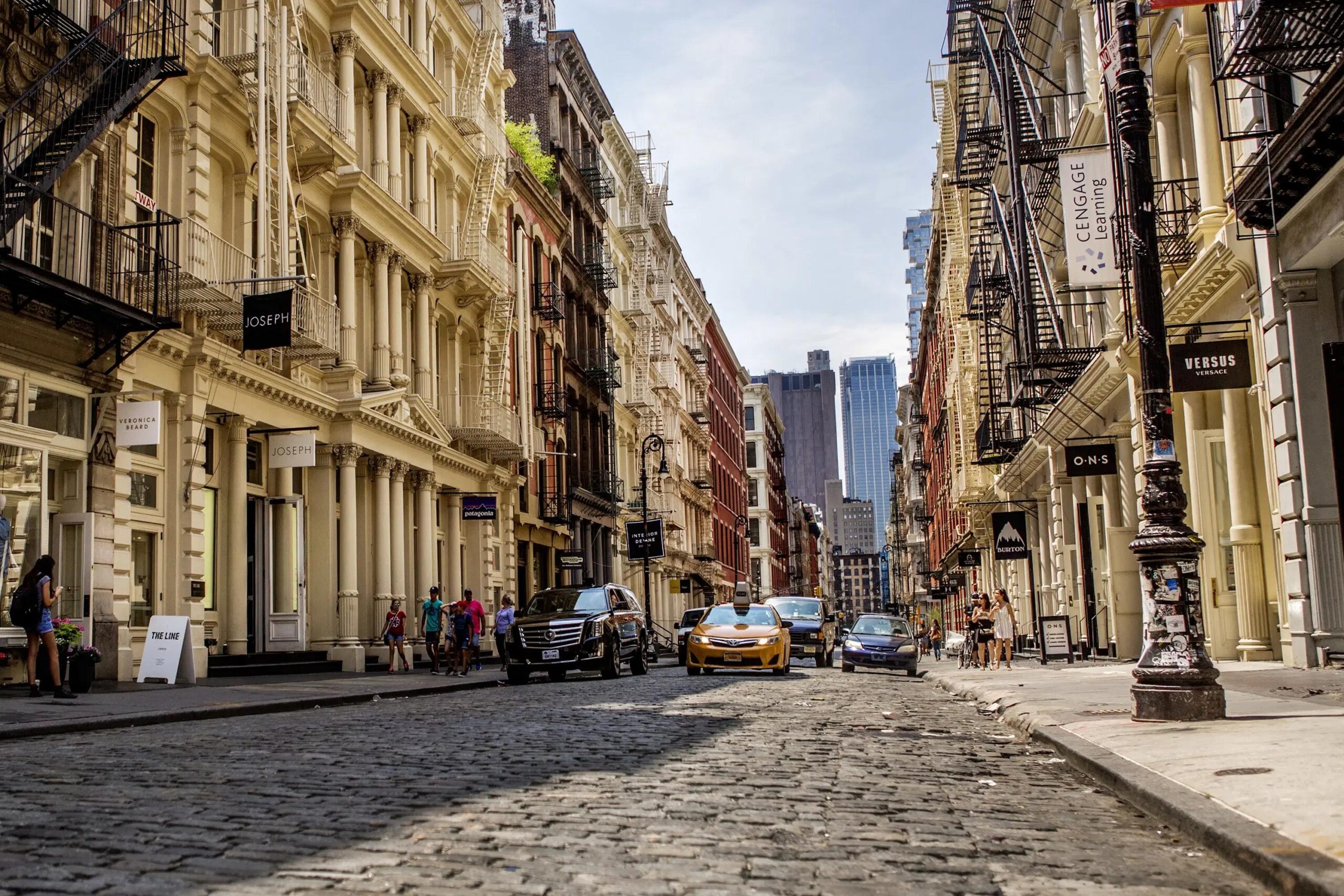
The cast-iron buildings along Greene, Mercer, and Wooster Streets are among the finest examples of 19th-century commercial architecture in the country — roughly 500 cast-iron facades in a 26-block historic district. The cobblestone streets, the gallery spaces, the mix of flagship stores and serious restaurants, the proximity to Nolita, Tribeca, Little Italy, and the West Village — these things make SoHo a neighborhood that rewards being in it, not just passing through.
What SoHo is not is a universal event base. Broadway requires a subway or taxi. MSG is across town. The Upper East Side museums are uptown. SoHo is less about being closest to one venue and more about being in a neighborhood where the walk before and after dinner is part of the night.
Things to Do in SoHo NYC at Night
If you are looking for things to do in NYC at night, SoHo works best as a neighborhood-first evening rather than a single attraction. Build the night around dinner, a cast-iron walk, drinks or a hotel bar, then connect to a Broadway show, concert, comedy set, jazz room, club, or other event elsewhere in the city if that is the main event.
That distinction matters. SoHo is strongest when you want the streets, restaurants, architecture, and nearby downtown neighborhoods to be part of the night. It is less useful if the only goal is to be steps from a specific Midtown theater, arena, or nightclub.
Dinner + Cast-Iron Walk
Book dinner around Spring, Prince, Mercer, or Sullivan, then walk west of Broadway after the daytime shopping crowds thin out. This is the most distinctly SoHo version of a night out.
Drinks + Hotel Bars
SoHo works well for a polished drink before or after dinner, especially around the boutique hotels and restaurant bars. It is better for conversation and atmosphere than for a giant all-night club circuit.
Broadway, Comedy, Jazz & Live Music
Use SoHo as the dinner-and-drinks base, then travel to the performance. The exact venue should drive your departure time; do not assume every New York night attraction is nearby just because you are staying downtown.
Nightclubs & Dancing
SoHo has nightlife, but it is not the city's densest nightclub district. If dancing is the entire point of the night, choose the club first and treat SoHo as the place for dinner, a drink, or the start of the evening.
Nolita, LES, Tribeca & West Village Add-Ons
One of SoHo's biggest strengths is how naturally the evening can spill into nearby downtown neighborhoods. You can change the mood of the night without turning it into a cross-city expedition.
Last-Minute / Tonight
If you are deciding what to do in NYC tonight, use SoHo for the flexible part of the plan—dinner, walking, drinks—then confirm the actual event time, reservation, or venue hours before heading out.
SoHo in Zones
Think of SoHo in five visitor zones. The zone you land in shapes the entire experience.
Broadway / Prince / Spring Corridor
- Flagship stores, highest foot traffic
- Most subway access
- First-time SoHo shoppers
- Easy orientation and energy
Busiest and most tourist-heavy. Can feel chaotic on weekend afternoons. Not the most relaxed hotel zone.
Mercer / Greene / Wooster Cast-Iron Core
- Classic SoHo streetscape
- Design hotels and galleries
- Cobblestone blocks and architecture
- Best for couples and date nights
Expensive. Some blocks go quiet at night. Late-night options thinner than LES or West Village.
West SoHo / Hudson Square Edge
- Calmer hotel base
- Access to Tribeca and Hudson River Park
- Good for families
- SoHo feel without peak shopping crowds
Fewer “classic SoHo” blocks. Can feel slightly removed from the shopping core.
Nolita / Elizabeth / Mott / Bowery Edge
- Restaurants, cafés, boutiques
- Date nights and younger downtown energy
- Little Italy / LES add-ons
- Lively and walkable
Less polished hotel feel. More crowded and tighter at night. Not as calm as western SoHo.
Canal / Tribeca Edge
- Access to Tribeca and downtown transit
- Hudson River Park / Pier 25 / Pier 26
- Good for families mixing SoHo with waterfront
Canal Street can be chaotic. Not always the prettiest arrival experience. Hotel location matters more here.
Is SoHo a Good Place to Stay?
The short answer is yes — for the right trip. Here’s the longer answer.
✓ Stay Here If…
- Shopping, restaurants, galleries, and cafés are central to the trip
- You want a boutique or design hotel, not a giant Midtown property
- You’re planning a couples or date-night weekend
- You want easy access to Nolita, Tribeca, West Village, and Little Italy
- You prefer a neighborhood that feels good all day, not just after an event
- You’re comfortable taking subway or taxi to Broadway and Midtown
- You want a downtown base with genuine character
✗ Consider Another Neighborhood If…
- Broadway is the main event every night
- You want to walk to Times Square theaters
- MSG or Penn Station is the center of the trip
- You’re hunting for the cheapest possible Manhattan hotel
- You want quiet residential streets over shopping energy
- You’re traveling with small kids and need the simplest logistics
- You hate weekend crowds and plan to be out on Saturday afternoons
SoHo beats Midtown on atmosphere. Midtown beats SoHo on event convenience. If Broadway is the whole trip, the Theater District or Hell’s Kitchen serve you better. If the trip is about the city itself — restaurants, walking, design, downtown energy — SoHo is a genuine contender. See our full where to stay in NYC for shows and events guide for the full comparison.
SoHo Hotels: How to Choose
SoHo is one of NYC’s strongest neighborhoods for boutique and design hotel stays. It has few true budget options, and rates can move sharply by date, season, room type, and citywide demand. Treat SoHo as a premium hotel market and compare the exact dates of your trip rather than relying on a fixed neighborhood-wide nightly range.
Boutique / Design Stay
The Manner (opened in 2024 in the former Sixty Soho property), Crosby Street Hotel (Firmdale’s downtown outpost, secret garden terrace, private cinema), The Mercer (minimalist interiors, generous rooms, heart of the cast-iron district), and Soho Grand Hotel (grand bar, club room, a SoHo fixture since 1996) are among the neighborhood’s flagship design stays.
Couples / Date Night
The Mercer and Crosby Street Hotel are the strongest date-night bases — location, design, and bar quality all contribute. NoMo SoHo’s Rose Garden and whimsical design make it a memorable alternative. ModernHaus SoHo has a rooftop bar (Jimmy) with outdoor pool deck, one of the few in downtown Manhattan.
Shopping Trip
Stay near the Mercer/Greene/Wooster core or just west of Broadway to be within walking distance of the main shopping streets while avoiding the most chaotic block directly on Broadway. Arlo SoHo and SIXTY SoHo are practical options in this zone at slightly lower price points.
Family Stay
West SoHo and the Hudson Square edge work best for families — slightly calmer, closer to Hudson River Park and Pier 25/26, and generally easier for stroller logistics than the cobblestone-heavy cast-iron core. Room size matters more here than hotel name.
Broadway Weekend
SoHo works for a Broadway weekend if you value the hotel and neighborhood more than walking distance to theaters. Plan transportation in advance — eat early in SoHo, then taxi or subway uptown. The quiet return to a downtown hotel after a show is one of SoHo’s genuine advantages. See our Broadway weekend hotel guide.
Budget Reality
SoHo is not a budget neighborhood. Visitors looking for value should consider Long Island City, Midtown South, or the Financial District. See our budget-friendly NYC hotels guide.
For deeper hotel guidance: Romantic NYC Hotels · Luxury NYC Hotels · Family-Friendly NYC Hotels · Where to Stay for Concert Nights
SoHo Restaurants: Dining Strategy by Night Type
SoHo’s restaurant scene is anchored by a handful of institutions that have been defining downtown dining for decades — and supplemented by a newer generation of stylish openings that fit the neighborhood’s aesthetic without trying to copy its history. The range is wider than the neighborhood’s expensive reputation suggests.
Date Night
Raoul’s (180 Prince St) is the definitive SoHo date-night room — French bistro, open since 1975, steak au poivre, old-school energy that never feels tired. The Corner Store is the newer entry: wood-paneled, sultry, wagyu French dip, great martinis. Both require reservations. Le Coucou at 11 Howard is Michelin-starred and beautiful if the occasion warrants it.
Special Occasion / Brasserie
Balthazar (80 Spring St) remains the defining SoHo restaurant — the red leather booths, oysters, seafood towers, and the room’s energy justify the reputation after 25+ years. Open daily from breakfast through late supper. Reservations recommended for dinner; bar walk-ins are often possible.
Casual Group / Neighborhood
Charlie Bird (5 King St, just south of SoHo) is the neighborhood’s best pasta and wine option for a relaxed group dinner. The Dutch (131 Sullivan St) is an all-day standby — good for brunch, drinks, or dinner and flexible enough for mixed groups. Fanelli Cafe (Prince & Mercer) is SoHo’s oldest bar, open over 100 years, good for a casual drink or burger without pretension.
Seafood
Lure Fishbar (142 Mercer St) is the nautical-themed subterranean seafood institution that has anchored SoHo since 2004. It remains open in 2026; earlier uncertainty about a possible Prada takeover eased after that expansion plan was dropped. Blue Ribbon Brasserie (97 Sullivan St) serves until 4am, making it one of SoHo’s strongest late-night food options.
Café / Bakery / Light Lunch
Dominique Ansel Bakery (189 Spring St) — birthplace of the Cronut, serious pastries, lines worth joining. Sadelle’s (463 W Broadway) is the neighborhood’s best bagel and brunch spot. Jack’s Wife Freda (224 Lafayette) is the dependable all-day Mediterranean-American café. La Mercerie (53 Howard St) is the beautiful French café inside Roman and Williams Guild — excellent for a shopping-day lunch.
Family Meal
Jack’s Wife Freda works well for families — relaxed, no attitude, good menu range. Aurora SoHo (510 Broome St) is a solid neighborhood Italian option for early family dinners. Sadelle’s is genuinely good for kids for brunch. Avoid booking Raoul’s or Balthazar on a weeknight with young kids — the rooms and energy don’t lend themselves to it.
Pre-Broadway Dinner
If your show is uptown, eat in SoHo at 6pm and subway or taxi by 7:15-7:30. This is a better strategy than trying to eat near Broadway at peak showtime and works especially well if you’re already staying downtown. See our pre-theater restaurant guide for options near the theaters themselves.
Late / Post-Event
Blue Ribbon Brasserie until 4am is the clear answer. Balthazar runs until midnight most nights. The bar at The Mercer and The Manner are both good post-show options if you’re staying in either hotel. SoHo’s late-night scene is not dense — plan accordingly if the evening ends after midnight. See our post-show restaurant guide.
Shopping, Architecture & Walks
SoHo’s 500+ cast-iron buildings represent the largest concentration of 19th-century cast-iron commercial architecture in the world. The neighborhood was designated a historic district in 1973, which preserved the scale and character that makes it worth walking. The shopping is the top layer; the architecture underneath it is what makes the walk feel different from anywhere else in the city.
The Smart SoHo Walk
Start on Broadway if you want the flagship stores — Apple, Uniqlo, Zara, Supreme, the major names. Then move west to Greene, Mercer, and Wooster for the streets that actually feel like SoHo: narrower, cobblestoned, cast-iron facades, fewer crowds, better independent stores and galleries. West Broadway south of Spring Street has the quietest stretch of the neighborhood and connects naturally toward Tribeca. The blocks that matter most are roughly Prince Street to Broome Street, between West Broadway and Crosby Street. That’s the core.
For a couple doing SoHo on a weekend afternoon: start on the east side of Broadway before the crowds peak, move west by noon, have lunch near Mercer or on Spring, then explore Nolita’s boutique spillover on Elizabeth and Mott Streets before circling back for an early dinner. That sequencing avoids the worst of the weekend chaos while covering the best of what SoHo actually is.
SoHo connects naturally in every direction. Walk ten minutes east and you’re in Nolita’s restaurant and boutique cluster. Walk south across Canal and you’re in Tribeca. Walk west and you’re near Hudson River Park, Pier 25, and Pier 26 — the waterfront add-on that works especially well for families. The West Village is a 15-minute walk northwest. These connections are part of why SoHo works as a base for a real downtown NYC trip rather than just a shopping destination.
For galleries: SoHo’s gallery scene has largely migrated to Chelsea and the Lower East Side, but a handful of significant spaces remain — Jeffrey Deitch Gallery, The Drawing Center (35 Wooster St), and various rotating gallery installations in storefront spaces. Eden Gallery maintains a SoHo presence for contemporary art. The MoMA Design Store (81 Spring St) is worth a stop for design-focused visitors even if you’re not buying.
How SoHo Works for Events
This is the section most neighborhood guides skip. Here’s the honest picture.
Broadway / Theater District
Not walkable. Subway (C/E from Spring Street to 34th, or R/W from Prince Street toward Times Square) or taxi is the move. Allow 25–35 minutes. Eat in SoHo at 6pm if you prefer downtown dining — don’t try to eat near Broadway at 7pm for an 8pm show.
Getting to Broadway from downtown →Downtown Concerts & Brooklyn
SoHo is a natural base for any night that starts or ends downtown. Webster Hall, Brooklyn venues, Lower East Side bars and clubs — SoHo’s downtown position is an advantage here. Pre-concert dinner in SoHo then subway to the venue is a clean plan.
NYC Concert Venues →Radio City / Midtown East
A subway ride from SoHo to Midtown East is workable — 20–30 minutes on the N/R or A/C/E. Radio City and Rockefeller Center events are manageable from a SoHo base if you plan the timing.
Getting to Radio City →MSG / Penn Station
MSG is across town. SoHo is not a logical MSG base. If MSG is the center of the trip, Midtown West serves it far better. Mention it once, route users, and move on.
Getting to MSG →Sports Venues
Yankee Stadium, Citi Field, Barclays, UBS Arena, MetLife — none of these are SoHo’s strong suit. SoHo can work if the game is one night of a broader downtown trip, but it is not the obvious place to stay for a sports-focused visit. See our where to stay for sports guide.
Downtown / Tribeca / LES Nights
SoHo is genuinely well-positioned for any night that lives downtown. Restaurants in Nolita, bars in the Lower East Side, gallery openings, Tribeca Festival events, Hudson River Park concerts — this is SoHo’s home territory.
Pre-concert dining NYC →Transportation: What Visitors Need to Know
SoHo has solid subway access, but which lines are convenient depends heavily on where your hotel sits within the neighborhood.
The R/W trains serve Prince Street (northeast SoHo) and Canal Street (south). The C/E trains serve Spring Street (west SoHo / Hudson Square edge). The A/C/E and 1 trains serve Canal Street at the south end. Broadway-Lafayette and Bleecker Street serve the neighborhood’s east edge via the B/D/F/M and 6 trains. No single station covers all of SoHo — your hotel location determines which lines are practical.
Walking is SoHo’s strongest transit advantage. Nolita, Little Italy, Tribeca, and the West Village are all on foot. The neighborhood is compact and flat enough that you can cover a lot of ground without needing a subway. That changes when you’re headed to Midtown, Broadway, or uptown — those trips require planning.
Taxis and rideshares work well in and out of SoHo, but the tight streets, delivery traffic, and weekend shopping crowds can slow drop-offs and pickups on the main shopping streets. If you’re being dropped off by car, allow extra time on weekends.
For transit planning: NYC Subway Tips for Shows and Events · Uber vs. Subway for NYC Nights Out · Full Transportation Hub
SoHo vs Other NYC Neighborhoods
The most useful comparison isn’t “which neighborhood is better” — it’s “which neighborhood fits this specific trip.”
| vs. | SoHo Advantage | Other Neighborhood Advantage |
|---|---|---|
| Times Square | Better atmosphere, restaurants, real neighborhood feel, better sleep, design hotels | Walk to every Broadway theater; maximum tourist convenience; nothing requires planning |
| Theater District | Better hotel options, calmer streets, better restaurants, more interesting neighborhood | Broadway is the entire trip; walk to every show; no transit needed |
| Bryant Park / Midtown South | More stylish, better downtown dining, stronger boutique hotel scene | More central for Broadway, MSG, Grand Central, Radio City — better all-purpose Midtown base |
| Hell’s Kitchen | Better shopping, design hotels, downtown character | Broadway dining on your doorstep; Theater District walking distance; best pre-show base |
| Upper West Side | Downtown energy, shopping, restaurants, galleries, trendier hotel options | Lincoln Center, Beacon Theatre, Central Park, calmer residential feel, families |
| Williamsburg | Manhattan convenience, better shopping, boutique hotels, easier uptown access | Brooklyn nightlife, Brooklyn Bowl concerts, skyline views, authentic neighborhood night-out feel |
| Long Island City | Better neighborhood experience, restaurants, galleries, downtown atmosphere | Significantly better value, Midtown subway access, skyline views at fraction of SoHo price |
Best SoHo Plans by Visitor Type
Couples
- Boutique hotel in cast-iron core
- Late afternoon walk west of Broadway
- Dinner at Raoul’s or The Corner Store
- Drinks at hotel bar or nearby
- Optional Broadway by taxi/subway
Shopping Trip
- Start early — before Broadway crowds peak
- Broadway/Prince/Spring first
- Lunch off Broadway
- Move west to Greene/Mercer/Wooster
- Early dinner reservation before evening rush
First-Time Visitors
- SoHo works well for first-timers who want downtown character
- Pair with Nolita, Tribeca, Little Italy, West Village
- Broadway and Midtown classics by subway
- Don’t try to see everything in one day
Families
- Stay in West SoHo or Hudson Square edge
- Morning shopping / walk
- Hudson River Park / Pier 25 / Pier 26 afternoon
- Early dinner — avoid peak-crowd weekend timing
- Don’t overpack the itinerary
Broadway Weekend
- Eat in SoHo at 6pm, go uptown for the show
- Subway or taxi — don’t wait until 7:45pm
- Return to a quieter downtown hotel after
- Use the neighborhood mornings and days, not just evenings
Concert / Downtown Night
- SoHo is ideal when the evening is downtown or Brooklyn-adjacent
- Dinner in SoHo or Nolita, then subway to the venue
- Post-show return is easy from most downtown venues
- Less ideal for MSG or uptown concert nights
Common SoHo Planning Mistakes
- Assuming SoHo is convenient for every NYC eventIt is a great downtown base, not a universal event hub. Be honest about your itinerary before booking.
- Booking a hotel by “SoHo” name without checking the exact blockEast/west/north/south edges change the experience and the subway access significantly.
- Spending the whole visit on Broadway the streetBroadway is useful for shopping but the better SoHo feel is often one or two blocks west.
- Trying to do SoHo at peak weekend afternoon without a planSaturday 1–4pm on the main shopping blocks can feel more chaotic than stylish. Go earlier or move west.
- Assuming SoHo is cheap because it is downtownSoHo is a premium hotel and dining market, and room rates can swing sharply by date and demand. Budget accordingly and compare your exact travel dates.
- Planning Broadway dinner too late from SoHoA 7:00pm dinner in SoHo before an 8:00pm Broadway show is a genuine problem. Eat at 6pm or eat near Broadway.
- Ignoring nearby neighborhoodsNolita, Little Italy, Tribeca, Hudson Square, and the West Village are practical extensions of a SoHo trip. Plan them in.
- Relying on easy car drop-offsTight streets, delivery traffic, and shopping crowds make car logistics frustrating in SoHo. Walk or use subway where possible.
Frequently Asked Questions
Is SoHo a good place to stay in NYC?
Yes — for the right trip. SoHo is one of NYC’s best bases for shopping, downtown dining, boutique hotels, gallery walks, and stylish weekend stays. It is less ideal if your trip revolves around Broadway, MSG, or uptown museums. The neighborhood works best when it’s part of the reason you’re there, not just a hotel address.
Is SoHo good for first-time visitors?
Yes, if they want downtown character rather than maximum Midtown convenience. First-timers who want to walk to Times Square and every Broadway theater will find Midtown more practical. First-timers who want real New York neighborhood texture, excellent restaurants, and a walkable downtown base will do well in SoHo.
What is SoHo best known for?
Shopping, cast-iron architecture, restaurants, galleries, and boutique hotels. SoHo (South of Houston) was historically an artists’ district and later became one of Manhattan’s premier shopping and dining neighborhoods. The cast-iron historic district — roughly 500 buildings — gives it a streetscape that’s genuinely different from anywhere else in the city.
What is the best part of SoHo to stay in?
For couples and design stays: the Mercer/Greene/Wooster cast-iron core. For shopping convenience: near Broadway and Prince/Spring with subway access. For families or a calmer base: West SoHo or the Hudson Square edge. The key variable is subway access — check which lines are near your specific hotel before booking.
Is SoHo close to Broadway?
Not walkable for most visitors. Broadway’s Theater District is in Midtown — about 30–40 blocks north of SoHo. Plan on 25–35 minutes by subway (R/W from Prince Street toward Times Square, or A/C/E from Spring Street to 34th Street) or a taxi/rideshare depending on time of day.
What subway lines are near SoHo?
Prince Street serves the R/W trains (northeast SoHo). Spring Street serves the C/E (west SoHo). Canal Street serves the A/C/E, N/Q/R/W, 1, 6, J/Z, and more. Broadway-Lafayette/Bleecker Street serves the B/D/F/M and 6 (east edge). Which lines are useful depends on where your hotel sits within the neighborhood.
Is SoHo good for families?
It can work, especially with the right hotel zone. West SoHo and the Hudson Square/Tribeca edge give families calmer streets, easier stroller logistics, and access to Hudson River Park (Pier 25 and Pier 26 are family-friendly waterfront parks). Avoid the main shopping corridors on weekend afternoons with young kids.
Is SoHo walkable?
Very. Within the neighborhood and to adjacent areas (Nolita, Tribeca, Little Italy, West Village), SoHo is excellent on foot. East-west movement is easier than in Midtown. For uptown trips, Broadway, or events across town, you’ll need the subway or a taxi.
Is SoHo good for a date night?
One of NYC’s strongest date-night neighborhoods. Raoul’s on Prince Street, The Corner Store, Balthazar, Le Coucou, the cast-iron walk after dinner, hotel bars at The Manner or The Mercer — the combination of good rooms, good restaurants, and genuinely attractive streets makes SoHo a consistently strong date-night base.
Is SoHo expensive?
Usually, yes. SoHo is a premium hotel and dining neighborhood, and room rates vary widely by date and demand. There are casual food options — Fanelli Cafe, Dominique Ansel Bakery, neighborhood delis — but budget travelers will generally find better value in Long Island City, Midtown South, or the Financial District.
What are the best things to do in SoHo at night?
A strong SoHo night combines dinner, a walk through the cast-iron streets west of Broadway, drinks or a hotel bar, and then either a nearby downtown stop or a subway/taxi ride to the main event. SoHo is strongest when the neighborhood itself is part of the evening rather than just a place to sleep.
Is SoHo good for nightlife?
Yes for restaurants, bars, date nights, hotel lounges, and a stylish downtown evening. It is less ideal if your definition of nightlife is a dense cluster of large nightclubs. For comedy, jazz, live music, or dancing, choose the venue first and use SoHo as the dinner-and-drinks base when the geography makes sense.
What can I do in SoHo tonight?
Keep the flexible part of the night in SoHo: dinner, a cast-iron walk, drinks, dessert, or a nearby downtown neighborhood. If you are adding a show, concert, comedy set, jazz room, or club, confirm that venue’s current schedule and travel time before leaving SoHo.
SoHo NYC Quick Facts
On This Page
Plan the Stay
Plan the Meal
Compare Neighborhoods
Transit & Transportation
Save & Share
Plan the Full SoHo Stay
Hotels, dining, neighborhoods, and transit guides — everything to build the right NYC downtown trip.
NYC Neighborhoods Guide
Compare every Manhattan neighborhood for stays, dining, and nights out.
Where to Stay for Shows & Events
Match your hotel neighborhood to the events on your itinerary.
Theater District Guide
The alternative to SoHo if Broadway is the entire trip.
Times Square Guide
SoHo's most common comparison — better convenience vs. better atmosphere.
Bryant Park / Midtown South Guide
More central all-purpose base for Broadway, MSG, and Grand Central.
Romantic NYC Hotels
Hotels with the atmosphere and setting for a genuinely romantic stay.
Luxury Hotels for Special Occasions
NYC's best upscale stays for anniversaries, milestone visits, and splurge weekends.
Date Night Restaurants NYC
The best New York restaurants for a properly planned evening out.
NYC Subway Tips for Shows & Events
How to use the subway for Broadway, concerts, and sports from any neighborhood.
Uber vs. Subway for NYC Nights Out
When to take the subway and when a rideshare actually makes sense.
How to Get to a Broadway Show
Subway, taxi, and rideshare options from every Manhattan neighborhood.
Broadway NYC Guide
Shows, theaters, tickets, seating — the full Broadway planning hub.