

Lincoln Center Tickets & Upcoming Events: NYC Schedule, Concerts & Venue Guide
Find Lincoln Center tickets, upcoming events and schedule guidance across David Geffen Hall, Alice Tully Hall and the wider performing arts campus — with box office, parking, transit and venue-specific planning.
Most people planning their first Lincoln Center concert make the same assumption: that they are going to one building, one hall, one door. They are not. Lincoln Center is a performing arts campus occupying several blocks on the Upper West Side, home to 11 resident arts organizations and multiple distinct venues that operate under the same name but feel entirely different from each other. Where your event is — David Geffen Hall, Alice Tully Hall, the plaza, or another space on campus — matters a great deal for how the night works and what kind of experience you should expect.
That complexity is not a drawback. For the right visitor, it is exactly the point. A night at Lincoln Center is not just a concert — it is a destination. The campus itself, the architecture, the plaza, the sense of occasion — these are part of the experience in a way that simply does not apply to an arena, a theater, or a club. Lincoln Center works best when you approach it as a place worth planning around rather than just a room to arrive at.
This guide is built for the person who wants to understand what they are going to, plan the night properly, and make sure the venue they are choosing actually matches the kind of evening they want.
Lincoln Center Tickets, Upcoming Events & Schedule
Lincoln Center tickets are not sold through one universal box office because Lincoln Center is a campus shared by multiple resident organizations. For Lincoln Center Presents programming, tickets are available from Lincoln Center directly online, by phone through CenterCharge, or in person at the David Geffen Hall and Alice Tully Hall box offices. Resident organizations such as the New York Philharmonic, Metropolitan Opera, New York City Ballet, Lincoln Center Theater and Jazz at Lincoln Center maintain their own ticketing channels. Whether you search Lincoln Center tickets NYC, Lincoln Center New York tickets, or Lincoln Center tickets New York, confirm the presenting organization and venue before checkout.
For a broad view of Lincoln Center upcoming events, shows and concerts, start with the Lincoln Center calendar, then follow the listing to the presenting organization or venue. Searches such as Lincoln Center schedule, Lincoln Center shows, Lincoln Center tonight, and Lincoln Center today can return several unrelated performances on the same date because David Geffen Hall, Alice Tully Hall, the David Rubenstein Atrium, Lincoln Center Theater, the Koch Theater and other spaces can all be active at once.
Lincoln Center discount tickets depend on the presenter. Lincoln Center Presents currently offers extensive Free and Choose-What-You-Pay programming, with ticket terms shown on each event page. The David Rubenstein Atrium also continues to host a TKTS Discount Booth for same-day and next-day Broadway, Off-Broadway and dance tickets at advertised discounts of 20%–50%. Student, rush, under-35 and other discount programs from resident organizations are separate products, so check the organization actually presenting your event rather than assuming one Lincoln Center-wide discount rule.
Current Lincoln Center Upcoming Events — September & October 2026
Looking for Lincoln Center tonight or today? Use the live calendar before traveling. The campus can host multiple events at the same time, and a listing may be on the main campus or at an affiliated space such as Rose Theater at Columbus Circle.
Lincoln Center Box Office & Ticket Office Hours
For Lincoln Center Presents programming, tickets can be purchased online, by phone through CenterCharge at 212-721-6500 Monday–Friday from 10:00 AM–6:00 PM, or in person at the David Geffen Hall or Alice Tully Hall box office. Current Lincoln Center guidance lists the in-person box offices as open Monday–Saturday 10:00 AM–6:00 PM and Sunday noon–6:00 PM. Resident organizations can use different box offices and policies, so confirm the presenter shown on your ticket.
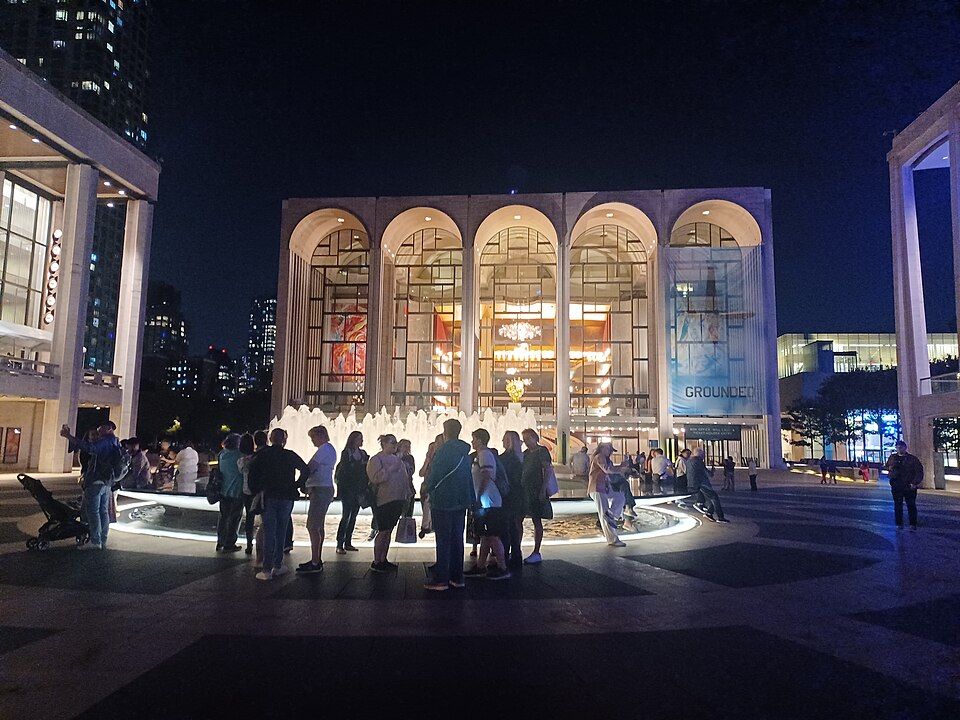
Lincoln Center in New York City, a major performing arts campus where the setting, architecture, and multiple venues shape a more destination-style concert night.
What Lincoln Center Actually Is
Lincoln Center for the Performing Arts is a 16-acre campus on the Upper West Side of Manhattan, roughly bounded by 62nd and 66th Streets between Columbus and Amsterdam Avenues. The official address is Lincoln Center Plaza, New York, NY 10023. It opened in the early 1960s as one of the first major performing arts complexes in the United States built specifically to consolidate major arts institutions in one location.
The campus is home to 11 resident organizations, including the New York Philharmonic (often searched as lincoln center philharmonic, lincoln center ny philharmonic, or lincoln center new york philharmonic), the Metropolitan Opera, New York City Ballet, the School of American Ballet, the Film at Lincoln Center, Jazz at Lincoln Center, and the Chamber Music Society Lincoln Center calls one of its longest-running resident ensembles. Each organization is largely autonomous, operates its own schedule, and in some cases has its own venue within or affiliated with the campus. Lincoln Center Presents — the producing arm of Lincoln Center itself — also programs events across campus spaces independently of the resident organizations.
Lincoln Center is a campus, not a building. Before purchasing tickets to any Lincoln Center event, confirm: which specific venue is hosting your event, which organization is presenting it, and which box office or entry point to use. “Lincoln Center” tickets can mean David Geffen Hall, Alice Tully Hall, a plaza event, or another campus space. These are not interchangeable. Getting this right before you go is the single most useful planning step.
Why this distinction matters for planning
Unlike Barclays Center or MSG — where one building, one entrance, and one seating chart cover every event — Lincoln Center requires one additional step before every visit: confirming where on campus your specific event is happening. The 1 train drops you at 66th Street–Lincoln Center, the campus is walkable, and the various venues are not far from each other. But knowing whether you are heading to the main Geffen Hall entrance or Alice Tully Hall changes your navigation, your entry point, your box office, and in some cases your timing. This takes 60 seconds to confirm and consistently prevents the most common Lincoln Center planning mistakes.
Lincoln Center NYC: Address, Campus Location & Parking
Lincoln Center for the Performing Arts is a multi-building campus on Manhattan’s Upper West Side, generally spanning West 62nd to West 66th Streets between Columbus and Amsterdam Avenues. Searches for Lincoln Center NYC, Lincoln Center Manhattan, where is Lincoln Center, and Lincoln Center address all point to this campus rather than one universal front door.
For event-night navigation, use the address printed on your ticket. David Geffen Hall is at 10 Lincoln Center Plaza; Alice Tully Hall is at 1941 Broadway at West 65th Street. Jazz at Lincoln Center is separate at the Deutsche Bank Center at Columbus Circle. The 1 train at 66th Street–Lincoln Center remains the most direct subway stop for the main campus.
Lincoln Center Parking Garage
Lincoln Center Main Campus Parking is open 24/7. The garage can be entered from West 62nd Street between Columbus and Amsterdam Avenues or at West 63rd Street and Amsterdam Avenue. Lincoln Center accepts parking reservations through its parking system, and accessible spaces are available in the garage. For most Manhattan visitors, subway access is still simpler, but the campus garage makes driving more workable than street parking alone.
The Main Concert Venues Inside Lincoln Center
For concertgoers, three situations cover the majority of Lincoln Center visits: an event at David Geffen Hall, an event at Alice Tully Hall, or an outdoor plaza or special program event. Concerts at Lincoln Center span all three, and understanding what each of these spaces is — and how the experience differs — is what separates a well-planned Lincoln Center night from a confusing one.
This main page owns campus-level ticket, event, schedule and venue-planning intent. For Lincoln Center seating view, seat view, view from my seat, hall-by-hall seating differences and section strategy, use the Lincoln Center seating guide. Seating is venue-specific — a David Geffen Hall chart is not an Alice Tully Hall chart.
David Geffen Hall
David Geffen Hall, at 10 Lincoln Center Plaza, is the campus’s primary large-scale concert venue and home of the New York Philharmonic. It is the anchor of the complex — the most prominent building on the central plaza, the venue with the largest capacity, and the one most commonly associated with the Lincoln Center name. The hall underwent a major renovation that was completed in 2022, redesigning the interior layout and acoustics with the stated goal of making the hall more responsive, more flexible, and more connected between performers and audience. The post-renovation hall is meaningfully different from its predecessor, and most assessments of the room since reopening treat it as a significantly improved concert experience.
For visitors attending a New York Philharmonic concert or another event staged in the main hall, this is your venue. David Geffen Hall tickets for New York Philharmonic performances are sold by the Philharmonic, while Lincoln Center Presents and outside-licensee events can use different ticketing paths. Confirm the presenting organization, the address at 10 Lincoln Center Plaza, and the event-specific entry information before arrival.
Alice Tully Hall
Alice Tully Hall is Lincoln Center’s principal chamber music and recital hall, also hosting a range of other performances including film screenings (as part of the Film Society’s programming), solo recitals, smaller ensemble concerts, and special events. It sits at the northwest corner of the campus, with its own entrance and its own feel — more intimate in scale than Geffen Hall, and suited to a different kind of program. An evening at Alice Tully Hall is typically quieter, more focused, and more chamber-concert in character than a night in the main hall. If your event is at Alice Tully Hall, the experience will be meaningfully different from a Philharmonic night, even though you are on the same campus.
David H. Koch Theater — home of New York City Ballet
The David H. Koch Theater, on the plaza across from David Geffen Hall, is home to New York City Ballet and, seasonally, other dance and opera programming. Lincoln center ballet tickets are sold through New York City Ballet’s own box office rather than the main Lincoln Center system. The single biggest seasonal draw here is holiday programming: nutcracker tickets lincoln center, nutcracker ballet lincoln center tickets, and the lincoln center the nutcracker tickets searches all point to NYCB’s annual Nutcracker run at the Koch Theater, typically running late November through early January. Book these well ahead of the holidays — it’s Lincoln Center’s highest-demand ticket of the year. For 2026, George Balanchine’s The Nutcracker runs November 27 through January 2, with a sensory-friendly performance on January 3; our NYC Ballet Nutcracker tickets guide covers dates, prices, the best seats in the Koch Theater and planning with kids.
Plaza and outdoor programming
Lincoln Center’s outdoor spaces — particularly Josie Robertson Plaza, the main central plaza between the major buildings — host free and ticketed events throughout the warmer months, including the Midsummer Night Swing series, outdoor concerts, film screenings, and community programs. These are a distinct category from an indoor hall event: more casual, often free or low-cost, and suited to a completely different kind of night. The plaza itself is one of the better public spaces in Manhattan — particularly on a summer evening when the fountain is running and the buildings are lit. Knowing whether your event is an indoor hall event or a plaza program is essential because the experience, the dress code sensibility, the timing, and the feel are entirely different.
Home of the NY Philharmonic. Major-scale orchestral concerts, special events, Lincoln Center Presents programming. Renovated 2022. Largest capacity on campus. Central plaza location — the building most people picture when they say “Lincoln Center.”
More intimate scale. Chamber music, solo recitals, film screenings, smaller ensemble events. Northwest campus corner. A different, quieter kind of evening than a Geffen Hall night — suited to programs that benefit from a closer, more concentrated room.
Free and ticketed outdoor programming — Midsummer Night Swing, outdoor concerts, screenings, community events. Casual dress, public atmosphere, often free admission. Best in summer and early fall. A completely different kind of night from an indoor hall visit.
A separate institution with its own building at Columbus Circle (Deutsche Bank Center), a short walk from the main campus. Technically Lincoln Center affiliated but physically and organizationally distinct. If your event is at Dizzy’s Club or Rose Theater, you are heading to Columbus Circle, not to Lincoln Center Plaza.
Jazz at Lincoln Center is affiliated with Lincoln Center but located in the Deutsche Bank Center at Columbus Circle, roughly a 10-minute walk from the main campus. If your tickets say Jazz at Lincoln Center, Dizzy’s Club, Rose Theater, or The Appel Room, your destination is Columbus Circle — not 66th Street. Confirm your venue and address when tickets arrive. This is the most common navigation confusion in the Lincoln Center ecosystem.
Jazz at Lincoln Center — Real Programming, Different Address
Jazz at Lincoln Center tickets are one of the most-searched parts of the entire Lincoln Center name, and some of those searches — lincoln center jazz center, jazz lincoln centre — are really just people looking for this program under a slightly different name. It deserves real coverage here, not just a navigation warning. The Jazz at Lincoln Center Orchestra, led by Wynton Marsalis, performs regularly across three venues at Frederick P. Rose Hall: Rose Theater Lincoln Center, The Appel Room at Jazz at Lincoln Center, and the smaller, club-format Dizzy’s Club.
Jazz at Lincoln Center concerts and the jazz at Lincoln Center schedule run independently of David Geffen Hall or Alice Tully Hall — check availability separately rather than assuming one calendar covers everything. Jazz at Lincoln Center orchestra tickets for home performances, and Wynton Marsalis tickets specifically, sell through the organization’s own box office rather than the main Lincoln Center ticketing system. The full long-tail search — jazz at Lincoln Center orchestra with Wynton Marsalis tickets — usually points to the same home-season performances described here rather than a separate touring product; the orchestra also tours nationally and internationally on its own schedule, so confirm you’re booking Wynton Marsalis at Lincoln Center specifically if a home engagement is what you want.
The honest logistics: Rose Hall Lincoln Center’s three rooms sit inside the Deutsche Bank Center (formerly the Time Warner Center) at Columbus Circle — about a 10-minute walk from the main Lincoln Center campus at 66th Street, reachable directly via the A, B, C, D, or 1 trains to 59th Street–Columbus Circle. If your event is at Rose Hall Jazz at Lincoln Center’s Rose Theater, The Appel Room, or Dizzy’s Club, that’s your subway stop, not 66th Street. Once that’s sorted, Jazz at Lincoln Center is one of the strongest jazz programs in the country and deserves treatment as its own destination rather than an afterthought.
For the wider club scene beyond Columbus Circle — the Village Vanguard, Blue Note and Smalls downtown, Birdland near Broadway, and Dizzy’s Club’s late sessions Thursday through Saturday — see our jazz clubs NYC guide.
What a Lincoln Center Concert Night Actually Feels Like
Lincoln Center occupies a different category from almost any other concert destination in New York. It is not the intimacy of a club, not the scale of an arena, not the informal energy of a general-admission show. It is something more specific: a place where the concert is always part of a larger occasion, where the building and the campus and the audience’s shared sense of purpose give the evening a particular weight before a note is played.
The campus shapes the night from the moment you arrive
Arriving at Lincoln Center — walking up from the 66th Street station, entering the plaza, seeing the illuminated fountain and the buildings arranged around it — is not the same as arriving at any other concert venue in the city. The architecture is deliberate. The plaza is designed to be a gathering place. The buildings around it signal that something significant is about to happen. For visitors who care about where they are as much as what they are hearing, this is a genuine and consistent part of the Lincoln Center experience.
The audience and the atmosphere
Lincoln Center concerts tend to draw a more intentional, occasion-conscious audience than casual pop concerts or general-admission club shows. People dress for the evening — not necessarily formally, but thoughtfully. The experience is quieter in the lobby, more concentrated in the hall, and more focused on the performance itself than the crowd around you. If you are coming from a world of arena shows, club energy, or GA floor concerts, Lincoln Center will feel noticeably more reserved. This is not a drawback — it is the specific character of the place, and it is what makes it the right venue for certain programs and certain kinds of evenings.
The range is wider than most people expect
Lincoln Center’s programming is not limited to classical music and opera. Lincoln Center Presents brings in jazz, world music, dance, film-with-live-orchestra events, crossover productions, and more across its various venues. The campus’s programming calendar includes events suited to a wide range of audiences — including visitors who have never attended a classical concert and are not planning to. If you have dismissed Lincoln Center as not relevant to your tastes, checking the current schedule may surprise you.
Arriving 30–45 minutes before your event and spending time on Josie Robertson Plaza before going inside is consistently one of the better pre-concert experiences in the city. The central fountain, the surrounding architecture, and the pre-show crowd give the evening a sense of occasion that starts before the hall doors open. On a clear evening, the Lincoln Center plaza at dusk is worth building your arrival time around.
What to Know Before You Go
Confirm your specific venue before anything else
This point is worth repeating because it is where Lincoln Center first-timers consistently run into trouble. When you receive your tickets, confirm: the specific building name, the address, and the entry point. “Lincoln Center” on a ticket confirmation is not sufficient information on its own. David Geffen Hall is at 10 Lincoln Center Plaza. Alice Tully Hall has its own entrance on the northwest side of campus. Jazz at Lincoln Center is at Columbus Circle. Know which building before you leave home.
Transit is consistently the easier choice
The 1 train to 66th Street–Lincoln Center is the primary transit option for most visitors, and it works cleanly. The station exit puts you directly at the campus edge. From Midtown, the 1 train from Times Square–42nd Street is about 5 minutes. From the East Side, the crosstown bus (M66) connects to the 1 or to Columbus Circle. The A, B, C, and D trains at 59th Street–Columbus Circle are also a reasonable walk of about 10 minutes to the main campus. Driving to Lincoln Center exists as an option, but the Upper West Side street parking situation on performance nights is difficult, and garage options should be treated as a planning layer rather than an assumption. Check Lincoln Center’s official parking guidance for current options when driving is necessary.
Campus navigation — it is easier than it sounds
The Lincoln Center campus is compact enough that once you are at the 66th Street station, you are a short walk from any venue on the main campus. The plaza is the orientation point: Geffen Hall is directly on it, Alice Tully Hall is at the campus edge. On your first visit, budget 10–15 extra minutes to orient yourself, find your entry point, and pick up will-call or handle any box office needs. The campus has clear signage, and first-time navigation is not difficult — it simply rewards a slightly earlier arrival than you might plan for a single-door venue.
Box office and ticketing
Lincoln Center programming can be booked online, by phone, or in person at the box office. David Geffen Hall and Alice Tully Hall have box offices accessible for Lincoln Center Presents programming. Resident organization events — New York Philharmonic, Metropolitan Opera, etc. — are ticketed through their own organizations and box offices. Confirm which ticketing channel applies to your specific event when booking, particularly for will-call pickup on the night of the show.
Lincoln Center’s indoor hall events — particularly NY Philharmonic concerts — typically enforce a late-seating policy where entry is only permitted between pieces, not once a performance has begun. If you arrive after the start time, you may need to wait in the lobby until a suitable break to be seated. Arriving 20–30 minutes early is strongly recommended, not just for logistics but because the late-entry policy is real and enforced. Confirm the policy for your specific event when booking.
Accessibility across the campus
Lincoln Center’s official accessibility information states that all Lincoln Center venues have accessible entrances, accessible seating locations, and accessible restrooms. The plaza is reachable via ramp. The campus prioritizes accessibility as an ongoing commitment, with audio description, assistive listening, and other accommodation programs available across venues. Visitors with specific accessibility needs are advised to confirm the details directly with Lincoln Center for their specific event, as accommodations can vary by venue and program.
Is Lincoln Center the Right Choice for Your Night?
Lincoln Center is not the right venue for every kind of concert night, and understanding that clearly is more useful than pretending it fits every situation. Here is an honest breakdown of when it works and when a different venue serves better.
You want a more elevated, occasion-grade concert experience. Lincoln Center is designed for evenings that feel intentional — where the venue, the program, and the overall sense of occasion are part of what you are going for. If the night itself matters as much as the music, this is a strong fit.
You are attending a classical, orchestral, chamber, jazz, or crossover program. This is Lincoln Center’s native territory. The NY Philharmonic, major recitalists, chamber ensembles, and Lincoln Center Presents programming sit squarely in what the campus does best.
You want a date night or special occasion evening in Manhattan. Few venues in the city match Lincoln Center’s combination of architecture, program quality, and pre/post-show neighborhood for a genuinely memorable night out. The Upper West Side offers strong dinner options for a full evening built around the show.
You are a first-time visitor to New York who wants a landmark Manhattan cultural experience. Lincoln Center is one of the city’s most significant performing arts institutions, and a first visit — even for an accessible program like a summer plaza event — delivers a sense of place that is genuinely New York.
You are building an evening around architecture, public space, and the campus itself. The plaza, the buildings, the fountain — Lincoln Center rewards visitors who engage with the campus rather than treating it as just a door to walk through. Arriving early and spending time on the plaza is part of what makes the destination work.
You want a simple one-room, one-door concert destination with no navigation complexity. For a straightforward concert venue experience without the campus-wide logistics, the Beacon Theatre, Radio City Music Hall, or other standalone venues offer exactly that.
You are specifically looking for an arena-scale pop or rock concert. Lincoln Center’s largest hall is not an arena. For major touring acts at arena scale, see Madison Square Garden or Barclays Center.
You want an intimate standing-room or general-admission concert experience. The scene energy of a club show, a GA floor experience, or a smaller room concert is not what Lincoln Center provides. For that, the city’s club and mid-size venue options are a better fit.
Lincoln Center is not interchangeable with any other NYC concert option. It exists in its own category — a campus-scale performing arts destination where the place itself is part of the event. When that is what you are looking for, nothing else in New York replaces it. When that is not what you are looking for, there are better-matched venues for almost every other concert type.
The honest question before booking: are you going for the music, for the occasion, or for both? Lincoln Center is especially strong when the answer is both.
Building the Full Lincoln Center Night
The Upper West Side as a dinner destination
The Upper West Side surrounding Lincoln Center — particularly Columbus Avenue, Amsterdam Avenue, and the cross streets between 62nd and 72nd — has a genuine restaurant density that makes a pre-show dinner in the neighborhood a natural part of the evening. The area supports everything from quick and casual to reservations-required, and the dining options are established neighborhood restaurants serving locals daily rather than purely event-adjacent tourist stops. Booking dinner when you book your Lincoln Center tickets is the move that turns the night into a complete Manhattan evening rather than just a concert with a commute.
For the broader picture on restaurants near New York concert venues, including Upper West Side options, see the restaurants near NYC concert venues guide.
How much time to budget
For a Lincoln Center indoor hall event, a well-planned night looks like this: dinner nearby at 6:00–6:30 PM, arrival at the campus by 7:15–7:30 for a 7:30 or 8:00 PM curtain, time on the plaza before the doors open, then the performance. Total evening from dinner to post-show is typically 4–5 hours depending on program length. Allow slightly more time on your first visit for campus navigation.
After the show
The Upper West Side is walkable and well-served by transit post-show. The 1 train from 66th Street runs late, and the neighborhood has bars and late-evening spots for anyone extending the night. The campus itself is often beautiful after a performance lets out — particularly on warm evenings when the plaza is still occupied. Post-show on the plaza is one of the better informal endings to a Manhattan concert night. For live jazz afterward, Smoke Jazz Club on Broadway near 106th Street is a short ride north on the 1 train on the nights it is open; the jazz clubs NYC guide has the details.
Hotels near Lincoln Center
For visitors building a trip around a Lincoln Center event, the Upper West Side and nearby Midtown West both have hotel options that put Lincoln Center within easy reach. The 1 train also makes virtually any Midtown hotel a convenient transit connection to the campus. See the hotels near NYC concert venues guide for area options.
Parking — the honest version
Street parking on performance evenings is competitive, but Lincoln Center does have a main campus parking garage open 24/7, with entrances on West 62nd Street between Columbus and Amsterdam and at West 63rd Street and Amsterdam Avenue. Reservations are available through Lincoln Center’s parking system. For most visitors coming from Manhattan, the 1 train remains easier, but drivers should use the campus garage or a reserved nearby garage rather than depending on street parking. See the parking near concert venues guide for broader strategy.
Lincoln Center vs Other NYC Concert Venues
Lincoln Center for campus-scale programming and multiple-venue destination evenings; Carnegie Hall for a single-room prestige concert experience with a specific historical weight. Both are among New York’s most important concert destinations for classical and orchestral music. Carnegie Hall at 57th Street is a single building with one primary hall (Isaac Stern Auditorium) and a strong secondary space (Zankel Hall) — one room, one door, consistent experience. Lincoln Center is a campus with multiple venues and organizations. The choice often comes down to which specific organization or program you are attending rather than a direct venue-to-venue comparison. For a visitor trying to choose a “prestige Manhattan concert night,” either delivers — but they feel genuinely different.
Different categories for different programs. The Beacon at 2,894 seats is a mid-size theater on the Upper West Side handling a broad range of popular music, comedy, and special events — one room, clear logistics, reliable sightlines from most sections. Lincoln Center handles prestige arts programming at multiple scales, from intimate chamber performances to large orchestral concerts, in a campus setting designed to feel like a destination. Artists who play the Beacon do not typically play Geffen Hall on the same tour — these venues serve largely different programming worlds.
Radio City for a spectacular mid-size hall experience with broad mainstream programming; Lincoln Center for elevated arts programming in a campus destination setting. Radio City Music Hall (5,960 seats) is its own category — a landmark Midtown hall with distinctive Art Deco interiors and programming that ranges from major pop concerts to the Rockettes. It does not overlap significantly with Lincoln Center in programming terms. The choice between them almost always resolves itself based on which specific event you are attending.
Entirely different categories. Madison Square Garden and Barclays Center are major arenas hosting large-scale touring productions at 19,000–20,000 capacity. Lincoln Center’s halls seat hundreds to a few thousand. Artists who play arenas do not play Lincoln Center on the same tour. The only comparison that applies: for a visitor deciding what kind of concert night to plan in New York, arenas offer scale and popular-music touring productions while Lincoln Center offers prestige arts programming in a destination campus environment. These are not competing options — they serve different programs and different intentions.
Lincoln Center Tours — A Different Ticket Than a Performance
Lincoln Center tours are a separate ticket product from performances. The current official tour is a 75-minute campus tour that can include rehearsal areas, backstage corridors, theaters and public spaces depending on that day’s activity. Tours begin at the David Geffen Hall Welcome Center, and itineraries vary because Lincoln Center is a working performing-arts campus. Book through Lincoln Center directly and select a current date rather than relying on a fixed weekly schedule.
Frequently Asked Questions
It depends on the presenting organization. Lincoln Center Presents tickets can be purchased through Lincoln Center online, by CenterCharge, or at the David Geffen Hall and Alice Tully Hall box offices. Resident organizations such as the New York Philharmonic, Metropolitan Opera, New York City Ballet, Lincoln Center Theater and Jazz at Lincoln Center maintain their own ticketing systems. Confirm the presenter and venue on the event listing before buying.
For Lincoln Center Presents, the David Geffen Hall and Alice Tully Hall box offices are currently listed as open Monday through Saturday from 10:00 AM to 6:00 PM and Sunday from noon to 6:00 PM. CenterCharge is available Monday through Friday from 10:00 AM to 6:00 PM at 212-721-6500. Other resident organizations may use different box offices and hours.
Yes. Lincoln Center Main Campus Parking is open 24/7, with entrances from West 62nd Street between Columbus and Amsterdam Avenues and from West 63rd Street at Amsterdam Avenue. Parking reservations are available, and designated accessible spaces are provided. Street parking is much less dependable on performance nights.
Yes, but the program depends on the presenter. Lincoln Center Presents currently offers many Free and Choose-What-You-Pay performances. The David Rubenstein Atrium also houses a TKTS booth offering discounted same-day and next-day Broadway, Off-Broadway and dance tickets. Resident organizations such as the New York Philharmonic, New York City Ballet and Lincoln Center Theater run separate discount, student or rush programs.
Lincoln Center for the Performing Arts is a 16-acre performing arts campus on the Upper West Side of Manhattan, home to 11 resident arts organizations. It is not one concert hall but a campus with multiple distinct venues — including David Geffen Hall (home of the New York Philharmonic), Alice Tully Hall, and outdoor programming spaces — as well as affiliated institutions like Jazz at Lincoln Center. The key planning step for any Lincoln Center visit is confirming which specific venue on campus your event is in, because the buildings, entry points, and experiences differ significantly from each other.
David Geffen Hall at 10 Lincoln Center Plaza is the campus’s primary large-scale concert venue and home of the New York Philharmonic. It is the most prominent building on the central plaza, with the largest capacity, and it underwent a major renovation completed in 2022 that redesigned the interior for improved acoustics and audience connection. Alice Tully Hall is Lincoln Center’s principal chamber music and recital hall — more intimate in scale, suited to chamber ensembles, solo recitals, film screenings, and smaller-format events. They are physically different buildings with separate entrances and seating configurations. Knowing which one your event is in before you arrive is essential.
The 1 train to 66th Street–Lincoln Center is the primary transit option — the station exit puts you directly at the campus edge. From Times Square, the 1 train takes approximately 5 minutes. The A, B, C, and D trains at 59th Street–Columbus Circle (about a 10-minute walk to the main campus) are also viable. Driving is possible but the Upper West Side parking situation on performance evenings is competitive — confirm current parking options through Lincoln Center’s official website if driving is necessary. For most visitors, transit is the clearly easier choice. See the NYC concert venue transit guide for full directions.
Lincoln Center is one of the strongest date night venues in the city, specifically because the experience is larger than the concert itself. The campus, the plaza, the pre-show dinner in the neighborhood, the sense of occasion — these give the evening a shape that a club show or arena concert typically does not. The Upper West Side provides good dinner options in the blocks surrounding the campus, and the full arc of the evening (dinner, plaza arrival, performance, post-show walk) is well-suited to a memorable Manhattan night. See the best concerts for date night in NYC guide for a broader look at the options.
For a first-time visitor who wants a significant Manhattan cultural destination, Lincoln Center consistently delivers. The campus itself is worth seeing regardless of what program you attend. Even a summer plaza event — often free and accessible without classical-music background — gives a first-time visitor an experience that few other places in the city match. For visitors attending their first indoor hall performance, the key preparation steps are simple: confirm your specific venue, arrive 20–30 minutes early, note the late-seating policy if it applies, and allow time on the plaza before the doors open. See the first-timers concert guide for the broader framework.
Yes. Lincoln Center’s official accessibility information states that all Lincoln Center venues have accessible entrances, accessible seating locations, and accessible restrooms. The plaza is reachable via ramp. Lincoln Center also offers assistive listening, audio description, and other accommodation programs across venues and events. Visitors with specific accessibility needs should confirm the details directly with Lincoln Center for their specific event, as accommodations can vary by venue and program. Lincoln Center’s official accessibility page is the best current source for policies and available services.
No. Jazz at Lincoln Center is affiliated with Lincoln Center but located in the Deutsche Bank Center at Columbus Circle — physically a separate building approximately a 10-minute walk from the main Lincoln Center campus at 66th Street. Dizzy’s Club, The Appel Room, and Rose Theater are all at Columbus Circle. If your tickets say any of these venues, your destination is Columbus Circle (1, A, B, C, D trains to 59th Street–Columbus Circle), not the main Lincoln Center campus at 66th Street.
There is no formal dress code enforced at Lincoln Center, but the audience tends to dress more intentionally than at a casual concert. Smart casual is a reliable benchmark for most events — neat, pulled-together, appropriate for an occasion evening rather than a club. For gala events or opening-night performances, more formal dress is common among regular attendees. For outdoor plaza events, relaxed dress is entirely appropriate. When in doubt, dressing one level above your usual concert clothes is a safe and consistent choice at Lincoln Center. See the what to wear to a concert in NYC guide for venue-by-venue guidance.
Lincoln Center, Understood
Lincoln Center is one of the most important concert-going destinations in New York — not because it is the loudest, the most accessible, or the most scalable, but because no other venue in the city matches what it does: a full performing arts campus where the room, the program, the plaza, and the surrounding neighborhood combine into an evening that is more than the sum of its parts.
The planning checklist is short: confirm which specific venue your event is in (David Geffen Hall, Alice Tully Hall, or elsewhere on campus). Know the late-seating policy if it applies. Take the 1 train to 66th Street. Arrive early enough to spend time on the plaza before the doors open. Book dinner in the neighborhood when you book the tickets.
For the right program and the right visitor, a Lincoln Center night is one of the best things Manhattan does. The complexity is part of the appeal — and knowing the campus is what makes the experience pay off the way it should.