

St. James Theatre Seating Guide: Best Seats, Balcony Tips, Views & Accessibility
One of Broadway’s great classic musical houses — but the room is large, the Balcony is steep, and there is no elevator. This is how to choose before you commit.
The St. James Theatre is where classic Broadway scale lives. A 1927 Warren & Wetmore house at 246 West 44th Street, with approximately 1,700 seats across Orchestra, Mezzanine, Balcony, and Boxes, it is one of the defining large musical theaters on Broadway — the house where Oklahoma! played, where Hello, Dolly! ran, where The Producers broke box office records. The room has theatrical weight.
It also has real seating stakes. The best seats here feel thrilling — the scale of the house, the history of the room, and the energy of a major production at full Broadway volume are hard to replicate. But the wrong cheap seats can feel distant, high, steep, and physically demanding. The Balcony requires 76 steps. There is no elevator. The Mezzanine overhang starts cutting off the top of the stage from row J onward. This guide helps you understand where the room delivers and where it compromises.
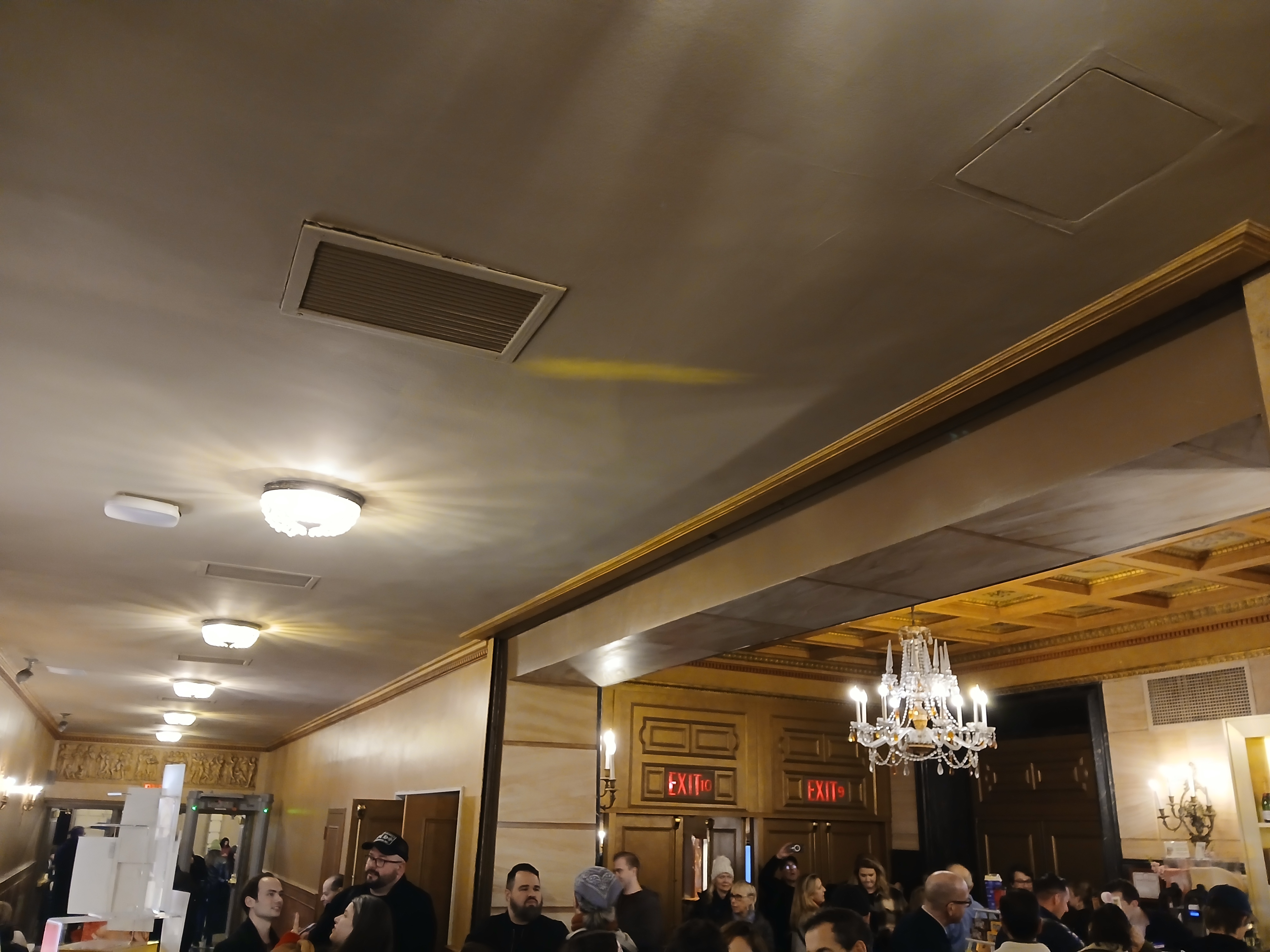
The St. James Seating Principle
At the St. James, buy the best centered seat you can afford. The room is large enough that drifting too far back, too high, or too far to the side changes the experience in ways that are not subtle. Center Orchestra rows D through L is where the classic Broadway musical energy of this house is concentrated. Front Center Mezzanine rows A through E is the smartest value in the building — excellent full-stage view, comparable pricing to mid/rear Orchestra, and a panoramic musical perspective that many experienced visitors prefer.
Balcony is a physical and visual commitment — 76 steps, genuine height, and real distance. The Mezzanine overhang starts cutting into the top of the stage from Orchestra row J. Row A center in the Orchestra has a conductor’s box obstruction risk on the middle seats. None of these are reasons to avoid the theater. They are reasons to choose deliberately.
Orchestra Seats — The Classic St. James Musical Experience
The St. James Orchestra has approximately 705 seats across 20 rows (A through T) in Left, Center, and Right sections. The Center section runs seats 101 through 115. For a major Broadway musical in this room, Center Orchestra delivers the experience the St. James was built to give: performer proximity at theatrical scale, the energy of a full-company production in a landmark house, and the feeling of being inside one of Broadway’s great musical rooms.
Center Orchestra Rows D–L — The Primary Sweet Spot
Headout identifies rows BB through M as best overall; SeatPlan confirms “views are best in the Center Orchestra’s first ten rows.” The practical target for most visitors is rows D through L center. From here you get the ideal distance for a large musical — close enough to read performer detail and feel the show’s energy, far enough for the full stage picture to compose itself. This is the zone where the St. James delivers everything the seat was supposed to deliver.
Row A Center — The Conductor’s Box Warning
Orchestra Row A center deserves specific attention: the conductor’s box in front of the center of the stage can obstruct the middle seats in Row A. SeatPlan, Headout, and multiple reviewer sources all flag this. Row A center discounted tickets should be examined carefully before purchasing — the “cheap front row” may have a real sightline issue. Row A on the sides, or rows B through D center, avoid this problem.
SeatPlan confirms: “The Mezzanine overhang begins at row J, meaning seats behind this may experience cut-off at the top of the stage.” The overhang is “more noticeably” felt from rows M and N. An AVFMS reviewer at a rear Orchestra seat confirmed: “top of stage is cut off because of mezzanine overhang.” For productions with significant above-stage visual elements or vertical staging, this matters. Center Orchestra value seats in rows L through P are still broadly good — but the top of the proscenium is reduced. Rows D through K generally avoid the worst of this.
Center Orchestra Rows L–P — Value Zone
Rows L through P in the Center Orchestra are the value zone confirmed by Headout (“rows L–S have prime value for money seats”). The overhang starts around row J and becomes more noticeable farther back, but a centered position in this range is still a real Orchestra experience at the St. James. Step-free throughout this zone — the 1–2 step issue begins at rows Q and R.
Rows Q–T — Step Warning and Rear Positioning
Rows Q, R, S, and T in the Center and Right Orchestra have 1–2 steps to access — confirmed by ATG official accessibility page. These are not wheelchair-accessible rows. If step-free access is needed, book rows A through P or the designated wheelchair locations in rows O and P. For general visitors, these rear rows are the most affordable Orchestra positions, still centered, but with noticeable Mezzanine overhang impact on the top of the stage.
Side Orchestra — Inner Good, Far Outer Caution
Inner side Orchestra positions maintain mostly centered sightlines. The far outer seats — especially in the front rows where the angle to the stage becomes pronounced — can miss portions of the stage on the opposite side. SeatPlan confirms: “views of the side of the stage become gradually more restricted the further out you sit.” For any production with important action across the full stage width, a centered seat farther back beats a close-but-angled outer side position.
Mezzanine Seats — Not a Compromise. A Genuine Choice.
The St. James Mezzanine has approximately 674 seats across rows A through R in three sections. It is reached by 29 steps from the Orchestra level — all with handrails. The entrance is behind approximately row E or F depending on specific seating location. Once in the section, there are approximately 2 steps up or down to each row. Reaching the rear of the Mezzanine section requires an additional 20 steps beyond the initial 29.
Front Center Mezzanine is the smartest value position in the St. James Theatre. SeatPlan calls out “panoramic overhead sightlines that don’t feel too close or uncomfortable” and notes that the Center Mezzanine has “excellent rake and prices comparable to the middle and back rows of the Center Orchestra.” For a production where full-stage staging, choreography, scenic design, and lighting are central to the experience, Front Mezzanine center rows A through E can genuinely be the best seats in the house.
Front Center Mezzanine Rows A–E — The Recommended Value Target
Row A of the Center Mezzanine is specifically noted by SeatPlan as having “excellent sweeping views of the stage” and by Headout as among the best seats overall. The rake from Front Mezzanine reveals the full horizontal width and depth of the stage in a way that Orchestra seats — however good — cannot match from a front-angle position. For choreography, lighting design, ensemble formation, and the visual architecture of a major musical, Front Center Mezzanine is the position from which the production reads most completely as its creators designed it.
The St. James Mezzanine requires a minimum of 29 stairs from the Orchestra level. All stairs have handrails on both sides of every aisle. Reaching the rear portion of the Mezzanine requires an additional 20 steps. There is no elevator or escalator at the St. James Theatre. The Shubert Organization cannot provide assistance on stairs. Do not book Mezzanine for anyone with mobility concerns, limited stair capacity, or anyone who needs step-free access — Orchestra only for these visitors.
Mezzanine Rows F–L — Value Mid-Zone, Balcony Overhang from Row D
The Balcony overhang begins at Mezzanine row D — confirmed by TicketIQ citing the official seating chart. From row D onward, the Balcony structure above begins to reduce the top-of-stage view. SeatPlan notes that the rear rows “can be more affected by the Balcony overhang.” This does not make rows F through L unusable — the rake remains good — but it is worth knowing for productions with important vertical staging. The front four rows of Center Mezzanine (A through D) are before the overhang becomes a meaningful factor.
Front-of-Stage Shows and the Mezzanine
A View From My Seat reviewers have noted that when a production plays a lot of its action near the front edge of the stage, Mezzanine viewers end up leaning forward to catch it. For comedy-first and performer-forward shows, Center Orchestra is the stronger pick if the budget allows. For big ensemble numbers and design-led staging, Front Center Mezzanine holds its own.
Side Mezzanine — Inner Rows Good, Far Outer Seats Cut Off
Inner side Mezzanine positions are generally fine, with broadly usable sightlines. Far outer seats — SeatPlan specifically cites B32 as an example — will have the opposite side of the stage cut off. Far outer Mezzanine seats are partial view territory. Center always beats far side in the St. James Mezzanine, and a rear center position is usually preferable to an extreme outer position in any row.
Balcony Seats — 76 Steps, Real Height, Real Tradeoffs
The St. James Balcony has approximately 326 seats across rows A through H. It requires 76 steps from the Orchestra level — all with handrails. The entrance is behind row H. Within the section, there are approximately 2 steps up or down to each row. There is no elevator. This is a significant physical commitment before you even consider the viewing experience.
SeatPlan’s summary of the Balcony is direct: it “can feel very steep and distant,” and “at the very back of the Balcony, patrons may find the sightlines and sound are more obstructed than anywhere else in the theater.” The St. James Balcony can get you into the room for a major production, but it is not the same experience as Orchestra or Mezzanine.
Front Center Balcony Rows A–C — The Only Recommended Balcony Position
If Balcony is the only budget option, front center rows A through C give the least-compromised Balcony view. The height is still significant — it is a steep house — but the production still communicates visually from here. For large musicals where full-stage scale is the spectacle, front center Balcony can deliver enough of the picture. For productions where comedy timing, facial expression, or performer detail are central, the distance is a real reduction.
The St. James Balcony requires 76 stairs from the Orchestra level. All stairs have handrails. There is no elevator. The Balcony is steep and noticeably high. It is not recommended for: visitors afraid of heights, mobility-limited visitors, older guests who cannot manage a significant stair climb, first-time Broadway visitors if Front Mezzanine is within budget reach, or anyone attending a production where facial detail and comedy timing are central to the experience. The Balcony can work for large spectacle musicals where full-stage picture is the primary value, but it is a physical and experiential compromise, not a neutral alternative.
Box Seats — History, Atmosphere, and Side Angles
The St. James has two box sections — Box A on the right and Box B on the left — positioned above the Orchestra flanking the stage. Each has 5 rows of 2 seats. They are architectural remnants of the theater’s 1927 Warren & Wetmore design and have a distinct theatrical atmosphere: elevated, somewhat private, and physically removed from the main seating bowl.
The practical issue is the same as at every Broadway house: boxes are side-angled to the stage. For a major musical with broad staging — ensemble numbers across the full stage width, choreographic formations, scenic design that fills the proscenium — a side-angled box position misses significant portions of that picture. Boxes can work for a group seeking a distinct occasion-driven experience, or for a repeat visitor who has already seen a production and wants something different. They are not recommended as the primary seat choice for first-time visitors or anyone for whom a complete stage view is the priority.
How the Best Seat Changes by Show at the St. James
The St. James books big musicals, but not every big musical wants the same seat. Comedy-first and performer-forward shows reward Center Orchestra, where facial detail and timing land. Ensemble-heavy, choreography-driven and design-led productions often read best from Front Center Mezzanine, where the whole stage composes itself. Use the production-type guide below, then check what’s actually booked.
DOLLY hasn’t been staged on Broadway yet, so we’ll sharpen this advice once previews start. For tickets, cast, songs and age guidance, see the DOLLY on Broadway guide.
Best Seats by Production Type
Orchestra for energy and performer detail. Front Mezzanine for the full-stage musical picture. Both are legitimate primary choices depending on budget and preference.
Comedy timing, facial expression, and performer-to-audience connection reward Orchestra proximity more than most show types. Front Mezzanine works for the bigger musical numbers.
The elevated, centered position is where choreographic formations read as composed patterns. The definitive recommendation for any production where dance architecture is the point.
When the performance of a specific person is the primary draw, proximity is the priority. Center Orchestra brings you close enough to see the work that makes a star-driven production worth the ticket.
Both work well. Orchestra gives kids the most immersive close-up experience. Front Mezzanine gives a cleaner full picture that helps younger audiences follow what is happening across the full stage.
If you have experienced the show from Orchestra, Front Mezzanine reveals the staging architecture — how the blocking, design, and choreography compose the stage as a whole. A different and valuable perspective.
Best Seats by Visitor Type
The most reliable first St. James experience. Close, centered, energized. If budget allows, rows D through H give the strongest first-time premium experience in one of Broadway’s greatest rooms.
Front Mezzanine to understand the staging architecture. Center Orchestra for the historical room experience. Both are worth doing in the St. James across different productions.
The classic St. James date-night seat. Premium enough to feel special, centered enough to deliver the full musical experience, and in a room with real theatrical history. The Shubert Alley arrival adds to the atmosphere.
Orchestra H–M for a strong immersive experience at lower pricing. Front Mezzanine for the full visual picture that helps kids follow the story. Check stair access before booking Mezzanine for young children.
Front Center Mezzanine is often the smartest value in the house — comparable pricing to mid-rear Orchestra with a better full-stage view. Choose Front Mezzanine center over Balcony unless the price gap is very significant.
Orchestra is the only accessible level. Wheelchair seating rows O–P. No elevator to Mezzanine or Balcony — 29 and 76 steps respectively. Contact St. James box office before booking. Accessible restroom in Orchestra lobby.
The St. James Balcony is steep and high. For visitors sensitive to heights, Orchestra is the right section — no height discomfort, no significant stair count. Mezzanine (29 steps) is manageable for most stair-capable visitors.
Front Mezzanine can be easier for groups to seat together and delivers a premium view without the front-orchestra premium price. Center Orchestra for groups who want the full room energy. Book early for large parties — centered blocks sell first.
Accessibility at the St. James Theatre
The St. James can work well for accessibility-conscious visitors — but only if the seat is chosen correctly. Orchestra is the access-safe level. Everything above Orchestra is stair-only, and the numbers are specific: Mezzanine is 29 stairs, Balcony is 76. These are real figures from the official ATG accessibility page, not vague estimates.
Seats to Avoid — or Approach With Clear Expectations
- Do not book Orchestra Row A center middle seats without checking for the conductor’s box obstruction — discounted Row A center tickets at the St. James frequently reflect this issue.
- Do not book Orchestra rows Q–T (Center and Right) if step-free access is required — these rows have 1–2 steps and are not accessible for wheelchair users.
- Do not book Mezzanine or Balcony for anyone with mobility concerns — 29 stairs to Mezzanine and 76 stairs to Balcony, with no elevator and no staff assistance on stairs.
- Do not book rear or side Balcony expecting a reasonable Broadway experience — SeatPlan confirms the very back of the Balcony has the worst sightlines and sound in the house.
- Do not treat Balcony as equivalent to Front Mezzanine for value — Front Center Mezzanine rows A–E is almost always the smarter buy when budget is the constraint.
- Do not book far outer side Mezzanine (like B32) expecting a full-stage view — SeatPlan confirms the far outer side is partial view with the opposite stage edge cut off.
- Do not book far outer side Orchestra in front rows when a centered seat farther back is available — the angle compromises the full-stage picture for any large musical.
- Do not book Box A or Box B expecting the primary production view — they are side-angled, atmospheric, and best for repeat visitors who want a different physical relationship to the room.
- Do not arrive late — the St. James is a large house and finding seats in the Mezzanine or Balcony with a 29-step or 76-step climb requires extra time.
Nearby 44th Street Houses
Planning Your St. James Theatre Night
The St. James is at 246 West 44th Street — between 7th and 8th Avenues, close to Shubert Alley and the 44th Street theater cluster. Times Square transit is the most common arrival: the cluster of 1/2/3/7/N/Q/R/W/S lines at 42nd Street puts you a two-block walk north. Port Authority / A-C-E access from 42nd Street at 8th Avenue gives you the western approach. Bars at the St. James open 40 minutes before the show.
Restaurant Row is on West 46th Street — a short walk north and easily walkable for pre-show dinner. Hell’s Kitchen extends from 8th Avenue westward and has a broad pre-theater dining range. Hotels near Broadway and near Times Square are the most logical stays for a St. James night. For accessibility planning: do not leave restroom logistics to intermission — the accessible restroom in the Orchestra lobby is the only step-free option, and the regular restrooms require stairs. Plan arrival time to allow extra buffer for the 44th Street crowd and, for Mezzanine and Balcony visitors, the stair climb to your section.
FAQ — St. James Theatre Seating
Center Orchestra rows D through L for the classic St. James musical experience — performer detail, room energy, full-stage view. Front Center Mezzanine rows A through E for the smartest value and best full-stage musical picture. For a first-time visit, Center Orchestra rows E through K is the primary recommendation. Front Mezzanine rows A and B are specifically noted by SeatPlan as some of the best seats in the house for their “panoramic overhead sightlines.”
Both are strong for different reasons. Center Orchestra gives you performer proximity, room energy, and the St. James experience at its most immediate. Front Center Mezzanine gives you the full-stage musical picture — choreography, lighting, ensemble formations, scenic design — as a composed whole. For comedy-musicals and performer-forward shows where personality is central, Orchestra is the stronger pick. For choreography-heavy or visually designed musicals, Front Mezzanine center is often the better seat.
Yes — it is one of the smartest seats in the house. SeatPlan confirms the Center Mezzanine has “excellent rake and prices comparable to the middle and back rows of the Center Orchestra.” Row A of the Center Mezzanine has “excellent sweeping views of the stage.” Front Center Mezzanine rows A through E is the recommended value position for any production where the full-stage visual picture — choreography, staging design, lighting — matters.
Front Center Balcony rows A through C are acceptable for budget buyers who can handle the stair count and height. The Balcony is steep and the distance from the stage is real. SeatPlan describes the rear Balcony as having “sightlines and sound more obstructed than anywhere else in the theater.” For first-time visitors and anyone who prioritizes performer detail or comedy timing, Front Mezzanine center is almost always the better buy if the price difference is manageable.
76 steps from the Orchestra level — confirmed by ATG official accessibility page, Ticketmaster, all major sources. The entrance to all Balcony seating is behind Row H. All stairs have handrails. Within the Balcony, there are approximately 2 steps up or down to each row. There is no elevator or escalator.
No. The St. James Theatre has no elevator or escalator — confirmed by ATG official page, all major accessibility sources, and the theater’s own seating chart page. Mezzanine = 29 stairs. Balcony = 76 stairs. Orchestra is the only level accessible without stairs. This is a permanent feature of the 1927 building.
At the Orchestra level, yes. The entrance is step-free and there is no step from the sidewalk to the Orchestra. Wheelchair seating is in Orchestra rows O and P. Transfer seats are available in Orchestra rows D, E, J, M, O, and P. An accessible unisex restroom is in the Orchestra lobby. Mezzanine and Balcony are not wheelchair accessible — no elevator exists. Contact the St. James box office before booking accessible seating.
Yes — a unisex wheelchair-accessible restroom is step-free in the Orchestra lobby. Other restrooms inside the theater require stairs: regular restrooms are one floor below (22 steps down) and on the Mezzanine level (29 steps up). Plan restroom timing carefully for anyone with mobility concerns or anyone in the Mezzanine or Balcony sections who will need the accessible restroom during intermission.
Avoid: Orchestra Row A center middle seats (conductor’s box obstruction risk), Orchestra rows Q–T for anyone needing step-free access (1–2 steps), any Mezzanine or Balcony seating for mobility-limited visitors, rear/side Balcony (worst sightlines in the house per SeatPlan), far outer side Mezzanine (partial view), far outer side Orchestra front rows (angle compromises full-stage picture), box seats if a complete stage view is the priority.
Center Orchestra rows D through L is the primary recommendation for DOLLY: A True Original Musical — a biographical musical lives on its lead performances, and Center Orchestra keeps you close to them. Front Center Mezzanine rows A through E is the value pick for the full stage picture of the big numbers. DOLLY begins previews December 7, 2026 and opens January 19, 2027.
They are atmospheric and historically interesting, but not the best production view. Boxes A and B are side-angled above the Orchestra flanking the stage. For musicals with broad staging, the side angle misses portions of the full-stage picture. Best for repeat visitors who want a different physical relationship to the room — not recommended as primary seats for first-time visitors or anyone who wants the complete production view.
Yes — it is one of Broadway’s greatest musical houses and a meaningful first Broadway experience. The key is booking the right section: Center Orchestra rows E through K is the recommended first-time target. Do not let budget pressure lead to Balcony seats for a first visit — Front Mezzanine center is almost always the better upgrade if Balcony pricing is what the budget reaches. Book early to secure the best centered positions.
Plan at least 20–30 minutes before curtain. 44th Street is one of Broadway’s busiest theater corridors on show nights. If seated in the Mezzanine, allow extra time for the 29-step climb. If seated in the Balcony, allow extra time for the 76-step climb. Bars open 40 minutes before the show. If accessibility logistics apply — including using the accessible restroom in the Orchestra lobby — plan for a full 30-minute buffer before curtain.
One of Broadway’s Great Houses — Choose Your Seat for It
Center Orchestra for the St. James experience at its most charged. Front Mezzanine for the full musical picture. Know the stairs, buy centered, and plan the accessibility before the night.
Pick the Big Broadway View — Then Build the Whole Night
The St. James is one of Broadway’s great large musical houses, so seat choice matters. Center Orchestra gives the room energy and performer detail. Front Mezzanine center gives the cleanest full-stage musical picture. Balcony is a budget move with real stair and height tradeoffs. Use these related guides to connect the seat decision with the theater, show, dinner, transit, hotels, parking, and nearby 44th Street planning.
St. James Theatre Broadway Guide
Go deeper on the 44th Street location, classic musical-house history, St. James accessibility realities, nearby theaters, and full-night planning.
Open Theater Guide Current Booking · Previews Dec 7DOLLY at the St. James
DOLLY: A True Original Musical begins previews December 7, 2026 and opens January 19, 2027. Tickets, cast, songs, age guidance and when to buy.
Open DOLLY GuideMore Seating, Ticket & Broadway Strategy
Seats · Timing · ValueBroadway Seating Guide
Compare Orchestra, Mezzanine, Balcony, boxes, sightlines, value zones, and when elevated center beats closer side seats.
All Broadway Theater Guides
Compare every Broadway house by size, access, neighborhood, seating levels, room personality, and night-out fit.
What’s Playing on Broadway
Browse current Broadway shows and connect each production to the right theater, seat choice, and full-night plan.
First-Time Broadway Guide
For visitors choosing their first show: seats, arrival, timing, dress, intermission, crowds, and Theater District basics.
When to Buy Broadway Tickets
Know when buying early matters, when waiting can work, and how timing changes for premium center seats and limited runs.
Broadway Rush and Lottery Tickets
How discount systems work, what seat tradeoffs to expect, and why cheap seats can be great — or risky — depending on the room.
Plan the St. James Theatre Night
Dinner · Hotels · TransitRestaurants Near Broadway
Use the broader Broadway dining guide when you want a reliable pre-show meal before walking into the 44th Street theater zone.
Restaurants Near Times Square
Useful when your group wants to stay close to the St. James, Broadway, Times Square, and post-show transit.
Pre-Show Dining Guide
Plan reservation timing, walking buffer, arrival, late-seating risk, and post-show movement around a Theater District show.
Hotels Near Broadway
Compare Theater District, Times Square, Midtown West, and Hell’s Kitchen hotel zones for a Broadway-centered trip.
Hotels Near Times Square
Best for visitors who want short walks, easy subway access, and simple post-show return logistics after a St. James show.
How to Get to a Broadway Show
Subway, walking, rideshare, and arrival timing for Theater District shows, including the St. James on West 44th Street.
Subway to Broadway
Pick the right subway approach for West 44th Street, Times Square, Shubert Alley, and post-show exits.
Parking Near Broadway
When driving makes sense, when it does not, and how to avoid turning a St. James night into a Midtown garage problem.
Best Way Home After a Show
Subway, taxi, rideshare, walking, and hotel return strategy after a crowded 44th Street performance.
Nearby Neighborhood & Theater Guides
44th Street · Shubert Alley · Nearby HousesTheater District
The practical guide to Broadway’s center: theaters, crowds, hotels, restaurants, walking routes, and first-time visitor logistics.
Times Square
Useful for hotels, transit, crowd planning, visitor logistics, and the classic Broadway arrival flow.
Hell’s Kitchen
A strong pre- and post-show dining base west of the St. James, especially if you want less Times Square noise.
Shubert Theatre Guide
Compare another major 44th Street Broadway house with a classic musical-theater feel and important access limitations.
Majestic Theatre Guide
A nearby classic Broadway house useful for comparing musical-house scale, balcony tradeoffs, and 44th Street planning.
Booth Theatre Guide
Compare the St. James’s big musical-house energy with a smaller, play-friendly Broadway house near Shubert Alley.