Concert Venue Guide · Rockefeller Center · Midtown Manhattan

Radio City Music Hall Seating Guide — Best Seats, Tips & Planning

One of New York’s great large-theater concert experiences — beautiful enough to feel like an occasion, large enough for major acts, and a better fit for more evenings than most people realize. Here is how to choose seats and plan the full night.

Address1260 Avenue of the Americas, NY 10020
Capacity5,960 seats
TransitB/D/F/M — 47th–50th Sts–Rockefeller Center
SettingRockefeller Center, Midtown

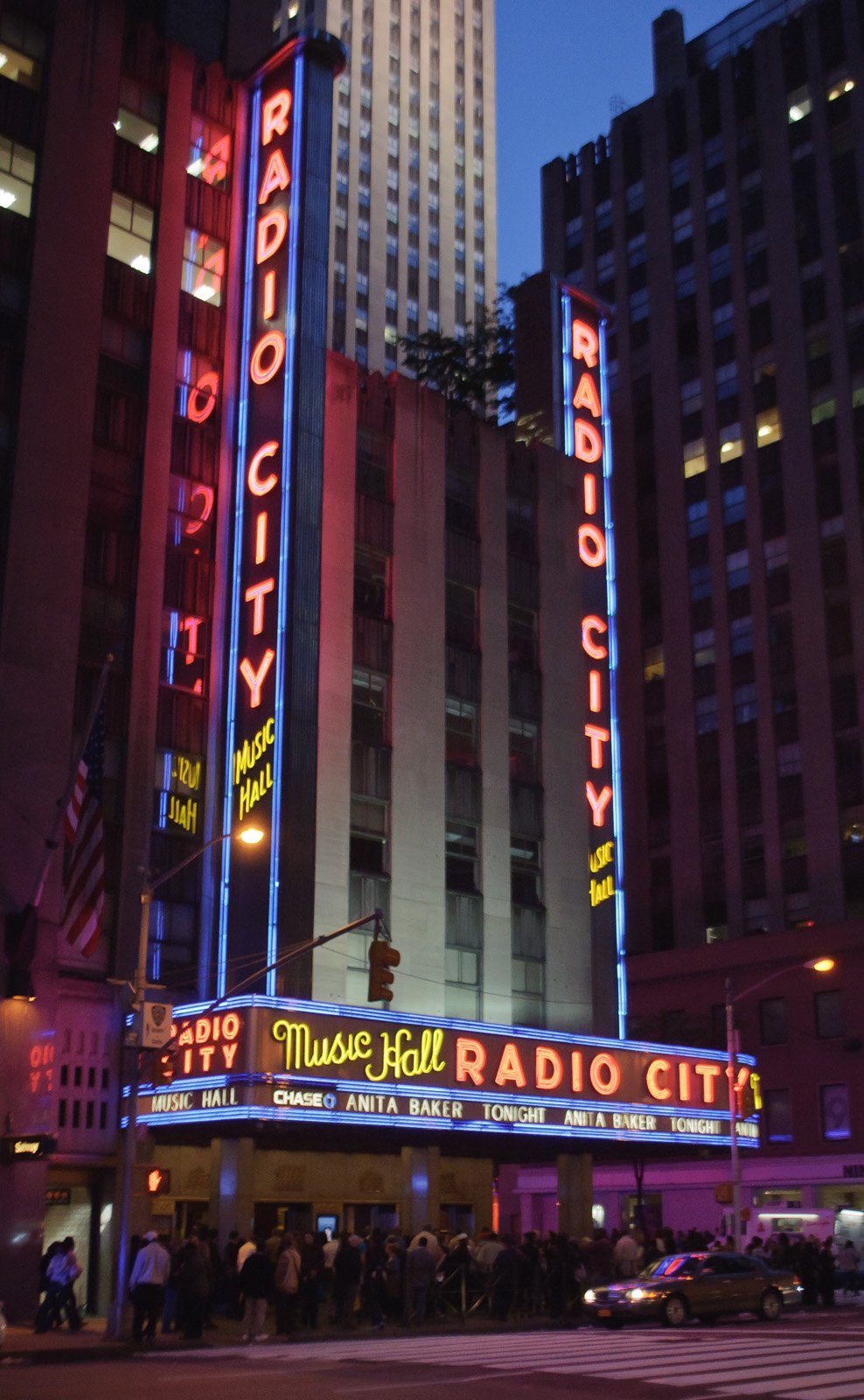
Radio City Music Hall sits on 6th Avenue between 50th and 51st Streets inside Rockefeller Center — and that address sets an expectation the building actually meets. The Art Deco architecture is not decorative backstory; it is part of what you experience when you walk into the room. The proportions, the arched ceiling with its concentric rings drawing your eye toward the stage, the warm amber lighting, the plush seats with more legroom than any comparable concert hall in the city — all of this constitutes a venue that performs simultaneously as architecture and as a place to see a show.

At 5,960 seats, Radio City occupies a useful middle position in the New York concert landscape. It is significantly larger than the Beacon Theatre or Carnegie Hall, which means it can host touring artists whose production requirements or audience size rule out those rooms. It is significantly smaller than Madison Square Garden or Barclays Center, which means the experience remains coherent and connected rather than sprawling. For many artists and many audiences, Radio City is precisely the right scale — large enough for a meaningful production, compact enough that every seat is a real seat rather than a distant viewing position.

The seating decisions matter here in specific ways. The orchestra’s center section has a well-known soundboard obstruction in the rear rows that most buyers do not find out about until they are inside. The first mezzanine center is frequently the strongest value in the house. And the extreme side sections at every level are significantly weaker than center sections. This guide covers all of it.

Interior stage view at Radio City Music Hall in New York City, showing the scale and atmosphere of a major live performance venue

An interior stage view at Radio City Music Hall, highlighting the scale, symmetry, and grand performance setting that make it one of New York City’s most distinctive concert venues.


What Radio City Is Actually Like for Concerts

The first thing most people notice about Radio City — if they arrive early enough to take it in — is the ceiling. The signature Art Deco arches and the circular design that radiates toward the stage are genuine architectural achievements, and the effect of watching a performance unfold inside them is meaningfully different from watching the same performance in a neutral box. The room has a formal grandeur that is neither stuffy nor intimidating. It elevates the evening.

The room is also unusually comfortable by any concert-venue standard. The seats are plush and genuinely more spacious than the cramped accommodations typical of older New York theaters. Row A of both the orchestra and mezzanine levels offers extra legroom, and corner sections throughout the venue provide more lateral space. Under-seat storage compartments are standard. For anyone who finds the physical experience of most concert venues tedious — hard seats, insufficient legroom, sightlines blocked by the person in front — Radio City is a pleasant surprise.

One confirmed and significant recent development: in October 2025, MSG Entertainment announced a $7 million investment in upgrading Radio City’s sound system with a spatial audio system. This means the long-standing criticism that mezzanine sound disperses slightly compared to orchestra-level seats is being actively addressed. For concerts booked into Radio City from late 2025 onward, the mezzanine sound experience will improve from what older reviews describe.

Seating Levels
Pit + Orchestra + 3 Mezzanines
Pit (AAA–CCC, ~150 seats, not all shows) · Orchestra (AA–W, 7 side-by-side blocks) · 1st, 2nd, 3rd Mezzanine
Capacity
5,960 seats
Varies slightly by configuration · No columns obstructing any seat
Transit
B/D/F/M — 47th–50th Sts–Rockefeller Ctr
Subway entrance directly adjacent to the north end of the Radio City marquee — same structure
Sound System
Spatial audio upgrade — Oct 2025
$7M investment announced for spatial audio system — improving mezzanine sound quality from earlier configurations
Seating Comfort
Exceptional by NYC concert standards
Plush upholstery · More legroom than most theaters · Under-seat storage compartments · Row A and corners: most legroom
Sightlines
No columns anywhere in the venue
Critical exception: soundboard obstructs rows N–Z of orchestra center section 400 for most concerts

When Radio City Is the Right Venue — and When It Isn’t

Radio City is the right choice when

The artist benefits from a seated, attentive room with strong acoustics and architectural beauty. Radio City rewards performances that have something to fill the space elegantly rather than simply loudly. Singer-songwriters, orchestral performers, comedians, film-in-concert events, and artists with productions that blend visual and sonic ambition all work well in this room. The audience’s collective attention is more focused in a seated theater than in a standing-room arena; performers who draw on that attention rather than generating pure volume and crowd energy are well-served here.

The evening should feel like a proper occasion. A Radio City concert night naturally skews slightly more formal than an MSG arena show — not black-tie, but the room has a character that elevates the evening in a way that the functional Penn Station block does not. For a date night, a special occasion, or a first NYC concert experience for someone who wants to feel the city’s cultural weight, Radio City delivers it more consistently than most other options at its scale.

You want Midtown convenience without arena sprawl. The transit situation at Radio City is excellent — the B/D/F/M subway entrance is literally in the same building structure as the venue — and the Rockefeller Center setting is one of the more walkable and pleasant blocks in Midtown. For visitors staying in Midtown hotels, the walk to Radio City is often the best part of the pre-show evening.

Radio City may not be the right choice when

The artist is specifically designed for arena scale. Some tours are built for 15,000–20,000 people: the lighting rigs, the video walls, the stage design — all of it calculated to fill a room the size of MSG. These tours can play Radio City, and the experience is technically fine, but it can feel slightly compressed or constrained — like watching a production that is slightly too large for the stage. For tours that need an arena, MSG or Barclays is the right call.

You want floor energy or a standing-room atmosphere. Radio City is fully seated. There is no general admission floor, no pit culture, no standing-room crowd experience. If the appeal of a show is specifically the physical energy of being in a crowd on the floor — which is a real and legitimate preference — Radio City cannot provide it. See the comparison to MSG and Barclays below.

You want the most intimate possible experience at this show. Radio City at 5,960 seats is not an intimate venue. For artists playing a comparable NYC run at a 2,800-seat Beacon Theatre alongside a Radio City date, the Beacon will always deliver a more connected, closer performance. The choice usually comes down to which show you can get tickets for and at what price.


Best Seats for Concerts at Radio City — The Complete Guide

Radio City’s orchestra is enormous — over 45 rows arranged in 7 side-by-side blocks, numbered 1 (far right facing stage) through 7 (far left). Center block is the 400-series (seats 401–414). The three mezzanine levels overhang the orchestra starting at row K — so anyone sitting in the orchestra from row K onward is under a mezzanine ledge. This matters for sightlines to the ceiling architecture and for some lighting effects that originate from above.

The Soundboard Obstruction — Know Before You Buy

For most concerts at Radio City, rows N through Z (or the final rows depending on section) in the center orchestra section 400 are obstructed by the soundboard. The soundboard sits in the rear center orchestra for most events — blocking sightlines for anyone seated behind it in that center block. This is not a minor inconvenience; it is a real view obstruction in what appears on the chart as desirable center seating. The soundboard moves to the mezzanine level only for the Christmas Spectacular. For concerts, if you are buying rear orchestra center, verify that your specific rows clear the soundboard before purchasing.

Orchestra — the detail most buyers miss

The orchestra’s front rows (AA through roughly row L or M, depending on section) are clean and strong throughout the center. Orchestra center front is genuinely excellent when you are in the first half of the section — close to the stage, within the clean viewing zone before the soundboard obstruction begins, and with the elevated stage perspective working in your favor. Front orchestra center is the high-end, premium choice for concerts that reward proximity.

The extreme side sections — orchestra blocks 1 (far right) and 7 (far left) — are the weakest in the orchestra. The acute angle to the stage from these sections is significant enough that parts of the performance are cut off or difficult to see. Within these side sections, seats closer to the inside aisle are considerably better than seats toward the outside wall. If you are in the 100s or 700s, always choose the lower seat numbers (which are toward the inside).

The middle blocks — 200, 300, 400, 500, 600 — are all significantly stronger than the extreme sides. Within these, center 400 is the best; adjacent blocks 300 and 500 are nearly as good and sometimes better value.

First mezzanine — frequently the best seat in the house

The first mezzanine is one of the most consistently undervalued seating zones in New York concert venues, and the Radio City first mezzanine center is among the strongest examples of why. From front rows of the first mezzanine center (rows A–E of section 400 equivalent), you get a slightly elevated angle of the full stage — enough to see the production clearly, not so elevated that you feel disconnected. Because the mezzanine sections have fewer rows than the orchestra, there are fewer people between you and the row in front. A shorter person who struggles with sightline blocking in the orchestra often finds the first mezzanine center significantly better for exactly this reason.

The first two rows of the first mezzanine (row A and row B) are especially notable: they are in front of the mezzanine overhang, which means full view of the arched ceiling and the Art Deco architecture above. Anyone sitting in the mezzanine from row C onward is under the overhang of the next tier — which removes the ceiling view. Row A and B of the first mezzanine center are a genuinely distinctive seat in this room.

The same side-section caveat applies at the mezzanine level. First mezzanine sections 100 and 700 (extreme sides) are weaker than center and adjacent center sections. For mezzanine seats, the center and center-adjacent blocks (sections 300, 400, 500 of the mezzanine) are strongly preferred.

Second and third mezzanine

The second mezzanine is slightly higher than the first and offers a similar but more elevated perspective. The views from the second mezzanine center are strong, though the pre-October 2025 criticism of dispersed sound in the upper levels is being addressed by the spatial audio upgrade. Front rows of second mezzanine center sections are comparable to the rear rows of first mezzanine center in overall experience — the price difference between them is often meaningful enough that second mezzanine center represents strong value.

The third mezzanine is the highest level and has the fewest seats. The distinctive feature: from the third mezzanine, you are above the overhang of any tier above you, which means a full view of the ceiling rings and the complete Art Deco dome — the most architecturally complete perspective in the building. Third mezzanine front rows are worth considering for anyone who specifically wants the full room perspective. The distance to the stage is real but not as punishing as it might seem because the room’s geometry is compact relative to its seat count.

Best Value · Most Recommended
1st Mezzanine Center — Rows A–E, Sections 300–500

Slight elevation, full stage view, fewer rows than orchestra so less sightline blocking by neighbors. Rows A–B are in front of the overhang — full ceiling view. Consistently strong value against orchestra front pricing.

Premium Choice
Orchestra Front Center — Rows AA–M, Sections 300–500

Closest seats without soundboard obstruction. Strong for proximity-focused performances. Premium priced but genuinely excellent for the right show. Verify rows clear the soundboard zone before purchasing rear orchestra.

Best Architecture View
3rd Mezzanine Front Rows — Center Sections

Only level with an unobstructed view of the full ceiling arches and the room’s complete Art Deco geometry. Farthest from stage but a uniquely Radio City experience. Good for shows where the room itself is part of the appeal.

Strong Value Alternative
2nd Mezzanine Center — Front Rows, Sections 300–500

Comparable to rear first mezzanine but at lower prices. Front rows of 2nd mezzanine center are a reliable strong-value seat. Sound quality improving with 2025 spatial audio upgrade.

Pit — When Available
Pit Rows AAA–CCC (not all shows)

~150 seats at the very front of the stage. Not offered for all concerts. When available, front pit is the closest you can get to the performer at Radio City. Often unavailable on Ticketmaster primary; secondary market may have options.

Avoid
Extreme Side Sections — Blocks 1 & 7 (Orchestra & Mezzanine)

Sections 100–199 and 700–799 at any level. The acute angle from these sections cuts off significant stage area. If stuck in a side section, choose seats with lower numbers (inside aisle) over higher numbers (outside wall).

The First Mezzanine vs Orchestra Question — Settled

The first mezzanine center is frequently the best seat in Radio City for concerts. The slight elevation reduces the chance of sightline blocking, the perspective of the full stage is cleaner than from the extreme front orchestra, and the price premium over rear orchestra sections is often modest or reversed. The one scenario where orchestra front wins: shows where proximity to the performer is the primary value and the first rows of the center orchestra are genuinely among the closest seats in the room to the artist. For everything else — especially visually complex productions — first mezzanine center rows A–E are the benchmark against which other sections should be measured.


Seat Strategy by Concert Type

Singer-songwriter and vocal-forward performances

For shows where the performance is primarily about voice, lyric, and performer connection — an acoustic artist, a singer-songwriter, a vocalist performing with a small backing band — front orchestra center and pit (when available) are the strongest choices because proximity to the performer matters most. The room’s acoustics work in your favor at this scale: Radio City is a genuinely well-designed room for clear sound, and a vocal performance without overwhelming amplification sounds good throughout the house. First mezzanine center is a strong alternative for anyone who wants the elevated perspective without competing for premium front-row pricing.

Film-with-live-orchestra events

Radio City hosts a significant number of film-in-concert events — Lord of the Rings, Star Wars, and similar productions where a full orchestra performs the score live to a film projected on screen. For these, the seating equation tilts toward elevated positions: you want to see both the screen and the orchestra simultaneously. First and second mezzanine center rows deliver exactly this — an angle where the film and the performers are in the same field of view. Front orchestra for these shows can make the screen’s angle awkward and places the orchestra below your sightline rather than in frame with the visual element.

Pop or pop-rock shows in a seated format

For artists playing Radio City on a pop or light rock tour that fits the seated room rather than an arena, the seating recommendation returns to first mezzanine center for the reasons outlined above — the production typically has enough visual design to benefit from a slightly elevated view of the full stage picture. For artists with more stripped-down productions, front orchestra center is the premium choice. In either case, avoid the extreme side sections at any level.

Comedy and special event performances

Comedy at Radio City (and the venue hosts substantial comedy programming throughout the year) follows the same logic as any vocal-forward performance: proximity tends to improve the experience, and center positioning matters more than level. Front orchestra center rows and first mezzanine center front rows are both strong. The extreme difference in experience between orchestra front and upper mezzanine is more pronounced for comedy — where reading the performer’s facial expression contributes to the experience — than for heavily amplified music where screen projections compensate for distance.


What First-Timers Should Know Before a Concert at Radio City

The subway entrance is inside the building

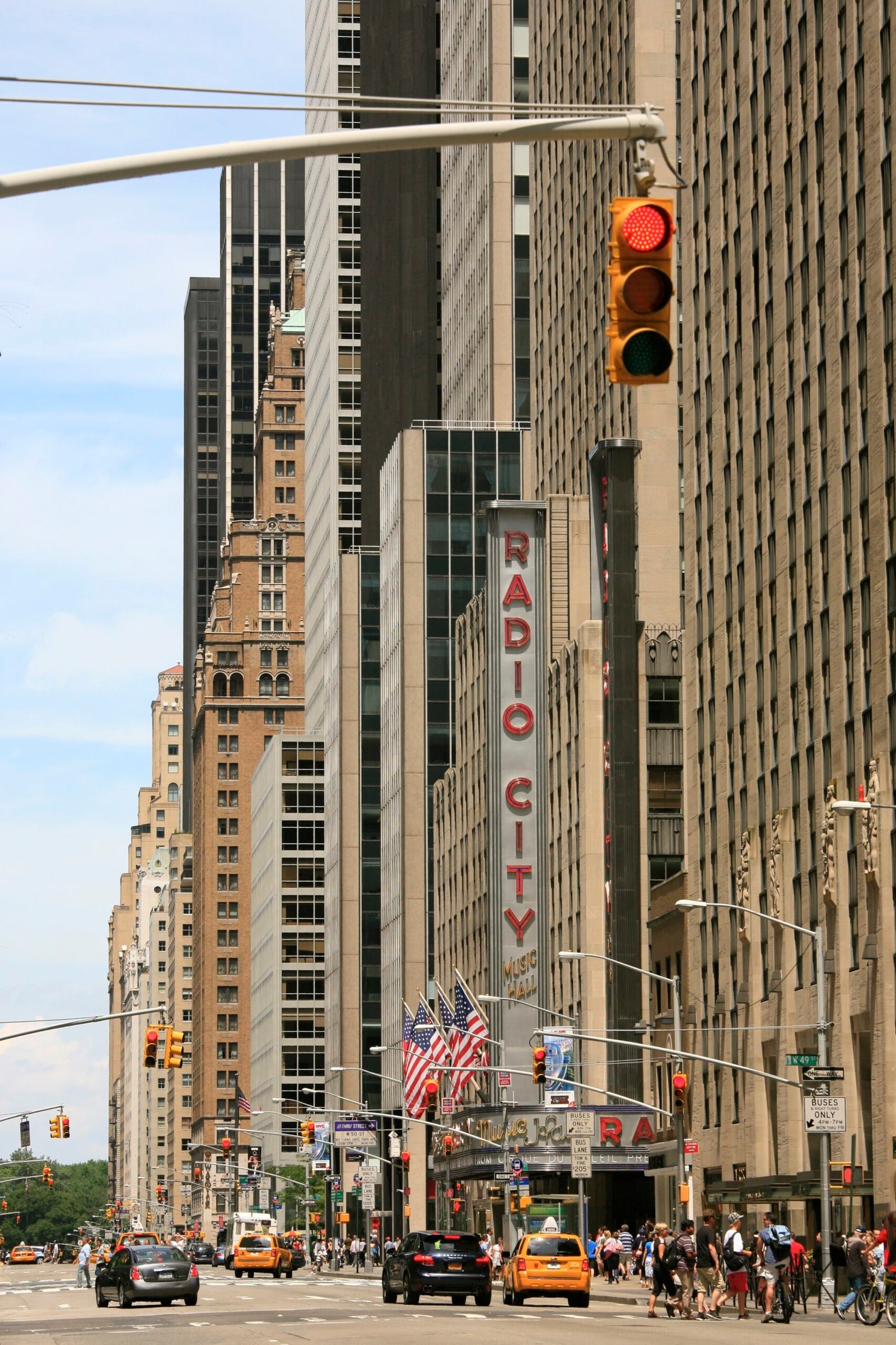
The 47th–50th Streets–Rockefeller Center station (B/D/F/M) has an entrance directly adjacent to the north end of the Radio City marquee — essentially in the same structure. Getting off the train and walking into the venue is a matter of following signs rather than navigating city blocks in any weather. This is the most direct subway access of any Midtown concert venue and makes Radio City among the easiest large concert halls in New York to reach without transit stress.

Arrive early and take the room in

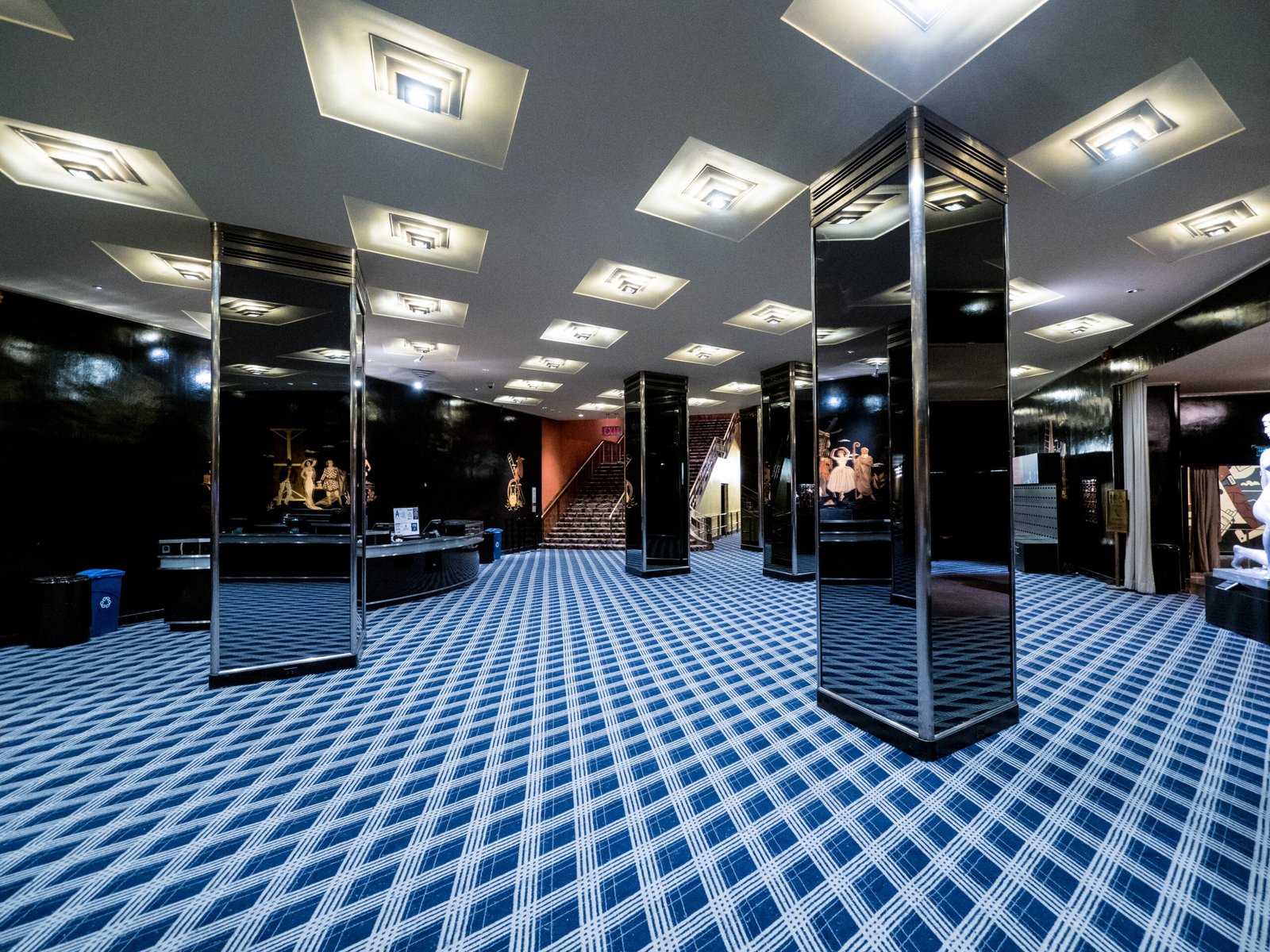
Radio City is one of the few New York concert venues where arriving 20–30 minutes early is genuinely rewarding for its own sake. The Grand Foyer, the lobby architecture, and the main auditorium itself are worth experiencing before the house lights go down. For a first-timer, sitting in the room and watching it fill is part of what makes the evening feel like a proper New York occasion. The architecture reads best when you have time to look at it.

Midtown timing — plan around it, not through it

The blocks around Rockefeller Center are among the most heavily trafficked in Midtown on weekday and weekend evenings. Arriving by subway (which deposits you directly at the venue) is categorically easier than arriving by car or rideshare, which are subject to Midtown gridlock. Allow a few extra minutes to navigate any outdoor foot traffic at Rockefeller Center if arriving from the north along 6th Avenue or from the Rockefeller Plaza side. Post-show, the same subway entrance makes exit straightforward — the B/D/F/M run frequently and the venue’s exit disperses cleanly into the station.

Dress for the occasion

Radio City skews slightly more polished than a standard arena show, and the room’s character supports that. There is no dress code and no one policing the door — but the audience at most Radio City shows tends toward smart-casual, and arriving in something that reflects the occasion is part of what makes the evening feel elevated. For date nights specifically, the Midtown setting makes dinner-before-show dressing natural. See the what to wear to a concert guide for full venue-specific guidance.


Building the Full Night — Dinner, the Neighborhood, and Getting Back

Rockefeller Center is a destination, not just a location

Radio City is embedded in Rockefeller Center — which means the pre-show experience of walking through the complex (the Channel Gardens, the plaza, the surrounding buildings) is itself pleasant in a way that the Penn Station block is not. In spring and summer, the outdoor elements of Rockefeller Center are genuinely enjoyable. In winter, the skating rink and seasonal decorations create a specific New York evening ambiance around the show. This is a venue where arriving on foot from nearby is part of the outing, not just transit logistics.

Pre-show dinner — the Hell’s Kitchen advantage

The restaurant options directly on the Rockefeller Center block are functional but tourist-facing. For a pre-show dinner that contributes to the evening, the right move is Hell’s Kitchen — the 9th Avenue corridor 10–12 minutes west of Radio City has the strongest neighborhood restaurant density in this part of Midtown. Genuine neighborhood restaurants at real prices rather than event-night tourist pricing. For anyone wanting a dinner that is part of the experience rather than merely adjacent to it, Hell’s Kitchen is consistently the right direction. See the restaurants near NYC concert venues guide for specific area recommendations.

For a date night specifically — where dinner and the show should feel like a continuous evening — the Midtown West / Hell’s Kitchen area supports this well. The sequence of a good dinner at 6:30, a short Midtown walk or cab to Radio City for an 8:00 show, and the pleasant 50th Street sidewalk environment on the way constitutes one of New York’s better-constructed concert evenings. See the concert date night guide for the full framework.

Hotels for visiting concertgoers

For visitors building a trip around a Radio City show, Midtown hotels between 44th and 57th Streets are the natural base — the venue is walkable from most of this range, and the post-show return requires no navigation. The 49th Street area hotels are particularly well-positioned: close enough to walk to Radio City in 5–10 minutes, in the heart of Midtown, and away from the Times Square density. See the hotels near NYC concert venues guide for Midtown-area options relative to Radio City.

Getting home

Post-show at Radio City, the B/D/F/M subway station at the building handles the crowd efficiently. Unlike a major arena exit (MSG, Barclays), Radio City’s 5,960-seat capacity disperses through the station without significant platform crowding. The 49th Street station on the N/Q/R/W is one block south and provides additional subway capacity for anyone heading to the East Side or downtown. Rideshare post-show is also more manageable from this location than from arena venues — the Midtown street grid is accessible and not under the same post-event gridlock that Penn Station creates.


Radio City vs Other NYC Concert Venues

vs MSG

Radio City for elegance, clarity, and a complete evening; MSG for arena scale and maximum crowd energy. MSG holds 20,000 and is designed for large-scale production spectacle. Radio City holds 5,960, is fully seated, and is architecturally beautiful. For the same artist, Radio City produces a more intimate, polished experience; MSG produces a larger, louder, more physically intense one. The choice usually makes itself based on the artist’s production scale. For a date night or first-timer experience, Radio City is the more reliably complete evening. For a fan who specifically wants the full arena experience of a sold-out NYC show, MSG delivers something Radio City cannot approximate.

vs Beacon

Radio City for a grander Midtown occasion; Beacon for a warmer, more neighborhood-embedded Upper West Side night. The Beacon Theatre (~2,800 seats) is smaller, more intimate, and set in a neighborhood that rewards exploring. Radio City is larger, more formal, and set in a landmark complex that is impressive but less personally livable. Artists who play both tend to produce more connected shows at the Beacon. Radio City is the right choice when the artist is too large for the Beacon or when the Rockefeller Center setting specifically contributes to the occasion you want.

vs Carnegie Hall

Radio City for concerts with production ambition; Carnegie Hall for acoustic performance at its highest level. Carnegie Hall’s main auditorium (Isaac Stern, ~2,804 seats) has superior acoustics for unamplified or lightly amplified performance — it is one of the great concert halls in the world for classical music and related forms. Radio City is larger, more production-oriented, and better suited to amplified concerts with visual components. They serve different programs; the comparison rarely comes up for the same show.

vs Barclays

Radio City for Midtown elegance; Barclays for arena scale in Brooklyn. Barclays Center at ~18,000 seats is an arena; Radio City at 5,960 is a theater. Different categories, different nights. The practical choice: if the artist is playing both, Radio City will almost always produce a more intimate, higher-quality concert experience. Barclays is the right call when the scale and Brooklyn evening are specifically what the visitor wants.

vs Club Venues

Different categories, different reasons to go. Music Hall of Williamsburg, Brooklyn Steel, and similar club venues (300–2,500 capacity) are about proximity, energy, and scene. Radio City is about elegance, production, and occasion. An artist who plays both is offering two genuinely different experiences. Neither is better; they serve different preferences and different nights. Radio City is appropriate when the evening should feel elevated; a club show is appropriate when you want to be inside the music rather than observing it from a beautiful seat.


Common Radio City Concert Mistakes

Not knowing about the orchestra soundboard obstruction

Rows N through Z of the orchestra center section (section 400) are obstructed by the soundboard for most concerts at Radio City. This is the most consequential thing a first-time buyer needs to know before choosing orchestra seats. It is not labeled as obstructed on many ticket platforms. Verify which rows in the center orchestra clear the soundboard for your specific show before purchasing rear orchestra center tickets — or simply buy front rows (AA through approximately M) to stay clear of the zone entirely.

Assuming orchestra is always better than mezzanine

First mezzanine center rows A–E are among the strongest seats in the house for most concerts, and they are frequently priced below front orchestra center. The elevated angle, fewer rows for sightline blocking, and the view of the full stage picture make the first mezzanine center a genuinely superior choice for many shows — not a budget compromise. Defaulting to “orchestra = better” without considering the mezzanine’s specific advantages at Radio City produces a worse-value purchase in many cases.

Buying extreme side sections without understanding the angle

Orchestra and mezzanine sections 100–199 (far right) and 700–799 (far left) have significant angle disadvantages for most performances. Parts of the stage are cut off or difficult to see from the outside seats in these blocks. If you end up in a side section, choosing seats with lower seat numbers (toward the inside aisle) substantially mitigates the angle. Paying the same price for an outside seat in a side section as for a center-adjacent seat is a common and avoidable mistake.

Treating the Rockefeller Center block as the dinner destination

The restaurants immediately surrounding Rockefeller Center are convenient but skew tourist-facing. The strongest pre-show dining is 10–12 minutes west in Hell’s Kitchen. For a Radio City concert night that is specifically built around a good dinner, spending a few minutes planning the restaurant rather than walking into the first available place on 50th Street produces a materially better evening.

Driving to Radio City without a parking plan

Midtown Manhattan parking around Rockefeller Center on a show night runs $40–60+ walk-up at nearby commercial garages. Pre-booking through SpotHero at least a day in advance produces better rates and guaranteed availability. More importantly, the B/D/F/M subway station at the Radio City marquee is one of the most direct venue-to-subway connections in the city — for most visitors, the subway is faster door-to-door than driving and parking. See the parking guide for strategy.

Choosing Radio City for a show that belongs in an arena

Some artists playing Radio City belong there; others are playing it because it is available, not because it is optimal. A major arena-scale tour playing Radio City as a warm-up or intimate run can feel slightly compressed — the production built for 20,000 people playing to 5,960 sometimes produces a physically awkward result. When an artist is on a full arena tour and also plays a Radio City date, the Radio City show may be genuinely more intimate and interesting. When an artist is simply too large for the room in terms of production scale, the arena will serve the show better.


Frequently Asked Questions

Is Radio City Music Hall good for concerts?

Yes — for concerts that fit its scale and character. Radio City is excellent for seated, amplified performances where a combination of acoustic quality, visual elegance, and mid-scale intimacy serves the artist. Singer-songwriters, vocal-forward performers, film-in-concert events, and pop artists whose productions fit a 5,960-seat theater all work extremely well. It is less suited to arena-scale tours where the production is designed for 15,000+ people, or to shows where floor-standing crowd energy is the primary appeal.

What are the best seats for concerts at Radio City Music Hall?

First mezzanine center (rows A–E of sections 300–500) for most concerts — elevated angle, full stage view, fewer rows to produce sightline blocking, and rows A–B open to the full Art Deco ceiling. Orchestra front center (rows AA through approximately M, sections 300–500) for shows where proximity to the performer is the primary value. Avoid extreme side sections (100s and 700s) at any level, and verify that rear orchestra center seats clear the soundboard obstruction before purchasing. Pit seats (rows AAA–CCC, when available) are the closest in the house.

Is first mezzanine better than orchestra at Radio City?

For many concerts, yes — particularly the front rows of the first mezzanine center. The slight elevation provides a cleaner view of the full stage, fewer rows means less sightline blocking by the person in front, and the first two mezzanine rows (A and B) are in front of the overhang for a full view of the ceiling. Orchestra front center wins for proximity-focused shows where being close to the performer is the primary goal. Rear orchestra center loses to first mezzanine for any show — the soundboard obstruction and increased distance from the stage make rear orchestra center a poor value compared to first mezzanine front rows at similar or lower prices.

Are upper mezzanine seats too far for concerts at Radio City?

Second mezzanine center front rows are not too far — the room’s geometry keeps the upper levels in a reasonable relationship with the stage, and the 2025 spatial audio upgrade specifically addresses the sound dispersal criticism that older reviews of upper mezzanine describe. Third mezzanine is farthest from the stage but provides the fullest view of the room’s architecture, and for many shows the experience of the room at a slight distance is genuinely worthwhile. Very front rows of the third mezzanine are the best of that level. The main seats to genuinely avoid for distance reasons are the outer extreme side sections at upper mezzanine levels, which combine distance with angle disadvantage.

Is Radio City or MSG better for concerts?

Depends entirely on the artist and what kind of night you want. MSG is better for artists with large-scale arena production, for the specific experience of a sold-out Manhattan arena show, and for crowd energy at scale. Radio City is better for a polished evening, for artists whose performance benefits from acoustic quality and a seated attentive audience, for date nights, and for visitors who want a formally beautiful room rather than functional arena infrastructure. For most first-time NYC concertgoers who want a comfortable, memorable, distinctly New York experience, Radio City is the more reliable starting point.

How early should I arrive for a concert at Radio City Music Hall?

20–30 minutes before showtime is generally sufficient given the venue’s manageable scale and efficient entry process. If you want to take in the Grand Foyer and the main auditorium before the house lights go down — which is worth doing at this particular venue — 30–40 minutes before is better. The B/D/F/M subway entrance is directly at the building, which removes the pre-show timing uncertainty that affects venues requiring a longer walk from the station.

What is the easiest way to get to Radio City Music Hall?

The B/D/F/M subway lines stop at 47th–50th Sts–Rockefeller Center, with an entrance directly adjacent to the north end of the Radio City marquee — in the same structure as the venue. This is the clearest subway-to-venue connection of any Midtown concert hall in New York. The 1 train stops at 50th St–Broadway, a short walk east on 50th Street. The N/Q/R/W stops at 49th Street, one block south. From Penn Station: take the B, D, F, or M from 34th St–Herald Square to 47th–50th Sts–Rockefeller Center. See the getting to NYC concert venues guide for full transit details.

Is Radio City a good venue for first-time NYC concertgoers?

One of the best. Radio City provides the combination of things that make a first NYC concert experience successful: a famous, architecturally beautiful room that genuinely feels like a special destination, a transit situation that is among the simplest in the city (subway entrance in the building), a seated format that removes the physical demands of arena or standing-room shows, and a Midtown setting that pairs naturally with dinner and a walkable evening. For first-timers who want the full “real New York concert experience” without arena overwhelm, Radio City is a consistently reliable choice. See the first-timers concert guide for the full framework.

Radio City, Chosen Intelligently

Radio City Music Hall is one of the most reliably excellent large concert venues in New York — not in spite of its constraints but because of them. The seated format, the architectural grandeur, the Midtown location, and the scale that sits between arena and intimate theater give it a specific character that serves specific kinds of evenings exceptionally well. The visitor who chooses Radio City for the right show and books the right seats is choosing one of the best nights available in the city.

The seats to know: first mezzanine center rows A–E for most shows; orchestra front center for proximity-focused performances; front mezzanine center over rear orchestra center without question. The obstruction to know: rows N–Z of orchestra section 400 are blocked by the soundboard for most concerts. The improvement to know: the 2025 spatial audio upgrade is actively improving what older reviews describe as dispersed mezzanine sound.

Build the dinner around Hell’s Kitchen rather than the immediate Rockefeller Center block. Take the B/D/F/M directly to the marquee. Arrive in time to sit in the room before the lights go down. That is the Radio City concert night done correctly.

Follow & Share

Share this guide or follow Stage & Street for more NYC nights out.

Link copied.