

Gerald Schoenfeld Theatre Tickets: Box Office & Broadway Guide
Gerald Schoenfeld Theatre tickets, box office hours, Buena Vista Social Club Broadway information, official ticketing guidance, location, accessibility, seating links and night-out planning.
Gerald Schoenfeld Theatre tickets currently center on Buena Vista Social Club, which remains the Broadway production at 236 West 45th Street. The Shubert Organization currently lists the show as now playing and directs ticket buyers to Telecharge for official primary ticketing.
The Gerald Schoenfeld Theatre is a classic mid-size Broadway house with a specific reputation among the people who book shows into it: strong sightlines from nearly every seat. It is not the largest theater in the district, nor the most ornate, but it consistently delivers what visitors actually want from a Broadway seat — a clear, unobstructed view that does not require squinting, craning, or second-guessing your purchase.
This main venue guide covers Gerald Schoenfeld Theatre ticket and box-office planning, the current show, location, accessibility, history and the rest of the evening. For detailed seat-selection intent, use the Gerald Schoenfeld Theatre seating guide.
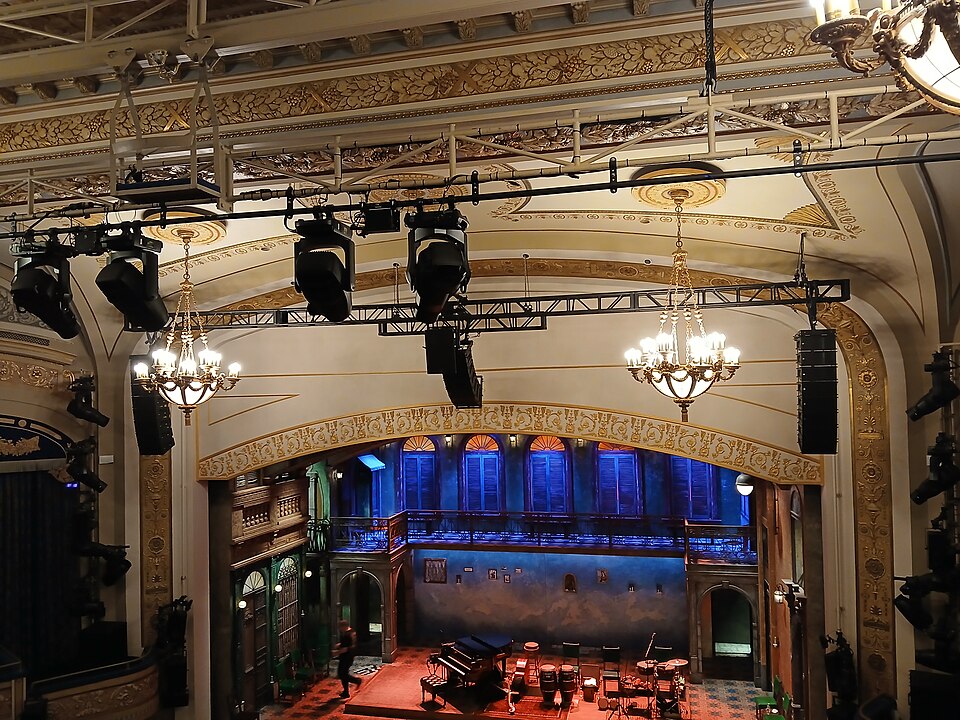
Gerald Schoenfeld Theatre Tickets & Box Office
The primary commercial intent on this page is Gerald Schoenfeld Theatre tickets. The current Broadway production is Buena Vista Social Club. The Shubert Organization currently lists the production as now playing and identifies Telecharge as the official ticketing source for the Schoenfeld.
Buying Gerald Schoenfeld Theatre tickets
For primary inventory, use the official ticketing path identified by the Shubert Organization: Telecharge or the Gerald Schoenfeld Theatre box office. Before purchasing, confirm the performance date and time, exact seat, whether the listing is primary inventory or resale, and the final all-in price.
Gerald Schoenfeld Theatre box office hours
The box office is at 236 West 45th Street, between Broadway and Eighth Avenue. Current posted hours are Monday through Saturday from 10am to 8pm and Sunday from noon to 6pm; when there is a Sunday evening performance, the box office remains open until curtain. Future sales pause shortly before a performance, so verify hours before making a special trip.
Buena Vista Social Club at the Gerald Schoenfeld Theatre
Buena Vista Social Club at the Gerald Schoenfeld Theatre remains current. The earlier September 6, 2026 end-date language is stale: Shubert announced on September 18 that the production continues into the fall, including a six-week Bernie Williams engagement from October 22 through November 29. For cast, runtime, content and production details, use the Stage & Street Buena Vista Social Club guide.
Rush, lottery and discount searches
Search demand exists for Buena Vista Social Club rush tickets, lottery tickets and discount tickets, but these programs can change during a Broadway run. Use the Broadway rush and lottery guide and verify the live offer for your performance date before relying on a discount program.
Quick Answers
About the Gerald Schoenfeld Theatre
The theater at 236 West 45th Street opened in 1917 as the Plymouth Theatre — the first independent commission for architect Herbert J. Krapp, who would go on to design nearly half of Broadway’s surviving historic houses. The Shubert brothers built it alongside the Broadhurst on the same block, and the two theaters share a private alley between them. The block itself — West 45th Street between Broadway and 8th Avenue, formally designated George Abbott Way — remains one of the most concentrated stretches of Broadway houses anywhere in the district, with the Booth, Shubert, Broadhurst, and Schoenfeld all within a short walk of each other.
The Plymouth operated under the management of producer Arthur Hopkins from its earliest years through his death in 1950. Hopkins used the theater for some of his most significant productions — it was a prestige house during the first half of the twentieth century, hosting major American and British dramatic work. After Hopkins, the Shubert Organization took over direct operations. The theater was renamed the Gerald Schoenfeld on May 9, 2005, honoring the Shubert Organization’s longtime chairman. Both the facade and the auditorium interior are New York City designated landmarks.
The Schoenfeld and the neighboring Bernard B. Jacobs Theatre are consistently cited as among Broadway’s most producer-preferred mid-size houses, specifically because of their sightline quality. The auditorium is wider than it is deep, the orchestra has a good slope, and the balcony position provides a reasonably close elevated view rather than the distant feel of some larger houses. Productions are booked here because the room works — audiences in most positions can see what is happening without compromise.
The official seating capacity is 1,079: 653 orchestra, 392 mezzanine (balcony), 24 boxes, and 15 standing positions. That puts the Schoenfeld in the mid-size range — larger than the intimate houses like the Booth or the Hayes, smaller than the major musical palaces like the Gershwin or the Majestic. The scale suits productions that want to feel substantial without becoming anonymous.
Gerald Schoenfeld Theatre Seating Overview
The Schoenfeld’s reputation for strong sightlines means that the usual Broadway hierarchy — center always over side, closer always better up to a point — holds here with fewer exceptions than at some other houses. Still, the distinctions between sections are real enough to be worth understanding before you book.
For the full Gerald Schoenfeld Theatre seating chart, seating map, view-from-my-seat comparisons, best seats, sections and row-level guidance, use the dedicated Gerald Schoenfeld Theatre seating guide. This main venue page keeps the seating overview because it is useful for planning, while the separate guide owns detailed seat-selection intent.
The most reliable range in the house for a combination of proximity, sightline quality, and full-stage picture. Far enough back to take in the full width of the staging, close enough to follow individual performers with clarity. These are the seats that sell first and command the highest prices — at the Schoenfeld, that premium is genuinely earned.
The front three rows of center orchestra are premium-priced and physically close to the stage. For productions with a lot of vertical staging or ensemble choreography spread across the full width, sitting this close can narrow your field of view in ways that work against the material. For more intimate work — plays, small-cast musicals — the front rows deliver real intimacy. For Buena Vista Social Club, where the full stage picture and the band’s presence matters, a few rows back tends to serve the experience better.
The elevated angle from front mezzanine center gives the widest and most complete view of the stage — useful for productions where the full picture matters. Rows A and B center in the front mezzanine are often the best value seats in the house when priced at a meaningful discount to premium orchestra. The rake is solid; heads in front are not usually a problem. The trade-off is the 31-step climb to reach this level.
The front mezzanine side sections angle outward from center, giving increasingly diagonal views the further you move from the aisle. Inner seats — those closest to the center block — are significantly better than outer positions. If booking in the mezzanine sides, prioritize seats with low seat numbers (close to center). Outer side mezzanine positions can involve meaningful stage angle that works against some productions.
The rear mezzanine offers unobstructed center sightlines at the lowest prices in the house, but it is a real distance from the stage. For productions where atmosphere and large-scale staging matter more than close detail — and Buena Vista Social Club qualifies — the rear mezzanine is a workable budget option. For a play or an intimate musical where following expressions and physical nuance is the point, the distance is more limiting. Factor in the stair climb (31 steps to front mezzanine, more to rear) before deciding.
Inner side orchestra seats — those closest to the center sections — often provide views comparable to center orchestra positions a few rows further back, at lower prices. The outer side orchestra, especially in forward rows, can involve a meaningful stage angle. Worth comparing specific seat numbers before purchasing discounted side positions. The Schoenfeld’s good sightline design means even side positions are more usable than at some comparable houses.
Boxes and standing room
The Schoenfeld has 24 box seats on either side of the orchestra. Boxes offer an intimate and visually distinctive experience, but their lateral angles mean you are viewing the stage from the side rather than straight on. They are a choice, not automatically an upgrade. Standing room positions (15 total) are available for sold-out performances and place you at the rear of the orchestra level.
Best Seats by Visitor Type
The most straightforward introduction to the Schoenfeld. Centered, mid-distance, step-free, and reliable for virtually any production type. You will not second-guess this choice.
The orchestra is fully step-free from the sidewalk. If avoiding stairs matters for anyone in your group, book orchestra seats only — the mezzanine is 31 steps up with no elevator alternative. Wheelchair positions are in the orchestra.
The widest stage picture in the house. For productions like Buena Vista Social Club where the full band, the dancing, and the staging all need to be seen simultaneously, front mezzanine center rows A–B frequently represent the best value per dollar when priced below premium orchestra.
Rear mezzanine center gives unobstructed if distant sightlines. Inner side orchestra seats often split the difference — better views than rear mezzanine, on the step-free level, at prices between center and rear mezzanine. Compare both before deciding.
This is a show where atmosphere, choreography, and the full stage picture matter as much as individual performer detail. Slightly pulled-back center positions — orchestra rows D–K or front mezzanine rows A–C — let you take in the whole stage rather than focusing on the nearest performer. The show rewards the broader view.
For groups where some members cannot manage the mezzanine stairs, booking everyone in the orchestra center keeps the group together on the step-free level. Orchestra center rows E–J accommodate this well at strong sightline quality.
Accessibility and Mobility Notes
The Schoenfeld’s accessibility profile is straightforward on the orchestra level and significantly more demanding on the mezzanine. Know the details before you book.
The mezzanine is reached via one flight of stairs — 31 steps from the orchestra level. Once in the mezzanine, each row descends approximately two steps, with handrails at the end of each stepped row. There are no elevators or escalators anywhere in the theater. If climbing or descending stairs is difficult for anyone in your group, book orchestra seats. The orchestra is fully step-free from the sidewalk entrance.
Orchestra access
There are no steps between the sidewalk and the orchestra level — the entrance is at street grade. All parts of the orchestra are accessible without steps, and the designated wheelchair seating locations are also step-free. This makes the orchestra the correct section for visitors with mobility limitations, and there is no need to call ahead for the step-free routing; it is the standard entrance.
Wheelchair seating
Wheelchair positions are available in the orchestra only. Aisle transfer seats — seats with folding armrests, for guests who can transfer from a wheelchair to a standard seat — are also available in the orchestra. A wheelchair-accessible restroom is located on the main level. To book accessible or transfer seating, use the Telecharge accessibility option or contact Shubert Audience Services at 212-944-3700.
Restrooms
General restrooms are located in the lower lounge — below the main theater level, down a flight of stairs. The wheelchair-accessible restroom is on the main level. If a standard restroom visit during intermission involves stairs for your group, plan for the time that takes. The lower lounge bar is also accessible this way.
Assistive listening and captioning
The Shubert Organization provides infrared assistive listening devices for every performance at the Schoenfeld, along with neck induction (t-coil) loop receivers. Hand-held audio description devices and hand-held captioning devices are available beginning four weeks after a show’s official opening, as is downloadable captioning and audio description via personal mobile devices. A Shubert Audience Services representative is present at every performance. Contact 212-944-3700 or audienceservices@shubertorg.com with questions or to arrange devices in advance.
The Schoenfeld’s Character and Production History
The Gerald Schoenfeld suits productions that want to feel real rather than remote — shows where the live element of performance is the point, and where the audience’s sense of being in the room with the performers matters. Its scale puts the back rows closer to the stage than they would be in a larger house, and its sightline design means even less central positions rarely feel cut off from the action. The room is, in Broadway terms, honest: it does not hide weak staging behind spectacle, and it does not make good staging work harder to see than it needs to be.
The current production, Buena Vista Social Club, demonstrates what the Schoenfeld does particularly well. It is a show built around live music, atmosphere, and the physical presence of a world-class band on stage — material that benefits from the kind of enclosed, focused room the Schoenfeld provides. The show won four competitive Tony Awards at the 2025 ceremony and the 2026 Grammy for Best Musical Theatre Album. The earlier September 6, 2026 end date is no longer current; Shubert continues to list the production as now playing and announced fall 2026 guest engagements extending into late November.
Planning a Night Around the Schoenfeld
Location and getting there
The Schoenfeld is at 236 West 45th Street between Broadway and 8th Avenue — the core of the Theater District, and one of its most walkable blocks. The nearest subway is the N/Q/R/W trains to 49th Street (one block north) or the C/E trains to 50th Street at 8th Avenue. Times Square on the 1/2/3 and N/Q/R/W lines is also a short walk. The getting to a Broadway show guide covers transit in more detail. For drivers, the parking near Broadway guide covers garage options in the area — transit is almost always faster and easier for this part of 45th Street.
Arrive with time to settle
The theater opens 30 minutes before curtain. For Buena Vista Social Club, which has been running at strong capacity, the lobby is lively on performance nights. Arriving 20 to 25 minutes before curtain gives you time for will-call pickup, the security check, and getting to your seats — particularly worth budgeting if you are in the mezzanine, where navigating 31 steps and finding your row takes a few extra minutes. The lower lounge bar is accessible before the show as well.
Pre-show dinner
West 45th Street between Broadway and 8th Avenue sits in the heart of the Theater District restaurant zone. The blocks immediately surrounding the theater tend toward the tourist-traffic end of the dining spectrum; moving a few blocks west toward 9th Avenue or Hell’s Kitchen — a 5–8 minute walk — gives you better quality and pricing for the same logistics. For Buena Vista Social Club‘s 2-hour-10-minute runtime, plan dinner no later than 90 minutes before curtain. The pre-show dining guide covers timing strategy and the restaurants near Broadway guide has specific options for this part of the district.
Hotels and the neighborhood
The Schoenfeld’s 45th Street location puts it within walking range of Theater District hotels along 7th and 8th Avenues. The hotels near Broadway guide covers options across price points. The Theater District neighborhood guide gives a fuller picture of this part of Midtown for visitors planning more than one evening in the area.
Frequently Asked Questions
The Shubert Organization identifies Telecharge as the official primary ticketing source for the current production at the Gerald Schoenfeld Theatre. Tickets can also be purchased at the theater box office at 236 West 45th Street. Confirm the performance date, seat and final price before checkout.
Current posted hours are Monday through Saturday from 10am to 8pm and Sunday from noon to 6pm. When there is a Sunday evening performance, the box office remains open until curtain. Future sales pause shortly before curtain, and hours are subject to change.
236 West 45th Street in Manhattan, between Broadway and 8th Avenue on George Abbott Way. The nearest subway stops are 49th Street on the N/Q/R/W lines (one block north) and 50th Street on the C/E at 8th Avenue.
1,079 seats per the Shubert Organization’s official figures: 653 orchestra, 392 mezzanine, 24 boxes, and 15 standing room positions.
Partially. The orchestra is fully step-free from the sidewalk, and wheelchair seating is available in the orchestra. The mezzanine requires one flight of 31 stairs with no elevator or escalator alternative. A wheelchair-accessible restroom is on the main level. For accessible seating bookings, use Telecharge’s accessible option or contact Shubert Audience Services at 212-944-3700.
Buena Vista Social Club remains the current Broadway production. The Shubert Organization lists it as now playing at the Gerald Schoenfeld Theatre, and its September 18, 2026 announcement confirms guest engagements running into late November.
Center orchestra rows D through J offer the most reliable combination of proximity and full-stage sightline. Front mezzanine center rows A and B are frequently the best value in the house when priced below premium orchestra — strong elevated views at a lower cost. The Schoenfeld is specifically known for good sightlines from most positions, so the differences between sections are less dramatic than at some other houses, but center always outperforms side at any level.
The Plymouth Theatre — its name from its opening in 1917 through May 2005, when it was renamed the Gerald Schoenfeld in honor of the Shubert Organization’s longtime chairman. It is one of the few Broadway houses that operated under a single original name for nearly 90 years before being renamed.
Discount programs can change during a Broadway run. Check the current official ticketing and show channels for any live rush, lottery or discount offer before planning around one. The Broadway rush and lottery guide and last-minute Broadway tickets guide cover the broader strategy.
The Gerald Schoenfeld and the neighboring Bernard B. Jacobs Theatre are consistently cited by producers and critics as among Broadway’s most reliable mid-size rooms, primarily because of their sightline quality. The auditorium’s proportions — wider than deep, with a good orchestra rake and a well-positioned mezzanine — mean that most seats deliver a clear, unobstructed view without the compromises that affect some other houses of comparable size.
The Schoenfeld in Brief
For Gerald Schoenfeld Theatre tickets, verify the live Buena Vista Social Club performance calendar, official primary ticket source, seat and final checkout price before purchasing.
The Gerald Schoenfeld Theatre is a Broadway house that earns its reputation through reliability rather than grandeur. Its sightlines are genuinely good, its scale is genuinely manageable, and its production history reflects the consistent choice of producers and directors who want a room that supports their work rather than competing with it. The main things to know before booking are that center always outperforms side, that the mezzanine stair load is real and there is no elevator alternative, and that the current production is well-matched to what this room does well.
The Broadway theaters guide covers the full picture of what each house in the district offers, and the Buena Vista Social Club Broadway guide covers the current production in more detail.
The Sightlines Are Strong — Now Build the Whole Night
The Gerald Schoenfeld is one of Broadway’s most dependable mid-size houses, especially when you choose a centered seat. Use these guides to connect the theater, seating chart, Buena Vista Social Club, dinner, transit, parking, hotels, and the surrounding West 45th Street plan.
Gerald Schoenfeld Theatre Seating Chart
Compare center orchestra, front mezzanine, rear mezzanine, boxes, standing room, accessibility, value picks, and the best seats for Buena Vista Social Club before you book.
Open Seating Guide Current ShowBuena Vista Social Club Guide
Plan around the music, Cuban club atmosphere, live band presence, dance movement, runtime, content notes, and the best kind of centered view for this production.
Open Show GuideBroadway Seating & Ticket Planning
Seats · Timing · DealsBroadway Seating Guide
Compare orchestra, mezzanine, boxes, side seats, premium zones, and obstructed-view listings across Broadway houses.
When to Buy Broadway Tickets
Know when buying early matters, when waiting can work, and how timing changes for hot shows, weekends, holidays, and limited inventory.
Last-Minute Broadway Tickets
TKTS, same-day listings, rush, lottery, and practical ways to compare late options without blindly choosing poor distance or angle.
Broadway Rush and Lottery Tickets
How discount systems work, what tradeoffs to expect, and why a cheap seat can be smart — or risky — depending on the view.
First-Time Broadway Guide
For visitors choosing their first show or first theater: seats, arrival, timing, intermission, dress, and Theater District basics.
Best Broadway Shows for Date Night
Compare show tone, dinner pairing, music, mood, pacing, and whether the production fits the kind of night you are planning.
Plan the Gerald Schoenfeld Theatre Night
Dinner · Transit · ParkingRestaurants Near Broadway
West 45th Street puts you deep in the Theater District core, with Hell’s Kitchen dining a short walk west.
Pre-Show Dining Guide
Plan reservation timing, walking buffer, arrival, and post-show movement so dinner and theater work together.
Best Pre-Theater Restaurants NYC
Use this when you want stronger restaurant choices around Broadway instead of only timing and logistics advice.
Best Post-Show Restaurants NYC
Where to go after the curtain when you want a drink, dessert, late dinner, or a calmer landing after the show.
How to Get to a Broadway Show
Subway, walking, rideshare, and arrival timing for Theater District shows, including West 45th Street houses.
Parking Near Broadway
Driving can work, but garage choice and timing matter. Use this before choosing a Midtown parking plan.
Nearby Neighborhood & Hotel Guides
45th Street · Times Square · Hell’s KitchenTheater District
Where to eat, what to skip, and how to use the blocks around the Gerald Schoenfeld before and after the show.
Times Square
Best when convenience, subway access, and being right in the center matter most for a short Broadway trip.
Hell’s Kitchen
A strong nearby option when dinner matters — more restaurant depth, calmer blocks, and an easy walk west after the show.
Midtown West
A broader west-side planning base for hotels, transit, restaurants, and nights that stretch beyond the immediate Theater District.
Hotels Near Broadway
Compare Theater District, Times Square, Midtown West, and Hell’s Kitchen hotel zones when Broadway is the center of the trip.
Where to Stay for Broadway Weekends
Match hotel zone, walking distance, subway access, and post-show energy to the kind of Broadway weekend you want.
More Broadway Theater Planning
Nearby Houses · Hubs · CompareBroadway Theater Guides
Compare Broadway houses by room size, location, seating feel, history, accessibility, and what each theater is best for.
All Broadway Shows
Compare current productions before committing, with planning links to match the show to your group, budget, and night-out style.
Broadway in NYC
The full Broadway planning hub for shows, theaters, ticket timing, seating, visitor strategy, and night-out logistics.
Bernard B. Jacobs Theatre
A neighboring West 45th Street Shubert house with its own seating, access, and show-night planning context.
Booth Theatre
A smaller West 45th Street house nearby, useful for comparing scale, intimacy, seating, and theater-cluster planning.
Shubert Theatre
Another major West 44th/45th Street Broadway anchor with strong historical and planning overlap for visitors in this cluster.