

MetLife Stadium Concert Seating Chart: Best Seats & Seat Views
Compare the MetLife Stadium concert seating chart, best concert seats, seat views, floor sections, lower bowl, club level and upper deck — with event-specific stage-layout guidance before you buy.
The MetLife Stadium concert seating chart changes by tour, so the most useful way to compare seats is to start with the event-specific map and then evaluate distance, angle, elevation, floor configuration and stage placement. Searches for a MetLife concert seating chart, MetLife Stadium concert seating map, best seats at MetLife Stadium for a concert, or a view from my seat are all asking versions of that same question: what will this exact section feel like for this exact show?
MetLife Stadium holds approximately 82,500 people. That number is the key fact that should drive every seat decision you make here — not the color of the price tier, not the row number, not proximity alone. At this scale, choosing seats based only on “closer is better” produces results that range from genuinely great to actively disappointing depending on the event. A floor seat at a sold-out summer concert can be the best experience in the building or a frustrating standing-behind-tall-people marathon depending on your section placement and where the stage is set. A 300-level seat for a massive spectacle production can deliver a view of the full show that lower-bowl attendees literally cannot see.
This guide covers how to actually choose seats at MetLife — level by level, priority by priority, and event type by event type. It also covers the key configuration reality that most seat guides ignore: MetLife’s stage and floor layout changes for virtually every concert, meaning the “best sections for concerts” shifts depending on the specific show. Understanding how to apply the principles rather than memorizing a fixed best-section list is what makes this guide useful across the full calendar of events at the stadium.
Whether you’re looking at the MetLife stadium seating chart, the MetLife stadium map, or a seating diagram from a specific ticket platform, the section numbers and level layout are the same — what changes is how that layout actually plays out for your specific event. A MetLife seating plan alone won’t tell you whether a “great” section is actually facing the stage for your show; that’s what the rest of this guide is for.
One more thing worth saying at the start: the conventional seating wisdom that dominates Google results for MetLife — “sections 112-114 and 139-140 are best” — is football-specific advice frequently misapplied to concert planning. Those sections are excellent for NFL sideline views. For a concert where the stage is at one end and the floor extends into the field, they may be side-on to the performance. The advice in this guide accounts for that difference.
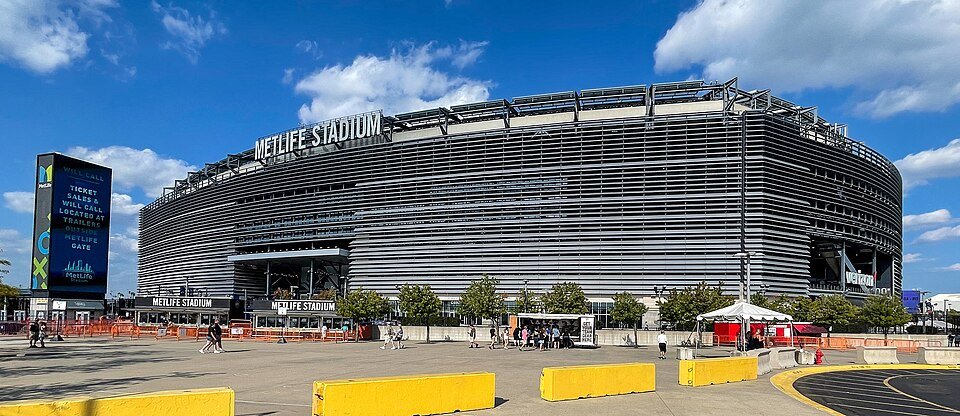
MetLife Stadium Concert Seating Views — “View From My Seat” Explained
A MetLife Stadium concert seating view depends on more than the section number. The same seat can feel excellent for one tour and badly angled for another if the stage moves, a runway is added, the floor becomes general admission, or side sections open behind the stage. That is why a generic “view from my seat MetLife concert” photo should be treated as context, not a guarantee.
Match the photo or seat-view tool to the same stage end and concert configuration shown on your ticketing map. Then compare four things: whether your section faces the stage or sits side-on, how much elevation you have, whether the floor or runway blocks part of the sightline, and how much of the production will be watched directly versus on the video boards.
Use the level-by-level breakdown below together with the event-specific MetLife concert map. For exact seat numbers, the live ticketing map should be the final reference because temporary floor sections and production holds can change from tour to tour.
Whether you’re using the official MetLife seating chart, a third-party floor plan, or trying to view my seat MetLife Stadium through a photo-based tool before committing, the MetLife stadium views from otherwise similar-looking seats can vary more than people expect between the sideline and end-zone sides of the bowl — which is why level position alone doesn’t tell the whole story.
How MetLife Stadium Actually Works as a Room
MetLife is an open-air stadium, which means every seat above the lower bowl is fully exposed to the sky. There is no roof overhang that covers most of the seating the way some other NFL stadiums provide. Only a relatively small portion of seats — primarily end-zone rows 38 and above in sections 104, 106, 121-131, and 101-106, and 146-149, and the back rows of certain 200-level sections — have any cover. If you are attending a summer afternoon show, shade is a real variable worth researching for your specific section. For night shows it matters less, but for daytime events it can significantly affect your experience.
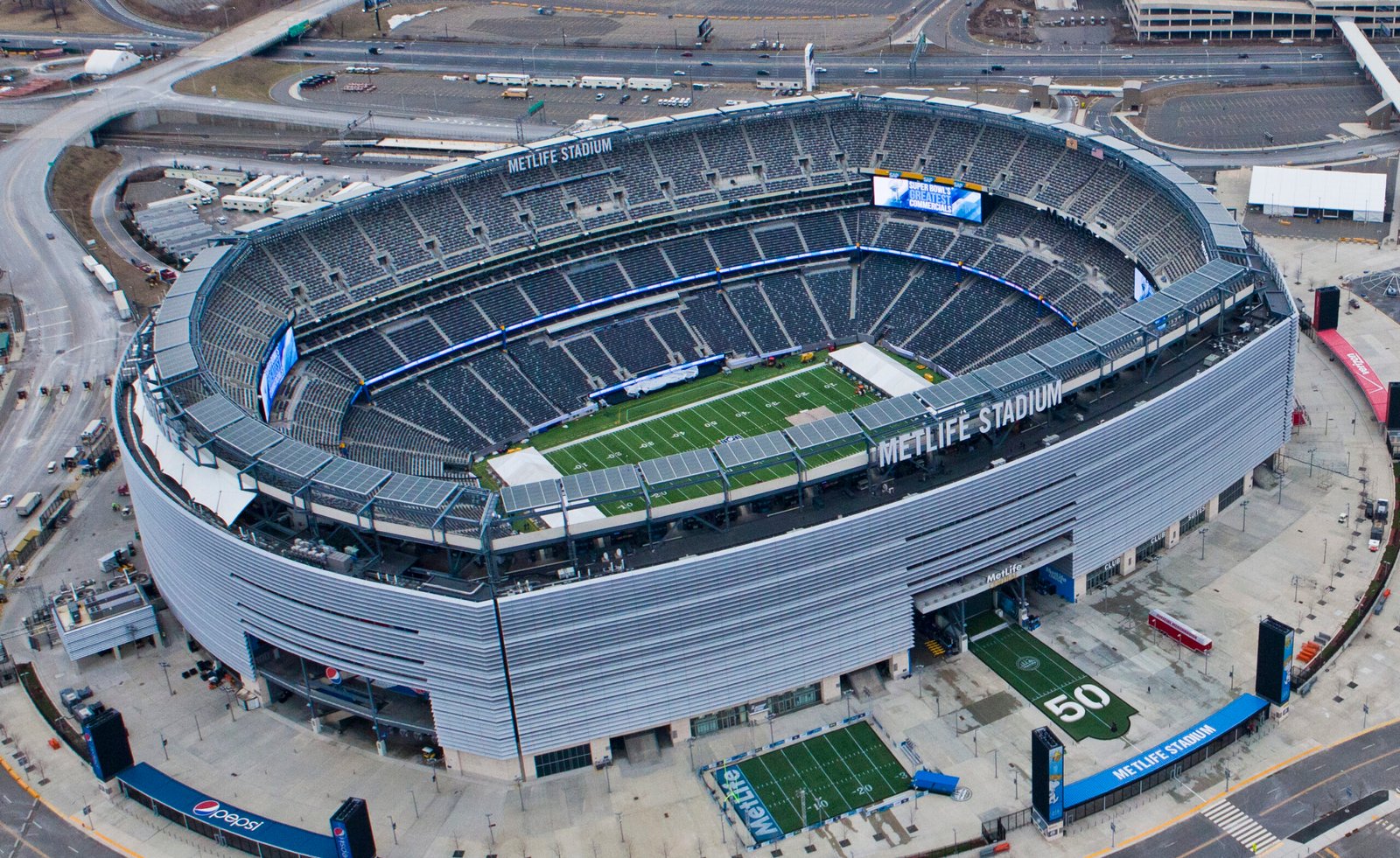
The stadium is built as a traditional oval bowl across three primary seating levels, with field-level and club-level options adding further layers. The 100 level forms the lower bowl, ringing the field at the closest distance. The 200 level sits above it — mid-height, and where the club sections with premium amenities sit on the sidelines. The 300 level forms the upper bowl and provides the most elevation and broadest overall perspective of any section.
For concerts specifically, the stage is typically placed at one end of the field, with the field itself converted to standing-room or reserved floor sections facing the stage. The result is that the stadium effectively becomes a horseshoe or three-quarter-round configuration — sections at the back and sides of the stadium are less affected by where the stage faces, but end-zone sections on the stage side become premium close-up locations while end-zone sections on the opposite end become the most distant seats in the house. This concert-specific logic applies to any ticketed show you are researching.
At a 5,000-seat venue, close always matters. At 82,500, perspective matters as much as distance. The difference between row 1 of the 100 level and row 30 is significant. The difference between a well-placed 200-level section and a poorly placed 100-level corner section may favor the 200 level. Choosing based on level alone — rather than on which sections within that level serve the specific event — is the mistake most people make when booking MetLife.
If you’re checking the MetLife stadium seating chart with seat numbers before buying, know that the seat numbers themselves follow a consistent layout across the stadium — what changes section to section is the angle and distance to whatever’s happening on the field or stage. The overall MetLife stadium layout is a fairly standard three-tier bowl, but the views from otherwise-similar seat numbers can differ meaningfully between the sideline and end-zone sides of each level.
Four large high-definition video screens mounted above the seating tiers mean that regardless of where you sit, you can see detailed close-up footage of what is happening on stage or on the field. This is relevant context for upper-level decisions: the trade of distance for price at the 300 level is softened by video board visibility that does not exist at most outdoor stadium-scale venues.
If you’re studying a MetLife stadium seat map or a MetLife stadium seating diagram before buying, keep in mind that a MetLife stadium diagram or MetLife stadium floor plan alone can’t show you the actual MetLife stadium seat view for your specific show — that depends entirely on where the stage or field configuration puts you relative to the action, which is exactly what the level-by-level breakdown below accounts for.
MetLife Stadium Concert Seating Levels — Floor, 100, 200 & 300
For concerts, the field is converted to either general admission standing sections, reserved floor seating with folding chairs, or a combination of both (including GA Pit closest to the stage). The configuration changes entirely by artist — Bruce Springsteen has used a full GA field; other artists use reserved field sections with a GA pit at the front. There are no permanent field seats for general events.
Field and pit sections offer the closest physical proximity to the performance. The tradeoff: you are at field level, looking up at a raised stage, with a crowd in front of you. GA sections mean you need to arrive early to claim position. Reserved field sections can be excellent or mediocre depending entirely on which part of the field your section occupies relative to the stage. Always check the event-specific map.
The 100 level is the lower bowl — the closest fixed seating to the action at any configuration. The sections ring the field entirely, with sideline sections on the east and west and end-zone sections behind each goal line. Side sections run approximately 30–40 rows deep; end-zone sections go considerably deeper, up to 48 rows.
At the 100 level, row position matters enormously. The first ten rows put you very close — which is thrilling for the immediate performer energy but means you are looking up at a raised stage, and the opposite end of the field or production is distant. Rows 15–25 are the sweet spot for most events: you still feel close but get enough elevation to see the full stage without craning. Corner sections (around 108–110 and 131–133) offer excellent angled views of center stage for concerts without the extreme proximity of direct front sections.
The 200 level is MetLife’s most underrated seating tier and the level most worth understanding before you book. Club sections on the sidelines (207C–220C on one side, 232C–245C on the other) include access to climate-controlled indoor clubs — the Corona Beach Club and Toyota Club — with bar service, cushioned wider seats, and additional legroom. These are genuinely premium seats with amenities that matter on a hot summer night or cold November game day.
The 200-level perspective from sideline sections is often called the best balanced view at MetLife — elevated enough to see the full field or full stage production without being so far back that the performers seem distant. You are not as close as the 100 level, but for large-scale visual productions, concerts with elaborate stage design, or any event where seeing the full picture matters, the elevated 200-level angle can deliver a more satisfying view than lower and closer.
Important caveat: 200-level sections directly below the 300-level overhang can have partially obscured upward sightlines in some configurations. Check the specific sections when booking.
The 300 level is the highest and most affordable seating tier. It is fully open-air with no overhang protection from weather or sun. The views from the 300 level are genuinely panoramic — you see the entire stadium layout, the production design at full scale, and the crowd energy of 82,500 people in a way that no lower level provides. The distance from the stage is significant and real.
In the 300 level, rows 1–5 are generally the best bang for money: you are at the front of the section with the full view ahead. Rows 6–8 in some sections can have railing obstructions — a known issue worth avoiding when possible. Sideline sections in the 300s (roughly 315–335) provide the best distance-to-view ratio at this level, showing both the full field and a centered perspective on center stage for concerts.
MetLife is fully open-air and approximately 85% of its seats have no weather or sun protection. For daytime summer events, shade is a meaningful factor. Sections 104, 106, 121–131, and 146–149 have some coverage beginning around rows 38 and above. Some rear 200-level sections receive partial cover from the 300-level overhang. If a hot summer afternoon event is on your schedule, knowing which sections have cover is worth researching before you book.
One more distinction worth making: a generic MetLife stadium seating chart built for football doesn’t automatically double as an accurate concert seating chart. The MetLife stadium concert seating map for your specific show — with the stage placement and floor configuration for that tour — is what actually determines your MetLife stadium concert seating view, not the standing football chart. A MetLife concert seating chart pulled from a general concert seating chart MetLife Stadium search may not reflect your specific tour’s stage placement, so when you’re comparing MetLife concert seating options across ticket platforms, look for the event-specific concert seating chart rather than the default venue map, and check whether suite options (via the MetLife stadium suite map) make more sense for your group than individual seats.
Best Seats at MetLife Stadium for a Concert — By What You Actually Want
This section covers what most people are really asking when they search for the MetLife stadium best seats, best seats in MetLife Stadium for concert, best concert seats MetLife Stadium, or best seats for concert at MetLife Stadium — the answer depends on whether proximity, full-production view, or value matters most to you. The same question shows up in slightly different phrasing too: best seats at MetLife Stadium concert, best seats MetLife Stadium concert, and even best seats at Met Life Stadium (however you spell “MetLife”) all point to the same three-way tradeoff covered below.
Best seats if you want to feel as close to the performance as possible
For concerts, field-level sections — GA Pit closest to the stage, or reserved Field sections in the front rows — offer the nearest physical proximity to the performer. The field configuration varies by show, so the specific section that puts you closest depends entirely on the event’s stage placement and floor layout. For any major concert, check the event-specific seating map before buying field tickets.
For the best fixed-seat proximity without floor standing, the center sideline sections of the 100 level in the mid-row range (roughly rows 15–25) give you close enough energy to feel the performer presence while sitting at a height that gives real sightlines over the crowd in front of you. Rows under 10 put you close but low — useful for the thrill factor, less useful for actually seeing stage production detail. Rows above 30 start to feel noticeably distant even at the 100 level.
Best seats for seeing the full production
The mezzanine club sections in the 200 level are the answer for anyone who prioritizes seeing the full picture — the entire stage design, the complete production lighting, the crowd in context — over pure proximity. At this elevation and center positioning, the full scale of a stadium concert production becomes visible in a way that floor-level and front-row-100-level seats simply cannot provide. Beyoncé’s elaborate stage design, a touring production with B-stage runways, or a major international event like FIFA — these all read differently and often better from the 200-level sideline perspective than from right at the front.
The club access on the sideline sections adds meaningful comfort for a long event: climate-controlled space, bar service, wider cushioned seats. On a summer concert night, the indoor club access during breaks is a real advantage over a general 100-level ticket.
Best seats for value without sacrificing the experience
The 300 level’s front rows on the sidelines — roughly sections 315–335, rows 1 through 5 — offer the most complete value proposition at MetLife. You see the entire field or stage production at full panoramic scale. The distance is real and will show on your binoculars if you use them. But the visual experience of seeing 82,000 people in a fully lit stadium, a production that fills the entire field, or a soccer match or NFL game at full strategic view, is something only the upper bowl delivers at this scale.
Avoid 300-level rows 6–8 in some sections, where railings and safety glass can create partial obstructions. If budget is the driving factor and you want to attend the event without overpaying, rows 1–5 of the 300-level sidelines are the honest recommendation.
Best seats for atmosphere without overpaying
Corner end-zone sections in the 100 level are a genuinely underrated combination of lower-bowl access and better value. For concerts, these sections often angle toward the stage well — close enough to feel the crowd energy, at the lower-bowl level for the full atmosphere, and typically priced below the premium center sideline sections. For football, these sections are close to game action at the goal line and offer some of the best angles to one of the video boards.
MetLife Stadium Seating by Event Type
The most important thing to understand about MetLife seating is that there is no universal “best section” that applies to every event. The stage location, floor configuration, and viewing priorities shift entirely depending on what you are attending. Here is how that plays out across the major event categories.
For this Stage & Street page, concert seating is the primary search intent. The NFL and soccer examples remain useful because they explain how the same stadium sections behave under different configurations, but concert buyers should always prioritize the concert-specific stage map over football seating logic.
Stage typically placed at one end zone. Floor field sections closest to stage are nearest. Center sideline 100-level sections (rows 15–25) give best fixed-seat balance. 200-level sidelines give the full production view. Far end-zone 100-level sections are the most distant — avoid unless that’s all that’s available. Always check the event-specific chart; stage side varies by show.
Midfield sideline sections on both sides (roughly 109–120 and 130–140) are the premium viewing positions. Rows 10–20 on the 100 level are the sweet spot for field views — close enough without being too low. Corner sections 108–110 and 139–141 offer great value with strong angled views. 300-level sidelines for value. End-zone sections in the 100 level are the budget option; back rows actually see the full field better than the first rows.
Soccer at MetLife uses the full oval configuration. Sideline sections at all levels provide the most balanced pitch views — sitting on the sideline means watching play across the full width of the pitch. End-zone sections for soccer put you looking down the length of the pitch, which works well for attacking play toward your end but creates a less complete view of possession across the full field. The 200-level sidelines are excellent for soccer perspective — elevated, centered, full-pitch visible.
For events featuring elaborate stage design, full-field production elements, aerial staging, or complex lighting rigs — think major stadium tours with elaborate setups — the 200-level sideline sections often deliver the most complete visual experience. From the floor or front of the 100 level, you see the immediate performer clearly but miss the scale of the production that only the elevated middle view reveals fully.
MetLife’s concert floor layout changes for virtually every major artist. The stage end, floor section numbering, GA versus reserved configurations, and runway placements are all show-specific. Before purchasing any concert ticket at MetLife, always find the event-specific seating map — available through the official ticketing platform for your show — and verify where your sections fall relative to the stage for that particular event.
Lower Bowl vs. Club/Mezzanine vs. Upper Bowl — Which Is Actually Worth It?
The conventional answer to this question is “lower is better.” At MetLife, that answer needs more nuance than it usually gets.
When the 100 level is clearly worth the premium
Lower bowl is undeniably worth the price for events where performer closeness is the primary value — a concert where seeing the artist’s face and feeling the immediate energy of being near the stage matters more than seeing the production design in full. Front and center sections of the 100 level deliver an immersive energy that no other level replicates. If proximity to the performer is the specific experience you are buying, the 100 level premium is justified.
When the 200 level is the smarter call
The 200-level club sections are worth serious consideration when: the event features elaborate stage production you want to see in full; the price premium over 300-level seats is modest; the weather warrants indoor club access; or when specific 100-level sections would put you at side angles to the stage. The elevated perspective with club amenities makes the 200 level the best overall option for a significant number of MetLife visitors who currently undervalue it.
When the 300 level is completely worth buying
The 300 level is worth buying when budget matters and you still want to experience the event in person — which is most of the time, for most people. The first several rows of the 300-level sidelines provide a panoramic view of MetLife at full capacity that is one of the more genuinely impressive sights in stadium entertainment. The video screens compensate for distance. The atmosphere at that elevation, with the full crowd visible in every direction, is part of what makes stadium events distinctive. Anyone who tells you the 300 level “isn’t worth it” is making a statement about their personal threshold for distance, not about whether the experience is good.
Book floor or 100-level sideline (rows 15–25) if closeness and performer energy are the priority. Book 200-level sideline club sections if you want the best overall view with the most complete production perspective and premium comfort. Book 300-level sideline front rows if budget is the driver and you still want to see the event in a great setting. Avoid: far end-zone sections opposite the stage for concerts; 300-level rows 6–8 with potential obstructions; and extreme side sections in any tier that put you more than 90 degrees off-angle from center stage.
Center vs. side — does it actually matter?
At MetLife’s scale, center-versus-side matters more than at smaller venues. A section that is 45 degrees off-center from the main stage at a 10,000-seat arena is mildly off-axis. The same angular displacement at MetLife puts you in a fundamentally different relationship to the stage — one where the main production screen may be partially off your sightline and the stage itself appears foreshortened. For any event where there is a defined front of house and back of house, center sections within your chosen level are meaningfully better than extreme side sections.
Accessibility at MetLife Stadium
MetLife Stadium is designed to be fully accessible across all levels and event types. The following information is drawn from the official MetLife Stadium accessibility and A-Z guide pages.
Wheelchair and companion seating on all levels
MetLife has wheelchair, low-mobility, and companion seating on all three levels — 100, 200, and 300. Accessible seating is available across all price ranges. To purchase accessible seating, visit the official Ticketmaster page or call the MetLife Stadium Guest Services Hotline at 201-559-1515. For NFL events, the Giants’ ADA line is 888-694-1925 and the Jets’ ADA line is 973-549-4585.
Elevators and accessible entrances
Elevators for guests with disabilities are available at the HCLTech, Verizon, and Moody’s corners of the stadium, and at both premium seating entrances on the east and west sides. Ramps are located in each end zone and provide access to all levels. Public escalators are at multiple entrance points including AMEX, HCLTech, Verizon, MetLife, and Moody’s gates.
Wheelchair assistance at entry
Guests with limited mobility who need assistance reaching their seats can request a wheelchair from any team member at the gates. Transportation to your seat is available from all entry points.
Assistive listening and captioning
MetLife offers assistive listening via the ListenWIFI app, available through the stadium’s free WiFi. Captioning is available on ribbon boards, section-sign TVs on the concourses, and via mobile device during major events. A TTY phone is available at the Guest Services Booth near Section 149.
Re-seating and day-of assistance
If you arrive and need to exchange fixed seating for accessible seating, visit the nearest Guest Services Booth. Guest Services Booths are located on the 100 Concourse near Sections 124 and 149, on the 200 Concourse near Sections 227 and 249, and on the 300 Concourse near Sections 303, 324, 328, and 349. Day-of accessible re-seating is available on a first-come, first-served basis. For specific events or advance questions, contact adainfo@metlifestadium.com or call 201-559-1515.
Common Mistakes When Booking MetLife Stadium Seats
Applying football seat advice to concerts
The most-cited “best sections” for MetLife — 112–114 and 139–140 — are sideline NFL seats close to the 50-yard line. For a concert where the stage is at one end zone, those sections may be side-on to the performance. Football seating logic and concert seating logic are different at this venue. Always find the event-specific chart.
Buying the first few rows of the 100 level without thinking about angle
Row 1 sounds premium. At an outdoor stadium, row 1 of a section that is not directly in front of the stage means you are very close to the action but looking sideways at a performer who is 60 feet in the air on a raised stage. Mid-rows (15–25) in properly centered sections consistently outperform the front rows for balanced enjoyment at MetLife.
Dismissing the 200 level without investigating club access
The 200-level club sections (207C–220C and 232C–245C) include indoor climate-controlled club access, wider seats, and bar service. Many visitors skip the 200 level assuming it is a downgrade from the 100 level. For summer concerts or cold weather games, the club access alone can justify the ticket, and the elevated balanced view is often better than what people expect.
Booking 300-level rows 6–8 without checking for obstructions
Rows 6–8 in some 300-level sections are known to have sightline issues from railings and safety glass. The front five rows of any 300-level section are meaningfully better. If the only available 300-level seats are in rows 6–8, check specific section reviews before purchasing.
Buying end-zone sections opposite the stage for concerts
For any concert with a stage at one end, sections at the far end zone are the most distant seats in the building. They have the highest elevation looking back at the stage, but are further from the action than any comparable section in the building. If you are going to a concert and want to feel part of the show rather than watching from a great distance, avoid far end-zone sections unless budget leaves no other option.
Not checking the event-specific floor layout before buying field tickets
MetLife’s concert floor configuration — which sections are GA, which are reserved, where the pit is, whether there is a B-stage runway and where it runs — changes for every major tour. A field ticket for show A may put you in a completely different position relative to the stage than the same-numbered section for show B. Always find and review the tour-specific seating map before purchasing field-level tickets.
Seat Choice Is Part of the Whole Evening Plan
The seat you choose at MetLife is one piece of a larger event night — and at a venue where parking, transportation, and pre-event logistics have as much impact on your experience as your section number, it is worth thinking about all of it together. The seating guide is where the experience decision starts. The logistics decisions are what determine how well the evening actually flows.
For where to eat before your event — including how the dining decision connects to your parking plan — see the restaurants near MetLife Stadium guide. For hotels if you are making an overnight trip of it, the hotels near MetLife Stadium guide covers the key options by trip type. For getting there and parking logistics, the how to get to MetLife Stadium guide and parking near MetLife Stadium guide cover the full picture. And for the broader venue overview, see the MetLife Stadium venue guide.
Frequently Asked Questions
Use the event-specific concert seating chart shown for your exact performance, not the generic football map. The permanent 100, 200 and 300 levels stay the same, but the stage end, floor sections, pit, runway and seats released behind or beside the stage can change from one tour to another.
Start with what matters most to you. Choose floor or well-placed 100-level seats for proximity and energy, centered 200-level sections for the most balanced production view, and front-row 300-level sideline seats for value and the full stadium spectacle. Then check the event-specific stage map to make sure your section is not at an extreme side angle or opposite the stage.
It depends on the event and what you want from the experience. If you’re researching MetLife stadium best seats for concert specifically, the best fixed seats are 100-level center sideline sections in rows 15–25, or 200-level club sections for the best balanced production view — the same logic applies whether you found this page searching MetLife seating concert or a more general seating question. For best seats at MetLife Stadium for football, midfield sideline sections in the 100 level — particularly rows 10–20 near the 50-yard line — are the acknowledged premium view. For value, 300-level front rows on the sidelines provide the most complete panoramic view for the price. There is no single correct answer that applies across all events.
Lower level is better if proximity and performer energy are your priority. Upper level is better if you want to see the full scale of the production, value the complete stadium panorama, or are working with a budget. The 200 level is often the smartest choice for anyone who wants the best balanced perspective — elevated enough to see the full picture, with club access and comfort advantages on the sideline sections that the other levels lack.
Yes, if you go in with accurate expectations. The 300-level front rows on the sidelines are genuinely good seats for experiencing a major event — the panoramic view of the full stadium, the production at scale, and the crowd energy is something only the upper bowl delivers. The four large high-definition video screens compensate meaningfully for distance. Avoid rows 6–8 in some sections where obstruction can be an issue, and aim for sideline positions over extreme end-zone seats.
First, find the event-specific seating chart for your concert and identify where the stage is placed. Then: for the closest fixed seat, center 100-level sections in rows 15–25 on the near side of the stage. For the best production view, 200-level club sideline sections. For value, 300-level front rows on the sidelines. Avoid far end-zone sections for any concert. For floor sections, check whether they are GA or reserved and whether there is a pit or runway, as the best floor section depends entirely on the specific show setup.
Sideline seats — those on the long sides of the stadium rather than the end zones — are generally the best seats at MetLife for both football and concerts. For NFL games, sideline seats give you the classic field view across the full width of the field. For concerts, sideline seats put you in a centered position relative to a stage at one end, providing better overall sightlines than end-zone positions. Side seats in the 100 and 200 levels, particularly those between the 30-yard lines (or their concert-layout equivalents), are the most consistently recommended positions in the stadium.
Accessible seating is available on all three levels of MetLife Stadium and across all price ranges. To book in advance, use the official Ticketmaster page and look for the accessible seating option, or call the MetLife Stadium Guest Services Hotline at 201-559-1515. If you arrive on the day and need to exchange your seats for accessible seating, visit the nearest Guest Services Booth — they are located on all three concourse levels. The stadium has elevators at multiple corners (HCLTech, Verizon, Moody’s gates) and ramp access at both end zones.
For the most complete and balanced view of any event — whether a concert production, an NFL game, a FIFA World Cup match, or another major event — the 200-level sideline club sections are the answer most experienced stadium visitors reach after attending enough events. They are elevated enough to see the full production, centered for the best sightline perspective, and include club access that makes the experience more comfortable than the equivalent 100-level price point. For pure closeness, the lower 100 level wins. For panoramic scale, the 300 level wins. For the best overall — 200-level sideline.
Since MetLife’s concert configuration changes by tour, the honest answer is that a generic view from my seat MetLife concert photo from a past show may not reflect your show’s actual stage placement. The most reliable approach: identify your section and level using the breakdown above, then check the event-specific seating chart for your exact show before buying — that tells you whether the seat view MetLife Stadium concert experience for your section is centered, side-on, or facing the stage directly, which matters more here than at almost any other venue in this guide’s coverage.
For concerts where you specifically want the energy of being close to the performer, yes — the lower 100-level experience is genuinely different from the levels above. For events where the production design is as important as performer proximity (elaborate stage tours, large-scale visual events, international sporting events with complex logistics), the premium is less clearly justified. Many seasoned MetLife attendees report that a well-chosen 200-level section — particularly on the sidelines with club access — delivers a more satisfying overall experience than a comparably priced corner section on the 100 level.
Choose the Seat That Matches the Night You Want
MetLife Stadium is large enough that seat choice is a genuine decision with real consequences for your experience — not a formality before the fun starts. The difference between a well-chosen seat and a poorly-matched one at this scale can be the difference between feeling inside the event and feeling like you are watching it happen somewhere else.
The principle that runs through everything in this guide: think about what kind of experience you are actually buying before you choose a level. Proximity? Lower bowl. Full production perspective? Middle level. Value and spectacle? Upper front rows. Whatever the event — NFL, concert, FIFA, major stadium show — the seat that matches your actual priority will deliver more than the seat that simply sounds better on paper.