

Stephen Sondheim Theatre Seating Chart: Best Seats & Views
Use this Stephen Sondheim Theatre seating guide to compare Orchestra and Mezzanine views, find the best-value rows, understand accessible seating, and avoid angled side positions.
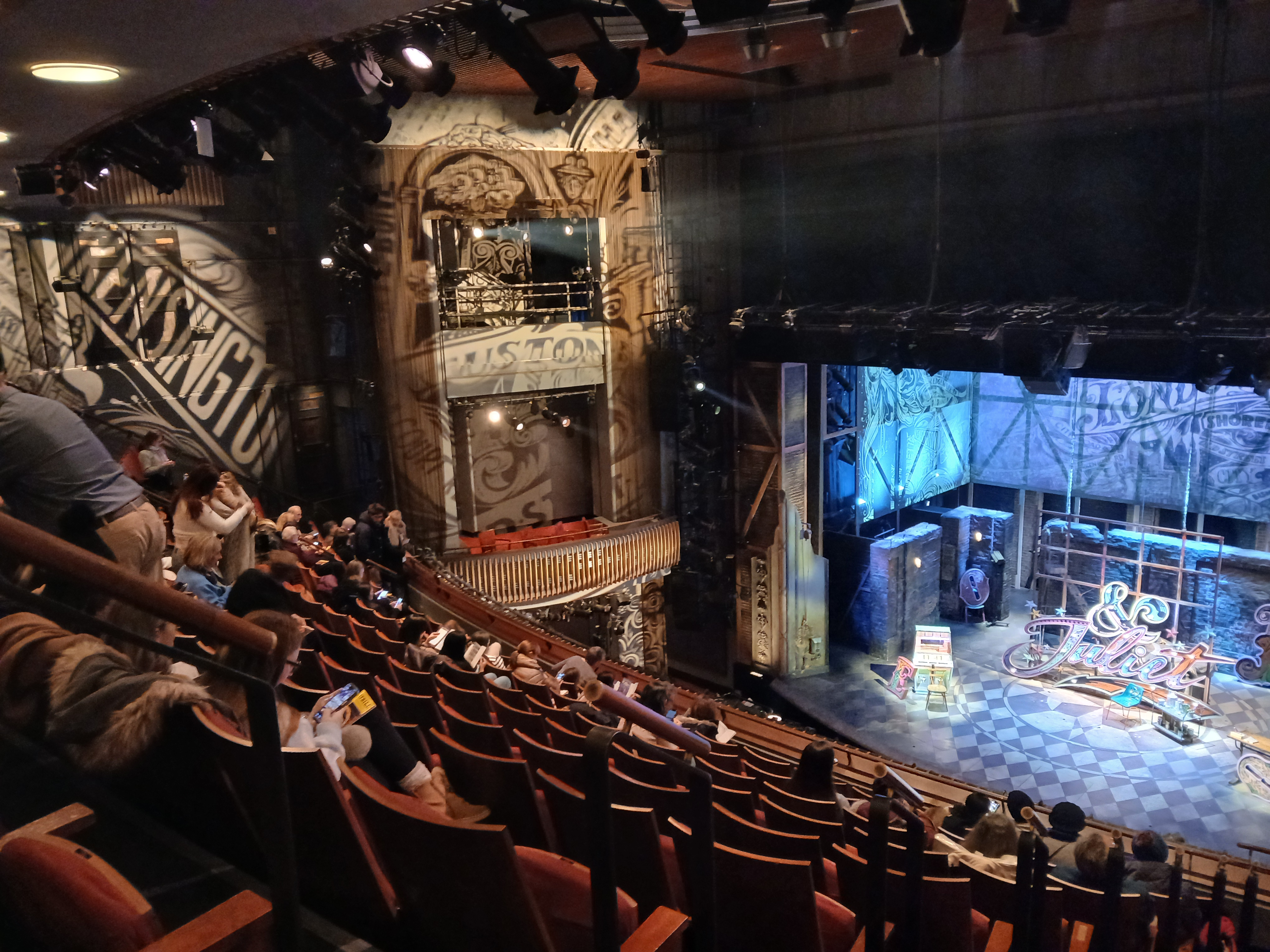
The Stephen Sondheim Theatre is one of the few Broadway houses where the seating decision is genuinely easy — in the best possible way. The 1918 façade of Henry Miller’s Theatre has been preserved. Everything else was rebuilt from the ground up in 2009, producing a modern 1,055-seat auditorium with two seating levels, no Balcony, strong sightlines, good acoustics, elevator access to all levels except the House Left Box, and accessible restrooms inside the building. It is the first LEED-certified Broadway theater.
The seat decision here is not about avoiding disasters. It is about choosing the right kind of experience: close performer detail and room energy from Center Orchestra, or a clean full-stage musical picture from Front Center Mezzanine. Because there is no third level — no steep Balcony, no nosebleed section — the range from best to budget is meaningfully narrower than at older three-level Broadway houses.
The Sondheim Seating Principle
At the Stephen Sondheim Theatre, the seat decision is about choosing a view, not escaping a bad one. Center Orchestra rows C through G give you the premium emotional experience — performer proximity, room energy, and the feeling of being inside the production. Center Mezzanine rows AA and BB give you the best full-stage musical picture — where choreography reads as designed patterns, lighting lands as complete compositions, and the staging architecture of the show reveals itself.
Because there is no Balcony, budget buyers land in either rear Center Orchestra or rear Center Mezzanine. Both are meaningfully better positions than equivalent budget seats at older Broadway houses with steep third levels. The 2009 rebuilt interior, good rake, and modern acoustic design mean that the viewing experience degrades more gradually here than at older houses. Center always beats side. Mezzanine AA–BB is not a downgrade from Orchestra — for contemporary musicals, it is often the stronger pick.
Orchestra Seats — The Classic Sondheim Experience
The Sondheim Orchestra has approximately 669 seats across Left, Center, and Right sections spanning rows A through U. The entry is step-free. There is a notable design feature: in the Left and Right Orchestra, the theater uses a horizontal aisle in place of row E — giving extra legroom to the row F seats directly behind. From row J onward, stepped rows provide additional elevation to improve sightlines over the heads in front, meaning rear Orchestra seats are meaningfully less compromised than in older flat-floor theaters.
Center Orchestra Rows C–G — The Primary Premium Zone
Rows C through G of the Center Orchestra are the best all-purpose seats in the house. They sit far enough back to reduce the steep viewing angle of the first rows while remaining close enough for facial detail and room energy. Row D seats 109–110 are an especially centered target when available, but adjacent centered seats across this zone follow the same basic logic.
From Center Orchestra C through G, you get strong performer detail, the full energy of the room, and a sightline that captures the stage picture without the too-close upward angle of the front two rows. For contemporary musicals like & Juliet — where performer personality and concert-like energy are central — this is where those qualities land most forcefully.
Front Orchestra Rows A–B — Immersive But Close
Rows A and B are exciting — you are very close to the stage and performers feel immediately present. The tradeoff is that the full-stage composition, choreographic patterns, and upstage action can be harder to read. For a pop musical like & Juliet, rows C through E often give a more complete picture than A or B despite the slight distance. Front rows also require more upward viewing, which some visitors find tiring over a full show.
Center Orchestra Rows H–L — Best Value Zone
Rows H through L are the strongest Center Orchestra value zone. The stepped rows from J onward give extra elevation to each row behind, so these seats can maintain a clear view despite being farther back. At a 1,055-seat theater with no Balcony, row L center is closer to the stage in absolute terms than the equivalent position at many larger Broadway houses.
Side Orchestra — Angle Matters, Especially in Front Rows
The inner aisle positions of the Left and Right Orchestra maintain a mostly centered sightline. Outer double-digit seats, especially in the front rows, create a more obvious angle across the stage. For any production where full-stage width matters, a centered seat farther back is preferable to a close outer-side position.
Mezzanine Seats — The Full Musical Picture
The Stephen Sondheim Theatre Mezzanine has approximately 350 seats across rows AA through JJ in Left, Center, and Right sections. It is elevator accessible. Once inside the section, the rake is strong enough to preserve useful sightlines across most centered positions. The main caveat is tight row spacing, so taller visitors should prioritize aisle seats for comfort.
The key argument for the Sondheim Mezzanine is this: because there is no Balcony, the Mezzanine is the only elevated section, which means it has been designed with that responsibility in mind. The rake is strong. The sightlines are generally good throughout. And the front rows deliver a full-stage picture that is genuinely competitive with or superior to front Orchestra for productions where seeing the complete stage composition matters — like choreography-heavy contemporary musicals.
Center Mezzanine Rows AA–BB — The Full-Stage Sweet Spot
Rows AA and BB of the Center Mezzanine are the recommended target for visitors who want the strongest full-stage musical experience. From here, you see the production as its director and choreographer designed it to be seen: the full width of the stage, choreographic formations as complete patterns, lighting design as a whole composition, and — for pop musicals like & Juliet — the full concert-like visual world of the show. Many experienced theatergoers prefer this position to front Orchestra for musicals with strong visual design.
Center Mezzanine Rows CC–EE — Strong Value
The good rake means that rows CC through EE in Center Mezzanine maintain strong sightlines — the elevation continues to work in your favor as you move back. At a 1,055-seat house with no third level, row EE center is not a remote position in any meaningful sense. These rows are often priced below the AA–BB premium zone while offering only a marginal distance increase. For budget-conscious visitors who want the Mezzanine view without the front-row pricing, CC through EE center is a strong option.
Center Mezzanine Rows FF–JJ — Rear Mezzanine
Rear Mezzanine center is the most budget-oriented position in the house. Row JJ contains the wheelchair seating (6 designated spaces) and transfer seats. The good rake ensures that rear rows are not as punishing as they would be in a flat-floor Mezzanine at another theater. At this distance, performer facial detail is reduced — binoculars are worth considering for any production where facial expression and fine performance nuance are important. Row JJ is the rear-most row; it is also where accessible seating is concentrated.
Side Mezzanine — Inner Good, Far Outer Caution
The inner sections of Left and Right Mezzanine maintain broadly usable sightlines. As you move toward the outer double-digit seats, the angle becomes more noticeable and the far edge of the stage can slip from view. The principle is the same as Orchestra: center beats side, and an inner-aisle position beats an outer seat for any production where full-stage width matters.
Does the Stephen Sondheim Theatre Have a Balcony?
No. The Stephen Sondheim Theatre does not have a traditional Broadway Balcony. The theater has Orchestra and Mezzanine seating only — no third level, no steep nosebleed climb, no separate Balcony section.
In most classic Broadway houses, the Balcony is the most problematic section: steep, high, far from the stage, often served only by stairs, and with the most compromised sightlines. At the Sondheim, that section simply does not exist. The Mezzanine is the highest general seating level — and it is elevator accessible, meaningfully raked, and much closer to the stage than an equivalent third-tier position at an older house. This makes the Sondheim significantly more forgiving for budget buyers, height-sensitive visitors, and accessibility-conscious visitors than most older Broadway houses with three seating levels.
This also simplifies the seat decision significantly. At the Shubert, the Imperial, or the Majestic, buyers must navigate Orchestra vs Mezzanine vs Balcony with meaningfully different price and quality tiers. At the Sondheim, the choice is: Orchestra for closeness, or Mezzanine for the elevated full-stage picture. That is it. No steeply raked third tier to weigh. No high-climb accessibility question. No “is the Balcony too far?” calculus.
Best Seats for & Juliet at the Stephen Sondheim Theatre
& Juliet is a pop jukebox musical featuring songs produced by Max Martin and his collaborators — a catalog that spans three decades of pop music, performed with full choreography, pop-concert lighting design, colorful staging, and an ensemble that uses the full width and depth of the Sondheim stage. For this kind of show, seat choice is partly about how you want to feel the production: as a concert (close Orchestra) or as a designed theatrical experience (front Mezzanine).
Best Seats by Production Type
Pop musicals reward both proximity (performer energy, song connection) and elevation (choreography, lighting, ensemble formations). Both positions are strong — the choice is what matters more to you.
The elevated, centered position is where dance formations read as composed patterns. This is the production type where Front Mezzanine center is the clear recommendation over any Orchestra row.
Closer proximity to performer and dialogue. Center Orchestra delivers the classic musical experience. Front Mezzanine also works well for staging-heavy book musicals.
When the star performance is the draw, proximity to the performer is the priority. Center Orchestra is where facial expression, lyric delivery, and stage presence land at closest range.
Actor detail, dialogue, silence, and micro-performance all reward Orchestra proximity for a play. Front Mezzanine can work for visually complex productions but Orchestra is primary for text-driven drama.
Orchestra H–L gives families a strong immersive experience below premium pricing. Center Mezzanine AA–BB gives a full clear stage picture that helps younger audiences follow the story. Both work well.
Best Seats by Visitor Type
The most reliable first Sondheim experience. Close, centered, energized, and giving you the full room feeling. The Sondheim’s modern build means this position delivers a clean, comfortable Broadway night without surprises.
The position from which you see the show as the director designed it — choreography as architecture, lighting as composition, staging as intentional spatial language. The theatrical smart seat for a contemporary musical.
Center Orchestra for the close, energized experience. Front Mezzanine for the elevated theatrical perspective. Both make strong date nights at one of Broadway’s most comfortable and modern theaters.
Close enough for kids to feel the show; back enough for the full stage picture and some buffer from the most premium pricing. The stepped rows from J ensure clear sightlines even with taller people in front.
The Sondheim’s no-Balcony layout means even budget seats are reasonably close to the stage. H–L Orchestra with stepped rows is the primary value recommendation. Center Mezzanine CC–EE for the elevated option at comparable pricing.
Elevator to all levels except House Left Box. Wheelchair seats are in Orchestra rows A and T and Mezzanine row JJ. Accessible restroom access is available inside the theater. Contact Roundabout Theatre Company before booking to confirm the specific seat path and companion-seat arrangement.
The best Broadway house answer for visitors who dislike high, steep seating. The Sondheim has no Balcony. The Mezzanine is the highest level, elevator accessible, and with a manageable rake. Comfort is built into the room’s design.
Mezzanine row spacing is tight, so aisle seats provide the easiest exit and can feel less confined. In the side Orchestra, the horizontal aisle replaces row E and leaves more open space in front of row F. Confirm the exact seat on the current map before treating it as a guaranteed legroom upgrade.
Accessibility — One of Broadway’s Strongest Houses
The Stephen Sondheim Theatre was rebuilt in 2009 with accessibility built into the design — not patched onto a century-old layout as an afterthought. The result is one of Broadway’s most genuinely accessible houses. Elevator access, accessible restrooms inside the building, wheelchair seating on two levels, and a no-step entrance make the planning conversation here significantly simpler than at most older Broadway houses.
Seats to Avoid — or Approach With Clear Expectations
- Do not book extreme outer side Orchestra (high-number seats in front rows) when centered alternatives are available — the angle becomes more noticeable close to the stage.
- Do not book extreme outer side Mezzanine for full-stage musicals — the outer double-digit positions look at an angle, with parts of the opposite stage edge out of view.
- Do not book Orchestra rows A–B expecting the best full-stage musical picture — they are exciting, but the proximity and upward angle can make the complete composition harder to read.
- Do not book the House Left Box if elevator access is needed — it is the one level without elevator access at this theater.
- Do not book transfer seats Row S (1, 2, 101, 117) or Row AA (13–14) if steps are a concern — these require 1–4 steps and are not step-free despite being listed as transfer seats.
- Do not assume all Mezzanine seats are comfortable for tall visitors — the pitch is tight, and aisle seats are strongly recommended for anyone over average height.
- Do not assume Orchestra center is always better than front Mezzanine center for musicals — for choreography-heavy and visually designed shows, Center Mezzanine AA–BB is often the stronger pick.
- Do not book any partial-view or obstructed-view listings without understanding exactly what is blocked in the context of the current production.
The Sondheim vs Other Broadway Houses
The Stephen Sondheim Theatre occupies a distinctive position in the Broadway landscape: it is modern and comfortable in a way that most older houses are not, but it is not so large that it loses theatrical intimacy. At 1,055 seats, it is meaningfully larger than intimate playhouses like the Booth, Lyceum, and Hudson, and meaningfully smaller and more intimate than the large-scale houses like the Marquis and Minskoff. Against classic mid-size houses like the Shubert and St. James, the Sondheim wins on accessibility, comfort, and modern sightlines — though it lacks their decades of legendary theatrical history.
Planning Your Stephen Sondheim Theatre Night
The Sondheim is at 124 West 43rd Street — between Sixth Avenue (Bryant Park) and Broadway. The Bryant Park transit cluster is the most convenient subway approach: the B, D, F, M, and 7 lines stop at 42nd Street–Bryant Park, a short walk to the theater. Times Square lines (1, 2, 3, 7, N, Q, R, W, S) also provide a practical approach from the west. If driving, reserve a nearby garage in advance and verify its entrance and operating hours on the day of the performance.
The 43rd Street location is slightly less crowded at curtain time than the 44th and 45th Street theater cluster — a real advantage for arrival timing. Restaurant Row on West 46th Street is within easy walking distance. The Theater District and Hell’s Kitchen options extend to the north and west. The Sondheim has bars and concessions on both the Orchestra and Mezzanine levels, which reduces movement during intermission and makes the evening more comfortable — especially for accessibility-conscious visitors who want to minimize staircase navigation.
FAQ — Stephen Sondheim Theatre Seating
Center Orchestra rows C through G — with row D seats 109–110 as a precise centered target — are the best overall positions. Center Mezzanine rows AA and BB are the best full-stage seats for musicals. For choreography-heavy productions, Front Mezzanine center can be the smarter choice.
Both are strong for different reasons and for different visitor priorities. Center Orchestra C–G gives performer proximity, energy, and the classic theatrical close-up experience. Center Mezzanine AA–BB gives the full-stage picture — choreography, lighting, staging, and ensemble patterns as designed. For musicals with strong visual design and choreography, many experienced theatergoers prefer Front Mezzanine center. For first-timers and visitors who want performer connection, Center Orchestra is the default recommendation.
Yes — often excellent. The front rows AA and BB deliver a centered full-stage view that many visitors prefer to Orchestra for musicals with choreography, lighting design, or ensemble staging. Front Mezzanine is not a downgrade here; for the right production, it can be the best choice in the house.
No. The theater has Orchestra and Mezzanine seating only. There is no third-level Balcony. This is a significant advantage over many older Broadway houses — no steep nosebleed section, no high stair climb, no punishing budget seats. The Mezzanine is the highest general seating level, and it is elevator accessible.
More workable than equivalent positions at older houses. The Mezzanine’s good rake means that even rows FF through JJ maintain generally clear sightlines. Row JJ is where accessible seating is concentrated. At a 1,055-seat theater with no Balcony, rear Mezzanine center is closer to the stage in absolute terms than the equivalent position in a three-level 1,500-seat house. Facial detail diminishes with distance — binoculars can help for productions where expression is important.
Avoid extreme outer side Orchestra and Mezzanine when a full-stage view matters, Orchestra rows A–B if a complete musical picture is the priority, the House Left Box if elevator access is needed, transfer seats in Row S and Row AA if any steps are a concern, and any seat marked partial view. Taller visitors should prioritize Mezzanine aisle positions because row spacing is tight.
Choose Center Mezzanine rows AA–BB for the full choreographic and lighting picture, or Center Orchestra rows C–G for pop-concert energy and performer proximity. & Juliet has announced its final Broadway performance for January 3, 2027, so confirm the performance date before booking.
Yes — one of Broadway’s strongest accessibility houses. The elevator reaches all levels except the House Left Box. Wheelchair seating is available in Orchestra rows A and T and Mezzanine row JJ. Accessible restroom access is available inside the theater. Contact Roundabout Theatre Company to confirm the exact seat path and companion-seat availability before booking.
Yes. Elevator access reaches all levels except the House Left Box. Levels served include the Rear Mezzanine, Lounge/Restrooms, House Right Box, Rear Orchestra/Bar, and Front Orchestra/Accessible Restroom. This makes the Sondheim significantly more accessible than older Broadway houses that have no elevators.
Yes. Accessible restroom access is available inside the theater and reached by elevator. Ask front-of-house staff for the most convenient route from your seat when you arrive.
Yes — it is one of the most recommended houses for first-time Broadway visitors. The modern rebuilt interior means comfortable seats, good sightlines, clear acoustics, and no confusing three-level stair navigation. The no-Balcony layout eliminates the most problematic budget section. The elevator access makes accessibility planning simple. Book Center Orchestra rows C through G for the most reliable first-visit experience.
Yes — it is one of the best Broadway houses specifically for this concern. There is no Balcony. The highest seating is the Mezzanine, which is elevator accessible and has a manageable rake. Visitors who have had uncomfortable experiences in high, steep Broadway balconies will find the Sondheim significantly more comfortable. The seat choice between Orchestra and Mezzanine does not involve any significant height or stair anxiety.
Plan to arrive at least 15–20 minutes before curtain. The 43rd Street location is slightly less congested than the 44th/45th Street theater cluster. The theater has bars and concessions on both levels, so if you want to grab a drink before the show, allow extra time. If accessibility logistics apply, arrive 30 minutes early and confirm arrangements with front-of-house staff. Late seating is typically at management’s discretion.
Modern, Accessible, and Built for the Music
Center Orchestra for the experience of being in the show. Front Mezzanine for seeing the show as it was designed. No Balcony, no nosebleed section, and a real elevator. The Sondheim makes this easy.
Pick the Modern Broadway View — Then Build the Whole Night
The Stephen Sondheim Theatre is one of Broadway’s easiest seating houses to buy well: two levels, no Balcony, a rebuilt modern interior, and strong accessibility. Center Orchestra gives the close pop-musical energy, while Front Center Mezzanine gives the cleanest full-stage picture for choreography, lighting, and design.
Stephen Sondheim Theatre Guide
Go deeper on the 43rd Street location, preserved Henry Miller’s façade, Roundabout connection, LEED-certified rebuild, accessibility, and full-night planning.
Open Theater Guide Seating StrategyBroadway Seating Guide
Compare Orchestra, Mezzanine, Balcony, boxes, sightlines, value zones, and why no-Balcony houses can be much easier to buy well.
Read Seating GuideMore Seating, Show & Ticket Strategy
Seats · Timing · ValueAll Broadway Theater Guides
Compare every Broadway house by size, access, neighborhood, seating levels, room personality, and night-out fit.
What’s Playing on Broadway
Browse current Broadway shows and connect each production to the right theater, seat choice, and full-night plan.
First-Time Broadway Guide
For visitors choosing their first show: seats, arrival, timing, dress, intermission, crowds, and Theater District basics.
When to Buy Broadway Tickets
Know when buying early matters, when waiting can work, and how timing changes for premium center seats and popular musicals.
Last-Minute Broadway Tickets
Compare same-day options without accidentally grabbing extreme side seats when better centered value may still be available.
Broadway Rush and Lottery Tickets
How discount systems work, what seat tradeoffs to expect, and why cheap seats can be great — or risky — depending on the room.
Plan the Stephen Sondheim Theatre Night
Dinner · Hotels · TransitRestaurants Near Broadway
Use the broader Broadway dining guide when you want a reliable pre-show meal before walking into the 43rd Street theater zone.
Restaurants Near Times Square
Useful when your group wants to stay close to the Sondheim, Broadway, Times Square, Bryant Park, and post-show transit.
Pre-Show Dining Guide
Plan reservation timing, walking buffer, arrival, intermission expectations, and post-show movement around a Broadway musical.
Hotels Near Broadway
Compare Theater District, Times Square, Midtown West, and Bryant Park hotel zones for a Broadway-centered trip.
Hotels Near Times Square
Best for visitors who want short walks, easy subway access, and simple post-show return logistics after a Sondheim night.
How to Get to a Broadway Show
Subway, walking, rideshare, and arrival timing for Theater District shows, including the Sondheim on West 43rd Street.
Subway to Broadway
Pick the right subway approach for West 43rd Street, Times Square, Bryant Park, and post-show exits.
Parking Near Broadway
When driving makes sense, when it does not, and how to avoid turning a Sondheim night into a Midtown garage problem.
Best Way Home After a Show
Subway, taxi, rideshare, walking, and hotel return strategy after a crowded 43rd Street performance.
Nearby Neighborhood & Theater Guides
43rd Street · Bryant Park · Nearby HousesTheater District
The practical guide to Broadway’s center: theaters, crowds, hotels, restaurants, walking routes, and first-time visitor logistics.
Times Square
Useful for hotels, transit, crowd planning, visitor logistics, and the classic Broadway arrival flow.
Bryant Park / Midtown South
A smart nearby planning zone for subway access, quieter hotel bases, dinner timing, and Midtown arrivals.
Hudson Theatre Guide
Compare another 43rd Street house with a different scale, access setup, and intimate Broadway feel.
Lyceum Theatre Guide
Compare an older historic Broadway house with more traditional layout quirks and a very different accessibility feel.
Shubert Theatre Guide
Compare the Sondheim’s modern comfort with one of Broadway’s defining classic musical houses on nearby 44th Street.