

Samuel J. Friedman Theatre Seating Chart: Best Seats, Views & MTC Playhouse Tips
Use this Samuel J. Friedman Theatre seating guide and seat map to compare Orchestra, Premier Circle and Mezzanine views. Manhattan Theatre Club’s 650-seat Broadway home is intimate enough that center alignment and viewing angle often matter more than raw distance.
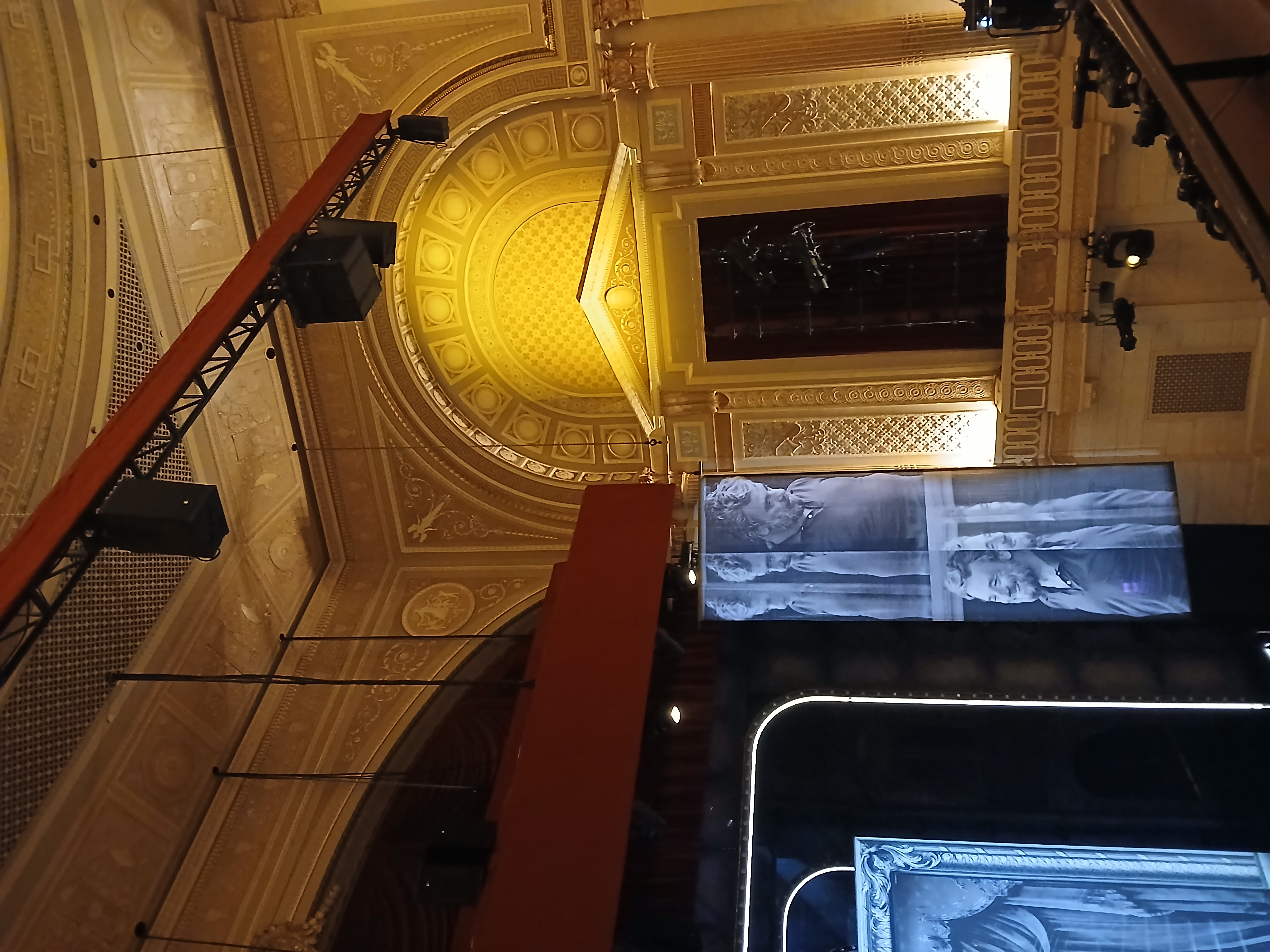
The Samuel J. Friedman Theatre seating chart divides the 650-seat, actor-forward playhouse into Orchestra, Premier Circle and Mezzanine levels. Manhattan Theatre Club’s Broadway home on West 47th Street has housed MTC productions since 2003. It is not a spectacle house. It does not have a turntable, a fly system for a magic carpet, or 1,700 seats of Disney visual ambition. It is a precision room built for plays, for writing, and for the kind of performance where an actor’s face across fifty feet of air can change what a scene means.
That changes how you should choose your seat. At a large Broadway musical house, you are fighting scale — trying to find a position where the room’s size does not work against you. At the Friedman, the room is already on your side. The real questions here are: how close do you want to be to the actors, do you want the full-stage picture or the emotional close-up, and what is the smartest seat for your budget.
The 650-Seat Advantage — Why This Room Is Different
The Friedman was originally a larger theater. When Manhattan Theatre Club took over in 2003, the renovation deliberately reduced the capacity — from roughly 1,000 seats to approximately 650. The rest became MTC’s lounges, offices, and operational infrastructure. The result is a Broadway house that sits at the intimate end of the district’s size spectrum, which changes the math on nearly every seat decision.
At a 1,700-seat Broadway house, rear Orchestra can feel punishingly distant. At the Friedman, the rear of the house is simply not that far from the stage. A seat in the middle of the Mezzanine at the Friedman is roughly equivalent to a mid-Orchestra position at a large Broadway musical house in terms of actual distance. This means that the value calculation is different here: a centered Mezzanine seat at the Friedman can be a smarter buy than an equivalent Mezzanine seat at the Majestic or Lyric, because the scale penalty is smaller. At the Friedman, you are not fighting the room the way you are at a massive house.
This also means the common Broadway advice of “always buy the closest seat you can afford” applies less strongly here. At a large-scale musical house, proximity is often the difference between a great night and a frustrating one. At the Friedman, the more important variables are center alignment, viewing angle, whether you want actor proximity or stage composition, and what the specific production rewards. A centered Mezzanine seat for an MTC play can be more satisfying than a close-but-angled Orchestra seat.
The other thing the small scale gives you: for plays specifically, the intimacy of the room helps. The silence between actors’ lines, the physical specificity of performance, and the spatial relationships between characters all land with more force in a room where you are already close to the action from most seats.
Orchestra Seats — The Most Immersive Actor-Forward Choice
The Samuel J. Friedman Orchestra is divided into left, center and right seating on a raked floor. The rake helps sightlines, so you are not fighting the flat-floor problem that affects some older Broadway houses. The Orchestra is the most immersive level: from the mid-center zone, you are in the space with the actors in a way that the elevated Mezzanine cannot quite replicate. Always compare the listing with the current production-specific seat map before buying.
Mid-Center Orchestra Rows D–L — The Recommended Zone
Mid-center Orchestra rows D through L represent the strongest all-around position for most MTC productions. From here you get strong facial detail, clear lyric or dialogue delivery, and the emotional texture of live performance in a relatively intimate room. The rake means sightlines are good throughout this zone. This is the zone that most serious theatergoers at the Friedman would recommend as the starting point.
Front Orchestra Rows AA–C — Exciting But Not Always Optimal
The very front of the Orchestra, rows AA through C, puts you extremely close to the performers. For many plays — especially star-driven two-handers or productions where proximity to specific actors is the point — this can be exceptional. The consideration is that very close seats at any theater can distort the full staging picture: blocking, spatial relationships, and the designed composition of scenes can feel harder to read at very close range. For plays with complex or movement-heavy staging, rows D through G often give a more complete experience than AA through C.
The motorized lift serves rows AA through F on the left orchestra side (house left, odd-numbered seats) — this is the designated access route for that section for visitors using mobility aids beyond standard wheelchair spaces.
Side Orchestra — Workable Inner, Caution Outer
Inner side Orchestra positions can work well in a 650-seat house where the angles are more forgiving than in a larger venue. Extreme outer sides — especially in the front rows where the decorative box structures frame the proscenium — can feel angled enough to miss the full center stage picture. For plays where all the important action happens at center stage, a centered seat a few rows farther back will serve you better than a close-but-far-side position.
Rear Orchestra — Still Functional at This Scale
Rear Orchestra at the Friedman is not the punishing proposition it would be at a much larger house. Several wheelchair locations and foldable-armrest seats are in the rear Orchestra, making this an important accessible zone. For general buyers, rear center Orchestra is a viable budget option — the room’s scale means you are not lost at the back of a cavernous space. The primary concern in rear Orchestra is that very subtle facial detail becomes harder to read; for plays where precise expression and micro-performance matter, moving forward or upward to Premier Circle center can be worth considering.
Premier Circle — Often the Smartest Seat in the House
The Premier Circle at the Samuel J. Friedman Theatre comprises the front elevated rows AA and BB ahead of the main Mezzanine. It sits above the Orchestra and in front of the main Mezzanine body, offering an elevated perspective that combines a full-stage overview with a proximity that rear Mezzanine rows cannot match.
For MTC productions — which frequently involve precisely designed staging, spatial relationships between characters, and compositional choices that reward seeing the full stage picture — Premier Circle center is frequently cited as one of the strongest seats in the house. You see the blocking as the director intended it, with enough elevation to read spatial relationships and enough proximity to catch the performance detail that would be lost from farther back.
Premier Circle is also where the value argument for the Friedman’s elevated section is strongest. When Premier Circle center is priced below premium Orchestra rows AA through C, it is often the smarter purchase — especially for plays where the full-stage picture matters as much as raw proximity to the actors.
The Premier Circle lounge is exclusively for members of MTC’s Patron Program. If you are not a Patron Program member, you will not have access to this lounge, but your seat in the Premier Circle section itself is not restricted. The standard lounges — the Solomon Family Lounge on the lower level and the Mezzanine lounge — are open to all ticketholders.
Mezzanine Seats — A Stronger Option Than the Name Suggests
The Samuel J. Friedman Theatre Mezzanine is divided into left, center and right sections behind the Premier Circle. It is elevator accessible, but the aisles contain steps. MTC currently identifies one wheelchair location at E2 and two foldable-armrest seats at F101 and F121. Above-average legroom is noted across this section by multiple reviewer sources — a genuine comfort advantage over some other Broadway houses.
In a 650-seat house, the Mezzanine does not function the way a balcony would in a 1,500-seat venue. The distance from stage to front Mezzanine is manageable; the distance from stage to rear Mezzanine is still a meaningful Mezzanine experience, not a remote-corner experience. The strongest elevated positions are Premier Circle center and the first center rows behind it — these offer a clean full-stage view at what is often competitive pricing.
Center Mezzanine throughout is preferable to side Mezzanine. The side sections have slightly angled sightlines — the Left Mezzanine looks at the right-hand portion of the stage more directly, and vice versa. For plays with centered staging this is less of an issue; for productions where important action happens at the stage edges, side Mezzanine positions can miss moments that front-center Mezzanine would catch.
The rear Mezzanine is the budget option — and because of the Friedman’s small scale, it is a more viable budget option than equivalent rear-elevated positions at larger theaters. The primary trade-off from rear Mezzanine is reduced facial detail rather than a completely lost stage picture.
Best Seats for Plays at the Samuel J. Friedman Theatre
The Friedman is primarily a play house. MTC’s Broadway programming includes new American plays, world premiere productions, and prestige limited runs — productions where writing, acting, and dramatic form are the point. The seat logic for plays is different from the logic for large-scale musicals.
For a musical, the questions are usually: can I see the full stage? Can I read the choreography? Are the effects visible? For a play, the questions become: can I see the actors’ faces? Can I hear every word? Does the staging composition read clearly? These questions push toward different seat choices.
Best Seats by Visitor Type
Mid-center Orchestra for actor proximity and emotional depth. Premier Circle center to read the staging composition. Both are excellent for the kind of MTC production where form and performance are the draw.
The most reliable introduction to what a Broadway play feels like up close. Not so close it feels overwhelming; close enough for the performance to land with real force. The Friedman is a great first Broadway play house.
Orchestra for intimacy and closeness to the performance. Premier Circle if you want to see the play as a composed stage picture. The Friedman is an excellent date-night theater — small, specific, and serious without being pretentious.
Subscribers will know the house. Premier Circle center is the reward for subscribers who want the full-stage view and Patron Program lounge access. Experiment with sections across productions — the Friedman rewards familiarity.
In a 650-seat house, the budget seats are significantly better than equivalent positions at larger Broadway venues. Center Mezzanine can be a smart buy when priced well below Orchestra. Rear center Orchestra also works.
The elevator at the right of the box office serves all levels. MTC lists six Orchestra wheelchair locations and one Mezzanine location at E2. A motorized lift serves rows AA–F house left. Contact MTC at 212-399-3000 before purchasing to confirm the best access route.
Maximum actor proximity in a house where the scale already works in your favor. Rows C–E give better full-staging angle than AA–B while still being very close. For star-driven or performance-first MTC productions.
Premier Circle is the recommended position for anyone who wants to read the staging composition, blocking, and spatial relationships of the play as a whole. The elevation reveals the design logic that close Orchestra seats can obscure.
Accessibility at the Samuel J. Friedman Theatre
The Friedman has a stronger accessibility story than many Broadway houses of comparable age, and stronger than some that have been renovated more recently. The MTC renovation specifically addressed access, and the result is a theater where most visitors with mobility concerns can genuinely find a workable seat.
The Friedman has a stronger access story than many older Broadway houses — but accessible-seat selection still needs to be deliberate. The elevator serves all levels; wheelchair locations are designated in both Orchestra and Mezzanine; accessible restrooms are on the lower and upper Mezzanine levels. Contact MTC directly to confirm your specific seat’s access path before purchasing.
Seats to Avoid — or Approach With Clear Expectations
- Do not book extreme far-side Orchestra seats for productions where all important staging happens at center stage — horizontal angle is less forgiving than distance in an intimate room.
- Do not book extreme far-side Mezzanine positions if the production uses strong center-to-edge staging — side sections have angled sightlines that can miss key moments at the far stage edge.
- Do not pay premium front-Orchestra prices assuming closer is always better — for MTC plays where staging composition matters, Premier Circle center can give a more complete experience at a lower or equal price.
- Do not dismiss Mezzanine as “too far” without considering the Friedman’s scale — center Mezzanine at a 650-seat house is materially different from center Mezzanine at a 1,700-seat house.
- Do not book any seat listed as partial view without understanding exactly what is obstructed in the context of the current production.
- Do not book the very front rows (AA–B) for productions where the staging is complex and full-width — the upward angle and reduced peripheral vision can make those rows feel overwhelming rather than immersive.
- Do not assume the Premier Circle lounge is accessible to all ticketholders — it is exclusive to MTC Patron Program members. The Solomon Lounge and Mezzanine lounge are open to everyone.
The Friedman vs Larger Broadway Houses
The Samuel J. Friedman is best understood by contrast with Broadway’s larger venues. At the Majestic (1,681 seats), the Lyric (1,622 seats), or the Gershwin, the seat decision is dominated by distance management — trying to avoid positions where the room’s scale works against you. At the Friedman, that problem is largely solved by the room itself.
The Friedman’s 650-seat scale means distance is less punishing. Mezzanine seats here are closer than mezzanine seats at the Lyric or Majestic. The seat decision shifts from “how close can I get” to “what angle do I want.” MTC plays reward this different calculation.
The Friedman sits alongside the Booth, Lyceum, and Music Box as one of Broadway’s intimate playhouses. Its MTC identity — programming new American plays and world premieres — gives it a distinct character. Its elevator access makes it more physically accessible than the Lyceum or Music Box, which have no elevators.
If you are choosing between a Friedman ticket and a larger-house ticket for a night out, consider what you want from the experience. The Friedman is the right choice when the play is the draw — when you want writing, performance, and the experience of watching theater happen at close range in a room designed for it.
Nearby Broadway Houses
Planning Your Samuel J. Friedman Theatre Night
The Friedman is on West 47th Street between Broadway and 8th Avenue — one block north of Restaurant Row (West 46th Street), which is one of the most convenient pre-theater dining corridors in the district. The 46th Street block between 8th and 9th Avenues has a concentrated cluster of restaurants within a two-minute walk of the theater. Book dinner 90 minutes before curtain for a comfortable arrival.
Subway: the C and E trains at 50th Street are a short walk, and the cluster of Times Square lines at 42nd Street–Times Square can work if you walk north on 7th Avenue. Allow 15–20 minutes of buffer over typical commute time for Times Square foot traffic. Doors open 45 minutes before curtain — arrive early to visit the Solomon Family Lounge, pick up your ALD device if needed, or simply settle in without rushing.
FAQ — Samuel J. Friedman Theatre Seating
Mid-center Orchestra rows D through L are the best starting point for actor detail and emotional proximity. Premier Circle center in rows AA–BB offers the best full-stage view and often the strongest value in the house. The first center Mezzanine rows behind the Premier Circle are also strong when priced meaningfully below Orchestra. The right answer depends on the production and what you want from the experience.
Both are strong in different ways. Orchestra gives you actor proximity and emotional immediacy — the preferred position for intimate plays and star-driven productions. Mezzanine (especially Premier Circle center / front Mezzanine center) gives you the full-stage picture — the preferred position for productions where blocking, staging design, and spatial relationships matter. In a 650-seat house, the distance penalty for a front Mezzanine seat is meaningfully less than at a larger Broadway house.
Premier Circle comprises rows AA and BB at the front of the elevated level. It occupies a position above the Orchestra and ahead of the main Mezzanine body, giving a full-stage view from a closer distance than the rows behind it. The Premier Circle lounge is exclusively for MTC Patron Program members. The seats themselves are available to all ticketholders.
Yes — more so than at larger Broadway houses. The Friedman’s 650-seat scale means Mezzanine seats are materially closer to the stage than equivalent elevated sections at 1,500-seat venues. Premier Circle center and the first center Mezzanine rows behind it are often excellent value. Legroom in the Mezzanine is noted as above average. The main trade-off is some reduction in facial detail compared with front Orchestra — not a severe distance problem.
Yes — it is one of Broadway’s more intimate houses at approximately 650 seats. For context, the Majestic Theatre has 1,681 seats and the Lyric has 1,622. The Friedman was deliberately reduced from about 1,000 seats during the MTC renovation to create a more focused, intimate room. It sits alongside the Booth, Lyceum, Music Box, and John Golden as part of Broadway’s intimate playhouse category.
It is one of Broadway’s best rooms for plays. MTC’s programming — new American plays, world premieres, prestige limited runs — is matched to a room that rewards writing, acting, and performance specificity. The scale keeps the audience connected to the stage. The quality of the productions is consistently high. The Friedman is specifically designed for the kind of theater where what an actor does with their face in a moment of silence matters as much as anything else.
Relatively speaking, yes. Center Mezzanine at the Friedman is a meaningfully better proposition than center Mezzanine at a 1,600-seat house because the room is smaller and the distance is shorter. Budget buyers should focus on center alignment and avoid extreme side positions rather than worrying excessively about being in the Mezzanine versus the Orchestra.
Avoid extreme side Orchestra and Mezzanine — horizontal angle in a small room is a real sightline compromise. Avoid any partial-view or obstructed-view listings. Approach very front rows (AA–B) with awareness that staging composition can feel overwhelming at very close range. Do not pay front-Orchestra premium for a close-but-angled seat when a centered Mezzanine position at lower cost may give a better overall view.
Use seat-view photos to confirm the horizontal angle, how much of the stage edge is visible, and whether the current production changes the normal layout. Match every photo to the exact section, row and seat number on the current Samuel J. Friedman Theatre seat map; a nearby photo is useful context, but it is not a guarantee of the same view.
Yes. The elevator serves all levels. MTC currently lists six Orchestra wheelchair locations and one Mezzanine wheelchair location at E2, plus six Orchestra and two Mezzanine seats with foldable armrests. A motorized lift serves front orchestra house left (rows AA–F). Accessible restrooms are on the lower and upper Mezzanine levels. Contact MTC at 212-399-3000 before purchasing to confirm current availability and the correct access route.
Yes. An elevator located at the right of the box office lobby provides access to all levels of the theater — Orchestra, Premier Circle, Mezzanine, the Solomon Family Lounge (lower level), and the Mezzanine lounge area. This is confirmed by MTC’s official plan-your-visit and accessibility pages. The Friedman’s elevator is a meaningful accessibility advantage over older Broadway houses like the Lyceum or Music Box that have no elevator.
Yes — on multiple levels. Wheelchair-accessible restrooms are in the Susan and Peter J. Solomon Family Lounge on the lower level (accessible by elevator or stairs) and in the Mezzanine lounge area. Both are confirmed by MTC’s official accessibility page and SeatPlan. Regular restrooms are also available. The Solomon Lounge is open to all ticketholders beginning 45 minutes before curtain.
Yes — particularly for theater-literate couples or anyone who appreciates serious playwriting and performance. The Friedman’s MTC programming skews toward ambitious new plays and prestigious limited runs. The small room creates an intimate atmosphere that works well for a date-night experience. The nearby Restaurant Row on West 46th Street makes pre-show dinner logistics simple. Book mid-center Orchestra rows D–H for the most consistently strong date-night seat.
Yes, with one note: if you are a first-time Broadway visitor specifically looking for a large-scale musical spectacle, the Friedman’s MTC programming may not be what you are expecting. If you are a first-time Broadway visitor who wants to see a well-written, well-acted play in a beautiful intimate room, it is an excellent choice. Book center Orchestra rows D through J for the most reliable first-time experience.
A Room Built for the Work
The Samuel J. Friedman is not a spectacle house. It is a room built for plays — for writing, acting, and the particular kind of attention that theater at its best demands. Choose the right seat, and it will reward you completely.
Pick the Actor-Forward View — Then Build the Whole Night
The Samuel J. Friedman is not a giant musical barn. It is an intimate MTC Broadway playhouse where center sightlines, dialogue clarity, and stage composition matter more than simply being closest. Use these guides to choose the seat, then plan dinner, hotels, transit, parking, and the surrounding Theater District night.
Samuel J. Friedman Theatre Guide
Go deeper on MTC’s Broadway home, the 47th Street location, intimate room, accessibility, Restaurant Row, and full-night planning.
Open Theater Guide Seating StrategyBroadway Seating Guide
Compare Orchestra, Mezzanine, Balcony, boxes, sightlines, value zones, accessibility, and when elevated center beats closer side seats.
Read Seating GuideMore Seating, Playhouse & Ticket Strategy
Seats · Plays · ValueAll Broadway Theater Guides
Compare every Broadway house by size, access, neighborhood, seating levels, room personality, and night-out fit.
What’s Playing on Broadway
Browse current Broadway shows and connect each production to the right theater, seat choice, and full-night plan.
First-Time Broadway Guide
For visitors choosing their first show: seats, arrival, timing, dress, intermission, crowds, and Theater District basics.
When to Buy Broadway Tickets
Know when buying early matters, when waiting can work, and how timing changes for plays, limited runs, and premium center seats.
Last-Minute Broadway Tickets
Compare same-day options without accidentally grabbing awkward extreme sides or a seat that misses subtle actor detail.
Broadway Rush and Lottery Tickets
How discount systems work, what seat tradeoffs to expect, and why cheap seats can be great — or risky — depending on the room.
Plan the Samuel J. Friedman Theatre Night
Dinner · Hotels · TransitRestaurants Near Broadway
Use the broader Broadway dining guide when you want a reliable pre-show meal before walking into the 47th Street theater zone.
Restaurants Near Times Square
Useful when your group wants to stay close to the Friedman, Broadway, Times Square, and post-show transit.
Pre-Show Dining Guide
Plan reservation timing, walking buffer, arrival, late-seating risk, and post-show movement around a Theater District play.
Hotels Near Broadway
Compare Theater District, Times Square, Midtown West, and Hell’s Kitchen hotel zones for a Broadway-centered trip.
Hotels Near Times Square
Best for visitors who want short walks, easy subway access, and simple post-show return logistics after an MTC night.
How to Get to a Broadway Show
Subway, walking, rideshare, and arrival timing for Theater District shows, including the Friedman on West 47th Street.
Subway to Broadway
Pick the right subway approach for West 47th Street, Times Square, Restaurant Row, and post-show exits.
Parking Near Broadway
When driving makes sense, when it does not, and how to avoid turning a Friedman night into a Midtown garage problem.
Best Way Home After a Show
Subway, taxi, rideshare, walking, and hotel return strategy after a crowded Theater District performance.
Nearby Neighborhood & Theater Guides
47th Street · Restaurant Row · Nearby HousesTheater District
The practical guide to Broadway’s center: theaters, crowds, hotels, restaurants, walking routes, and first-time visitor logistics.
Hell’s Kitchen
A strong pre- and post-show dining base west of the Friedman, especially if you want less Times Square noise.
Times Square
Useful for hotels, transit, crowd planning, visitor logistics, and the classic Broadway arrival flow.
Booth Theatre Guide
Compare another intimate Broadway house where plays, actor detail, and center sightlines matter more than spectacle scale.
John Golden Theatre Guide
A nearby play-first Broadway house useful for comparing intimate room feel, sightlines, and theatergoer-focused nights.
Lyceum Theatre Guide
A historic Broadway house with a different layout, useful for comparing classic room character, scale, and seat strategy.