

How to Get to a Broadway Show
Subway, parking, rideshare, or commuter rail — what actually works, when it works, and how to get home without the stress.
Getting to a Broadway show is genuinely easy — but only if you’ve thought about it before you’re standing on a midtown sidewalk at 7:52 trying to find your theater. The theater district is one of the most transit-accessible parts of New York City. Nearly every subway line passes through it. Commuter trains from New Jersey and Long Island drop you within walking distance. For people already in Midtown, some theaters are less than a ten-minute walk from a hotel. The logistics aren’t complicated. They just reward a little planning.
What trips people up isn’t the distance — it’s the timing, the post-show chaos, and the gap between what sounds convenient on paper and what actually works on a Tuesday night in Midtown. This guide covers all of it: the real tradeoffs between subway, driving, rideshare, and commuter rail, and how to think about getting home once the curtain comes down.
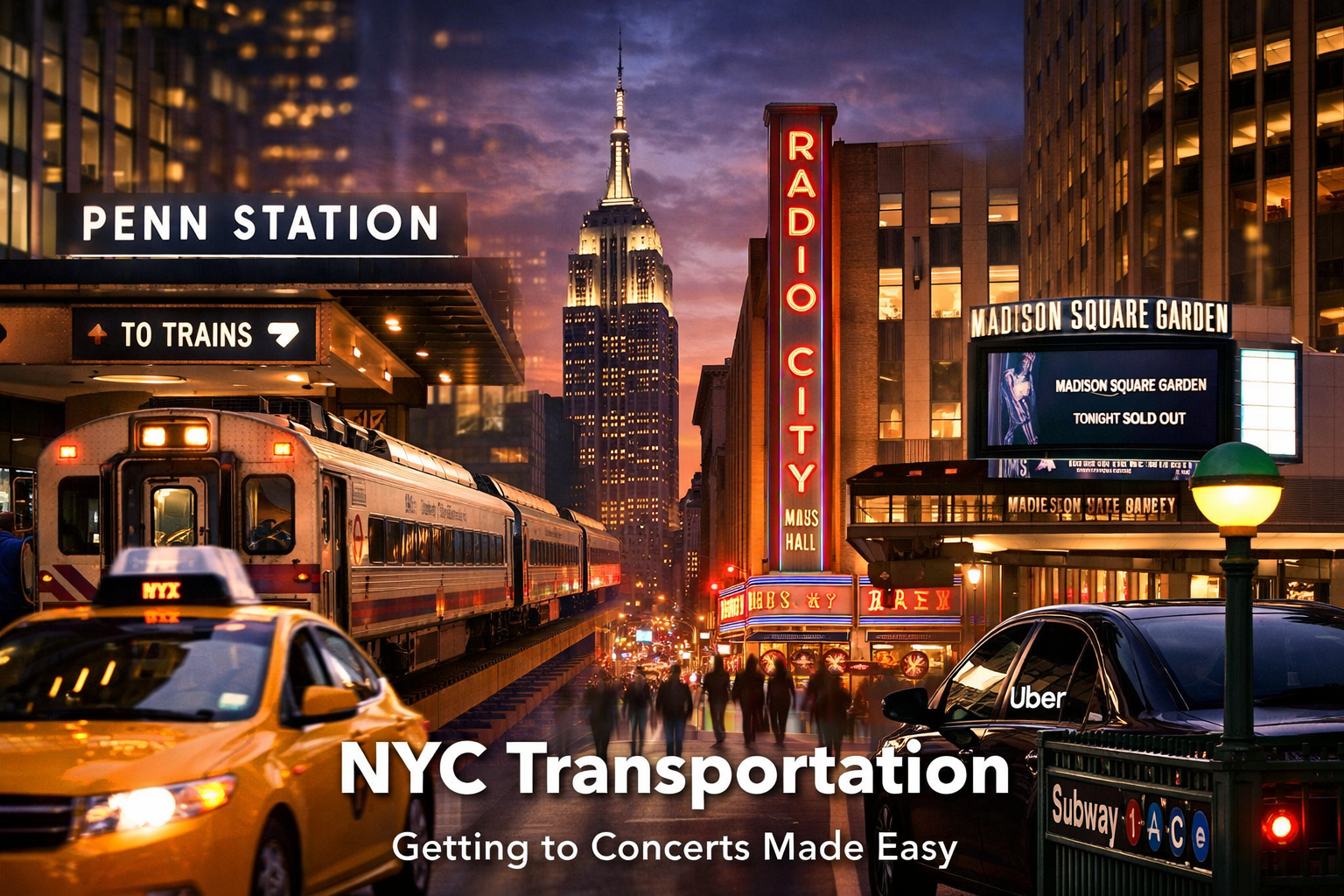
Making the Right Call for Your Night
The right way to get to a Broadway show depends less on where the theater is — they’re all clustered in a ten-block radius in Midtown — and more on where you’re coming from, who you’re with, and what the rest of the evening looks like. A couple staying at a hotel on 48th Street has a completely different calculus than a family of four driving in from New Jersey. Getting that starting point right shapes every decision that follows.
How to think about it before you commit
If your hotel is anywhere near Times Square, you’re almost certainly within walking distance of the theater. Check the address, then walk. It’s almost always faster than any other option.
Multiple lines run directly into the Times Square–42nd Street complex. Traffic from either borough into Midtown on a show night is slow and unpredictable. The subway wins every time.
Penn Station is a 10–15 minute walk from most Broadway theaters. This is the smoothest option for NJ visitors — reliable timing, no parking headache, no tunnel traffic gamble.
Same logic as NJ Transit. The Long Island Rail Road delivers you to Penn Station and you walk. Pre-book your return train before you leave — late trains fill up fast on show nights.
Managing a stroller or young children through a crowded subway at curtain time adds stress you don’t need. Driving with a pre-booked garage, or commuter rail with a direct walk, is worth it.
Worrying about parking and navigating post-show traffic is the wrong energy for a date night. Take the subway or a cab if you’re already in Manhattan. You’ll both enjoy the evening more.
Taking the Subway
For most people, most of the time, the subway is the right answer. The Times Square–42nd Street station is the largest subway hub in the city, served by ten lines — the 1, 2, 3, 7, N, Q, R, W, A, C, and E — which means you can reach it with at most one transfer from almost anywhere in the five boroughs. With the sole exception of the Vivian Beaumont Theater at Lincoln Center (take the 1 to 66th Street), every Broadway theater is within a few blocks of a Times Square-area station. The 50th Street stop on the C/E and 1 lines is worth knowing if your theater is on the north end of the district.
What subway riders should know
OMNY — the MTA’s tap-to-pay system — works at every subway turnstile. Apple Pay, Google Pay, and contactless credit or debit cards all work. You don’t need a MetroCard. Each ride is $2.90 with contactless payment. If you do need a MetroCard, get it from a machine in the station, not from street vendors.
The MTA runs scheduled maintenance on nights and weekends, which means certain lines get rerouted or skip stops without much warning. Before you leave for a Saturday matinee or a weeknight show, check the MTA website or Google Maps for any service changes on your line. What worked last month may not run the same way tonight.
The Times Square station is enormous and has 16 exits spread across several blocks. Coming out of the wrong exit can add five minutes to your walk. Know which exit gets you to your theater before you go underground — Google Maps will tell you. And factor in the post-show crowd if you’re timing your return.
This is worth saying plainly. Midtown Manhattan traffic before an 8:00 curtain is bad. A cab or rideshare from 30 blocks away can take 40 minutes on a Tuesday. The same trip on the subway takes 12. The subway feels less glamorous, but it gets you there.
Assuming your usual weekend line runs the same way it does on weekdays. Reroutes are common, and they’re announced with short notice. A two-minute check on the MTA site before you leave saves you from the wrong train at the worst possible time.
Driving and Parking
Driving to a Broadway show is a reasonable choice — but only if you go in with the right expectations. Midtown traffic before an 8:00 curtain is slow and unpredictable, especially on 7th and 8th Avenues where theater-bound cars compete with everything else Midtown throws at the road. The post-show garage exit, with hundreds of other cars leaving the same area at the same time, adds another 20–40 minutes. None of this is a dealbreaker, but it means driving works best when you’ve planned for it rather than defaulted to it.
When driving actually makes sense
If you’re coming from the suburbs of New Jersey, Westchester, or Connecticut, driving may genuinely be your most practical option — particularly for a family, or on a night when commuter rail timing doesn’t line up well with the show. For visitors from Long Island, the LIRR is usually smoother, but driving and parking near Penn Station or a garage in the West 40s is a workable alternative. The key in all cases is parking booked before you leave, not figured out when you arrive.
Parking strategy that actually works
On-street parking in the Theater District is metered, expensive, and nearly impossible to find on a show night. Garage rates in the immediate Times Square area run roughly $40–$50 for an evening. Pre-booking through SpotHero or ParkWhiz typically gets you better rates and guarantees a spot — often at garages a block or two from the theater that you’d never find by driving around. Book before you leave home, not from the car.
The garages immediately adjacent to Times Square charge the highest rates and have the worst post-show exit traffic. A garage on the west side of 9th Avenue, or a few blocks north of 54th Street, is often cheaper, easier to exit, and only adds three or four minutes to your walk. When comparing options, factor in exit time, not just distance to the theater entrance.
This is the part most drivers skip. When you’re booking a garage, look at where it sits relative to the main avenues and how post-show traffic flows. A garage on 8th Avenue will exit onto 8th Avenue traffic — headed in one direction. A garage west of 9th can often get you out more cleanly, especially if you’re heading back to the Lincoln Tunnel or the West Side Highway. Five minutes of map work before you park saves real time on the way home.
Both run multiple garages within walking distance of the Theater District — Icon Parking at 250 W. 50th St. and Edison ParkFast at 332 W. 44th St. are among the most convenient. Check both through SpotHero when you’re comparing rates, as pre-booked prices vary by night and can be meaningfully lower than drive-up rates.
Commuter Rail: NJ Transit & the LIRR
For visitors coming from outside Manhattan, commuter rail is frequently the cleanest option — faster than driving through traffic, less stressful than navigating the subway system for the first time, and with a clear endpoint (Penn Station) that puts you a manageable walk from most Broadway theaters.
Most NJ Transit lines terminate at Penn Station, which sits at 34th Street and 7th Avenue. The walk to the heart of the Theater District — roughly 44th to 54th Streets — takes 10 to 15 minutes on foot, or you can take the 1, 2, or 3 subway one stop uptown. Book your return train before you leave: the 11:00 and 11:30 trains after an 8:00 show fill up quickly on weekend nights.
The LIRR also terminates at Penn Station, making it the same practical setup as NJ Transit. Most main-line LIRR trains run frequently enough that you don’t need to time your arrival precisely — but post-show, the 10:45 and 11:15 trains on popular lines sell out. Check the schedule before you leave and buy your return ticket in the app.
Metro-North arrives at Grand Central Terminal on 42nd Street and Park Avenue — slightly east of the Theater District but well within walking distance for most theaters. The 4/5/6, 7, and S shuttle lines connect Grand Central to Times Square in two stops if you’d rather not walk. Return trains run until midnight on most lines, but late Friday and Saturday service fills fast.
Rideshare and Taxis
Rideshare and yellow cabs have a specific role to play on Broadway nights, and it’s not getting you to the theater. For that, they’re usually the slowest and most expensive option in Midtown. Where they genuinely earn their place is in two situations: getting from a hotel or restaurant that’s awkward to reach by subway, and — more usefully — getting home after the show when the subway feels like too much.
When rideshare works and when it doesn’t
Midtown traffic in the 6:30–8:00 window is genuinely unpredictable. A trip that Google Maps estimates at 12 minutes can take 35 on a busy evening. If you have a hard curtain time, a cab or rideshare in Midtown is a risk. The subway doesn’t get stuck in traffic.
When 35 Broadway shows release their audiences within the same 30-minute window, every rideshare app in the Theater District sees the same demand spike. Prices surge, wait times climb, and the pickup chaos on narrow midtown streets is real. If you’re planning to Uber home, either wait 30–45 minutes at a nearby bar or restaurant, or budget for 2–3x normal pricing.
NYC yellow taxis charge flat metered rates with no surge pricing, no extra charge for additional passengers, and no app required. After a show, walking one or two blocks away from the theater entrance before hailing puts you in a better position. They’re reliable, predictable, and often faster to get than a rideshare pickup on a busy night.
Getting Home After the Show
The post-show logistics are the part most people don’t think about until they’re standing outside the theater at 10:45 trying to figure it out in real time. Broadway shows run two to two and a half hours including intermission, which means most 8:00 performances end between 10:30 and 11:15. Here’s what to expect and how to handle it.
After the subway vs. after the car
The Times Square station at 10:45 on a weeknight is busy but not unbearable — and late-night service runs until around 1:00 a.m. on most lines before switching to reduced overnight frequency. If you’re heading back to a hotel or apartment in the outer boroughs, the subway is usually the most reliable way to do it without the stress of post-show traffic.
Nothing ends a good evening faster than missing the last NJ Transit or LIRR train home. Check the schedule before you leave for dinner, note your last viable departure time, and — if the show runs long — be ready to catch the next one. Most lines run until midnight or later on weekends, but late departures on popular routes fill up. Buy your return ticket before the show, not on the platform.
The 15 minutes immediately after curtain are the worst time to retrieve your car. Everyone else has the same idea, and the garages in the Theater District back up accordingly. If you can stay for a drink nearby and retrieve the car 30–45 minutes after the show ends, you’ll save yourself real aggravation — and probably exit Midtown faster too.
If you’re a commuter rail rider and your theater is in the mid-40s, walking to Penn Station (34th and 7th) or Grand Central (42nd and Park) takes 10–15 minutes and avoids any post-show transportation scramble entirely. It’s a pleasant enough walk on most nights, and you arrive at the station calm rather than stressed from sitting in traffic or waiting for a pickup.
Decide how you’re getting home before you leave for dinner — not after the show ends. Know your last train time if you’re on commuter rail. Know your garage exit strategy if you drove. Have a bar or restaurant in mind if you’re waiting out post-show rideshare surge. Five minutes of planning eliminates the one part of the evening that most often goes wrong.
More Transportation Guides
Getting to a Broadway show is one piece of the puzzle. If you’re planning a night at a concert, a game, or a different part of the city, the logistics change. These guides cover the specifics for each major venue area.
The best garages, what to pay, and how to book in advance without overpaying.
Parking Guide →Penn Station is right below MSG — but there’s more to the transit picture than that.
MSG Guide →Downtown Brooklyn is easy from Manhattan — if you know which trains to take.
Barclays Guide →The 4, B, and D trains all stop at the Stadium. Here’s how to get there and park.
Yankee Stadium Guide →Getting There Is the Easy Part
The Theater District is one of the most accessible places in New York City. Ten subway lines, two commuter rail terminals within walking distance, dozens of parking garages, and enough cabs and rideshares to handle any overflow — the infrastructure is there. The only variable is whether you’ve thought about it before you need it.
Take the subway if you’re coming from within the city. Take NJ Transit or the LIRR if you’re coming from the suburbs and the timing works. Drive if you have a family or a reason — but book your garage first and know your exit. And whatever you choose going in, have a plan for getting home before the curtain comes down. That’s the one that people always forget.
Build the Broadway night around the subway line, theater block, garage exit, dinner timing, hotel walk-back, and post-show return
Getting to Broadway is simple when the route is chosen before the night starts. Use these guides to connect the theater, subway stop, parking plan, dinner reservation, hotel area, and post-show return into one clean Midtown plan.
How to Get to a Broadway Show
This page handles the main arrival decision: subway, walking, driving, commuter rail, rideshare, theater timing, and what to do after the curtain comes down.
You are hereBroadway rewards the route that gets you there calm, not the route that sounds easiest.
Subway wins for most visitors. Driving can work with a booked garage. Hotels close to the theater solve the return before it starts.
NYC Transportation Hub
The main routing hub for Broadway, concerts, sports, subway, commuter rail, parking, rideshare, and post-event exits.
Open transportation hub → SubwaySubway to Broadway
Best Theater District subway stops, Times Square alternatives, 50th Street options, and how to avoid the wrong exit.
Choose subway stop → Subway TipsNYC Subway Tips for Shows and Events
Apps, OMNY, late-night service, platform crowds, station exits, transfers, and smart subway habits for show nights.
Ride smarter → ParkingParking Near Broadway
Garage booking, Theater District rates, exit strategy, why slightly farther can be better, and when driving makes sense.
Plan Broadway parking → After CurtainBest Way Home After a Show
The post-show return guide for walking, subway, taxi, rideshare, waiting out the crowd, families, and hotel walk-backs.
Plan the return → Car vs SubwayUber vs Subway for NYC Nights Out
Compare when rideshare is worth it, when the subway is faster, and when a taxi beats an app car after the show.
Compare options → DinnerRestaurants Near Broadway
Plan dinner by theater location, curtain time, walking route, Hell’s Kitchen access, Restaurant Row, and post-show options.
Plan Broadway dinner → TimingPre-Show Dining Guide
The timing layer that connects dinner reservations, subway arrival, walking buffer, and 8:00 curtain deadlines.
Time dinner right → Pre-Theater PicksBest Pre-Theater Restaurants
Use this once the route is set and the reader needs actual pre-show restaurant choices near the theater corridor.
Choose pre-theater dinner → Times SquareRestaurants Near Times Square
Convenient food around the busy core, with better route logic for visitors already using Times Square subway stations.
Eat near Times Square → After ShowBest Post-Show Restaurants
Late food and drinks can be the smartest transportation move if the first subway or rideshare wave is jammed.
Find post-show food → Walk-Back HotelsHotels Near Broadway
The simplest Broadway transportation plan is often a hotel close enough to walk back after the show.
Find Broadway hotels → Weekend StayWhere to Stay for Broadway Weekends
Choose between Theater District, Times Square, Bryant Park, Midtown West, Hell’s Kitchen, and value hotel bases.
Choose Broadway base → Hotels HubNYC Hotels Hub
Use hotel location as transportation strategy for Broadway, concerts, sports, families, date nights, and weekend trips.
Open hotels hub → Core AreaTheater District Guide
Know the blocks, theaters, subway stations, hotels, restaurants, crowd flow, and post-show sidewalk logic.
Explore Theater District → Dining AreaHell’s Kitchen Guide
A better dinner zone for many Broadway nights, still walkable to theaters and useful for post-show food.
Explore Hell’s Kitchen → Crowd CoreTimes Square Guide
Helpful for first-timers who need to understand where Times Square helps and where it slows the night down.
Explore Times Square → Calmer MidtownBryant Park / Midtown South
A calmer hotel and transit base for Broadway, Grand Central, Bryant Park subway access, and Midtown nights.
Explore Bryant Park → Penn / MSGMidtown West Guide
Useful for Broadway visitors using Penn Station, staying near MSG, eating in Hell’s Kitchen, or walking from rail.
Explore Midtown West → BroadwayBroadway in NYC Guide
The main Broadway hub for shows, theaters, tickets, seating, first-time visitors, and full night-out planning.
Open Broadway hub → TheatersAll Broadway Theater Guides
Find theater-specific seating, accessibility, neighborhood, restaurant, and transportation context before choosing the route.
Browse theaters → First VisitFirst-Time Broadway Visitors
For visitors who need the full basics: timing, tickets, theater arrival, seating, dinner, and how the night works.
Plan first Broadway trip → TicketsLast-Minute Broadway Tickets
Same-day tickets change the transportation clock. Use this when show choice and arrival route are both happening fast.
Plan last-minute tickets → SeatsBroadway Seating Guide
Pair the arrival plan with the seat plan so the whole night feels intentional from door to curtain.
Choose seats → RestaurantsNYC Restaurants Hub
The broader dining hub for pre-show, post-show, date-night, family, concert, sports, and quick-bite planning.
Open restaurants hub → NeighborhoodsNYC Neighborhoods Hub
Compare Theater District, Hell’s Kitchen, Times Square, Bryant Park, Midtown West, and other event-night bases.
Compare neighborhoods → Full NightNYC Night Out Hub
The planning hub for restaurants, hotels, transportation, neighborhoods, Broadway, concerts, sports, and complete nights out.
Plan the full night →