

Brooklyn Paramount — Seating Guide
How the room actually works, when the floor pays off, when it doesn’t, and how to choose the right ticket for the kind of night you want.
Brooklyn Paramount is not just another concert room. It is a restored Downtown Brooklyn palace — closed as a theater in 1962 and reopened as a live music venue in Spring 2024 — where the atmosphere is a genuine part of what you are paying for. The ornate interior, the scale of the room, and the feeling that the building has its own presence all matter here in a way they simply do not at a stripped-down GA hall or a black-box space.
But the right ticket still depends on what kind of night you want. This guide explains how the room works across general admission and seated configurations, how to think about floor energy versus more elevated viewing positions, and how to match your seat choice to your concert style. Because Brooklyn Paramount does not operate on a single fixed layout for every event — and understanding that distinction is the most useful thing you can walk away with from this page.
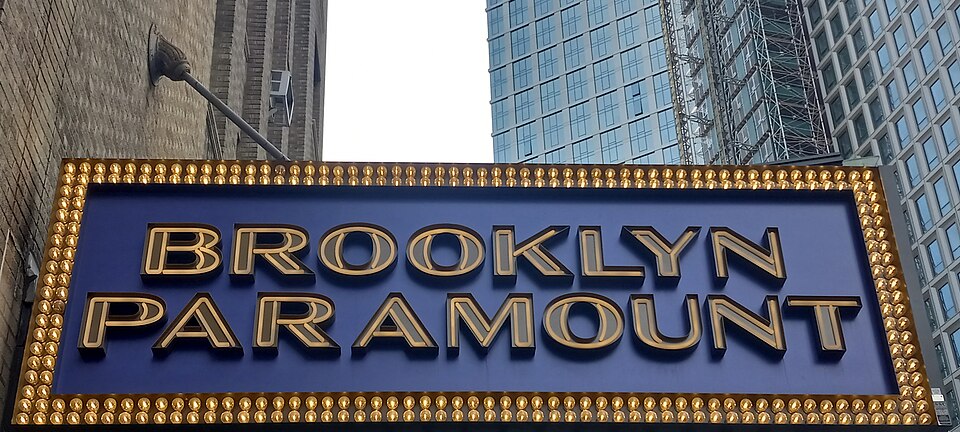
Brooklyn Paramount in Downtown Brooklyn, the restored palace venue that now anchors one of the borough’s strongest concert-night districts.
Quick Take — Who Brooklyn Paramount Is Best For
Brooklyn Paramount rewards concertgoers who care about where they are, not just what they are watching. If you want a more atmospheric, more visually striking venue than the average NYC club or GA hall, this room delivers. If you want the cheapest possible standing-room arrangement regardless of everything else, there are more bare-bones options in the city.
Concertgoers who want the venue to feel like an event, not just a container for a show. The architecture adds real value here.
If you want to see the full stage picture and take in the room simultaneously, an elevated position at Brooklyn Paramount delivers better than most mid-size NYC rooms.
Easy subway access, strong dining nearby, and a neighborhood with its own energy. This is a straightforward full-evening option for a Manhattan or Brooklyn-based night out.
If your only priority is being as close to the stage as possible in a raw standing crowd, there are more stripped-down rooms. The grandeur of this venue is not something you are paying for in that case.
Artists who have grown past club-level but do not need an arena. The room’s scale makes those shows feel appropriately big without losing the sense that the band is actually in the same space as you.
If you have never been, consider prioritizing an elevated position for at least part of the evening. The first time you see the full room from above is its own moment.
How Brooklyn Paramount Actually Works as a Room
Brooklyn Paramount is a historic movie palace turned concert hall, which means the bones of the space are not built to the logic of a purpose-built music venue. The room is tall and ornate, with decorated plasterwork, elaborate architectural detailing, and a vertical scale that most mid-size concert venues simply do not have. That scale changes how the space feels both when you are in the middle of it on the floor and when you are taking it in from above.
In broad terms, the room has two main experiential zones: the main floor, where the crowd is densest and the stage is closest, and elevated positions — balcony or mezzanine-style seating areas — where you trade proximity for a more composed view of both the stage and the room as a whole. The specific names and configurations of those areas may vary depending on the event, so the right approach is to understand what each zone delivers rather than to memorize a fixed map that may not match what you see when tickets go on sale.
In a standard black-box venue or a warehouse-style GA room, the only question is distance from the stage. At Brooklyn Paramount, there is a second variable: the room itself is worth looking at. An elevated position does not just give you a better sightline to the stage — it gives you the full visual of the restored palace around the stage. For some people that trade-off is worth more than a few rows of proximity. For others it is irrelevant. Know which you are before you buy.
The floor at Brooklyn Paramount works the way a general admission floor works at most mid-size venues — standing room, crowd density that increases as you move toward the stage, and a level of immersion in the performance that seated elevated positions do not match. When the room is full and the show is right for it, the floor energy here is genuine. But the floor also has the standard GA trade-offs: limited sightlines if you are not tall, competition for front positions requiring early arrival, and the physical cost of standing for several hours.
The elevated areas offer what the floor cannot: the full stage picture in one view, the ornate room visible above and around the stage, and a more relaxed physical experience. The distance is real — you are further from the performers — but the visual sweep of the room from above is one of the more striking things Brooklyn Paramount offers that other rooms in its size class simply do not have.
The Configuration Rule — Not Every Show Is Set Up the Same Way
This is the single most important thing to understand about buying tickets for Brooklyn Paramount: the venue operates in different configurations depending on the event. Some shows are general admission. Some are seated. Some may use a combination of both. The official venue accessibility page explicitly distinguishes between general admission events and seated events when describing how accessible seating works — which is a clear signal that the room’s configuration is not fixed.
This page is designed to help you interpret the event-specific seating chart, not to replace it. Before you purchase, always pull up the actual seat map for your specific show. The configuration you see will tell you whether the floor is GA standing, whether elevated positions are available as purchased seats, and which areas of the room are in play for that event. A page like this one cannot know what the chart will look like for your show — and anyone pretending otherwise is guessing.
General Admission Events
On GA nights, the main floor is open standing room — no assigned positions, first-come-first-served for proximity to the stage. Elevated or balcony areas may or may not be available as separate purchased sections depending on the event. For GA events, the venue offers a limited number of reserved accessible seats that can be requested by email in advance; those spots are held for 30 minutes after doors open. If accessibility is a consideration for you, contact the venue before the event — do not count on walk-up availability.
Seated Events
On seated nights, the room operates more like a theater, with assigned positions across the floor and elevated levels. Sightlines, row depth, and the relationship between sections become the relevant variables. For seated events, accessible seating is available through the standard purchase flow. The experience of a fully seated Brooklyn Paramount is meaningfully different from a GA night — quieter, more composed, and more conducive to taking in the room itself.
The Practical Implication
Your decision framework should shift depending on which configuration you are dealing with. For GA: arrival time, physical stamina, and tolerance for crowd density are the main variables. For seated: position, row, and proximity logic apply much as they do at a theater. The sections below are written to be useful for both — but knowing which type of event you are attending before you read the seating guide is essential.
Floor vs. Elevated — The Core Seating Trade-Off
The floor-versus-elevated decision at Brooklyn Paramount involves more variables than it does at most rooms its size, precisely because the room itself has visual value beyond just the stage. Here is how to think about it honestly.
Closest to the performers. Best for artists who work the front row, for shows where crowd participation is part of the experience, for fans who want to feel inside the show rather than watching it.
You lose the room. From the floor, the palace architecture is largely behind and above you. The ornate visual sweep that makes Brooklyn Paramount distinctive is much less present at stage level. You are in the crowd, not above it.
From above, you see both the stage and the room simultaneously. This is where the restoration of the palace really pays off visually — the full picture of performers in this space is only available from an elevated position.
Distance is real. Performer detail — facial expressions, small stage movements, the physical energy of being close — is reduced. You are watching the show more than you are in it.
Center floor positions — not packed against the stage, not buried in the back — give you reasonable proximity with some visual breathing room. On a lightly attended night this can be a strong spot; on a packed GA night it can be more chaotic than the elevated option.
For most shows, front rows of the elevated level — center position — offer the strongest combination of full stage view, room atmosphere, and practical comfort. Often better value than premium floor tickets for non-GA seated events.
When the floor is worth it
The floor makes sense if the artist is someone whose performance is best experienced at close range — where physical presence, direct crowd interaction, or the sheer volume and physicality of the show are central to what you came for. It also makes sense if you have the stamina for standing for several hours and the willingness to arrive early enough to secure a good position in GA configurations. If those trade-offs work for you, the floor energy at Brooklyn Paramount is legitimate.
When to consider the elevated option instead
If this is your first time at the venue, if you care about seeing the restored room as much as you care about proximity, or if physical comfort over a long evening matters to you — an elevated position is almost certainly the better choice. You will see more of what makes Brooklyn Paramount distinctive from up there than you will from the floor. And for artists whose shows have strong visual production design, the full-stage view from above reads considerably better than what you see through the backs of heads on the floor.
Best Spots by Type of Night
If you want maximum energy and you are willing to work for it
Arrive early, go to the floor, get as close to center as you can. Accept that you will be standing for the full show, that sightlines will depend on the crowd around you, and that the ornate room above you will mostly be out of frame. This is the pure concert experience, and it works well at Brooklyn Paramount for the right kind of show.
If you want to appreciate the venue as well as the performance
Go elevated, center. From a front row of the balcony or mezzanine level, you get the full picture — stage and room simultaneously. This is the option that distinguishes Brooklyn Paramount from a generic standing-room venue, and it is worth experiencing at least once before you commit to floor-only as your default.
If you want to avoid blocked views on a crowded night
Elevated positions offer more predictable sightlines than the floor. On a GA night when the room is packed, floor sightlines depend heavily on who ends up standing in front of you. From an elevated assigned seat, your view is fixed regardless of crowd density. The trade-off in proximity is often worth it for a sold-out show.
If you want a more relaxed concert night
Seated elevated positions give you a physically comfortable show. You are not competing for floor position, you are not standing for three hours, and you have more room to move around between sets. For a long evening, or for a group that includes people with different physical preferences, the elevated seating option changes the logistics considerably.
If you want the venue to feel genuinely special
Brooklyn Paramount’s restored palace atmosphere is most present from elevated positions. The decorated ceiling, the scale of the room, the visual detail of the architecture — all of it is more visible and more immersive from above. If you want the venue to feel like more than a room you happened to be in, go up.
How Brooklyn Paramount Compares With Other NYC Concert Rooms
Understanding where Brooklyn Paramount sits in the NYC concert landscape helps calibrate expectations before you arrive. This is not a universal scale — the right comparison depends on what you care about — but a few direct contrasts are useful.
Versus large arena venues
Brooklyn Paramount is mid-size, which means the largest artists by ticket demand tend to land in arenas instead. The advantage is proportional scale: you are genuinely in the same room as the performer, not watching a figure on a distant stage while following along on video screens. For mid-tier headliners, that scale difference matters considerably. Brooklyn Paramount can feel like an event without becoming an exercise in logistics.
Versus raw GA warehouse-style rooms
Brooklyn Paramount is architecturally richer than most warehouse-converted concert spaces in NYC. The restored palace interior is a genuine differentiator. If you have spent a lot of time in stripped-down venues where the aesthetic is bare walls and minimal lighting, Brooklyn Paramount will feel meaningfully different — and for some concerts that atmosphere adds something real rather than just decorative.
Versus classic seated theater venues
Brooklyn Paramount is more flexible than a fixed-layout theater. It can operate GA, which pure theatrical venues generally cannot. The trade-off is that it lacks the sightline precision of a purpose-designed theatrical space. But for concerts — where crowd energy, sound, and general atmosphere are at least as important as an unobstructed angle on every performer — that flexibility is usually an advantage.
Versus other Brooklyn concert nights
Brooklyn has a strong mid-size concert venue ecosystem. Brooklyn Paramount is at the more architecturally distinguished end of that range. If the venue as an experience matters to you — if you want to feel like where you are is part of the night — Brooklyn Paramount competes strongly. If the venue is irrelevant and only the show matters, the comparison becomes about capacity, lineup availability, and ticket price.
Night-Of Details — What You Need to Know Before You Arrive
Policies, bag sizes, coat check availability, and event-specific rules can change. Always check the official Brooklyn Paramount venue page and your specific event’s details before you arrive — especially for sold-out shows where entry logistics may be more tightly managed.
On arriving early
For GA events where floor position matters to you, arrival time is the variable you control. The earlier you arrive after doors open, the closer to the stage you can position yourself. Brooklyn Paramount’s ornate interior is also worth experiencing in its full pre-show state — the lighting, the room, the energy before the crowd fully fills the space. Coming 30 to 45 minutes after doors for a GA show lets you get a good position and take in the room before it gets densely packed.
For seated events, arrival early is less logistically critical for your position but still worth doing to take in the room before the house fills. Brooklyn Paramount is the kind of space where the pre-show experience has real value, and spending five or ten minutes in the venue before the lights drop costs nothing.
Accessibility at Brooklyn Paramount
Accessible main entrance
Brooklyn Paramount’s main entrance at 385 Flatbush Avenue Extension is accessible. Verify this detail directly with the venue before your visit if accessibility is a primary consideration, as entry logistics can vary by event.
Elevator access to all seating areas
The venue has elevator access to all seating levels, which means the elevated positions are reachable without stairs. This is a meaningful logistical advantage over venues where upper levels require stair-only access. Confirm elevator availability for your specific event before attending.
Accessible restrooms
Accessible restrooms are available throughout the venue.
General admission events — accessible seat requests
For GA events, Brooklyn Paramount offers a limited number of reserved accessible seats. These must be requested by email in advance. The venue holds those positions for 30 minutes after doors open. If you need accessible seating for a GA event, do not wait until the day of the show — contact the venue ahead of time to make the request. Walk-up availability cannot be assumed.
Seated events — accessible seating purchase
For seated events, accessible seating is generally available through the standard ticket purchase flow. If you cannot find accessible options online or have specific accommodation needs, contact the venue directly before purchasing.
If accessibility is a primary factor for your visit — whether for seating, entry, mobility, or other considerations — reach out to Brooklyn Paramount before the event rather than relying on assumptions. The venue’s official accessibility page and contact channels are the authoritative sources for current policies.
Build the Night — Brooklyn Paramount in Context
Brooklyn Paramount sits at the intersection of Flatbush Avenue Extension and DeKalb in Downtown Brooklyn — one of Brooklyn’s most transit-accessible neighborhoods and one of its best for pre-show dining options. The B, Q, and R trains stop directly across the street at DeKalb Avenue; the 2, 3, 4, and 5 trains are about a five-minute walk at Nevins Street. Getting here without a car is genuinely easy from most of Brooklyn and Manhattan, which makes it a practical anchor for a full evening.
For the broader picture of what the neighborhood offers — restaurants, hotels, and how to orient an evening in this part of Brooklyn — see our Downtown Brooklyn neighborhood guide. That page covers the full pre- and post-show context around the venue, including dining options and where to stay if you are making a night of it.
The venue has seven bars and light bites, but it is not a dining destination — come fed. There is enough within walking distance of the venue to eat well before most shows without having to rush. For specific restaurant and dining planning, the restaurants near Brooklyn Paramount guide covers your options. For transit logistics in more detail, see the how to get to Brooklyn Paramount guide.
Frequently Asked Questions
It depends on the event configuration and what kind of experience you want. For a GA night where floor energy is the priority, arrive early and position yourself center-floor at a depth that works for your crowd tolerance. For seated nights or for anyone who wants to see the full room, front rows of the elevated level at center position offer the strongest combination of sightlines, room view, and practical comfort. Check the live event-specific map before purchasing — the configuration varies.
It varies by event. Brooklyn Paramount operates in both GA and seated configurations depending on the show. Always check the ticket page for your specific event to see which setup is in use — the layout can be meaningfully different between the two.
Yes. The venue has elevated seating areas above the main floor — consistent with the historic palace design of the building. The specific naming and availability of those areas may vary by event. The venue confirms elevator access to all seating levels, so elevated positions are accessible without stairs.
Not exclusively. It operates in seated configurations for some events and general admission for others. It is not a fixed-layout room the way a Broadway theater is — the configuration is event-specific. Check the live seat map for your show before assuming either format applies.
For GA shows where floor position matters, 30 to 45 minutes after doors is a reasonable target to secure a good position without an extended wait. For seated events, arriving 20 to 30 minutes before the show gives you time to find your seat and take in the room before the lights go down — which at Brooklyn Paramount is genuinely worth doing. For sold-out shows in any configuration, give yourself extra time for entry.
The venue’s bag policy allows bags up to 12″ × 6″ × 12″. Bags larger than those dimensions may not be permitted. Verify the current policy on the official venue page before your show, as policies can be updated or tightened for specific events.
Yes. The main entrance is accessible, elevator access is available to all seating levels, and accessible restrooms are available throughout the venue. For GA events, a limited number of reserved accessible seats can be requested by email in advance — these are not available on a walk-up basis. For seated events, accessible seating is generally available through the standard purchase flow. Contact the venue directly if you have specific accommodation needs.
Yes — this is one of the stronger arguments for Brooklyn Paramount over comparable mid-size NYC rooms. The restored palace interior is genuinely distinctive, and the visual impact of a restored early-20th-century theater used as a concert hall is part of what the venue offers. If that kind of atmosphere matters to you, this room delivers it more consistently than most alternatives in its size class. An elevated seating position gives you the fullest view of the space.
The Short Version
Brooklyn Paramount is one of the more distinctive concert rooms in the city — a restored palace that closed in 1962 and reopened as a live venue in 2024, with an ornate interior that makes the question of where you sit more interesting than it is at most mid-size rooms. But the best Brooklyn Paramount experience comes from understanding the event setup first and choosing the kind of night you want, not just buying the first ticket you see.
For GA nights: arrive early, go to the floor if energy and proximity are the priority, or go elevated if you want the full room sweep and more predictable sightlines. For seated nights: front of the elevated level, center, is the strongest general-purpose choice. And either way — come early enough to take in the room before the show starts. It is worth it.
For the full Downtown Brooklyn context — dining, hotels, and how to orient an evening in the neighborhood — see our Downtown Brooklyn neighborhood guide.