

Terminal 5 — NYC Concert Seating Guide
Floor, upper levels, crowd intensity, and what to know before buying tickets at one of NYC’s biggest standing-room concert venues.
Terminal 5 is a large multi-level standing-room venue at 610 West 56th Street in Hell’s Kitchen, operated by The Bowery Presents. It holds around 3,000 people across three floors and regularly hosts mid-to-large touring acts that have outgrown the city’s smaller clubs but are not yet playing arenas. For a lot of visitors, it is the biggest non-seated concert venue they will have encountered in New York — and that scale changes how you should think about where to watch from.
This guide focuses on the practical room decision: floor versus upper levels, what each one actually feels like, what the tradeoffs are, and which choice fits different kinds of concertgoers. The right answer depends on the kind of show you are going to and the kind of night you want, not just on ticket price.
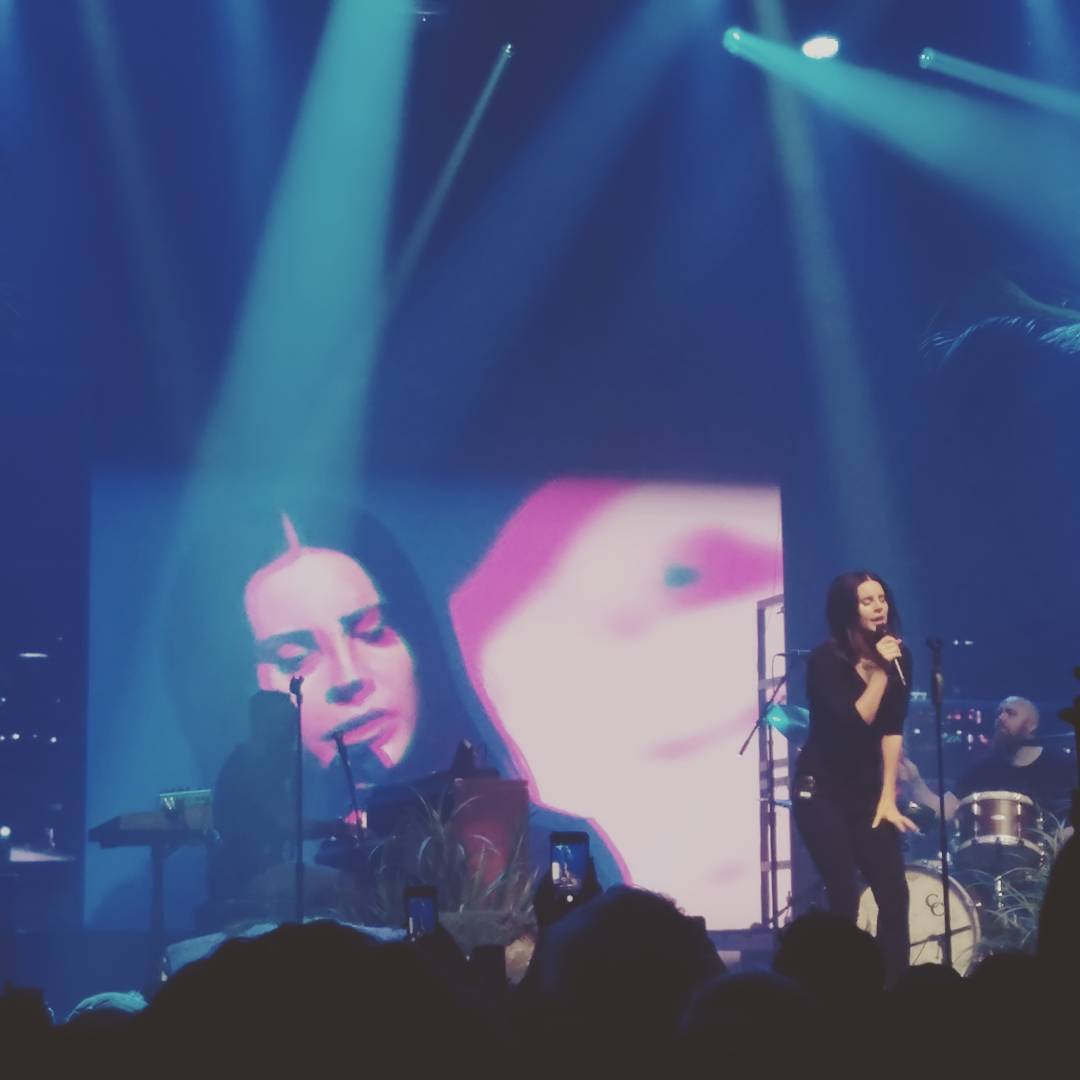
Terminal 5 during a live show, a strong look at the kind of floor-versus-upper-level room experience readers should think through before buying.
Quick Answer — Where to Watch at Terminal 5
This is where the crowd is densest and the show feels most visceral. Best for high-energy acts where you want to be inside the room rather than watching it from above.
You see the entire stage and stage production clearly, and the crowd below adds to the spectacle. Better for visually ambitious shows or acts where you want to take in the full picture.
If you are shorter or have concerns about sightlines, the upper-level rails are more reliable than standing at the back of the main floor, where you may be looking at the backs of taller people all night.
The upper levels thin out toward the back of each floor. You can still see and hear the show well while having more breathing room than the main floor allows at capacity.
Terminal 5 is predominantly general admission. For most shows, ticket price does not determine your position — arrival time does. Arriving thirty to forty-five minutes early makes a meaningful difference in where you end up.
The second level gives you enough elevation to understand the room and the show without committing to main floor intensity. A solid orientation point for a first Terminal 5 visit.
What Terminal 5 Is Actually Like
Terminal 5 is not a theater, not a club, and not an arena. It occupies its own category: a large standing-room concert hall where the scale is ambitious but the experience stays fundamentally physical and crowd-driven. The main floor is wide, the ceilings are high, and on a sold-out night the energy is genuine. But the room also has edges — literal ones — where the experience gets noticeably worse, and it takes three floors to fill.
Terminal 5 works best for mid-tier touring acts and artists who can fill a room this size without getting lost in it. The sound system is capable, the stage is large enough to support serious production design, and a full house here feels like an event rather than just a show. The tradeoff is that the room punishes passive positioning — hanging at the back of the main floor or on an upper level without good sightlines gives you a noticeably lesser version of the night. The venue rewards people who think about where they want to be before they walk in.
The building stacks three levels above the main floor entrance, each with its own standing area and front-facing rail. Event setup and access to specific levels can vary by show — for some events, certain levels have separate ticketing or VIP access. Check the specific event page before assuming all three levels are general access on the night you are attending.
Sound at Terminal 5 is generally strong from the center and front of each level. The room can be loud toward the back of the main floor — not in a punishing way for most shows, but worth knowing if sound quality matters to you more than crowd proximity. Upper-level positions tend to give you slightly more acoustic clarity than the rear of the main floor, where crowd noise can blend with the mix.
Floor vs Upper Levels at Terminal 5
This is the decision that shapes the entire night. The main floor and the upper levels are genuinely different experiences at Terminal 5 — not just different distances from the stage, but different crowd textures, different sightline realities, and different relationships to the show. Understanding the tradeoff before you buy is worth the few minutes it takes.
| Factor | Main Floor | Upper Levels |
|---|---|---|
| Energy | Highest — you are inside the crowd, physically part of the room’s energy | Cooler — you are watching the room as much as participating in it |
| Sightlines | Strong from center-forward; degrades significantly toward rear and sides as crowd fills in | Reliable from front rail positions on any level; elevation compensates for distance |
| Crowd intensity | High at capacity — expect close contact, movement, heat | Noticeably lighter; upper levels never fill to the same density as the main floor |
| Comfort | Variable — depends heavily on show and crowd size; can be physically taxing on packed nights | Generally more comfortable; room to move, easier to navigate |
| Stage visibility | Excellent up close; the production can feel overwhelming in the best way | Full-stage picture visible from upper levels — better for productions with complex staging |
| Sound | Immersive and physical; the bass is felt, not just heard | Cleaner mix from elevated positions; less chest-level impact |
| Flexibility | Harder to move once the show is packed in; finding a new position mid-set is difficult | Easier to shift position; less dense crowds mean more mobility |
| Best for | High-energy shows, artists you love, crowds that are part of the experience | Viewing-focused shows, first visits, concertgoers who want the room without the intensity |
The main floor at Terminal 5 puts you inside the concert — the crowd is the environment and the intensity is real. The upper levels put you above it, with a cleaner view and less physical pressure. Neither is the wrong choice, but they produce genuinely different nights. The question to ask yourself before buying is whether you want to feel the room or see it. For a lot of shows at Terminal 5, the floor is the better answer. For shows with ambitious visual production, or for concertgoers who prioritize sightlines and comfort over crowd immersion, the upper levels earn their place.
A note on upper-level quality variance
Not all upper-level positions at Terminal 5 are equal. The front rail of each upper level gives you a clear sightline and a strong sense of the stage — worth arriving early to claim. Positions toward the back of the upper floors, especially the third level, can feel disconnected from the show. The elevation helps your view, but the distance starts to work against you. Front-rail upper level is a good strategic choice; rear third-level is not.
Best Spots at Terminal 5 by Concertgoer Type
For maximum energy
Main floor, center-forward, arrived early enough to hold position. This is the Terminal 5 experience in its most complete form — the crowd is dense, the sound is physical, and you are inside the room rather than watching it. Wear something you do not mind getting warm in, and do not bring more than you can fit in a bag that stays on your back.
For a full-stage view without the crush
Second or third level, front rail. The elevation clears the crowd and gives you the full stage picture — useful for shows with elaborate production design, lighting rigs, or staging that unfolds horizontally across a wide set. You trade physical intensity for perspective, and for many shows that is the right call.
For shorter concertgoers
Upper-level front rail positions are more reliable than the main floor for anyone concerned about sightlines. The main floor at a packed Terminal 5 show is not a welcoming environment if you are not tall — upper levels give you reliable elevation over the crowd in front of you. This is one of the clearest cases where upper level outperforms floor.
For first-time Terminal 5 visitors
Second level, front-facing, middle section. You get enough elevation to read the room and understand the stage without committing to floor-level intensity. If you love it, you know the floor is an option next time. If you are more comfortable with breathing room, you have made the right choice from the start.
For concertgoers who care about sound quality
Second or third level center has cleaner acoustics than the rear main floor on most nights. The mix tends to be better from elevated positions, and you are not dealing with the same rear-floor sound bleed that can muddy the experience when the room is full. If the music matters more to you than the crowd energy, consider trading up.
For concertgoers who want to move around
Upper levels at any Terminal 5 show give you significantly more mobility than the main floor at capacity. If you are the type who likes to drift between bars, step out for a moment, and come back to a position — the upper levels accommodate that more easily than a packed main floor does.
For artists you love deeply
Get on the main floor, arrive early, and claim your position. Terminal 5 at its best is a place where the crowd and the artist are in the same room having the same experience. That only happens from the floor, and it is worth the intensity for the right show.
What to Know Before Buying
Terminal 5 event configurations vary by show. Level access, VIP sections, GA versus reserved sections, and standing-room layouts are not fixed venue-wide — they depend on the specific event. Always check the event page before buying to confirm what is actually included with the ticket you are looking at.
Arrival time matters more than you might expect
Terminal 5 is predominantly general admission. For most shows, there is no meaningful ticket-price difference between a position near the front of the main floor and a position at the back. What determines where you end up is when you arrive. If floor position matters to you, arriving thirty to forty-five minutes before doors open is not excessive — for sold-out shows, lines form earlier.
Age restrictions are show-specific
Current Terminal 5 listings run the range: All Ages (16 and under with an adult), 16+, and 18+ shows all appear in regular rotation. Do not assume the venue runs a single age policy. Verify the specific show before buying tickets if this is a consideration for your group.
Upper-level quality degrades toward the back
The upper floors at Terminal 5 are not uniformly good. Front-rail positions are worth taking. Rear positions on the upper floors — especially the third level — can feel frustratingly disconnected from the show. If you are choosing an upper level, factor in early arrival here too. The front rail fills first.
The main floor has its own limitations
At capacity, the Terminal 5 main floor is physically demanding in a way that not every concertgoer enjoys. Heat, close contact, and limited ability to move once the room fills are real factors. If any of those is likely to affect your night, the upper levels are not a consolation prize — they are the smarter choice.
Check the show’s production scale
Not every Terminal 5 show benefits from floor immersion equally. For a DJ set or an EDM show where the entire crowd is the experience, the floor is right. For a rock act with a detailed visual production, the upper level gives you a better read on what is actually happening on stage. Let the nature of the show inform the level choice.
Plan the Night Around Terminal 5
Terminal 5’s location on 11th Avenue at 56th Street puts it in a part of Hell’s Kitchen that is less dense with pre-show options than the blocks immediately around Times Square — but the neighborhood has solid options once you know where to look, and the logistics of getting there are straightforward from most of Manhattan.
Getting there
The A, C, E trains to 59th Street–Columbus Circle drop you about a ten-minute walk south and east of the venue. The 1, A, C, B, D train to 59th Street is another option. The far-west location means taxis and rideshares are often the most practical choice late at night — the 11th Avenue corridor is not as saturated with late-night transit as Midtown’s eastern grid. For full details on subway options and getting to venues on the west side of Hell’s Kitchen, see the transportation guide for Midtown West.
Dinner before the show
Hell’s Kitchen has a wide range of pre-show dining in the blocks east of the venue — the 9th and 10th Avenue corridors have reliable options at multiple price points, all accustomed to theater and concert-crowd timing. Plan to eat in that corridor rather than immediately around the venue. See the restaurants near Broadway and Hell’s Kitchen guide and the pre-show dining strategy guide for timing and specific options.
Hotels nearby
The Times Square and Midtown West corridor has a high concentration of hotels within reasonable distance of Terminal 5. See the hotels near Broadway and Midtown West guide for well-positioned options across price points.
Parking
Street parking is limited in this part of Hell’s Kitchen, and the venue draws large crowds for sold-out shows. Garage parking is available in the surrounding blocks, but booking in advance for weekend shows is worth doing. See the parking near Broadway and Midtown West guide for garage options in the area.
Frequently Asked Questions
It depends on what you want from the night. For maximum energy and crowd immersion, center-forward on the main floor is the right choice — arrive early to claim a position before the room fills in. For a full-stage view with less crowd intensity, the front rail of the second or third level gives you reliable sightlines and more breathing room. For first-time visitors or shorter concertgoers, the second level front rail is generally the safest recommendation: good sightlines, elevated above the crowd, and less physically demanding than the main floor at capacity.
Neither is categorically better — they produce different nights. The floor is more intense, more immersive, and more physically demanding. The upper levels give you a cleaner sightline, less crowd pressure, and an elevated view of the full stage production. For high-energy shows where the crowd is part of the experience, the floor is worth it. For shows where production design and visibility matter more, upper levels earn their place. Knowing which kind of night you want is the key decision before buying.
Yes. Terminal 5 is primarily a standing-room venue across all levels. Some events include limited seating or VIP configurations with seated areas, but the default experience across the main floor and upper levels is standing. Verify the specific event setup before buying if seating is important to you.
The upper levels are more reliable than the main floor for shorter concertgoers who want clear sightlines. On a sold-out main floor, the crowd will obscure views from rear positions for anyone who is not tall. The front rail of the second or third level gives you elevation over the crowd and a more consistent view of the stage. If you are deciding between the rear of the main floor and an upper-level front position, take the upper level.
No. Age restrictions at Terminal 5 vary by event — current listings show All Ages (16 and under with adult), 16+, and 18+ shows all in rotation. There is no single venue-wide age policy that applies to every show. Verify the specific event listing before buying tickets if age is a consideration for your group.
Yes, with the right preparation. Terminal 5 is a genuine NYC concert experience — large enough to feel like an event, with a strong roster of touring acts and a room that works well when you are positioned correctly. For first-timers, the second level is the recommended starting point: you get a clear view of the room and the stage without committing to the intensity of a packed main floor. Once you know the room, you can make a more informed choice next time about where you actually want to be.
Terminal 5 holds approximately 3,000 people across its main floor and three upper levels. That puts it among the larger standing-room concert venues in New York City — significantly bigger than the city’s 1,500-cap mid-size clubs, but well short of arena scale. It is a venue where large touring acts can play without the performance feeling abstracted, and where the crowd size adds energy without the anonymity of a 15,000-seat arena.
Yes — more than at most venues. Terminal 5 is predominantly general admission, which means ticket price does not determine your position in the room. Arrival time does. For the main floor, arriving thirty to forty-five minutes before doors gives you a meaningful advantage in choosing where you end up. For upper-level front-rail positions, the same principle applies — those fill up before the show and are not always available once the room is packed in. If position matters to you, factor arrival time into your plan.
Terminal 5 in Brief
Terminal 5 is one of New York’s most significant mid-large concert rooms — a three-floor standing-room venue that draws serious touring acts and fills to an energy that smaller clubs cannot produce. The room rewards people who think about where they want to be. The main floor at its best is one of the better standing-concert experiences in the city. The upper levels, when used well, give you a perspective on the show that the floor cannot provide.
The key to Terminal 5 is understanding that your position in the room is part of the ticket decision. Floor versus upper level is not a small variation — it shapes the entire night. Know which one you want before you buy, verify the event-specific setup, and arrive early enough to land where you intended.
For broader NYC concert planning, the concert venues guide and the NYC concert seating guide are the right starting points. For dinner, transit, and logistics around the venue, the pre-show dining guide and Hell’s Kitchen and Midtown West planning guides have what you need.