

UBS Arena Seating Chart: Best Concert Seats, Seat Views & Sections
Not a single seat more than 130 feet from the stage. Here’s how to choose the right one for your kind of concert night — floor, lower bowl, upper level, and everything in between.
Quick Answer: Best Seats at UBS Arena by Priority
The UBS Arena seating chart is most useful when you treat it as a concert-specific decision tool rather than a generic arena map. The permanent bowl sections stay consistent, but the floor, stage position, pit, runways, and seats released beside or behind the stage can change by tour. That is why this guide pairs the UBS Arena seat map with concert-specific advice on best seats, seating views, rows, seat numbers, and premium club options.
UBS Arena Seating Views — How to Read a “View From My Seat”
Searches for UBS Arena seating view, UBS Arena view from my seat, and view from my seat UBS Arena all run into the same limitation: a photo from one concert does not automatically predict the view for another. The permanent bowl angle may be identical, but the tour can move the stage, add a runway, use a center-stage setup, change the floor from reserved seating to GA, or open sections that were previously behind the production.
What to Match Before You Trust a Seat-View Photo
First match the section and row. Then make sure the photo came from a show with the same basic stage orientation as your concert. A clear-looking lower-bowl side view from an in-the-round show can become a severe side angle at an end-stage show. The same warning applies to floor-seat photos, where a runway or pit can completely change what “close” means.
For the most reliable decision, use the event-specific seating chart for your show together with the level-by-level guidance on this page. Treat user photos as context for height, rake, distance, and general angle — not as a guaranteed preview of the exact production.
How UBS Arena Feels as a Concert Room
UBS Arena was described at opening as “designed for music and built for hockey” — and it is not marketing language. The arena opened in November 2021 as one of the few major-league arenas in the region built specifically for hockey from the ground up, not adapted from a basketball facility. That distinction matters for concertgoers in ways most people do not realize before they walk in.
In a basketball-first arena, the room is typically built tall and wide to accommodate the court, which produces the cavernous, echo-prone sound environment that makes many arena concerts feel muddier than they should. UBS Arena went the other direction. Working with acoustic consultants Wrightson, Johnson, Haddon & Williams, the designers built in fiberglass baffles across roughly 80 percent of the ceiling to absorb sound, installed bass traps in the upper corners to contain low-frequency rumble, and covered every vertical surface between seating sections with absorptive acoustic treatments. Every seat in the venue is upholstered — not a cost decision, but an acoustic one, chosen to prevent the hollow bounce that plagues arenas at less-than-capacity shows.
The result is one of the better-sounding large arenas in the New York metro area. Sound checks at UBS Arena are notably cleaner than at comparable venues. The roof sits just 93 feet above the floor — only three feet higher than the old Nassau Coliseum, despite having thousands more seats — which keeps the room feeling intimate relative to its capacity. And according to the venue’s own design documentation: no seat in UBS Arena is more than 130 feet from the stage.
What this means practically for seat choice: UBS Arena is a room where the upper level is genuinely competitive. The acoustic engineering means sound quality does not degrade dramatically as you move back — a real problem at many older arenas. The steep, hockey-optimized bowl means upper-level sightlines are often better than at basketball-converted venues. And the 130-foot maximum distance guarantee means that even the furthest seat is not far in absolute terms.
For comparison: Barclays Center and Madison Square Garden are both basketball-first buildings adapted for concerts. Both have higher ceilings and more problematic concert acoustics. UBS was built the other way around. If you have been to either of those venues and came away feeling like the sound was muddy or the room felt impersonal, UBS Arena will feel different — cleaner, tighter, more like the show was meant to be heard.
UBS Arena Seating Chart by Zone — Floor, 100, 200 & 300 Levels
UBS Arena’s seating breaks into four main tiers for concerts, each with meaningfully different tradeoffs. The sections are numbered continuously around the arena: 100-level wraps the lower bowl, 200-level is the mid-tier mezzanine, 300-level is the upper bowl. Floor sections are temporary — brought in specifically for concerts in numbered sections (typically 1–9, varying by show) on the arena floor itself.
Floor / Pit
Temporary sections on the arena floor, closest to the stage. For end-stage setups, sections 1–3 are nearest the stage. Can be assigned seating or General Admission standing depending on the show. No elevation — flat floor means forward rows are important.
Closest. Most energetic. Least comfortable.Lower Bowl — 100 Level
Sections 101–122 wrap the arena at floor level. Sideline sections (103–105, 114–115) face the stage most directly for end-stage concerts. End sections (101, 107–111, 118–121) are at stage-adjacent angles. Corner sections (102, 106, 112, 117) split the difference. Rows run 1–27 or 1–28 in most sections.
Best balance of proximity, sightline, and comfort.Mezzanine — 200 Level
Mid-tier sections 201–231. Sideline sections (204–208, 219–223) face stage most directly. End sections (211–215, 227–231) are behind or beside the stage for end-stage shows. Rows run 1–5 in most areas. Compact level — not a deep upper bowl, more of a true mezzanine with relatively short rows.
Good value zone. Strong angles from center sections.Upper Bowl — 300 Level
Sections 301–326 form the highest tier. Sideline sections (304–308, 319–323) face the stage. End sections (312–315) sit behind the stage for end-stage shows. Center sections in the 300 level are where upper-bowl value is strongest at UBS — the acoustic engineering and 130-foot max distance keep these seats in the conversation.
Best value. Surprisingly competitive due to room acoustics.The Stage Setup Variable
This is the single most important thing to understand before buying floor or end-section tickets at UBS Arena: concert setups vary significantly by show. UBS Arena hosts end-stage concerts (stage at the north end near sections 101 and 118), center-stage concerts (stage in the middle of the floor, often in the round), General Admission floor shows, and assigned floor shows — sometimes within the same touring cycle for different artists.
The UBS Arena concert seating chart layout changes by tour. For end-stage setups — the most common configuration — the best-value floor tickets are in sections 1–3 (directly in front of the stage) and the worst-value floor tickets are in sections 7–9 (behind the stage looking back). For center-stage or in-the-round setups, floor position matters less because the stage rotates visibility. Always verify the specific show’s floor configuration before assuming floor section 8 or 9 is worth what end-stage floor section 1 would cost.
Reading the UBS Arena Seating Chart
The UBS Arena seating chart runs on a simple three-digit logic once you know it: the first digit tells you the level (1 for lower bowl, 2 for mezzanine, 3 for upper bowl), and the section number tells you position around the bowl. Sideline sections in the 103–105 and 114–116 range face the stage most directly for end-stage shows. Pull up the UBS Arena virtual venue tool or the UBS seat map for your specific event before buying — floor and end-section layouts change by show, but the UBS seating chart and UBS seating map bowl numbering above stays consistent year-round.
UBS Arena Seating Chart With Seat Numbers & Rows
If you are comparing a UBS Arena seating chart with seat numbers or a UBS Arena seating chart with rows, use the live event map as the final reference. Permanent bowl section numbers remain stable, but exact row availability, production kills, temporary floor sections, and concert-specific seat numbering can change with the setup.
How to Use Rows at UBS Arena
Rows matter differently by level. On the flat concert floor, being farther forward can materially improve sightlines because there is no permanent elevation between rows. In the lower bowl, a few rows of elevation can improve the stage picture without making the performance feel distant. In the compact 200 level and upper 300 level, the section’s angle to the stage generally matters more than chasing the absolute lowest row number.
Seat Numbers: Center vs Aisle vs Extreme Side
Seat numbers are most useful after you have chosen the right section and row. A low or high seat number by itself does not tell you whether you are closer to the center-facing side or the extreme stage-side edge of a section. Use the interactive map to see where your exact seat falls within the section, especially for side-stage and corner sections where a handful of seats can noticeably change the viewing angle.
The practical order is: choose the correct concert configuration, then the section, then the row, and only then the exact seat number. That prevents a technically “better” row or seat number from pulling you into a much worse angle.
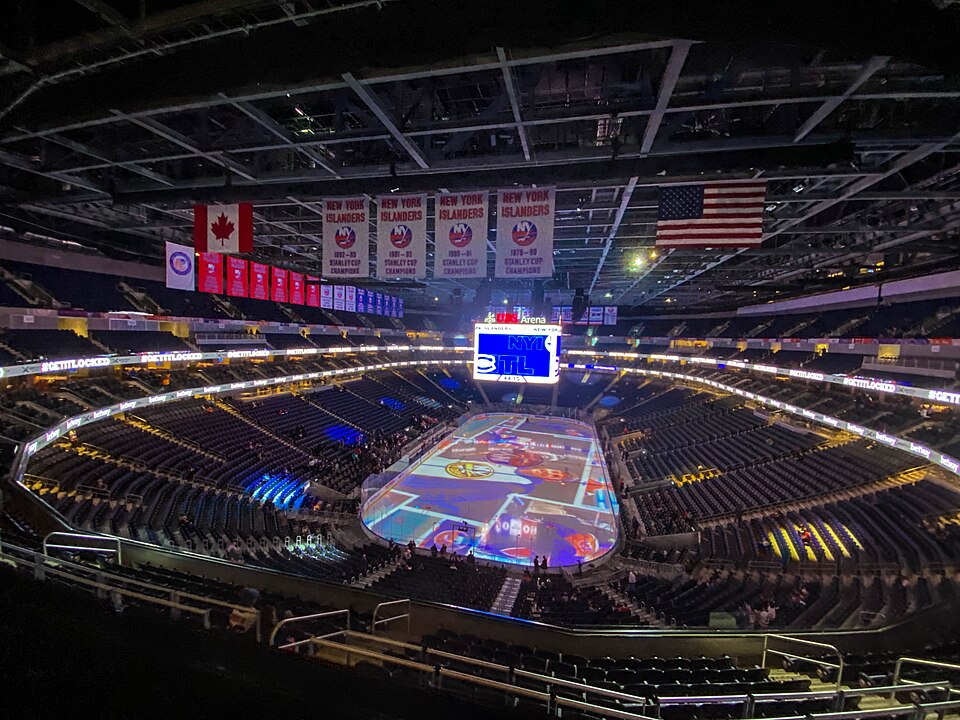
An interior view of UBS Arena, a fitting lead image for a seating guide built around sightlines, seat value, and concert-night strategy.
Best Concert Seats at UBS Arena — Floor vs Lower Bowl vs Upper Level
Floor Seats
Floor seats at UBS Arena are temporary sections — brought in for concerts and removed for hockey. For end-stage shows, the floor sections closest to the stage (1–3) are genuinely excellent: you are as physically close to the performance as the venue allows, surrounded by the crowd energy that the bowl cannot replicate, and the acoustic engineering means sound at floor level is clean rather than muddy. For General Admission shows, the floor becomes a standing crowd — if you want to be in the front third, you arrive early and hold your position.
The limitation of floor seats is honest: there is no elevation. The floor is flat. If the person in front of you is significantly taller, or if everyone around you stands on their chair (common for GA shows), your view of stage-level details shrinks. The closer you are to the stage, the more this matters in reverse — at sections 1–2, you are so close that you are looking slightly up at the stage, which is often preferable to watching through heads. Further back on the floor, say sections 5–7, you are far enough from the stage that the lower bowl often delivers a better visual experience with its natural elevation advantage.
Best for: GA standing shows where energy and proximity are the whole point. Assigned floor sections 1–3 for end-stage shows where you want the closest seat possible. Less ideal for: seated floor sections 7–9 at end-stage shows — these can face the back of the stage or require awkward sightline angles.
Lower Bowl — 100 Level
For most concerts at UBS Arena, the lower bowl is where the strongest overall seat experience lives — not necessarily the most exciting, but consistently the most satisfying across a wide range of shows. The elevation gives you a clear line over the crowd on the floor, the proximity keeps the performance detailed and human-scale rather than distant, and the acoustic treatments mean sound quality here is excellent. UBS Arena’s hockey-first bowl design also means the lower bowl is steeper than a basketball-converted arena — you feel closer to the stage than comparable section numbers at MSG or Barclays.
For end-stage concerts, the sideline sections facing the stage most directly are the prime lower bowl territory — you have a straight-on view of the performance rather than an angled one. Corner sections trade some direct sightline for a slightly more affordable price point. End sections behind or beside the stage are the lower bowl territory most people regret — proximity does not help when the angle is poor.
Best for: almost every type of concert. Seated pop shows, R&B, country, rock, comedy — the lower bowl works cleanly for all of them. For a couple making an occasion of the UBS Arena night, the lower bowl delivers the experience without the energy-management required on the floor.
Upper Bowl — 200 and 300 Level
This is where UBS Arena’s acoustic engineering pays off most clearly for budget-conscious concertgoers. At most arenas, the upper level is where the experience degrades significantly — sound bounces, distances feel punishing, and the show loses its intimacy. At UBS Arena, the 93-foot ceiling, fiberglass sound baffles covering 80 percent of the ceiling, and upholstered seating throughout all work together to keep the upper bowl competitive in a way it is not at many older venues.
The 200 level at UBS Arena is more accurately described as a mezzanine — compact rows (typically 1–5 in most sections), not a deep upper bowl. Center mezzanine sections facing the stage offer a solid elevated view with meaningfully less price than the lower bowl. The 300 level is the true upper bowl, and in the center facing-stage sections it still benefits from the room’s acoustic design. The full-room perspective from up top also suits certain show types particularly well — big production concerts with elaborate stage design, lighting, and video walls read better from elevation than they do from the floor.
Best for: budget buyers, anyone bringing a group where total ticket cost matters, and shows with elaborate production design where the full-stage picture matters more than facial detail. Avoid end sections in the 200 and 300 levels for end-stage concerts — the angle gets difficult and the distance adds up.
DIME Club UBS Arena — Premium Seats, View & Entrance
The DIME Club — also written as Dime Club UBS Arena, UBS Arena Dime Club, or simply UBS Dime Club — is UBS Arena’s dedicated premium space, offering club seats with bar access and a club-style environment paired with bowl-level sightlines, sitting above a standard ticket without requiring a full suite purchase. It’s the right call for a splurge night where the extras (space to move around, a proper bar, a calmer crowd) matter as much as the seat itself.
DIME Club has its own dedicated entrance separate from the general arena gates. The UBS Arena Dime Club entrance is worth knowing before the show so you’re not searching for it in a crowd at first pitch. Check your ticket or the arena’s day-of signage for the specific entrance nearest your section; club-level entrances are typically marked separately from the main concourse gates.
For buyers searching DIME Club UBS Arena, UBS Arena DIME Club, or UBS Dime Club, the key question is whether the premium club environment is worth more to you than moving closer to the stage in a standard section. Compare the actual concert sightline from the club seat against a similarly priced lower-bowl ticket before assuming the premium label automatically means the best view.
Best for: splurge nights, birthdays, anyone prioritizing the full experience over pure proximity to the stage.
The Stat That Changes How You Think About UBS Arena
According to UBS Arena’s official design documentation: no seat in the venue is more than 130 feet from the stage. At a 19,000-seat arena, that is a genuinely remarkable design constraint. For context, at Madison Square Garden — a 20,000-seat arena — upper-level corner sections can be significantly further from the stage, with the acoustic challenges that come from a taller, harder-surfaced room.
The practical implication: if you have ever felt that upper-level seats at a major arena made the show feel remote and tinny, UBS Arena is worth recalibrating against. The deliberate acoustic design — 80% ceiling coverage with absorptive baffles, bass traps, upholstered seating, absorptive vertical surfaces — keeps the room tighter and the sound cleaner than its size would suggest. Upper-level center sections at UBS Arena often out-perform their equivalent at venues with better reputations for concert seating.
Best Seats at UBS Arena by Type of Concertgoer
| Your Priority | Best Seat Zone | Why It Works |
|---|---|---|
| First-timer wanting the safest choice | Lower bowl sideline, rows 5–15 | Direct stage view, comfortable elevation, easy concourse access, no floor crowd navigation required |
| Budget buyer maximizing value | Upper bowl center (300-level, 304–308 or 319–323) | Acoustic engineering keeps sound quality competitive; full-room view; meaningful price difference from lower bowl |
| Couple making a night of it | Lower bowl center or mezzanine (200-level) center | Good sightlines, comfortable seats, full arena experience without floor energy management |
| Energy seeker / GA standing show | GA floor, arrive early for front third | Floor is where the crowd energy lives; proximity and crowd are the whole point |
| Assigned floor — close as possible | Floor sections 1–3 for end-stage shows | These are the closest permanent seats to the stage; only worthwhile for end-stage setups |
| Production-focused / big visual show | Upper or mid-level center | Full stage picture reads better from elevation; lighting rigs, video walls, and production design are seen whole |
| Splurge buyer wanting premium experience | DIME Club or UBS Club premium options | Bar access with bowl views; elevated experience beyond just proximity; club-style environment |
| Group of 6+ keeping cost manageable | Upper bowl center or mezzanine end sections | Price per ticket drops significantly; group can sit together without premium cost |
| Comfort-first, detail-optional | Lower bowl corner or mid-section | Angled but close; comfortable seats; no floor trade-off; not paying full center premium |
How Show Type Changes the Calculus
Seat choice at UBS Arena is not one-size-fits-all across concert types. A General Admission standing show — a rock act, a K-pop group with a passionate floor crowd, a DJ-forward performance — rewards floor tickets in a way a seated production pop show does not. For GA shows, the floor is where the show lives; the lower bowl is where you watch the floor. For a fully seated arena pop concert with elaborate lighting, screen design, and stage production, the lower bowl or even the upper center often delivers a more satisfying experience than being so close to the stage that you cannot see the full picture. Know what kind of show you are attending before deciding which seat type serves it.
When the “Best” Seat Is Not the Most Expensive One
UBS Arena is one of the cleaner rooms in the metro area for this argument — that the most expensive seat is not always the best seat for the show you are seeing. A few scenarios where this is particularly true:
When Lower Bowl Beats Floor
- Seated production concerts where the full stage picture matters more than proximity
- Shows where floor sections 5–9 are behind or beside the stage for end-stage setups
- Any concert where you prefer a seat to standing crowd energy
- Shows where the artist uses elaborate lighting, video walls, or stage design that reads better from elevation
- When you are making a night of it with dinner and transit effort — the lower bowl rewards the investment without the floor crowd trade-off
When Upper Level Beats Expectation
- Any show at UBS Arena where you fear the upper level will sound bad — the acoustic design actively counters this
- Full-production concerts where the 360-degree view of lights, screens, and staging makes the full picture clearer
- Budget shows where price difference between upper center and lower bowl is $80–$150 per ticket
- Groups of 4+ where the total savings across tickets is substantial
- First visits where you want to see the whole room and understand the venue before buying premium next time
The single biggest value trap at UBS Arena is paying floor-section prices for an end-stage concert and landing in sections 7–9, which sit at or behind the stage. At that point, you have paid floor-adjacent pricing for a seat that looks at the back of the production. A lower bowl section facing the stage directly will be a better experience for a lower or equivalent price. Always check the specific floor configuration for your show before assuming all floor sections face the performance.
The UBS Arena night is also a destination effort — the LIRR, parking, dinner, the overall trip. When you have already invested in getting there, the seat choice starts to look different. The visitors who feel most satisfied with their UBS Arena experience are often those who spent slightly more on a lower bowl sideline seat rather than cutting the ticket cost with a compromised floor or end-section position. The trip itself is the bigger investment. The seat quality is where you control how much you enjoy it.
How Seat Choice Fits the Full UBS Arena Night
Because UBS Arena is a destination venue — LIRR from Manhattan, driving from Long Island, parking logistics, pre-show dinner — the seat decision is actually part of a larger night-out plan. A few connections worth making explicitly:
Seat Tier and Arrival Timing
Floor ticket holders often need to arrive earlier to secure a good standing position for GA shows, or to navigate the floor sections before filling crowds arrive for assigned seats. Lower and upper bowl tickets have fixed seats — arrival timing is more flexible. If your night includes dinner at Belmont Park Village or at a nearby restaurant before the show, build in realistic arrival time for your seat type. For GA floor, dinner needs to end earlier than it does for an upper bowl section. The restaurants near UBS Arena guide covers pre-show dinner timing for each type of plan.
Seat Tier and Post-Show Logistics
Upper bowl sections on the concourse level typically exit faster than floor or lower bowl after a sold-out show — concourse access is more direct and the crowd density is lower. Floor ticket holders are last out on most nights. If you are catching a specific LIRR train after the show, or trying to beat parking lot traffic, the upper bowl can be a strategic advantage for exit speed. The full transportation guide covers post-show exit strategy in detail.
Ticket Tier and the Overnight Question
If the night is built around a premium lower bowl experience — a couple spending on a special show — that investment profile often pairs naturally with staying overnight at the Garden City Hotel or another nearby property rather than rushing a late train home. The seat, the dinner, and the hotel become a package decision. If you are buying upper bowl tickets on a budget, the train home after the show is usually the right call. The hotels near UBS Arena guide covers both scenarios. For ticket timing and buying strategy, see when to buy concert tickets.
What Most People Get Wrong About UBS Arena Seats
Assuming floor is always the best seat in the house
Floor sections at UBS Arena for end-stage concerts range from excellent (sections 1–3, directly in front of the stage) to genuinely bad (sections 7–9, behind or beside the stage). The floor designation alone does not tell you whether the seat faces the performance. Always check the specific concert’s floor configuration before assuming a floor ticket is premium. For many seated shows, lower bowl center rows 1–10 deliver a better experience than floor sections 5–9 at a similar or lower price.
Writing off upper level without accounting for the acoustic design
UBS Arena was built with acoustic engineering that most venues do not have. The 80% ceiling coverage with fiberglass sound baffles, the upholstered seating throughout, and the deliberately low 93-foot roofline keep sound quality competitive in the upper bowl in a way that comparable sections at MSG or Barclays often do not. If your last upper-level arena experience was at an older or basketball-primary venue, UBS Arena’s upper center sections will likely feel better than expected — sometimes significantly so.
Not checking the show’s specific layout before buying
UBS Arena hosts end-stage, center-stage, GA floor, assigned floor, and hybrid configurations across different concerts. The same section 8 floor ticket is excellent for a center-stage in-the-round show and terrible for an end-stage show. Check the specific show’s seating chart — not a generic UBS Arena concert chart — before purchasing floor or end-section tickets. Ticketmaster and other platforms show the specific configuration for each event.
Ignoring angle in favor of raw proximity
A lower bowl corner section that is 15 rows from the stage at a 45-degree angle is often a worse experience than a sideline section in row 20 with a direct stage view. Proximity without angle produces a seat where you spend the show looking at the side of the performance. For end-stage concerts, sideline sections facing the stage directly (103–105 on the stage side, their equivalents across the bowl) are almost always better value than similarly priced corner or end sections, even if those end sections are technically closer to the stage.
Not matching seat type to the kind of show
GA floor for a rock show is one of the best concert experiences available. GA floor for a seated theater-style R&B performance is an upright position in a crowd that may or may not all be standing, with worse sightlines than the lower bowl above you. Similarly, upper level center is excellent for a production-heavy spectacle show and mediocre for an intimate acoustic performance where facial expression and stage connection matter. Ask yourself what the show actually is before defaulting to the seat tier that sounds right in the abstract.
Frequently Asked Questions
Use the event-specific concert seating chart for your exact performance. The permanent 100, 200 and 300-level bowl sections stay consistent, but the stage, pit, runway, temporary floor sections and seats sold beside or behind the production can change by tour. A generic hockey map is useful for orientation but should not be the final reference for a concert purchase.
Use the photo to judge the section’s elevation, general distance and bowl angle, then compare it with the event-specific stage map for your concert. A photo from a different tour may show a different stage position, runway or floor layout, so it should be treated as context rather than a guaranteed preview of your exact concert view.
Ticketmaster and the UBS Arena virtual venue tool both show an interactive UBS Arena seating chart with seat numbers and row-by-row detail for your specific event — this is the most reliable way to confirm an exact seat before buying, since floor and end-section layouts change by show. The general bowl layout (section numbers, tier structure, sideline versus end positioning) stays consistent year-round and is covered in the seating zones breakdown above.
Yes — the UBS Arena seating chart concert layout adds temporary floor sections that don’t exist for hockey, and shifts the effective sightlines from the sideline-facing hockey configuration to whatever stage position the tour uses. For UBS Arena concert seating view questions specifically, the lower bowl and DIME Club UBS Arena club seats both deliver strong sightlines without the floor’s crowd-management trade-off.
For the strongest overall experience, lower bowl sideline sections facing the stage (103–105 or their equivalents on the opposite side) offer the best combination of proximity, sightline, and comfort. For the full energy experience on a GA show, floor sections 1–3 are closest to the stage. For value, upper bowl center sections (300-level, 304–308 or 319–323) benefit from the venue’s acoustic engineering and deliver a more competitive experience than comparable sections at older arenas.
Depends entirely on the floor configuration and show type. For GA standing shows where crowd energy and proximity are the point, floor seats are the correct choice and the first three or four sections closest to the stage are genuinely excellent. For end-stage assigned seating shows, floor sections 1–3 are strong, but sections 6–9 can face the wrong direction and represent the worst-value tickets in the building. Always verify which floor sections face the stage for your specific concert before buying.
Often, yes — particularly for seated shows and for floor sections further from the stage. The lower bowl provides natural elevation over the floor crowd, direct sightlines from sideline sections, and comfortable seating without the crowd-management required on a GA floor. The main scenario where floor genuinely beats lower bowl is a GA standing show where the energy and proximity of being in the crowd is the experience itself.
Better than you might expect, specifically because of the arena’s acoustic engineering. The 93-foot roof height, fiberglass sound baffles covering 80 percent of the ceiling, and upholstered seating throughout the venue keep sound quality competitive in the upper bowl in a way that older or basketball-first arenas do not. The design stat that anchors this: no seat in UBS Arena is more than 130 feet from the stage.
Lower bowl sideline, rows 5–15 in sections facing the stage. These seats give you a direct view of the performance, comfortable elevation above the floor crowd, easy concourse access, and no floor navigation required. You will leave understanding the room and knowing exactly where you want to sit next time.
Yes — one of the better large arena rooms in the New York metro area. The acoustic engineering is genuine and distinguishes it from most comparably sized venues: fiberglass baffles on 80 percent of the ceiling, bass traps in the upper corners, absorptive treatments on all vertical surfaces, and upholstered seating throughout. Compared to MSG or Barclays Center for concert acoustics, UBS Arena is the most intentionally engineered room of the three.
Upper bowl center sections (300-level, 304–308 and their equivalents on the opposite side) consistently represent the best price-to-experience ratio at UBS Arena for most concerts. The acoustic engineering keeps sound quality strong through the upper bowl, and the price difference from lower bowl can be $50–$150 per ticket depending on the show.
UBS Arena was built specifically for concerts and hockey, while MSG and Barclays are both basketball-first buildings adapted for other uses. That distinction shows up most clearly in acoustics — UBS Arena’s engineered sound absorption keeps the room cleaner across all seating levels. The main trade-off is location — UBS is a destination venue requiring LIRR or car rather than a subway stop.
The Right Seat for Your UBS Arena Night
UBS Arena is worth the effort of getting to it — the LIRR, the parking, the dinner plan — because the room delivers on what the trip promises. The acoustic engineering is real. The 130-foot maximum stage distance is a genuine design constraint, not marketing copy. The upper bowl is more competitive than the equivalent at most arenas in the metro area. And the lower bowl, with its hockey-optimized steep angle, puts you closer to the action than you expect at a venue of this size.
The best seat at UBS Arena is the one that fits the kind of night you want. For GA energy and crowd immersion, the floor in the first few sections is where you want to be. For a clear, comfortable, direct-view experience, the lower bowl sideline delivers cleanly. For the best value in a room that actively rewards it, upper bowl center sections are the answer most people underestimate. And for a show with big production — lighting, video walls, full stage design — the elevated perspective from anywhere in the mid-to-upper level makes the whole picture visible in a way the floor cannot.
Decide what kind of show it is, match the seat to the experience, and book the parking or the LIRR when you buy the ticket. The room will take care of the rest.