

How to Get to Madison Square Garden
Subway, Penn Station, NJ Transit, LIRR, driving, and what nobody tells you about getting home after the show.
Madison Square Garden is one of the easiest major arenas in the country to reach by rail. That is not a marketing claim — it is a geography fact. Penn Station sits directly beneath the building, connecting it to four subway lines, NJ Transit, the Long Island Rail Road, and Amtrak. For most visitors, that single fact should settle the transportation question before anything else.
But getting to MSG and getting home from MSG are two different problems, and the second one is the one most people underplan. This guide covers both halves — arrival and departure — organized by where you are actually coming from, with honest comparisons of every option including driving.
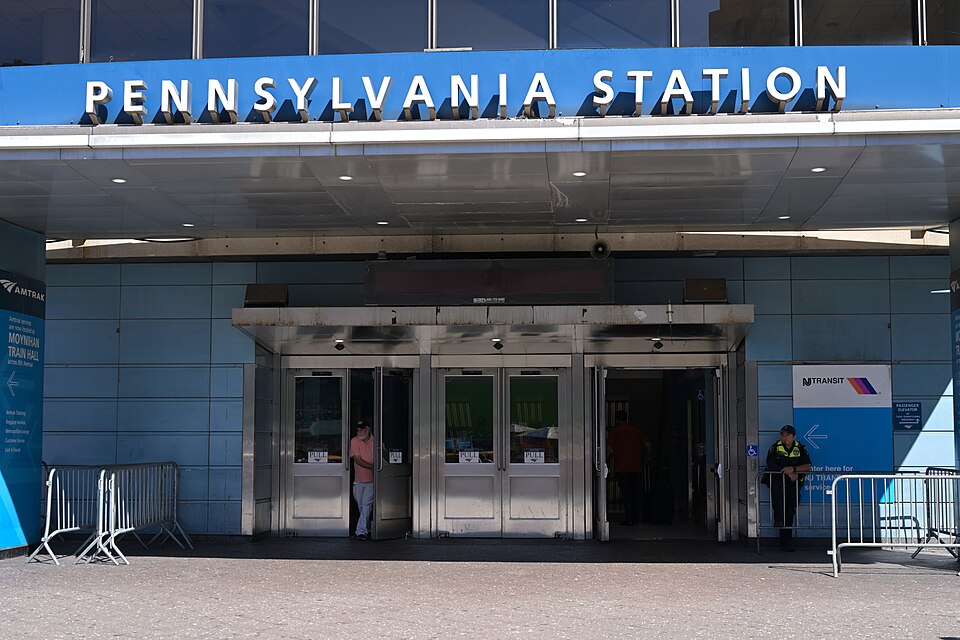
A Penn Station entrance at Madison Square Garden, showing why rail and subway access make MSG one of the easiest major event venues in the city to reach without driving.
Why Getting to MSG Is Different From Other Venues
Most major arenas in the New York metro area require some planning to reach by transit. Yankee Stadium means the 4 or B/D train to the Bronx. Barclays Center means the Atlantic Terminal complex. MetLife Stadium means the NJ Transit shuttle from Penn Station. Madison Square Garden is different because you do not transfer to the arena — you walk up from the train platform directly into it.
Penn Station Is Directly Below the Arena
Madison Square Garden sits on top of Penn Station, between 31st and 33rd Streets on Seventh Avenue. When you exit Penn Station, you are already there. This makes MSG unusually accessible for suburban commuters, New Jersey visitors, and Long Island arrivals — groups who often have a harder time getting to venues in other parts of the city. If your train ends at Penn Station, you are essentially door-to-door.
That advantage compounds when you think about the return trip. After a sold-out concert or a Knicks playoff game, thousands of people pour out of MSG simultaneously. Rideshare prices surge, taxis are scarce, and the street grid around 33rd and 7th becomes briefly chaotic. Visitors who can walk to a nearby hotel or step directly onto a waiting LIRR or NJ Transit train avoid all of that entirely. Visitors who need a rideshare back to a hotel on the other side of Manhattan sit in that mess for twenty minutes before a car even accepts their request.
How to Get to MSG — by Where You’re Coming From
The correct transportation plan for MSG depends almost entirely on your starting point. Here is how to think about it for each situation.
If you are staying in Midtown West, Chelsea, or anywhere within ten blocks of Penn Station, you can often walk to MSG in under 15 minutes. From Times Square hotels, the 1/2/3 train one stop south to 34th Street is faster than any car. This is the easiest MSG situation by far — and a strong reason to book a hotel in this neighborhood if transport convenience matters to you. See the hotels near Madison Square Garden guide for where to stay.
NJ Transit trains run from Newark, Hoboken, and multiple New Jersey hubs directly into Penn Station — which is, again, directly below MSG. From Newark Penn Station, the ride is roughly 20 minutes. This is genuinely one of the best commuter-rail-to-venue experiences in the metro area. NJ Transit frequency increases before major events; check NJ Transit’s app for schedules and return times before you leave for the show.
The Long Island Rail Road terminates at Penn Station, making the LIRR one of the most comfortable ways to get to MSG from any point on Long Island. No transfers, no last-mile problem — you arrive directly below the arena. LIRR runs late trains after events; check the schedule in advance and identify which train you want before the show ends, because LIRR trains fill quickly on event nights.
Metro-North terminates at Grand Central, not Penn Station. From Grand Central, take the S shuttle (or the 7) one stop to Times Square–42nd Street, then transfer to the 1/2/3 train south to 34th Street–Penn Station. Total subway time is roughly 10–15 minutes. Some visitors prefer a short rideshare from Grand Central instead. Either way, the extra leg is manageable.
The A, C, and E trains run from downtown Manhattan and connect at 34th Street–Penn Station. The 1, 2, and 3 trains from lower Manhattan and the West Village run directly to 34th Street as well. From Brooklyn, most visitors will transfer once — typically at a major hub like Jay Street–MetroTech or Atlantic Av–Barclays Center — before heading north. Budget 25–35 minutes from most of Brooklyn.
If you are already in the subway system, getting to MSG is a matter of getting to 34th Street. The B, D, F, M, N, Q, R, and W trains stop at 34th Street–Herald Square, one block east of MSG on 6th Avenue — a five-minute walk. Penn Station (A/C/E, 1/2/3) puts you closer. Either works. Check your current location in Google Maps or the MTA app and route to whichever hub is most efficient from where you are.
Getting to MSG by Subway
The subway is the default answer for most Manhattan visitors and the right call for most events. It is faster than driving on any event night, costs $2.90, runs until the early morning hours, and deposits you either directly at Penn Station below the arena or one block away at Herald Square.
Penn Station — 34th Street (A, C, E trains and 1, 2, 3 trains)
This is the most direct subway option. Exit Penn Station and follow signs to Madison Square Garden — the signage inside the station is clear. The 1/2/3 trains run up and down the West Side of Manhattan; the A/C/E serve the 8th Avenue corridor and connect to Brooklyn, Queens (JFK via AirTrain), and the Bronx. Both sets of trains stop frequently before and after events.
Herald Square — 34th Street (B, D, F, M and N, Q, R, W trains)
Exit Herald Square, head one block west to 7th Avenue, then one block south to the MSG entrance. This serves visitors coming from Midtown East, the Upper East Side, Queens, and points along the B/D/F/M corridor. The walk is easy and completely flat.
Post-event crowds make the Penn Station subway platforms temporarily congested after major shows. If you can wait 20–25 minutes after the final buzzer or curtain — grab a drink, wait for the main rush to clear — the platform and trains will be noticeably less crowded and the ride will be more comfortable. This is especially true after sold-out concerts.
Commuter Rail — NJ Transit, LIRR & Amtrak
For suburban visitors, commuter rail is often the single best way to get to and from Madison Square Garden — specifically because it terminates at Penn Station, not at some transfer point that requires additional transit. You step off the train and you are there.
NJ Transit
NJ Transit runs multiple rail lines into Penn Station from Newark, Trenton, the Shore, Montclair, and points across New Jersey. The Northeast Corridor from Newark Penn to New York Penn is roughly 20 minutes. NJ Transit buses also run into Port Authority (8th Ave and 42nd St), from which the A/C/E subway is a direct shot to 34th Street. Check the NJ Transit app for event-night schedules — train frequency often increases around major events at MSG, and late-night service continues after most shows end.
Long Island Rail Road (LIRR)
Every LIRR branch terminates at Penn Station, which makes MSG one of the most convenient arena destinations for Long Island visitors. Identify your return train before the event begins — LIRR trains on event nights fill quickly, and the post-event Penn Station crowd can feel overwhelming if you are not oriented. Most major post-event trains depart within 30–45 minutes of each other; knowing which one you want means you can plan whether to leave early, wait it out, or grab a post-show drink nearby.
Amtrak
Visitors arriving from Philadelphia, Washington, D.C., Boston, or other Northeast Corridor cities can take Amtrak directly to Penn Station — which drops them, again, directly below MSG. This is a genuinely underused approach for out-of-town visitors flying into the region and connecting through Newark or Philadelphia. Consider staying in a Midtown West hotel to eliminate the return-trip problem entirely; see hotels near Penn Station for train-first options.
If your train ends at Penn Station, the return trip from MSG is as simple as it gets: the show ends, you walk down an escalator, and you are on the platform. No surge pricing, no waiting for a car, no street-level crowd management. For suburban visitors who are accustomed to the nightmare of post-event traffic and parking, this is one of the strongest arguments for planning an MSG night around commuter rail rather than driving.
Driving to Madison Square Garden — When It Makes Sense (and When It Doesn’t)
Driving to MSG is not automatically wrong. For some visitors — particularly families with young children, visitors with mobility considerations, groups coming in from suburbs without good rail access, or anyone attending a show on an unusual weekday at an off-peak hour — driving and parking can be reasonable. But it is usually not the easiest or cheapest option, and for most event nights in Midtown Manhattan, it adds friction rather than eliminating it.
The parking reality
Madison Square Garden has no dedicated parking lot. Parking garages in the surrounding blocks of Midtown West are available, and the ParkWhiz app is MSG’s official parking partner — you can pre-book a spot in advance, which is strongly recommended for any major event. Expect to pay $40–$70 for a garage spot on event nights, sometimes more for premium events. Spots within a two-block radius of MSG go quickly; many pre-booked spots are several blocks away. For full details on parking strategy and specific garages, see the parking near Madison Square Garden guide.
Traffic logic
Midtown Manhattan traffic on event nights is heavy before and after major shows. The blocks around 7th Avenue between 31st and 34th Streets are particularly congested as rideshares, taxis, buses, and private cars all converge on the same corridor. If you are driving from New Jersey, the Lincoln Tunnel approach is manageable; the Holland Tunnel adds time if you are heading uptown from it. From Connecticut and Westchester, the Triborough or GW Bridge are the usual approaches — plan for traffic on both.
When driving makes the most sense
Driving works best when you have a specific reason it beats the alternatives: a suburb with no direct rail access, a large group where parking costs spread across multiple people become reasonable, an off-peak weekday event with lighter Midtown traffic, or a return trip late enough that you are concerned about transit service. It also works if your hotel is in a neighborhood where driving to 34th Street is genuinely faster than the subway would be from where you are staying.
Rail is faster door-to-door for most visitors. It is cheaper (a $2.90 subway fare versus $50+ parking). It eliminates post-event traffic stress. And for the majority of New York metro visitors, a transit option exists that terminates within walking distance of MSG. The only real argument for driving is flexibility — arriving and departing on your own schedule, and not navigating a transfer or a platform. That flexibility has real value for some visitors. For most, it is not worth the trade.
Subway vs. Commuter Rail vs. Rideshare vs. Driving — Quick Comparison
Fast, cheap, direct to Penn Station or Herald Square. Best for Manhattan visitors.
NJ Transit and LIRR terminate at Penn Station. Door-to-door convenience for suburban visitors.
Fine for arrival. Often surges badly post-event. Walk away from the venue before requesting.
Works for some suburbs. Parking is expensive and must be pre-booked. Post-event traffic is real.
The Trip Home — What Most People Don’t Plan For
The most common MSG transportation mistake is thinking only about arrival. The trip home after 20,000 people empty out of the arena at the same time is a different experience from walking in two hours earlier — and if you have not thought about it in advance, it will cost you time, money, or both.
Why the return trip is the harder problem
When a major concert or sold-out Knicks game ends, the blocks around 7th Avenue and 33rd Street briefly become some of the most congested pedestrian and vehicle corridors in Midtown. Rideshare apps register the demand spike and surge accordingly — sometimes to two or three times the normal fare within minutes of final buzzer. Taxis are scarce because they are all already occupied in the same corridor. The buses are slow. The sidewalks are packed.
This is not a crisis. It resolves relatively quickly, usually within 20–30 minutes. But visitors who have not planned for it either pay surge pricing because they need to leave immediately, or they stand on the corner staring at their phone waiting for something to improve.
The approaches that work best
Walk to a hotel within a few blocks
If you are staying in Midtown West near Penn Station, your return trip is a walk. This is the single best post-MSG transportation plan available: no waiting, no surge, no crowds beyond the sidewalk outside the arena. The hotels near MSG guide covers the best-positioned options specifically for this reason.
Take commuter rail back (LIRR or NJ Transit)
Late trains after major events exist, and for commuter rail users they are often the cleanest exit. Know which train you want before the show ends — LIRR and NJ Transit post event schedules. Step directly from the arena floor down to Penn Station and onto the platform. If you’d rather stay over and catch a morning train, hotels near Penn Station put the platform a short walk away.
Wait out the crowd at a nearby bar or restaurant
Koreatown on 32nd Street — a short walk east of MSG — is one of the best post-show neighborhoods in Midtown. It stays open late, it is busy even on weeknights, and waiting 30–40 minutes there means leaving when the rideshare surge has passed and the subway platforms have thinned. See restaurants near MSG for specific options.
Walk a few blocks before requesting a rideshare
Rideshare pricing spikes highest in the immediate blocks around MSG after major events. Walking three or four blocks south, north, or east before opening the app typically produces both a shorter wait and a lower fare. The demand surge is concentrated; move away from its center.
Take the subway from Herald Square instead of Penn Station
Herald Square, one block east, is sometimes less congested immediately post-event than the Penn Station subway entrance. If the Penn Station platforms are packed, walk to Herald Square and use the B, D, F, M, N, Q, R, or W trains instead.
Where You Stay Changes the Entire Transportation Equation
If you are planning an MSG night that involves staying over — a weekend visit from the suburbs, a trip combining MSG with other NYC plans, or a destination concert night — your hotel location determines your transportation experience more than any other single decision.
The strongest hotel-and-transport setup for MSG is simple: stay in Midtown West within walking distance of Penn Station. This eliminates almost every transportation problem on both ends of the evening. You walk to the venue. You walk home. No apps, no platforms, no surge pricing.
Hotels on 34th–38th Streets between 7th and 9th Avenues put you within a 10-minute walk of MSG. The Midtown West neighborhood guide covers this corridor in full. As a secondary option, Bryant Park / Midtown South hotels on the east side of 5th and 6th Avenue in the 30s are close enough for a 15-minute walk and have easy subway access to Herald Square. Times Square hotels are fine but slightly further than their proximity to MSG might suggest — the street-level crowd around 42nd and 7th is dense, and the subway one stop south is usually faster than walking through it.
For a full planning picture covering where to stay for MSG nights, see the hotels near Madison Square Garden guide. If you’re arriving or leaving by NJ Transit, LIRR or Amtrak, the hotels near Penn Station guide is built around the train. For the broader neighborhood context, the Midtown West guide covers what the area is like as a base for an evening.
How Transportation Fits Into a Full MSG Night
Getting to MSG is one piece of the evening. The neighborhood around it has specific advantages that are worth building the night around — especially if you are treating the event as a full night out rather than just a destination.
Koreatown, on 32nd Street between 5th and 6th Avenues, is a short walk from MSG and is arguably the best pre- or post-show dining block in this part of Midtown. It is open late, it moves quickly (which matters on event nights when you need to leave for a 7:30 curtain), and it stays lively after shows when you want somewhere to decompress before heading home. The broader Hell’s Kitchen and Midtown West restaurant cluster, a few blocks north and west, covers the full range from quick pre-show casual to full sit-down. See the restaurants near MSG guide for specifics.
For the full MSG venue picture — seating, what to expect inside, and event-specific planning — the Madison Square Garden venue guide is the right starting point.
Frequently Asked Questions
For most visitors, the best way to get to Madison Square Garden is by subway or commuter rail to Penn Station, which is directly below the arena. Manhattan visitors should take the A/C/E or 1/2/3 train to 34th Street–Penn Station. New Jersey visitors should take NJ Transit to New York Penn Station. Long Island visitors should take the LIRR to Penn Station. The subway or commuter rail beats driving for almost every event night at MSG.
The A, C, E, 1, 2, and 3 trains stop at 34th Street–Penn Station, directly below MSG. The B, D, F, M, N, Q, R, and W trains stop at 34th Street–Herald Square, one block east — a five-minute walk to the arena. Both options work well depending on where you are coming from.
Yes — NJ Transit trains terminate at New York Penn Station, which is directly below Madison Square Garden. From Newark Penn Station, the ride to New York Penn is roughly 20 minutes. This is one of the most direct arena-access commuter rail trips in the metro area. Check the NJ Transit app for event-night schedules and late-night return trains before you leave.
Madison Square Garden has no dedicated parking lot. Nearby garages are available and can be pre-booked through ParkWhiz, MSG’s official parking partner. Spots typically run $40–$70 on event nights. Pre-booking is strongly recommended; walk-up spots are harder to find as events approach. For full details, see the parking near Madison Square Garden guide.
The best way from New Jersey is NJ Transit rail to New York Penn Station, which puts you directly below MSG. From Newark Penn Station, the ride is about 20 minutes. From other New Jersey hubs, travel times vary — check the NJ Transit app. Driving across the Lincoln Tunnel is also an option but adds parking costs and post-event traffic to the equation.
Take the Long Island Rail Road to Penn Station. Every LIRR branch terminates there, and you walk up from the platform directly to MSG. Identify your return train before the event — LIRR trains fill quickly after major events, and having a plan means you are not scrambling on a packed platform at midnight.
Yes, rideshare and taxi drop-off and pickup are available in the area around MSG. However, rideshare surge pricing can be significant immediately after major events. If you are taking a rideshare home, either leave slightly early, wait 25–30 minutes for the surge to ease, or walk a few blocks from the arena before requesting a car.
Madison Square Garden is in Midtown West, on 7th Avenue between 31st and 33rd Streets. The surrounding neighborhood — particularly the Penn Station corridor and nearby Koreatown on 32nd Street — is well-served by transit and has strong dining options for pre- and post-show. Staying in Midtown West hotels near Penn Station is the single best thing you can do to simplify MSG transportation, since it eliminates the transit question entirely for the return trip.
Getting to MSG — The Short Version
Madison Square Garden is easier to reach by rail than almost any other major arena in the New York metro area because Penn Station sits directly below it. For subway riders, the A/C/E and 1/2/3 trains stop at 34th Street–Penn Station — walk up and you are there. For New Jersey visitors, NJ Transit to New York Penn Station is the move. For Long Island visitors, the LIRR does the same job. Driving is viable for some suburban situations but needs a pre-booked parking spot and patience for post-event Midtown traffic.
The variable most people ignore is the return trip. Plan that before the show starts — know which train you are catching, which bar you are waiting in while the surge clears, or which hotel is close enough to walk back to — and the whole night is easier.
For everything else around MSG — restaurants, hotels, parking specifics, and the venue itself — see the related guides below.
Build the MSG night around the Penn Station advantage, A/C/E and 1/2/3 subway, NJ Transit, LIRR, parking, Koreatown food, walkable hotels, and the post-show trip home
Madison Square Garden is one of NYC’s easiest major venues to reach because Penn Station sits directly below it. The catch is the exit. Use these guides to connect arrival, seating, food, hotel base, parking, neighborhood strategy, and the way home before the event starts.
How to Get to Madison Square Garden
This page handles the transportation decision: subway, Penn Station, Herald Square, NJ Transit, LIRR, Amtrak, driving, parking, rideshare, hotel strategy, and the post-show return.
You are hereArrival is easy. The trip home is the part to plan.
Walk to a nearby hotel, catch a known return train, wait out the crowd in Koreatown, or walk away from the arena before requesting rideshare.
Madison Square Garden Venue Guide
The main MSG guide for concerts, arena layout, arrival feel, neighborhood context, event-night timing, and full planning.
Open MSG venue guide → SeatsMadison Square Garden Seating Guide
Pair the route with the right section: floor, lower bowl, Chase Bridge, upper levels, side views, and concert sightlines.
Choose MSG seats → ParkingParking Near Madison Square Garden
Prebooked garages, ParkWhiz logic, Midtown traffic, event-night pricing, and when driving is actually worth it.
Plan MSG parking → FoodRestaurants Near Madison Square Garden
Koreatown, Penn District, quick pre-show meals, post-show drinks, and places to wait out the rideshare surge.
Plan MSG food → HotelsHotels Near Madison Square Garden
Walkable Midtown West hotel bases that erase the post-show transportation problem entirely.
Plan nearby hotel → Core AreaMidtown West Guide
The neighborhood layer for MSG: Penn Station, hotels, restaurants, 34th Street logistics, and walkable night-out planning.
Explore Midtown West → Late FoodKoreatown Guide
The strongest post-MSG food-and-wait-out zone: late restaurants, lively blocks, and easy walk from the arena.
Explore Koreatown → Transport HubNYC Transportation Hub
The main routing hub for subway, rail, rideshare, parking, Broadway, concerts, sports, and post-event exits.
Open transportation hub → Concert TransitHow to Get to NYC Concert Venues
Compare MSG with Barclays, Radio City, Beacon, Carnegie, Terminal 5, Forest Hills, Citi Field, UBS, and MetLife.
Plan concert transit → Concert ParkingParking Near NYC Concert Venues
Compare garages, stadium lots, rideshare zones, transit-first venues, and the true cost of driving.
Compare concert parking → After ShowBest Way Home After a Show
Post-show subway timing, commuter rail returns, rideshare surge, nearby drinks, and calmer ways to leave major events.
Plan the exit → Car vs TrainUber vs Subway for NYC Nights Out
Helpful for MSG nights where rideshare looks easy until 20,000 people hit the street at once.
Compare the choice → Subway TipsNYC Subway Tips for Shows and Events
OMNY, service changes, station exits, crowd timing, and smarter subway habits for event nights.
Ride smarter → Concert FoodRestaurants Near NYC Concert Venues
The broader concert dining layer for MSG, Barclays, Radio City, Beacon, Terminal 5, stadiums, and theaters.
Plan concert food → Before ShowWhere to Eat Before a Concert
Pre-concert dinner timing, fast meals, neighborhood choice, and how to avoid racing through Penn Station.
Plan pre-show food → Post ShowBest Post-Show Restaurants
Use a late bite or drink to let subway platforms thin and rideshare surge fade after sold-out events.
Find post-show food → Concert StayWhere to Stay for Concert Nights
Compare Midtown West, Theater District, Hell’s Kitchen, Brooklyn, Queens, and venue-adjacent hotel bases.
Choose concert base → Hotel GuideHotels Near NYC Concert Venues
The broad hotel routing page for venue clusters, walk-backs, train returns, rideshare exits, and full trip planning.
Compare venue hotels → NearbyHell’s Kitchen Guide
A strong dinner-and-drinks layer for MSG nights when you want better options west of Times Square.
Explore Hell’s Kitchen → ConcertsNYC Concerts Hub
The main concert hub for major shows, venue planning, seating, date nights, families, first-timers, and logistics.
Open concerts hub → VenuesNYC Concert Venue Guides
Compare MSG with arenas, stadiums, classic halls, Brooklyn rooms, Queens venues, and Manhattan theaters.
Compare venues → SportsNYC Sports Hub
Use this for the Knicks, Rangers, basketball, hockey, and sports-night planning connected to MSG and other NYC venues.
Plan sports nights → Full NightNYC Night Out Hub
The full planning hub for restaurants, hotels, transportation, neighborhoods, Broadway, concerts, sports, and complete nights out.
Plan the full night →