

Hotels Near NYC Concert Venues: Where to Stay for Your Show
NYC concert venues span Manhattan, Brooklyn, Queens and New Jersey. The right hotel depends on which venue you’re seeing, how late the night runs, and whether the show is the whole trip or one night of a longer stay.
Most people booking a hotel for an NYC concert look for the hotel closest to the venue. Sometimes that is right. Often it is not. The city’s venues are spread across four boroughs and New Jersey, and the blocks around several of the big arenas are transit hubs and commercial corridors rather than places you would choose for the whole stay.
This guide is organized by venue cluster. For each one, you get a clear answer to the hotel question: when staying close matters, when being near a subway hub beats being near the venue, and when a stronger neighborhood a few stops away makes for a better trip. Each cluster links to its full venue-specific hotel guide.
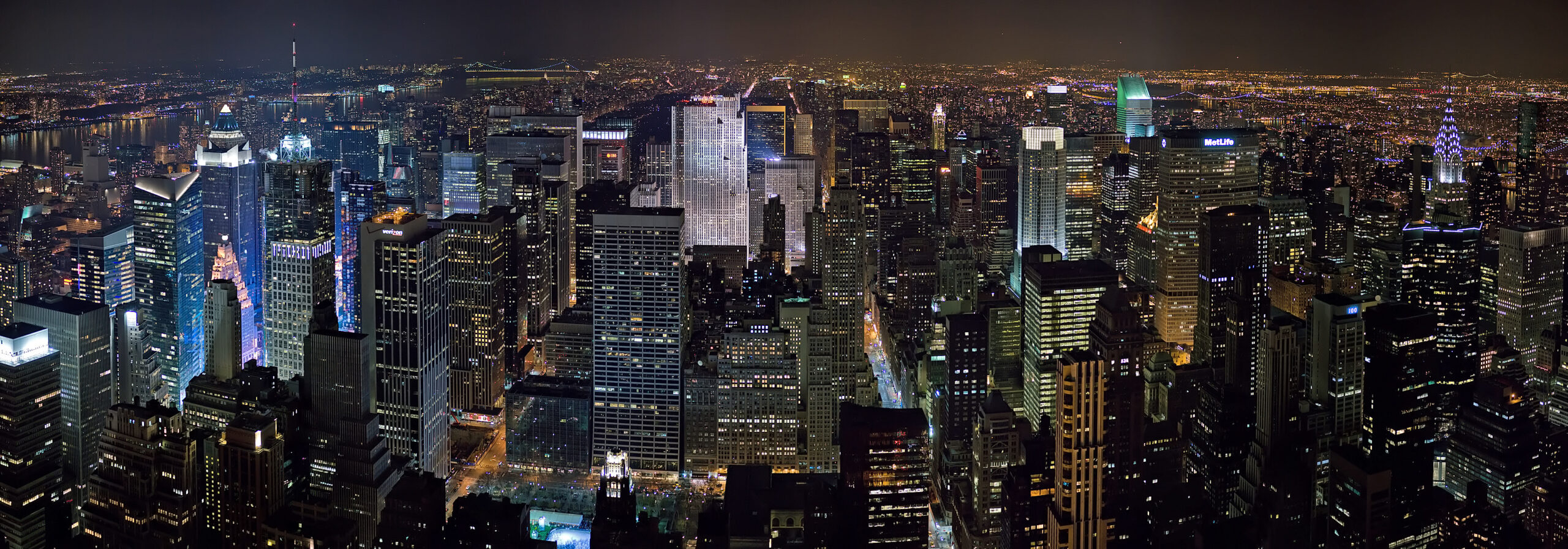
Midtown Manhattan at night, one of the most convenient hotel bases for many NYC concert trips.
Quick Answer: Best Hotel Areas by Concert Venue
If you need a fast decision, start here. Each venue cluster and its strongest hotel base:
Stay near Penn Station for maximum show-night convenience. The New Yorker, Renaissance Midtown, Fairfield Penn Station and Hampton Inn MSG Area are all in the immediate corridor. See hotels near MSG.
Midtown hotels between the Theater District, Rockefeller Center and Carnegie Hall work well. The real choice is Times Square energy, Rockefeller Center calm, or a quieter base toward Central Park South.
Stay on the Upper West Side if you want the neighborhood to be part of the trip. The Beacon is at 2124 Broadway, and Hotel Beacon is right next door. See hotels near the Beacon.
A strong hotel-and-transit base for both venues, with EVEN, Ace, Hilton Brooklyn, the Marriott at the Brooklyn Bridge and Hampton Inn Downtown all in range. See hotels near Barclays.
Williamsburg has a small but real hotel scene. From Manhattan, the L train is the key connection. Stay in Williamsburg if the neighborhood is part of what you want from the trip.
A seasonal outdoor venue with no venue parking. The stadium recommends the LIRR or subway, so a Manhattan or Queens base on a direct line usually beats forcing a stay next door. See hotels near Forest Hills Stadium.
MetLife is in East Rutherford, New Jersey. Manhattan works well when event-day NJ TRANSIT rail is running; Secaucus and other New Jersey bases suit drivers. See hotels near MetLife.
The summer rooftop concert season gives a reason to stay downtown, where hotel rates can compare well with Midtown on show nights.
How to Choose the Right Hotel Base for an NYC Concert
Booking the closest hotel mixes up two goals: being close during the show and being well positioned for everything around it. A good concert hotel handles getting to the venue, getting back at midnight or later, dinner before and drinks after, and the rest of the trip if the concert is one night of several.
When venue proximity genuinely matters
Proximity pays off when you want to walk back after the show: late finishes, visitors who would rather skip transit after a long night, and one-night trips where cutting friction matters more than neighborhood. For MSG, that means the Penn Station blocks. For Barclays, Downtown Brooklyn. For the Beacon and Radio City, the walk back is pleasant either way because both neighborhoods stay active late.
When transit proximity beats venue proximity
For Brooklyn club venues, Forest Hills Stadium and MetLife, staying beside the venue is not always the strongest move. Stay near a station that gives you a clean ride instead: Penn Station or Midtown for MetLife, Williamsburg or a Manhattan base on the L for Brooklyn clubs, and a Queens or Midtown base on the E, F, M or R or the LIRR for Forest Hills.
When the neighborhood matters more than either
When the concert is one night of a longer visit, choose the base that makes the whole trip work. A couple spending three nights around a Radio City show does not need to be on Sixth Avenue at 50th Street; the Upper West Side, Chelsea, the Flatiron area and Lower Manhattan all make good full-trip bases with easy subway access to Midtown.
The best concert hotel is the one where the whole evening flows: dinner nearby, an easy arrival, and a return at whatever hour the night ends that doesn’t turn into its own ordeal. Sometimes that is the hotel closest to the arena. Often it is not.
Hotels Near Madison Square Garden
MSG sits above Penn Station between Seventh and Eighth Avenues, with unusually strong rail and subway access. The A, C, E and 1, 2, 3 stop at Penn Station, and LIRR, NJ TRANSIT and Amtrak run underneath. For visitors arriving by train, hotels on the immediate blocks mean walking out of the arena and into the lobby.
The blocks around MSG, roughly 31st to 35th Streets between Sixth and Ninth Avenues, hold hotels at many price points. The area is commercial and busy rather than charming, but for a midnight walk back after a concert, being a couple of blocks from the arena is hard to beat. The Hammerstein Ballroom on 34th Street sits in the same corridor.
For a nicer neighborhood at the cost of a short ride, Chelsea is a stop or two south on the 1, and the Flatiron area is a quick walk or N, R or W ride from Herald Square.
We may earn a commission if you book through our links, at no extra cost to you.
The New Yorker by LOTTE Hotels
Best for: train-in trips and maximum arena proximity. The Art Deco landmark sits at Eighth Avenue and 34th Street, moments from Penn Station and Moynihan Train Hall. Room categories vary a lot, so compare the exact room.
Renaissance New York Midtown
Best for: couples who want a more polished full-service stay while keeping MSG a short walk away. Marriott lists a large retractable-roof terrace among its spaces.
Fairfield Inn & Suites Midtown Manhattan/Penn Station
Best for: Amtrak, NJ TRANSIT and LIRR arrivals and one-night shows. Directly across from Moynihan Train Hall, with complimentary breakfast for the morning after.
Hampton Inn Manhattan-Madison Square Garden Area
Best for: value-minded fans who want to walk to the arena and back. A reliable Hilton stay one block east of MSG, with breakfast included. Parking is valet only.
More options, including Pendry Manhattan West and Kimpton Hotel Eventi: hotels near Madison Square Garden.
Hotels Near Radio City, Carnegie Hall and Midtown Venues
Radio City at Sixth Avenue and 50th Street and Carnegie Hall at Seventh Avenue and 57th Street anchor a Midtown cluster that also includes Theater District music rooms. This is the most hotel-dense part of the city, and that abundance is itself the challenge: quality varies a lot, and the most visible hotels are not always the best value.
Hotels right around Times Square (roughly 42nd to 47th Streets, Seventh to Eighth Avenues) are convenient but crowded and loud. That works for a one-night show; on longer trips it wears on most visitors. The mid-40s to mid-50s between Fifth and Sixth Avenues, around Rockefeller Center, tend to be calmer without giving up transit.
For Radio City, anywhere within a 15-minute walk puts you in one of Manhattan’s best-connected areas, busy enough at 11pm that the walk back is easy.
Full property comparisons: hotels near Radio City · hotels near Carnegie Hall · hotels near Terminal 5.
Hotels Near the Beacon Theatre and Lincoln Center
The Beacon offers a concert stay unlike anywhere else in the city. The Upper West Side is residential, walkable and much quieter than Midtown, the kind of place you want to linger after the show. Hotels between 72nd and 86th Streets keep the venue in walking distance, and Lincoln Center is a short walk or one stop south.
Inventory is thinner than in Midtown and leans mid-range and boutique. The trade is worth it for couples, repeat visitors and anyone who values the neighborhood as much as the show: real restaurants on Amsterdam and Columbus, Central Park a few blocks away, and a calm walk back.
If you prefer Midtown’s hotel choice, the 1, 2 and 3 to 72nd Street make the Beacon an easy trip.
Hotel Beacon
Best for: the shortest possible walk to the Beacon and a calmer Upper West Side base. Rooms and suites run larger than typical Midtown rooms, and the 72nd Street express station is close.
One of the few places in Manhattan where staying near the venue also means staying somewhere genuinely pleasant to explore. For more options, see hotels near the Beacon Theatre and hotels near Lincoln Center.
Hotels Near Brooklyn Concert Venues
Downtown Brooklyn is a real concert base, not just a compromise. Atlantic Av–Barclays Ctr is served by the 2, 3, 4, 5, B, D, N, Q and R, and the LIRR terminates at Atlantic Terminal next door. Brooklyn Paramount on Flatbush Avenue Extension is a short walk or ride away.
Hotels cluster within about a mile and a half of Barclays, and Fort Greene, Boerum Hill and Cobble Hill add real dinner and bar options. Stay in Brooklyn when the show anchors a Brooklyn-focused trip; keep a Midtown base when the concert is one event in a Manhattan-centered visit or when your dates price Midtown lower.
EVEN Hotel Brooklyn
Best for: event-focused stays where the walk to the arena is the priority, and LIRR arrivals through Atlantic Terminal. Wellness-oriented IHG property with on-site dining.
Ace Hotel Brooklyn
Best for: couples who want Brooklyn character rather than a chain stay. Hoyt–Schermerhorn station is a minute away, and Barclays is a manageable walk.
Hilton Brooklyn New York
Best for: a familiar full-service brand with Smith Street dining outside the door. Factor in the daily destination charge when comparing rates.
New York Marriott at the Brooklyn Bridge
Best for: groups, longer Brooklyn stays and Marriott Bonvoy travelers. Jay St–MetroTech and Court St stations connect quickly to the arena corridor.
Hampton Inn Brooklyn Downtown
Best for: value-focused trips, and especially Brooklyn Paramount shows, which are a short walk up Flatbush Avenue Extension. Barclays is about a mile, or a quick subway hop on busy nights.
Pod Brooklyn
Best for: Brooklyn Bowl, Music Hall of Williamsburg and Brooklyn Steel nights. Compact private rooms keep the cost down, and the L makes Manhattan an easy ride.
Williamsburg and Brooklyn club venues
For Brooklyn Steel, Brooklyn Bowl and Music Hall of Williamsburg, hotel choice is more limited, but Williamsburg itself puts you in the middle of Brooklyn’s dining, nightlife and music scene. Brooklyn Steel sits in East Williamsburg near the Graham Av L station, so check the walk from your hotel. From Manhattan, the L is the key connection. See hotels near Brooklyn Steel, hotels near Brooklyn Bowl, hotels near Brooklyn Paramount and hotels near Kings Theatre.
Forest Hills Stadium, MetLife, UBS Arena and the Seaport
Forest Hills Stadium
Forest Hills Stadium is a seasonal outdoor venue in a residential Queens neighborhood. It has no venue parking, says nearby residential streets are not available for event parking, and recommends the LIRR or subway. For many visitors, a Manhattan base on the E, F, M or R, or near Penn Station for the LIRR, works better than forcing a stay next to the stadium. If you want Forest Hills itself, with its Tudor-style streets and dinner on Austin Street, a Queens hotel is a reasonable choice. See hotels near Forest Hills Stadium.
MetLife Stadium
MetLife is in East Rutherford, New Jersey, with no hotel cluster within walking distance. For large concerts, NJ TRANSIT may run Meadowlands rail service via Secaucus Junction, so a Penn Station or Midtown hotel can work well. Because service depends on the event, verify the schedule before choosing a Manhattan hotel around the train plan. Drivers and New Jersey-based visitors can look at Secaucus, Newark or the Jersey City/Hoboken corridor. See hotels near MetLife and the MetLife Stadium guide.
UBS Arena
UBS Arena is at Belmont Park in Elmont, just over the Queens line on Long Island. The LIRR to Elmont-UBS Arena makes a Penn Station base workable for many shows; check the event-night train schedule before relying on it. See hotels near UBS Arena.
Pier 17 / Seaport
The Rooftop at Pier 17 at 89 South Street is the clearest argument for staying in Lower Manhattan during its outdoor season. Seaport and Financial District hotels can compare well with Midtown on price, and a waterfront dinner plus a short walk to the show makes the whole evening easy.
Compare Live Hotel Rates for Your Show Date
The map opens on Midtown. Add your concert date, then drag toward Penn Station, the Upper West Side, Downtown Brooklyn or Williamsburg to see what’s open near your venue.
Prices and availability come from booking partners and change by date. Big show nights move rates fast, so check the checkout total before you book.
Hotel Guides by Concert Venue
Each venue has its own hotel guide with a property shortlist, live-rates map and walking and transit details.
Best Hotel Choice by Trip Style
For the full trip-planning version, see where to stay for concert nights in NYC.
Stay at Penn Station / MSG-adjacent hotels: arrive at Penn, check in, see the show, walk back, train home in the morning. The New Yorker or Fairfield Penn Station are the obvious targets.
Match the hotel to the neighborhood that fits the weekend: the Upper West Side for a Beacon show, Downtown Brooklyn for Barclays, Rockefeller Center for a Radio City night.
Compare room types and occupancy rules rather than relying on one brand. Near MSG, The New Yorker, Renaissance and Fairfield cover different room profiles; Downtown Brooklyn adds larger full-service hotels. Book early, since big concert weekends sell out the largest rooms first.
MSG: The New Yorker or Hampton Inn MSG Area. Barclays: EVEN Hotel or Ace. Beacon: Hotel Beacon. Radio City: any Midtown hotel between roughly 47th and 54th Streets.
Brooklyn and Long Island City hotels can price below comparable Midtown options, but it varies by date and event demand. Compare the total including the ride home. See cheap hotels in NYC.
Choose the base for the whole trip, not the show night. Chelsea or Flatiron suits most Manhattan itineraries and reaches any venue by subway.
Booking Advice for Concert Trips
Book early for major show weekends
Hotel rates near MSG, Barclays and Radio City can climb sharply around big concerts. For high-demand dates, compare refundable rates when you buy the tickets rather than waiting for a fixed booking window.
Count the ride home, not just the nightly rate
A cheaper hotel loses value if the return trip needs a surge-priced ride or adds real friction at midnight. A slightly higher rate for a walkable hotel is often the better decision. See the best way home after a show.
When Midtown pricing is not worth it
During major events, peak season or weekends with several arena shows, Midtown can be expensive. Compare Downtown Brooklyn, Lower Manhattan and Queens alongside Midtown rather than assuming the central location is the best value.
Use Moynihan Train Hall
If you are arriving by train, Moynihan Train Hall on Eighth Avenue between 31st and 33rd Streets is far calmer than the old Penn Station concourses. The Fairfield Inn directly across 33rd Street benefits most.
Plan the morning after
Checkout time matters on one-night and weekend concert trips, especially with a train or flight home the next day. Check the checkout time and late-checkout policy when you book, and whether breakfast is included or nearby.
Hotels Near NYC Concert Venues: FAQ
It depends on the venue. Penn Station and Midtown West for MSG and the Hammerstein, Midtown for Radio City and Carnegie Hall, the Upper West Side for the Beacon and Lincoln Center, Downtown Brooklyn for Barclays and Brooklyn Paramount, and Williamsburg or a Manhattan base on the L for Brooklyn club venues. For Forest Hills and MetLife, a transit-connected base usually beats staying next door.
Penn Station and Midtown West are the clearest choice for an easy walk between hotel, arena and regional rail. The New Yorker, Renaissance New York Midtown, Fairfield Inn & Suites Penn Station and Hampton Inn Manhattan-Madison Square Garden Area are all close. Chelsea, a stop or two south on the 1, is a calmer alternative.
Downtown Brooklyn, if the concert anchors a Brooklyn-focused trip or you want dinner, the show and drinks after all nearby. Manhattan, if the concert is one event in a Manhattan-based visit. Atlantic Av–Barclays Ctr has direct subway lines to Manhattan either way.
For one-night trips and anyone who wants to walk back after the show, usually yes. For longer trips where the concert is one event among several, a hotel that works for the whole trip, with easy subway access on show night, is often the better value.
For MSG and Barclays, those are the same thing. For Radio City and the Beacon, staying near the venue also puts you near strong subway access. A hub base beats venue proximity mainly for Forest Hills Stadium, MetLife and some Brooklyn club venues.
For MSG, Radio City, Carnegie Hall and Theater District venues, yes. Inventory is huge and transit is excellent. For Barclays, Downtown Brooklyn is a credible alternative. For Forest Hills and MetLife, Midtown remains a practical default when the train plan is confirmed.
Yes, for Barclays Center and Brooklyn Paramount shows and for visitors who want a Brooklyn base for the whole trip. EVEN Hotel Brooklyn, Ace Hotel Brooklyn, Hilton Brooklyn and Hampton Inn Brooklyn Downtown cover closest, boutique, full-service and value options, and Fort Greene and Boerum Hill add dinner and bars nearby.
Hotel Beacon at 2130 Broadway is right next door to the theater. For more Upper West Side options, see the hotels near the Beacon Theatre guide.
For most visitors, a Manhattan base with E, F, M or R access, or near Penn Station for the LIRR, is the practical choice, since the stadium recommends public transit and has no venue parking. If you want to experience Forest Hills itself, a Queens hotel is a reasonable alternative.
Penn Station or Midtown works well when NJ TRANSIT runs event-day rail to the Meadowlands via Secaucus Junction. Verify the service for your specific event. Drivers and visitors focused on New Jersey can consider Secaucus or Newark instead.
The Right Hotel for Your Concert Trip
The smartest concert hotel fits the venue cluster, handles the late-night return and supports the trip you are actually taking. For MSG, that usually means Penn Station. For Barclays, Downtown Brooklyn or a Manhattan base with fast subway access. For the Beacon, the Upper West Side if you want the neighborhood, Midtown if you want more hotel choice. For Forest Hills and MetLife, a well-connected base and a confirmed ride to the show.
For the rest of the night: restaurants near NYC concert venues · how to get to NYC concert venues · NYC concert venue guide · NYC hotels full guide.