

Lyric Theatre Tickets, Box Office & Harry Potter Broadway Guide
Find Lyric Theatre tickets, box office hours, official Harry Potter Broadway ticket options, seating overview, accessibility, entrances and NYC planning tips for one of Broadway’s largest houses.
The Lyric Theatre New York is one of Broadway’s largest houses — a 1,622-seat venue at 214 West 43rd Street with entrances on both 43rd and 42nd Streets, three distinct seating levels, and an origin story that sets it apart from every other theater in the district. Built in 1998 on the combined footprint of the original Lyric Theatre (1903) and the Apollo Theatre (1920), it incorporated actual architectural salvage from two demolished predecessors into a new room built around those recovered pieces. It is currently home to Harry Potter and the Cursed Child.
This guide covers what kind of room the Lyric Theatre Broadway visitors find here actually is, how to navigate its three seating levels honestly, what the entrance and accessibility situation looks like in practice, and how to plan a complete evening around a visit. If you’re comparing Lyric theatre New York tickets across sections, the seating breakdown below is the place to start.
If you are searching for Lyric Theatre tickets, Lyric Theater NYC tickets, or Lyric Theatre New York tickets, the current resident production is Harry Potter and the Cursed Child. ATG Tickets is the official online box office for the Lyric, and tickets are also sold in person at the 43rd Street box office. Detailed seating-chart and view-selection questions belong on the dedicated Lyric Theatre seating guide; this page focuses on venue-level ticket buying, box office, current-show and planning information.
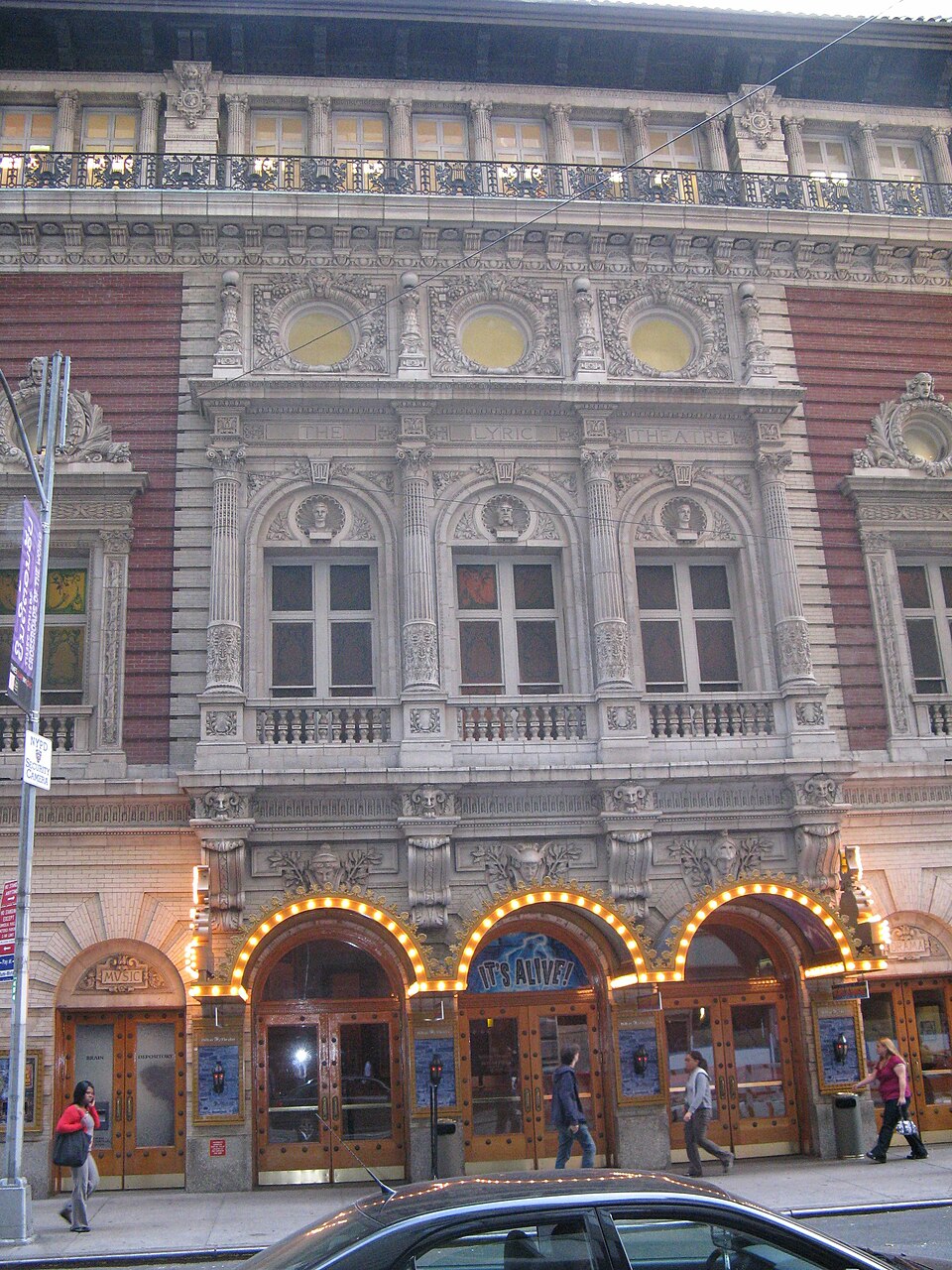
What Kind of Broadway House This Is
Scale is the first thing to understand about the Lyric. At approximately 1,622 seats across three levels, it is the second-largest Broadway house currently in operation, behind only the Gershwin Theatre. Shows that land here tend to be built for exactly this kind of scale.
The Lyric also feels different from the older Broadway houses — it is a modern room. Wikipedia notes seat widths of up to 22 inches and row spacing of 34.5 inches, meaningfully more comfortable than the industry average. The sightlines were designed with a contemporary understanding of what a large audience needs from a three-level house.
The Lyric works best for the kind of production that needs genuine physical scale to land at full impact: large casts, elaborate staging, ambitious effects, and the kind of theatrical event-making that requires a room with real capacity.
One detail that distinguishes the Lyric from any other Broadway theater: when the two predecessor buildings were demolished in the 1990s, the construction team recovered approximately 190 tons of original plaster decoration from both houses — ceiling domes, box seats, proscenium elements, a medallion of Zeus from the original Lyric’s proscenium arch — restored them off-site, and reintegrated them into the new building. The original Lyric’s brick and terra-cotta facade on 43rd Street was also preserved in place.
Lyric Theatre Tickets & Box Office
Lyric Theatre tickets currently mean tickets to Harry Potter and the Cursed Child. ATG Tickets is the official online box office for the Lyric Theatre, while in-person tickets are available directly from the theater box office at 214 West 43rd Street.
For Lyric Theatre New York tickets and Lyric Theater NYC tickets, start with official primary inventory. ATG currently lists performances of Harry Potter and the Cursed Child through May 30, 2027. That is the current on-sale period, not a stated closing date.
Lyric Theatre box office hours
The current Lyric Theatre box office hours are Monday 10:00 AM–6:00 PM, Tuesday–Saturday 10:00 AM–7:00 PM, and Sunday 10:00 AM–6:00 PM. The official production site notes that tickets purchased in person at the box office do not carry ticketing fees.
$49 same-day rush
A limited number of $49 rush tickets are currently offered at the Lyric Theatre box office on the day of each performance, subject to availability.
$40 Friday Forty lottery
The production’s Friday Forty releases a limited number of $40 tickets each Friday for the following week’s performances. Current official guidance says the lottery is offered through the TodayTix app.
Group tickets
Official group ticketing is available for parties of 10 or more. ATG currently advertises group savings with reserve-now, pay-later options for eligible dates.
This page owns Lyric Theatre tickets, the Lyric Theatre box office, current-show and venue-planning information. For the Lyric seating chart, Dress Circle and Balcony views, seat maps, best seats and view-from-seat research, use the dedicated Lyric Theatre seating guide.
What the Theater Experience Feels Like
Arriving at the Lyric involves a decision that most Broadway theaters do not require: which entrance to use. The main entrance and box office are on the 43rd Street side at 214 West 43rd Street. The 42nd Street entrance — at 213 West 42nd Street — is a street-level access point with elevator access to the Orchestra and Dress Circle levels, and is the recommended entry point for visitors who use wheelchairs or have difficulty with stairs.
Inside, the Lyric is a gold and crimson room — the preserved Apollo box seats flanking the stage, the restored ceiling domes overhead. For the current production, the theater has been further transformed to reflect the world of Harry Potter.
In a 900-seat house, the challenge is finding the seat that puts you at the right distance. In a 1,622-seat house, the challenge is understanding how distance works across three meaningfully different levels. The Lyric rewards that advance thought more than most Broadway theaters — the Orchestra, Dress Circle, and Balcony each offer a genuinely distinct experience.
Lyric Theatre Seating Overview — Three Levels, Three Different Experiences
The Lyric’s three levels — Orchestra, Dress Circle, and Balcony — are not just price tiers. The house is wide rather than narrow, which means center seating matters more here than at some other Broadway theaters.
~802 seats
~476 seats
~344 seats
The single most important decision at the Lyric is center versus side, not which level. Whatever level you book, prioritize center over side before prioritizing row number. For a full section-by-section breakdown, see the Lyric Theatre seating guide.
Accessibility and Practical Comfort
The Lyric has one of the more clearly differentiated accessibility setups of any Broadway theater — one entrance offers meaningfully better access than the other.
Step-free access is available at both street entrances
Current official guidance says wheelchair access is available at both the 42nd Street and 43rd Street entrances. Designated ADA seating is available in the Orchestra and Dress Circle, with elevator access to both levels.
ADA seating is available on Orchestra and Dress Circle levels
Designated ADA seating locations are available on both levels, both with elevator access from the 42nd Street entrance. Accessible restrooms are in the Dress Circle lobby.
Balcony level — no elevator, stairs only
There is no elevator access to the Balcony level. Visitors who cannot manage stairs should book Orchestra or Dress Circle seats.
Hearing access and assistive services
Infrared assistive listening devices are available. The GalaPro app provides on-demand captioning, audio description, and translation subtitles. The venue has partnered with KultureCity for sensory bags and quiet areas.
Accessibility provisions and entrance details can change. Always confirm current details with the box office or the official ATG Lyric venue page.
Where the Lyric Theatre New York Is — Location and Getting There
The Lyric sits at the intersection of 42nd and 43rd Streets between Seventh and Eighth Avenues. Lyric Theatre 214 W 43rd St New York NY 10036 is the full address for GPS or delivery purposes — also written as Lyric Theatre West 43rd Street New York NY.
The Times Square–42nd Street station, served by eleven subway lines, is as close as any Broadway theater gets to a major transit hub. If you’re looking for parking near Lyric Theater NYC, advance planning helps on weekend evenings — the parking near Broadway guide covers the best garage options. For food near Lyric Theater NYC, see the pre-show dining section below.
A Theater Built from Two Others — The Lyric’s Origin
The story of the Lyric’s construction is genuinely unusual in Broadway history.
Current Production — Harry Potter and the Cursed Child at the Lyric Theatre
Harry Potter and the Cursed Child has been the Lyric’s resident production since 2018. The show — set nineteen years after the events of the Harry Potter novels — currently runs approximately 2 hours and 55 minutes including one intermission and is suitable for ages 8 and up. Children under 5 are not permitted in the theater, and guests under 15 must be accompanied by an adult. Harry Potter Lyric Theatre tickets are available through the official ATG Tickets system and at the Lyric box office.
ATG currently lists the Broadway production through May 30, 2027. The current ticket calendar includes Tom Felton as Draco Malfoy through January 3, 2027 and Rupert Grint as Ron Weasley from February 2 through May 30, 2027. For exact cast schedules, content advisories, rush and lottery rules, verify the official production calendar before buying.
Build the Night Around the Lyric Theatre
The Lyric’s 42nd Street position puts it at the center of the most heavily trafficked part of the Theater District — excellent transit access and a wide range of pre-show dining options.
Pre-show dining
The best pre-theater restaurants near the Lyric are generally found by walking slightly away from the 42nd Street midpoint — toward the 44th–46th Street corridor to the north, or west into Hell’s Kitchen. The restaurants near Broadway guide covers specific options.
Getting there
The Times Square–42nd Street station is the most practical subway stop, with eleven lines converging within a block of the theater. Full routing details are in the how to get to a Broadway show guide.
Hotels for out-of-town visitors
Times Square and the Theater District have the largest concentration of Broadway-adjacent hotels in the city. The hotels near Broadway guide covers the best-positioned options.
Frequently Asked Questions
The Lyric Theatre’s main address and box office entrance is at 214 West 43rd Street, between Seventh and Eighth Avenues in the Theater District. There is an additional accessible entrance on 42nd Street at 213 West 42nd Street. The nearest subway is Times Square–42nd Street.
ATG Tickets is the official online box office for Harry Potter and the Cursed Child at the Lyric Theatre. Tickets are also sold in person at the Lyric Theatre box office at 214 West 43rd Street.
Current hours are Monday 10am–6pm, Tuesday–Saturday 10am–7pm, and Sunday 10am–6pm. The box office is at 214 West 43rd Street, and the official production site states that in-person purchases do not carry ticketing fees.
Yes. A limited number of $49 same-day rush tickets are currently available at the theater box office, and the Friday Forty offers a limited number of $40 tickets through the TodayTix app for the following week’s performances.
The Lyric Theatre is currently home to Harry Potter and the Cursed Child, which has been in residence since 2018. ATG currently lists performances through May 30, 2027.
The Lyric Theatre has approximately 1,622 seats across three levels: roughly 802 in the Orchestra, 476 in the Dress Circle, and 344 in the Balcony. It is the second-largest Broadway house currently in operation, behind the Gershwin Theatre.
Yes. Current official guidance says wheelchair access is available at both the 42nd Street and 43rd Street entrances. Designated ADA seating and elevator access are available in the Orchestra and Dress Circle. There is no elevator access to the Balcony.
The Lyric Theatre uses the term “Dress Circle” for what many Broadway houses call the mezzanine — it is the first elevated level above the orchestra, elevator accessible from the 42nd Street entrance.
The building opened in 1998 as the Ford Center for the Performing Arts, was renamed the Hilton Theatre in 2005 and the Foxwoods Theatre in 2010. When ATG Entertainment acquired the lease in 2013, they restored the Lyric Theatre name in 2014.
The Lyric Theatre in Brief
The Lyric is Broadway’s second-largest house — a 1,622-seat theater built in 1998 on the combined footprint of two demolished predecessor buildings, with recovered architectural elements from both woven into the modern room.
For current show information and Lyric Theatre tickets, verify directly on the official ATG Lyric venue page. For broader Broadway planning, the Broadway hub and the Theater District neighborhood guide are the right starting points.
The Theater Is Huge — Now Choose the Right View
The Lyric is one of Broadway’s largest and widest houses, so seat choice matters. Start with the dedicated seating guide, then build the rest of the night around Harry Potter and the Cursed Child, Times Square arrival, pre-show dining, hotels, transit, parking, and nearby Broadway theaters.
Lyric Seating Chart & Best Seats
Compare Orchestra, Dress Circle, Balcony, center-vs-side views, accessible entrance details, and the best seats for Harry Potter and the Cursed Child.
Open Seating Guide Current ShowHarry Potter and the Cursed Child
Plan the show around immersive staging, full-stage magic, family timing, intermission, large-house effects, and the best Lyric seat perspective.
Open Show GuideBroadway Seating & Ticket Strategy
Seats · Timing · ValueBroadway Seating Guide
Compare orchestra, mezzanine, dress circle, balcony, boxes, side seats, premium zones, and obstructed-view listings across Broadway houses.
All Broadway Theater Guides
Browse every Broadway house guide and compare room scale, location, access notes, and seating strategy across the Theater District.
What’s Playing on Broadway
Compare current and upcoming Broadway productions, then connect each show to the right theater, seat choice, and full-night plan.
When to Buy Broadway Tickets
Know when buying early matters, when waiting can work, and how timing changes for weekends, family trips, holidays, and strong seat inventory.
Last-Minute Broadway Tickets
Same-day listings, cancellation movement, rush/lottery context, and practical ways to compare late options without choosing awkward seats blindly.
Broadway Rush and Lottery Tickets
How discount systems work, what tradeoffs to expect, and why cheap seats can be great — or risky — depending on the view.
Plan the Lyric Theatre Night
Dinner · Hotels · TransitRestaurants Near Broadway
The Lyric sits near Times Square and 42nd Street, so reservation timing and walking buffer matter before a long theater night.
Restaurants Near Times Square
Useful for visitors staying near Times Square or coming in from the central subway-heavy Theater District zone.
Pre-Show Dining Guide
Plan reservation timing, walking buffer, arrival, intermission expectations, and post-show movement so dinner and theater work together.
Hotels Near Broadway
Compare Theater District, Times Square, Midtown West, and Bryant Park hotel zones for a Broadway-centered trip.
Hotels Near Times Square
Best for visitors who want the shortest walk to the Lyric, subway access, and an easy post-show return.
How to Get to a Broadway Show
Subway, walking, rideshare, and arrival timing for Theater District shows, including the Lyric’s 42nd and 43rd Street entrances.
Subway to Broadway
Use the Times Square–42nd Street subway complex and plan the exact exit/walk depending on which Lyric entrance you need.
Parking Near Broadway
When driving makes sense, when it does not, and how to avoid turning a Broadway night into a Midtown garage problem.
Best Way Home After a Show
Subway, taxi, rideshare, walking, and hotel return strategy after a busy Times Square performance.
Nearby Neighborhood & Theater Guides
42nd Street · Times Square · Nearby HousesTheater District
The practical guide to Broadway’s center: theaters, crowds, hotels, restaurants, walking routes, and first-time visitor logistics.
Times Square
Best when convenience, subway access, and being right in the center matter most — especially for Lyric Theatre trips.
Bryant Park / Midtown South
A calmer pre-show dining and hotel zone east of Times Square, useful for visitors who want Broadway access without full Times Square chaos.
New Amsterdam Theatre Guide
A nearby 42nd Street Broadway landmark useful for comparing spectacle staging, family trips, and Times Square logistics.
Minskoff Theatre Guide
A major Times Square musical house useful for comparing large-room spectacle seating and family Broadway planning.
Marquis Theatre Guide
A Times Square Broadway house useful for comparing hotel-district logistics, broad-room seating, and large-musical planning.