

Greenwich Village New York:
Restaurants, Bars, Things to Do & Night Out Guide
Explore Greenwich Village New York with practical guidance on restaurants, bars, comedy, live music, Washington Square Park, hotels, Off-Broadway, transit, date nights, and things to do — while keeping the neighborhood’s flexible downtown night-out character at the center.
Greenwich Village New York works as both a neighborhood destination and one of downtown Manhattan’s most flexible night-out bases. It is best for people who want a downtown New York night that does not revolve around one giant venue. The neighborhood works because it is dense, walkable, and atmospheric enough to be the destination itself — dinner on a side street, a comedy room below street level, drinks that stretch into music, a walk past Washington Square Park at the right hour.
It is a strong choice before or after downtown Off-Broadway, for date nights, for visitors who want something more local than Times Square, and for anyone who likes evenings that can change shape as they go. It is less predictable than Midtown — and more atmospheric for it.
Quick Facts
Why Greenwich Village Works for a Night Out
Most NYC neighborhoods organize themselves around one kind of evening. Greenwich Village does not. The mix of restaurants, small performance rooms, comedy clubs, bars, music spots, and open park space means you can arrive with a plan or without one — and the neighborhood will accommodate either.
The streets around MacDougal, Bleecker, Minetta Lane, and the blocks west toward the Hudson have a density that rewards wandering. You are rarely more than a block from something worth stopping at. The NYU presence keeps the area active on weeknights. The mix of longtime institutions and newer spots gives the neighborhood texture that purely tourist-facing areas lack.
Greenwich Village is where the night can be the destination. You do not need tickets to an event for the evening to feel worthwhile — dinner, a walk, drinks, and the city itself are often enough. When you do add a show or performance, the neighborhood absorbs it naturally rather than making the evening feel like logistics management.
It is also notably stronger for mood and atmosphere than for spectacle. If someone in your group needs a big marquee experience to feel the night was worth it, this may not be the right neighborhood. But if the collective preference is for a good dinner, easy conversation, and an evening that does not feel like tourism — Greenwich Village delivers consistently.
Best Ways to Use the Neighborhood
Greenwich Village rewards flexibility. Here are the formats that work best:
Things to Do in Greenwich Village New York
The best things to do in Greenwich Village are unusually compatible with the way the neighborhood already works: walk, stop, listen, eat, and let one part of the day lead naturally into the next. Washington Square Park is the obvious geographic anchor, but the neighborhood’s comedy, jazz, live music, historic sites, and compact streets give you several ways to build a visit without turning it into a checklist.
The strongest Greenwich Village plan usually combines one fixed commitment — a reservation, comedy set, jazz show, or Off-Broadway performance — with open time for Washington Square Park, walking, drinks, or a second stop. That is more faithful to the neighborhood than trying to stack every attraction into a rigid itinerary.
Greenwich Village Restaurants & Dinner Strategy
Greenwich Village has a dense concentration of restaurants ranging from long-established neighborhood spots to newer arrivals — across price points, cuisines, and moods. The strategy for using them well is more about timing and zone than about chasing one famous reservation.
The main advice: build around a small geographic zone rather than treating the Village as a single restaurant neighborhood and committing to one place on the opposite end of it. MacDougal Street, Bleecker Street, Minetta Lane, and the blocks between them are the core dinner zone for most Village nights. Stay in that radius and you will have enough options to adapt if your first choice falls through.
For a 7:30 or 8:00 PM show or performance nearby, aim for a dinner reservation that ends by 6:45 at the latest — earlier if the venue involves a walk or subway. For a neighborhood-only night with no fixed event, dinner can run later and more relaxed. Avoid over-scheduling if comedy or music is part of the plan — those tend to have their own pace.
- Reserve earlier than you think you need to on weekends — the Village is popular, and prime-time tables fill up.
- Check kitchen close times before you go. Some spots close earlier than the room does.
- If pairing dinner with comedy, leave space between — comedy rooms often have their own drink minimum and seating window.
- Do not drive to dinner hoping to park nearby. Use transit or rideshare and plan around walking after.
- Verify current hours, reservation policies, and menus directly with any restaurant before building your evening around it.
Greenwich Village Bars, Comedy Clubs, Jazz & Live Music
The Village’s after-dark identity is built on small rooms — comedy clubs that have been running since before most tourists were born, jazz cellars with their own history, bars that look unremarkable from the street and have excellent wine lists or decades of regulars inside.
Comedy has deep roots in the neighborhood, with rooms ranging from established clubs to smaller late-night sets. Jazz has an especially long Greenwich Village association — the area’s music history is inseparable from postwar American creative culture, and several current venues continue that tradition. Verify specific room calendars, ticket requirements, and drink policies before building an evening around any of them.
Three current anchors make that history practical rather than nostalgic: Comedy Cellar on MacDougal Street, Blue Note Jazz Club on West 3rd Street, and Cafe Wha? on MacDougal Street are all active. They serve different nights — stand-up, jazz, and live band energy — but together they explain why searches for Greenwich Village comedy clubs, jazz clubs, bars, and live music still map naturally to the neighborhood.
Greenwich Village is often better for people who want several possible endings to the night, not one fixed plan. Having a dinner reservation is smart. Having a hard ticket to comedy or music is smart. But leaving the second half of the evening open — walk here, see what’s on there, drinks somewhere — works unusually well in this neighborhood. That flexibility is part of what makes it good for dates and friend groups alike.
One thing to set expectations correctly: the Village is not primarily a late-night club neighborhood. It gets livelier on weekends but does not have the density of loud clubs and bottle-service rooms you would find in some other parts of Manhattan. The energy here tends toward conversations, small rooms, and the kind of night that ends at midnight feeling satisfying rather than at 4am feeling inevitable.
Washington Square Park & Walking Around
Washington Square Park is the natural mental center of Greenwich Village for most visitors — and it earns that status. The arch at the north end, the central fountain, the chess players, the occasional musicians, the mix of NYU students and longtime locals and visitors from everywhere: the park captures something real about the neighborhood.
For a night out, it works best as a transitional space rather than a destination. Walk through it on the way to dinner. Stop at the fountain between dinner and drinks. Use it as the meeting point when someone is coming from a different direction. It is atmospheric in the early evening especially, and holds energy well until dark.
The park has official hours — check current rules and closing times before planning late around it. As with any busy public space in a dense city, use normal awareness, particularly later in the evening. The park is part of the neighborhood, not separate from it — the blocks immediately surrounding it are active and well-trafficked. The streets immediately east, west, and south of the park connect naturally to the Village’s restaurants and bars.
Beyond the park, Greenwich Village rewards aimless walking in a way that few New York neighborhoods do. The street grid breaks down west of 6th Avenue — streets angle, merge, and dead-end in ways that surprise visitors used to Midtown’s precision. Use a map. Allow extra time. And treat the occasional wrong turn as part of the Village experience rather than a failure of navigation.
Date Night in Greenwich Village
Greenwich Village is one of the best date-night neighborhoods in New York — not because it has the most famous restaurants or the biggest venues, but because the environment itself does the work. The streets are atmospheric. The distances between dinner, drinks, and music are walkable. The neighborhood has enough variety to keep things interesting without the decision fatigue of Midtown’s infinite options.
A typical strong Greenwich Village date arc: a pre-booked dinner reservation, a walk past Washington Square Park, drinks at a bar that feels like it belongs in the neighborhood rather than to a hotel chain, and then either something planned (comedy, music) or something improvised (another bar, another walk, coffee somewhere good). The evening has natural shape without requiring a minute-by-minute agenda.
Greenwich Village date night is not ideal if someone needs guaranteed easy parking, a perfectly predictable plan, a venue that can accommodate a large group easily, or an environment that prioritizes spectacle over atmosphere. It rewards flexibility and comfort with ambiguity — if one person is rigidly agenda-driven and the other is not, calibrate expectations before you go.
Greenwich Village for Visitors
Greenwich Village is one of the better neighborhoods for tourists who want a real New York evening rather than a curated tourist product — but it requires a slightly different approach than, say, Midtown.
The streets do not behave like Midtown’s grid. Avenues meet at angles. Numbered streets and named streets intersect unexpectedly. It is easy to think you know where you are going and discover you are one block off in a direction that matters. Use a map, allow extra time between commitments, and do not assume that a short distance on the map corresponds to a short walk.
Make one or two decisions in advance — a dinner reservation, a show or comedy ticket — and leave the rest of the evening flexible. Do not try to combine Greenwich Village with other scattered neighborhoods in one night; the Village is worth a full evening on its own. Take the subway there and back. Walk while you are there.
Greenwich Village Hotels & Where to Stay
Greenwich Village is not a giant hotel district, but it does have a small set of real neighborhood hotels that let visitors stay inside the atmosphere instead of commuting into it. That makes the area especially useful for couples, repeat NYC visitors, and travelers who care more about downtown restaurants, walking, comedy, jazz, and neighborhood character than being steps from Times Square.
For broader stay comparisons, use the NYC hotels guide. For a couples-focused trip, the romantic NYC hotels guide is the better next step. This neighborhood page owns the decision of whether Greenwich Village is the right base; the hotel hub owns the broader hotel search.
Greenwich Village Before or After Shows
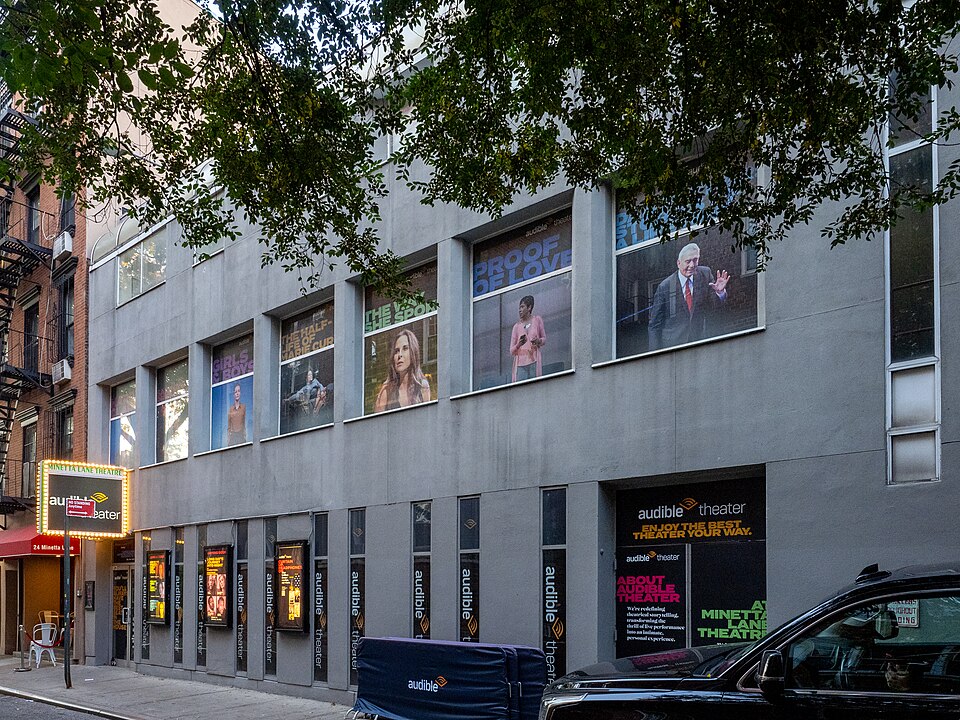
The Village is an excellent neighborhood to pair with downtown Off-Broadway theater, comedy, and music. Several of New York’s most important Off-Broadway venues are within a comfortable radius — either inside the neighborhood or a short walk or subway ride away.
Pre-show dinner in the Village before an Off-Broadway production is one of the more satisfying ways to structure a downtown theater night. The neighborhood is not frantic, the restaurants are good, and the transit connections to nearby venues are clean. Post-show drinks work equally well — the Village stays active, and having a show in common gives the evening immediate conversational momentum.
Nearby Off-Broadway Venues
You may also want to explore how Broadway and Off-Broadway compare if you are deciding between venues for your trip.
Getting There: Transit & Arrival
The subway is the right way to arrive at Greenwich Village for a night out. Driving is possible but adds friction that is rarely worth it — the streets are narrow, the parking situation is genuinely difficult, and the walk from a garage to anywhere useful in the Village may be longer than expected.
Parking & Rideshare: The Reality
Parking in Greenwich Village is limited, expensive, and frequently unavailable at the hours when you most want it. The streets in much of the neighborhood are narrow enough that even finding the right block can be disorienting. Weekend and evening traffic on the surrounding avenues adds time to any driving plan.
If you are driving because you have no alternative: book a garage in advance, expect to pay, and accept that you will be walking several blocks to your destination. Do not plan to find street parking on a Saturday night.
Rideshare is meaningfully better than driving yourself — you eliminate the parking variable — but pickup and drop-off in the Village comes with its own friction. Request on wider streets like 6th Avenue, 7th Avenue South, or Houston rather than on the narrow side streets where the address and the actual accessible location may not match.
Nearby Neighborhood Connections
Greenwich Village sits at the intersection of several important downtown Manhattan neighborhoods. To the east is the East Village, NoHo, and Astor Place. To the north is Union Square — one of the most transit-connected intersections in the city, and a natural extension of a Village evening. To the south is SoHo. To the west, the neighborhood blends into what many people call the West Village — the quieter, more residential blocks below 14th Street west of 7th Avenue South.
Greenwich Village vs. West Village
Greenwich Village is the broader neighborhood name. In everyday NYC use, “West Village” generally refers to the western, more residential part of Greenwich Village, especially west of 7th Avenue South, though casual boundaries vary. For visitors, the practical difference is less about a hard line and more about feel: the MacDougal / Bleecker / Washington Square core is busier and more performance-oriented, while the western side tends to feel quieter, more residential, and more restaurant-and-stroll focused.
The most natural extension of a Greenwich Village night is Union Square, which offers additional dining, transit connections, and the Daryl Roth Theatre if Off-Broadway is part of the plan.
Note: NoHo, East Village, West Village, Astor Place, SoHo, and Chelsea are mentioned here as geographic context only. Stage & Street neighborhood guide pages for those areas will be listed when available.
Who Greenwich Village Is Best For
- Couples looking for a genuinely atmospheric date night
- Friend groups who enjoy wandering and improvising as the evening develops
- Visitors who want a real neighborhood experience rather than curated tourism
- Comedy fans who prefer intimate rooms to arena-scale stand-up
- Jazz and music lovers interested in small-venue performance
- Off-Broadway audiences pairing dinner with a show at a nearby venue
- NYU-area visitors and people staying in lower Manhattan or the East Village
- Repeat NYC visitors who have already done Midtown Broadway and want something more layered
- Anyone who prefers atmosphere over spectacle
- Large groups needing simple parking and logistics
- Anyone who cannot manage without a car nearby
- Visitors who want Times Square energy or Broadway marquee spectacle
- Families with very young children planning a late-night evening
- People who dislike crowds on weekend nights, particularly around Washington Square
- Anyone who needs a rigid, fully planned evening with no room for improvisation
- Groups looking for big clubs, bottle service, or arena-scale nightlife
What to Check Before You Go
- Restaurant hours and reservation availability — verify before the day, not the hour
- Kitchen close time — different from restaurant close time; some Village spots close the kitchen earlier
- Comedy or music show start time and ticket policy — many rooms have specific set times and drink minimums
- Subway service changes — check the MTA for weekend or late-night service advisories before heading out
- Rain or cold weather plan — the Village is a walking neighborhood; have a backup if the weather changes
- Walking distance between your stops — Greenwich Village distances can be deceptive on the irregular street grid
- Parking garage if driving — book in advance and expect to walk
- Washington Square Park current hours and rules if planning around it late
- Whether the night should anchor on dinner or a show — plan the fixed commitment first, then build around it
Frequently Asked Questions
Greenwich Village is in Lower Manhattan, centered around Washington Square Park and the West 4th Street area. For practical visitor planning, the neighborhood sits south of 14th Street and north of Houston Street, with the West Village forming its quieter western portion and NoHo, the East Village, Union Square, and SoHo nearby.
Start with Washington Square Park, then build around the neighborhood’s strongest cultural anchors: comedy at Comedy Cellar, jazz at Blue Note, live music at Cafe Wha?, Stonewall National Monument and Christopher Park, Off-Broadway theater, and a walk through MacDougal, Bleecker, Minetta Lane, and the surrounding side streets. The neighborhood works best when one or two fixed stops are combined with unstructured walking time.
Yes. Current neighborhood options include Walker Hotel Greenwich Village at 52 West 13th Street, Washington Square Hotel at 103 Waverly Place, and The Marlton Hotel at 5 West 8th Street. Greenwich Village has less hotel inventory than Midtown, so compare the exact block, nearby subway access, and whether your trip actually benefits from being based downtown before booking.
Yes — for the right kind of night out. Greenwich Village is excellent for dinner, drinks, comedy, music, and atmospheric wandering. It is not the right choice if you need one huge headlining venue, easy parking, or a perfectly scripted plan. But for an evening built around good food, conversation, and a downtown neighborhood that has genuine character, it consistently delivers.
Historically, comedy clubs, jazz and music rooms, independent restaurants, bars with local regulars, and the general creative downtown energy around Washington Square Park and the Bleecker / MacDougal corridor. The specific venues change; the character of the neighborhood has remained consistently suited to the kind of night that unfolds rather than the kind that is fully booked in advance.
One of the best in the city. The combination of atmospheric streets, walkability, good restaurants at various price points, and easy access to comedy, music, and drinks makes it a natural date-night neighborhood. It works especially well for evenings where neither person wants to over-plan — the Village gives enough options and variety that the night can develop naturally.
For most of the neighborhood, the A, C, E, B, D, F, and M trains to West 4th Street–Washington Square are your best option. For the western edge of the Village (closer to the Hudson), the 1 train to Christopher Street–Sheridan Square is more direct. From Times Square–42 Street, the A or C train to West 4th is a clean single-seat ride. From elsewhere in Midtown, the best line depends on your starting station.
Yes. Washington Square Park is at the heart of Greenwich Village, on the south edge of NYU’s campus. The arch at the north entrance and the central fountain are the park’s most recognizable features. It functions as the neighborhood’s de facto public square and is a useful meeting point and transitional space for evening plans.
Not particularly. Broadway’s Theater District is in Midtown Manhattan, roughly 2 miles north of Greenwich Village. The neighborhoods feel very different — Broadway/Times Square is a dense Midtown commercial corridor; Greenwich Village is a downtown residential and creative neighborhood. They are connected by subway (about 20–25 minutes) but are meaningfully different experiences.
Yes — particularly for shows at nearby venues. The Lucille Lortel Theatre on Christopher Street is walking distance from the heart of the Village. The Public Theater at Astor Place and the Daryl Roth Theatre at Union Square are each a short subway ride or brisk walk away. Pre-show dinner in the Village before a nearby Off-Broadway production is one of the more satisfying ways to structure a downtown theater evening. See our Off-Broadway guide for more.
No. The parking situation is genuinely difficult: limited spots, high rates, tight streets, and the irregular grid that makes even knowing where to look for a garage harder than it should be. Take the subway or use rideshare. If driving is unavoidable, book a garage in advance, accept the walk, and do not count on finding street parking anywhere near where you want to be.
Yes, for tourists who are comfortable with some ambiguity. The neighborhood is not primarily organized around tourism — it is a real neighborhood where people live, and that is most of what makes it worth visiting. Tourists who want a tightly scripted experience with no navigation challenges and guaranteed availability may find it slightly frustrating. Tourists who are comfortable using a map, making adjustments, and letting the evening develop will typically have an excellent night.
In casual use, the terms often overlap. Technically, Greenwich Village is the broader neighborhood; West Village is commonly used to refer to the quieter, more residential area west of 7th Avenue South, roughly between 14th Street and Houston. The West Village tends to be slightly more expensive, more residential, and less overtly commercial than the core Village streets around MacDougal and Bleecker. For night-out planning purposes, both areas work well, and the distinction matters less than the specific block you are on.
The MacDougal, Bleecker, and Minetta Lane zone in the heart of the Village is the most practical pre-night-out dining area — dense enough that you have options if your first choice is full, and walkable to wherever the rest of the evening takes you. Reserve in advance for weekends and popular times. Check current hours and menus directly with any restaurant before committing. See our pre-show dining guide for timing strategy.
All four — and the combination of them is exactly what makes the neighborhood work for a full evening. It is particularly strong for dinner as a social experience and for the kind of after-dinner wandering that leads to a bar or a late comedy set. It is less strong for anyone who needs one of those categories to dominate an otherwise structured night. The Village rewards combining them, not choosing between them.
Keep Planning the Night
Use these guides to build out the rest of your Greenwich Village visit — restaurant strategy, hotels, nearby neighborhoods, Off-Broadway context, transit planning, and the broader night-out system.
Planning Guides — Neighborhoods, Dining, Shows & Transit
At a Glance
- What It Is Professional theater in venues of 100–499 seats Distinct from Broadway by size, not ambition
- Best For New plays · intimate musicals · star-driven limited runs · adventurous theater
- Geography Spread across NYC — not one district Downtown, Midtown, Theater Row, Union Square, and beyond
- Tickets Typically less expensive than Broadway · rush / lottery / discount options vary by show
- Planning Rule Always check which venue your show is in — each has its own neighborhood, transit, and logistics
Current & Priority Shows
Off-Broadway Venues
Plan & Compare
Dining, Neighborhoods & Hotels
- Pre-Show Dining Guide Strategy →
- Best Pre-Theater Restaurants Dining →
- Best Post-Show Restaurants Late Night →
- Greenwich Village Guide Downtown →
- Union Square Guide Midtown-S →
- Hell’s Kitchen Guide 42nd St →
- Theater District Guide Area →
- Hotels in NYC Stay →
- NYC Transportation Guide Transit →
- More Planning Guides Planning ↓