

Lunt-Fontanne Theatre Seating Chart: Best Seats, Mezzanine, Boxes & Accessibility Tips
A practical guide to choosing seats at the Lunt-Fontanne Theatre — Orchestra vs Front Mezzanine vs Rear Mezzanine, raised-stage sightlines, box-seat tradeoffs, stair warnings, accessibility, and where to sit for Blue Man Group: A New Holiday Surprise.
The Lunt-Fontanne Theatre is one of Broadway’s larger musical houses — 1,505 seats in a Beaux-Arts room that has been home to Beauty and the Beast, Tina: The Tina Turner Musical and Death Becomes Her (November 2024 – June 2026). This holiday season it hosts Blue Man Group: A New Holiday Surprise (November 12, 2026 – January 3, 2027), and Lin-Manuel Miranda and Eisa Davis’s Warriors is announced for spring 2027. In a house this size, seat choice matters more than it might at a smaller venue. A seat that feels perfect at an 800-seat theater can feel too close, too angled, or too distant here.
Two things change the Lunt-Fontanne equation most significantly: the raised stage and the stair requirement. The raised stage means rows A through C are very close and may require looking upward — which is fine for some visitors and uncomfortable for others. Center orchestra rows D through J give you a cleaner, more comfortable view of the show’s full production. The stair requirement means all Mezzanine and Box seating requires stairs, with no elevator or escalator available anywhere in the theater. If step-free access matters for any member of your group, book Orchestra.
For big, visual productions — the kind this room books — the seat-buying logic prioritizes full-stage legibility over maximum closeness. That holds for Blue Man Group’s paint, percussion and lighting as much as it did for the spectacle musicals before it.
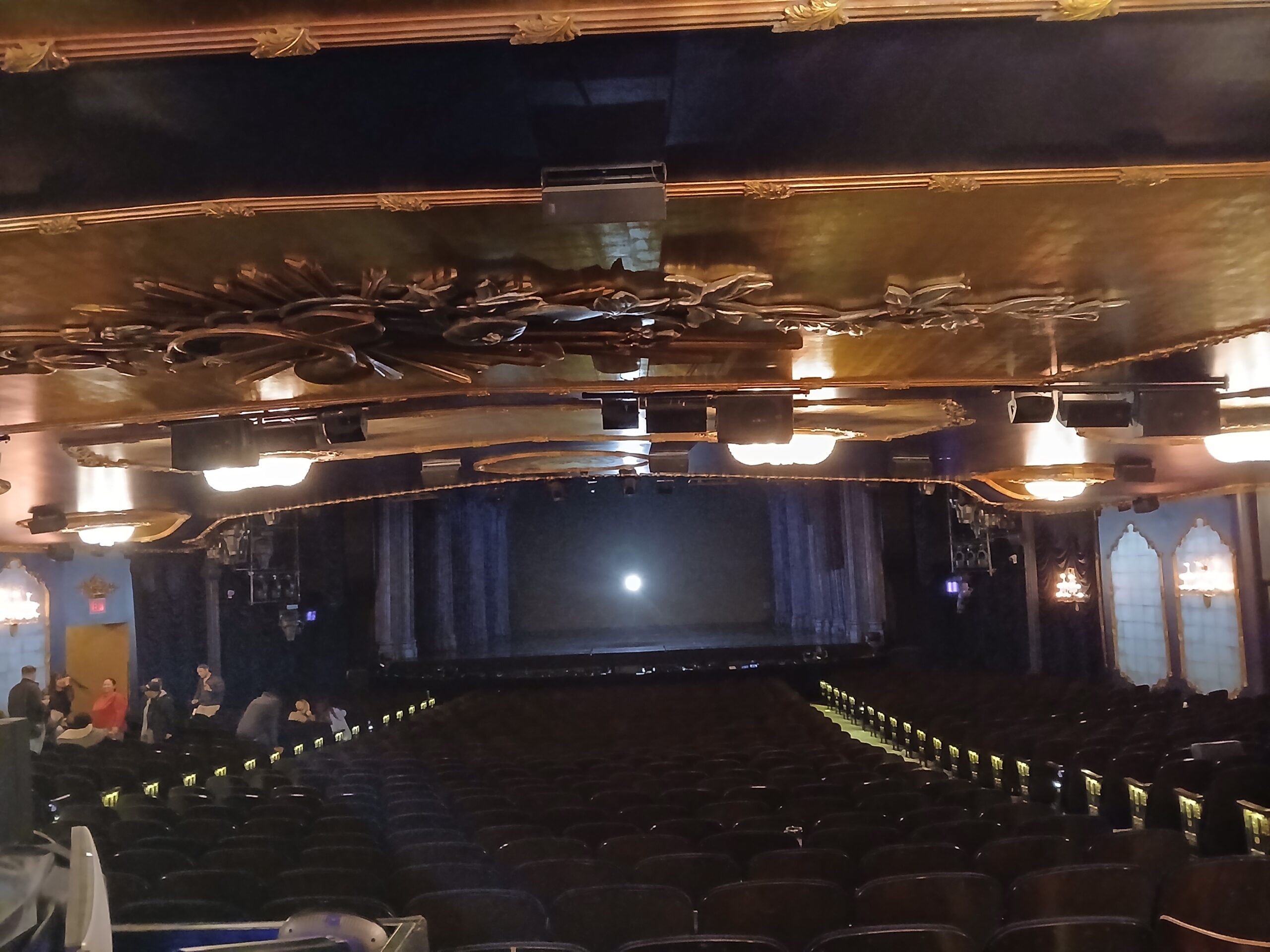
Seating Chart Overview — A Grand Broadway Musical House
The Lunt-Fontanne was designed by Carrère and Hastings in the Beaux-Arts style and opened in 1910 as the Globe Theatre. Rebuilt in 1958 to its current configuration, it was renamed for Alfred Lunt and Lynn Fontanne — the celebrated acting couple whose private collection of photographs is displayed in the lobby areas. At 1,505 seats, it is one of Broadway’s larger musical houses, and one of the Nederlander Organization’s nine Broadway theaters.
The seating is distributed across three main zones — Orchestra (~860 seats), Front Mezzanine (~168 seats across 5 rows), and Rear Mezzanine (~462 seats across 13 rows) — plus 20 box seats in two boxes on either side of the auditorium. The Front Mezzanine is notably compact at just 5 rows, which makes it feel more intimate than a typical mezzanine. The Rear Mezzanine is substantial, and in a 1,500-seat house, its distance from the stage is genuinely felt.
The most reliable all-around section. Strong performer detail, comfortable stage angle, full production picture, step-free access. The default recommendation for most visitors.
Elevated spectacle view — strong for seeing a show’s full production and lighting design. Only 5 rows total. Often below orchestra premium pricing. Stairs required.
Most affordable. Front center rows work for a visually large show. Distance is genuine at 1,500 seats. Stairs required. Far back rows and side positions are less advisable.
Orchestra Seats — The Main Floor
The orchestra is the most reliable, most accessible level at the Lunt-Fontanne. Step-free from the main entrance on West 46th Street, it houses all the wheelchair seating and offers the most direct connection to the show. For the big, physical productions this house books, the orchestra gives you the performance at close to mid-range distance with a comfort level that the very front rows don’t always match.
Center Orchestra, Rows D–J/K — The Premium Sweet Spot
This is the section that both SeatPlan and TickPick single out as the best in the house: “rows D to J, Center Orchestra combine good detail with a comprehensive view of the stage.” From here, you’re close enough to read expressions and physical comedy, far enough from the raised stage to avoid a steeply upward-looking angle, and centered enough for the full production picture — costumes, effects, choreography — to read as one complete stage spectacle.
Within this range, rows D through G are the closer end — excellent for facial detail and the physical precision of the comedy. Rows H through J are slightly more comfortable, with nearly identical sightlines and often at a lower price. Row K and slightly beyond remain strong for large-scale shows, which communicate clearly at that distance.
Front Orchestra, Rows A–C — Close But Know the Tradeoff
The very front rows at the Lunt-Fontanne are dramatically close to the raised stage. The excitement is real — you’re near the performers, the costumes are at close range, the comedy lands with immediate physical impact. The tradeoff is equally real: the raised stage means rows A and B in particular can require looking upward through much of the show. SeatPlan reviewers specifically warn that shorter visitors may need booster cushions in these seats.
Row C is meaningfully better than A or B for most visitors — still very close, but at a distance where the stage angle becomes less steep. Row D is where the sightline becomes comfortable for the full show without sacrificing proximity. For most visitors, rows D through G center orchestra deliver everything the front rows offer, with none of the neck strain.
Side Orchestra — Center Strongly Preferred
In a house with the Lunt-Fontanne’s width, side orchestra seats lose the balanced full-stage view faster than in smaller theaters. Inner side orchestra seats — particularly in mid-range rows — can be acceptable value. Far outer side orchestra can miss visual effects, scenic elements on the opposite side of the stage, and the full stage picture. In a show that uses the full width of a large stage for choreography and comedy, a far side angle means you’re consistently missing part of the picture.
The consistent rule: a centered seat in rows L–N beats a side seat in rows D–F for most visitors.
Rear Orchestra, Rows L–N Center — The Value Zone
SeatPlan specifically calls out “rows L–N in the Center Orchestra” as value picks — “cheaper than premium” and still delivering “good detail.” In a 1,500-seat house, rear orchestra center is farther from the stage than in smaller rooms, but it’s step-free, it’s accessible, and it keeps you on the same level as the performance. For budget-conscious visitors who want Orchestra access without the premium row prices, center rows L–N are the recommended target. Note that at the very rear of the orchestra, the mezzanine overhang may begin to affect sightlines to the top of the stage — verify from the current seating map before purchasing the last few rear-orchestra rows.
Center orchestra rows D through J is the most reliable, most versatile choice in the house — the right distance from the raised stage, centered for the full production picture, and step-free for any visitor who needs it.
Front Mezzanine Seats — The Best Elevated View in the House
All Mezzanine and Box seating at the Lunt-Fontanne requires stairs. There is no elevator and no escalator anywhere in the theater. The Front Mezzanine entrance is behind orchestra row E; inside the section, there are approximately 2 steps up or down per row. If step-free access is required for any member of your group, book Orchestra only.
Front Center Mezzanine, Rows A–D — One of the Best Seats in the House
The Front Mezzanine at the Lunt-Fontanne is unusually compact — just 5 rows (A through E) — which makes it feel more intimate than a typical mezzanine. SeatPlan rates rows A and B as delivering “excellent, detailed overhead views” and describes front mezzanine center as one of the strongest vantage points in the theater. From here, you have an elevated full-stage perspective that reveals the complete production design: choreography, scenic effects, lighting and visual gags as a single picture.
For visually ambitious productions — elaborate effects, staging that uses the full stage width, big lighting design — the elevated mezzanine view often reveals things the orchestra-level view can’t. The top of the stage picture is fully legible, the choreography reads as a complete composition, and the production’s scale becomes most evident.
Rows C and D of the center front mezzanine are specifically noted as value picks — lower in price than A and B, but with only a modest difference in the view quality in a section this small. When the price gap between mezzanine rows A–B and C–D is significant, the latter offer one of the best dollar-per-sightline positions in the theater.
Legroom note: SeatPlan reviewers note that legroom can be tight in the Front Mezzanine. The transfer seats at E19, E20, and E114 (aisle positions) can help if legroom or mobility within the row is a concern — though reaching these seats still requires stairs.
Side Front Mezzanine — Inner Possible, Outer Loses the Picture
Inner side front mezzanine can be acceptable at the right price — the elevation partially compensates for horizontal angle, and the section is small enough that even slightly off-center positions are closer to the stage picture than in a larger mezzanine. Outer side front mezzanine loses the clean full-stage advantage. For a wide-staged show, outer side mezzanine means you’re angled away from parts of the stage where significant choreography and effects may occur. Center is strongly preferred at any price difference that’s meaningful.
Rear Mezzanine Seats — The Budget Compromise
The Rear Mezzanine at the Lunt-Fontanne has 13 rows (A through N) and approximately 462 seats. In a 1,505-seat house, this is genuinely far from the stage — farther than rear mezzanine would feel in a smaller house. That’s the honest reality of budget seating in a large Broadway musical venue, and it’s worth knowing before purchasing.
Rear Mezzanine Center, Front Rows A–D — The Budget Target
The front rows of the center rear mezzanine are the only zone in the rear mezzanine that can be recommended with reasonable confidence. The big, visual shows this house books communicate at a distance in a way a small, intimate play would not: choreography, scenic effects and lighting stay legible. What diminishes is the fine detail: facial expressions, nuanced physical comedy, and the smaller visual gags. Those are real tradeoffs for any show where the performers’ faces carry the comedy.
If the rear mezzanine is the budget choice, center rows A through D are the target. Beyond row D, the distance compounds further. When a production offers a digital lottery or in-person rush, that is often a path to better seats at a similar price; check the current show’s discount options before settling for the rear mezzanine.
Rear Rows and Side Positions — Approach with Caution
Rows E through N of the rear mezzanine are the most distance-compromised seats in the house. The Lunt-Fontanne is a large enough theater that these positions are genuinely far from the stage — big visual design communicates the broad strokes, but comedy that depends on physical precision and expression is harder to access from here. Side positions in the rear mezzanine add horizontal angle to an already challenging distance. Only consider these seats when the price is meaningfully lower than all other alternatives.
Box Seats — A Specialty Experience, Not a Standard Best-Seat Pick
The Lunt-Fontanne has two boxes, with 10 seats each (20 total). They are positioned on either side of the Front Mezzanine level — elevated, side-angled, and somewhat set apart from the main seating bowl. They require stairs to reach and are not available with step-free access.
Box seats offer something distinctive: a sense of private elevation, a theatrical-historical atmosphere, and a view of both the stage and the audience that creates a different relationship to the performance. For the right visitor — a theater fan on a return visit, someone who finds the side-angle view interesting, or a group that wants a unique perspective on a familiar show — boxes can be a memorable choice.
For most productions here, however, box seats are not the optimal sightline choice. Choreography, stage effects and comedy sequences are usually designed to be seen from the center of the house. From a box, one side of the stage is more in your direct sightline than the other, and the effects and production elements on the opposite side of the stage may be partially obscured or read at a compromised angle. The front center mezzanine delivers a far more reliable view of the full production for a similar or lower price.
Boxes are a legitimate novelty and atmospheric experience. They are not a pure sightline upgrade.
Blue Man Group — Where to Sit for the Holiday Run
Blue Man Group: A New Holiday Surprise is the group’s first-ever Broadway engagement: holiday tunes played on the Blue Men’s custom instruments, paint, comedy and audience participation, with no dialogue. Performances begin November 12, opening night is November 17, and the limited run ends January 3, 2027.
About 90 minutes with no intermission. Recommended for ages 3 and up. Expect loud drumming and flashing, strobe-like lighting. Official prices run $48.25–$274, and as of October 12 no rush or lottery had been posted.
Blue Man Group is a wordless show built on percussion, paint, lighting and the Blue Men pulling people out of the audience. There’s no plot to follow, so the seat question is really two questions: how close do you want to be to the action (and the mess), and how much of the lighting and full stage picture do you want to take in?
Center Orchestra D–J — The All-Round Pick
Close enough to see the Blue Men’s deadpan expressions and the paint flying, far enough from the raised stage that you’re not craning your neck, and step-free. With small kids, this is the easiest place to be: no stairs, quick exits to the restroom, and no intermission to plan around.
Front Orchestra A–C — For Brave Kids and Superfans
The closest seats are the most likely to get pulled into the act or catch whatever comes off the stage. Poncho seats haven’t been confirmed for this Broadway run, so check seat details before you buy if getting messy matters either way. The raised stage still applies here, and booster cushions are available for shorter visitors.
Front Center Mezzanine A–D — The Lighting Picture
A lot of Blue Man Group is lighting and stage pictures, and the front mezzanine shows them off as one composition. It’s often below orchestra premium pricing. Stairs only, though, so skip it with very young kids or anyone who can’t manage steps.
Best Seats by Visitor Type
Step-free, centered, and the most reliable position in the house. Center orchestra rows D–J put you where large-scale shows are designed to be experienced.
For Blue Man Group (ages 3+, 90 minutes, no intermission): step-free, close to the action, and an aisle seat makes a mid-show bathroom trip easy. Front rows A–C only if your kids want to be picked.
See the complete production design — sets, costumes, lighting and effects — as a unified visual composition. Rows A–B for premium elevated views; C–D for strong value. Stairs required.
Orchestra rows L–N stay step-free and centered for a meaningfully lower price than premium rows D–K. Front mezzanine C–D deliver excellent elevated views below the price of A–B. Both are strong dollar-per-sightline positions.
No elevator. No escalator. All Mezzanine and Box seating requires stairs. Wheelchair seating is in the rear orchestra. Aisle transfer seats in Orchestra rows D, F, G, R, T, Z. Contact Broadway Direct (212-575-9200) or the box office before purchasing.
Center orchestra for the immersive premium experience. Front mezzanine center for an elevated theatrical view at potential savings. Both are strong for a memorable night out.
Orchestra avoids all stairs. For older visitors or families who want the easiest logistics, any centered orchestra row works — D–J for premium, L–N for value. Do not book Mezzanine or Boxes if climbing stairs is even a consideration.
When the current show runs a digital lottery or rush, it often produces better seats at better prices, so check first. Otherwise, front center rear mezzanine rows A–D are the budget floor. Stairs required.
Accessibility — Orchestra Only, Know the Facts
The Lunt-Fontanne Theatre is accessible at the orchestra level. Access from West 46th Street to the ticket lobby and orchestra is step-free. All Mezzanine and Box seating requires stairs — there is no elevator and no escalator anywhere in the theater. This is a firm current limitation confirmed by Broadway Direct, TDF, and BroadwayWorld. If step-free access is needed for any member of your group, book Orchestra.
- Step-free access from West 46th Street to the ticket lobby and orchestra (double doors; first set attended, ramp to second set)
- Orchestra is the only seating level that does not require steps — step-free throughout
- Wheelchair seating in the rear of the Orchestra (pending availability) — up to 1 wheelchair and 3 companion seats per order
- Aisle transfer seats with folding armrests in Orchestra (no stairs): D101, D114, F1, F2, G101, G114, R1, R2, R101, R114, T1, Z101
- Transfer seats also in Front Mezzanine (stairs required): E19, E20, E114
- All Mezzanine and Box seating requires stairs — no elevator or escalator at the Lunt-Fontanne
- Front Mezzanine: entrance behind orchestra row E; approximately 2 steps up/down per row inside
- Rear Mezzanine: entrance in front of row A; approximately 2 steps up/down per row inside
- Theater representatives available to escort patrons with disabilities to designated wheelchair accessible areas
- Accessible (unisex) restroom on the theater’s first floor — designated for guests with disabilities
- Free headsets for sound augmentation (assistive listening) — photo ID required as deposit; contact 212-575-9200 or info@nederlander.com for advance arrangements
- Induction loop / telecoil-compatible system available in the auditorium
- I-Caption automated closed captioning and audio description available (select performances and via personal devices with GalaPro app)
- Service animals and guide dogs permitted (other animals not permitted)
- Box office hours: Mon–Sat 10am–8pm, Sun noon–6pm (extended to 8pm on two-show Sundays)
- For accessibility assistance: 212-575-9200 or through broadwaydirect.com
What to Avoid at the Lunt-Fontanne Theatre
- Do not assume rows A–C are the best seats. The raised stage can create an uncomfortable upward-looking angle in these rows. Rows D–J center orchestra are better for most visitors. Booster cushions are available for shorter visitors in front rows.
- Do not book Mezzanine or Boxes if anyone in your group needs step-free access. There is no elevator and no escalator at the Lunt-Fontanne. This is a firm limitation.
- Do not overpay for far-side orchestra seats when centered seats farther back are available at similar or lower prices. For full-stage effects and choreography, a centered row N beats a side row F consistently.
- Do not treat box seats as automatic upgrades. They offer a distinctive side-angle experience, not a centered premium view. Front center mezzanine delivers a far more reliable view of the full production at a similar or lower price.
- Do not purchase far rear mezzanine or far-side rear mezzanine seats for a first visit. Comedy detail, expression and physical gags are significantly harder to access at that distance and angle in a 1,500-seat house.
- Blue Man Group is a limited holiday run (November 12, 2026 – January 3, 2027) with Mondays and Wednesdays usually dark. If a specific December date matters, book it first and choose the seat second.
How to Choose Between Two Similar Prices
The Seat-Picking Formula
- Best overallCenter Orchestra rows D–J — reliable, comfortable stage angle, step-free, full production picture
- Comedy detailCenter Orchestra rows D–H — close enough for facial gags and physical comedy timing
- Spectacle viewFront Center Mezzanine rows A–D — elevated complete production design; often below orchestra premium; stairs required
- Best valueCenter Orchestra L–N or Front Mezzanine C–D — both offer strong sightlines at reduced prices
- Blue Man GroupCenter Orchestra D–J for the action (aisle seats with kids); Front Mezzanine A–D for the full lighting picture
- AccessibilityOrchestra only — no elevator; wheelchair in rear orchestra; accessible restroom on first floor
- BudgetFront Rear Mezzanine Center A–D — or check the current show for a lottery or rush first
- No stairs at allOrchestra only — any centered orchestra row; L–N for value without premium pricing
- Avoid all riskCenter Orchestra D–J; don’t chase rows A–C or far side seats; don’t book upper levels if stairs are any concern
FAQ — Lunt-Fontanne Theatre Seating
It depends mainly on level and how centered you are. A search for the Lunt Fontanne theatre seat view, Lunt Fontanne view from my seat, Lunt Fontanne theater view from my seat, view from my seat Lunt Fontanne, or view from my seat Lunt Fontanne theatre all point to the same three answers: center orchestra rows D–J gives a clean, comfortable view with no obstruction and no raised-stage angle issue; front center mezzanine rows A–D looks down at a comfortable angle that takes in the full spectacle at once; and seating at Lunt Fontanne theatre on the far sides, at any level, introduces some angle that can cut off parts of a wide staging. The Lunt Fontanne seating view changes meaningfully by row here because of the raised stage — check the section breakdowns above before booking a specific seat.
Center orchestra rows D through J for the safest, most comfortable combination of comedy detail and full-stage legibility. Front center mezzanine rows A through D for the best elevated spectacle view. Both are confirmed top picks; the choice comes down to whether you want proximity or overview.
Center orchestra rows D through J is the most reliable all-around choice — the right distance from the raised stage for a comfortable viewing angle, centered for the full production picture, and step-free. Front center mezzanine rows A through D is an excellent alternative offering an elevated full-stage spectacle view at typically lower pricing. Both are confirmed best-seat positions by SeatPlan, TickPick, and Broadway Direct.
Both are strong for different reasons. Orchestra gives you closer performer detail, step-free access, and the most immediate version of the show’s physical comedy and stage energy. Front mezzanine center gives you an elevated full-stage view where the production design, choreography, and effects read as a complete picture. Orchestra is the answer if step-free access matters. Front mezzanine center is worth considering if the price is significantly lower than orchestra premium and the stairs are manageable.
Yes — front center mezzanine is consistently rated as one of the best views in the house. The section has only 5 rows (A through E), which makes it more compact and intimate than most mezzanines. SeatPlan rates rows A and B as offering “excellent, detailed overhead views.” Rows C and D are specifically cited as strong value picks. The critical caveat: all mezzanine seating requires stairs, and there is no elevator at the Lunt-Fontanne. If step-free access is needed, front mezzanine is not an option regardless of its sightline quality.
The front center rows of the rear mezzanine (rows A through approximately D, center positions) can work for big, visual shows, whose spectacle is broad enough to communicate at this distance. Beyond the front rows, the distance becomes genuinely challenging in a 1,500-seat house. Far rear positions and side positions are the most compromised viewing areas in the theater. If the current show runs a lottery or rush, it is worth trying before settling for rear mezzanine tickets.
Box seats offer a distinctive experience — elevated, side-angled, private-feeling — but they are not the standard “best seats” in the conventional sense. From a box, one side of the stage is more in your direct sightline than the other, which can mean missing visual effects and choreographic sequences that happen on the far side of the stage. For shows that use the full stage width, front center mezzanine delivers a far more reliable view. Boxes are interesting for repeat visitors or theater fans who want a different perspective — not recommended as a first choice.
Center orchestra rows D through J is the best all-round choice for Blue Man Group: A New Holiday Surprise — close to the action, comfortable from the raised stage, and step-free, which matters with young kids. Front orchestra rows A through C are the most likely to be pulled into the act, though poncho seats have not been confirmed for this Broadway run. Front center mezzanine rows A through D show off the lighting and full stage picture but require stairs. The run is November 12, 2026 through January 3, 2027.
Yes — it’s a grand, impressive room built for big, visual shows. Center orchestra rows D through J is the safe recommendation for a first visit: a large production works on every level from here, the theater’s scale is impressive without being overwhelming, and the step-free access keeps the logistics simple. The one note: if anyone in your group needs step-free access, book orchestra only — there are no elevators or escalators to any other level.
No. There is no elevator and no escalator at the Lunt-Fontanne Theatre. Orchestra seating is step-free from the street. All Mezzanine and Box seating requires stairs. If elevator access is required for any member of your group, book orchestra seating and contact Broadway Direct (212-575-9200) in advance to confirm accessible seating arrangements.
Yes, at the orchestra level. Step-free access from West 46th Street, step-free throughout the orchestra, with wheelchair seating in the rear orchestra section and aisle transfer seats in multiple orchestra rows. Accessible restrooms are on the theater’s first floor. All Mezzanine and Box seating requires stairs — no wheelchair access to those levels. Contact Broadway Direct or the box office (212-575-9200) before your visit to confirm accessible seating availability and arrangements.
Approach with caution: orchestra rows A and B (raised stage angle can require looking upward — booster cushions available), far outer side orchestra (misses parts of the full-stage production in a wide house), far rear and side rear mezzanine (distance compounds with angle for the most challenging views), and box seats for visitors who want the centered stage picture. Also avoid Mezzanine and Boxes entirely if any member of your group has difficulty with stairs.
Yes — the Lunt-Fontanne has a raised stage. This affects the very front orchestra rows (A through approximately C) most significantly. From these seats, viewers — particularly shorter visitors — may need to look upward at the performers, which can become uncomfortable over the course of a long show. Booster cushions are available at the theater for visitors in the front rows. Rows D and beyond give a more comfortable sightline to the stage. This is one of the key reasons experienced theatergoers consistently recommend rows D–J over rows A–C at this venue.
The Lunt-Fontanne has 1,505 seats (Nederlander Organization official count), distributed across Orchestra (~860 seats), Front Mezzanine (~168 seats across 5 rows), Rear Mezzanine (~462 seats across 13 rows), and 20 box seats in two side boxes. It is one of Broadway’s larger musical houses — larger than many nearby theaters, which is why center placement and distance from the raised stage matter more here than in smaller houses.
The theater was built in 1910 as the Globe Theatre — named in honor of Shakespeare’s famous London playhouse. It operated as the Globe until 1932, when it was converted to a movie house. In 1957, City Playhouses Inc. acquired the building and had it gut-renovated; it reopened in 1958 as the Lunt-Fontanne Theatre, named in honor of Alfred Lunt and Lynn Fontanne, the celebrated husband-and-wife acting couple who starred in its first production after the renovation (Friedrich Dürrenmatt’s The Visit). A collection of photographs from their private collection is on display throughout the theater’s lobby areas. The theater’s facade on 46th Street is a New York City designated landmark.
The front center rows of the rear mezzanine (rows A–D) are workable for big, visual shows — spectacle and broad visual comedy communicate at this distance better than a small intimate play would. Beyond those front rows, and particularly in side positions, the rear mezzanine in a 1,500-seat house is genuinely far. Physical comedy timing, costume details, and smaller visual gags are harder to read. For a special night out, front center mezzanine delivers a much better experience for a price often not dramatically higher.
Pick Center, Skip the Stairs If You Need To
Blue Man Group plays the Lunt-Fontanne from November 12, 2026 through January 3, 2027. Center orchestra D through J for the action up close, front center mezzanine for the lighting and full stage picture, and orchestra only if stairs are a problem. However you get in: stay centered, sit back from the raised stage, and expect a little paint.
See the Spectacle — Then Build the 46th Street Night
The Lunt-Fontanne is a large Broadway musical house where the best seat depends on scale, stage height, center alignment, and stairs. Center Orchestra gives the strongest mix of detail and comfort, Front Center Mezzanine gives the clean spectacle view, Rear Mezzanine is the budget tradeoff, and Boxes are a specialty side-angle choice.
Lunt-Fontanne Theatre Guide
Go deeper on the theater itself: West 46th Street location, Globe Theatre history, Beaux-Arts facade, accessibility, subway access, and full-night planning.
Open Theater Guide 🥁 Holiday Run · Nov 12 – Jan 3Blue Man Group: A New Holiday Surprise
The 90-minute, no-intermission holiday show built for families and first-timers. Tickets, ages, show length, dinner timing and how to plan the night around it.
Open Show GuideMore Seating & Ticket Strategy
Seats · Timing · ValueBroadway Seating Guide
Compare orchestra, mezzanine, balcony, boxes, side seats, premium zones, and obstructed-view listings across Broadway houses.
When to Buy Broadway Tickets
Know when buying early matters, when waiting can work, and how timing changes for limited runs, weekends, holidays, and strong seat inventory.
Last-Minute Broadway Tickets
TKTS, same-day listings, rush, lottery, and practical ways to compare late options without choosing awkward seats blindly.
Broadway Rush and Lottery Tickets
How discount systems work, what tradeoffs to expect, and why cheap seats can be great — or risky — depending on the view.
First-Time Broadway Guide
For visitors choosing their first show or first theater: seats, arrival, timing, intermission, dress, and Theater District basics.
Best Broadway Shows for Date Night
Compare Broadway nights by tone, dinner pairing, room feel, pacing, and how the whole evening works beyond the ticket.
Plan the Lunt-Fontanne Theatre Night
Dinner · Hotels · TransitRestaurants Near Broadway
The Lunt-Fontanne sits on West 46th Street, close to Restaurant Row, Times Square, and Hell’s Kitchen dining.
Restaurants Near Times Square
Useful for visitors staying near Times Square or coming in from the central subway-heavy Theater District zone.
Pre-Show Dining Guide
Plan reservation timing, walking buffer, check arrival, and post-show movement so dinner and theater work together.
Hotels Near Broadway
Compare Theater District, Times Square, Midtown West, and Hell’s Kitchen hotel zones for a Broadway-centered trip.
How to Get to a Broadway Show
Subway, walking, rideshare, and arrival timing for Theater District shows, including the West 46th Street houses.
Parking Near Broadway
When driving makes sense, when it does not, and how to avoid turning a Broadway night into a Midtown garage problem.
Nearby Neighborhood & Theater Guides
46th Street · Theater District · Nearby HousesTheater District
The practical guide to Broadway’s center: theaters, crowds, hotels, restaurants, walking routes, and first-time visitor logistics.
Times Square
Best when convenience, subway access, and being right in the center matter most — especially for short Broadway trips.
Hell’s Kitchen
A strong nearby option when dinner matters — more restaurant depth, calmer blocks, and an easy walk west after the show.
Lena Horne Theatre Guide
A nearby 47th Street house useful for comparing midsize musical staging, Mezzanine decisions, and Theater District routes.
Palace Theatre Guide
A nearby Times Square landmark useful for comparing restored-house context, scale, access, and Midtown planning.
Richard Rodgers Theatre Guide
A nearby 46th Street Broadway house useful for comparing musical-house sightlines, location, and night-out planning.