

Imperial Theatre Seating Chart: Best Seats, Mezzanine Views & What to Avoid
A practical guide to choosing seats at the Imperial Theatre — orchestra vs front mezzanine, rear mezzanine value, center-vs-side sightlines, stair warnings, accessibility, and how the right seat changes between a big musical and a solo show.
The Imperial Theatre seating chart has two levels, the Orchestra and the Mezzanine, with the Mezzanine ticketed as Front and Rear sections and no balcony. This guide shows which rows and sections work best, where the views narrow and what the stairs mean before you buy. The advice is about the room itself, so it holds for any production.
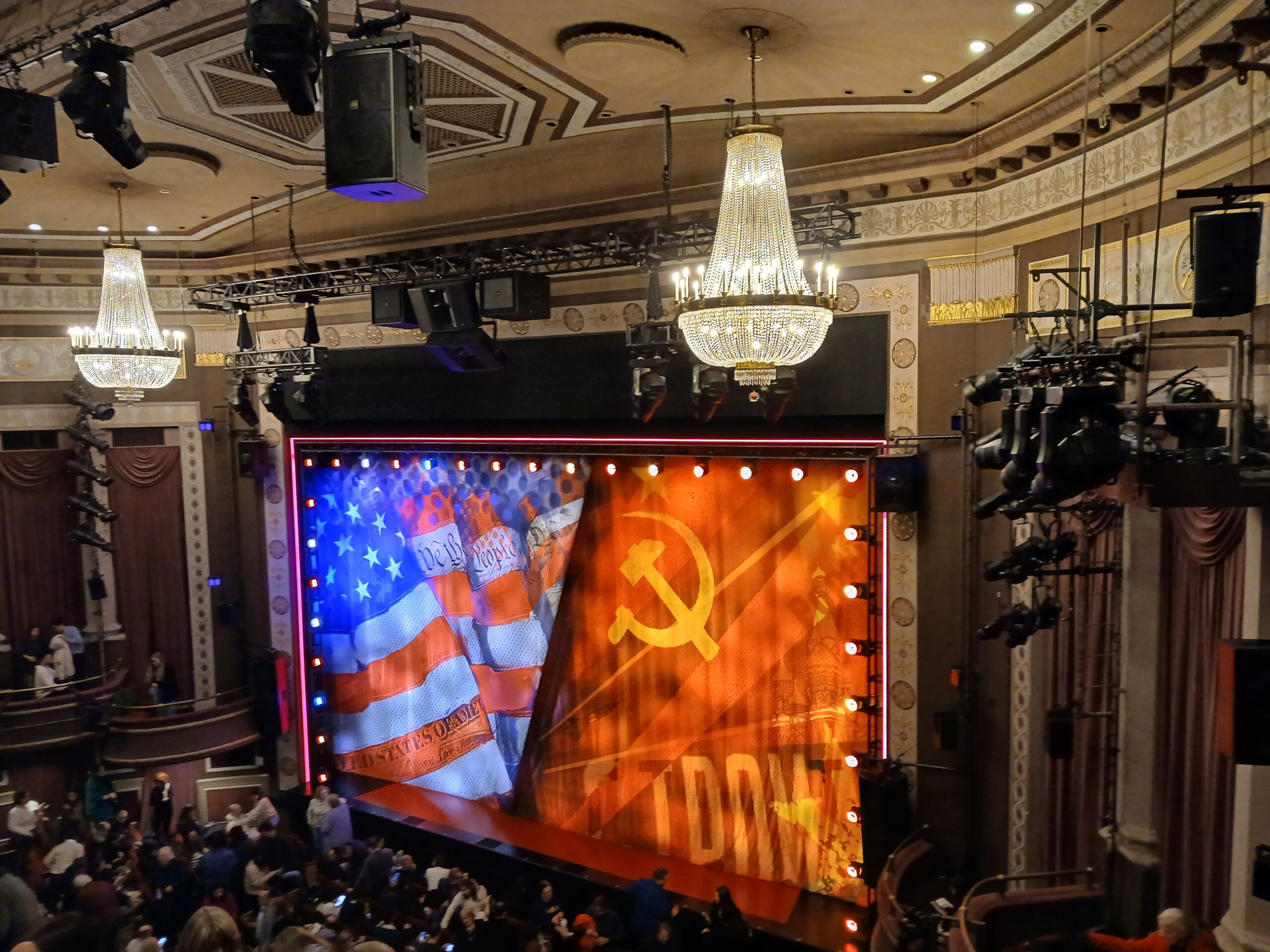
The Imperial is a classic large Broadway musical house — 1,457 seats, two seating levels, no balcony, and a wide auditorium with a long record of hosting some of Broadway’s biggest musicals. The seat-buying logic here is different from a small playhouse. Closer is not automatically better, and side seats lose their advantage faster in a wide room than they would in a narrow one.
The mezzanine is divided into Front and Rear sections, both reached by two flights of stairs. There is no elevator and no escalator. That single fact changes the decision for a significant portion of visitors — anyone who needs step-free access, or anyone traveling with someone who does, should book orchestra and stop there.
For everyone else, this guide compares center orchestra with front mezzanine, explains the rear mezzanine honestly, and shows how the best seat shifts with the production — a big, full-stage musical rewards the mezzanine overview, while a play or a solo show like Billy Crystal’s 860 rewards a centered seat in the orchestra.
1,457 seats across Orchestra, Front Mezzanine, and Rear Mezzanine. A wide classical musical house built by the Shubert Brothers in 1923 and one of Broadway’s most storied venues. Previous productions include Les Misérables, Billy Elliot, Dreamgirls, Gypsy, and Chess — which premiered here in 1988 and returned for its first Broadway revival in 2025–26.
Seating Chart Overview — A Wide Musical House
The Imperial’s three ticketing sections — Orchestra, Front Mezzanine, and Rear Mezzanine — are the entire house. There is no balcony. The orchestra takes up the main floor, and both mezzanine sections sit above it on the second level. At 1,457 seats, it’s large enough that section and placement matter, but the width of the room is the key variable — center positions outperform side positions more reliably here than at narrower houses.
The reliable, versatile premium pick. Full stage width, performer detail, step-free access, and the right distance for a house this size.
Elevated full-stage view — often the best sightlines in the house for choreography, lighting, and scale. Typically priced below center orchestra premium. Stairs required.
Workable for a large musical if center placement is maintained and stairs are manageable. Weaker for a play or solo show, and not for visitors who need step-free access.
Imperial Theatre Seating Chart: Orchestra, Front Mezzanine and Rear Mezzanine at a Glance
The Imperial Theatre seating chart has two levels, the Orchestra on the main floor and the Mezzanine above, with the Mezzanine ticketed as Front and Rear sections. Wikipedia and Broadway Direct list 1,457 seats, and other sources give totals from about 1,417 to 1,425, so treat counts as approximate and confirm on the official map for your performance date.
Imperial Theatre NYC Seating Chart: How to Read It
Read the chart by level, section and row. Orchestra rows run from AA at the front to U at the rear, and the Mezzanine restarts at row A in the Front section and continues into the Rear section. Each level splits into Left, Center and Right. The Mezzanine is up 23 steps (two flights) with about 2 steps per row, so the level matters as much as the row. For exact seats use the ticket listing for your date, since the diagram at the top of this page is a schematic.
Imperial Theatre best seats at a glance
Imperial Theatre Seating Plan: Rows, Seat Numbers and What It Hides
An Imperial Theatre seating plan on a ticket listing is more detailed than the schematic on this page, and it shows the level, section, row and seat number for each seat. These notes cover what a flat plan hides.
Imperial Theatre New York seating chart: row letters and seat numbers
Orchestra rows count from the stage back, AA through U, and the Mezzanine restarts at A, so a row letter alone does not identify a seat until you know the level. The Shubert Organization’s accessibility list uses seats such as R101 and R102 for center positions and R1, R2, R3 and R4 toward the sides, which suggests center seats are numbered in the 100s with odd and even numbers on opposite sides. Check the section and seat number, not just the row.
What the Imperial Theatre Broadway seating chart does not show
Three things matter more than the chart suggests. The auditorium is wide, so far side Orchestra seats beyond about row P can lose part of the opposite side of the stage. The Mezzanine is a real climb, with the Front Mezzanine entrance placed behind row F and no elevator or escalator. And the railing can slightly affect a few seats in the front Mezzanine rows A and B, while center seats are unaffected. The Mezzanine and Orchestra sections below cover the row-level detail.
Orchestra Seats — The Main Floor
The orchestra is the Imperial’s main floor and the safest, most accessible section in the house. It’s step-free from the sidewalk on 45th Street, houses all the wheelchair seating, and delivers the most immediate version of whatever is on stage. For a big musical, the orchestra puts you inside the sound; for a play or solo show, it puts you closest to the performer.
Center Orchestra, Rows G–P — The Sweet Spot
The mid-range center orchestra is the most reliable choice for most visitors. Far enough from the stage to take in the full width of the Imperial’s stage picture without looking steeply upward, close enough for performer detail and the full impact of the sound. Rows H through P give clean views at a comfortable distance, while rows C through G are the premium, more immersive zone without much neck strain.
Rows G through M are where the fullest combination of proximity and perspective lives. Rows N through approximately P remain strong — slightly more distant but still excellent in center, and often priced below the front-row premium.
Front Orchestra, Rows AA–F — Very Close, Production-Dependent
The front rows at the Imperial put you very close to the stage — exciting for the immediacy of performance, but at a distance where the full width of the staging can become harder to take in at once. For a production that uses the whole stage for choreography, lighting, and scenery, the very front rows trade some of that scale for closeness.
Rows C through F are better than AA through B for most visitors — still close but at a distance where the stage picture begins to work as a whole. Rows AA and B are genuine front-row intensity: thrilling for the right visitor, disorienting for someone who wants the full stage sweep. Know which experience you’re buying before choosing them.
Side Orchestra — Inner Works, Far Rows Need Checking
The Imperial’s width makes side orchestra more variable than at a narrower house. Inner side orchestra seats — those closest to the center section — can be a reasonable value pick, particularly in mid-range rows. The sightline is angled but manageable.
Far outer side orchestra seats, particularly beyond approximately row P in the left and right sections, can develop partial obstructions to the opposite side of the stage. In a production that uses the full stage width, a sharp side angle means some scenic elements and some of the staging will be harder to see clearly. With a single performer, a sharp angle costs even more. Always verify the specific seat on the current seating map before purchasing far side positions.
Rear Orchestra — Practical, Accessible, Underrated
Rear orchestra center is a practical and often underappreciated choice at the Imperial. It’s step-free throughout, it houses the theater’s wheelchair seating, and the center rear orchestra gives you a straight-on view of the full stage. For mixed-mobility groups or visitors who want to stay on the main floor, center rear orchestra is consistently smarter than far side orchestra or — for those who can’t use stairs — any mezzanine seat.
Center orchestra rows G through P is the most reliable all-around choice at the Imperial — straight-on sightlines, full-stage width, step-free access, and the right distance for almost any production this house books.
Mezzanine Seats — Views, Value, and the Stair Reality
Both the Front Mezzanine and Rear Mezzanine are reached by two flights of stairs — approximately 23 steps from the main lobby level. There is no elevator and no escalator at the Imperial Theatre. Once inside the mezzanine, there are approximately 2 additional steps up or down per row, with handrails at the end of every stepped seat row. The entrance to the Front Mezzanine is located behind orchestra row F. If anyone in your group has difficulty with stairs or requires step-free access, book orchestra only.
Front Mezzanine Center, Rows A–E — One of the Best Views in the House
If you can handle the stairs, front mezzanine center is a genuinely excellent position at the Imperial. Rows A and B in particular are among the best views in the house — elevated enough to see the full stage picture with all of its width, choreography, and lighting design read as a single composition, close enough that performer detail remains sharp. The safety railing may slightly affect the sightline from a handful of specific seats in rows A and B; center placement avoids this.
For a big, full-stage musical, the front mezzanine center is especially well-suited: the elevated view takes in staging, ensemble movement and scenic design as a unified whole, and it’s typically priced below premium center orchestra, making it one of the better value arguments in the house. For a solo show, it’s still a strong straight-on view, just a little farther from the performer.
Rows C through approximately E remain strong — slightly more distant but with the same elevated sightline advantage and still in the front mezzanine price tier.
Side Front Mezzanine — Inner Is Workable, Outer Gets Angled
The same principle that governs side orchestra applies here, compounded by height. Inner side front mezzanine seats can be reasonable at the right price — the elevation partially compensates for horizontal angle. Far outer side front mezzanine is where the view becomes more challenging: you’re angled from center while also elevated, which can leave parts of the opposite side of the stage harder to see. Verify outer side mezzanine seats on the current seat map before purchasing.
Rear Mezzanine Center — The Honest Budget Option
Rear mezzanine center can work for a big musical in a way it might not for a more intimate production. When the score is large and the staging is broad, the distance of the rear mezzanine doesn’t strip the show of its impact — you’ll hear it fully and see the staging as a complete picture.
What you trade is performer detail. Facial expressions, physical nuance, the small moments in a scene — these are significantly harder to read from the rear mezzanine. For a star-driven production, a play, or a solo show built on one performer’s delivery, the rear mezzanine is a genuine compromise. Center placement within the rear mezzanine is essential — rear side mezzanine adds a horizontal angle to the distance, which is the most challenging viewing combination at the Imperial.
Choosing Seats for the Current Production
Everything above is about the room, and the room doesn’t change between shows. What changes is what the production asks of you. A big musical that fills the stage rewards a centered, slightly elevated view — front mezzanine center is often the best seat in the house. A play or a solo show built on one performer rewards a centered orchestra seat, where facial expression and timing read clearly.
Billy Crystal’s new one-man show begins previews October 1, 2026, opens October 21 and runs through January 3, 2027. It’s about 1 hour 40 minutes with no intermission — a single performer in a 1,457-seat musical house.
That makes centered seats the priority. Center Orchestra mid-rows is the strongest pick; Front Mezzanine center is a good straight-on alternative if you can manage the stairs. Avoid extreme side seats, where the angle to one performer costs more than usual. For dates, official tickets and age guidance, see our Billy Crystal 860 guide.
Best Seats by Visitor Type
Step-free, centered, and the most reliable all-around position in the house. No tradeoffs for a first Broadway experience at a classic house.
Front mezzanine center for the full-stage composition; center orchestra for performer immersion. Both serve a big musical at its best.
A big score fills this house. Center orchestra puts you inside the sound; front mezzanine gives you the panoramic overview. Either works.
When one performer is the reason you’re going, proximity and a straight-on view matter most. Rows C–F for maximum intensity; G–J for the best balance.
Center orchestra for the immersive premium experience; front mezzanine center for an elevated view at a potential value. Both make a strong evening.
The mezzanine requires 23 stairs with no elevator. All wheelchair seating and aisle transfer seats are in the orchestra. Contact Shubert Audience Services (212-944-3700) in advance.
Center orchestra keeps everyone on the main floor with step-free access. If the group can handle 23 stairs, front mezzanine center expands options. Do not split the group across levels.
For a big musical, rear mezzanine center is the honest budget floor. For a play or solo show, stretch for front mezzanine or rear orchestra center if you can.
Accessibility — Orchestra Only, Know the Stair Facts
The Imperial Theatre is accessible at the orchestra level. Step-free entry is available from the sidewalk at 249 West 45th Street. All wheelchair seating is in the orchestra, and no accessible seating exists in either mezzanine section. The mezzanine has no elevator and no escalator — this is a firm limitation, not a temporary condition. See the Broadway accessibility guide for captioning, audio description and booking tips.
- Step-free access from the sidewalk to all parts of the orchestra — no steps at the designated wheelchair locations
- All wheelchair seating is in the orchestra: rows K, N, O, T, and U — up to 5 wheelchair spaces with companion seating available at each location
- Aisle transfer seats with folding armrests in orchestra rows R, H, K, and L
- Mezzanine requires two flights of stairs — approximately 23 steps from the main lobby level. No elevator. No escalator. No accessible route to mezzanine.
- Inside the mezzanine, approximately 2 steps up or down per row — handrails available at the end of every stepped seat row
- Entrance to the Front Mezzanine is behind orchestra row F
- Wheelchair-accessible unisex restroom on the main level (inner lobby) — door 33″, stall 96″×66″, grab bars
- At least 10 infrared assistive listening devices available for every performance — no advance reservation required; ID with printed address required as deposit
- Loop/T-coil assistive listening system also available
- Handheld captioning devices and audio description available via GalaPro app or handheld devices, typically beginning several weeks after a production’s official opening; before that, contact audienceservices@shubertorg.com
- For accessibility assistance: call Shubert Audience Services at 212-944-3700 or email audienceservices@shubertorg.com
What to Avoid at the Imperial Theatre
- Do not book mezzanine if anyone in your group struggles with stairs or requires step-free access. Two flights (23 steps), no elevator, no escalator — this is a firm limitation.
- Do not assume closer side seats are better than a more centered seat farther back. At the Imperial’s width, a far side orchestra seat can restrict the view of the opposite side of the stage in ways that a centered rear orchestra seat does not.
- Do not buy far outer side orchestra seats beyond approximately row P in the left and right sections without verifying on the current seating map. These seats can show partial obstructions depending on production staging.
- Do not choose rear mezzanine side without weighing the combination of distance and angle carefully. It’s the most challenging viewing position in the house, and at the Imperial’s scale the cumulative effect is significant.
- Do not book mezzanine for very young children or anyone who might need to exit mid-performance quickly — navigating 23 stairs plus row steps on exit is a real logistics consideration.
- Do not overpay for very front orchestra rows (AA–B) if you want to see the full-stage picture. A centered mid-row seat sees considerably more of a production’s design than the very front rows.
- Arrive with time to navigate the mezzanine if that’s your section — two flights of stairs plus finding your row takes longer than entering an orchestra section, especially on busy performance nights.
How to Choose Between Two Similar Prices
Compare all-in prices before purchasing — platform fees vary significantly. Buying at the Imperial Theatre box office directly (249 W. 45th Street) avoids online service charges. For timing, see the when to buy Broadway tickets guide.
The Seat-Picking Formula
- Safest premiumCenter Orchestra rows G–P — reliable, centered, step-free, right distance for this house
- Full stage viewFront Mezzanine Center rows A–B — panoramic, staging reads completely, often strong value; stairs required
- Best valueFront Mezzanine Center when meaningfully cheaper than center orchestra
- Performer proximityCenter Orchestra rows C–G — close and immersive, the right call when one performer is the draw
- AccessibilityOrchestra only — all wheelchair and transfer seating is here; no elevator to mezzanine
- BudgetRear Mezzanine Center — fine for a big musical; be honest that stairs and distance are real tradeoffs
- No stairs at allAny orchestra section — do not book mezzanine; center orchestra is the right call
- Avoid all riskStay center, verify far side seats before purchasing, skip mezzanine if stairs are any concern
FAQ — Imperial Theatre Seating
For most visitors, center orchestra rows G through P is the strongest all-around choice — centered, step-free, and the right distance for a large house. Front mezzanine center rows A and B are an excellent alternative, offering a panoramic full-stage view at typically lower pricing than premium center orchestra, but requiring two flights of stairs. The right pick depends on whether you prioritize performer proximity, full-stage composition, step-free access, or budget — this guide covers all four.
Both can be excellent — they offer different experiences. Orchestra puts you inside the production at close range, with step-free access and the most flexible pricing range. Mezzanine center gives you a panoramic elevated view where the full stage picture — choreography, staging, lighting, and scenic design — reads as a complete composition. For a big musical that uses the full stage width, front mezzanine center is often the best sightline in the house. The firm caveat: mezzanine requires 23 stairs with no elevator alternative.
Yes — front mezzanine center is one of the best views in the house. Rows A and B deliver a panoramic elevated sightline with strong performer detail, and the section is typically priced below center orchestra premium. The main consideration is the stair requirement — two flights (23 steps), no elevator, plus additional steps between rows inside the section.
Rear mezzanine center is a genuine budget option rather than a strong viewing choice. For a large musical, the score and broad staging still communicate at that distance. For a play or a solo show, the distance costs more, because facial expression and small moments carry the evening. Center placement within the rear mezzanine is essential; side rear mezzanine adds a horizontal angle to the distance that compounds the problem significantly.
No. The Imperial has two seating levels: Orchestra and Mezzanine (divided into Front Mezzanine and Rear Mezzanine sections). There is no balcony. The mezzanine is the highest seating level, and it requires two flights of stairs to reach — there is no elevator or escalator.
No. There is no elevator and no escalator to either mezzanine section at the Imperial Theatre. Both the Front Mezzanine and Rear Mezzanine are reached by two flights of stairs — approximately 23 steps from the main lobby level. Inside the mezzanine, there are additional steps between rows (approximately 2 per row) with handrails at each row end. If anyone in your group requires step-free access or has difficulty with stairs, book orchestra seating only.
Approach with caution: far outer side orchestra beyond approximately row P in the left and right sections (can restrict views to the opposite side of the stage), rear mezzanine side seats (distance plus angle is the most challenging combination in the house), and very front orchestra rows AA and B if seeing the full staging matters (too close for the full-stage picture). Also avoid mezzanine entirely if any member of your party struggles with stairs — there is no elevator alternative.
Yes, at the orchestra level. Step-free entry is available from 249 West 45th Street, and all wheelchair seating and aisle transfer seats are in the orchestra — the mezzanine is not accessible. Wheelchair seating with companion seats is available in orchestra rows K, N, O, T, and U. Aisle transfer seats with folding armrests are in rows R, H, K, and L. The accessible unisex restroom is on the main level. For accessibility arrangements, contact Shubert Audience Services at 212-944-3700 or audienceservices@shubertorg.com before your visit.
Center orchestra rows G through P is the recommended range for most visitors — centered for the full-stage width, close enough for performer detail, and step-free. Front mezzanine center rows A and B is the alternative that delivers the best full-stage panoramic view and is often priced lower than center orchestra premium — ideal for seeing staging, choreography, and production design as a complete picture. Stairs (23 steps, no elevator) are the decision variable for anyone choosing mezzanine.
Inner side seats, particularly in mid-range rows, can be acceptable at the Imperial. The theater is wide, which means far outer side seats are less reliable than at a narrower house — beyond approximately row P in the left and right sections, partial obstructions to the opposite side of the stage can occur. For any production that uses the full width of the stage, a centered sightline matters more, and center rear orchestra usually beats far front side orchestra.
Yes — it’s one of Broadway’s most storied musical houses and an excellent introduction to large-scale Broadway production values. Center orchestra mid-rows is the safe recommendation for a first visit. The one note: if budget leads you to mezzanine seating, make sure your group can comfortably handle two flights of stairs — 23 steps total — before purchasing.
The schematic at the top of this page shows the levels and the strongest zones, and the ticket listing for your date shows exact rows and seat numbers. Orchestra rows run from AA at the front to U at the rear, and the Mezzanine, ticketed as Front and Rear sections, restarts at row A.
Use the chart on the ticket listing for your date. The Shubert Organization’s accessibility list uses seats such as R101 and R102 for center positions, so center seats appear to be numbered in the 100s.
Use the seating plan on the ticket listing for your date, or the Shubert Organization’s Imperial Theatre page. The schematic here shows the two levels, and the listing shows the level, section, row and seat number for each seat.
Wikipedia and Broadway Direct list 1,457 seats across two levels, the Orchestra and the Mezzanine, with no balcony. Other sources list totals from about 1,417 to 1,425, so use the official map for your performance date.
Front Mezzanine center rows A–E is the usual value pick, with an elevated full-stage view priced below premium Orchestra, and center Orchestra rows G–P is the premium choice. Rear Mezzanine center is the budget option if you can manage the stairs.
For a solo show, a centered seat matters more than a close one. Center Orchestra in the middle rows keeps you connected to the one performer, and Front Mezzanine center is a strong value alternative if you can climb the stairs. Avoid extreme side seats. The show runs 1 hour and 40 minutes with no intermission, from October 1, 2026 through January 3, 2027.
The levels and rows are fixed, but a production can change which seats are sold, so check the chart on the listing for the production you are booking.
Plan the Night Around the Production
The Imperial was built for big musicals, and it rewards sitting centered — whether that’s in the orchestra for performer detail or the front mezzanine for the full-stage picture. Match the seat to the show, check the stairs, and choose the seat before you choose the ticket.
Choose the Center — Then Build the Night
The Imperial is a classic Broadway musical house: wide, warm, and built for big productions. Use these guides to connect the seating decision — Orchestra vs Mezzanine, center vs side, full-stage view vs access-safe choice — to the current show, dinner, hotels, transit, and the full 45th Street night.
Imperial Theatre Guide
Go deeper on the theater itself: tickets and box office, address, history, Shubert context, accessibility, bag policy, and how the Imperial fits the 45th Street Broadway corridor.
Open Theater Guide Now Playing · Through Jan 3, 2027Billy Crystal: 860
Billy Crystal’s one-man show plays the Imperial through January 3, 2027. Dates, official tickets, age guidance, runtime and where to sit for a single performer in this room.
Open Show GuideBroadway Seating & Ticket Strategy
Seats · Timing · ValueBroadway Seating Guide
Compare orchestra, mezzanine, balcony, boxes, side seats, premium zones, and obstructed-view listings across Broadway houses.
When to Buy Broadway Tickets
Know when buying early matters, when waiting can work, and how timing changes for limited runs, weekends, holidays, and strong seat inventory.
Last-Minute Broadway Tickets
TKTS, same-day listings, rush, lottery, and practical ways to compare late options without choosing awkward seats blindly.
Broadway Rush and Lottery Tickets
How discount systems work, what tradeoffs to expect, and why cheap seats can be great — or risky — depending on the view.
First-Time Broadway Guide
For visitors choosing their first show or first theater: seats, arrival, timing, intermission, dress, and Theater District basics.
Broadway Shows for Families
Compare family-friendly Broadway choices by age, attention span, room logistics, show length, and full-night planning needs.
Plan the Imperial Theatre Night
Dinner · Hotels · TransitRestaurants Near Broadway
The Imperial sits in the heart of the Theater District, with Restaurant Row, Times Square, and Hell’s Kitchen all within easy reach.
Pre-Show Dining Guide
Plan reservation timing, walking buffer, check arrival, and post-show movement so dinner and theater work together.
Best Pre-Theater Restaurants NYC
Use this when you want stronger restaurant choices around Broadway rather than only timing and logistics advice.
Hotels Near Broadway
Compare Theater District, Times Square, Midtown West, and Hell’s Kitchen hotel zones for a Broadway-centered trip.
How to Get to a Broadway Show
Subway, walking, rideshare, and arrival timing for Theater District shows, including the West 45th Street houses.
Parking Near Broadway
When driving makes sense, when it does not, and how to avoid turning a Broadway night into a Midtown garage problem.
Nearby Neighborhood & Theater Guides
45th Street · Theater District · Nearby HousesTheater District
The practical guide to Broadway’s center: theaters, crowds, hotels, restaurants, walking routes, and first-time visitor logistics.
Times Square
Best when convenience, subway access, and being right in the center matter most — especially for short Broadway trips.
Hell’s Kitchen
A strong nearby option when dinner matters — more restaurant depth, calmer blocks, and an easy walk west after the show.
Broadhurst Theatre Guide
A nearby 44th Street house useful for comparing theater scale, sightlines, and classic Broadway room feel.
Gerald Schoenfeld Theatre Guide
A nearby 45th Street Broadway house with a different room shape, sightline profile, and show-night planning rhythm.
Bernard B. Jacobs Theatre Guide
Another nearby Broadway house worth comparing for location, room feel, seating choices, and 45th Street planning.