

Booth Theatre Seating Chart — View From My Seat & Best Seats
Use the Booth Theatre seating chart to compare Orchestra and Mezzanine seat views, view-from-my-seat tradeoffs, best seats, box seats, overhang, legroom, accessibility, stairs, and Downstate seating strategy.
Booth Theatre Seating Chart — Orchestra, Mezzanine & Seat Views
This page is for people choosing seats at the Booth. If you’re comparing the Orchestra and Mezzanine, checking a Booth Theater view from my seat result, deciding whether the compact room makes rear seats viable, or trying to understand what box seats actually mean for your view, this is what you need before you book.
The Booth Theatre sits at 222 West 45th Street — one of Broadway’s smaller, more intimate playhouses. At roughly 800 seats, it was built for serious dramatic work: plays, not spectacles. That scale has real practical implications for how you think about seats. Rear orchestra at the Booth is closer to the stage than the equivalent position at a 1,400-seat theater. Front mezzanine center feels genuinely close because the room doesn’t require you to be far from the stage at any level. The question at the Booth is not how to avoid being too far away. It’s what kind of closeness you want.
Proof closed July 19, 2026. The Booth’s next production is Downstate, beginning previews October 17. Because the new production has not yet begun performances, this guide separates verified theater sightlines from production-specific assumptions and focuses on what the Booth’s current seating geometry reliably tells you.
Booth Theatre View From My Seat — What the Photos Show
A flat Booth Theatre seating chart tells you the section and row. A seat-view photo shows the angle, elevation, overhang and legroom trade-offs that matter once you are actually in the room. Current audience-photo guidance is unusually consistent at the Booth because the house is compact.
When two seats are similarly priced, favor the more centered seat. The Booth is small enough that distance is rarely the main problem; the bigger trade-offs are extreme side angle, being too close in AA/BB, and the rear-Orchestra overhang beginning around row O.
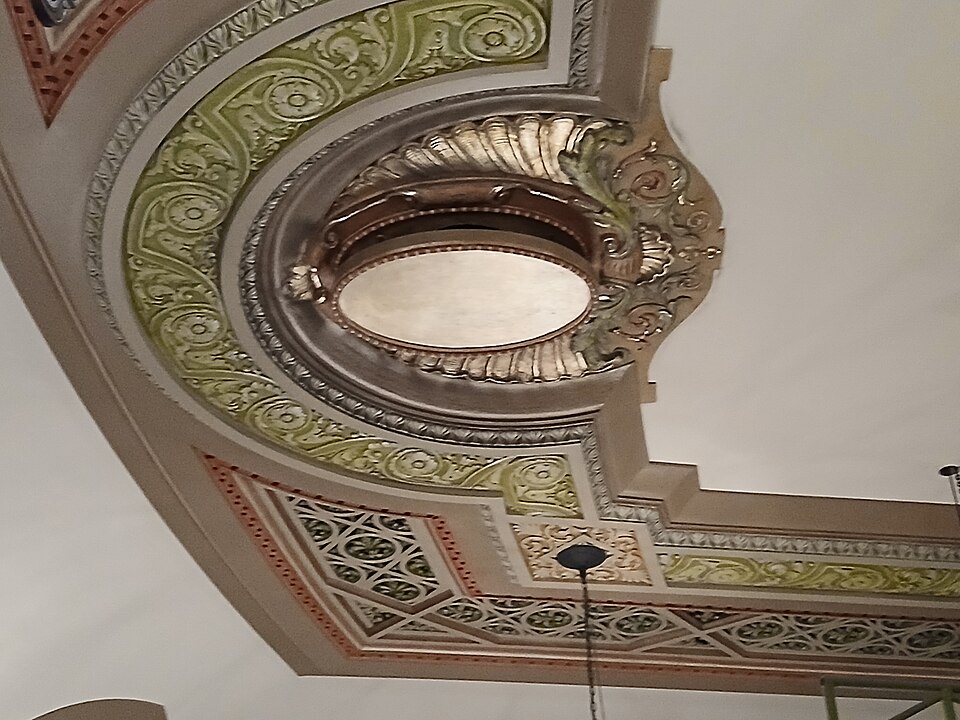
Inside the Booth Theatre, where the compact auditorium keeps both Center Orchestra and Center Mezzanine unusually close to the stage. Photo by Epicgenius via Wikimedia Commons, CC BY-SA 4.0.
Why the Booth Feels Different
The Booth Theatre was built in 1913 as a companion house to the Shubert, and it was designed from the start for legitimate drama — plays that live in the space between actors, not in spectacle or scale. At roughly 800 seats, it is one of Broadway’s most compact and intimate houses. That intimacy is not just a physical fact; it shapes the experience. The room feels close even from seats that would feel distant in a larger theater.
For buyers, this means two things. First, rear seats at the Booth are more viable than they would be at a 1,400-seat theater — the compact footprint keeps the stage within reasonable reach from nearly every position. Second, the intimacy makes clean sightlines and center placement more important, not less. In a room where every seat feels relatively close, side seats and angled views become more noticeable — not because you’re far from the actors, but because the production depends on subtle character work that needs a direct, frontal view to land completely.
The Booth’s small scale is its defining advantage for plays. With Downstate arriving next, the theater’s verified sightline pattern matters more than speculation about production-specific blocking: centered seats remain the safest choice, and even the rear of the room stays relatively close.
Orchestra Seats
The Orchestra is the main floor of the Booth — 514 seats on the level closest to the stage. Current seat-view guidance identifies Center Orchestra rows A–H as the strongest overall cluster. Rows AA and BB can feel too close, while the Mezzanine overhang begins to affect the top of the stage around row O.
The strongest Orchestra zone. Rows A–D give excellent detail, while F–H can be a particularly strong value because they stay centered, close and largely free of overhang concerns.
Rows AA and BB are extremely close and can make the viewing angle feel steep, especially for shorter visitors. A few rows back in Center Orchestra is generally the more complete choice.
Rows F–H in Center Orchestra are a particularly useful target: detailed enough for actor work, far enough back for a complete stage picture, and often better value than the very front premium rows.
More viable here than in most Broadway houses. The Booth’s compact footprint keeps rear Orchestra Center within reasonable reach, but from roughly row O the Mezzanine overhang begins to cut slightly into the top of the stage.
Requires scrutiny. Far-side Orchestra seats introduce more angle, especially in double-digit seats near the outer aisles. Inside seats in Left and Right Orchestra are materially safer than the extremes.
Inside aisle seats are the best Orchestra choice when extra legroom matters. They preserve a relatively centered view while giving taller visitors more room than typical mid-row seats.
For the safest combination of detail, comfort and direct sightline, target Center Orchestra A–H. If value matters, F–H is especially attractive. Avoid assuming the closest seat is automatically the best: AA and BB can be too close for some visitors.
Mezzanine Seats
The Booth’s Mezzanine holds 252 seats and sits 31 steps above the Orchestra across two flights. Current seat-view guidance identifies Center Mezzanine rows A–B as some of the best elevated views in the theater, while rows G–H offer particularly strong value. Legroom can be tight, so inside aisle seats are the better choice for taller patrons.
Rows A–B in Center Mezzanine are among the best seats in the Booth: elevated enough for the complete stage picture, centered, and still unusually close because the house is small.
Far-side Mezzanine seats develop more angle than Center. Inside seats in the Left and Right sections remain useful, but the outer double-digit seats are less reliable for a complete view.
Rows G–H in Center Mezzanine are particularly strong value. They are farther from the stage than the premium rows, but the good rake and compact room preserve a clean overall view.
The stairs and row steps — important details
The mezzanine is accessed via 31 steps across two flights of stairs, with the entrance located behind Row H in the orchestra. Once on the mezzanine level, there are approximately 2 steps up or down to access each row. Handrails are available at the end of every stepped row. There is no elevator or escalator. If stairs or step access are any concern for you or anyone in your party, orchestra seating is the only appropriate level. See the Accessibility section below.
Box Seats and Standing Room
Downstate Seats — What We Can Say Before Previews
Downstate begins previews at the Booth Theatre on October 17, 2026, opens November 15, and is scheduled through January 10, 2027. Broadway.org lists the production for audiences 17 and older because of mature content. Because performances have not started yet, there are not reliable production-specific seat reports to justify claims about exact blocking, scenery, or sightline quirks.
For a first visit, Center Orchestra A–H and Center Mezzanine A–B are the safest premium targets based on current Booth seat-view evidence. Center Mezzanine G–H is the stronger value play. Far sides, AA/BB, and deep Orchestra around row O and behind deserve a closer seat-photo check.
Once Downstate begins previews, this guide should be rechecked for any production-specific obstruction, set-height, or staging issues reported by actual attendees.
Best conservative pick before previews
Center Orchestra A–H gives the most direct and detailed view. Center Mezzanine A–B is the best elevated alternative. If price matters more, Center Mezzanine G–H is the current value target.
For current dates, ticketing and official production information, use the official Downstate Broadway site.
Accessibility at the Booth Theatre
- All parts of the Orchestra are accessible without steps. Wheelchair-accessible seating is in the Orchestra only.
- Shubert lists six designated wheelchair locations in the Orchestra, plus aisle-transfer seating. Confirm exact wheelchair and companion-seat placement when booking.
- The mezzanine entrance is located behind Row H in the orchestra and requires 31 steps across two flights of stairs. Once on the mezzanine level, there are approximately 2 steps up or down to access individual rows. Handrails are available at the end of every stepped row.
- There is no elevator and no escalator at the Booth Theatre. Mezzanine access is stairs only.
- A wheelchair-accessible restroom is available — verify its current location and availability with the venue before your visit.
- Infrared assistive listening is available for every performance. Shubert also provides captioning and audio-description options under its current accessibility program; timing and device availability should be confirmed for the specific production.
- Always book accessible seating through the official box office or Telecharge, not through a resale platform, to ensure correct seating placement and companion seat availability.
Best Seats by Visitor Type
The Booth is an excellent first-time house because it is compact and easy to read. Center Orchestra A–H gives a detailed direct view; Center Mezzanine A–B gives a clean elevated picture. Either is a strong first-time choice.
Before previews begin, use verified Booth sightlines rather than guessed production blocking. Center Orchestra A–H and Center Mezzanine A–B are the safest premium targets; Center Mezzanine G–H is the better value play.
For Downstate, note the official 17+ mature-content advisory before treating it as a date-night choice. If the material fits your plans, Center Orchestra A–H is the safest detailed view. See the Broadway date night guide for more.
The Booth is one of Broadway’s most intimate dramatic houses. Center Mezzanine A–B is excellent for seeing the stage as a complete composition, while Center Orchestra A–H gives the strongest performer detail.
The Booth’s compact size makes both rear Orchestra and rear Mezzanine more viable than at larger houses. Center Mezzanine G–H is the clearest current value target, while rear Orchestra Center is useful if stairs are a concern. Check the rush and lottery guide for Proof availability before committing to budget seats.
The mezzanine requires 31 stairs plus row-access steps. There is no elevator. Orchestra-level accessible seating is the only step-free option. The orchestra is accessible without steps. Book through the official box office and confirm the seating placement, companion seat availability, and accessible restroom details before your visit.
Very front orchestra rows in a compact room can require looking upward at an elevated stage. A few rows back in center orchestra removes that issue. Front mezzanine center is a comfortable alternative — looking down at the stage is much easier for shorter visitors over the course of a full play.
If seeing the full stage picture is your priority, Center Mezzanine A–B is the strongest current choice. It combines a centered angle, useful elevation and close proximity in this small auditorium.
One reliable answer: Center Orchestra A–H. Strong sightlines, genuine proximity, no stair concerns and no major side-angle penalty.
Seats to Think Twice About
- Extreme side orchestra sections — Far side Orchestra seats push your sightline off the primary axis of the stage. Current seat-view reports consistently favor the inside seats over the outer extremes. Always check a seat-view tool before purchasing any far side orchestra section.
- Box seats if frontal view matters — Box seats offer a side-angle view of the stage. Box seats are not the safest first-time choice for anyone who wants a complete frontal view. Verify any box seat for partial-view language before purchasing.
- Far side mezzanine — The outer edges of the mezzanine develop a side angle that is more significant for a play with frontal staging. Center mezzanine is reliably stronger than the outer edges. Check seat-view tools for any mezzanine seat outside the center section.
- Very front orchestra rows — In a compact room, the very front rows are extremely close. This can feel exciting for some visitors and uncomfortably steep for others. A few rows back in center orchestra is typically the more complete and comfortable experience.
- Mezzanine if stairs are any concern — 31 steps across two flights, plus row-access steps throughout the mezzanine level. No elevator. If this is a consideration for anyone in your party, orchestra is the only appropriate level.
- Rear mezzanine if actor detail is your priority — Rear Mezzanine is workable in this compact house, but it still reduces actor detail compared with Center Orchestra or the front of the Mezzanine. Acceptable if price is the primary driver; not ideal if you’re coming for the performance.
- Any partial-view or obstructed-view listing — The label is accurate. Don’t purchase a partial-view seat expecting a complete view.
- Assuming the compact room makes every seat equal — The Booth’s size helps, but center placement, far-side angle, AA/BB proximity, and rear-Orchestra overhang still create meaningful differences.
Price and Value Strategy
Ticket prices at the Booth for Downstate vary by performance and advance timing. This guide won’t state specific prices. But the value framework for this theater and show is worth understanding clearly.
Always compare final price with all fees included. The total at checkout is what the seat costs.
The Seat-Picking Formula
- Safest premiumCenter orchestra, mid-range — the most reliable current Booth choice
- Best full-stage valueFront mezzanine center — complete staging picture, typically below center orchestra pricing
- Emotional detailCenter orchestra — performer detail at close range
- Full set compositionFront mezzanine center — clean elevated full-stage view
- Budget — main floorRear orchestra center — compact house keeps this more viable than most Broadway theaters
- Budget — upper levelRear mezzanine center — distance trade-off, plus 31-step stair requirement
- Step-free accessOrchestra only — contact the box office; no elevator to mezzanine
- No risk at allCenter at any level; avoid boxes for a first visit; avoid partial-view listings entirely
FAQ — Booth Theatre Seating
Current seat-view evidence favors Center Orchestra rows A–H and Center Mezzanine rows A–B. Orchestra A–D is especially detailed; F–H can be excellent value. In the Mezzanine, G–H is a strong lower-cost target.
Neither is categorically better — they deliver different things. Orchestra center gives you the emotional immediacy of being close to the performers. Front mezzanine center gives you the full stage picture and set composition. Center Orchestra is better for the most direct performer detail, while Center Mezzanine is better for a clean elevated overview. The Booth is small enough that both remain close to the stage.
Before Downstate begins previews, the safest choices are based on verified Booth sightlines rather than production-specific assumptions: Center Orchestra A–H for direct detail, Center Mezzanine A–B for a premium elevated view, and Center Mezzanine G–H for value.
Yes. Center Mezzanine rows A–B are among the strongest elevated views in the Booth Theatre. Rows G–H can offer particularly good value, and the compact room keeps even the back of the section relatively close.
Less so than at a larger Broadway house. The Booth’s compact scale and good Mezzanine rake keep the rear rows viable. Center rows G–H are especially useful value seats, although actor detail is naturally reduced compared with the front.
They require scrutiny at the extremes. Current seat-view evidence shows that inside Left/Right Orchestra seats are strong, while outer double-digit seats become more angled. Check an exact seat photo before buying a far-side position.
They have historical charm and genuine proximity, but they are side-angle seats and may be sold with partial-view limitations. They are not the safest first-time choice if a complete frontal view matters.
More viable than at a larger Broadway house because the Booth is compact. Standing room remains a comfort and stamina trade-off and is typically tied to sold-out performances.
Yes, at the orchestra level. All parts of the orchestra are accessible without steps. Wheelchair-accessible seating and companion seats are in the orchestra. The mezzanine requires 31 stairs with no elevator access. Always book accessible seating directly through the official box office or Telecharge to ensure correct placement and companion seat availability.
No. There is no elevator or escalator at the Booth Theatre. The mezzanine requires 31 steps across two flights, with the entrance located behind Row H in the orchestra. Individual mezzanine rows have approximately 2 steps up or down for access. Handrails are at the end of each row. If elevator access is required, orchestra-level seating is the only appropriate option. Contact the box office directly for accessible seating arrangements.
Approach with caution: extreme side Orchestra, box seats if a full frontal view matters, far-side Mezzanine, rows AA–BB if you dislike being extremely close, deep Orchestra around row O and behind if the top of the stage matters, Mezzanine if stairs are a concern, and any partial-view or obstructed-view listing.
Use a current seat-photo database for the exact section, row and seat number you are considering. At the Booth, photo checks are especially useful for rows AA–BB, far-side Orchestra, Orchestra row O and behind, box seats, and far-side Mezzanine.
Current seat-view guidance points to Center Orchestra rows F–H and Center Mezzanine rows G–H as especially useful value areas. They stay centered and preserve a clean view without the highest premium pricing.
Yes, slightly. The overhang begins to cut into the top of the stage around Orchestra row O. The overall view is often still good because the Booth is compact, but buyers in deep Orchestra rows should check an exact seat photo.
Legroom is average in the Orchestra and tighter in the Mezzanine. Inside aisle seats are the best choice on both levels if extra space matters.
Plan the Full Night at the Booth
For most visitors, the safest Booth choices are Center Orchestra A–H for a direct detailed view or Center Mezzanine A–B for a premium elevated view. Center Mezzanine G–H is the strongest current value target. The Booth’s intimacy makes more seats viable than at larger Broadway theaters, but far-side angle, AA/BB proximity, the rear-Orchestra overhang, and the 31-step Mezzanine access still matter.
Pick the Seat — Then Build the Night
The Booth is a compact Broadway playhouse, so the right seat is about choosing the kind of closeness you want. Use these guides to connect the seating decision to Proof, the theater itself, dinner, hotels, transit, and the full Theater District night.
Booth Theatre Guide
Go deeper on the Booth itself: address, history, Shubert Alley location, accessibility, neighborhood context, and how this compact playhouse fits a Broadway night.
Open Theater Guide Current ShowProof Broadway Guide
Plan the production around the seat choice: what to expect, who it is best for, why the Booth works for an intimate play, and how to build the night around curtain.
Open Show GuideMore Seating & Ticket Strategy
Seats · Timing · ValueBroadway Seating Guide
Compare orchestra, mezzanine, balcony, boxes, side seats, premium zones, and obstructed-view listings across Broadway houses.
When to Buy Broadway Tickets
Know when buying early matters, when waiting can work, and how timing changes for plays, weekends, holidays, and high-demand performances.
Last-Minute Broadway Tickets
TKTS, same-day listings, rush, lottery, and practical ways to compare late options without choosing awkward seats blindly.
Broadway Rush and Lottery Tickets
How discount ticket systems work, what tradeoffs to expect, and why a cheap seat can be great — or awkward — depending on the view.
First-Time Broadway Guide
For visitors choosing their first show or first theater: what to know about arrival, timing, seats, intermission, dress, and the Theater District.
Best Broadway Shows for Date Night
Compare shows by tone, dinner pairing, mood, pacing, and how the whole night feels beyond the ticket itself.
Plan the Booth Theatre Night
Dinner · Hotels · TransitRestaurants Near Broadway
The Booth sits by Shubert Alley and West 45th Street, with Restaurant Row, Times Square, and Hell’s Kitchen within easy reach.
Pre-Show Dining Guide
Plan reservation timing, walking buffer, check arrival, and post-show movement so dinner and theater work together.
Best Pre-Theater Restaurants NYC
Use this when you want stronger restaurant choices around Broadway rather than only timing and logistics advice.
Best Post-Show Restaurants NYC
Where to go after the curtain when you want a drink, dessert, late dinner, or a calmer landing after the show.
How to Get to a Broadway Show
Subway, walking, rideshare, and arrival timing for Theater District shows, including the central West 45th Street houses.
Parking Near Broadway
When driving makes sense, when it does not, and how to avoid turning a Broadway night into a Midtown garage problem.
Nearby Neighborhood & Hotel Guides
45th Street · Shubert Alley · Broadway CoreTheater District
The practical guide to Broadway’s center: theaters, crowds, hotels, restaurants, walking routes, and first-time visitor logistics.
Times Square
Best when convenience, subway access, and being right in the center matter most — especially for short Broadway trips.
Hell’s Kitchen
A strong nearby option when dinner matters — more restaurant depth, calmer blocks, and an easy walk west after the show.
Midtown West
A broader west-side planning base for hotels, transit, restaurants, and nights that stretch beyond the immediate Theater District.
Hotels Near Broadway
Compare Theater District, Times Square, Midtown West, and Hell’s Kitchen hotel zones for a Broadway-centered trip.
Where to Stay for Broadway Weekends
Match hotel zone, walking distance, subway access, and post-show energy to the kind of Broadway weekend you want.
More Broadway Theater Planning
Nearby Houses · Hubs · CompareBroadway Theater Guides
Compare Broadway houses by room size, location, seating feel, history, accessibility, and what each theater is best for.
Shubert Theatre Guide
The neighboring Shubert Alley landmark — useful context for visitors comparing West 44th and West 45th Street Broadway houses.
Bernard B. Jacobs Theatre Guide
A nearby West 45th Street theater with its own seating, show, accessibility, and full-night planning context.