

Proof on Broadway
Ayo Edebiri and Don Cheadle make their Broadway debuts in one of the best American plays of the last thirty years — and the first time it has ever been revived on Broadway.
Proof is a play by David Auburn that won the Pulitzer Prize for Drama and the Tony Award for Best Play when it premiered on Broadway in 2000. It is a tight, psychologically sharp drama about a young woman named Catherine who has spent years caring for her brilliant but mentally unstable mathematician father — and who, in the aftermath of his death, faces a question about her own mind and a contested claim about a piece of extraordinary mathematical work. This Broadway revival — the first time the play has ever been revived on Broadway in New York — was directed by Thomas Kail and starred Ayo Edebiri and Don Cheadle, both in their Broadway debuts. It played at the Booth Theatre through July 19, 2026.
This guide is for visitors deciding whether Proof belongs on their Broadway itinerary. It is a play, not a musical — intimate, writer-driven, and built around psychological tension and family grief rather than spectacle. It is a particular kind of Broadway night, and the page below is designed to help you work out whether it is the right one for your trip.
Why Proof Stands Out This Spring
Proof is not a new play — it premiered twenty-five years ago — but this production is a genuine theatrical event rather than a routine remount. It is the first time the play has ever been revived on Broadway in New York, which means the production that ran in 2000 with Mary-Louise Parker and Anthony LaPaglia is the only point of comparison for New York theatergoers, and most of the audience for this revival will be encountering the play fresh. That gives it the weight of a discovery rather than a revisitation.
Thomas Kail directing is a significant signal. Kail directed Hamilton, which means he understands how to make text-driven theater feel urgent rather than academic — how to keep language alive and moving rather than letting it settle into the comfortable rhythms of a prestige revival. His presence here suggests a Proof that has been interrogated rather than preserved.
In the days after her father’s death, Catherine — who has spent years caring for Robert, a brilliant mathematician whose mind was disintegrating — discovers a proof among his notebooks that may represent a major mathematical breakthrough. The question is who wrote it. Her sister Claire believes their father wrote it in one of his rare lucid periods. Robert’s former student Hal believes it too. Catherine says she wrote it herself. The play is about that dispute, but it is really about whether Catherine can trust her own mind — and whether anyone else can trust it either.
The play works because Auburn is not actually writing about mathematics. He is writing about the specific terror of watching a brilliant parent lose their mind and wondering what you inherited from them — the talent or the instability or both. That question, which Catherine cannot answer with certainty and neither can the audience until the play decides to let them, is what keeps the play taut across two hours and what makes it more emotionally dangerous than its chamber-drama scale might suggest.
What the Experience Is Actually Like
Proof is a small play in the best sense. It has four characters, a single set, and a story that does not rely on theatrical spectacle to generate its pressure. The drama comes entirely from what the characters say to each other, what they withhold, and what the audience gradually realizes they cannot be certain of. It is the kind of play that requires you to pay attention not just to the dialogue but to the silences around it.
The runtime — approximately two hours with one intermission — is well-paced for the material. Auburn does not pad the play or underestimate his audience. The tension builds steadily across the first act and the second act delivers on it in a way that feels both surprising and inevitable — which is what good dramatic writing does. The intermission falls at the right moment: just after the play has established what is at stake and just before it begins to take that apart.
Proof is intimate, cerebral, and emotionally unresolved in exactly the right ways. It is not a comfortable evening — the play’s central question about Catherine’s reliability is not fully settled until late, and even then the settling does not feel clean. What it leaves you with is not catharsis so much as recognition: the sense of having watched something true about how families carry damage and talent in the same breath. That is a specific kind of theater experience, and it is genuinely rare on Broadway.
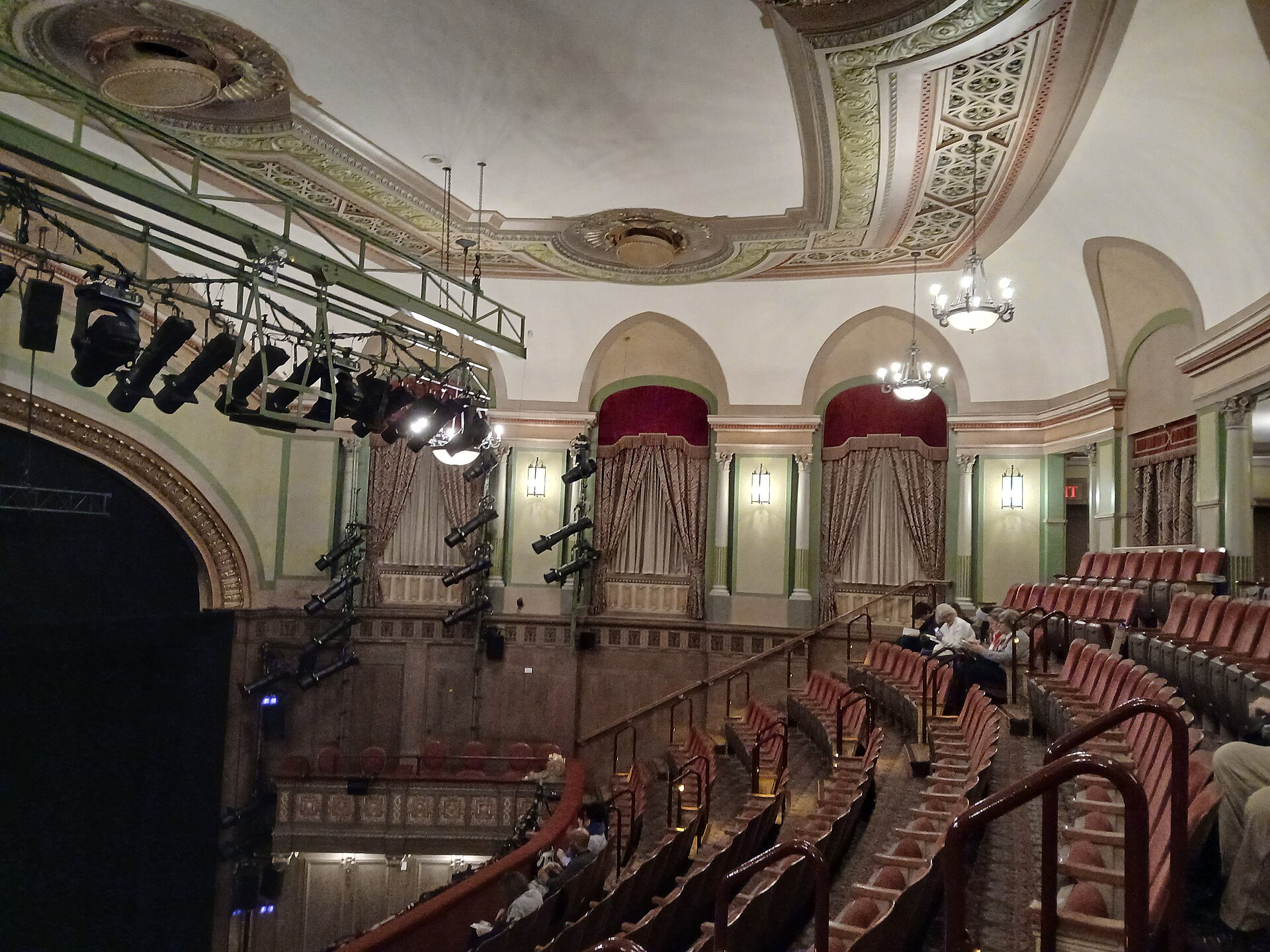
The Booth Theatre is one of Broadway’s smaller and more intimate houses — it seats around 750, which is exactly right for this kind of play. The physical proximity to the stage means the performances register at close range, and in a play this dependent on what actors do with their faces and bodies between words, that intimacy matters. There is no sightline in the Booth from which Proof would feel remote.
The Debut Question — Edebiri, Cheadle, and Why It Matters
The most searched fact about this production is that both Ayo Edebiri and Don Cheadle are making their Broadway debuts. It is worth being specific about what that means and why it matters, rather than simply noting it as a celebrity hook.
Edebiri’s work in The Bear demonstrated a specific quality that the role of Catherine requires: the ability to make intelligence feel physical and volatile rather than performed. Catherine is a person who is constantly running calculations — about what people think of her, about what she thinks of herself, about what she is capable of. Edebiri plays people who are doing that kind of internal work in a way that reads clearly without being signaled. That is the central technical demand of this role.
Robert is a role that requires a performer to hold two things simultaneously: the residue of extraordinary brilliance and the reality of a mind that has broken down. Cheadle’s screen career is built on exactly that kind of dual register — the ability to show what a person once was and what they have become in the same moment. His presence in the role gives Robert a weight that the play needs him to have even when he is not physically present on stage.
The honest answer to “is this worth seeing specifically for them” is: yes, and also for the play itself. The risk with revival casting at this level of celebrity is that the production becomes about the performers rather than the work. Kail’s direction appears designed to prevent that — to make Edebiri and Cheadle serve Auburn’s play rather than the other way around. A production where that balance is maintained is worth considerably more than a star vehicle, and this has the creative team to achieve it.
- Ayo EdebiriCatherine · Broadway debut
- Don CheadleRobert · Broadway debut
- Jin HaHal
- Kara YoungClaire
Verify current casting on the official Booth Theatre site before booking. Broadway casts can change during a run, and this is worth confirming close to your visit date.
Who Proof Is Best For
Proof has a specific appeal that is worth being direct about. The visitors who will find this the right Broadway night are clear. So are the ones who should look elsewhere — and being honest about that is more useful than pretending the show is for everyone.
If you come to theater for the writing and the performances — if you want to be inside a tightly constructed story for two hours and leave with something that stays with you — Proof is the spring play that delivers that most precisely.
The first Broadway revival of a Pulitzer and Tony winner, directed by Thomas Kail, with two of the most interesting screen actors working today making their stage debuts. For anyone who follows Broadway seriously, this is the spring production to prioritize.
If The Bear is the reason you are searching this show, the case is straightforward: Catherine is a role that uses exactly the qualities that made Edebiri compelling on screen, and seeing those qualities operate in a live room is a different and more immediate experience than any camera can provide.
For visitors who find the best theater in small rooms with few characters and no spectacle — where the drama is entirely in what people say and do not say to each other — Proof is the most formally accomplished example of that in the current season.
If you already know you love plays and want something intellectually and emotionally engaging, Proof is a strong choice for a first Broadway experience. If you are not yet sure what kind of theater you like, a musical may be the better starting point — and the first-time visitor guide can help you decide.
Proof is quiet, contained, and demands sustained attention. If your Broadway night needs to be high-energy, visually spectacular, or immediately crowd-pleasing, this is not the right choice.
If you are comparing Proof against other serious spring dramas — Giant, Joe Turner’s Come and Gone, The Fear of 13 — the distinction worth making is one of register: Proof is more contained and domestic, less historically epic. It operates in the space of a single family and a single question. That intimacy is its specific strength, not a limitation.
Know Before You Go
The Booth is one of Broadway’s most intimate houses — all seats work
The Booth Theatre seats around 750, making it one of Broadway’s smaller houses. For a play as dependent on close-range performance as Proof, this is a genuine advantage — there is no seat in the Booth from which the actors feel remote. The orchestra and front mezzanine are both strong choices; the rear mezzanine is further from the stage but still well within the range at which Proof operates. Avoid extreme side seats if you want a full view of the playing space, which is relatively contained.
Two hours with one intermission — dinner timing is flexible
At approximately two hours, Proof is one of the shorter Broadway productions currently running. That gives you real flexibility on dinner — pre-show dinner before a 7pm curtain is comfortable, and post-show dinner is an equally natural choice. The Booth Theatre is on West 45th Street, close to Hell’s Kitchen and the Theater District dining cluster. See the pre-show dining guide for timing advice and the restaurants near Broadway guide for options near the theater.
This is a new production of a play — early previews are still finding the show
Proof opened previews on March 31, 2026 and officially opens April 16. During the preview period, productions are still adjusting — pacing, staging, technical elements. Seeing a show in previews means you are watching it find itself, which can be exciting and occasionally uneven. Seeing it after opening night typically means a more settled production. Verify current performance details on the official Booth Theatre site before booking.
Plan the Night Around the Booth Theatre
The Booth Theatre sits on West 45th Street in the Theater District, in one of the densest clusters of Broadway houses in the city — the Shubert, the Music Box, the Al Hirschfeld, and the Jacobs are all within a short walk. The neighborhood has strong pre- and post-show options at every price point and is well-connected to the full subway system.
Getting there
Times Square is a three-minute walk east, connecting to the 1, 2, 3, N, Q, R, W, A, C, E, and S lines. The 49th Street N/Q/R/W stop is also a comfortable walk. If you are driving in, Theater District garages are available nearby but fill quickly on performance evenings — booking in advance removes the stress. Our guide to getting to a Broadway show covers the best subway options, timing from different neighborhoods, and parking near the Booth.
Dinner before or after
The shorter runtime means both pre- and post-show dinner work comfortably. Post-show dinner is particularly natural for a play like Proof — the story gives you things to discuss, and sitting down over food after the curtain drops is a good way to work through what just happened. Hell’s Kitchen, a five-minute walk west, has the densest concentration of reliable options near this part of 45th Street. Restaurant Row on West 46th Street is one block north and within easy walking distance. See the restaurants near Broadway guide for specific picks and the pre-show dining guide for timing advice.
If you’re staying nearby
The Theater District has strong hotel options within walking distance of the Booth. Our hotels near Broadway guide covers the best-positioned options at different price points. For a full picture of the neighborhood, the Theater District neighborhood guide is the right starting point.
Frequently Asked Questions
Proof is a play about Catherine, a young woman who has spent years caring for her father Robert — a brilliant mathematician whose mind was breaking down — and who, in the days after his death, faces a disputed claim about a potentially groundbreaking proof found among his notebooks. Catherine says she wrote it. No one is sure whether to believe her. The play is ultimately about what we inherit from our parents — the talent or the instability or both — and whether Catherine can trust her own mind. It is written by David Auburn, who won the Pulitzer Prize and the Tony Award for Best Play for this work when it premiered in 2000.
No. Proof is a straight play — a drama with no songs, no choreography, and no score. It is a four-character, psychologically driven work that is entirely text and performance. If you are specifically looking for a Broadway musical, the first-time visitor guide covers the current season’s strongest options.
The cast includes Ayo Edebiri as Catherine, Don Cheadle as Robert, Jin Ha as Hal, and Kara Young as Claire. Both Edebiri and Cheadle are making their Broadway debuts in this production. The play is directed by Thomas Kail. Verify current casting on the official Booth Theatre site before booking.
The current runtime is approximately 2 hours, including one intermission. Verify the current official runtime on the Booth Theatre site before booking, as runtimes can adjust during the preview and early run period.
Current guidance is recommended for ages 12 and up. The play deals with grief, mental illness, family conflict, and questions of reliability and trust — adult themes handled seriously. It is not appropriate for young children. For families with kids under 12, the current season has better-matched options. Verify current age policy on the official site before booking.
Proof is playing at the Booth Theatre, 222 West 45th Street in Manhattan, in the Theater District.
It can be — for the right person. If you already know you respond to intimate, character-driven drama and want a play with genuine psychological tension and exceptional acting, Proof is a strong first Broadway play experience. If you are not yet sure what kind of theater you prefer, a musical may be the more accessible starting point. The first-time visitor guide can help you work out which choice fits your taste.
Yes — the original production premiered on Broadway in 2000 with Mary-Louise Parker and Anthony LaPaglia. This 2026 production is the first Broadway revival of the play in New York, which gives it significance beyond a routine remount. Most of the audience for this revival will be encountering the play fresh.
The Bottom Line on Proof
Proof is one of the best American plays of the last thirty years, and this is the first time it has been revived on Broadway in New York. Directed by Thomas Kail and starring Ayo Edebiri and Don Cheadle in their Broadway debuts — alongside Jin Ha and Kara Young — it is the spring’s most quietly urgent theater event: a two-hour play about a contested mathematical proof that is really about what it means to inherit a brilliant and broken mind.
For serious drama lovers, repeat Broadway visitors, and anyone who came to this page because of Ayo Edebiri and wants to know if the show is worth it beyond the celebrity factor — the answer was yes. The play earned the cast and the cast earned the play. The run closed July 19, 2026.
For help planning the rest of the evening, the pre-show dining guide and the Theater District neighborhood guide are the right places to start.
Proof closed July 19, 2026. Ayo Edebiri and Don Cheadle’s limited run at the Booth Theatre has ended. This guide stays live for reference.
See the Booth Theatre Guide →Proof at a Glance
- Closed July 19, 2026
- Theater Booth Theatre · 222 W 45th St
- Runtime 2 hrs 15 min · one intermission
- Type Play — not a musical
- Ages Recommended 12+ · under 4 not permitted
- Run Apr 16 – Jul 19, 2026 · first Broadway revival
- Best For Serious drama lovers, theater fans, Edebiri fans
More Broadway Plays
Tickets, Seats & Planning
Before & After the Show
“The play is tighter than it looks and more unresolved than it feels comfortable being. That’s why it holds.”
Plan the Full Broadway Night
From choosing the right Broadway show and booking before a closing date to seating at the Booth, dinner in Hell’s Kitchen, and getting there from any neighborhood — everything that makes a Broadway night work.
Broadway Shows Guide
Current productions, what’s closing, what’s new, and show-fit guides by visitor type — the starting point for choosing what to see.
Browse Shows →Other Shows to Book Now
Broadway Resources Hub
Ticket timing, seating, rush and lottery, visitor guides, and everything else that shapes a smart Broadway trip.
All Resources →Booth Theatre Guide
One of Broadway’s most intimate houses — seating breakdown, best sections, sight lines, and what the Booth is like to experience.
Booth Theatre →