
Off-Broadway Seating Guide · Theatre Row · 499-Seat Stadium House

Stage 42 Seating Guide: Best Seats, Sightlines & What to Know

A practical guide to choosing seats at Stage 42 on West 42nd Street — how stadium seating changes the seat-buying math, best zones for different show types, accessibility, value picks, and Theatre Row planning.

Address422 West 42nd Street
NeighborhoodTheatre Row / Hell’s Kitchen
Capacity499 seats
Seating StyleStadium rake
Best OverallCenter orchestra, mid-house
OperatorShubert Organization

Stage 42 is one of the more unusual Off-Broadway seating experiences in New York City — and not in a way most guides bother to explain. At 499 seats, it sits right at the upper edge of Off-Broadway capacity, but its infrastructure puts it in a different class than most venues of that size. The stage is comparable in scale to many Broadway houses. The orchestra pit exists. The stadium rake is real. And the result is a room where seat-buying logic sits somewhere between the intimate Off-Broadway experience and the mid-size Broadway calculus — which means the normal rules from either category do not fully apply.

This guide is specifically about choosing seats at Stage 42. It covers which sections give you the best experience for different types of productions, where the value picks are, what to know about accessibility, and what to think twice about before you click purchase. Because Stage 42 is operated by the Shubert Organization and can support Broadway-scale staging, the production itself matters more than it does in a small black-box room. Read the show description before you read this guide. Then use this guide to choose your seats.

Stage 42 — Quick Seating Snapshot
Address
422 West 42nd Street, Theatre Row
Capacity
499 seats
Seating Style
Stadium rake — designed for sightlines and proximity
Former Name
Little Shubert Theatre
Best Overall Seats
Center orchestra, mid-house for most productions
Best Value Zone
Rear or slightly off-center orchestra — stadium rake keeps it workable
Accessibility
Elevator/escalator to theater level · accessible restrooms ground floor
Watch-Outs
Steps between rows · wide stage can affect side seats · verify current production layout

How Stage 42 Seating Actually Feels

The most important thing to understand about Stage 42 is that it does not feel like either category of theater it technically belongs to. It is Off-Broadway by seat count, but its stage dimensions and infrastructure are closer to a mid-size Broadway house. The result is a room that is more intimate than its 499 seats suggest on paper — and that is almost entirely because of the stadium rake.

Stadium seating angles each row upward more steeply than a conventional flat or gently sloped orchestra. At Stage 42, this means that rear rows have a sightline that would be significantly better than the same position in a traditional flat-floor theater. The person in front of you is less likely to block your view. The stage feels closer because the angle is better. This is one of the structural advantages of Stage 42 that most seat-buying guides undervalue.

The trade-off is that the rows require steps to navigate — which matters for accessibility and for guests who prefer to avoid steep seating. And because the stage is Broadway-comparable in width, extreme side seats can still lose important staging detail for productions that use the full width of the playing area.

The Seat-Buying Math Is Different Here

In a 1,500-seat Broadway house, paying a premium to avoid the rear or the extreme sides can be essential. At Stage 42, the stadium rake and 499-seat scale change that calculus significantly. Rear center orchestra is genuinely workable. The premium for center mid-house exists but is less dramatic than in a large Broadway venue. Focus your decision-making on the current show’s staging rather than defaulting to Broadway-house assumptions.


Best Seats at Stage 42

The following recommendations hold for most standard productions at Stage 42. Because Stage 42 can support non-standard staging configurations, always verify the current show’s official seating map before purchasing.

Best overall

Center orchestra, mid-house. This is the default safe recommendation for most visitors at most productions. The stadium rake means your sightlines are clean, the full stage picture is clear, and actor detail and sound are both strong. For most shows, this is where the experience is best balanced.

Best for musicals, dance, and full-stage productions

Center orchestra, slightly pulled back from the extreme front. For productions where choreography, formations, and the full stage picture matter — ensemble musicals, dance shows, productions with elaborate staging — being slightly back in center lets you see the spatial relationships the director has built. Very front-row seats can make it harder to see full stage geometry in a house with a wide stage.

Best for plays and intimate productions

Front-to-mid center orchestra. When the production is actor-focused, text-driven, or built around close performance detail rather than wide staging, closer seats pay off. Stage 42’s scale makes the front center position more rewarding for intimate productions than the same position in a large Broadway house.

Best value

Rear center orchestra or slightly off-center orchestra. Because the stadium rake genuinely reduces the sightline penalty of being farther back, rear center is a stronger value pick here than it would be in a flat-floor theater. If the price difference is meaningful and you do not need to be in the first several rows, rear center can be the smart buy.


Stage 42 Seating Zones

Instead of inventing exact row-level claims, here is how to think about Stage 42’s main seating zones based on the room’s structure. Verify specific rows and exact seat positions against the current official seating chart.

Best Zone
Premium Center Orchestra

Mid-house center seats. The strongest all-around position for most productions. Full stage picture, clean sightlines, strong sound, actor detail. The right choice when budget is not a primary constraint.

Best for: most visitor types, most productions. The standard recommendation.

Front Zone
Front Orchestra Center

Closest to the stage. Excellent for text-heavy or intimate productions. For wide-staging shows or dance-heavy productions, you may lose the full-stage picture. Not a bad seat — a specific choice.

Best for: intimate plays, solo shows, productions where performer detail matters most.

Mid Zone
Mid Orchestra Center

The practical sweet spot. Far enough back to see the full stage picture; close enough for actor detail and sound immersion. The stadium rake is most advantageous here.

Best for: musicals, full-staging productions, mixed groups, first-timers.

Value Zone
Rear Orchestra Center

Stronger than rear seats in a flat-floor theater, because the stadium rake maintains sightlines. Still genuinely inside the show. Strong value pick if priced meaningfully lower than mid-center.

Best for: budget buyers who want center alignment; repeat visitors familiar with the room.

Side Zone
Side Orchestra & Off-Center

Workable at a real price discount, especially in the mid-range. Extreme side seats can miss staging detail for productions using the full width of the Stage 42 stage. Center is meaningfully better when prices are close.

Best for: budget buyers at a real discount; avoid extreme sides for full-staging productions.

Accessible Zone
Accessible & Transfer Seating

Wheelchair seating does not require steps. Elevator and escalator access to theater level. Accessible restrooms on ground floor. Exact seat locations, transfer arm availability, companion seating, and current configuration must be confirmed before booking.

Best for: wheelchair users, visitors with mobility needs. Confirm directly before purchasing.


How to Read the Stage 42 Seating Chart

The Stage 42 official seating chart is the most important document for any seat decision. Here is how to read it with the room’s specific characteristics in mind.

Center Column
Usually the safest zone for most productions. Center alignment matters more here than in very small rooms because the stage is wide enough to create meaningful off-angle seats at the extremes.
Distance from Stage
Less punishing than in a flat-floor theater because the stadium rake is doing real work. Rear center should be evaluated on current show pricing, not written off automatically.
Side Columns
Worth buying at a meaningful discount. Check whether the current production uses the full stage width before buying the extreme sides at mid-house pricing.
Front Rows
Excellent for intimate shows. For dance-heavy or ensemble musicals, consider mid-center over front-center — the full choreographic picture requires a little more distance in a wide-stage house.
Production-Specific Holds
Compare the production’s official seat map. Some shows may alter standard layout, hold sections for production purposes, or use staging that changes which seats are most valuable.
Partial / Limited View
Check whether any current seats are labeled partial view or limited view on the official ticketing page before purchasing. Stage 42 does not commonly have severe obstructions, but verify for the current show.

Accessibility at Stage 42

Stage 42 has made meaningful accessibility investments for an Off-Broadway venue, but the specific details of wheelchair seating, transfer seating, companion positions, and access services must be verified for each production before purchasing. The following reflects general venue information and should be confirmed against current official sources.

Stage 42 Accessibility Overview
  • Elevator and escalator access from the ground level to the theater level. Confirm current operational status before your visit.
  • Wheelchair-accessible seating is available and does not require steps to reach. Confirm exact current locations for the specific production before booking.
  • Most regular orchestra rows involve steps between rows. Handrails are available at the end of stepped rows.
  • Accessible restrooms are located on the ground floor. Confirm restroom availability and route before your visit.
  • Transfer seating, companion seating, folding armrests, and aisle transfer positions should be confirmed with the official venue or ticketing service before booking if any of these are needed.
  • Assisted listening devices, captioning, audio description, and other access services should be verified for the specific production and performance date before planning around them.
  • For productions with non-standard staging or modified seating configurations, accessible seat locations may change. Always confirm for the current production.
Always confirm current accessible seat locations, transfer-seat details, and access-service availability directly through official Shubert/Telecharge accessibility channels or by contacting Stage 42 before purchasing.

Think Twice Before Booking These Seats

This section is not about bad seats — Stage 42 does not have many genuinely bad positions. It is about seats that carry meaningful risk depending on the production, and which are worth evaluating before you click purchase.

Seats Worth Verifying Before Buying
  • Extreme side seats for shows with wide staging. Stage 42’s stage is comparable to a Broadway house in width. If the production uses the full width, extreme side seats may miss important staging detail that center seats would catch.
  • Very front-row seats for choreography-heavy or full-ensemble productions. The wide stage means you may see the performers in front of you clearly while missing what is happening on the full stage picture behind them.
  • Stepped rows for guests with mobility concerns. Most regular rows require steps. If ease of movement through the row matters, verify the exact accessible seating option before booking anything else.
  • Any discounted or bargain seat without checking whether the current production uses non-standard staging, platforms, projections, in-the-round configurations, or side-stage action that might change which sections are most valuable.
  • Side orchestra at full center pricing. If side seats are priced close to center seats, the center is almost always the better value. The exception is if side seats are significantly discounted and the production does not use the extreme edges of the stage.

Best Seats by Visitor Type

First-Time Off-Broadway Visitor
Center orchestra, mid-house

The most reliable entry point. Clean sightlines, strong sound, the full stage picture. Stage 42 is a gentler introduction to Off-Broadway than a black-box studio — the stadium rake and familiar auditorium format work in your favor.

Theater Fan / Full-Stage Priority
Mid to mid-rear center orchestra

If seeing the complete staging picture matters — formations, choreography, scene transitions — slightly pulled back center gives you the full view. Front center can cut off the stage geometry in a wide-stage house.

Families
Center orchestra, mid-house; aisle if needed

Center mid-house works for most family configurations. If younger children may need to move during the show, aisle access adds flexibility. Check whether the current production has age recommendations or content advisories before booking.

Date Night
Center orchestra; mid-house preferred

Center mid-house for a shared sightline and the full experience. Stage 42 on Theatre Row pairs well with Hell’s Kitchen dinner on 9th Avenue before the show.

Visitors with Mobility Concerns
Accessible orchestra seating — confirm before booking

Wheelchair-accessible seating does not require steps. Elevator and escalator access to theater level. Accessible restrooms on ground floor. Confirm exact current accessible seat locations with official Shubert/Telecharge accessibility channels before purchasing.

Budget / Value Buyer
Rear center orchestra

The stadium rake genuinely reduces the sightline penalty of being farther back. Rear center at Stage 42 is a much stronger value than rear seats at a comparable flat-floor theater. Center alignment matters here — rear center over rear side.

Dance / Musical Theater Fan
Mid-center orchestra

You want to see the full choreographic picture and the spatial relationships across the stage. Mid-center gives you the full production view without the compressed perspective of the front rows in a wide-stage house.

Aisle / Easy Exit Preference
Aisle-adjacent center seats

Check that aisle seats are still reasonably centered before choosing comfort over alignment. An aisle seat in a center section is ideal; an aisle seat in an extreme side section is a different trade-off.


Stage 42 vs Larger Broadway Theaters

Understanding how Stage 42 differs from a typical Broadway house helps explain why the seat-buying logic here is different — and why value seats are often more attractive than they would be at a larger venue.

How Stage 42 Seat Math Differs from Broadway
  • Distance penaltyMuch lower at Stage 42 because the room is 499 seats with stadium rake, not 1,200+ seats flat. Rear orchestra is not a purgatory tier here.
  • Overhang / mezzanineStage 42 does not have a traditional overhang or mezzanine that traps rear orchestra visitors under a ceiling. Sightlines are open.
  • SoundIn a smaller house with a stadium rake, sound distribution tends to be more even. The extreme rear is not as acoustically punishing as in a large Broadway house.
  • Stage widthThe Stage 42 stage is Broadway-comparable in width. This means extreme side seats can still miss full-stage staging in a way that would not happen in a very small black-box room.
  • Premium vs value gapThe gap between premium center and value rear seats is smaller here than in a large Broadway house because the overall room is more compact and well-raked. That makes value seats more competitive.
  • Production-specific stagingBecause Stage 42 can support Broadway-scale productions, the current show’s staging affects seat choice more than it would in a small fixed-configuration room. Always check the show first.

Plan the Night — Theatre Row & Stage 42

Stage 42 is at 422 West 42nd Street on Theatre Row — the stretch of West 42nd between Ninth and Tenth Avenues that houses several Off-Broadway theaters. It sits west of the Times Square core, which makes it feel calmer and more neighborhood-oriented than the Midtown tourist circuit even though it is only a short walk from Times Square.

The most practical subway is the A, C, or E train to 42nd Street–Port Authority Bus Terminal. Times Square trains (N/Q/R/W, 1/2/3, 7) are also walkable with a short westward walk along 42nd. For dinner, Ninth Avenue in Hell’s Kitchen is the strongest pre-show option — a dense stretch of neighborhood restaurants well west of the Times Square crowd.

Arrive 20–25 minutes before curtain. Stage 42 is a full-production venue and generally expects a standard curtain schedule. If accessibility seating or special services are needed, allow extra time for coordination and arrive earlier.

More Stage 42 & Theatre Row Planning

Venue guide, Off-Broadway hub, restaurants, transportation, and hotels for your Stage 42 night.


FAQ — Stage 42 Seating

What are the best seats at Stage 42?

Center orchestra, mid-house, is the safest all-around recommendation for most productions. It gives you the full stage picture, strong sightlines from the stadium rake, and good sound. For intimate or text-driven productions, front center can be excellent. For dance-heavy or full-staging shows, slightly pulled-back center is often the strongest pick.

Is Stage 42 a small theater?

At 499 seats, Stage 42 is at the upper limit of Off-Broadway by seat count — but it feels more compact than that number suggests because of the stadium rake and the room’s configuration. The stage, however, is comparable in scale to a mid-size Broadway house, which is what makes it unusual among Off-Broadway venues.

Does Stage 42 have stadium seating?

Yes. Stage 42 uses a stadium rake, which means the rows angle upward more steeply than a conventional flat-floor theater. This significantly improves sightlines across the house and is one of the main reasons rear seats here are more workable than rear seats in many comparable venues.

Are rear seats good at Stage 42?

Better than at many Off-Broadway and Broadway venues of comparable scale. The stadium rake reduces the sightline penalty of being farther back. Rear center orchestra can be a strong value pick if it is priced meaningfully lower than mid-center. Rear side seats are less attractive because of the angle to a wide stage.

Is Stage 42 accessible?

Yes. Stage 42 has elevator and escalator access from the ground level to the theater level, wheelchair-accessible seating that does not require steps, and accessible restrooms on the ground floor. Exact accessible seat locations, transfer seating, companion seating, and access services should be confirmed with official Shubert/Telecharge accessibility channels before booking.

Are there steps inside Stage 42?

Yes. Most regular orchestra rows involve steps between rows as part of the stadium configuration. Handrails are available at the end of stepped rows. Accessible wheelchair seating does not involve steps. If steps are a concern, confirm the accessible seating option before purchasing any other ticket category.

Is Stage 42 Broadway or Off-Broadway?

Off-Broadway. Stage 42 is a 499-seat Off-Broadway venue operated by the Shubert Organization at 422 West 42nd Street on Theatre Row. Despite its Broadway-comparable stage infrastructure, it is classified Off-Broadway by seat count.

Should I sit close for a musical or dance show at Stage 42?

For most dance-heavy and ensemble musical productions, slightly pulled-back center is often stronger than the absolute front rows. Because the Stage 42 stage is wide, the front rows can make it harder to see the full choreographic picture. Mid-center gives you the complete staging view. For more intimate or character-driven musicals, front center can be excellent.

SEO TitleStage 42 Seating Guide | Best Seats, Sightlines & Tips Meta DescriptionUse this Stage 42 seating guide to compare the best seats, sightlines, accessibility notes, and value picks at this 499-seat Off-Broadway theater. Primary KeywordStage 42 seating guide Secondary KeywordsStage 42 seating chart · Stage 42 seats · Stage 42 seating · Stage 42 Off-Broadway seating · best seats at Stage 42 · Stage 42 orchestra seats · Stage 42 accessibility · Stage 42 Theatre Row seating Slug/broadway/off-broadway/venues/stage-42/seating-guide/ ExcerptA practical Stage 42 seating guide covering the best orchestra seats, stadium rake sightlines, value picks, accessibility, and Theatre Row planning for this 499-seat Off-Broadway venue.
Off-Broadway Seating Guide · Theatre Row · 499-Seat Stadium House

Stage 42 Seating Guide: Best Seats, Sightlines & What to Know

A practical guide to choosing seats at Stage 42 on West 42nd Street — how the stadium rake changes the seat-buying math, where the best value sits, what to verify before booking, and how to plan a Theatre Row night around the show.

Address422 West 42nd Street
NeighborhoodTheatre Row / Hell’s Kitchen
Capacity499 seats
Seating StyleStadium rake
Best OverallCenter orchestra, mid-house
OperatorShubert Organization

Stage 42 is one of the more unusual Off-Broadway seating experiences in New York City. At 499 seats, it sits right at the upper edge of Off-Broadway capacity, but its infrastructure feels more ambitious than many rooms in that category. The stage is comparable in scale to many Broadway houses, the venue has a real orchestra pit, and the auditorium uses a stadium-style rake that makes the back of the room more useful than it would be in a flatter house.

That combination changes how you should buy seats. In a larger Broadway theater, avoiding the rear or the extreme sides can be critical. At Stage 42, distance is less punishing because the house is compact and well-raked. But the stage is wide enough that side angles still matter, especially for productions using full-stage choreography, scenic movement, projections, or ensemble blocking.

This guide is specifically about choosing seats at Stage 42. It covers the safest seat zones, value picks, what to think twice about, accessibility considerations, and visitor notices that should be checked before purchase. Because Stage 42 can support larger staging than many Off-Broadway rooms, the current production matters. Read the show description, check the official seat map, then use this guide to choose the seat that fits the night you want.
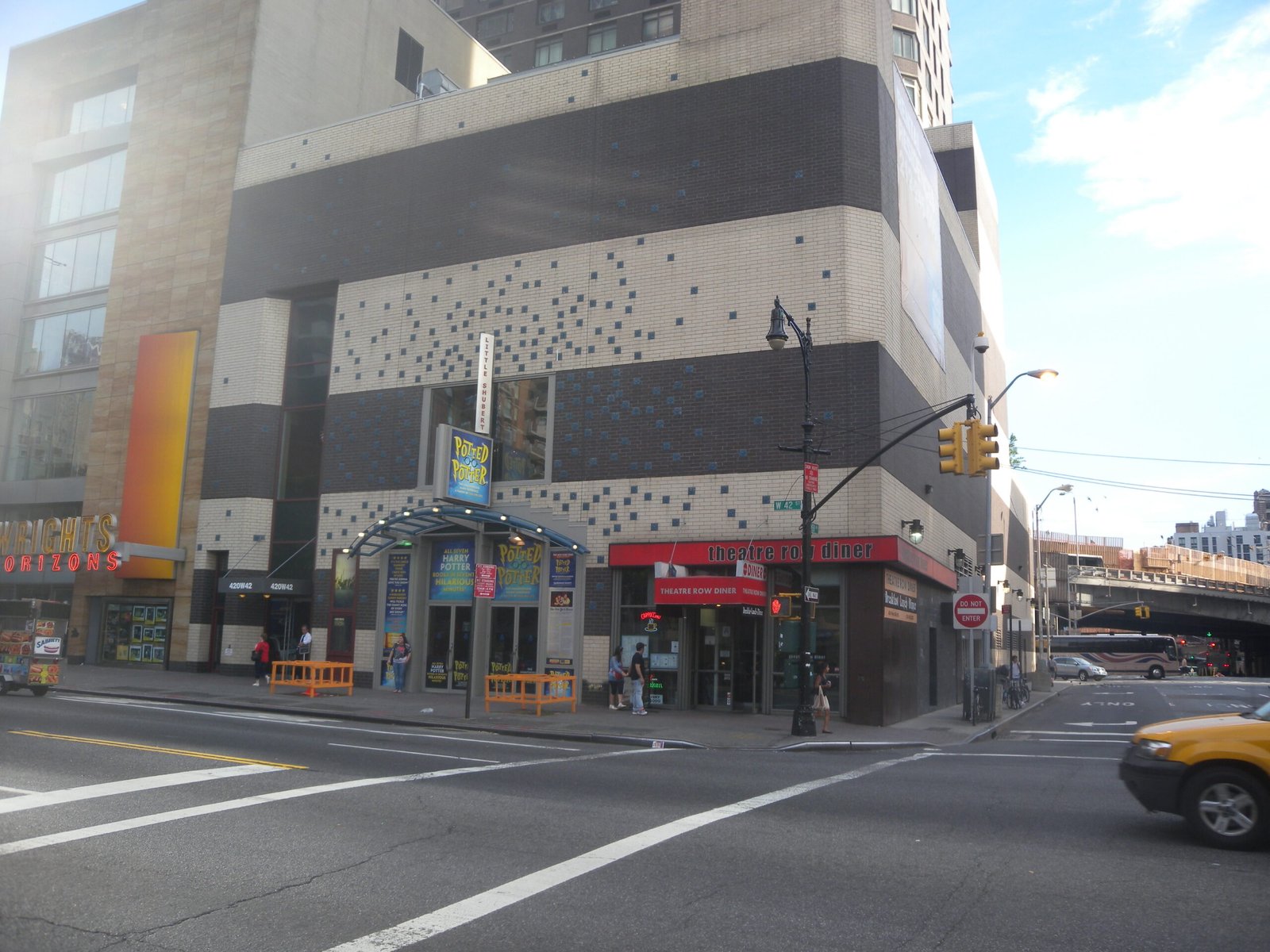
Stage 42 theater exterior on West 42nd Street in Theatre Row, home to a 499-seat Off-Broadway auditorium with stadium seating
Stage 42 on West 42nd Street, the 499-seat Off-Broadway theater formerly known as the Little Shubert.
Stage 42 — Quick Seating Snapshot
Address
422 West 42nd Street, Theatre Row
Capacity
499 seats
Seating Style
Stadium rake designed for sightlines and proximity
Former Name
Little Shubert Theatre
Best Overall Seats
Center orchestra, mid-house for most productions
Best Value Zone
Rear or slightly off-center orchestra when priced well
Accessibility
Elevator/escalator to theater level; accessible restrooms on ground floor
Watch-Outs
Steps between many rows; side angles and current show layout must be checked
Visitor Notice Always compare this guide with the current official seat map.

Stage 42’s standard seating logic is helpful, but individual productions can alter pricing, holds, staging, sightline notes, or accessible-seat locations. Before purchasing, check the official Shubert or Telecharge seat map for the exact performance you plan to attend.

Production Notice The best seat can change depending on the show.

For dance, ensemble staging, or productions using the full width of the stage, slightly pulled-back center seats may be better than the first few rows. For intimate plays or solo performance, closer center seats can be more rewarding.

Access Notice Confirm accessible seating before booking, not after.

Stage 42 has elevator/escalator access to theater level and accessible restrooms on the ground floor, but exact wheelchair spaces, transfer seats, companion seats, folding armrests, and access services should be confirmed through official venue or ticketing channels before purchase.

Limited-View Notice Do not assume a discount seat is only discounted because it is farther back.

If any ticket is marked partial view, limited view, obstructed view, accessible, companion, or production hold, treat that label as more important than the general seat advice on this page.


How Stage 42 Seating Actually Feels

The most important thing to understand about Stage 42 is that it does not feel like a typical small Off-Broadway room. It is Off-Broadway by seat count, but its stage dimensions, pit, and auditorium design give it a more substantial feel than many smaller downtown or black-box spaces. That is why seat choice here should not be treated like a simple “sit as close as possible” decision.

The stadium rake is the defining feature. Rows rise more sharply than they would in a conventional flat or gently sloped orchestra, which helps reduce head-blocking and makes rear rows more usable. A rear center seat at Stage 42 can feel much more connected to the stage than a rear seat in a flatter room with the same number of seats.

The trade-off is movement. Stadium-style rows often mean more steps, and that matters for guests who have mobility concerns or who prefer easier row access. The room is also wide enough that extreme side seats can become a real angle decision. The side may still be close, but it may not be the best way to see the full stage picture.

The Seat-Buying Math Is Different Here

In a 1,500-seat Broadway house, paying a premium to avoid the rear can be essential. At Stage 42, the 499-seat scale and stadium rake make the rear center more competitive. The better question is not simply “how close can I get?” but “what does this production need me to see?”


Best Seats at Stage 42

The safest general recommendation is center orchestra, mid-house. That zone gives you the cleanest blend of full-stage visibility, actor detail, and balanced sound for most standard productions. It is close enough to feel involved, but far enough back to see the full stage picture.

Best overall

Center orchestra, mid-house. This is the default safe recommendation for most visitors at most productions. The stadium rake supports clean sightlines, the stage picture is balanced, and the seat does not force you to choose between closeness and composition.

Best for musicals, dance, and full-stage productions

Center orchestra, slightly pulled back from the extreme front. For choreography, formations, ensemble movement, and wide scenic design, a little distance helps. You are not watching one person at a microphone — you are watching the whole stage operate as a picture.

Best for plays and intimate productions

Front-to-mid center orchestra. If the production is actor-driven, text-heavy, or emotionally intimate, closer seats can be excellent. The compact room means close does not feel swallowed by scale the way it can in a larger house.

Best value

Rear center orchestra or slightly off-center orchestra. Because the rake does real work, rear center is stronger here than it would be in many flat-floor theaters. If the price difference is meaningful, rear center can be a smart buy.

Seat-Buying Notice Center usually beats side when prices are close.

Side seats can be worthwhile at a real discount, but if side orchestra and center orchestra are priced similarly, center is usually the better value at Stage 42.


Stage 42 Seating Zones

Instead of inventing row-by-row claims, the smarter way to approach Stage 42 is by zone. Exact rows and seat numbers should always be checked against the current production’s official seating chart.

Best Zone
Premium Center Orchestra

Mid-house center seats. The strongest all-around position for most productions. Full stage picture, clean sightlines, strong sound, and good performer detail.

Best for: first-timers, date night, mixed groups, and anyone who wants the safest pick.

Front Zone
Front Orchestra Center

Closest to the stage. Excellent for intimate productions, acting detail, and emotional immediacy. Less ideal if the show depends on full-stage choreography or wide scenic movement.

Best for: plays, solo shows, actor-focused productions, and visitors who love being close.

Sweet Spot
Mid Orchestra Center

The practical sweet spot. Far enough back to see the stage picture; close enough for faces, sound, and theatrical energy. The stadium rake is especially helpful here.

Best for: musicals, dance, ensemble shows, families, and first-time visitors.

Value Zone
Rear Orchestra Center

Stronger than rear seats in many comparable theaters because the rake keeps the view open. If the price is right, this can be one of the best values in the house.

Best for: budget buyers who still want center alignment.

Side Zone
Side Orchestra & Off-Center

Often workable, especially in the middle rows, but the wider stage means side angles deserve attention. Extreme side seats are more production-dependent than rear center seats.

Best for: value buyers when the discount is meaningful.

Accessible Zone
Accessible & Transfer Seating

Wheelchair seating does not require steps. Elevator and escalator access connect ground level to theater level. Accessible restrooms are on the ground floor.

Best for: guests with mobility needs — confirm exact locations before buying.


How to Read the Stage 42 Seating Chart

The official seating chart is the most important document for any Stage 42 seat decision. Use the guide below to interpret it with the room’s specific layout in mind.

Center Column
Usually the safest zone. Center alignment matters because the stage is wide enough for extreme side seats to create a noticeable angle.
Distance from Stage
Less punishing than in a flat-floor theater. Rear center should be evaluated by price and show type, not dismissed automatically.
Side Columns
Worth considering at a meaningful discount. Be more cautious if the current show uses the full stage width.
Front Rows
Excellent for intimate productions. For dance, ensemble work, or wide staging, mid-center may provide a better overall picture.
Production Holds
If the map shows unavailable clusters, production holds, or unusual pricing patterns, treat that as a sign to verify the current staging setup.
Limited View
If any seat is marked partial view, limited view, or obstructed view, follow the official label over general seating advice.
Chart Notice Official labels override general advice.

This guide explains the room, but the official seat map tells you what is true for the current production. If a seat is labeled limited view, partial view, obstructed view, accessible, companion, or transfer, treat that label as decisive.


Accessibility at Stage 42

Stage 42 has meaningful accessibility features for an Off-Broadway venue, but accessible seating should always be planned through the current official ticketing or venue accessibility process. Do not assume that every production uses the same accessible locations or seat holds.

Stage 42 Accessibility Overview
  • Elevator and escalator access connect the ground level to the theater level. Confirm current operational status before your visit.
  • Wheelchair-accessible seating is available and does not require steps to reach. Confirm exact current locations before booking.
  • Most regular orchestra rows involve steps between rows. Handrails are available at the end of stepped rows.
  • Accessible restrooms are located on the ground floor. Confirm route and availability before your visit.
  • Transfer seating, companion seating, folding armrests, and aisle transfer positions should be confirmed with the official venue or ticketing service.
  • Assisted listening, captioning, audio description, and other access services should be verified for the specific production and performance date.
  • For non-standard staging or modified layouts, accessible seat locations may change.
Visitor notice: If you need wheelchair seating, transfer seating, companion seating, listening assistance, captioning, or audio description, confirm directly through official Shubert/Telecharge accessibility channels before buying.

Think Twice Before Booking These Seats

This section is not about bad seats. Stage 42 does not have many positions that are automatically bad. It is about seats that deserve extra verification because the production, price, or accessibility needs may change the value.

Seats Worth Verifying Before Buying
  • Extreme side seats for shows with wide staging. Stage 42’s stage is broad enough that side angles can matter.
  • Very front seats for choreography-heavy or ensemble productions. You may be close but lose the full stage picture.
  • Stepped rows for guests with mobility concerns. Most regular rows involve steps.
  • Discounted seats that are labeled limited view, partial view, obstructed view, companion, transfer, or production hold.
  • Side orchestra seats priced almost the same as center seats. If prices are close, center is usually the better buy.
  • Any seat purchased without checking whether the current production uses projections, platforms, side-stage action, or modified staging.

Best Seats by Visitor Type

First-Time Off-Broadway Visitor
Center orchestra, mid-house

The safest entry point. Clean sightlines, balanced sound, and a traditional theater view without the scale of a large Broadway house.

Theater Fan / Full-Stage Priority
Mid to mid-rear center orchestra

If formations, choreography, scenic transitions, or full-stage composition matter, pull back slightly from the front.

Families
Center orchestra, mid-house; aisle if needed

Center mid-house works for most groups. If younger visitors may need easier movement, consider aisle access while staying reasonably centered.

Date Night
Center orchestra, mid-house preferred

A balanced view that pairs well with a Hell’s Kitchen dinner and a full Theatre Row night.

Visitors with Mobility Concerns
Official accessible seating

Do not guess. Confirm wheelchair, companion, transfer, and aisle needs through official channels before booking.

Budget / Value Buyer
Rear center orchestra

The stadium rake makes rear center much more competitive than it would be in a flat-floor room.

Dance / Musical Theater Fan
Mid-center orchestra

Best for seeing the complete choreographic picture without losing performer detail.

Aisle / Easy Exit Preference
Aisle-adjacent center seats

Choose aisle comfort carefully. A center-section aisle is usually better than an extreme side aisle.


Stage 42 vs Larger Broadway Theaters

Stage 42 is Off-Broadway by seat count, but its stage and production capacity make it feel more substantial than many Off-Broadway rooms. Understanding that difference helps explain why the usual Broadway seating rules only partly apply.

How Stage 42 Seat Math Differs from Broadway
  • Distance penaltyLower than in many large theaters because the room has 499 seats and a stadium rake. Rear center is not automatically weak here.
  • Overhang / mezzanineStage 42 does not have the classic rear-orchestra-under-mezzanine problem found in many Broadway houses.
  • SoundThe smaller, raked room generally keeps visitors closer to the stage picture and sound environment.
  • Stage widthThe stage is broad enough that side angles still matter, especially for productions using the full stage.
  • Premium gapThe difference between premium center and rear/value seats is often smaller here than in a larger Broadway house.
  • Current stagingThe production matters. A dance show, play, solo performance, or modified staging setup can shift the best seat choice.

Plan the Night — Theatre Row & Stage 42

Stage 42 is at 422 West 42nd Street on Theatre Row, west of the Times Square core and close to Hell’s Kitchen. That location changes the rhythm of the night. You are still in Midtown, but you are not sitting directly inside the busiest Broadway blocks.

The most practical subway is usually the A, C, or E train to 42nd Street–Port Authority Bus Terminal. Times Square lines are also walkable, but plan on a westward walk along 42nd Street. For dinner, Ninth Avenue in Hell’s Kitchen is the strongest pre-show option, with more neighborhood restaurant range than the immediate Times Square core.

Arrive about 20–25 minutes before curtain for a standard visit. If you need accessibility coordination, assistive services, or extra time getting to the correct entrance and seating area, build in more buffer.

Arrival Notice West 42nd Street is walkable, but it is west of the main Broadway cluster.

If you are coming from Times Square, restaurants east of Broadway, or another Broadway theater, do not assume the venue is directly next door. Leave enough time for the walk west, especially in bad weather or with mobility needs.

More Stage 42 & Theatre Row Planning

Use these guides to connect your seat choice to the venue, Off-Broadway planning, restaurants, transportation, and hotels.


FAQ — Stage 42 Seating

What are the best seats at Stage 42?

Center orchestra, mid-house, is the safest all-around recommendation for most productions. It gives you the full stage picture, strong sightlines from the stadium rake, and a balanced view of the stage.

Is Stage 42 a small theater?

Stage 42 has 499 seats, placing it at the upper edge of Off-Broadway by capacity. It feels more compact than a Broadway house, but its stage and production infrastructure are unusually substantial for Off-Broadway.

Does Stage 42 have stadium seating?

Yes. Stage 42 uses a stadium-style rake, which helps improve sightlines and makes rear seats more workable than they would be in many flatter theaters.

Are rear seats good at Stage 42?

Rear center seats can be a strong value because the stadium rake reduces the usual distance penalty. Rear side seats are more angle-dependent and should be judged against the current production’s seat map.

Is Stage 42 accessible?

Stage 42 has elevator and escalator access to theater level, wheelchair-accessible seating that does not require steps, and accessible restrooms on the ground floor. Exact accessible seat locations and services should be verified before booking.

Are there steps inside Stage 42?

Yes. Most regular orchestra rows involve steps as part of the stadium-style seating configuration. Handrails are available at the end of stepped rows, while wheelchair seating does not require steps.

Is Stage 42 Broadway or Off-Broadway?

Stage 42 is Off-Broadway. Its 499-seat capacity places it below the 500-seat Broadway threshold, even though its stage and production infrastructure are comparable to many Broadway houses.

Should I sit close for a musical or dance show at Stage 42?

For dance-heavy or ensemble productions, slightly pulled-back center is often better than the closest rows because it gives you a fuller view of the choreography and stage picture. For more intimate shows, close center can be excellent.

Seating Quick Facts

Stage 42 Seating Guide

  • Address 422 West 42nd Street, Theatre Row
  • Capacity 499 seats — upper edge of Off-Broadway
  • Room Type Compact Off-Broadway house with stadium-style sightlines
  • Best Overall Center / mid-house for the cleanest full-stage balance
  • Best Value Rear or slightly off-center seats can still feel close
  • Access Note Elevator and escalator to theater level; verify exact accessible seats before booking
Stage & Street NYC

Choosing seats at Stage 42?

Share this Stage 42 seating guide or follow us for more Off-Broadway seating, theater, dining, hotel, and night-out planning.

✓ Link copied to clipboard
Stage 42 · Seating & Night-Out Planning

Build the full Stage 42 night around your seats.

Once you know whether you want center balance, value seats, aisle comfort, or the full-stage picture, use these guides to connect the seating decision to the venue, the Off-Broadway cluster, dinner, transit, hotels, and the Theatre Row neighborhood.

499-seat Off-Broadway house Stadium-style sightlines Theatre Row / West 42nd Street Center seats usually safest Verify show-specific layout
Seat-buying reminder: Stage 42 is compact enough that many rear and off-center seats can work well, but the broad stage means side angles and very-close seats should still be judged against the specific production’s map.
Parent Venue

Stage 42 Main Venue Guide

Use the parent guide for the theater’s location, Theatre Row context, history, access notes, and how this 499-seat Shubert venue fits into Off-Broadway.

Open venue guide →
Off-Broadway

Off-Broadway in NYC

Compare Stage 42 with the wider Off-Broadway landscape before choosing a show, venue, or night-out plan.

Explore Off-Broadway →
Venue Hub

Off-Broadway Venue Guide

Browse nearby and comparable Off-Broadway rooms, from Theatre Row venues to larger commercial Off-Broadway houses.

Browse venues →
Basics

Broadway vs. Off-Broadway

Stage 42 is a perfect example of why seat count, venue scale, and production ambition do not always line up neatly.

Understand the difference →
Show

Gotta Dance! at Stage 42

Pair the seating strategy with the current Stage 42 show guide when judging close seats, center balance, and full-stage visibility.

Open show guide →
Neighborhood

Theater District Guide

Orient your Stage 42 night inside the broader Midtown theater corridor, from Times Square to the western edge of 42nd Street.

Plan the area →
Nearby

Hell’s Kitchen Guide

Stage 42 sits close to one of Midtown’s best pre-show dining zones, especially if you want more restaurant range than Times Square.

Explore nearby →
Dinner

Restaurants Near Broadway

Find dinner options that work before or after a Theatre Row show without turning the night into a timing scramble.

Find restaurants →
Timing

Pre-Show Dining Guide

Use this before booking dinner so your seat choice, arrival window, and curtain time all work together cleanly.

Time dinner right →
Transit

How to Get to a Midtown Show

Stage 42 is west of the Times Square core, so the A/C/E at Port Authority often matters more than visitors expect.

Plan transit →
Hotels

Hotels Near Broadway

Choose a hotel that makes sense for Theatre Row, Hell’s Kitchen dining, Times Square transit, and late-night return plans.

Compare hotels →
Browse

Browse Broadway & Theater Shows

Compare what is playing across Broadway, Off-Broadway, and nearby theater venues before locking in a seat.

Browse shows →
    0 0 votes
    Article Rating
    Subscribe
    Notify of
    guest
    0 Comments
    Oldest
    Newest Most Voted
    Inline Feedbacks
    View all comments