

Yankee Stadium Concert Tickets & Concerts: Events, Tours & Venue Guide
Find Yankee Stadium concert tickets and concerts, check current events and stadium tours, then plan seating, subway access, parking, weather and the full Bronx concert night.
Yankee Stadium is at 1 East 161st Street in the Concourse neighborhood of the Bronx, at the corner of 161st Street and River Avenue. It is the largest outdoor stadium concert venue within the five boroughs of New York City, seating roughly 47,000 for baseball and a variable number for concerts depending on stage configuration. It is where major stadium-scale tours stop when they play New York City — not New Jersey — and the transit situation is fundamentally different from MetLife Stadium because of it: the 4 train and the D train stop at 161 St–Yankee Stadium station directly adjacent to the building, with no transfer required from most of Manhattan. That direct subway connection is the single most important practical distinction between a Yankee Stadium concert and a MetLife concert for most New York visitors, and it’s a real reason yankee stadium concert tickets for infield lower-level sections tend to move fast once a major tour is announced.
What a Yankee Stadium concert is: an open-air summer event in New York City at genuine stadium scale, with crowd energy and production spectacle that no indoor venue in the region can match and transit logistics that are significantly more accessible than the region’s only larger stadium option across the river. What it is not: an intimate evening. The sound is distributed through large speaker arrays. The performers are at a distance from most of the crowd. The distance from very front field to the rear of the upper deck spans the full geography of a major league ballpark. The production has to be built for that scale to fully justify the experience.
This guide covers the transit clearly, the seating honestly — including the lower bowl overhang situation in sections 105–108 that most buyers do not know about — and the full picture of what to expect and prepare for when a major summer tour comes to the Bronx.
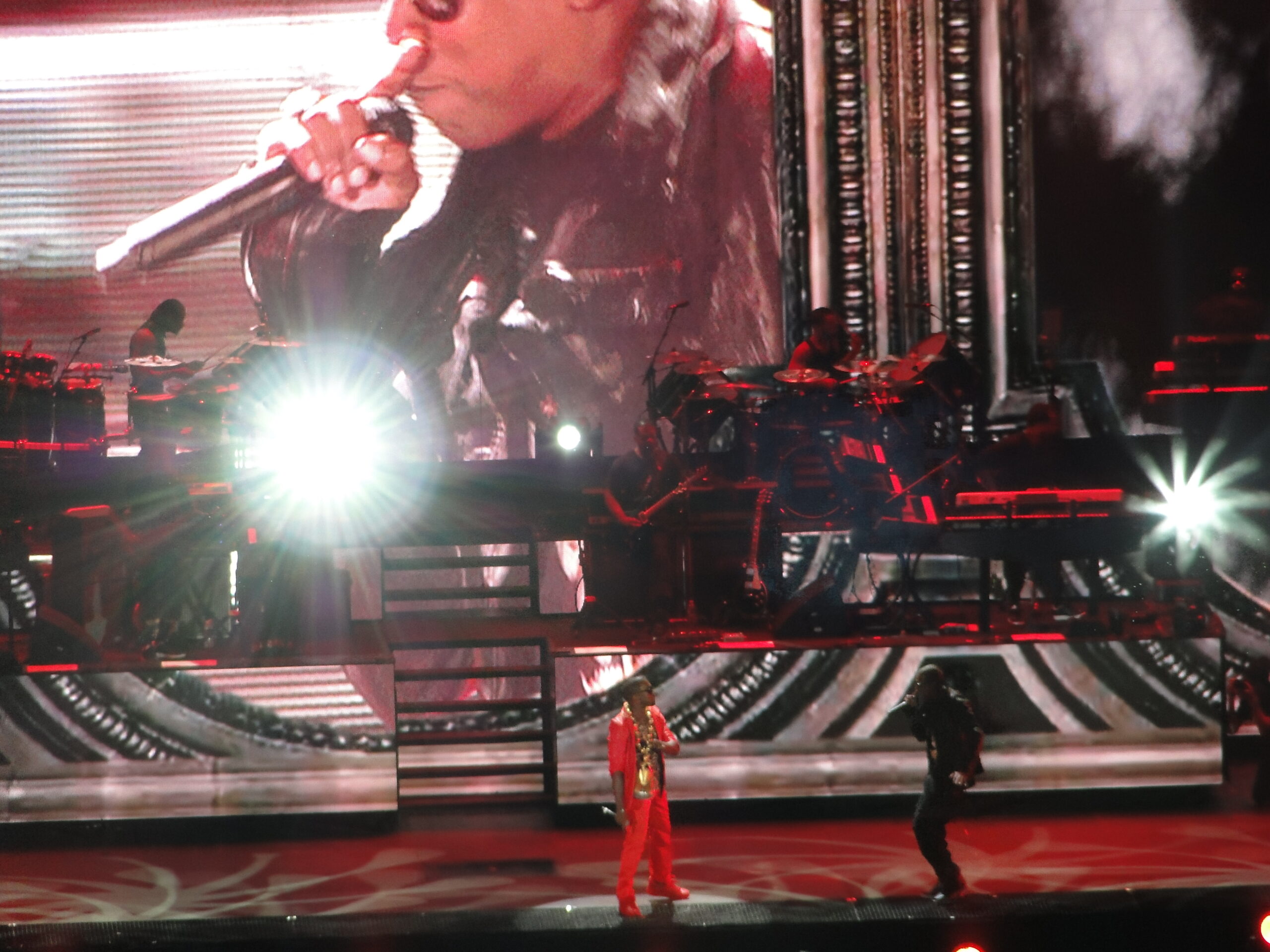
Yankee Stadium Concert Tickets: Buying for a Stadium Show
Yankee Stadium concert tickets are a much narrower search than the broad phrase Yankee Stadium tickets, which is dominated by Yankees baseball demand. Stage & Street keeps this page focused on live music: concert ticket buying, event-specific seating, stage configuration, transit, weather and the logistics that matter on a stadium show night.
For current primary concert inventory and official event information, start with the Yankees’ official Concerts at Yankee Stadium page. Stage & Street’s ticket buttons are separate marketplace links, so compare the exact concert date, section, row, stage configuration and final checkout total before purchasing.
A Yankee Stadium baseball section can behave very differently for an end-stage concert. The field becomes temporary floor seating or GA, side sections can turn into partial-view positions, and production can close or open inventory. Use the event-specific map first, then use the dedicated Yankee Stadium concert seating guide for the seat-choice decision.
Yankee Stadium Concerts, Upcoming Events & What’s Happening Now
Yankee Stadium concerts are only one part of the building’s event calendar, which also includes Yankees games, soccer, college football and other special events. Searches for Yankee Stadium events, upcoming events at Yankee Stadium, Yankee Stadium events today and Yankee Stadium tonight therefore need to be checked against the current official calendar rather than treated as automatically concert-related.
Upcoming Yankee Stadium Concerts
As of September 22, 2026, the Yankees’ official concert page does not show a current upcoming concert lineup. The official upcoming-events page currently highlights the Cortaca Jug college football game on November 14, 2026, which is not a concert. For new music announcements, check the official concert page before adding an artist or date here.
Yankee Stadium Concerts 2026
Search demand for Yankee Stadium concerts 2026 remains active even after individual dates have passed. Treat artist-specific search results carefully and verify the date before purchasing resale inventory or making travel plans. A past concert page can continue ranking long after the show itself is over.
Yankee Stadium Box Office & Ticket Office
The Yankee Stadium box office is cashless. Yankee Stadium’s current information guide identifies ticket windows and customer-service locations inside the building, including the Great Hall near Gate 6 and Terrace/Grandstand Level locations, while the Yankees’ contact page lists the Yankee Stadium Ticket Office at tickets@yankees.com.
For non-baseball events, the Yankees list a dedicated phone line at (646) 977-8400. Concert-specific ticketing and event-day procedures can differ from baseball operations, so verify the event page before making a special trip to the stadium for ticket help.
Where Is Yankee Stadium? The Bronx, New York City
Yankee Stadium is at One East 161st Street, Bronx, NY 10451, at East 161st Street and River Avenue in the Concourse area of the Bronx. It is inside New York City and directly served by the 161st Street–Yankee Stadium subway station.
The location is one of the stadium’s biggest concert advantages. The No. 4 and D trains stop at 161st Street–Yankee Stadium, the B also serves the station on weekdays, and Metro-North serves the stadium area as another rail option. The full transit strategy remains later on this page.
What Yankee Stadium Is Actually Like for Concerts
Yankee Stadium is a baseball stadium designed by the architectural firm Populous and opened in 2009. Its concert capacity is smaller than MetLife Stadium — roughly 47,000 against MetLife’s 82,500 — but it brings something MetLife cannot offer: it is in New York City. The address is in the Bronx. The 4 train stops outside it. The surrounding blocks on River Avenue have restaurants, bars, and real street activity before the show. The skyline context, while not the dramatic Manhattan-from-New-Jersey view MetLife provides, is the ambient reality of being in a New York City borough at an outdoor event in summer. That distinction matters more than it might seem in the abstract.
The stadium is open-air, which means summer heat, potential afternoon weather, and the full sensory character of a summer evening in the Bronx. The lower bowl is generous by baseball stadium standards — seats are 19–24 inches wide with 33–39 inches of legroom, and most lower bowl seats are cushioned. The upper deck is functional and provides clear sightlines from the infield sections, with the outfield upper sections at significantly greater distance. Four large screens are positioned around the stadium for visual coverage from all sections.
The 200-level overhang is an important physical reality that affects lower bowl concert seating in a specific way. Sections 105–108 (lower outfield-adjacent) have a deep overhang from the 200 level that covers the back half of those sections. The first rows of that covered portion can be pleasant — shade and shelter — but deeper rows feel enclosed, with obstructed sightlines to the screens. For concerts where the field-level production includes video screens positioned above the stage, this overhang creates a viewing restriction that matters significantly. More on this in the seating section.
When Yankee Stadium Is the Right Venue — and When It Isn’t
Yankee Stadium is the right choice when
You want a major stadium concert without leaving New York City. This is Yankee Stadium’s defining advantage over MetLife: it is in the Bronx, inside the city, reachable by direct subway from Manhattan without a transfer. For visitors and residents who want stadium-scale concert energy but are not willing to do the NJ Transit transfer to East Rutherford, Yankee Stadium is the answer. The show is smaller than MetLife — roughly 47,000 capacity against MetLife’s 82,500 — but the logistical simplicity is significantly greater.
The artist is on a major summer stadium tour. The concerts that play Yankee Stadium are at the same level as MetLife tours — artists whose production is built for 40,000–50,000 people, with large staging, screen content, and crowd energy that requires stadium scale. When the show is designed for this room, the open-air Bronx summer stadium experience is genuinely its own thing: city energy, warm evening, a crowd of 40,000 people with the stadium’s architecture framing the production.
The East Side transit access is important to you. The 4 train’s express service from the East Side of Manhattan — Grand Central, 59th Street, 86th Street, 125th Street — puts Yankee Stadium at roughly 25 minutes from Midtown. For visitors staying on or near the Lexington Avenue line, this is more direct than getting to Barclays or MSG. Metro-North from Grand Central (Hudson Line to Yankees-E 153rd Street, 15 minutes) adds a second strong access option for visitors from Westchester or the upper Hudson Valley who do not want to travel through Penn Station.
Yankee Stadium may not be the right choice when
The show requires MetLife’s capacity. Artists on true mega-tours — those that sell 75,000+ seats per night — play MetLife, not Yankee Stadium. The capacity difference between the two venues is not a minor variation; it is a fundamentally different scale of event. When the tour is genuinely stadium-level in the MetLife sense, Yankee Stadium may not be an option at all.
You want intimacy, acoustic precision, or a polished indoor evening. Yankee Stadium is an open-air stadium. The sound system, the distance, and the production format are all built around scale rather than intimacy. For shows where being close to the performer matters, where acoustic clarity is paramount, or where the evening should include a beautiful room and a structured dinner-and-show plan, the Beacon, Radio City, or Carnegie Hall will serve those preferences in ways an outdoor stadium cannot.
Weather is a serious concern. An open-air stadium in the Bronx in July offers no cover for rain or heat. If the forecast is uncertain and weather matters to your experience, either plan accordingly or consider whether an indoor venue better serves the evening.
Best Seats for Concerts at Yankee Stadium
This main venue page keeps seating at the decision-summary level. For the full concert seating chart, best seats, floor strategy, section views, overhang details and view-from-my-seat guidance, use the dedicated Yankee Stadium concert seating guide.
Yankee Stadium concert seating follows the same general logic as MetLife — the best seats are typically not the closest — but the specific geometry of a baseball stadium creates some distinct situations that matter for concert purchases. The overhang from the 200 level over lower outfield sections is the most important specific feature to know about before buying.
Sections 105–108 in the lower level have a deep overhang from the 200 level that covers the back half of those sections. The first few covered rows (approximately rows 13–17) can actually be pleasant for shade and shelter. But deeper into the overhang, the view becomes increasingly restricted — the ceiling is low, screen visibility is compromised, and the sense of being in an open-air stadium disappears. For concerts where the production includes elevated video screens or overhead lighting effects, this overhang creates a genuine viewing restriction. Verify the specific row and position if purchasing in sections 105–108 before committing.
Lower level (100s) — the primary concert zone
The lower level sections wrap around the stadium from outfield foul poles through the infield. For end-stage concert configurations — the most common for major tours — the infield lower level sections directly facing the stage are the primary target. Within those sections, the key principle from multiple stadium-seating sources: for the 100-level sideline sections, rows in the range of approximately 10–20 strike the best balance between proximity, viewing angle, and depth perception. The very front rows of the lower bowl require looking upward at an elevated stage — a position that becomes physically demanding over a two-hour show and may cut off sightlines to the upper production elements. Going back 10–15 rows gives you enough elevation from the field to see the full stage picture without losing meaningful proximity to the performance.
Infield lower level sections facing the stage are stronger than outfield lower level sections for end-stage configurations. When the stage is at one end of the field, sections at the far outfield end are at maximum distance from the stage and at an angle that makes the experience significantly weaker than their price suggests. Verify where the stage is positioned for your specific event before purchasing outfield sections at infield prices.
Field / floor sections
Concert floor configurations at Yankee Stadium use the converted field level, with sections typically labeled in zones (Floor A1–A7, B1–B9 or similar arrangements that vary by tour). As with MetLife, the very front floor positions close to an elevated stage can require an awkward upward viewing angle and may put you too close to see the full production picture. Mid-floor positions near any catwalk or runway extension can be excellent when the production uses extended staging. GA floor involves standing for the full show — a real physical commitment for a stadium summer evening, and the crowd density in a packed GA floor can be significant. Check the tour’s specific floor configuration before purchasing.
200 level (main level / mezzanine)
The 200 level runs above the lower bowl with consistent elevated sightlines across most sections. Infield 200-level sections facing the stage deliver a good full-stage view of the complete production, with enough elevation to see everything simultaneously rather than looking up at a steep angle from field level. For productions that are heavily designed around screen content and full-stage visuals, 200-level infield center sections can deliver a better overall production experience than lower-level seats that are physically closer but at a more compressed angle.
300 and 400 level (upper deck)
The upper deck at Yankee Stadium divides strongly between infield-facing sections and outfield sections. Upper deck infield sections facing the stage, while far from the stage, maintain a direct angle to the performance and have functional screen visibility. Upper deck outfield sections are the most distant positions in the building at the most acute angles for end-stage configurations — the combination of distance and angle makes these the weakest positions in the building. They are also the most affordable. For the right person and the right price, an upper deck infield section is viable. An upper deck outfield section for an end-stage concert is a genuine compromise.
The stadium’s core value zone for most concert configurations. High enough for the full stage picture, close enough for real performer presence. Avoid very front rows (1–8) for elevated stages. Avoid sections 105–108 deeper rows (overhang obstruction).
Elevated angle of the complete stage picture — both the performance and the production design simultaneously. Good for shows where full-stage spectacle is the primary experience. Often better value than front lower bowl for heavily produced tours.
Best when the tour uses catwalk or runway staging that extends into the floor. GA floor is physically demanding — standing for the full show. Avoid extreme front floor for elevated end-stages where the upward angle compromises the view.
Far from the stage but with a direct angle to the performance and functional screen access. Viable for budget attendees at shows with strong screen production. Upper deck outfield sections for end-stage shows are the weakest positions — avoid unless budget is the only consideration.
The 200-level overhang covers the back half of these sections. Front covered rows are shaded but workable. Deeper rows have compromised screen views and feel enclosed. Verify the specific row before purchasing at non-discounted prices.
Maximum distance at maximum angle from an end-stage configuration. These sections become viable for in-the-round or center-stage shows. For standard end-stage tours, outfield sections at any level are the genuinely weakest positions. Check stage position before purchasing.
Concert stage layouts at Yankee Stadium vary by tour. End-stage, runway/catwalk, and other configurations change which sections face the stage and which sections are behind it or at sharp angles. The baseball stadium seating chart is not the right reference for a concert — use the event-specific configuration from the ticket platform before purchasing.
Seat Strategy by Concert Type
End-stage stadium tour (most common)
Stage at one end of the field, floor extending toward center, bowl seating wrapping around. Lower level infield rows 10–20 facing the stage: the primary value zone. 200-level infield center: strong full-production-view alternative. Upper deck infield facing stage: budget option with functional angle. All outfield sections at any level: avoid for end-stage shows where possible. Floor mid-field sections: best proximity option, but understand the physical demands of GA floor in a summer stadium.
Runway and catwalk productions
Tours with extended runways or catwalks into the floor area change the seat equation for floor and front lower bowl sections. Positions adjacent to the catwalk can become among the best in the building during the moments the performer uses it, producing genuine proximity and connection at stadium scale. For these configurations, a mid-floor or front lower bowl section near the anticipated catwalk path can outperform a standard lower bowl seat. Check tour-specific staging information before purchasing if you are targeting catwalk-adjacent positions.
Pop spectacle with heavy screen production
For heavily produced tours where the video screen content is co-equal with the live performance, the distance penalty of upper or mid-level seating is reduced because the screens are the primary visual medium for much of the show. 200-level infield sections can deliver a more complete view of the full production — stage and screens simultaneously — than lower bowl sections where the angle to the overhead or rear screen elements may be less favorable. Choose based on what you most want to experience: performer proximity or full-production overview.
Seated floor vs general admission floor
Yankee Stadium concerts may offer either seated floor sections with assigned positions or GA floor with open standing access. Seated floor positions in the mid-field range are a strong option for those who want proximity without the GA crowd management. GA floor is for the concert-goer who specifically wants the energy, the physical closeness, and the experience of being in the crowd — and who is prepared for the physical demands of standing for two-plus hours on a converted baseball diamond in summer heat. Neither is universally better; they serve different preferences and different kinds of concert experience.
Yankee Stadium Tour & Tour Tickets (Separate from Concert Tickets)
A Yankee Stadium tour is a different product entirely from a concert ticket — sold directly by the Yankees, not through a ticket resale platform, and worth knowing about even if a concert isn’t why you’re reading this. Current official tour offerings include public tours, private and premium experiences, and group tours, with Monument Park and the New York Yankees Museum among the signature stops highlighted by the Yankees.
If you’re searching for a Yankee Stadium tour or Yankee Stadium tour tickets, use the Yankees’ official tour booking page. Tour dates, times, routes and locations are subject to change, and the Yankees reserve the right to cancel all or part of a tour. For current questions, the Tours Department lists (646) 977-TOUR and tours@yankees.com.
For visitors combining a concert trip with other Yankee Stadium interest — or simply looking to see the stadium outside of an event — booking a stadium tour on a separate day from your concert is usually the more relaxed way to do both, since a tour involves walking through areas that aren’t accessible once a concert crowd is in the building.
What First-Timers Should Know Before a Concert at Yankee Stadium
The 4 train is the fastest and most reliable option from Manhattan
The 4 train (IRT Lexington Avenue express) stops at 161 St–Yankee Stadium directly. From Grand Central (42nd Street), the trip is approximately 25 minutes. The 4 provides direct access from the East Side of Manhattan without a transfer. The D train also stops at 161 St–Yankee Stadium and provides direct access from the Sixth Avenue corridor, while the B also serves the station on weekdays. See the transit guide for full route details.
The Metro-North Hudson Line stops at Yankees-E 153rd Street — an 8–9 minute walk from Yankee Stadium — and the trip from Grand Central takes approximately 15 minutes. For visitors from Westchester, the Hudson Valley, or Connecticut connecting through Grand Central, Metro-North is often faster than the subway to the Bronx. Extra trains (Yankee Clipper service on the Harlem and New Haven lines) run for major events. Verify Yankee Clipper availability for your specific concert date — it does not run for all events, including 1 PM weekday games and NYCFC matches.
Direct subway is why Yankee Stadium beats MetLife for most Manhattan visitors
The transit comparison between Yankee Stadium and MetLife is the most practically important distinction in this guide. MetLife requires a mandatory transfer at Secaucus Junction and depends on Meadowlands Rail Service being activated for your event. Yankee Stadium requires no transfer — you board the 4 or D train in Manhattan and exit at the stadium. For most Manhattan residents and visitors, this makes Yankee Stadium meaningfully easier to get to and meaningfully easier to get home from. The post-show subway is crowded but disperses quickly across the 4 and D lines running in both directions.
Arrive 60–75 minutes before show time
Security at Yankee Stadium involves metal detector screening for all guests at all events. The Yankees specifically encourage arriving early and warn that security regulations require all visitors to budget extra time for entry. For a major concert with a large crowd arriving in the same time window, the entry queues build significantly in the 30 minutes before showtime. Factor in the transit trip plus entry time, and leaving Manhattan 75–90 minutes before the listed concert start is a reasonable plan for a major sold-out event.
The bag policy is not a clear-bag requirement
Yankee Stadium does not enforce a clear bag policy for standard events. The policy requires soft-sided bags no larger than 16″×16″×8″. Your standard purse, small backpack, or tote bag passes this requirement as long as it fits within those dimensions and is not hard-sided. However, the Yankees note that policies may vary for concerts specifically — always verify the event-specific policy before the day of the show. No storage is available at the venue for non-compliant bags. Empty non-glass water bottles (up to 24 oz) are permitted.
Weather preparation for an open-air summer stadium
Yankee Stadium is open-air with no general-admission cover for rain or heat. Check the forecast before leaving home, not when you are already at the Bronx. A light packable rain layer is worth including in your bag for any summer concert where afternoon weather is uncertain. Summer heat in a full stadium can be intense — particularly in sections not benefiting from shade or breeze. Hydration and footwear matter more at a summer outdoor stadium show than at any indoor venue. See the what to wear guide for full venue-specific clothing and bag advice.
Post-show subway — plan the exit
The 4 and D trains handle the post-Yankee Stadium concert crowd efficiently compared with a mandatory-transfer system like MetLife. But both platforms fill quickly immediately after a major show ends. Two approaches that work: exit your section 5–10 minutes before the final song to get in the first wave of train departures. Or stay in the stadium 20–30 minutes after the show ends, let the main rush pass, and board a less crowded train home. The trains run throughout the night and the wait for a less crowded one is typically not long.
Planning the Full Night Around a Yankee Stadium Concert
The neighborhood — a real urban setting, not a parking lot
Unlike MetLife Stadium, which sits in the New Jersey Meadowlands with no walkable dining or neighborhood character, Yankee Stadium is in the South Bronx — a real urban neighborhood with restaurants, bars, and street activity on River Avenue and the surrounding blocks. Hard Rock Cafe is at River Avenue and East 161st Street. There are additional casual dining options in the immediate vicinity that serve the event crowd. These are not destination restaurants, but they represent a meaningful difference from MetLife’s total dining void.
For a more intentional pre-show dinner, the Harlem neighborhood — about 15–20 minutes south on the 4 train — has real restaurant options and a strong neighborhood character that can turn the evening into something more than just transit-to-stadium. Eating in Harlem and then taking the 4 to 161st Street for the show is a legitimate plan for visitors who want the concert to be part of a fuller night. See the restaurants near NYC concert venues guide for broader area context.
Is this a full night-out venue or a destination event?
Yankee Stadium lands between MetLife (pure destination event, no surrounding neighborhood) and Barclays (arena embedded in a Fort Greene / Boerum Hill dinner scene). The stadium itself is a destination — you go for the show, not for the neighborhood. But unlike MetLife, the transit home does not require a transfer, so the evening can include a post-show drink or bite in Harlem or the Upper West Side without planning a major additional transit leg. For visitors based in Manhattan, the Yankee Stadium concert is much more compatible with a flexible evening structure than a MetLife concert requires.
Hotels and overnight stays
For visitors building a trip around a Yankee Stadium concert, Manhattan hotels are the natural base — the transit to the Bronx from any Manhattan hotel near a 4, B, or D train line is direct. No special proximity to the Bronx is required or particularly advantageous. For visitors arriving from outside the metro area, staying near Grand Central makes Metro-North access to the Yankees-E 153rd Street station an additional option. See the hotels near NYC concert venues guide for options.
Parking
City Parking controls the parking lots and garages surrounding Yankee Stadium and sets the current rates, rules and availability. Prepaid parking is available through City Parking and is worth checking before a major event. As with every high-transit-access venue in this guide, the subway is usually simpler than driving for visitors coming from Manhattan, Brooklyn, or Queens. Driving makes more sense for visitors from areas without convenient subway or Metro-North access. See the parking guide for pre-booking strategy.
Yankee Stadium vs Other NYC-Area Concert Venues
Yankee Stadium for staying in New York City; MetLife for maximum stadium capacity. MetLife at 82,500 seats is significantly larger than Yankee Stadium at ~47,000. The biggest tours — those that sell 75,000+ seats per night — play MetLife, not Yankee Stadium. When both are options for the same artist, Yankee Stadium wins on transit convenience (direct 4 or D train, no transfer versus the mandatory Secaucus Junction transfer), neighborhood accessibility, and the experience of an NYC stadium versus a New Jersey one. MetLife wins on scale, production capacity for the largest tours, and the distinct experience of the Manhattan skyline view from the upper deck. For most Manhattan visitors choosing between comparable events, Yankee Stadium is the easier logistical choice.
Different scale categories. MSG at ~20,000 is an indoor arena; Yankee Stadium at ~47,000 is an outdoor stadium. Artists playing both on the same tour are typically offering a different scale of event. The MSG show is the arena run — indoor, intense, contained. The Yankee Stadium show is the stadium run — outdoor, larger, more spectacle-oriented. For most tours, if you are weighing MSG against Yankee Stadium, the MSG show will feel more intimate and acoustically cleaner; the Yankee Stadium show will feel larger and more event-like. Both are reachable by direct subway — MSG from Penn Station on the 1/2/3 or A/C/E, Yankee Stadium on the 4 or D.
Barclays for Brooklyn arena scale; Yankee Stadium for New York City stadium scale. Barclays at ~19,000 is an arena; Yankee Stadium at ~47,000 is a stadium. These are different event categories — artists do not typically play both on the same leg of a tour as interchangeable options. Barclays has excellent transit and a strong neighborhood dinner scene. Yankee Stadium has direct subway access and stadium-scale open-air atmosphere. Neither substitutes for the other.
Completely different categories. Radio City at 5,960 seated is a theater; Yankee Stadium is a stadium. No decision between these two comes up for the same show. They serve categorically different event types and different touring scales.
Yankee Stadium for stadium-scale NYC shows; UBS for arena-scale Long Island events. UBS Arena in Elmont, Long Island (~17,500 capacity) is an indoor arena that is the same scale as Barclays. Yankee Stadium is a stadium more than twice its capacity. Artists playing UBS and Yankee Stadium on the same tour are in different tour tiers. Transit to UBS requires LIRR from Penn Station (~30–35 minutes); transit to Yankee Stadium requires the 4 or D with no transfer. For Long Island residents, UBS may be geographically closer. For most Manhattan visitors, Yankee Stadium is more direct.
Common Yankee Stadium Concert Mistakes
Buying into sections 105–108 rear rows without checking the overhang
The 200-level overhang over sections 105–108 is a specific physical reality of the Yankee Stadium design that most buyers do not know about. Deeper rows in these sections (particularly past the point where the overhang begins to feel enclosing) have restricted screen views and lose the open-air atmosphere that is a primary reason to attend an outdoor stadium concert. If you are purchasing in these sections, verify the specific row and what the overhang covers before committing to non-discounted prices.
Buying outfield sections for an end-stage show
The outfield sections at Yankee Stadium — at any level — are at maximum distance and maximum angle from an end-stage concert configuration. These sections exist and are sold at lower prices for good reason. For a show where the stage is at one end of the field, an outfield section is a significantly compromised position. Verify where the stage is positioned for your tour before purchasing sections on the far end of the stadium from the stage.
Not checking the stage configuration before purchasing
Concert stage layouts at Yankee Stadium vary by tour. The same sections that are excellent for one configuration can be behind-stage or side-angled for another. The baseball seating chart is not an accurate guide to concert positions. Always use the event-specific seating chart from the ticket platform when purchasing, not the generic Yankee Stadium layout.
Underestimating entry time for major events
Metal detector security screening is standard for all Yankee Stadium events. The Yankees explicitly encourage all visitors to budget extra time for arrival at every event. For a major concert with the stadium approaching capacity, entry queues in the 30 minutes before showtime are substantial. The combination of transit time (25–30 minutes from Midtown on the 4 or D) plus entry processing means leaving Manhattan at least 75–90 minutes before the listed show start for a major sold-out event.
Choosing Yankee Stadium when the real goal was an arena experience
A stadium concert and an arena concert are different kinds of nights. If the primary things you want from a live show are acoustic clarity, closeness to the performer, intimacy with the crowd, or an indoor experience, a stadium — any stadium — is not the right venue. The Beacon, MSG, or Barclays will serve those preferences better. Choosing Yankee Stadium should be a deliberate choice to attend a stadium concert, not a default because tickets were available when the arena sold out.
Driving when the 4 train goes directly there
The 4 train runs direct from the East Side of Manhattan to 161 St–Yankee Stadium with no transfer. For most Manhattan and Brooklyn visitors, the subway is faster door-to-door than driving and parking — the express trains are efficient, and the post-show train frequency means the wait for a comfortable train home is short. Driving to Yankee Stadium makes sense primarily for suburban visitors from Westchester, Long Island, or northern New Jersey who cannot access the 4 or D train easily.
Frequently Asked Questions
Start with the Yankees’ official concerts page for current primary event information and ticket links, then compare verified resale listings if primary inventory is limited or sold out. Before buying, confirm the exact concert date and event-specific seating map because the floor, stage and side-section configuration can change by tour.
Yankee Stadium is at One East 161st Street in the Bronx, New York 10451, at East 161st Street and River Avenue. The 4 and D trains stop at the 161st Street–Yankee Stadium station directly beside the stadium, and the B also serves the station on weekdays.
Concert dates are intermittent rather than year-round. As of September 22, 2026, the Yankees’ official concert page does not show a current upcoming concert lineup. Check the official concerts page before making plans because new stadium dates are announced individually.
Yes — particularly for major stadium-scale tours where the production is designed for a large outdoor venue. Yankee Stadium combines open-air stadium atmosphere with direct subway access from Manhattan, making it considerably easier to reach than MetLife for many New York visitors. The tradeoff is the usual stadium experience: greater distance from the performer and less acoustic intimacy than an arena or theater.
Upper deck infield sections facing the stage keep a direct angle to the performance with functional screen visibility, even at distance. Upper deck outfield sections for end-stage shows are the most compromised concert view in the building, combining maximum distance with the sharpest angle. If you’re choosing based on concert seating view alone, prioritize infield-facing sections at any level over outfield sections.
For most end-stage configurations: lower level infield sections facing the stage, rows 10–20. High enough for full-stage perspective, close enough for real performer presence without the steep upward angle of the very front rows. Avoid sections 105–108 rear rows where the 200-level overhang creates viewing restrictions. For full-production overview: 200-level infield center sections facing the stage. For budget options: upper deck infield sections (not outfield) facing the stage. Always check the event-specific configuration — which sections face the stage changes significantly by tour.
Depends on the show. GA floor is best for artists whose tours include extended runway or catwalk staging that brings the performer into the floor area — these configurations can make floor positions excellent. For standard elevated end-stage productions, very front floor puts you at an awkward upward angle and may cut off sightlines to overhead production elements. Mid-floor seated positions are often the best compromise — proximity without the GA physical demands. Understand what the tour’s floor configuration looks like before purchasing floor-level tickets.
Upper deck infield sections facing the stage are far but functional — the angle is direct and the screens provide visual coverage. Upper deck outfield sections for end-stage shows are the most distant positions at the most acute angles: these are genuinely compromised for end-stage concert formats. If budget requires upper deck, prioritize infield-facing sections over outfield sections at every level.
Depends on what you prioritize. MetLife is significantly larger (~82,500 vs ~47,000) and hosts the absolute largest stadium tours. Yankee Stadium is within New York City with direct subway access — no transfer required — and a real urban neighborhood setting. For most Manhattan visitors: Yankee Stadium is easier to reach, easier to get home from, and embedded in the city rather than requiring a trip to New Jersey. For the very largest tours that need MetLife’s capacity, the comparison doesn’t come up — those shows don’t play Yankee Stadium. When both are genuinely comparable options for a given artist, Yankee Stadium wins on transit simplicity for most Manhattan visitors; MetLife wins on scale and the distinct experience of the larger venue.
For major sold-out concerts: aim to arrive at the stadium gates 60–75 minutes before the listed start time. Factor in the transit trip (25–30 minutes from Midtown on the 4 or D, more from elsewhere), the entry security queue (metal detector screening for all guests, significant at full capacity), and time to find your section. Leaving Manhattan 90 minutes before the show start is a reasonable buffer for events where arriving on time matters.
The 4 train (IRT Lexington Avenue express) from the East Side of Manhattan — Grand Central at 25 minutes, no transfer, direct to 161 St–Yankee Stadium station. From the West Side, the D train runs direct to the same station from Midtown West and the B/D/F/M corridor. Both trains stop at the station directly adjacent to the stadium. Metro-North Hudson Line from Grand Central to Yankees-E 153rd Street (15 minutes, 8–9 minute walk to stadium) is a strong alternative for visitors from Westchester or upper Manhattan. See the transit guide for full route details and post-show strategy.
For Manhattan, Brooklyn, and Queens visitors: take the subway. The 4 train from Midtown East takes 25 minutes with no transfer; the D from Midtown West is comparable. Both are faster than driving and parking under event-night conditions. Driving makes sense primarily for visitors from Westchester, the upper Bronx, or suburban areas that are not well-connected to the 4 or D lines. If driving, pre-book parking through City Parking before the event — lots fill quickly and walk-up pricing is higher. See the parking guide for advance booking strategy.
Yes — Yankee Stadium tours are a separate product from concert tickets, sold directly by the Yankees rather than through a ticket resale platform. Tours of Yankee Stadium typically include the dugout, clubhouse, and Monument Park, and run year-round regardless of the event calendar. Yankee Stadium tour tickets are booked through the Yankees’ own site — check the official schedule for current availability and pricing.
Yankee Stadium, Done Right
Yankee Stadium is New York City’s answer to the summer stadium concert — the open-air, 47,000-person, Bronx-based venue for tours that need more room than any arena in the city but do not require crossing into New Jersey. When the production is built for it, the combination of scale, open air, and direct subway access from Manhattan makes it a genuinely compelling stadium concert option that MetLife cannot match on logistics.
The practical checklist: take the 4 or D train direct — no transfer, 25 minutes from Midtown. Arrive 75–90 minutes before showtime for major sold-out events to clear security comfortably. Target lower level infield rows 10–20 facing the stage for the best balance of proximity and full-stage view. Avoid sections 105–108 rear rows where the 200-level overhang creates viewing restrictions. Verify the event-specific stage configuration before purchasing outfield sections at infield prices. Check the weather and pack a light layer. Soft-sided bag under 16″×16″×8″ — no clear-bag requirement.