

Neil Simon Theatre Tickets, Box Office & Broadway NYC Guide
How to buy Neil Simon Theatre tickets, use the official box office, see what is playing now, reach West 52nd Street and plan the rest of your Broadway night.
Neil Simon Theatre tickets are currently sold for MJ The Musical, the resident Broadway production at 250 West 52nd Street. Broadway Direct is the official online ticket source for the Nederlander-operated theater, and official tickets are also sold at the Neil Simon Theatre box office. MJ is currently on sale through May 30, 2027; that is the current ticket-sale window, not an announced closing date.
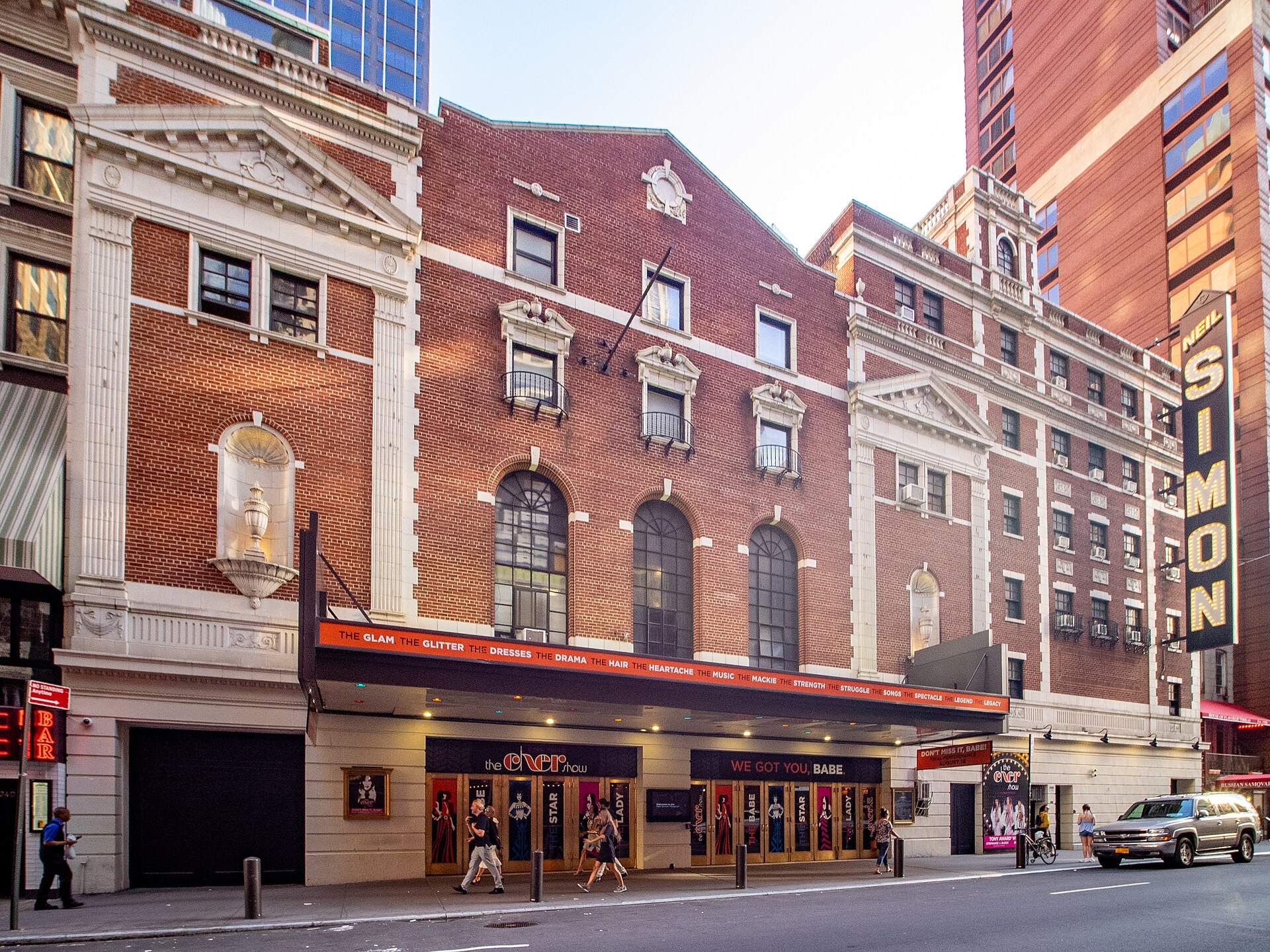
The Neil Simon Theatre is a 1,445-seat Broadway house at 250 West 52nd Street — one of nine Broadway theaters operated by the Nederlander Organization, and one of the few still-active houses from 1927. It sits in the upper Theater District, a block west of Broadway itself, and has a character that sets it apart from the noisier cluster of venues further south toward Times Square: it feels like a working Broadway house rather than a tourist destination, which tends to attract an audience that is there for the show.
This page covers what the theater is like as a room, how to approach seating, what accessibility actually looks like here, where it sits in the neighborhood and why that matters for your night, and how to think about planning an evening around it. The current resident production is MJ The Musical. For full information about that show, including cast, content, and whether it fits your group, see the MJ Broadway show guide.
Neil Simon Theatre Tickets: Official Seller & Box Office
For official Neil Simon Theatre tickets, Broadway Direct is the online source used by the Nederlander Organization, and tickets are also sold at the theater box office at 250 West 52nd Street. The theater does not sell a separate venue-wide season ticket; you are buying a seat for a specific MJ The Musical performance and date.
Official Neil Simon Theatre tickets
Broadway Direct identifies itself as the official online ticket source for MJ The Musical at the Neil Simon Theatre. The theater box office is also an official purchase point. If you compare third-party marketplace listings, compare the full checkout price and exact seat location before paying above face value.
Neil Simon Theatre box office hours
The current posted box-office hours are Monday through Saturday from 10:00 AM to 8:00 PM and Sunday from 12:00 PM to 6:00 PM. The box office is at 250 West 52nd Street. Because hours can change with production schedules or holidays, confirm before making a special trip.
What is playing at the Neil Simon Theatre?
MJ The Musical is the current Broadway production. Broadway Direct currently lists performances on sale through May 30, 2027. For cast, runtime, content, rush/lottery and show-specific ticket strategy, use the MJ Broadway show guide.
Group tickets
Broadway Direct currently lists group-ticket service for parties of 10 or more, with production-specific dates, seating and pricing. Group buyers can use the official group-sales channel or call the current group line at 800-714-8452.
Seating before you buy
The main theater page covers the room at a high level. For the dedicated Neil Simon Theatre seating chart, seat views, Orchestra vs. Mezzanine decisions and sections to avoid, use the Neil Simon Theatre seating guide.
What Kind of Broadway House This Is
The Neil Simon Theatre is a large-scale Broadway house — 1,445 seats across orchestra and mezzanine — that was designed for the kind of production that fills a room. The building opened in 1927 as the Alvin Theatre, designed by Herbert J. Krapp, and it sits in the mid-century Broadway tradition: a wide proscenium, a deep stage, strong sightlines across most of the orchestra, and the kind of acoustic presence that comes from a room built when theater acoustics were treated as an architectural priority.
What makes the Neil Simon distinctive in the current Broadway landscape is partly what it is not. It lacks the tourist-area proximity of the 42nd Street houses and the celebrity-magnet sheen of some smaller venues further south. What it has instead is a particular quality of seriousness as a working Broadway house — the kind of theater where productions that need scale and duration to work properly, like a large-cast dance musical, have room to breathe and deliver.
The Neil Simon works best for large musicals that use the full stage: shows with ensemble movement, ambitious choreography, and production design that requires physical depth. It is a house where the scale of the room and the scale of the right production meet each other well. For a production like MJ, built around Michael Jackson’s choreography and a stadium-era spectacle aesthetic, the fit is unusually direct. Productions that do not need that scale tend to feel a bit swallowed by it.
The proscenium is wide and the stage deep, which gives productions horizontal and vertical room that smaller Broadway houses cannot offer. The theater’s mid-block position on 52nd Street means arrivals tend to be calmer than at the 42nd Street or Times Square houses — the sidewalk is not a tourist bottleneck, and the pre-show experience on this block has a different feel from the southern end of the district.
Seating Guide — How to Think About the Neil Simon
This main venue page keeps the seating overview because it is useful context, but the dedicated Neil Simon Theatre seating guide owns the deeper seating-chart, view-from-my-seat, best-seats, Orchestra/Mezzanine and partial-view search intent.
The Neil Simon has two primary seating levels: the orchestra and the mezzanine. There are also box seats on either side of the house, though these tend to offer compromised sightlines and are generally not recommended for most productions. The orchestra is entirely step-free; the mezzanine requires stairs and has no elevator access.
The premium zone. Center orchestra rows A–F are closest and most immersive — you are inside the production. Rows G–P offer a step down in price with only a modest drop in sightline quality. Strong throughout center for most productions. Best value in the orchestra tends to be rows H–P center.
Side orchestra seating has a shallow rake. Far side seats lose sightlines to the opposite stage edge — on a wide-proscenium production, that can mean missing meaningful action. The inside aisles of the left and right orchestra are considerably stronger than the far outer seats. Avoid the extremes unless price is the only consideration.
The rear orchestra rows can fall under the mezzanine overhang, which cuts off sightlines to the very top of the stage and above. This matters more for productions with height — vertical staging, flying sequences, or overhead lighting that contributes to the spectacle. Worth knowing before you book rear rows for a production that works vertically.
The mezzanine gives you a slightly elevated full-stage view — good for productions where seeing the complete picture matters. Front mezzanine center offers a reliable combination of sightline quality and value. The section is reached by stairs only, with no elevator access; factor this into your planning if mobility is a consideration for anyone in your group.
More affordable and further from the stage. For a visually large-scale production like MJ, the show reads reasonably well at this distance because the production was designed to fill the room. For a production where subtle performance detail matters more than spectacle, proximity matters more. Know what you are seeing before you commit to rear mezzanine distance.
Box seats sit too far off to the side for a standard Broadway sightline. The angle is awkward, and you miss significant portions of stage action depending on where the action is blocked. Unless you have a very specific reason for a box seat, treat them as a last resort rather than a quirky experience upgrade.
This is a wide, deep house. The fundamental choice is whether you want to be close and inside the production — center orchestra rows A–M — or whether you want to see the full picture from a slightly elevated position, which is what front mezzanine center rows offer. For a production like MJ, built around ensemble choreography that works best when you can see the entire stage simultaneously, front mezzanine center is a genuinely strong choice — often better value than center orchestra and frequently a better view of the production as a whole. For immersion and performer proximity, center orchestra wins. Know the difference before you book.
Accessibility at the Neil Simon Theatre
The accessibility picture at the Neil Simon is relatively clear, and being honest about the limitations here is more useful than vague reassurance. The orchestra level is the accessible option; the mezzanine is stairs-only.
Orchestra — entirely step-free from the sidewalk
The Orchestra is the theater’s step-free seating level. Wheelchair locations are available there pending availability, and the current official policy allows one wheelchair location plus up to three companion seats per order when inventory allows. Theater staff can meet guests in the lobby and escort them to designated accessible areas.
Mezzanine — stairs only, no elevator
There is no elevator or escalator to the Mezzanine. All Mezzanine and Box seating requires stairs. Aisle-transfer seats with folding armrests are available in both the Orchestra and Mezzanine at specific locations, but upper-level transfer seats are not step-free. Guests who require step-free access should book Orchestra-level seating.
Accessible restroom
A wheelchair-accessible unisex restroom is located on the orchestra level (house left). Restrooms in the lower lounge (one flight down from orchestra) and on the mezzanine level are not wheelchair accessible, though wide stalls are available in both. The accessible restroom is the only fully accessible facility in the building.
Assistive listening and other devices
Infrared assistive-listening headsets are available free of charge, subject to availability, and the theater is equipped with an induction loop for compatible tele-coil devices. Current services also include I-Caption and GalaPro options for captioning, audio description and multilingual commentary, subject to availability. Accessible seating for low-vision, deaf and hard-of-hearing guests is listed in Orchestra rows B and C.
Accessibility provisions, seating availability, and device offerings can vary by production and change over time. Verify current details directly with the Neil Simon Theatre box office (212-757-8646) or through the official Nederlander accessibility page before finalizing plans where accessibility is a primary consideration. Do not rely solely on third-party sources for mobility-specific planning.
Where the Neil Simon Theatre Is — and Why It Matters
The Neil Simon sits at 250 West 52nd Street, between Broadway and Eighth Avenue, in the upper Theater District. This position places it noticeably above the Times Square cluster of houses, which affects both the arrival experience and your pre-show options in meaningful ways.
The 52nd Street location is a quiet advantage. The block is not a tourist bottleneck, and the arrivals experience is considerably calmer than at the houses further south. Pre-show dining on 8th Avenue and in Hell’s Kitchen — which extends north from this area — is strong and accessible without a long walk. Coming from Midtown East, the cross-town walk on 52nd Street is a pleasant evening walk rather than a Times Square crowd navigation. See the full guide to getting to a Broadway show for subway routing, timing, and parking details for this part of the district.
A Century of Broadway — The Theater’s History
The Neil Simon Theatre opened on November 22, 1927 as the Alvin Theatre — a name assembled from the first names of its producers, Alex Aarons and Vinton Freedley. It was designed by Herbert J. Krapp, one of the most prolific architects of Broadway’s great original building wave. The inaugural production was George and Ira Gershwin’s Funny Face, starring Fred and Adele Astaire — a starting point that says something about the kind of house this was from the beginning.
The naming for Neil Simon is worth a note. Simon was the most commercially successful American playwright of the second half of the twentieth century, and naming a theater for him honors a particular relationship between a playwright and a house — one where Simon’s work had actually performed on this stage, not just a posthumous honorific. The 1985 landmark designation is also meaningful: the theater is not just culturally significant, it is architecturally protected, which means its essential character as a room is not subject to the kind of radical renovation that has changed some other Broadway venues.
Current Production — MJ The Musical
The Neil Simon Theatre is currently home to MJ The Musical, the Broadway musical built around the music and performance legacy of Michael Jackson. The show is directed and choreographed by Christopher Wheeldon, written by two-time Pulitzer Prize winner Lynn Nottage, and centers on the making of Jackson’s 1992 Dangerous World Tour as a framing device for a broader portrait of the performer.
Broadway Direct currently lists MJ performances on sale through May 30, 2027. That date is the current ticket-sale window and should not be read as an announced closing unless the production separately says so.
MJ won four Tony Awards in 2022 — Best Choreography, Best Actor in a Musical, Best Lighting Design, and Best Sound Design — a set of technical wins that accurately describes what the production does well: the choreography and production design are built for a house of this scale, and the Neil Simon’s stage gives Wheeldon’s ensemble work the width and depth it was designed for. The production is high-energy and visually oriented; it is not a book-driven drama and does not require deep familiarity with the subject to enjoy.
Check Current Performance Availability
MJ plays multiple performances per week at the Neil Simon Theatre. Compare current listings and availability to find the performance that works for your visit.
Full MJ Show GuideFor full show information — including runtime, content advisories, age guidance, whether it is right for first-timers, and how it fits different kinds of Broadway nights — see the MJ Broadway show guide. This page is intentionally the theater guide, not the show guide.
Plan the Night Around the Neil Simon Theatre
The Neil Simon’s upper-district position gives you slightly better pre-show options than the 42nd Street houses — the sidewalks are calmer, the dining options are accessible without navigating tourist-heavy blocks, and the general arrival experience is more relaxed. Here is how to think about the full evening.
Getting there
The C and E trains at 50th Street (8th Avenue) drop you a short walk east to 52nd Street — this is the easiest subway connection. The 1 train at 50th Street (Broadway/7th Avenue) is a two-block walk west. If you are coming from Times Square or further south, the walk north on 8th Avenue or 7th Avenue is straightforward and takes about ten minutes. For full routing options, timing guidance, and parking near this part of the district, the guide to getting to a Broadway show covers the details. Parking-specific options are in the parking near Broadway guide.
Dinner before the show
Hell’s Kitchen — beginning roughly at 8th Avenue and extending west — is the natural choice for pre-show dining near the Neil Simon. The neighborhood has a dense, reliable pre-theater dining cluster with options at most price points, all accustomed to theater-crowd timing. You are a short walk from 8th Avenue’s restaurant strip, and the walk back to the theater afterward is a few minutes. The restaurants near Broadway guide covers specific picks in this part of the district, and the pre-show dining guide covers the timing and logistics of dinner before a Broadway show.
Late seating policy — plan ahead
The Neil Simon has a strict late seating hold. For Act I, the hold is approximately 22 minutes into the act — if you are not in your seat when the act begins, you will be held in the lobby promenade or upper lobby and able to watch on a monitor until the late-seating window opens. The hold for Act II is approximately 10 minutes. Plan to be in the theater at least 20 minutes before curtain. This is not a theater where arriving at curtain time and hoping for the best is a reasonable strategy, especially for a high-energy opening that begins immediately.
Hotels and longer stays
The Theater District and Times Square area have the broadest concentration of Broadway-adjacent hotels in the city, with options at every price point within walking distance of the Neil Simon. The hotels near Broadway guide covers the best-positioned options. For a broader orientation to the neighborhood — restaurants, landmarks, what the block-by-block feel of the district is like — the Theater District neighborhood guide is the right starting point.
Practical Information Before You Arrive
Theater policies can change between productions. The details above reflect current available information but should be confirmed with the theater directly before your visit. Box office: 212-757-8646.
Frequently Asked Questions
Buy for a specific MJ The Musical performance and date. Broadway Direct is the official online ticket source for the Nederlander-operated Neil Simon Theatre, and official tickets are also sold at the theater box office at 250 West 52nd Street.
Broadway Direct is the official online ticket source for MJ The Musical at the Neil Simon Theatre. The Neil Simon Theatre box office is also an official purchase point.
The current posted hours are Monday through Saturday from 10:00 AM to 8:00 PM and Sunday from 12:00 PM to 6:00 PM. Hours can change around holidays or production schedules, so confirm before making a special trip.
The Neil Simon Theatre is at 250 West 52nd Street in Manhattan, between Broadway and Eighth Avenue in the Theater District. The nearest subway is the C or E train to 50th Street (8th Avenue) — a short walk east to 52nd Street. The 1 train also stops at 50th Street (Broadway/7th Avenue), a two-block walk west.
The current production is MJ The Musical. Broadway Direct currently lists performances on sale through May 30, 2027. For cast, runtime, content and show-specific ticket strategy, see the MJ Broadway show guide.
For most productions, center orchestra rows G–M offer the strongest combination of sightlines, proximity, and value within the orchestra — close enough to feel inside the production, back enough to see the full stage picture. Rows A–F are closer and more immersive but at premium pricing. Front mezzanine center (rows A–C or so) is a reliable strong choice for productions where seeing the full stage simultaneously matters — often better value than orchestra center and occasionally a better view of ensemble choreography. Avoid extreme side orchestra seats and box seats, which have significantly limited sightlines.
The orchestra level is entirely step-free and accessible from the lobby. Wheelchair seating is available in orchestra rows U and V. There is no elevator to the mezzanine — mezzanine access requires stairs. The accessible restroom is on the orchestra level. Assistive listening devices are available free of charge. Verify current details with the box office at 212-757-8646 if accessibility is a primary consideration for your visit.
The Neil Simon Theatre has 1,445 seats across its orchestra and mezzanine levels. It is one of the larger mid-range Broadway houses — large enough to support big-cast musicals, but not at the scale of the very largest Broadway venues.
The theater opened in 1927 as the Alvin Theatre, named for its producers Alex Aarons and Vinton Freedley. The Nederlander Organization purchased it in 1977 and renamed it the Neil Simon Theatre in 1983, honoring the American playwright following the successful run of Brighton Beach Memoirs — the first of Simon’s autobiographical trilogy. Simon’s work performed on this stage multiple times across the decades, giving the naming a specific connection to the house rather than just a posthumous honorific. The building received New York City landmark status in 1985.
Yes — it is a strong theater for first-timers, particularly if they are seeing a large-scale musical. The room has genuine presence as a Broadway house, the sightlines are strong from most orchestra and front mezzanine seats, and the experience of being in a 1927 Broadway house with a century of history is part of what makes a Broadway visit feel like more than just a show. For first-timers who want to understand what a working Broadway musical in a major house looks and feels like, the Neil Simon delivers that clearly. See the first-time visitor guide for broader recommendations on shows and planning.
Yes — rear orchestra rows (roughly S–V) can fall under the mezzanine overhang, which limits sightlines to the top of the stage and above. This matters for productions with vertical staging, flying sequences, or significant lighting work in the upper stage house. For a production primarily focused on stage-level choreography, the effect is less significant but still worth knowing. If you want to avoid this entirely, center orchestra rows A–R or front mezzanine are cleaner choices.
The Neil Simon Theatre in Brief
The Neil Simon Theatre is one of Broadway’s solid, serious working houses — a 1,445-seat mid-century venue at 250 West 52nd Street with a century of significant productions, strong sightlines across most of the orchestra and front mezzanine, and a position in the upper Theater District that makes pre-show planning easier than at the southern cluster of houses. It is best suited to large-scale musicals that need physical stage depth and width to work properly, and the current production — MJ The Musical — fits the house well.
The key practical points: arrive 20+ minutes early due to the strict late seating policy; book center orchestra or front mezzanine center for the strongest sightlines; and note that the mezzanine requires stairs with no elevator alternative. For full night-out planning, the links below are the right next steps.
The Neil Simon Is Set — Now Pick the Right View
The Neil Simon is built for big musical energy, and MJ makes the seat choice matter. Use the dedicated seating guide for Orchestra-vs-Mezzanine strategy, then build the night around West 52nd Street dining, hotels, transit, parking, and nearby Broadway houses.
Neil Simon Seating Chart & Best Seats
Compare Orchestra, Mezzanine, overhang warnings, center-vs-side views, stair access, and the best seat zones for MJ’s choreography.
Open Seating Guide Current ShowMJ Broadway Guide
Plan around dance-heavy staging, stage width, lighting, performer detail, audience energy, and the best seat zones for the production.
Open Show GuideBroadway Seating & Ticket Strategy
Seats · Timing · ValueBroadway Seating Guide
Compare Orchestra, Mezzanine, Balcony, boxes, side seats, premium zones, and view tradeoffs across Broadway houses.
All Broadway Theater Guides
Browse every Broadway house guide and compare room scale, location, access notes, and seating strategy across the Theater District.
What’s Playing on Broadway
Compare current and upcoming Broadway productions, then connect each show to the right theater, seat choice, and full-night plan.
When to Buy Broadway Tickets
Know when buying early matters, when waiting can work, and how timing changes for popular musicals and premium center seats.
Last-Minute Broadway Tickets
Compare same-day options without accidentally grabbing far-side seats, overhang rows, or awkward partial-view boxes.
Broadway Rush and Lottery Tickets
How discount systems work, what seat tradeoffs to expect, and why cheap seats can be great — or risky — depending on view.
Plan the Neil Simon Theatre Night
Dinner · Hotels · TransitRestaurants Near Broadway
The Neil Simon sits on West 52nd Street, where Hell’s Kitchen, Midtown West, and Theater District dining can all work.
Restaurants Near Times Square
Useful for visitors staying nearby, arriving by subway, or building a classic central Broadway night.
Pre-Show Dining Guide
Plan reservation timing, walking buffer, arrival, intermission expectations, and post-show movement.
Hotels Near Broadway
Compare Theater District, Times Square, Midtown West, and Hell’s Kitchen hotel zones for a Broadway-centered trip.
Hotels Near Times Square
Best for visitors who want short walks, easy subway access, and simple post-show return logistics.
How to Get to a Broadway Show
Subway, walking, rideshare, and arrival timing for Theater District shows, including the northern 52nd Street cluster.
Subway to Broadway
Pick the best subway approach for West 52nd Street, Times Square, Midtown West, and post-show exits.
Parking Near Broadway
When driving makes sense, when it does not, and how to avoid turning a Broadway night into a Midtown garage problem.
Best Way Home After a Show
Subway, taxi, rideshare, walking, and hotel return strategy after a crowded 52nd Street performance.
Nearby Neighborhood & Theater Guides
52nd Street · Theater District · Nearby HousesTheater District
The practical guide to Broadway’s center: theaters, crowds, hotels, restaurants, walking routes, and first-time visitor logistics.
Hell’s Kitchen
A strong pre- and post-show dining base west of the Neil Simon, especially if you want less Times Square noise.
Midtown West
Useful for hotels, transit, restaurants, and West Side arrival planning around the northern Theater District.
August Wilson Theatre Guide
A nearby West 52nd Street house useful for comparing northern Theater District arrival, seating, and dinner strategy.
Broadway Theatre Guide
A nearby large musical house that helps visitors compare big-room seating, stage width, and West Side arrival planning.
Gershwin Theatre Guide
A major nearby musical house useful for comparing large-scale Broadway seating, accessibility, crowds, and family planning.