

Hayes Theatre: Seating, Access & What to Know
A practical planning guide to Broadway’s most intimate house — where to sit, how to get there, and how to build the rest of your night.
About the Hayes Theatre
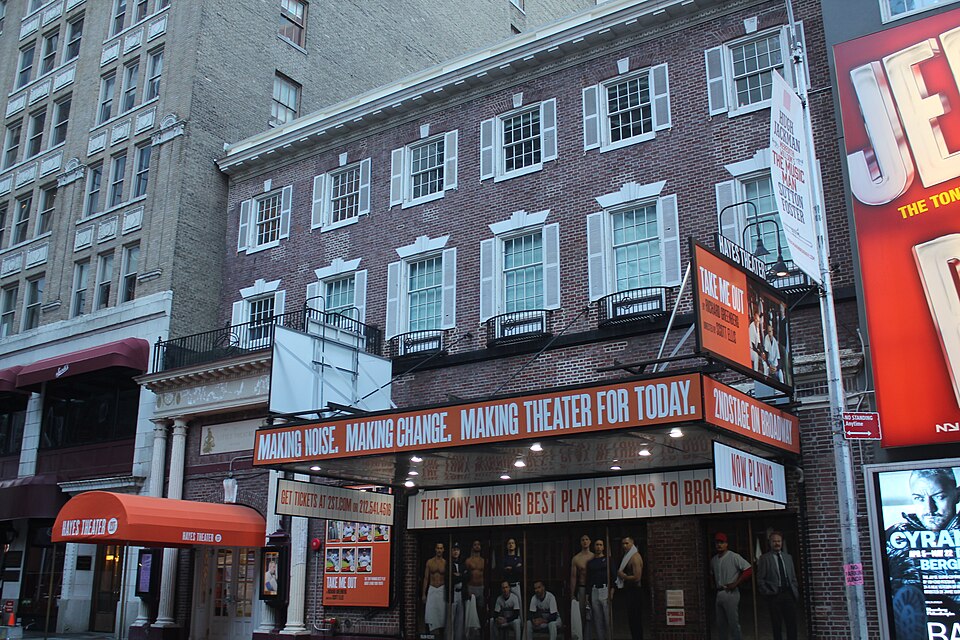
The Hayes is, by a real margin, Broadway’s most intimate house. At about 597 seats, it is smaller than almost any other Broadway venue, and that is not a caveat — it is the entire point. Sitting in the Hayes, you are close to the stage in a way that changes how a play lands. You can read faces. Silences feel heavier. The performances are bigger because the room is smaller.
The theater’s next production is The Fantasticks, opening October 22, 2026 — a Broadway premiere of the classic musical, and a different register from Becky Shaw, the Gina Gionfriddo play that closed here in June after strong reviews for its Broadway debut. Whatever happens to be playing when you visit, the Hayes’s scale is the constant: intimate, actor-forward, built for productions where closeness to the stage matters more than spectacle.
Is the Hayes right for you?
The Hayes is a strong choice for most visitors — but it is not a neutral one. Here is an honest read before you book.
Play lovers who want closeness and actor detail over spectacle
First-time visitors who want an intimate Broadway experience, not a giant musical
Date nights where atmosphere and conversation-starter matter
Theatergoers who want contemporary American playwriting, not revivals
Visitors with mobility needs — steps at the main entrance; check access notes below before booking
Visitors who want a large-cast Broadway spectacle — this is not that kind of house
A short history worth knowing
The Hayes opened in 1912 as the Little Theatre — a deliberate reaction against the oversized commercial houses of the era. Its founder, Winthrop Ames, wanted a theater that felt like being a guest in a private home. It has changed names and hands several times since then, passing through the New York Times’s ownership in the 1930s and a stint as a television studio before returning to live theater. It was renamed for actress Helen Hayes in 1983, and then shortened to the Hayes when Second Stage — one of only a handful of nonprofit companies operating on Broadway — bought the theater in 2015 and reopened it in 2018 after a full renovation. The building’s facade and parts of its interior are recognized New York City landmarks.
Hayes Theatre Seating Guide
The Hayes seating chart is simple: orchestra on the main level, a single mezzanine above. No side tiers, no deep balcony. Because the theater is so small, the stakes of seat selection are different here than at a larger Broadway house — a few rows in either direction changes the feeling of the show more than people expect.
The most immediate seats in the house
Center orchestra puts you at the heart of the action and is where most visitors will want to be. Rows A through E bring you very close — appropriate for intimate drama, but worth thinking about if you prefer a fuller picture of the stage. Rows F through N offer an excellent balance of proximity and sightline. Side seats in the orchestra work well given the theater’s narrow width; nothing feels far from the stage the way it might in a wider house.
Wheelchair seating available in orchestraA smart choice for full-stage clarity
The front rows of the mezzanine at the Hayes are genuinely good seats — not a compromise. You gain a clean overview of the full stage, and because the theater is small, you are not far from the action. If you want to take in staging and movement without feeling pressed against the performance, front mezzanine center is one of the best values in the house.
Elevator access from lower lobbyWorkable, but choose carefully
The rear mezzanine still benefits from the theater’s small scale — you will never feel as remote here as you would in the upper balcony of a larger Broadway house. That said, the angle steepens toward the back, and some rear side seats can have angled sightlines worth checking against the theater’s seating chart before you book. If budget is a factor and rear mezzanine is what’s available, it is still a real Broadway experience in a real Broadway house.
At a 597-seat theater, the difference between a “good” and “great” seat is smaller than people worry about — and the difference between center and side matters more than the difference between front and back. Prioritize center over front when you can.
Best seats by visitor type
Full stage, good proximity, easy entry and exit.
Close enough to read every expression.
Best sightline for staging and movement.
Scale of the house still works in your favor.
Accessibility at the Hayes Theatre
The Hayes was substantially renovated when Second Stage took over in 2018, and the rebuild included meaningful accessibility upgrades. That said, the building is over a century old, and visitors with mobility considerations should read these details before booking — especially around lobby entry.
What you need to know
If you have specific mobility needs, it is worth calling the box office before your visit — Second Stage’s staff tend to be responsive and well-informed about the specifics of their house.
Getting to the Hayes Theatre
The Hayes is at 240 W. 44th Street, between Broadway and Eighth Avenue — a few steps from the center of the Theater District and surrounded by some of Broadway’s most active blocks. You will almost certainly pass the Shubert Theatre, the St. James, and Sardi’s restaurant getting there.
By subway
The closest station is 42nd Street–Port Authority on the A, C, and E lines. From there it is a short walk east along 42nd Street and up to 44th. The 1, 2, and 3 trains at Times Square–42nd Street are also nearby — useful if you’re coming from the Upper West Side or downtown.
By bus
The M20 and M104 lines stop on Eighth Avenue near the theater. The M104 also stops on Seventh Avenue at 44th Street. Either works for arriving from further uptown or the West Village.
By rideshare or taxi
The Theater District is dense with post-show traffic, especially between 10:30 pm and 11:15 pm. If you’re ridesharing home, request the car a few minutes before curtain call — or walk a block east or west before requesting to avoid the worst of the pickup congestion on 44th Street.
Arriving early
Doors open roughly 30 minutes before showtime. If you have accessibility needs or are new to the theater, arriving 40 to 45 minutes early gives you comfortable time to find your seats and get settled. The theater is small enough that it fills quickly once doors open.
For parking options in the Theater District, there are several garages within a few blocks. Rates in this part of Midtown are not cheap — arriving early helps if you need to park, and it is worth checking garage rates before you drive. The subway is almost always faster and less stressful for this neighborhood.
Build the Night Around the Hayes
The Hayes sits in one of Broadway’s most walkable blocks, with restaurant, hotel, and transit options in every direction. The Theater District is not short on choices — the challenge is making the right ones before curtain.
How to time dinner before a Broadway show — and what actually works in the Theater District.
Named picks for pre-theater and post-show dining, organized by type and occasion.
What’s on the streets around the Hayes — hotels, bars, restaurants, and how the neighborhood works.
Where to stay if the Hayes is your anchor — from Times Square to Hell’s Kitchen.
Subway lines, rideshare strategy, and what to know about arriving in the Theater District.
Garages, rates, and timing advice if you’re driving to the Theater District.
The bottom line on the Hayes
Broadway is full of houses that can overwhelm you — enormous rooms, massive productions, hundreds of feet between you and the stage. The Hayes is the opposite. Its size is its defining quality, and that quality rewards the right visitor: someone who wants to see a play up close, feel the weight of a quiet moment, and leave having actually experienced something rather than just witnessed it.
Becky Shaw is the kind of show this theater makes its best case for. If you’re booking this spring, the Hayes is worth trusting. Just make sure your seats are center, give yourself time to arrive, and check the accessibility notes if that applies to your group.
The Room Is Intimate — Now Choose the Right Seat
The Hayes is Broadway’s smallest house, so the planning question is not just “how close can I get?” It is which center angle, section, and access path makes the night feel easiest. Start with the new seating chart, then use the show, dining, hotel, transit, and neighborhood guides to build the full West 44th Street plan.
Broadway Seating & Ticket Strategy
Seats · Timing · ValueBroadway Seating Guide
Compare orchestra, mezzanine, balcony, boxes, side seats, premium zones, and obstructed-view listings across Broadway houses.
When to Buy Broadway Tickets
Know when buying early matters, when waiting can work, and how timing changes for plays, limited runs, weekends, and strong seat inventory.
Last-Minute Broadway Tickets
TKTS, same-day listings, rush, lottery, and practical ways to compare late options without choosing awkward seats blindly.
Broadway Rush and Lottery Tickets
How discount systems work, what tradeoffs to expect, and why cheap seats can be great — or risky — depending on the view.
First-Time Broadway Guide
For visitors choosing their first show or first theater: seats, arrival, timing, intermission, dress, and Theater District basics.
Best Broadway Shows for Date Night
Compare shows by tone, dinner pairing, mood, pacing, and how the whole night feels beyond the ticket itself.
Plan the Hayes Theatre Night
Dinner · Hotels · TransitRestaurants Near Broadway
The Hayes sits in the West 44th Street theater core, with Restaurant Row, Times Square, and Hell’s Kitchen all within easy reach.
Pre-Show Dining Guide
Plan reservation timing, walking buffer, check arrival, and post-show movement so dinner and theater work together.
Best Pre-Theater Restaurants NYC
Use this when you want stronger restaurant choices around Broadway rather than only timing and logistics advice.
Hotels Near Broadway
Compare Theater District, Times Square, Midtown West, and Hell’s Kitchen hotel zones for a Broadway-centered trip.
How to Get to a Broadway Show
Subway, walking, rideshare, and arrival timing for Theater District shows, including the West 44th Street houses.
Parking Near Broadway
When driving makes sense, when it does not, and how to avoid turning a Broadway night into a Midtown garage problem.
Nearby Neighborhood & Theater Guides
44th Street · Theater District · Nearby HousesTheater District
The practical guide to Broadway’s center: theaters, crowds, hotels, restaurants, walking routes, and first-time visitor logistics.
Times Square
Best when convenience, subway access, and being right in the center matter most — especially for short Broadway trips.
Hell’s Kitchen
A strong nearby option when dinner matters — more restaurant depth, calmer blocks, and an easy walk west after the show.
Shubert Theatre Guide
A nearby West 44th Street landmark useful for comparing classic Broadway scale, seating feel, and Theater District logistics.
St. James Theatre Guide
A larger nearby musical house with a very different room feel — useful context against the Hayes’ intimate scale.
Booth Theatre Guide
Another intimate Broadway house worth comparing for play-focused seat choices, scale, and actor-forward viewing.