

CATS: The Jellicle Ball on Broadway: A Look Back at the Tony-Winning Run
CATS: The Jellicle Ball played the Broadhurst Theatre through August 8, 2026. Here’s what made the production distinctive, its Tony wins, and where to find what’s playing now.
235 W 44th St
Previews from Mar 18
141 performances
9 nominations
CATS: The Jellicle Ball was not simply Cats back on Broadway. It was a wholesale reimagining — Andrew Lloyd Webber’s iconic score and T.S. Eliot’s characters transported into the world of New York City’s underground ballroom scene, where the Jellicle Ball became a queer competition of fashion, performance, and survival. The choreographers were New York City Ballroom legends. The costumes, by Obie Award winner Qween Jean, were runway-grade. The Off-Broadway production at PAC NYC won three Obie Awards, a New York Drama Critics Circle Special Citation, and appeared on best-of lists at the New York Times, Washington Post, Wall Street Journal, Time Out, and The New Yorker — and was extended three times before its transfer to the Broadhurst.
The Broadway production ran from April 7 to August 8, 2026, closing five months earlier than its originally announced extension through January 2027. This page is kept as a record of what the show was, what made it significant, and who it was for — useful context whether you caught it during its run or are researching it after the fact.
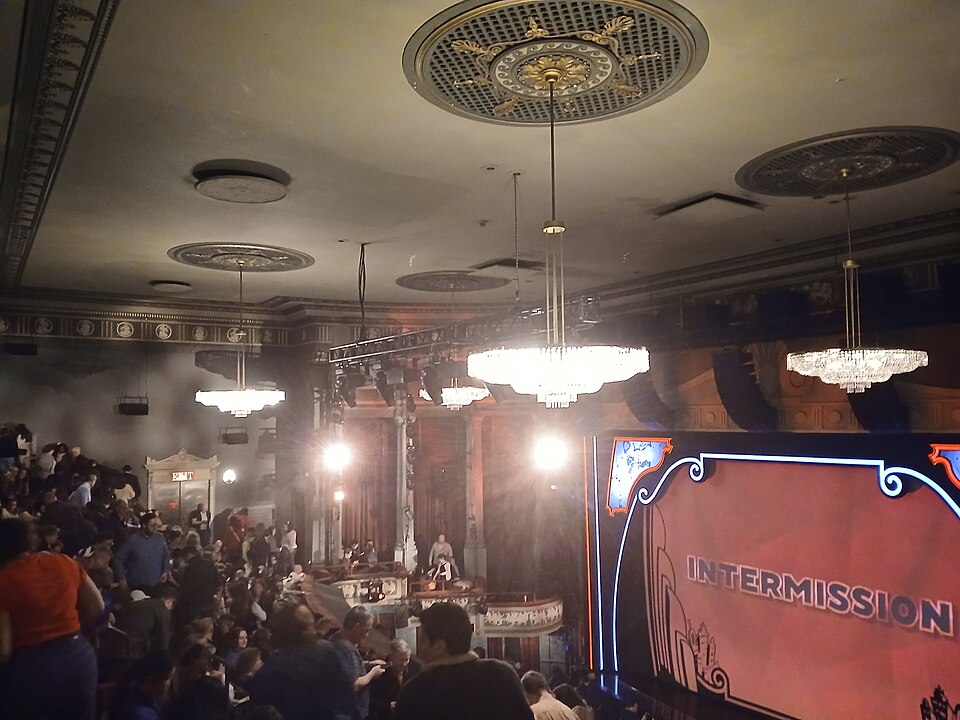
What CATS: The Jellicle Ball on Broadway was actually like
The original Cats — first performed in 1981, running on Broadway from 1982 to 2000 — told the story of a tribe of cats competing at the Jellicle Ball for the chance at a new life. CATS: The Jellicle Ball kept that framework but moved the entire world of the show into New York City’s ballroom scene: the underground queer performance tradition that gave birth to voguing, categories like “Face,” “Realness,” and “Runway,” and the competitive structure of the ball itself. The Jellicle Ball became a ballroom competition, the characters competed in categories, and the choreography was built not on the classical-inflected movement of the original but on the vocabulary of New York ballroom.
What this meant in practice was a Broadway show with a very specific and distinctive visual identity. The choreographers were Omari Wiles, from the House of Ricci, and Arturo Lyons, from the House of Miyake-Mugler — both Obie Award winners and Chita Rivera Award winners who were Ballroom legends in their own right before they were Broadway choreographers. The costumes by Qween Jean were runway-level fashion rather than the leotard-and-leg-warmer look of the original. Leiomy — “The Wonder Woman of Vogue” and a lead judge on HBO’s Legendary — played Macavity in her Broadway debut. Old Deuteronomy was played by André De Shields, the Tony and Grammy Award winner from Hadestown, as a figure of commanding, ageless wisdom whose presence anchored the show’s more exuberant passages.
The score was still Andrew Lloyd Webber’s — “Memory,” “Jellicle Songs for Jellicle Cats,” “Mr. Mistoffelees” — which meant the musical familiarity stayed intact. But the show’s movement language, visual identity, and cultural frame were entirely rebuilt. The Washington Post’s off-Broadway review called it “the most exhilarating fun that can be had in the theater.” The New York Times called it “a lightning strike that sets joy free.” Both descriptions reflected something real about what the show was when it worked: an experience that moved through the body as much as through the mind, in the way that great dance always does.
The production was also one of Broadway’s most visually lavish — “a kaleidoscope of glittering spectacle” is how the producers described it, and the production design supported that description. This was not a spare or restrained production. It filled the Broadhurst with light, costume, movement, and sound in a way that rewarded an audience that showed up ready to be overwhelmed.
Ballroom culture is a performance tradition originating in New York City’s LGBTQ+ communities of color in the 1970s, in which participants compete in categories — often based on fashion, dance technique, and the performance of different identities — at events called balls. The culture became widely known through Jennie Livingston’s 1990 documentary Paris Is Burning, and has since influenced mainstream fashion, dance, music, and television (RuPaul’s Drag Race, HBO’s Legendary, FX’s Pose all draw directly from it).
You didn’t need to know ballroom culture to enjoy CATS: The Jellicle Ball — the show explained its own frame clearly enough to bring in any audience. But knowing the tradition going in added a layer of meaning to the competition structure, the categories, the Houses, and the way the performers moved.
Who CATS: The Jellicle Ball was best for
The clearest fit was an audience that came to Broadway for the experience of being in the room with something alive and stylistically specific — people who responded to dance as a primary language, who were drawn to fashion and visual invention, or who wanted the particular energy of a show that was genuinely, specifically of its cultural moment rather than simply a polished revival of something familiar.
The choreography was the show’s central achievement. Audiences who loved watching exceptional movers in a theatrical context — and who came to Broadway as much for bodies in space as for narrative — found this production deeply satisfying.
Qween Jean’s costume design and the full production aesthetic were extraordinary even by Broadway standards. For audiences who responded to what a show looks like as a primary pleasure, this was one of the most visually distinctive productions of the season.
The ballroom competition frame gave the show an energy closer to a New York nightlife event than a conventional Broadway musical. Audiences who found that register thrilling found the show electric.
CATS: The Jellicle Ball was one of the season’s more distinctive date-night Broadway choices — shared spectacle, a lot to discuss, and a show that gave both people in the room something to respond to. See the Broadway date night guide for what’s playing now.
The show also carried a particular resonance for theatergoers who followed the performers specifically — André De Shields as Old Deuteronomy was a major Broadway event in itself for anyone who knew his work in Hadestown and across four decades of theater. And Leiomy’s Broadway debut as Macavity was a casting decision that carried its own cultural weight for audiences who knew her from the ballroom world.
Was CATS: The Jellicle Ball a good first Broadway show?
CATS: The Jellicle Ball was a strong first Broadway show for a specific kind of first-time visitor — one drawn specifically to this show’s identity, rather than one looking for the most accessible general introduction to what Broadway does.
The case for it as a first show: the Andrew Lloyd Webber score is one of the most recognizable in the musical theater canon, which meant the music provided a familiar anchor even if the production frame was unfamiliar. The show’s spectacle and energy were genuinely overwhelming in the best sense — leaving the Broadhurst after CATS: The Jellicle Ball, a first-time visitor understood immediately that Broadway is capable of doing something with bodies, light, and sound that no other medium can replicate.
The case for caution: CATS: The Jellicle Ball was a deliberately stylized, culturally specific reimagining that asked its audience to engage with a performance tradition most people don’t encounter in their everyday lives. First-timers who wanted a clearer narrative arc and a less confrontationally stylized Broadway experience were generally better served starting with something more conventionally structured.
The first-time Broadway visitors guide covers the full current season with this question in mind.
Was CATS: The Jellicle Ball good for kids or families?
The show carried an ages 12+ recommendation, with children under 4 not admitted. The age guidance was meaningful: the ballroom frame, the production’s visual intensity, the sensory effects (strobe lighting, flashing lights, theatrical haze, and smoke), and the show’s cultural register were all calibrated for an older audience rather than a younger one.
For children 12 and up who were already engaged with the cultural world the show drew from — teens who watched Legendary, who knew voguing, who were interested in fashion and performance — this could be an extraordinary experience. For younger children or for families whose primary goal was a shared Broadway experience accessible across age groups, it was not the right show. The original Cats was family-friendly; CATS: The Jellicle Ball was reimagined specifically for a more adult audience. For families with younger children, the Broadway shows for kids guide covers what’s currently running.
Sensory advisory (for reference): CATS: The Jellicle Ball used strobe lights, flashing lights, theatrical haze, and smoke throughout the production — a significant and persistent feature, not an occasional effect.
The Broadhurst Theatre and Runway Seating
The Broadhurst Theatre at 235 West 44th Street opened in 1917 and is one of the Shubert Organization’s historic Broadway houses, seating approximately 1,200 across orchestra and mezzanine. It’s a large and beautiful traditional Broadway theater, well suited to a production at this scale, with excellent sightlines from most positions.
CATS: The Jellicle Ball offered one unusual seating option worth knowing about for reference: Runway Seating, which placed audience members on the stage itself, adjacent to the performance space — an immersive option for theatergoers who wanted to be inside the world of the show rather than watching it from the house. It sold separately from standard house tickets.
For a full breakdown of the Broadhurst’s layout, sightlines, and what’s currently booked there, see the Broadhurst Theatre guide.
CATS: The Jellicle Ball didn’t arrive on Broadway without a track record. The PAC NYC off-Broadway run earned three Obie Awards, a New York Drama Critics Circle Special Citation, a Chita Rivera Award, two Outer Critics Circle Awards including Outstanding Revival, and appeared on the year-end best-of lists of the New York Times, Washington Post, Wall Street Journal, New York Magazine, Time Out New York, and The New Yorker. It was extended three times.
That production history meant what arrived at the Broadhurst was not an experiment — it was a fully developed production whose creative vision had been tested and refined over a significant run, brought to Broadway with the same cast and creative team.
CATS: The Jellicle Ball by the numbers
A snapshot of the Broadway run, based on final reporting as of its closing week:
Plus 21 preview performances, for a full Broadway engagement of April 7 through August 8, 2026.
Best Direction of a Musical, Best Choreography, and Best Costume Design of a Musical — the latter making Qween Jean the first openly trans woman to win a competitive Tony Award.
Total box office gross as of closing week, with a peak weekly gross of $1.83M.
Average weekly capacity, with an average ticket price around $115 — strong numbers for a stylistically ambitious, non-traditional production.
The show closed five months earlier than its previously announced extension through January 17, 2027 — a decision that drew significant attention in the Broadway trade press as a reflection of the tight economics facing even critically strong, awards-winning productions in the current market.
What’s next at the Broadhurst Theatre
As of this writing, the Broadhurst Theatre has no publicly announced next booking. The house is dark following CATS: The Jellicle Ball’s closing on August 8, 2026. Check the Broadhurst Theatre guide for the latest on what’s booked there next, or browse the current Broadway shows hub for what’s playing across the district right now.
For a full record of CATS: The Jellicle Ball’s run alongside other recently closed productions, see the Broadway shows archive.
Frequently asked questions
No. CATS: The Jellicle Ball played its final Broadway performance on August 8, 2026 at the Broadhurst Theatre, closing five months earlier than its previously announced extension through January 2027. See the current Broadway shows hub for what’s playing now.
For audiences drawn to dance, fashion, spectacle, and the specific energy of ballroom culture, it was one of the most distinctive shows of its Broadway season. The off-Broadway production at PAC NYC earned three Obie Awards, a New York Drama Critics Circle Special Citation, and appeared on best-of lists at the New York Times, Washington Post, and several other major publications. On Broadway, it went on to win 3 of its 9 Tony nominations. The Washington Post called it “the most exhilarating fun that can be had in the theater.”
CATS: The Jellicle Ball played previews from March 18, 2026, opened April 7, 2026, and closed August 8, 2026 — a total of 141 regular performances plus 21 previews.
No. CATS: The Jellicle Ball kept Andrew Lloyd Webber’s score (including “Memory” and the other familiar songs) and T.S. Eliot’s characters, but reimagined the entire production within New York City’s ballroom culture. The choreography was built on vogue and ballroom movement rather than the classical-inflected style of the original. The costumes were runway fashion. The competition structure was a ballroom ball with categories. Visitors expecting the original Cats were watching something deliberately, substantially transformed — which was the point of the production.
Yes. The production received 9 Tony nominations and won 3: Best Direction of a Musical (Zhailon Levingston & Bill Rauch), Best Choreography (Omari Wiles & Arturo Lyons), and Best Costume Design of a Musical (Qween Jean) — the latter marking the first time an openly trans woman won a competitive Tony Award.
As of this writing, the Broadhurst has no publicly announced next booking following CATS: The Jellicle Ball’s closing. See the Broadhurst Theatre guide for the latest.
CATS: The Jellicle Ball arrived on Broadway as something the season needed — a production with a genuine cultural identity, built by artists who are among the most significant figures in their respective traditions, bringing a world to the Broadway stage that most Broadway audiences had never encountered in a theater before. The critical response to the off-Broadway production was not tentative or qualified: it was an enthusiastic recognition that something genuinely new had been made from familiar material. Its early closing, five months ahead of its announced extension, was a reminder that critical acclaim and awards recognition don’t always translate into commercial longevity on Broadway — even for a show this distinctive.
For what’s currently playing on Broadway, browse the Broadway shows hub. For a full record of recently closed productions, see the Broadway shows archive.