

Getting to NYC Events — Transportation Guide for Shows, Concerts & Games
Subway, commuter rail, driving, parking, or rideshare — what actually works depends on where you’re going and where you’re coming from.
Transportation is the part of a New York City night out that most people plan last and regret most. The show gets booked weeks in advance. The restaurant reservation gets made days ahead. The transportation gets figured out on the way out the door — and that’s where evenings unravel. A cab stuck in Midtown traffic at 7:45 for an 8:00 Broadway curtain, a post-concert Uber surge that doubles the cost of the night, a parking garage exit that takes forty minutes after a Knicks game: these are preventable problems that happen to prepared people every weekend in New York because transportation didn’t make the planning list.
This guide is the transportation hub for Stage & Street NYC — the page that connects to every venue-specific transport guide on the site. It covers how to think about getting to events in general, how the right approach changes by venue type, and how decisions about hotels, neighborhoods, and parking fit into the larger picture of a night that actually works.
How to Think About Transportation for NYC Nights Out
There is no universally correct way to get to an event in New York. The subway is faster than driving for a Broadway show from Midtown but irrelevant for a family driving in from Westchester for a Yankees game. Commuter rail is the obvious answer for a New Jersey visitor heading to Broadway but adds transit complexity for someone already staying near Times Square. The right call depends on where you’re coming from, where the venue is, what time the event ends, how you want the evening to feel, and what you’re willing to trade off between cost, convenience, and stress.
The most useful reframe is to think about transportation not as a single trip to the venue but as two separate problems: getting there and getting home. Getting there is usually the easier one — you have a fixed deadline and a clear destination. Getting home is where most evenings go wrong. Post-show, post-concert, and post-game crowds converge at the same exits at the same time, Uber surge pricing spikes, and a parking garage that was convenient to enter becomes a forty-five-minute queue to exit. Planning both legs before the event starts is the single highest-leverage transportation decision you can make.
The variables that shape the decision
Where you’re coming from matters more than almost anything else. Someone staying at a hotel on West 48th Street faces a completely different Broadway transport calculus than someone driving from New Jersey. Someone who lives in Park Slope and takes the subway everywhere faces a different Barclays Center equation than a first-time visitor from Connecticut. Before settling on a transportation approach, identify your actual starting point — not just Manhattan generically, but where in Manhattan, or which suburb, or which airport you’re coming from.
The event type matters nearly as much. Broadway shows have hard curtain times and no flexibility for late arrivals. Concert start times are softer, with opening acts providing buffer. Sports events have even more flexibility — arriving in the second period of a hockey game is disappointing but manageable. These different flexibility levels should shape how conservatively you plan the transportation buffer.
The time of year changes everything. Midtown traffic on a Tuesday in February is nothing like Midtown traffic on a Saturday in December. Event nights during peak tourist season, holiday weekends, and Tony Awards season add congestion layers that don’t exist on a quiet weeknight in January. The transportation plan that works reliably in winter may fail embarrassingly in December.
The Main Ways People Get to NYC Events
The New York City subway is the most efficient way to get to most Manhattan events for anyone already in the city. The Times Square–42nd Street station, served by ten lines, puts you within walking distance of every Broadway theater. The 4, B, and D trains connect Midtown to Yankee Stadium in the Bronx. The A, C, and E lines reach the Garden State directly from 34th Street–Penn Station. For events at Barclays Center in Brooklyn, multiple lines converge at Atlantic Avenue–Barclays Center directly beneath the arena.
The subway’s weaknesses are specific and manageable if you plan for them. Service changes on nights and weekends reroute trains with limited notice — always check the MTA app or Google Maps before leaving rather than assuming your usual line runs the same way it does on weekdays. The post-show subway from Times Square at 10:45 PM is crowded; walking one or two blocks to an alternate station reduces that friction considerably. And for visitors entirely unfamiliar with the system, the learning curve on a first NYC trip can add stress to an evening that doesn’t need more variables.
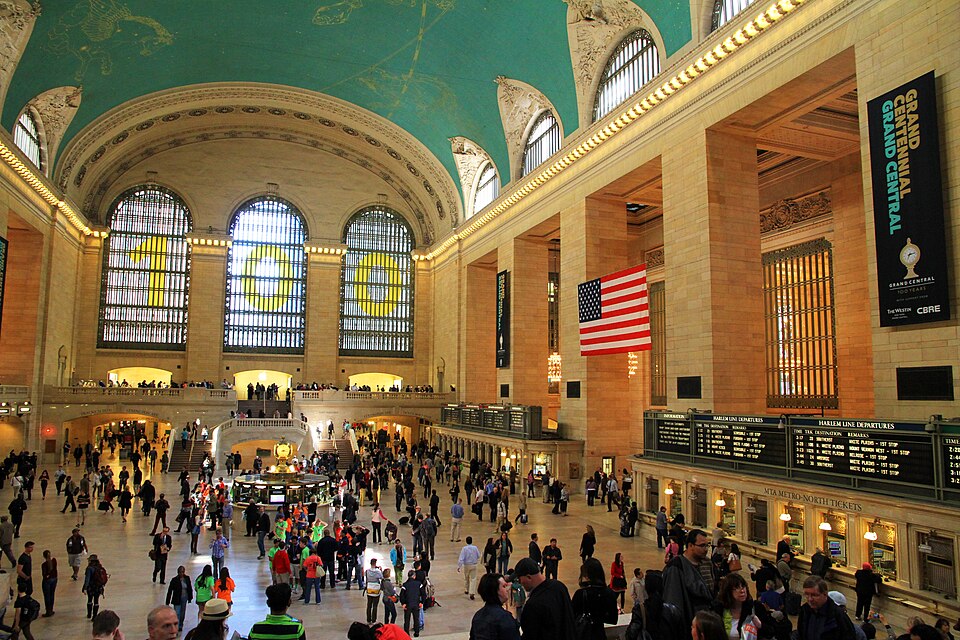
For visitors coming from the suburbs rather than staying in the city, commuter rail is frequently the cleanest option — more reliable than driving through event traffic, less stressful than navigating the subway for the first time, and with clear endpoints. NJ Transit and the Long Island Rail Road both terminate at Penn Station at 34th Street, a ten-to-fifteen-minute walk from the Broadway theater cluster and directly below Madison Square Garden. Metro-North from Westchester, Connecticut, and the Hudson Valley terminates at Grand Central Terminal on 42nd Street, also within easy walking distance of most Midtown venues.
The one critical commuter rail mistake: not booking the return train before the event. Late trains home on Friday and Saturday nights after Broadway shows and concerts fill quickly. Buy the return ticket before you leave — not on the platform at 11:00 PM while everyone else is doing the same thing.
Driving to a Manhattan event is a workable choice when approached with a plan — and a poor one when it isn’t. Midtown traffic in the pre-show window is genuinely unpredictable, parking rates near Times Square run high for event nights, and the post-show garage exit with hundreds of other cars attempting the same thing adds time that most people don’t account for. That said, driving makes legitimate sense for families with young children, visitors from suburbs where commuter rail timing doesn’t align with the event, bad weather nights, and anyone heading to a stadium venue where parking is more integrated into the event experience.
The key is booking a garage before you leave home — not circling for a spot when you arrive. Apps like SpotHero and ParkWhiz allow advance reservation at specific garages, often at lower rates than drive-up pricing, and guarantee a spot rather than leaving you circling at 7:30 PM. See the parking strategy section below for the full picture.
Rideshare — Uber, Lyft — and yellow cabs have a specific and useful role in NYC event nights, but it isn’t getting you to the show. In Midtown traffic before an 8:00 curtain, a rideshare from thirty blocks away can take forty minutes. The subway takes twelve. Where rideshare earns its place is post-show, when the subway feels overwhelming, or for a short hop from a hotel to a restaurant to a theater when the distances are too short to matter for transit but too awkward to walk. Yellow cabs don’t surge-price — their metered rate is fixed regardless of demand — which makes them a consistently predictable option when a car makes sense. The post-show surge on rideshare apps after a major event is real and significant; if you’re planning to Uber home, either wait it out at a nearby bar or budget for two to three times normal pricing.
The transportation plan that requires the least planning is staying close enough to walk. For Broadway visitors staying in the Theater District or Hell’s Kitchen, most shows are a five-to-fifteen-minute walk from the hotel. No subway decisions, no parking, no surge pricing, no post-show scramble. The walk back after a show at 10:45 PM is one of the better parts of a Broadway night — Midtown at that hour has a particular energy that doesn’t translate to sitting in traffic. The premium for a Theater District hotel over a comparable Hell’s Kitchen property pays for itself in friction reduction over multiple show nights.
Transportation Strategy by Event Type
This is the section most NYC transportation guides skip, and it’s the most useful one. How you should get to a Broadway show and how you should get to a Yankees game are genuinely different problems, and confusing them produces bad decisions.
Broadway nights
Broadway has the most unforgiving start time of any entertainment category in New York. The curtain goes up at 8:00 PM and latecomers are held at the back until a suitable break — sometimes five minutes, sometimes the entire first act. This makes transportation planning for Broadway more conservative than for almost any other event. The subway is the right answer for the vast majority of Manhattan-based visitors — it doesn’t get stuck in traffic and Times Square–42nd Street is served by ten lines. For visitors coming in from New Jersey or Long Island, commuter rail to Penn Station is the cleanest path, with a ten-to-fifteen-minute walk to most theaters.
Post-show Broadway is where most transport plans break down. The Theater District empties fast at 10:45 PM, rideshare surge pricing kicks in as tens of thousands of people request cars simultaneously, and the Times Square subway station at that hour is genuinely crowded. The best post-show Broadway transport is either walking back to a nearby hotel, taking the subway from a station one or two blocks from the main Times Square exit, or — if you drove — waiting out the first fifteen to twenty minutes of garage chaos at a nearby bar before retrieving the car. Our full guide at How to Get to a Broadway Show covers every option in detail.
Concert nights
Concert transport logic varies significantly by venue. Madison Square Garden sits directly above Penn Station, which makes it arguably the best-connected arena in the country for commuter rail visitors — exit the train and you’re effectively inside the building. The subway from Midtown to MSG takes minutes. For a Barclays Center concert in Brooklyn, the Atlantic Avenue–Barclays Center subway station deposits you directly at the arena entrance; the subway from Midtown takes roughly twenty minutes. For Radio City Music Hall on 6th Avenue at 51st Street, the subway from Times Square is one stop and the walk from Midtown hotels is fifteen minutes or less.
Concert timing is more forgiving than Broadway — opening acts provide buffer, and the main act rarely starts at the exact advertised time. This allows slightly less conservative transport planning than a Broadway show requires. That said, the post-concert crowd at MSG or Barclays is large and concentrated, and the same surge and garage-exit dynamics that affect Broadway apply in force after a major show.
Sports nights
Stadium sports — Yankees at Yankee Stadium in the Bronx, Mets at Citi Field in Queens — have transport profiles that are meaningfully different from Midtown arena events. Both stadiums are well-served by dedicated subway lines: the 4, B, and D trains to 161st Street–Yankee Stadium, and the 7 train to Mets–Willets Point for Citi Field. For suburban visitors, driving and stadium parking is a more viable option for stadiums than it is for Midtown arenas — the parking infrastructure is larger and more purpose-built. Yankee Stadium and Citi Field both have significant on-site and nearby parking, and the game-day ritual of tailgating and stadium parking is part of the experience for many fans in a way that parking near Broadway simply isn’t.
When Driving Makes Sense
Driving to a New York City event is often dismissed as always wrong. It isn’t. There are specific situations where driving is the correct choice, and knowing them prevents the mistake of forcing a transit solution onto a problem that doesn’t fit it.
Families with young children have a strong case for driving, particularly for suburban visitors who would otherwise be managing strollers, car seats, and tired children on late-night subway platforms. The math changes when you factor in the full logistics of transit with kids versus the predictability of a car, a familiar vehicle, and a direct route home after a show. The same logic applies to visitors dealing with mobility limitations, large amounts of luggage or equipment, or anyone for whom the subway system’s physical demands would be challenging.
Suburban visitors to outer-borough venues — Yankee Stadium, Citi Field — often find driving more practical than transit. Both venues have meaningful parking infrastructure, game-day driving is well-established in the fan culture, and the alternative (subway from the suburbs) can involve multiple transfers and longer total travel times than the drive. For these venues, the question isn’t whether to drive but how to handle the parking and post-game exit strategy.
Bad weather changes the calculation for any venue. A twenty-minute walk through January sleet to a subway station is less appealing than it sounds in October. Winter Broadway trips where driving and parking near the theater becomes the path of least resistance are one of the clearest cases for paying the parking rate and avoiding the elements.
When Subway and Commuter Rail Win
For the majority of Midtown Manhattan events — Broadway, Madison Square Garden, Radio City Music Hall, Carnegie Hall — transit beats driving on almost every dimension that matters except carrying capacity and weather tolerance. The transit case is strongest for visitors already staying in Manhattan, but it extends to suburban visitors as well once you factor in the commuter rail options.
The subway’s core advantage over driving for Midtown events is that it doesn’t get stuck in traffic. A trip that Google Maps estimates at twenty minutes by car can take fifty on a show night in Midtown. The same trip by subway takes the same time it always takes, regardless of what’s happening on the streets above. This predictability is worth more on a night with a fixed curtain time than almost any other factor in the transport decision.
Commuter rail extends this advantage to suburban visitors in ways that often go underused. NJ Transit from major New Jersey hubs to Penn Station, the LIRR from Long Island, and Metro-North from Westchester and Connecticut all deliver visitors to walkable distance from most Midtown venues at timetable reliability that no road trip through event traffic can match. The one overhead — buying the return ticket before the event rather than scrambling for it afterward — is a small planning cost for a significant logistical gain.
For any Midtown Manhattan event with a fixed start time, transit is faster than driving from anywhere in the city, and more reliable than driving from most suburbs. The subway and commuter rail don’t get stuck in pre-show traffic. They don’t need a parking spot. They don’t charge surge pricing after the show. The case for driving into Midtown for an evening event has to clear a high bar — and most of the time, it doesn’t.
Parking Strategy for NYC Nights Out
If you’re driving to an event in New York, parking needs to be planned before you leave home — not figured out when you arrive. This isn’t a suggestion. In the Theater District, near MSG, and around Barclays Center on event nights, last-minute parking is more expensive, harder to find, and more likely to create the exact stress the car was supposed to prevent.
Book in advance — always
SpotHero and ParkWhiz both allow advance reservation at specific garages, often at meaningfully lower rates than drive-up pricing. You lock in the spot, know exactly where you’re going before you leave, and arrive without circling. The ten minutes this takes during the planning phase saves thirty minutes of anxiety on the night.
The closest garage is not always the best garage
The garages immediately adjacent to Times Square charge the highest event-night rates and have the worst post-show exit congestion, because everyone else is also trying to leave immediately after curtain. A garage two or three blocks further west — toward 9th Avenue — is often cheaper, quieter during exit, and only adds a few minutes to the walk to and from the theater. When booking parking, factor in exit strategy as seriously as proximity. A garage that empties easily onto a clear street is worth more at 11:00 PM than a garage that’s fifty feet from the theater entrance but faces a ninety-minute exit queue.
Broadway parking vs. sports parking
The parking logic for a Broadway show and for a Yankees game are genuinely different. Broadway garages are in dense Midtown Manhattan, subject to full urban traffic dynamics, and the post-show exit competes with every other car in the Theater District leaving at the same time. Stadium parking at Yankee Stadium or Citi Field is more purpose-built — larger lots, dedicated exit infrastructure, and a more established game-day traffic flow that, while still slow after games, is at least predictable. Visitors who drive regularly to Yankee Stadium have developed their own parking strategies over years; visitors driving to Broadway for the first time should approach it more conservatively.
How Hotel and Neighborhood Choice Changes the Transport Plan
The transportation decisions that produce the best NYC event nights are often made before any transit planning happens — they’re made when choosing where to stay. A hotel in the Theater District for a Broadway-focused trip eliminates the entire transport problem. A hotel near Penn Station for an MSG-heavy weekend reduces every commuter rail and arena-adjacent logistics question to a short walk. The right hotel location doesn’t just save money on transportation — it saves the mental overhead of planning transportation at all.
For visitors whose trip combines multiple venue types — a Broadway show and a Knicks game in the same weekend, for example — the hotel location is a genuine tradeoff. The Theater District is better positioned for Broadway; the Penn Station area is better positioned for MSG. In those cases, the transit network makes either location workable for both venues, and the choice should lean toward whichever event type matters more and has the harder timing constraints.
Visitors staying further from their event venue — either by choice or budget — can still have smooth evenings if the transit connection is clean. A hotel in Downtown Brooklyn for a Barclays-heavy weekend is excellent transit logic. A hotel in Midtown East for a Broadway trip works fine with one subway stop. What creates friction is a hotel location that requires a long, indirect transit connection to the venue — the kind that adds two transfers and thirty minutes to a trip that should be simple.
Common Transportation Mistakes
The transportation decisions that save evenings — which garage to book, which train to take home, whether to walk or subway after the show — take five minutes to make in advance and can take fifty minutes to recover from in real time. Every transport plan that matters should be made before the day of the event, not on the way out the door.
Broadway is in Midtown. Yankee Stadium is in the Bronx. Barclays Center is in Brooklyn. Citi Field is in Queens. These aren’t walking distance from each other and they’re not served by the same transit lines. The transport plan for one doesn’t translate to another. Always start the planning from the specific venue’s location and work outward.
This is the most common and most consequential transport mistake. Getting to the event is usually the easier problem — you have a hard deadline and a clear destination. Getting home is when post-show surge pricing, packed subway platforms, and forty-five-minute garage exits happen. Knowing how you’re getting home before the event starts converts a potential disaster into a non-issue.
Proximity to the venue entrance is only one dimension of garage quality on an event night. How the garage exits — onto which street, in which direction, into what kind of traffic — matters just as much when you’re trying to leave at the same time as thousands of other cars. A garage two blocks further from the entrance that exits onto a less congested street is usually the right trade.
Rideshare apps surge aggressively after major NYC events. The post-show surge after Broadway lets out, after an MSG concert ends, after a Knicks playoff game — these are real and significant, sometimes two to three times the normal rate. Rideshare works well as a point-to-point option for specific legs of a night. It works poorly as a default fallback for post-event transportation when you haven’t thought through the alternatives.
Venue Transportation Guides
Every major NYC entertainment venue has its own transport logic. These guides cover the specifics for each one — which subway lines, where commuter rail drops you, how parking works, and what the post-show exit looks like.
Subway, commuter rail, parking, and rideshare for the Theater District — with post-show strategy.
Broadway Transport →Penn Station sits directly below MSG. Here’s how to use that, and what to do when you’re driving.
MSG Transport →The subway from Manhattan is direct. Here’s which lines, where to park, and how to time the return.
Barclays Transport →The 4, B, and D trains all go directly to the Stadium. Parking and driving strategy for suburban visitors.
Yankee Stadium Transport →Rockefeller Center access, nearby subway stops, and the best hotel areas for a Radio City night.
Radio City Transport →The 7 train runs directly to the Mets. Parking, LIRR access, and the post-game exit plan.
Citi Field Transport →Plan the Transport Before the Night
Transportation is the variable that determines whether a well-planned NYC evening stays well-planned through the final exit. The show, the dinner, the seats — all of that is arranged weeks in advance. The transport plan takes twenty minutes to make properly and prevents the specific kind of avoidable stress that no amount of good seats can compensate for at 7:55 PM when you’re still in traffic.
Use the venue guides above for the specific details on each event destination. And for any night that involves Broadway, use the full Broadway transport guide — it covers every option in the depth the curtain-time stakes demand.
Browse NYC Transportation Guides
Start with the smartest transportation-planning guides for Broadway nights, concerts, sports, and hotel-based NYC trips, then jump into the individual pages for parking, subway strategy, venue access, and getting home with less stress.