

Longacre Theatre Seating Chart: Best Seats, Mezzanine, Balcony & Accessibility Tips
A practical guide to choosing seats at the Longacre Theatre — Orchestra vs Mezzanine vs Balcony, center-vs-side views, stair warnings, accessibility, and where to sit for Two Strangers on Broadway.
The Longacre Theatre is a midsize Broadway house where seat choice comes down to two things: whether you want actor detail or a full-stage view, and whether anyone in your group can manage stairs. At 1,077 seats across Orchestra, Mezzanine, and Balcony, it sits in a useful range — large enough to feel like a real Broadway event, compact enough that upper-level seats can still feel connected to the performance when chosen carefully.
The current production is Two Strangers (Carry a Cake Across New York), the 8-time Tony-nominated musical rom-com about a charmingly naive Brit (Sam Tutty) and a no-nonsense New Yorker (Robin, played by Christiani Pitts) who embark on a 48-hour romp through the city after meeting at an airport. The show is actor-forward — chemistry, comic timing, emotional nuance — rather than a giant scenic spectacle. That makes centered proximity to the performers a more important variable here than it would be for a show that fills the stage with scenery and choreography at scale.
The most important practical fact: Orchestra is the only fully step-free level. The Mezzanine requires two full flights of stairs. The Balcony requires four. The theater has a small elevator, but it serves only the accessible restroom area — it does not take standard patrons to the Mezzanine or Balcony. If stair-free access matters for your visit, book Orchestra.
Seating Chart Overview — A Classic Broadway House, Carefully Restored
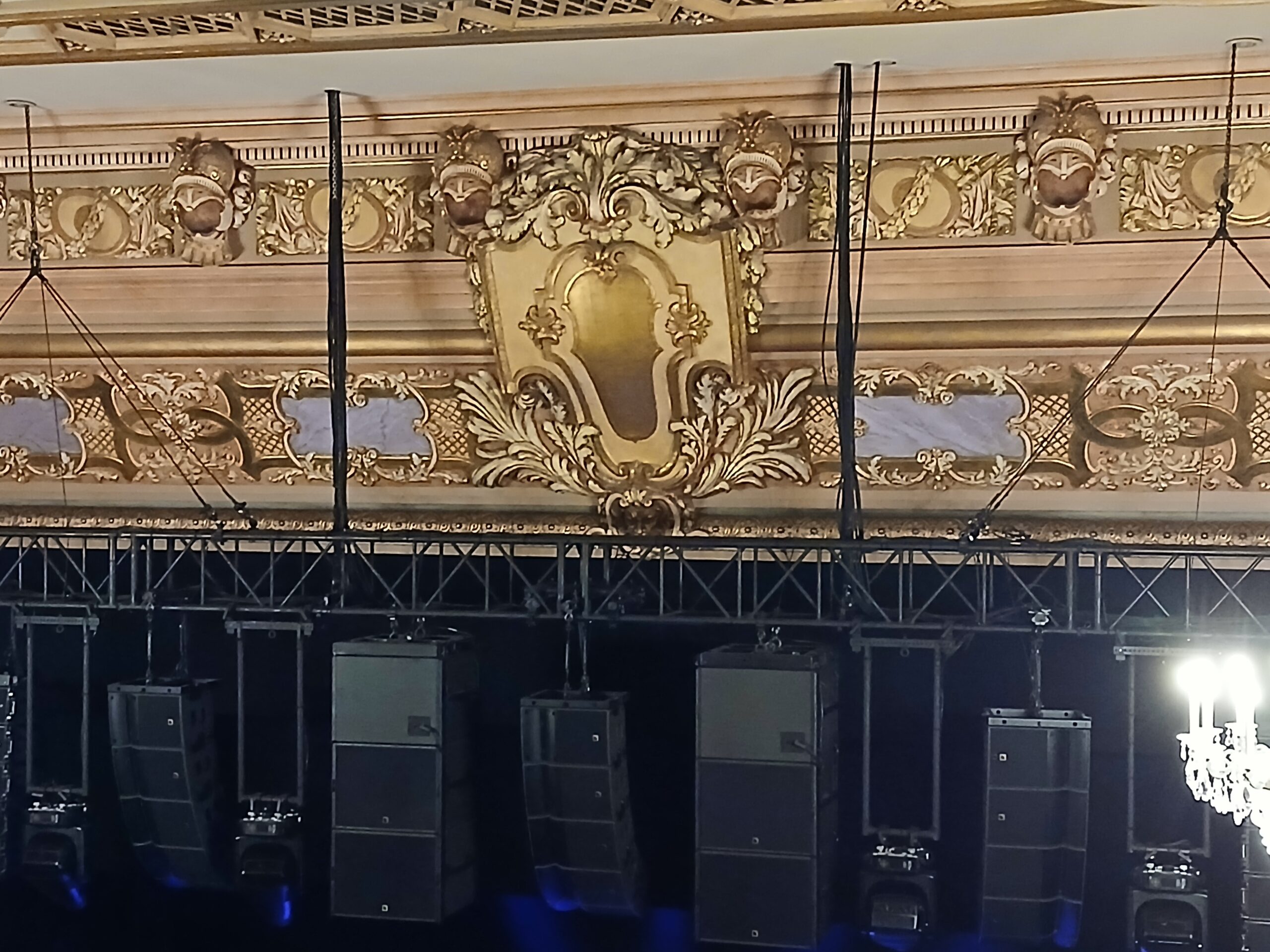
The Longacre Theatre was built in 1913 by producer H.H. Frazee — the same Frazee who sold Babe Ruth’s contract to the Yankees, a transaction that allegedly cursed the theater for flop productions. Despite that superstition, the Longacre has hosted a distinguished roster including Zero Mostel, Julie Harris, Ossie Davis, Ain’t Misbehavin’, Children of a Lesser God, and Catch Me If You Can. A major restoration in 2007–08 improved sightlines, restored the original Beaux Arts plasterwork, and brought the house up to modern standards. Two Strangers breaking through on this stage is, in its way, a welcome reversal of that old theatrical legend.
The theater’s three levels — Orchestra (~506–508 seats), Mezzanine (~304–320 seats), and Balcony (~249 seats) — are arranged in a classic French Neo-classical configuration. The auditorium’s width is slightly greater than its depth, which is relevant to seat choice: center alignment matters more here than at venues that are significantly deeper than they are wide. Far side seats become more problematic as the angle compounds with either distance or height.
Step-free from the main entrance. Automatic door from street, ramp to lobby, attended doors to Orchestra. Wheelchair seating rows K, M, N.
Enter behind orchestra row J. ~2 steps up or down per row inside. Handrails at every stepped row end. No elevator access to this level.
Steep and high. Handrails at stepped row ends. No elevator access for standard patrons. Small elevator serves only accessible restroom area.
Reliable, step-free, and the most important section for Two Strangers’ actor-forward chemistry and comic timing. Rows E–J are the safest premium target.
Elevated full-stage view at a typically lower price than center orchestra premium. Often the best value in the house for a production with clean two-person staging.
Most affordable option. Only viable from front center positions. Four flights of stairs required. Loses facial detail for a two-person show. Best for committed budget visitors.
Orchestra Seats — The Main Floor
The orchestra is the most reliable, most versatile level at the Longacre. Step-free from the street entrance, housing all the wheelchair seating, and delivering the most immediate version of Two Strangers’ actor-forward storytelling. For a show where a single raised eyebrow between two performers can shift the comic tone of a scene, being on the same level as the stage — and centered — matters.
Center Orchestra, Rows D–L — The Premium Sweet Spot
This range is the most consistent recommendation from seat-view sources and experienced Broadway visitors. SeatPlan confirms rows L–N center as “good value seats” from which “patrons can still take in the details of a play and don’t have to look up at the stage.” Rows D through approximately J are the tighter premium zone: close enough for full actor detail, far enough that the staging reads as a composition rather than a series of close-up moments.
For Two Strangers, rows E through J are the recommended center-orchestra target. You’re close enough to read both Sam Tutty and Christiani Pitts in real time — the comic timing, the emotional beats, the chemistry that makes the show work — without losing the broader staging context of the show’s New York journey. Rows K through L offer similar quality at a lower price.
Front Orchestra, Rows A–C — Very Close, Best for Devotees
The very front rows are the closest the Longacre gets to its stage. For a two-person musical, this can be powerful — actor chemistry at close range, every physical detail visible, the sense of being just a few feet from the performers. For Two Strangers, where the intimacy of the relationship between Dougal and Robin is the show’s emotional core, the front rows can deliver something unique.
The caveat: rows A and B can require a slight upward-looking angle, and the full staging picture — particularly the show’s use of the wider stage for New York movement sequences — is harder to take in at once from these positions. Rows C and D are consistently better for most visitors than A and B, offering close proximity with a more complete view of the staging.
Side Orchestra — Inner Works, Outer Gets Tricky
Inner side orchestra seats, at roughly the midpoint of each row, can be reasonable value at this theater. The Longacre’s width means far outer side seats are more of a caution zone — for Two Strangers, a side angle can consistently favor one performer over the other, which matters in a show where the interplay between the two characters is the engine of the narrative.
A useful rule: center rear orchestra is almost always preferable to closer far-side orchestra for Two Strangers. Distance is a smaller tradeoff than angle for a two-person show where you need both faces clearly.
Rear Orchestra, Rows L–N — Strong Value
SeatPlan specifically calls out rows L–N in center orchestra as strong value positions. The Longacre’s moderate depth means rear orchestra is not as far as it might be in a much larger house, and centered seats in this range deliver a full-stage view without the premium price of the front rows. For budget-conscious visitors who want to stay on the orchestra level, center rows L–N are the target.
Rear orchestra also houses all the wheelchair seating and is the safest choice for any visitor who wants to stay step-free while still getting a centered view of the production.
Center orchestra rows D through L is the most reliable all-around choice at the Longacre — step-free access, the right distance for Two Strangers’ actor-forward storytelling, and the cleanest sight line to both performers.
Mezzanine Seats — An Elevated View That Rewards Center Placement
The Mezzanine is located on the second level, up two full flights of stairs from the orchestra. There is no elevator access to the Mezzanine for standard patrons. The small elevator at the Longacre serves only the accessible restroom area and cannot accommodate all wheelchair sizes. Once inside the mezzanine section, there are approximately 2 steps up or down per row, with handrails at the end of every stepped row. The mezzanine entrance is behind orchestra row J. If anyone in your group has difficulty with stairs, book orchestra only.
Front Center Mezzanine, Rows A–D — One of the Best Views in the House
The Longacre theatre mezzanine view from front center is consistently cited as a strong elevated view at the Longacre. Rows A through D offer an elevated full-stage perspective where the complete staging of Two Strangers — the New York journey sequences, the choreography, the spatial relationship between the two characters — reads as a complete picture. SeatPlan rates the center mezzanine as “perfect for patrons wanting an elevated view.”
For Two Strangers, front center mezzanine gives you something center orchestra can’t fully replicate: the full stage as a choreographed composition, the New York cityscapes rendered in Soutra Gilmour’s design, and the spatial storytelling of Tim Jackson’s staging. You’ll lose a degree of close-up actor detail compared to center orchestra rows E–J, but you gain the complete visual picture.
Rows C and D of the center mezzanine are particularly notable as value picks — the same section at a lower price point than rows A and B, with only a modest difference in the view. SeatPlan notes these as “good value.”
Side Mezzanine — Inner Possible, Outer Is Caution
Inner side mezzanine seats can be workable at the right price — closer to center than the outer positions, and with elevation to partially compensate for horizontal angle. Outer side mezzanine develops more pronounced angle concerns, compounded by height. For Two Strangers’ two-person format, outer side mezzanine means you’re consistently better positioned to see one actor’s face than the other’s. Center placement is the strong preference within the mezzanine at any price point.
Rear Mezzanine, Rows F–J — The Budget Middle Ground
Rear mezzanine center can work for Two Strangers if budget is the constraint. The show communicates at this distance — the story, the music, and the broad emotional arcs of both characters are legible from the rear mezzanine. What diminishes is the fine performance detail: the specific qualities of Sam Tutty and Christiani Pitts’ performances that make the show such a critical success are harder to read from the rear mezzanine. Consider it if front mezzanine is unavailable or significantly more expensive, and always prioritize center placement within the section.
Balcony Seats — Budget Option, Maximum Stair Commitment
The Balcony is located on the third level, up four full flights of stairs from the orchestra level. There is no elevator access to the Balcony for standard patrons. The small elevator serves only the accessible restroom area above the balcony. Handrails are available at the end of every stepped row inside the Balcony. SeatPlan notes that “safety bars, height and thin pillars can affect sightlines” in the balcony. If four flights of stairs are any concern, do not book Balcony.
Center Balcony, Front Rows — The Only Balcony Position to Recommend
The Longacre theatre balcony view from front center is the only Balcony zone to approach with any confidence for Two Strangers. From here, you have a straight-on elevated view of the full stage, which allows you to follow the staging and musical storytelling even at significant distance. For a show that is not a giant scenic spectacle, the center balcony communicates enough — the narrative, the music, the broad emotional arc — that a committed budget visitor will still have a genuine Broadway experience.
What you lose from center balcony is the fine performer detail that makes Two Strangers exceptional. Sam Tutty and Christiani Pitts have been called “blindingly sparkling” in their performances; from center balcony, you’ll understand why they’re Tony-nominated, but the specific qualities of those performances — the micro-expressions, the precise timing, the physical rapport — will be harder to access.
The $48 lottery is often a better path to a better seat for the same budget. Try the lottery first; if you don’t win, center balcony front rows are the fallback.
Side Balcony and Rear Balcony — Highest Caution Zone
Side balcony compounds the Balcony’s height and distance with a horizontal angle — the most challenging viewing combination in the house. Rear balcony is the most distant zone in the theater, and the steep grade can make sight lines to the stage even more challenging. Neither should be a first choice for any visitor attending Two Strangers for the first time or for a special night. If cost is the primary constraint and balcony is the only option, center front balcony is meaningfully better than any side or rear position.
Two Strangers — Seating Strategy for This Production
Two Strangers (Carry a Cake Across New York) is playing at the Longacre Theatre in an open run that opened November 20, 2025. Written, music, and lyrics by Jim Barne and Kit Buchan. Directed and choreographed by Tim Jackson. Sets and costumes by Soutra Gilmour; lighting by Jack Knowles. Starring Sam Tutty as Dougal and Christiani Pitts as Robin. Cast recording released March 20, 2026. Nominated for 8 Tony Awards (2026) including Best Musical, Best Actor in a Musical (Sam Tutty), and Best Actress in a Musical (Christiani Pitts). Runtime: 2 hours 15 minutes with one intermission. Recommended for ages 12 and up; children under 4 not admitted.
Content warnings: theatrical haze, smoke; strobe/flashing lights. “Effervescent new musical comedy” (New York Times). “Achieves something magical” (Vulture). “Blindingly spark” (NY Post). Named a Critics’ Pick and a toast of the Broadway season.
Two Strangers is not a set piece showcase or a big-picture spectacle musical. It is a two-person actor showcase — a show that succeeds or fails on the chemistry, charm, and precision of Sam Tutty and Christiani Pitts. The staging, by director-choreographer Tim Jackson, uses the Longacre’s stage to tell the story of a 48-hour New York romp, moving through the city’s boroughs with physical storytelling and Soutra Gilmour’s witty design. But the emotional engine is always the two performers.
What this means for seat choice: you want to be close enough to read both performers’ faces, centered enough to see them both equally, and at a distance where the staging makes sense as a complete composition. Center orchestra rows D through J delivers all three. Front center mezzanine delivers the composition view without the same proximity.
Center Orchestra, Rows D–J — The Recommended Position
The most important range for Two Strangers. Close enough for the comedy to land with the timing it requires, centered enough to see both Dougal and Robin in full without favoring one side of the stage, and at a distance where the New York staging reads as a journey rather than a series of disconnected moments. For first-time visitors, for date nights, for anyone who wants to see why this show is one of Broadway’s most talked-about productions, this is the range.
Front Center Mezzanine, Rows A–D — The Best Composition View
If center orchestra is sold out or significantly over budget, front center mezzanine rows A through D is the alternative that best serves Two Strangers. You’ll see the full staging as a designed picture — how Tim Jackson moves the two characters through New York, how the set transforms to convey different locations, how the lighting tells the time of day and emotional temperature. You’ll lose some close actor detail but gain the full production overview. Stairs required.
For budget tickets: digital lottery via rush.telecharge.com — $48 per ticket (opens midnight day before; winners drawn 10am and 3pm; up to 2 tickets per winner). Rush: $42 in-person at the Longacre box office (10am M–Sa, noon Sunday), limit 2 per person. See the rush and lottery guide for current details.
Best Seats by Visitor Type
Step-free, centered, reliable. Two Strangers is an excellent first Broadway show — romantic, funny, and immediately accessible. Center orchestra puts you in the best position to experience everything it offers.
The Tony nominations for Best Musical, Best Actor, and Best Actress are recognition of performance-level detail. Get close enough to see what the nominations are about — center orchestra D–J puts you there.
The complete Two Strangers staging visible as a designed picture. Best for visitors who want to understand the show as a directorial and design achievement, not just a performance. 2 flights of stairs required.
Orchestra rows L–N center is the most reliable value pick — close enough for real actor detail, meaningfully cheaper than premium. Front mezzanine C–D is the best mezzanine value when A–B is significantly more expensive.
Orchestra is step-free throughout. No elevator to mezzanine or balcony (small elevator serves accessible restroom area only). Wheelchair seating at K20, M102, N116 with companion seats. Contact Shubert Audience Services at 212-944-3700 to confirm.
Center orchestra for the immersive romantic comedy experience — Two Strangers is the perfect date show and even better from close range. Front center mezzanine for a polished elevated view if budget matters and stairs are fine.
Orchestra stays step-free. Mezzanine requires 2 full flights; Balcony requires 4. For any group member with stair concerns, Orchestra only — center rows L–N are the smart value pick that avoids the climbing.
Center balcony front rows are the budget floor — four flights of stairs, distance, but still a view of the full production. The $48 lottery often wins better seats for the same or lower cost. Try lottery first; center balcony is the fallback.
Accessibility — What You Need to Know Before Booking
The Longacre Theatre is accessible at the orchestra level. The entrance from West 48th Street has an automatic door and ramp into the ticket lobby, then attended double doors to the orchestra. The orchestra is step-free throughout. The Mezzanine and Balcony require real stair climbing with no elevator alternative for standard patrons. The small elevator at the theater serves only the accessible restroom area and cannot accommodate all wheelchair sizes — it is not a route to any seating level above the orchestra.
- Automatic door (35″) from 48th Street with push-button control and ramp to ticket lobby; then attended double doors (26″ each) to Orchestra
- Orchestra is step-free for all patrons — no steps to any orchestra seat
- Wheelchair seating in Orchestra only — 3 designated spaces: K20 (+ K10-14 companion), M102 (+ M103-105 companion), N116 (+ N112-114 companion)
- Transfer seats with folding armrests in Orchestra: M116 (+ M115 companion), L101 (+ L102 companion), and additional row K and L positions — total 5 transfer seats in orchestra
- Mezzanine: 2 full flights of stairs from orchestra level. No elevator for standard patrons. ~2 steps up/down per row inside. Entrance behind Row J. Handrails at end of every stepped row.
- 4 transfer seats in Mezzanine: E1, E2, G1, G2 — each with companion space
- Balcony: 4 full flights of stairs from orchestra level. No elevator for standard patrons. Handrails at end of every stepped row.
- 2 transfer seats in Balcony: F1, F2
- Small elevator: serves only accessible restroom area (third floor above balcony). Cannot accommodate all wheelchair sizes. Does NOT serve Mezzanine or Balcony seating for standard patrons.
- Wheelchair-accessible restroom (unisex) on Orchestra level — accessible without elevator
- Additional wheelchair-accessible restroom (unisex) accessible via small elevator only: door 33″, stall 108″ × 99″
- Non-accessible restrooms: 1 flight down, 20 steps from Orchestra level
- Infrared assistive listening devices for every performance — no advance reservation needed; ID with printed address required as deposit; call 212-944-3700 to reserve in advance
- Loop/T-coil compatible assistive listening also available
- Handheld audio description and captioning devices available 4 weeks after official opening (contact audienceservices@shubertorg.com for earlier access)
- Unlimited GalaPro/downloadable audio description and captioning available 4 weeks after opening
- CART live captioning available with 2 weeks advance notice
- Shubert Audience Services: 212-944-3700 or audienceservices@shubertorg.com
What to Avoid at the Longacre Theatre
- Do not book Mezzanine if anyone in your group has difficulty with stairs. Two full flights are required, the small elevator does not serve the Mezzanine, and there is no accessible alternative to the stairs at this level.
- Do not book Balcony if four full flights of stairs are any concern. The elevator at this theater serves only the accessible restroom area, not the Balcony seating. Side Balcony adds angle risk to an already steep, high, distant position.
- Do not assume the small elevator makes upper-level seats accessible. It cannot accommodate all wheelchair sizes and does not provide access to any seating level above the orchestra.
- Do not overpay for far-side orchestra seats when centered rows farther back are available at similar or lower prices. For Two Strangers’ two-person format, a far side angle consistently favors one performer over the other — a centered row L beats a side row D for this show.
- Do not choose far-side mezzanine or far-side balcony over center positions — the angle compounds with height at both levels. Center mezzanine rows C–D are meaningfully better than outer side mezzanine rows A–B for this production.
- Do not assume row A or B is automatically the best seat. For Two Strangers’ staging, rows C through D may be preferable to A or B for most visitors — close without the slight upward angle of the very front rows.
- For the Balcony: SeatPlan notes that “safety bars, height and thin pillars can affect sightlines.” Verify current seat-map labeling for any Balcony seat you’re considering. Do not book Balcony as a first-Broadway-trip seat.
How to Choose Between Two Similar Prices
The Seat-Picking Formula
- Best overallCenter Orchestra rows D–L — reliable, centered, step-free, right for Two Strangers’ actor-forward storytelling
- Actor detailCenter Orchestra rows D–J — close enough for the chemistry and timing that make this show exceptional
- Full staging viewFront Center Mezzanine rows A–D — the complete Two Strangers picture; often below orchestra premium; 2 flights required
- Best valueCenter Orchestra rows L–N or Front Mezzanine C–D — both are SeatPlan-confirmed good value positions
- Two StrangersCenter Orchestra D–J for the performance; Front Mezzanine A–D for the production design
- AccessibilityOrchestra only — step-free throughout; wheelchair rows K, M, N; elevator does not serve mezzanine or balcony
- BudgetCenter Balcony front rows — or try the $48 lottery first; $42 rush at box office
- No stairs at allOrchestra only — center rear rows L–N are the value pick within the step-free level
- Avoid all riskStay center at any level; avoid far side seats; verify balcony map notes before purchasing
FAQ — Longacre Theatre Seating
It depends mainly on level and how centered you are. A Longacre theater view from my seat or view from my seat Longacre theatre search generally comes down to three answers: center orchestra rows D–L gives a clean, direct view with no obstruction; front center mezzanine rows A–D looks down at a comfortable angle that takes in the full stage at once; and side seats on any level introduce some angle, more pronounced toward the outer edges. For a specific seat, cross-reference the row against the section notes above, or check the current Telecharge seat map (the Longacre theatre seat map or Longacre theater seat map) before buying. A Longacre theatre view from seat search points to the same guidance.
Center orchestra rows D through L for actor-forward productions like Two Strangers, with rows E through J as the tightest premium target. Front center mezzanine rows A through D is the strongest full-stage alternative. If you’re weighing longacre theatre seat view options across levels, orchestra gives proximity and mezzanine gives the full picture — both are legitimate depending on what you want from the night.
For Two Strangers, center orchestra rows D through L is the most reliable all-around choice — step-free access, centered sightlines to both performers, and the right proximity for a two-person actor-driven musical. Front center mezzanine rows A through D is an excellent alternative, offering an elevated full-stage view at typically lower pricing, and particularly strong for seeing Tim Jackson’s staging as a complete picture. Both require knowing the respective stair and access situations before purchasing.
Both are good options for different reasons. Orchestra gives you step-free access, closer performer proximity, and the most immediate version of Two Strangers’ chemistry and comic timing. Mezzanine center gives you an elevated full-stage view where the staging and design read as a complete composition, often at lower pricing. The Mezzanine requires 2 full flights of stairs with no elevator access for standard patrons. For first-time visitors or anyone with any stair concerns: Orchestra. For visitors who can handle the stairs and want the best staged overview: front center Mezzanine rows A–D.
Front center Balcony can work for budget visitors who can manage four full flights of stairs and accept the distance and height. The center front positions give you a straight-on view of the full stage. SeatPlan notes that “safety bars, height and thin pillars can affect sightlines” in the Balcony — check the current seat map for specific seat notes. For Two Strangers specifically, Balcony loses the fine actor detail that makes the show’s Tony nominations meaningful. Consider the $48 lottery as a better alternative to paying for Balcony seats.
Center orchestra rows D through J is the recommended range for most visitors — close enough for both Sam Tutty and Christiani Pitts’ performances to land with full comic and emotional impact, centered for equal sightlines to both characters, and step-free. Front center mezzanine rows A through D is the alternative for visitors who want the full staging picture and can handle two flights of stairs. For either section, center placement is the critical variable — a centered seat farther back is almost always better for this two-person show than a closer side seat.
Yes — both the theater and the current show are good choices for first-time visitors. Two Strangers is immediately accessible, warm, and funny, with two Tony-nominated performances at its center. The Longacre’s midsize scale means even value seats feel connected to the performance. Center orchestra D–L is the safe recommendation for a first visit. The one note: the upper levels require significant stair climbing, so confirm before purchasing whether mezzanine or balcony stairs are manageable for everyone in your group.
The Longacre has a small elevator, but it does not serve the Mezzanine or Balcony for standard patrons. It reaches only the accessible restroom area on the level above the Balcony, and it cannot accommodate all wheelchair sizes. This elevator is not a route to any seating level above the orchestra for general audience members. If elevator access to seating is required, book orchestra only. All wheelchair seating is in the orchestra, which is step-free from the main entrance.
Partially. The main entrance has an automatic door and ramp, and the orchestra is step-free throughout with three designated wheelchair spaces (rows K20, M102, N116) and companion seating. A wheelchair-accessible unisex restroom is on the orchestra level. The Mezzanine and Balcony are not accessible by wheelchair — the small elevator serves only the restroom area and cannot accommodate all wheelchair sizes. Book orchestra and confirm your arrangements with Shubert Audience Services (212-944-3700) before your visit.
Three seating levels: Orchestra on the main floor, Mezzanine on the second level, and Balcony on the third level. The theater also has boxes on either side of the auditorium. Orchestra is step-free. Mezzanine requires 2 full flights of stairs. Balcony requires 4 full flights of stairs. There is no elevator access to the Mezzanine or Balcony for standard patrons.
Approach with caution: far outer side orchestra (particularly if centered alternatives are available at similar prices — for a two-person show, side angle consistently favors one actor over the other), side mezzanine (outer positions develop angle concerns compounded by height), any balcony seats for visitors who cannot manage four flights of stairs, and side or rear balcony as a first-Broadway-trip seat. Also: do not assume the small elevator provides accessible access to upper levels — it does not serve the mezzanine or balcony seating areas.
Inner side orchestra seats — roughly mid-row, not the extreme outer positions — can be workable at the right price. The Longacre’s width makes far outer side seats less reliable, particularly for Two Strangers where you need to see both performers’ faces equally clearly. A centered seat farther back is almost always better for this show than a closer far-side seat. The consistent rule: at the Longacre, center beats side at every level.
For Two Strangers, the Balcony is a genuine compromise. The show is a two-person actor showcase — the specific qualities of Sam Tutty and Christiani Pitts’ Tony-nominated performances are harder to access from the Balcony’s distance and height. You’ll understand the story and hear the music clearly, but the fine detail of the performances that has generated rave reviews will be less accessible. Center front Balcony is viable for committed budget visitors who can manage four flights of stairs. Side or rear Balcony is not a recommended first-time Two Strangers experience.
The Mezzanine is located up two full flights of stairs from the orchestra level. Once in the Mezzanine section, there are approximately 2 steps up or down per row, with handrails at the end of every stepped row. The entrance to the Mezzanine is behind orchestra row J. There is no elevator access to the Mezzanine for standard patrons — the small elevator at the Longacre serves only the accessible restroom area.
SeatPlan confirms two strong value positions: center orchestra rows L–N (close enough for detail, significantly cheaper than premium front rows) and front center mezzanine rows C–D (strong elevated view at lower prices than mezzanine rows A–B). For the best overall value that balances sightline quality with price, center orchestra rows L–N is the most accessible option (step-free, no stairs), while front mezzanine C–D is the best value if the two flights of stairs are manageable.
For Two Strangers, generally yes — center balcony front rows is usually preferable to outer side mezzanine at a similar price. The reason is the center-vs-side principle: for a show where you need to see both performers equally clearly, a side angle compromises the experience even if the seat is closer. Center balcony gives you a straight-on view of both characters at greater distance and height; outer side mezzanine gives you a more angled view that favors one performer. Four flights of stairs vs. two is the tradeoff — if the extra two flights are not manageable, inner side mezzanine (not outer) is the better answer.
Plan the Night Around the Journey
The Longacre is one of Broadway’s better midsize restored houses — a French Neo-classical room with a 2008 restoration and one of Broadway’s most charming shows running in it right now. Center orchestra D through J for the actor-forward experience that has earned Eight Tony nominations. Front center mezzanine A–D for the complete production picture. The lottery for both at $48. However you get in, sit centered — Two Strangers rewards that choice more than almost any other decision you’ll make before you go.
Stay Centered — Then Plan the 48th Street Night
The Longacre is a midsize Broadway house where the best seat depends on performer detail, full-stage perspective, budget, and stairs. Center Orchestra is the safest emotional pick for Two Strangers, Front Center Mezzanine gives the clean elevated view, and Center Balcony can work only when price matters and stairs are not a problem.
Longacre Theatre Guide
Go deeper on the Longacre itself: West 48th Street location, historic restored-house character, accessibility, nearby theaters, and full-night planning.
Open Theater Guide Current ShowTwo Strangers Broadway Guide
Plan the show around actor detail, rom-com timing, New York movement, intermission, audience fit, dinner timing, and seat perspective.
Open Show GuideMore Seating & Ticket Strategy
Seats · Timing · ValueBroadway Seating Guide
Compare orchestra, mezzanine, balcony, boxes, side seats, premium zones, and obstructed-view listings across Broadway houses.
When to Buy Broadway Tickets
Know when buying early matters, when waiting can work, and how timing changes for limited runs, weekends, holidays, and strong seat inventory.
Last-Minute Broadway Tickets
TKTS, same-day listings, rush, lottery, and practical ways to compare late options without choosing awkward seats blindly.
Broadway Rush and Lottery Tickets
How discount systems work, what tradeoffs to expect, and why cheap seats can be great — or risky — depending on the view.
First-Time Broadway Guide
For visitors choosing their first show or first theater: seats, arrival, timing, intermission, dress, and Theater District basics.
Best Broadway Shows for Date Night
Compare Broadway nights by tone, dinner pairing, room feel, pacing, and how the whole evening works beyond the ticket.
Plan the Longacre Theatre Night
Dinner · Hotels · TransitRestaurants Near Broadway
The Longacre sits on West 48th Street, close to Times Square, the north Theater District, and Hell’s Kitchen dining.
Restaurants Near Times Square
Useful for visitors staying near Times Square or coming in from the central subway-heavy Theater District zone.
Pre-Show Dining Guide
Plan reservation timing, walking buffer, check arrival, and post-show movement so dinner and theater work together.
Hotels Near Broadway
Compare Theater District, Times Square, Midtown West, and Hell’s Kitchen hotel zones for a Broadway-centered trip.
How to Get to a Broadway Show
Subway, walking, rideshare, and arrival timing for Theater District shows, including the West 48th Street houses.
Parking Near Broadway
When driving makes sense, when it does not, and how to avoid turning a Broadway night into a Midtown garage problem.
Nearby Neighborhood & Theater Guides
48th Street · Theater District · Nearby HousesTheater District
The practical guide to Broadway’s center: theaters, crowds, hotels, restaurants, walking routes, and first-time visitor logistics.
Times Square
Best when convenience, subway access, and being right in the center matter most — especially for short Broadway trips.
Hell’s Kitchen
A strong nearby option when dinner matters — more restaurant depth, calmer blocks, and an easy walk west after the show.
James Earl Jones Theatre Guide
A neighboring 48th Street Broadway house useful for comparing restored-room feel, access details, and show-night logistics.
Lena Horne Theatre Guide
A nearby 47th Street house useful for comparing midsize musical staging, upper-level choices, and Theater District routes.
Walter Kerr Theatre Guide
A nearby Broadway house with a compact, actor-forward feel and useful contrast for seating strategy.