

Upper West Side NYC — Neighborhood Guide
Culture, parks, walkability, and some of Manhattan’s strongest hotel and dining territory — whether the Upper West Side is the right base for your trip depends on what kind of New York you want.
The Upper West Side is not trying to impress you. That is, somewhat paradoxically, what makes it one of Manhattan’s most satisfying neighborhoods to visit. There are no giant tourist clusters, no overlit hotel corridors, no avenue-wide lines of chain restaurants calibrated for foot traffic. Instead there are brownstone-lined side streets, two of the largest parks in the city, some of New York’s most significant cultural institutions, and the particular feeling of being in a neighborhood that is actually lived in — by people who chose to be there and keep choosing to stay.
For visitors whose New York trip includes a show at Beacon Theatre, an evening at Lincoln Center, a museum day at the American Museum of Natural History, or simply a stay that prioritizes walkability and a calmer hotel-and-dinner experience over Times Square proximity, the Upper West Side is one of the strongest bases in Manhattan. This guide explains what the neighborhood actually delivers, who it is right for, and the honest comparison against the more obvious Midtown alternative.
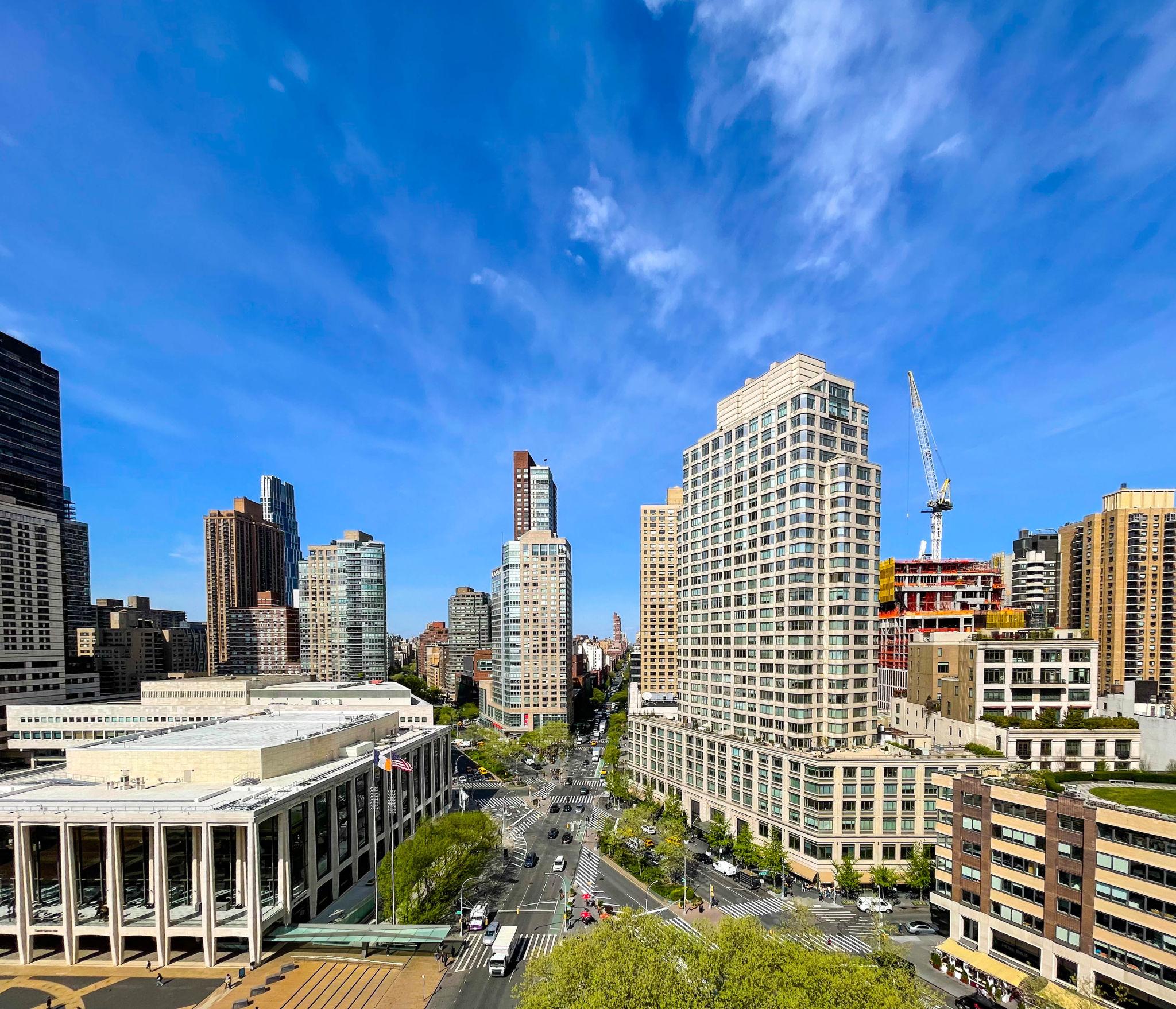
Upper West Side neighborhood streetscape in Manhattan near Beacon Theatre and Broadway.
Quick Answers — Is the Upper West Side Right for Your Trip?
The combination of Beacon Theatre, Lincoln Center, Central Park access, and a strong restaurant scene in a walkable, residential neighborhood is genuinely hard to replicate anywhere else in Manhattan.
If your agenda is Times Square shows, Downtown dining, or East Village nightlife, the Upper West Side is the wrong base — the subway connections are fine, but you will be commuting from the wrong end of the island every night.
The Beacon Theatre cluster — hotel, dinner, show — is entirely walkable from any of the neighborhood’s main hotel options. Staying on the Upper West Side converts a concert night from a transit exercise into a stroll.
Lincoln Center sits at 62nd–65th Streets, accessed by the 1 train at 66th Street or a short walk from anywhere in the lower UWS. The neighborhood’s restaurant cluster between 65th and 80th Streets is the natural pre-show dinner territory.
Central Park to the east, Riverside Park to the west, the American Museum of Natural History a short walk north, wide sidewalks, residential calm, and the most walkable park-to-museum corridor in the city. For families, the Upper West Side is a rare consensus answer.
The side streets off Broadway and Amsterdam Avenue are genuinely quiet in the evenings — brownstones, trees, neighbors walking dogs. The avenues have restaurants and energy. The difference from Midtown is significant and most visitors who experience it find it difficult to go back.
Sempre Oggi (Michelin Guide), Cafe Luxembourg (since 1983), Nice Matin (Wine Spectator Grand Award) — the restaurant quality near Beacon and Lincoln Center supports date-night occasions without requiring anything elaborate. Pair with a show and a short walk home.
The Upper West Side is a better first NYC experience than Times Square for many visitors — it shows them the city that New Yorkers actually inhabit. If the trip includes Central Park, museums, and a show, it earns its place easily. If it is primarily about tourist landmarks and nightlife, look elsewhere.
What the Upper West Side Actually Feels Like
The Upper West Side runs from Columbus Circle at West 59th Street up to West 110th Street — fifty blocks along Central Park’s entire western edge, with the Hudson River and Riverside Park on the other side. It is one of Manhattan’s largest neighborhoods, but the relevant strip for visitors is tighter: roughly 59th to 85th Street, along Broadway and Amsterdam Avenue, where the main cultural institutions, hotel options, and restaurant clusters sit.
The neighborhood is primarily residential. The main avenues — Broadway, Amsterdam, Columbus — have restaurants, bars, and shops at street level with apartment buildings above. The side streets are almost entirely brownstones and pre-war apartment buildings with tree cover and a level of quiet that surprises visitors accustomed to thinking of Manhattan as uniformly loud. Walking a cross block between Broadway and West End Avenue on a weekday evening is not like walking through Midtown. It is calm, tree-lined, and inhabited in a way that makes the city feel genuinely livable rather than simply tolerated.
The tradeoff the neighborhood asks of visitors is honest: this is not a neighborhood that stays up until 3am with rooftop bars and club scenes. Restaurants close on the earlier side compared with downtown neighborhoods. The energy is cultural and neighborhood-driven rather than nightlife-driven. Visitors who want a long post-midnight evening built around late bars and high-energy clubs will be better served by the East Village, the West Village, or Midtown. Visitors who want to walk to a world-class museum or concert, eat at a legitimately good restaurant, have a post-show drink, and return to a comfortable hotel room will find the neighborhood working better for them than almost anywhere else in the city.
One quality that deserves particular mention: the sidewalk experience. The Upper West Side has unusually wide sidewalks on its main avenues by Manhattan standards, and the side streets have the kind of human-scale, tree-covered streetscape that makes walking feel like something you do for pleasure rather than transit. The neighborhood rewards people who want to be in it rather than just passing through it. That is a real quality of place, and it is part of why it attracts the kind of visitor — and the kind of resident — that it does.
Why Visitors Choose the Upper West Side
For Beacon Theatre
Beacon Theatre at 2124 Broadway is in the heart of the Upper West Side’s main entertainment stretch, between West 74th and West 75th Streets. The combination of the venue’s walkable radius — excellent restaurants within three to five minutes on foot, hotel options within one to five minutes — means that staying in the neighborhood converts a Beacon show from a logistical event into a seamless evening. You arrive at your hotel, walk to dinner, walk to the show, walk back. No transit decisions, no surge pricing, no post-show navigation. For any visitor attending a Beacon show, the Upper West Side is the most genuinely useful base in the city.
For Lincoln Center
Lincoln Center — a 16.3-acre complex at Lincoln Square hosting the Metropolitan Opera, New York Philharmonic, NYC Ballet, Juilliard School, and more, with five million visitors annually — sits at the neighborhood’s southern edge between 62nd and 65th Streets. The 1 train’s 66th Street station is literally named Lincoln Center. For an evening at the Met Opera, a Philharmonic concert at David Geffen Hall, or a ballet at the Koch Theater, staying on the Upper West Side puts you in the venue’s natural surrounding territory rather than commuting in from a hotel elsewhere. The pre-show dinner options along Columbus and Amsterdam Avenues between 65th and 80th Streets make the whole evening fit together.
For Central Park access
The western edge of Central Park runs the full length of the Upper West Side, from Columbus Circle at 59th Street to Cathedral Parkway at 110th. The entrance at 72nd Street leads directly to Strawberry Fields and the quieter, less tourist-saturated western side of the park. Running paths, the Reservoir, the Ramble, Bethesda Terrace — all accessible from here, and in most cases with less crowd density than the same features accessed from the east side. For visitors whose trip includes meaningful time in Central Park, the Upper West Side is the right bank to be on.
For the American Museum of Natural History
One of the world’s largest natural history museums, on Central Park West at 79th Street. The Rose Center for Earth and Space, the Hall of Biodiversity, the dinosaur halls, the planetarium — the museum draws visitors from around the world, and staying in the Upper West Side means walking to it rather than transiting. For families especially, this proximity changes the whole texture of the day.
For Riverside Park
The 330-acre park along the Hudson River runs the full western length of the neighborhood. Less famous than Central Park but genuinely beautiful — waterfront paths, river views, the Hudson River Greenway that extends north and south, the 79th Street Boat Basin. For visitors who want a less crowded outdoor experience, Riverside Park is the Upper West Side’s hidden asset.
For a calmer hotel base
The hotel options within a few minutes of Beacon Theatre — Hotel Beacon, Hotel Belleclaire, Arthouse Hotel, The Lucerne — offer a quality of stay that Midtown hotels at comparable price points do not consistently match. The buildings have more character. The streets outside are quieter. The neighborhood mornings feel like a good place to have coffee rather than a place to escape from. For visitors who want the hotel to be part of a positive experience rather than just a functional base, the Upper West Side delivers more reliably than most of Midtown.
Cultural Venues and Anchor Points
One of New York City’s most beloved mid-sized venues — a 1929 National Historic Landmark with nearly 2,900 seats across orchestra, loge, and balcony levels. Home to major touring concerts, comedy, spoken-word events, and residencies. The venue’s ornate interior, strong acoustics, and relatively intimate scale compared with arenas make it a genuinely special room. The Beacon Theatre seating guide covers every level and section in detail.
A 16.3-acre complex of 30 indoor and outdoor facilities hosting five million visitors annually. Home to the Metropolitan Opera (3,900-seat house; season runs late September through June), the New York Philharmonic (David Geffen Hall, 2,738 seats), New York City Ballet (David H. Koch Theater, 2,586 seats), the Juilliard School, Lincoln Center Theater (including the Vivian Beaumont, a Broadway house), Alice Tully Hall, and more. Lincoln Center is not just a venue — it is a complex where you can spend an entire day or evening and encounter multiple kinds of world-class performance. The Josie Robertson Plaza fountain and the redesigned Amsterdam Avenue side (the Stavros Niarchos Foundation Lincoln Center West Initiative, currently in development) have made the campus increasingly welcoming as a public space.
One of the world’s largest and most visited natural history museums, with permanent halls covering dinosaurs, human evolution, ocean life, minerals and gems, and the Rose Center for Earth and Space (home to the Hayden Sphere planetarium). The museum is directly accessible from the neighborhood — no subway required — and is surrounded by Theodore Roosevelt Park, which adds outdoor space to the visit. For families, AMNH is often the primary reason to choose the Upper West Side as a base.
New York City’s oldest museum, with extensive holdings on American and New York history, rotating exhibitions, and an art gallery. A quieter and less crowded alternative to larger nearby institutions, and an easy complement to AMNH for visitors with a full museum day in the neighborhood.
Is the Upper West Side Right for You?
Upper West Side vs Midtown — The Honest Comparison
Midtown Manhattan wins on one thing clearly: centrality. If your agenda spans the Empire State Building, Times Square, Grand Central, museums on the east side, and Downtown in the same trip, Midtown puts you closer to more of it. For visitors whose trip is genuinely diverse in geography, a Midtown hotel with good subway access is the rational choice.
The Upper West Side wins on everything that makes a stay feel good rather than merely convenient. The hotels have more character — they are often in landmark or architecturally notable buildings, on quieter streets, in a neighborhood where the quality of the morning walk to get coffee matters. The restaurants near Beacon Theatre and Lincoln Center are stronger and more interesting than most of what surrounds Midtown hotels at comparable price points. The parks are immediately accessible rather than requiring transit to reach. The noise level outside your hotel room is meaningfully lower.
Most visitors who stay in Midtown for a Beacon Theatre show take the subway up, see the show, and take the subway back. They are in the Upper West Side for two hours. Most visitors who stay in the Upper West Side for a Beacon Theatre show walk to dinner, walk to the show, and walk home. They are in the Upper West Side for five hours. The neighborhood earns more of those hours, and the trip is better for it.
The same logic applies to Lincoln Center, to AMNH, to Central Park. The Upper West Side works better for any trip where the cultural institutions are the reason for being in New York at all. It works less well for trips where those institutions are just items on a checklist alongside many other Midtown-centric priorities.
Specific tradeoffs
Midtown gives you a shorter walk to Times Square Broadway shows. The Upper West Side gives you Beacon Theatre and Lincoln Center walkable. Midtown is better positioned for the east side museums (Metropolitan Museum of Art, Guggenheim). The Upper West Side is better positioned for AMNH and the Hayden Planetarium. Midtown has more hotel density and more price competition at every tier. The Upper West Side has fewer but more characterful hotel options. Midtown’s streets are louder and more tourist-facing. The Upper West Side’s streets are quieter and more neighborhood-facing. Both are well-served by transit; neither is remote.
Best Upper West Side Night-Out Scenarios
Pre-book a table at Sempre Oggi (164 W 75th, Michelin Guide Italian, directly across from Beacon). Arrive at 5:30pm for aperitivi, dinner at 6pm, show at 8pm. Walk across the street and into your seat. After the show, walk back to Hotel Beacon next door or Hotel Belleclaire two blocks north. No transit, no rideshare, no navigation. The whole evening is a single walkable radius. This is probably the cleanest version of a New York show night available at any venue in the city. See the restaurants near Beacon guide and hotels near Beacon guide for full planning detail.
Choose a restaurant on Columbus Avenue or in the 65th–72nd Street corridor for dinner at 6pm. Walk to Lincoln Center for a 7:30pm curtain at the Met Opera, the Koch Theater, or David Geffen Hall. After the performance, the bar at Cafe Luxembourg (200 W 70th) stays open until 10:30pm — walk there, have a nightcap, and walk back to your hotel. An evening built almost entirely on foot in one of the city’s most culturally dense neighborhoods.
Start at AMNH in the morning — the Rose Center for Earth and Space, the Hall of Ocean Life, the dinosaur halls. Lunch near 79th Street. Afternoon in Central Park from the 72nd Street entrance — Strawberry Fields, the Bethesda Fountain, the Reservoir path. Dinner at Salumeria Rosi or Playa Betty’s near the theater. Evening show at Beacon. Walk back to Hotel Beacon. A full New York day for a family without any transit required between elements.
Night one: Beacon Theatre. Night two: Lincoln Center. Days: Central Park, AMNH, Riverside Park, neighborhood restaurants. The two venues are separated by about twelve blocks on Broadway — both walkable from any hotel in the 65th–80th Street corridor. Two evenings of world-class culture, two good dinners, two morning walks to get coffee in a neighborhood that takes coffee seriously. This is the version of the Upper West Side weekend that repeating visitors describe when they explain why they stopped staying in Midtown.
Stay at Hotel Belleclaire (1903 Art Nouveau landmark) or The Lucerne (1904 European-inspired building with Nice Matin in the building). Dinner at Nice Matin (French Provençal, Wine Spectator Grand Award) or Cafe Luxembourg (French-American since 1983). Show at Beacon Theatre or a Lincoln Center performance. Post-show bar or dessert. The evening has real weight to it — the architecture, the restaurants, and the venues are all operating at a level that makes the occasion feel intentional rather than assembled from whatever was available.
Walkability and Getting Around the Upper West Side
The Upper West Side is one of Manhattan’s most walkable neighborhoods for visitors whose itinerary is concentrated within it. The distances between the main visitor anchors — Beacon Theatre at 74th–75th, AMNH at 79th, Lincoln Center at 62nd–65th — are fifteen to seventeen blocks at most, which is a comfortable 25–35 minute walk along Broadway or Amsterdam Avenue with things to see and stop at along the way. Most evenings at any of these venues can be built entirely on foot for visitors staying within the neighborhood’s hotel cluster.
The avenues run north-south and are easy to navigate — Broadway, Amsterdam Avenue, and Columbus Avenue are the main pedestrian corridors. The cross streets are calm and pleasant for walking even at night. The neighborhood is safe and well-lit, and the residential character means side streets feel comfortable rather than empty.
Transit becomes relevant when leaving the neighborhood for other parts of the city. The 1, 2, and 3 trains run along Broadway (stations at 66th, 72nd, 79th, 86th, 96th Streets), and the B and C trains run along Central Park West. The 1 train to 66th Street connects directly to Lincoln Center; the 1/2/3 at 72nd Street is a two-block walk from Beacon Theatre. From Times Square, the 2 or 3 express train reaches 72nd Street in roughly ten minutes — making the Upper West Side more accessible from Midtown than some visitors assume. See the how to get to Beacon Theatre guide for full transit detail.
The Upper West Side is not the right base for every trip. If your agenda is heavily concentrated in Downtown, the East Village, Brooklyn, or the east side museums (MET, Guggenheim, Frick), factoring in subway commute time from the Upper West Side is worth doing before committing to the neighborhood. The connections are good but they are real. For trips primarily focused on the Upper West Side’s own anchor institutions — Beacon, Lincoln Center, AMNH, Central Park — the neighborhood eliminates transit entirely for the main events of the trip.
Frequently Asked Questions
Yes, for the right trip. It is one of Manhattan’s most livable and pleasant neighborhoods for visitors whose agenda includes cultural venues (Beacon Theatre, Lincoln Center), museums (American Museum of Natural History), parks (Central Park, Riverside Park), and a calmer, more residential hotel experience. It is less suited to trips primarily focused on Midtown landmarks, Times Square, or late-night downtown nightlife. The quality of stay — hotels with more character, better nearby dining, quieter streets — is generally higher than Midtown at comparable price points.
It is the best possible base for a Beacon Theatre visit. The venue is at 2124 Broadway, between West 74th and 75th Streets — in the heart of the neighborhood’s main visitor corridor. Hotels within a one-to-five-minute walk include Hotel Beacon (directly adjacent), Hotel Belleclaire and Arthouse Hotel (two blocks north), and The Lucerne (five blocks north). Restaurants within a two-to-five-minute walk include Michelin Guide-listed Sempre Oggi directly across the street. A Beacon Theatre show night from a nearby hotel is entirely walkable from check-in to dinner to the show and back. See the complete hotels near Beacon guide and restaurants near Beacon guide.
Yes. Lincoln Center sits at the neighborhood’s southern end, between 62nd and 65th Streets on Columbus and Amsterdam Avenues. The 1 train’s 66th Street station is named for it. Staying anywhere in the 65th–80th Street range puts you within walking distance of Lincoln Center. The pre-show dining options on Columbus and Amsterdam Avenues between 65th and 80th Streets serve the neighborhood’s Lincoln Center crowd well. For opera, ballet, or Philharmonic evenings, the Upper West Side is the natural base.
One of Manhattan’s most family-friendly neighborhoods. The American Museum of Natural History is a short walk from most of the main hotel options. Central Park’s western entrance at 72nd Street leads to the quieter, less-touristed side of the park. Riverside Park offers waterfront paths and open space on the west side. The neighborhood’s wide sidewalks, residential character, and low street noise relative to Midtown make it significantly less stressful for families with young children. Hotel Beacon’s kitchenette suites are particularly practical for families.
Very. For visitors whose itinerary is concentrated within the neighborhood, most evenings can be done entirely on foot. Beacon Theatre, Lincoln Center, AMNH, Central Park, and Riverside Park are all within a 15–20 block radius. The main avenues (Broadway, Amsterdam, Columbus) are pleasant to walk at any hour; the side streets are residential and calm. Transit becomes relevant for reaching other parts of the city, but the 1/2/3 and B/C trains provide excellent connections when needed.
Depends on your trip. Midtown wins on centrality — if your agenda spans the east side, Times Square, and Downtown, Midtown reduces transit time. The Upper West Side wins on quality of stay, walkability to cultural venues (Beacon Theatre, Lincoln Center, AMNH), park access, and the kind of hotel-and-dining experience that makes the trip feel enjoyable rather than just efficient. For trips primarily built around Upper West Side cultural anchors — any combination of Beacon, Lincoln Center, AMNH, Central Park — the neighborhood is the better base. For geographically diverse trips hitting many parts of Manhattan, Midtown’s centrality has real value.
Visitors who value culture, walkability, and a calmer hotel base over Times Square proximity. Specifically: anyone attending Beacon Theatre or Lincoln Center; families with the American Museum of Natural History and Central Park on their agenda; couples who want a dinner-and-show evening that feels like a proper occasion; returning NYC visitors who want the city to feel like a place to inhabit rather than a checklist to clear; and anyone who has stayed in Midtown before and found the street noise, tourist intensity, and generic hotel experience less satisfying than expected.
The Upper West Side Is One of Manhattan’s Smartest Choices — If It Fits Your Trip
The Upper West Side does not try to be for everyone, and that restraint is part of what makes it work so well for the people it does suit. Visitors who come for Beacon Theatre, Lincoln Center, Central Park, or the American Museum of Natural History find that the neighborhood supports those trips in a way that feels coherent rather than assembled — dinner, venue, hotel, parks all within walking distance of each other, in a neighborhood that feels genuinely livable rather than built around tourism.
The comparison with Midtown is less about which is better in absolute terms and more about which fits the trip. For visitors whose New York includes a Beacon show or a Lincoln Center evening as the anchor of a one- or two-night stay, the Upper West Side is arguably the most practical and enjoyable base in the city. For visitors with a geographically diverse agenda that starts and ends in Midtown, Midtown’s centrality is the right answer. Knowing which version of the trip you are planning is the only real decision.
For detailed planning around the neighborhood’s main entertainment anchors: the Beacon Theatre seating guide, restaurants near Beacon Theatre, hotels near Beacon Theatre, how to get to Beacon Theatre, and parking near Beacon Theatre cover the full practical picture.
The Upper West Side Works When the Trip Wants Culture, Parks & Calm
Use the Upper West Side when Beacon Theatre, Lincoln Center, Central Park, Riverside Park, AMNH, family travel, or a more livable Manhattan stay are central to the trip. It is less useful for pure Times Square, MSG, or downtown nightlife plans — and that honesty is what makes the neighborhood easier to choose well.
Beacon Theatre Seating Guide
The Beacon is the Upper West Side’s cleanest event-night anchor: restaurants, hotels, seating, transit, and post-show walk-back all fit together.
Open Seating Guide Stay NearbyHotels Near Beacon Theatre
Use this when the win is no rideshare, no subway, no post-show scramble — just dinner, show, hotel, and a calm walk home.
Plan the StayCore Upper West Side Planning
Beacon · Hotels · Restaurants · TransitUpper West Side Guide
The neighborhood hub for Beacon, Lincoln Center, AMNH, Central Park, Riverside Park, family travel, and calmer stays.
Beacon Theatre Seating Guide
Orchestra, loge, balcony, sightlines, comfort, acoustics, and how to pick the right Beacon seat.
Restaurants Near Beacon Theatre
Pre-show dinner, post-show drinks, date-night options, family-friendly meals, and timing around a Beacon show.
Hotels Near Beacon Theatre
Hotel Beacon, Belleclaire, Arthouse, The Lucerne, walk-back logic, and why this cluster beats Midtown for Beacon nights.
How to Get to Beacon Theatre
1/2/3 trains, Broadway, 72nd Street, walking routes, rideshare tradeoffs, and getting back after the show.
Parking Near Beacon Theatre
Garage strategy, driving tradeoffs, Upper West Side street reality, and when transit is the smarter plan.
Use This Guide While Reading
On-Page JumpsQuick Answers
Best reason to stay here, best reason to skip it, and who the neighborhood fits best.
What It Feels Like
Residential streets, main avenues, park access, calmer evenings, and why the UWS feels lived in.
Venues & Culture
Beacon Theatre, Lincoln Center, AMNH, New-York Historical Society, and the cultural case for the neighborhood.
By Visitor Type
Beacon visitors, Lincoln Center visitors, families, couples, first-timers, return visitors, and solo travelers.
Upper West Side vs Midtown
Centrality versus quality of stay, walkability, park access, restaurants, noise, and event-night fit.
Night-Out Scenarios
Beacon dinner-show-hotel, Lincoln Center night, family museum day, calmer weekend, and date-night stay.
Culture, Parks & Family Planning
Lincoln Center · AMNH · Central Park · Riverside ParkNYC Concert Venue Guides
Use the venue hub for Beacon, Lincoln Center, Carnegie Hall, Radio City, MSG, Brooklyn rooms, and more.
NYC Concerts Hub
Concert planning, venue guides, seating, date nights, ticket timing, hotels, restaurants, and transportation.
NYC Hotel Guides
Where to stay for concerts, Broadway, sports, families, romantic weekends, and calmer Manhattan trips.
NYC Restaurant Guides
Pre-show dinners, date-night restaurants, post-show food, family-friendly meals, and neighborhood dining strategy.
NYC Transportation Guides
Subway, walking, rideshare, parking, event exits, and getting between neighborhoods without losing the night.
Where to Stay for Shows & Events
Compare UWS with Midtown, Times Square, Theater District, MSG zones, Brooklyn, Queens, and downtown bases.
Compare Nearby & Competing Bases
Midtown · Times Square · Theater District · MSGTimes Square Guide
Better for first-time tourist orientation and Broadway-heavy trips, but much louder and less residential.
Theater District Guide
The better base when the night is a Broadway show and walking to the theater matters most.
Midtown West Guide
Better for MSG concerts, Knicks, Rangers, Penn Station, Koreatown, and walk-back event logistics.
Hell’s Kitchen Guide
Better for Broadway-adjacent dining and post-show food when the event is in the Theater District.
Bryant Park / Midtown South
Better when you still want Midtown access but prefer a more polished, calmer hotel corridor.
NYC Neighborhood Guides
Compare the best areas for Broadway, concerts, sports, hotels, restaurants, transportation, and full-night planning.
Broader Stage & Street Planning
Night Out · Concerts · Hotels · RestaurantsNYC Night Out Hub
Restaurants, hotels, transportation, neighborhoods, Broadway, concerts, sports, and complete evening planning.
Best Concerts for Date Night in NYC
Useful when Beacon, Lincoln Center, Radio City, Carnegie Hall, or another venue anchors the evening.
What to Wear to a Concert in NYC
Helpful for Beacon nights where dinner, walking, weather, and the venue all factor into the outfit.
Broadway in NYC
Use this when the trip includes Theater District shows in addition to Upper West Side culture.
NYC Sports Hub
Use this when the trip also includes MSG, Yankee Stadium, Citi Field, Barclays, MetLife, UBS, or Prudential Center.
NYC Concert Venue Guides
Compare Beacon Theatre with Lincoln Center, Carnegie Hall, Radio City, MSG, Barclays, Brooklyn venues, and more.