

How to Get Cheap Concert Tickets Last Minute in NYC
No marketing spin, no fake urgency — where to actually buy last-minute concert tickets, when waiting helps versus when it costs you, and how to avoid getting burned.
Last-minute concert tickets in New York are more available than most people assume — and more expensive than they should be if you panic and buy from the wrong source at the wrong moment. The city has concerts every night across dozens of venues, and the inventory dynamics vary wildly between a sold-out MSG run and a midweek show at Radio City that still has seats in the system.
This is the honest version — the kind of straight answer you’d want from someone who’s actually done this, not a platform trying to sell you something. The smart move is not “always wait” and it is not “always buy immediately.” It is knowing where to buy last-minute concert tickets in the right order, understanding what kind of show you are dealing with, and making a confident decision rather than a desperate one.
If you are trying to understand the broader timing picture before a show even announces, the when to buy concert tickets guide covers the full price cycle from onsale to show night. This page is for when you are already in the last-minute window and need to move.
Where to Buy Last-Minute Concert Tickets — A Practical Source Hierarchy
Not all ticket sources are equal in a last-minute situation. Working through this hierarchy in order typically produces the best combination of price, safety, and speed.
The official ticketing platform for the show. Ticketmaster, AXS, or whichever primary platform the venue uses. This is always the first check — not because it always has tickets, but because when it does, those tickets are at face value without a resale markup and without any authenticity risk. “Sold out” on the main platform does not always mean completely gone. Check for remaining inventory in any section before moving to resale. Venue holds, accessible seating blocks, and artist-held tickets are sometimes released to the primary platform in the days or hours before a show.
The venue box office directly. For major NYC venues, the physical or phone box office sometimes has tickets that do not appear on any online platform. This is especially relevant for Radio City Music Hall, the Beacon Theatre, and similar venues where there are often limited hold releases closer to showtime. If you can call or visit the venue on the day of the show, it is worth thirty seconds. Not guaranteed, but real.
Official venue resale platforms. Ticketmaster Fan-to-Fan resale, AXS Official Resale, and similar platform-integrated resale options are generally the safest secondary market. The tickets are tied to the platform’s transfer system, meaning the authenticity risk is lower than fully external resale. Prices may still carry a premium, but the buy is cleaner.
Established secondary marketplaces. Platforms like StubHub, SeatGeek, and Vivid Seats have buyer guarantee policies that provide meaningful protection — if a ticket you purchased turns out to be invalid, these platforms have processes for replacement or refund. These protections are not perfect, but they are real and worth more than buying from an individual with no accountability. Always verify that the platform you are using has a buyer guarantee before purchasing from it.
TodayTix for same-day or day-of releases. TodayTix has been expanding its concert and live event inventory beyond its original theater focus. For select shows — particularly at mid-size venues — it sometimes offers day-of availability at or near face value. Worth a quick check if you are not finding good options elsewhere.
Random individuals selling via social media DMs, Craigslist or Marketplace listings for physical tickets, anyone asking you to complete a transfer after you have paid, screenshot “screenshots of the app” instead of actual mobile transfer — all of these carry authenticity risk that no price discount justifies. The floor on safety is a buyer-guarantee policy from an established platform. Anything below that floor is a gamble.
Last-Minute Strategy by Show Demand Level
The single most important variable in last-minute ticket buying is the demand level of the specific show. The same “should I wait?” question has completely different answers for a sold-out MSG pop run versus a midweek mid-tier arena show with tickets still in the primary system.
Sold-out arena and stadium shows by top-tier artists. Resale prices for these shows do not drop before showtime — they hold or increase as the available supply shrinks. If you decide you want to go, the decision to buy is more important than finding the perfect price. The price you find today is likely the best you will see.
Shows at major arenas that sold well but may not be total sellouts. Check primary inventory — sometimes seats appear here at face value even close to showtime. Compare resale with full fees. For these shows, waiting until the day of sometimes produces modest price softening, but the risk of losing the option entirely is real.
A solid act at an arena or theater, not a sellout. Primary inventory likely still exists. Resale prices in the 48–72 hours before the show often represent the most realistic market pricing you will see. Waiting until day-of can produce further softening. Watch whether inventory is thinning; if it is moving, do not push the patience too far.
GA clubs, Irving Plaza-scale shows, smaller Brooklyn venues. Many of these shows do not sell out completely, and last-minute availability is genuinely common. The GA format removes the seat-selection urgency. Day-of availability is often fine. Still check primary first — face-value tickets at this tier are often available close to the door.
MetLife and comparable stadium shows at peak demand. These do not soften late. The show is typically a once-in-a-run event for that artist in that market, and any remaining inventory close to showtime is competing-for, not abundant. Last-minute stadium ticket buying is the riskiest version of this decision.
A Tuesday or Wednesday night at Radio City, the Beacon, or Brooklyn Paramount for a non-sellout artist. This is the last-minute buyer’s best friend in New York. Inventory exists, sellers are motivated, prices are often at their most realistic, and the venue experience is strong regardless of what section you end up in.
When Waiting Helps — and When It Backfires
The promise that “prices always drop at the last minute” is partially true and partially a way to lose the show entirely. Here is the more accurate picture.
When prices do soften late
For any show where there is genuine unsold inventory — primary tickets still in the system, resale listings that have been sitting without buyers — the 24–48 hours before showtime can produce price compression as sellers become motivated to move what they have. A resale seller holding four tickets who paid face value would rather get something than nothing. This dynamic produces real price drops for real shows that are not true sellouts.
Weekday shows amplify this effect. A Tuesday night at a mid-size venue in New York tends to attract fewer last-minute competing buyers than the same show on a Saturday. The seller’s urgency goes up; the buyer’s competition goes down. Weather in winter can produce similar dynamics — rain or cold on a weeknight causes some ticket holders to bail, releasing inventory into the market later than usual.
When waiting backfires
For shows that are legitimately running out of inventory — where primary tickets are gone and resale listings are thin and getting thinner — waiting does not produce lower prices. It produces fewer options at higher prices as the remaining supply contracts. The clearest signal that you should stop waiting: primary inventory is fully exhausted and resale listings have dropped in number over the past 24 hours. That is a supply-constraint situation, not a buyer’s market.
Weekend shows at major venues are the highest-risk scenario for the “wait for prices to drop” approach. A Saturday night at MSG for a popular artist will not soften in the final day. Neither will a highly anticipated Friday at the Beacon from an artist with a passionate following. Weekend demand keeps prices firmer longer than weekday dynamics do.
If you are unsure whether to buy or wait, do this: check the total available resale listings for your preferred sections right now, then check again in a few hours. If the number of listings has dropped materially — sellers pulling inventory or buyers purchasing them — you are watching a market tighten, and waiting further is increasing your risk. If listings are stable or increasing, the market still has room for patience. This is imperfect but more useful than guessing.
How to Buy Last-Minute Without Getting Burned
Last-minute buyers are the most targeted group for fake tickets and fraudulent listings, because the urgency reduces careful evaluation. The following are the specific risks worth knowing.
Social media sellers and individual strangers
Tickets offered via Instagram DMs, Facebook Marketplace, Twitter/X posts, or Craigslist carry no buyer protection and no accountability. A screenshot of an app is not a ticket. A promise to transfer after payment is not a ticket. An individual seller can take your money and vanish, or provide you with a ticket that was already used or cancelled. There is no platform to dispute it with. If the price is so good that it would not make sense on a legitimate resale platform, it is probably not legitimate.
Unverified transfer timing
Mobile ticket transfers require the seller to actually initiate the transfer, which some sellers on certain platforms do not do until shortly before showtime. When you buy from an established platform with a buyer guarantee, there is a process if the transfer does not arrive. When you buy from an individual, there is no process. For any last-minute purchase involving mobile transfer, only buy from platforms where the transfer is either instant or backed by a buyer guarantee.
Fees that make the price less attractive than it appeared
A $60 resale listing with $25 in service fees and delivery charges is a $85 ticket. Always click through to the final checkout total before comparing any listing. Many resale platforms display fees only at checkout, which means every price comparison you do based on the listed amount is incorrect. The only number that matters is the total charged to your card.
Obstructed and limited-view sections that do not announce themselves clearly
Last-minute buyers in a hurry sometimes miss the fine print. “Limited view,” “partial view,” “side stage,” and “restricted view” are designations that appear in listing details and are easy to overlook when moving quickly. A side-stage seat that costs 40% less than a center section is not a deal if the production you came to see is oriented away from you. Always check the section designation before buying, and look up reviews or photos of that specific section if you are not sure what it looks like. The NYC concert seating guide covers what to look for at each major venue.
Fake urgency on resale platforms
“Only 2 left at this price” and countdown timers on resale platforms are interface features designed to pressure quick purchase decisions — not necessarily accurate reflections of real supply constraints. The actual supply situation is visible in how many total listings exist for the show and whether that number has been moving. Do not let a platform’s urgency interface override your own assessment of the market.
Last-Minute Ticket Strategy by NYC Venue
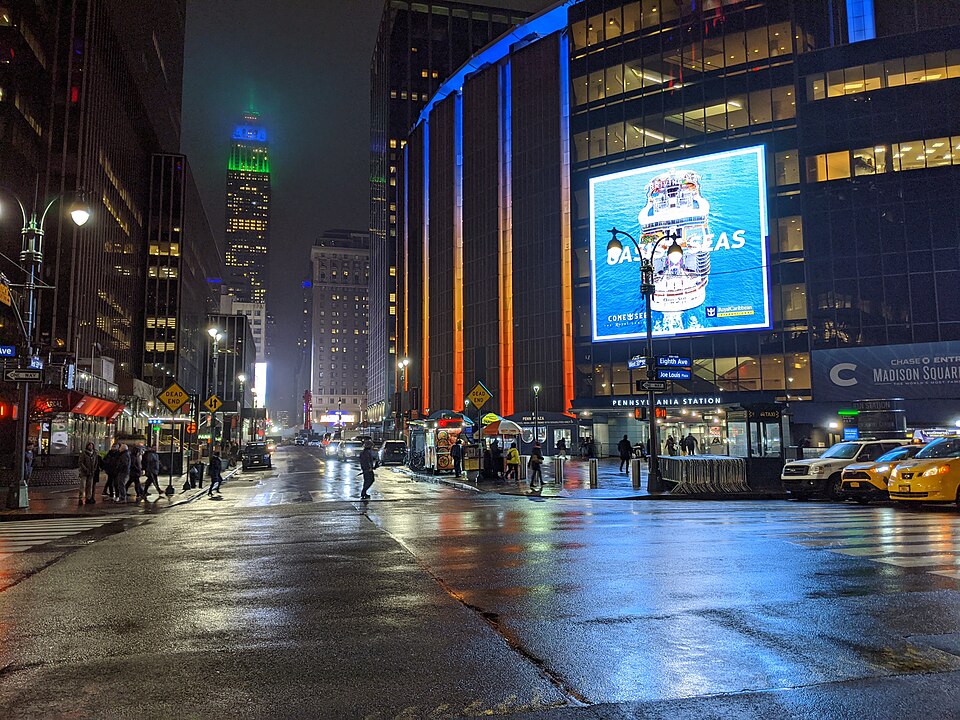
For major sellout tours, last-minute MSG tickets are available but priced to reflect the scarcity. Check the official platform for any released holds before buying resale. For mid-tier MSG shows, last-minute often works fine and prices may be reasonable. The transit convenience of MSG — Penn Station below the building — means you can decide late without logistical penalty. MSG venue guide →
Barclays operates on comparable demand dynamics to MSG for the same tier of touring acts. The Brooklyn location means slightly less last-minute foot-traffic competition from impulse buyers than Midtown. For mid-tier shows, late buying tends to be patient-friendly. Barclays venue guide →
Stadium shows at MetLife for peak-demand artists do not soften late. Any remaining inventory competes against serious demand. The added transit logistics — NJ Transit from Penn Station — make last-minute even more stressful than at a city venue. If you want to go, deciding early is the better call. MetLife venue guide →
Radio City has a large enough capacity and diverse enough programming that last-minute tickets are available for most non-sellout shows. The mid-size theater format means a wider range of sections; mezzanine seats that appear cheaper often deliver strong value here. Day-of buying works for many Radio City shows. Radio City venue guide →
The Beacon is intimate enough that popular artists sell it out genuinely. If the Beacon has sold out for a show in the past, last-minute inventory is limited and expensive. For shows that are running without a sellout, the Beacon’s smaller size means mid-cycle or last-minute buying can still land good sections. Check whether primary inventory exists before going to resale. Beacon venue guide →
The Paramount reopened in 2024 and is still building its booking cadence and sellout patterns. For most shows there, last-minute buying works unless the artist is clearly at peak demand. The sloped floor means even last-minute standing positions have reasonable sightlines, which reduces the urgency of securing a specific spot early.
Club-scale GA venues in New York are among the most last-minute-friendly options in the city. Many shows at this tier do not sell out, and the GA format means any ticket gets you in with the same standing opportunity as everyone else. Day-of buying is often viable. Check whether the artist has sold out this tier of venue before deciding your urgency level.
Brooklyn Steel, Music Hall of Williamsburg, and similar mid-small rooms often have last-minute availability for most shows. The borough’s venue scene is active enough that even strong artists sometimes have inventory remaining close to showtime. Check official platforms before looking at resale; many of these venues hold tickets through the primary system until close to the date.
Cheap Seats vs. Better Value Seats — What to Think About Last-Minute
Last-minute buyers often default to the cheapest available option, which is not always the smartest buy. A few seat considerations worth working through quickly before you commit.
When cheaper sections actually work fine
Upper bowl center-facing sections at arenas — even at MSG and Barclays — are entirely viable for the right show. If the artist is a strong enough presence that you will be watching the performer even from a distance, upper bowl center delivers a complete show at a much lower price. For spectacle-heavy productions with big screens and lighting rigs designed to read at distance, the upper bowl sometimes delivers a better full-picture view than the floor. The seating guide goes into specific section value at each major NYC venue.
When spending a bit more is clearly worth it
Rear floor at a large arena is one of the consistently worst-value sections in any venue — you are far from the stage, at a flat elevation, standing in a crowd, and paying a floor premium for the designation. For the same price or less, center lower bowl delivers a materially better experience. If you find yourself comparing a cheap rear-floor option to a center lower bowl seat that costs somewhat more, the center lower bowl is almost always the stronger buy.
Side-angle sections past roughly 45 degrees from center-stage are similarly overpriced for the experience they deliver. The production is oriented forward. Buying a side section because it is cheaper is only worth it if the price gap is substantial and you are comfortable watching at an angle.
Before buying the cheapest available option, ask whether a seat that costs 20–30% more puts you in a section that is meaningfully better. At large arenas, the jump from rear floor to center lower bowl, or from side upper to center upper, often represents a significant experience improvement for a modest price difference. The cheapest ticket is only a win if the experience it buys is still worth having.
Same-Day Checklist — What to Do If the Concert Is Tonight
If you are trying to get to a show today, work through this in order. The biggest mistake in same-day buying is spending too long comparing options and then missing the window to get there comfortably.
Check the official platform first. Go to Ticketmaster, AXS, or whatever primary platform the venue uses. Search specifically for this show. “Sold out” on the main page sometimes resolves to available inventory in specific sections when you actually click through. Face-value tickets here are always the best option if they exist.
Check the venue box office by phone or in person if you are already nearby. Not always productive, but for theater-scale venues like Radio City and the Beacon, day-of box office releases are real. Worth a 30-second call if you are close.
Open two or three established resale platforms simultaneously. StubHub, SeatGeek, and the official platform’s own resale section. Navigate to the checkout total — not the listed price — for the sections you are considering. Compare total costs across sources. The best listed price is often not the best total price once fees are applied.
Decide your maximum and your section floor before you buy. What is the most you will spend, total? What is the worst section you are willing to accept? Make both decisions before you start clicking. This prevents both overspending in the heat of the moment and accepting a bad seat because it was available.
Check the section you are considering. If you are buying a section you are not familiar with, spend 60 seconds looking up that section’s reviews or photos at that specific venue. “Row P, Section 412” means something specific at MSG and something different at Barclays. One quick lookup can save a disappointing night.
Verify the transfer mechanism before purchasing. Is the ticket an instant mobile transfer? A hard ticket for pickup? Requires a separate transfer initiation from the seller? Make sure you understand how you will actually receive the ticket and that the timeline works for your arrival plan.
Buy with enough lead time for logistics. Transit from your location to the venue, dinner if you are planning it, security and entry time — add all of this up. The worst version of same-day buying is securing a ticket and then missing the opening act because you did not leave room for getting there. Plan the transit before you buy, not after. The NYC transit guide covers getting to each major venue.
Do not keep waiting if you have found a viable option. The most common same-day buying mistake is holding out for a better price until the window closes. If you have found a ticket in an acceptable section at a price within your ceiling, buy it. The risk of spending another two hours hoping for something better is often higher than the potential savings.
Frequently Asked Questions
Check the official primary platform (Ticketmaster or AXS) first for any remaining face-value inventory, since “sold out” often just means the initial allocation is gone. If nothing’s there, compare established resale platforms with buyer guarantees — StubHub, SeatGeek, and the platform’s own integrated resale — using the final checkout total, not the listed price. For shows that aren’t true sellouts, prices in the 24-48 hours before showtime often soften as sellers become motivated to move inventory rather than hold it.
Work through a hierarchy in order: the official ticketing platform first, then the venue box office directly if you’re nearby, then official platform-integrated resale, then established secondary marketplaces with buyer guarantee policies like StubHub or SeatGeek. Avoid individual sellers on social media, Craigslist, or Marketplace — there’s no accountability if something goes wrong.
Sometimes — for shows that are not true sellouts. When there is genuine unsold inventory, sellers in the final hours become motivated to move tickets rather than hold them. For high-demand or sold-out shows, same-day prices typically hold or increase as available supply shrinks. The key variable is whether the show has remaining inventory or not. Check the total number of listings on resale platforms over time — if it is decreasing, do not expect prices to drop.
Start with the official primary platform (Ticketmaster or AXS for most major NYC venues) for any remaining face-value inventory. For resale, platforms with buyer guarantee policies — StubHub, SeatGeek, and the official platform’s integrated resale — are the safest options. Compare total prices including all fees, not listed prices. TodayTix is worth checking for select theater-scale venues. Never buy from unverified individual sellers via social media.
Yes, in most cases — though the price and availability depend entirely on the show. For major sold-out tours, last-minute MSG tickets are available on resale at a premium that reflects genuine scarcity. For mid-tier MSG shows, last-minute availability is often good and prices can be reasonable. Check the official Ticketmaster page for any remaining primary inventory before going to resale; hold releases sometimes appear here even close to showtime.
From established resale platforms with buyer guarantee policies — yes, generally. StubHub, SeatGeek, and similar platforms have policies that cover invalid tickets, and their transfer systems are designed to reduce fraud risk. The main risks come from buying outside these platforms: individual social media sellers, Craigslist listings, or any scenario where you are paying before the ticket is transferred to you with no accountability mechanism. Stick to platforms with a buyer guarantee.
“Sold out” on the primary platform often means the initial public allocation is exhausted, not that zero tickets exist anywhere. Check for: remaining inventory in non-premium sections on the primary platform (sometimes available even after a “sold out” notice); the venue box office directly (hold releases sometimes happen day-of); and established resale platforms where ticket holders may be listing. The show is only truly inaccessible when resale inventory has also dried up completely.
Depends on the show. For high-demand concerts, do not wait at all — buy at onsale. For normal-demand shows, a few days before the event is typically fine and sometimes produces better resale prices than buying weeks out. For same-day buying, the risk is logistics: the later you buy, the less time you have to plan transit, dinner, and arrival. As a practical floor, buying at least a few hours before showtime is better than buying in the hour before doors open, which can stress the logistics of actually getting there. The full timing guide covers the complete decision framework.
Yes — for shows with genuine unsold inventory. A seller who has held tickets all week and is now watching the show start in three hours will sometimes accept a lower price rather than eat the full cost. This effect is most pronounced for weekday shows at mid-size venues and least pronounced for sold-out arena or stadium events. If you see prices that have dropped materially in the final hours compared to where they were earlier in the day, that is a real signal — but buying at that point leaves very little margin for the logistics of actually getting to the venue.
Buy only from platforms that use authenticated transfer mechanisms — where the ticket is transferred directly to your account on the platform rather than being sent as a screenshot or barcode image. Official platform resale (Ticketmaster Fan-to-Fan, AXS Official Resale) and major secondary platforms (StubHub, SeatGeek) use transfer systems that are tied to verified accounts, reducing the ability to duplicate or sell already-used tickets. A screenshot of a barcode is not a protected ticket. A transferred entry in your app account is.
Almost always, somewhere in the city — New York has concerts happening nightly across dozens of venues, and inventory dynamics vary enormously by show. Weekday shows at mid-size venues are the most reliably available same-day; sold-out arena and stadium shows by top-tier artists are the least. Check the official ticketing platform first, then the venue box office if you’re nearby, then established resale platforms with buyer guarantees.
The Last-Minute Play
Last-minute concert tickets in New York are genuinely available for most shows — the city’s sheer volume of live events means there is almost always inventory moving somewhere. The skill is in knowing which shows reward patience and which ones punish it, where to look in the right order, and how to make a confident decision rather than an anxious one.
The buyers who consistently come out well in last-minute situations are not the ones who waited the longest or moved the fastest. They are the ones who understood what they were buying — the demand level, the venue, the section — and made a clear-eyed decision at the right moment. That is what this guide is built to help you do.
For everything that comes before the last-minute window — presales, onsale timing, and the full price cycle — see the when to buy concert tickets guide. For the full NYC concert landscape, the concerts hub is the right starting point.