

Off-Broadway Shows in NYC: Tickets, Best Shows & Discounts
Some of New York’s best theater never touches Broadway. Find what to see now, where to buy Off-Broadway tickets, and how to use rush, lottery, TKTS and 2-for-1 deals.
Off-Broadway is where Hamilton started. Where Rent started. Where A Chorus Line started. Where Titanique ran for over 1,000 performances before the audience demanded a bigger stage. The idea that Off-Broadway is somehow a lesser version of Broadway misunderstands how New York theater actually works — the best new writing in the city tends to appear in smaller rooms first, in front of audiences willing to take a chance on something unproven. Sometimes those shows stay Off-Broadway. Sometimes they move. Either way, the work is often extraordinary.
This guide covers Off-Broadway shows in NYC the way Stage & Street covers everything else — practically, editorially, and with enough specificity to actually help you plan a night around it. What Off-Broadway is and isn’t. Which off-Broadway plays and musicals are worth seeing right now, and which new Off-Broadway shows are opening this fall and winter. Which venues define the scene. How it compares to Broadway when you’re trying to decide between the two. When to catch 2-for-1 tickets. And how to make a full evening of it in a city full of options.
Off-Broadway Tickets NYC: Where to Buy, Discounts, Rush & TKTS
If you already know which show you want, start with the production’s official ticket link or theater box office. Off-Broadway does not use one universal ticket seller, so the safest buying path depends on the show and venue. For flexible buyers, the biggest savings usually come from show-specific rush, digital lottery, TKTS inventory, advance promotions, and NYC Off-Broadway Week.
Best when the exact show, performance, and seat matter more than chasing the lowest possible price.
Policies are show-specific. Current examples include a $35 digital lottery for The Play That Goes Wrong and a $45 digital lottery for Little Shop of Horrors.
Off-Broadway shows can appear at TKTS, but availability changes by performance. Check the live board rather than assuming a specific title will be there.
Cheap and discount Off-Broadway tickets
Searches for cheap Off-Broadway tickets and discount Off-Broadway tickets usually lead to four real strategies: rush, lottery, TKTS, and seasonal 2-for-1 programs. The best option depends on how flexible you are about the show, date, and seat location.
Where to buy Off-Broadway tickets
There is no single official marketplace for every Off-Broadway production. New World Stages, for example, directs official ticket buyers to Telecharge, while other theaters and producers use different ticketing partners or their own box offices. Start from the official production or venue site rather than assuming one seller handles every Off-Broadway show.
What Off-Broadway Actually Is
Off-Broadway is a designation based on theater size, not geography. Any professional theater in New York City with a seating capacity between 100 and 499 seats is classified as Off-Broadway, regardless of where it’s located. Off-Broadway theatre refers to performances in any venue besides the 41 designated Broadway theatres in the Theatre District. That means Off-Broadway theaters exist all over the city — in Greenwich Village, the East Village, the Upper West Side, Hell’s Kitchen, and Brooklyn — not just in Midtown.
The distinction matters because it shapes everything from ticket prices to the ambition of the work. Off-Broadway productions operate under different union contracts than Broadway shows, which typically means lower production costs, lower ticket prices, and more flexibility to take creative risks. A playwright whose work might be considered too challenging or too unconventional for a 1,500-seat Broadway house will often find a home Off-Broadway first. That’s not a consolation — it’s frequently where the most interesting theater in the city lives.
Off-Broadway isn’t smaller Broadway. It’s a different kind of theatrical experience entirely — often more intimate, frequently more adventurous, and sometimes more memorable precisely because the scale puts you closer to what’s happening on stage. The right Off-Broadway show for the right audience is genuinely one of the best things to do in New York.
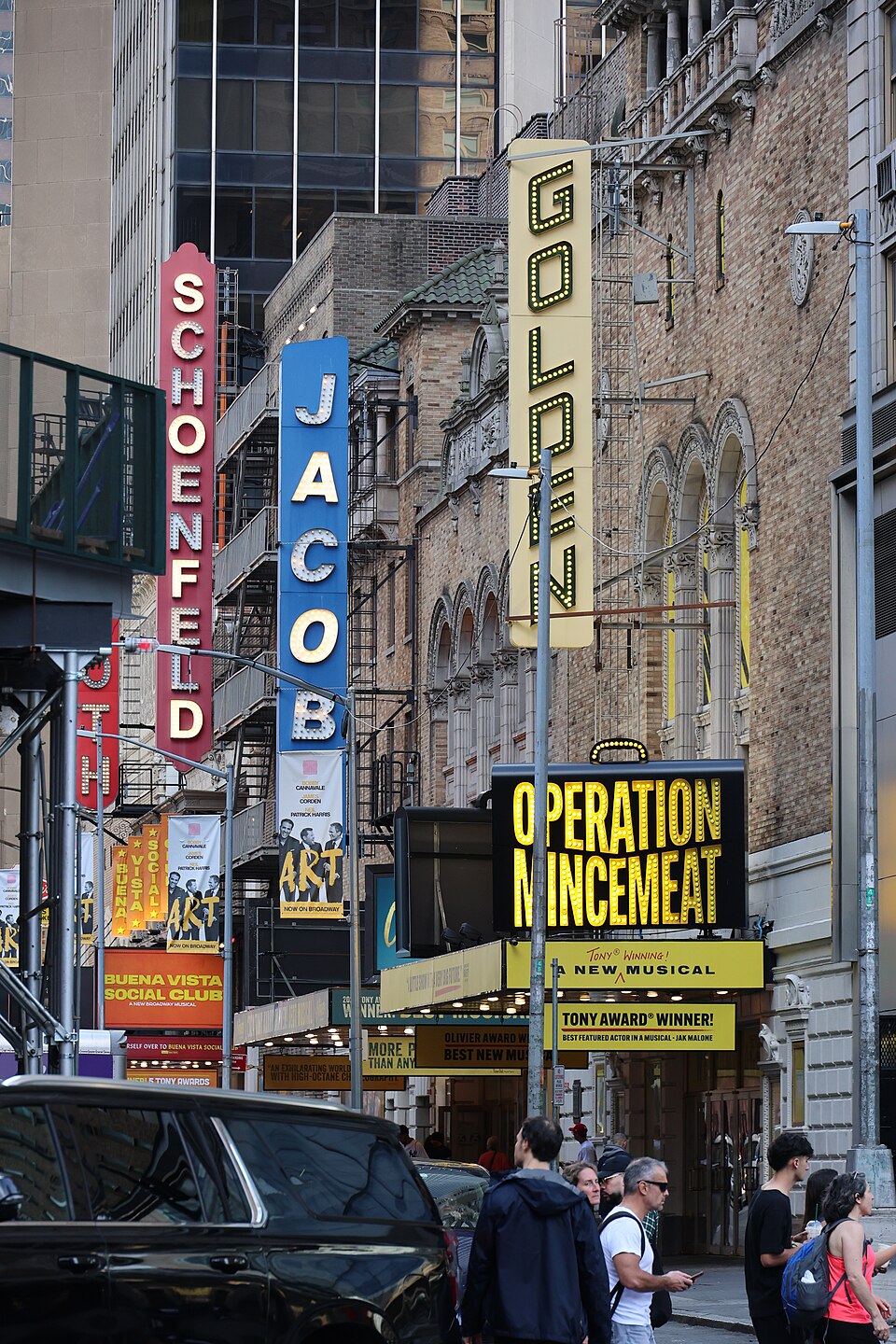
Best Off-Broadway Shows in NYC Right Now
This is the unglamorous truth about Off-Broadway: the calendar moves fast. Limited runs can come and go in a matter of weeks, so this section is the part of the pillar that needs the most frequent updating. These are reliable current choices verified for October 2026.
Open-ended and extended runs you can plan around
A community theater troupe attempts a 1920s murder mystery and absolutely everything goes wrong — sets collapse, actors get knocked unconscious, lines come out backward — and somehow the show keeps going anyway. It’s been one of the most reliable laughs in the city for years, and the reason it’s lasted is simple: the chaos is precision-engineered. The production currently offers a $35 digital lottery in addition to standard official inventory.
Skid Row florist Seymour falls for his coworker Audrey and accidentally raises a bloodthirsty alien plant that talks him into murder, one feeding at a time. This revival has run for years off the strength of a genuinely great score, rotating star casting that keeps it fresh, and a 1960s doo-wop sound that still lands. The production currently offers a $45 digital lottery for selected performances.
The longest-running play in New York history remains open-ended at the Anne L. Bernstein Theater. It’s a twisty whodunit about a psychiatrist who may or may not have murdered her husband, and the production currently offers day-of box-office rush, TodayTix digital rush, and a 20% advance-purchase promotion for qualifying dates through November 22.
One professional actor drinks five shots of whiskey and the company performs Shakespeare around the resulting chaos. The show runs about 90 minutes and is currently advertising $25 tickets for selected NYC performances.
Jamie Allan’s technology-driven magic show blends classic illusion with phones, lasers, augmented-reality effects, and autobiographical storytelling. It has extended several times at New World Stages and is now booking through January 31, 2027. It runs about two hours with an intermission.
The bubble-and-laser show that opened at New World Stages in 2007 had announced a September 7 closing, then extended through January 18, 2027 to carry it through the holidays and its 20th anniversary in New York. It runs about 70 minutes and works from age 2 up, which makes it the simplest Off-Broadway pick for families with very young kids. Treat this as a final run: the producers have said a touring version comes next.
New Off-Broadway shows for fall and winter 2026–27
This season brings a run of big-name limited engagements, several of them in buildings that aren’t traditional Off-Broadway houses. All five below are strictly limited, so the dates are the whole story: once a run ends, it’s gone. Listed in order of first performance.
The West End supernatural thriller makes its New York debut with Jasmine Cephas Jones, Finn Jones, Anna Camp and Martin Marquez. A new mother is convinced something walks through her house at exactly 2:22 a.m., and a dinner party turns into a wait to find out. It runs about two hours with an intermission and is recommended for ages 12 and up. Go in knowing as little as possible.
Lincoln Center Theater revives the 1940s chapter of Wilson’s Century Cycle, directed by Ruben Santiago-Hudson, who won a Tony for the original Broadway production. Russell Hornsby leads as blues guitarist Floyd “Schoolboy” Barton, with Kristolyn Lloyd, Chanté Adams, Michael Potts, Roslyn Ruff and John Douglas Thompson. Note the venue: this is Lincoln Center’s Off-Broadway thrust stage, not the August Wilson Theatre on West 52nd Street.
Jack Thorne’s adaptation, directed by Matthew Warchus, is the same production that won five Tonys on Broadway in 2019. Andy Karl plays Scrooge at the Perelman Performing Arts Center by the World Trade Center. It runs about two hours with one intermission and is recommended for ages 8 and up, which makes it the strongest holiday-season pick on this list for families with older kids.
A new musical with music and lyrics by John Legend and a book by Lynn Nottage, directed by Whitney White, with Tony winner Adrienne Warren and Jessica Vosk. Two single mothers, one Black and one white, build a life together in the 1920s and ’30s while race and class pull their daughters in different directions. It runs about 2 hours 40 minutes with an intermission at The Shed in Hudson Yards.
Sam Rockwell plays Eddie Carbone in Arthur Miller’s Red Hook tragedy, with Marin Ireland as Beatrice and Alfred Molina as Alfieri, directed by Neil Pepe. It’s a 13-week run in the East Village, and the steepest ticket on this list. The production recommends it for ages 12 and up.
Heathers plays its final performances at New World Stages through Sunday, October 11. Limited runs we covered earlier in 2026 have now ended, including Disruption, Broad Strokes, The Whoopi Monologues, Shifters, The Winter’s Tale, The Saviors, Girl, Interrupted, Kenrex, Jerome, What Happened Was…, Mexodus, New Born, Gotta Dance! and Ulster American. See the Off-Broadway archive for recently closed productions and venue context.
Off-Broadway Shows Tonight, Today & This Weekend
Off-Broadway shows tonight and Off-Broadway shows today are high-intent searches because the decision is usually immediate. The first step is to confirm that the production actually performs that day — Monday and Tuesday schedules vary significantly Off-Broadway — then compare official remaining inventory with rush, lottery, or TKTS if available.
A show being open-ended does not mean it performs every night of the week.
Flexible buyers can sometimes beat the remaining standard price by using verified day-of programs.
If one production is the reason for the night, secure it first; Friday and Saturday inventory is less forgiving.
Off-Broadway by Type of Visitor
Both are crowd-pleasers in the truest sense — funny, fast, well-made, and not the slightest bit homework-y. They show you exactly what Off-Broadway can do without requiring any prior taste for experimental theater.
2:22 is the rare date-night show you’ll both be talking about on the walk home, a West Village ghost story built for jumping and grabbing an arm. Little Shop has real romance buried in the comedy and a score that holds up. If you’d rather go loud, Drunk Shakespeare is the wild card.
This winter has two serious American classics in small rooms: August Wilson at Lincoln Center’s thrust stage and Arthur Miller in the East Village. Beyond those, check the current Public Theater or Playwrights Horizons limited run, since those calendars move faster than any list.
Not a play, not a musical — a one-man magic show built around a real childhood, blending old-fashioned sleight of hand with phones and lasers. Family-friendly, but with enough craft and heart to work for adults who think they’re too cynical for a magic show.
Both shows thrive on a rowdy crowd. Drunk Shakespeare wants you yelling at the stage; The Play That Goes Wrong is the kind of show where everyone leaves quoting the same disaster moment for weeks.
Imitation of Life is the musical-theater event of the winter: a John Legend score, a Lynn Nottage book and Adrienne Warren at The Shed. Little Shop is the year-round pick, with a famous score, rotating star casting and a room small enough to feel nothing like a Broadway-scale revival.
The Tony-winning Warchus production with Andy Karl, ages 8 and up, downtown at PAC NYC. It’s the one on this page built for the season, and December weekends will be the hardest dates to get.
Sam Rockwell, Marin Ireland and Alfred Molina in a downtown house is exactly the kind of casting that makes Off-Broadway worth the trip. Expect prices to match the names.
Off-Broadway Theaters in NYC — Where the Scene Happens
Off-Broadway venues are scattered across the city in ways that Broadway isn’t. Off-Broadway is not a specific district or area in New York City — Off-Broadway theatres are located all across the city. That’s part of what makes planning an Off-Broadway night different from planning a Broadway night — the venue and neighborhood become a bigger part of the decision.
NYC’s oldest continuously running Off-Broadway theater — built as a farm silo in 1817, opened as a playhouse in 1924 by Edna St. Vincent Millay and the Provincetown Players, and home to the world premiere of Samuel Beckett’s Happy Days in 1961. A24 purchased it in 2023, completed a full renovation, and reopened it in September 2025 with new seating, a film projector, and Wild Cherry — a bar/restaurant from the James Beard Award-winning team behind Frenchette.
Full Cherry Lane Theatre Guide →Lincoln Center Theater’s intimate Off-Broadway stage — a 299-seat room on the lower level of the Vivian Beaumont Theater building, opened in 1967 and operating as LCT’s smaller house ever since. The 3/4 thrust stage wraps the audience around three sides, making it fundamentally different from a proscenium Off-Broadway room. The Upper West Side setting means dinner planning is Columbus Avenue and 65th Street, not Restaurant Row — a calmer, more considered evening than a Times Square theater night.
Full Mitzi E. Newhouse Theater Guide →The anchor institution of New York’s Off-Broadway world. Founded by Joe Papp in 1967, the Public has produced work that has shaped American theater for decades — A Chorus Line, Hamilton, and Bring in ‘da Noise, Bring in ‘da Funk all started here. The building has multiple performance spaces ranging from intimate to mid-scale, and the work programmed tends toward ambitious new plays and politically engaged productions. It’s in Astor Place, which means excellent restaurant options before the show and easy subway access from most of Manhattan.
Full Public Theater Guide →A 391-seat house in the heart of Greenwich Village that has become, through its ongoing relationship with Audible Theater, one of the most consistent presenters of star-driven Off-Broadway productions in the city. The venue itself is intimate and well-proportioned — there genuinely isn’t a bad seat in a room this size. Greenwich Village around Minetta Lane is one of the better neighborhoods in Manhattan for a pre-show dinner, with a concentration of excellent restaurants within easy walking distance.
Full Minetta Lane Theatre Guide →The Mainstage Theater has a 198-seat capacity, while the slightly smaller Peter Jay Sharp Theater has 128 seats. Playwrights Horizons offers a range of developmental programs including script readings and musical theatre workshops. Situated on 42nd Street between 9th and 10th Avenues, it’s in the same neighborhood as Broadway’s theater district but operating at a fundamentally different scale and with a different mandate — developing new American playwrights. Work here tends to be genuinely new and frequently ambitious. The neighborhood is Hell’s Kitchen, which means strong pre-show dining options close by.
Full Playwrights Horizons Guide →A multi-theater complex in Midtown with five performance spaces, making it the closest thing Off-Broadway has to a dedicated venue cluster. New World Stages has five stages: Stage 1 (499 seats), Stage 2 (350 seats), Stage 3 (499 seats), Stage 4 (350 seats), and Stage 5 (199 seats). The Midtown location makes it the most straightforward Off-Broadway venue for visitors already staying in the theater district area — you’re walking distance from Broadway houses, Hell’s Kitchen dining, and major subway lines. Good choice for visitors who want to combine Broadway and Off-Broadway on the same trip without navigating across the city.
Full New World Stages Guide →A respected Off-Broadway producing organization based in Union Square with a track record of adventurous programming. The Union Square neighborhood is one of the better evening destinations in the city — the Greenmarket during the day, strong restaurant options in every direction, and easy access from practically every subway line in Manhattan. A good venue to build a proper night out around.
Full Daryl Roth Theatre Guide →A West Village landmark on Christopher Street, named for the producer who ran it for decades and gave the Lortel Awards their name. It’s an intimate house where the stage is never far away, which is why tense thrillers and new plays land so hard here. This fall it’s home to 2:22 A Ghost Story. The surrounding blocks are some of the best in the city for a pre-show dinner.
Full Lucille Lortel Theatre Guide →Broadway vs Off-Broadway: How to Choose
The honest answer is that it depends on what kind of night you’re after — not on which is “better.” They’re different experiences, and the right choice depends on your group, your interests, and what you want out of the evening.
Choose Broadway if…
Large-scale musicals designed for big houses — Wicked, The Lion King, Hamilton — deliver something that simply can’t exist in a 400-seat room. If the scale and the spectacle are part of what you’re after, Broadway is the answer.
First-time Broadway visitors almost always benefit from starting with a production that shows you what Broadway at its best looks and sounds like. That’s usually a major musical in a large house. Off-Broadway can come after.
Broadway’s family-oriented productions and crowd-pleasing musicals are designed to work for audiences who don’t go to theater regularly. Off-Broadway’s more adventurous programming generally rewards audiences who come prepared to engage.
Choose Off-Broadway if…
A major stage or screen star in a 391-seat room is a categorically different experience from seeing the same level of performer in a 1,500-seat Broadway house. If the performance is what matters most to you, Off-Broadway’s intimacy is frequently an advantage, not a compromise.
The most ambitious new plays in New York consistently appear Off-Broadway first. If you’re a theater person who wants to see the work that’s actually pushing the form forward, Off-Broadway is where you look.
Off-Broadway tickets typically run $35–$120 versus Broadway’s $80–$300+ — and cheap Off-Broadway tickets get even easier to find during 2-for-1 promotional periods (see below). The quality of the work at the top Off-Broadway houses is frequently equal to or better than comparable Broadway productions. The scale is smaller, but the cost savings are real and the experience can be extraordinary.
NYC Off-Broadway Week and 2-for-1 Ticket Deals
Off-Broadway tickets are already less expensive than many Broadway tickets, but there’s a specific seasonal window where they can get cheaper still: NYC Off-Broadway Week, a citywide 2-for-1 ticket program from New York City Tourism + Conventions in partnership with the Off-Broadway League.
The fall 2026 promotion is scheduled for October 5–18. Participating productions, blackout dates, ticket inventory, and booking instructions should be checked against the official NYC Tourism Off-Broadway Week page when you buy.
The 2-for-1 structure effectively reduces the base price per ticket when a qualifying performance is available, but service fees and production-specific restrictions can still apply.
A companion NYC Broadway Week program runs separately for Broadway shows. If your trip overlaps both promotions, compare the actual participating productions rather than assuming the same show or date rules apply across both programs. See the Broadway Week Fall 2026 guide for Broadway.
Frequently Asked Questions
Reliable open-ended options include The Play That Goes Wrong, Little Shop of Horrors, Perfect Crime, Drunk Shakespeare, Jamie Allan’s Amaze, and, for families with young kids, Gazillion Bubble Show, which has extended through January 18, 2027. The biggest new limited runs this season are 2:22 A Ghost Story, Seven Guitars, A Christmas Carol, Imitation of Life and A View From the Bridge. Limited engagements change quickly, so always verify dates before booking.
2:22 A Ghost Story begins previews October 20 at the Lucille Lortel Theatre. August Wilson’s Seven Guitars starts November 5 at Lincoln Center’s Mitzi E. Newhouse Theater, A Christmas Carol with Andy Karl starts November 20 at PAC NYC, the John Legend musical Imitation of Life starts November 21 at The Shed, and A View From the Bridge with Sam Rockwell starts November 27 at La MaMa. All five are limited runs that end between January 3 and February 27, 2027.
Start with the production’s official website or theater box office. Off-Broadway does not use one universal ticket seller, so the official partner varies by show and venue.
Compare show-specific rush and digital lottery programs, same-day TKTS inventory, official advance promotions, and NYC Off-Broadway Week when it is active.
Yes, Off-Broadway productions can appear at TKTS, but inventory changes by performance. Check the live board or app rather than assuming a particular show will be available.
Yes. Policies are show-specific. Current examples include a $35 digital lottery for The Play That Goes Wrong, a $45 digital lottery for Little Shop of Horrors, and day-of rush options for Perfect Crime.
Check each production’s official performance calendar first, especially on Mondays and Tuesdays when schedules vary, then compare remaining official inventory with any same-day rush or TKTS availability.
Off-Broadway is a professional theater designation for productions in New York City venues traditionally seating between 100 and 499 patrons and outside the 41 official Broadway houses. It’s a theater classification, not a neighborhood.
Generally yes, although popular star-led limited runs can still be expensive. Smaller houses and different production economics often create lower standard prices, and many shows also use rush, lottery, or promotional discounts.
Hamilton, Rent, A Chorus Line, Avenue Q, In the Heights, Fun Home, and Titanique all had important Off-Broadway runs before Broadway transfers.
Off-Broadway theaters are spread throughout Manhattan and beyond, with major venues in Midtown, Hell’s Kitchen, Greenwich Village, the East Village, Union Square, and the Upper West Side. Unlike Broadway, there is no single Off-Broadway district.
It depends on the show. Crowd-pleasers such as Little Shop of Horrors and The Play That Goes Wrong can work very well for first-time visitors, while more experimental limited runs may be better for experienced theatergoers.
Off-Broadway traditionally refers to professional venues with roughly 100 to 499 seats. Off-Off-Broadway generally refers to smaller venues, often 99 seats or fewer, with more experimental and lower-budget programming.
NYC Off-Broadway Week is the official seasonal 2-for-1 promotion. The fall 2026 edition is scheduled for October 5–18; check the official NYC Tourism page for participating shows, blackout dates, inventory, and booking instructions.
Off-Broadway Is Worth It. Here’s How to Use This Guide.
The strongest Off-Broadway shows right now are genuinely worth your time — and in several cases, they’re more interesting than comparable Broadway options at lower prices in more intimate spaces. A precision farce at New World Stages, a cult musical at the Westside, a mystery that has survived for decades, and a magician turning technology and childhood obsession into theater. Add this winter’s limited runs, from Sam Rockwell in Arthur Miller to a new John Legend musical, and this is a city that takes its smaller stages seriously.
Use the show cards above to find something that fits your group and your evening, and book the new limited runs early if your dates are fixed. Use the venue guides to understand where you’re going. Check the Ticket Deals section before you buy if your dates line up with Off-Broadway Week. And use the Broadway vs. Off-Broadway section to make the call if you’re still deciding between the two.
More NYC Theater Guides
From comparing Broadway to Off-Broadway, to finding the right venue, choosing a show, and planning the full theater night — everything you need to make Off-Broadway worth the trip.
New Off-Broadway Shows · Fall & Winter 2026–27
Broadway NYC — Main Hub
The main Broadway planning hub — shows, theaters, resources, Off-Broadway, and the full Broadway night out.
Back to Broadway →Broadway vs Off-Broadway — Which Is Right?
House size, ticket prices, show ambition, and what each delivers — the full comparison for anyone still deciding.
Read the Comparison →Broadway Shows Guide
Current Broadway productions, show-fit guides by visitor type, and what’s worth seeing on the big stages right now.
Browse Shows →Broadway Resources Hub
Ticket timing, rush and lottery, seating, first-time visitor tips — everything that shapes a smart theater trip.
All Resources →