

Broadway Theatre Seating Chart Guide — Best Seats for The Great Gatsby
A practical guide to choosing seats at the Broadway Theatre at 1681 Broadway, including orchestra vs front mezzanine, rear mezzanine, box seats, The Great Gatsby sightlines, accessibility, value picks, and seats to avoid before you book.
The Broadway Theatre — Seating Overview
This guide is specifically about the Broadway Theatre at 1681 Broadway — the Shubert Organization venue between West 52nd and 53rd Streets. If you searched for “Broadway seating chart” and were looking for general advice across all New York theaters, this is a different page. This is the seat guide for this specific house.
The Broadway Theatre is one of the largest venues on Broadway, with 1,763 total seats across a very deep orchestra, a compact but powerful front mezzanine, a large rear mezzanine, and 20 box seats. For The Great Gatsby — a large-scale musical built on scenic grandeur, party choreography, lighting design, and full-stage spectacle — the seat decision here requires more thought than “just get orchestra.”
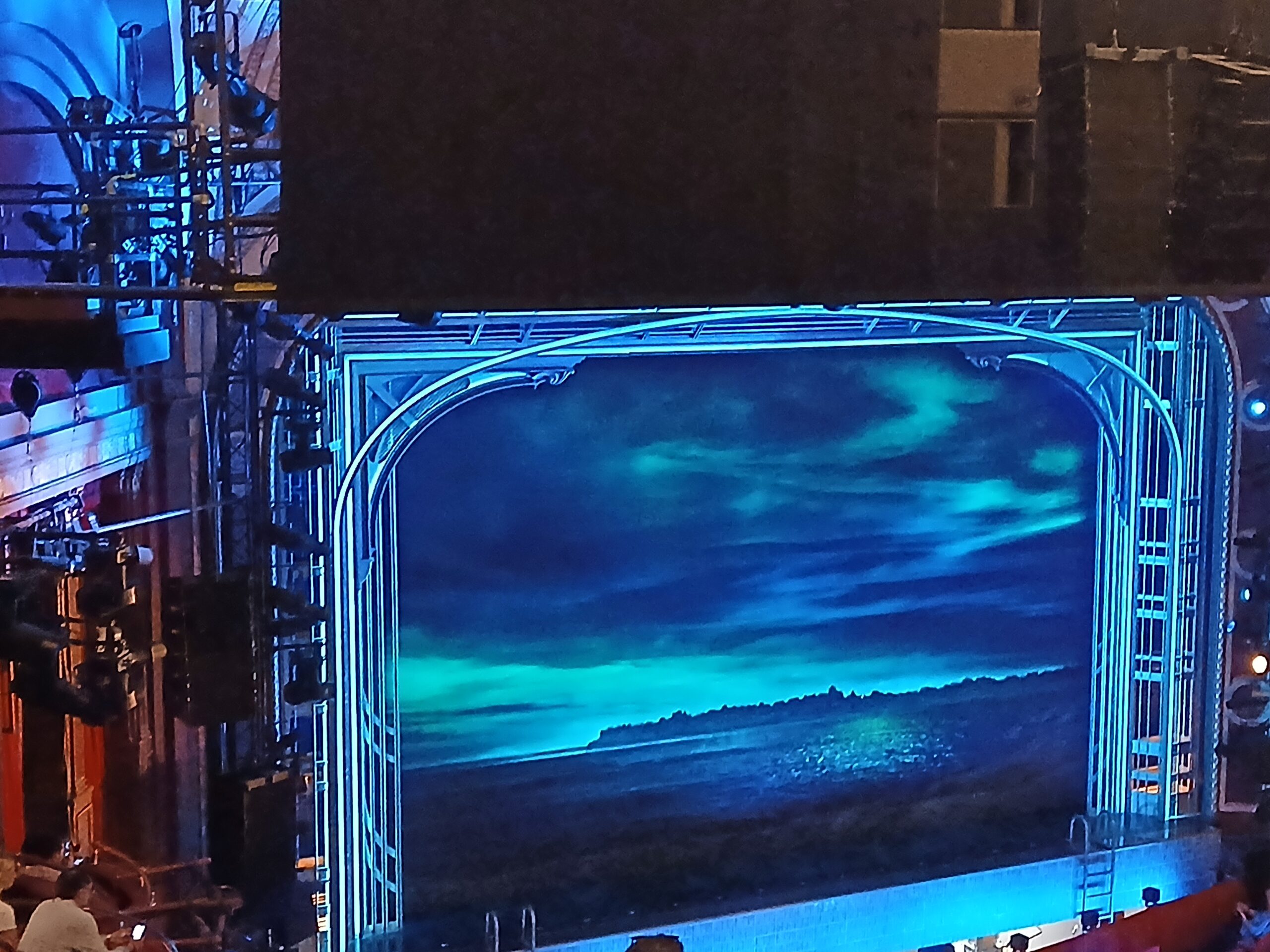
Inside the Broadway Theatre, where the deep orchestra and strong mezzanine sightlines make center placement especially important for large-scale musicals like The Great Gatsby. Photo by Epicgenius via Wikimedia Commons, CC BY-SA 4.0.
Why the Broadway Theatre Requires a Real Seat Decision
At most smaller Broadway houses, knowing you’re in “orchestra” tells you something meaningful about your experience. At the Broadway Theatre, it doesn’t. The orchestra has 909 seats across a very deep room. The difference between front orchestra center and rear orchestra side is the difference between two completely different experiences of the same show.
Front mezzanine center, meanwhile, is one of the strongest positions in the entire theater for a visually ambitious production like The Great Gatsby. From that elevation, you see the full scenic design, the choreography as a complete composition, and the staging in its intended scale. Many experienced theatergoers deliberately choose front mezzanine center at the Broadway Theatre over rear orchestra sections for exactly this reason.
The practical rule at this house: compare the specific row and position, not the section name. A centered front mezzanine seat frequently beats a rear side orchestra seat at any price. Center placement matters more than level.
Performer proximity. Costume and set detail at close range. The feeling of being inside the Gatsby party. The energy and scale of the production landing at a personal level. Best for visitors who want the show to feel immersive and immediate.
The complete stage picture. Choreography readable as a full composition. Scenic design visible in its intended scale. Lighting and full-stage movement as a unified visual experience. Best for visitors who want to see the whole production design at once.
Orchestra Seats
The Broadway Theatre’s orchestra holds 909 seats across center, side, and aisle sections in a very deep room. The range of experience across the orchestra is wider than at almost any other Broadway house — front center orchestra and rear side orchestra are genuinely different propositions. Center placement and distance from the stage are the two most important variables.
The strongest premium zone. Direct sightlines to the full stage, closest relationship with the performers, and the best position for experiencing The Great Gatsby’s scale and energy at close range. The production’s party world is most visceral from center orchestra.
Very close — exciting for The Great Gatsby’s scale and costume detail. But the very front rows can lose the complete stage picture during the production’s full-stage choreography and scenic compositions. A few rows back in center orchestra is typically the more complete view.
The most consistently satisfying zone for most visitors. Close enough for performer detail, far enough to see more of the scenic design and choreography. For The Great Gatsby’s combination of intimate scenes and large party sequences, mid-center orchestra covers both.
The distance here is real. In a 909-seat orchestra, rear rows can be significantly farther from the stage than buyers expect. Before purchasing rear orchestra, compare with the price of front mezzanine center. For a visually ambitious production, front mezzanine center will often deliver a better view. Also check for mezzanine overhang on the specific row.
Requires scrutiny. The Great Gatsby uses wide staging, large sets, and full-stage choreography. Extreme side orchestra seats can push your sightline significantly off axis, potentially cutting off portions of key scenes or design elements. Always check a seat-view tool before purchasing.
Center-adjacent aisle seats combine legroom and easy access with strong sightlines. For a production with party-scene energy and ensemble movement, mid-center aisle seats in the orchestra are a practical and comfortable choice.
Center orchestra is where The Great Gatsby’s ambition, energy, and scale land most directly — the performers close, the costumes in detail, the party world surrounding you. If you want to feel inside the production rather than watching it from a distance, center orchestra is the right level. But in a 909-seat orchestra, insist on a specific row and position before purchasing — “orchestra” alone tells you very little at this house.
Front Mezzanine Seats
The Broadway Theatre’s front mezzanine holds 250 seats and is, in the judgment of many experienced visitors, one of the two or three best positions in the entire theater for The Great Gatsby. The front mezzanine is compact relative to the theater’s total size — which means front mezzanine center seats are closer to the stage than their level suggests, elevated enough for a complete view, and often priced below center orchestra premium.
The standout value position in the Broadway Theatre for The Great Gatsby. Elevated above the orchestra, the full stage width is visible, scenic design reads in its intended scale, choreography is readable as a full composition, and lighting creates the complete visual environment the production was designed around. Generally priced below center orchestra premium. Frequently the smartest purchase in this house for a visually ambitious musical.
Seats adjacent to the center block in the front mezzanine are generally strong. The slight off-center angle is workable, and the elevation advantage is retained. A practical alternative when front mezzanine center is sold out or priced up.
The outer edges of the front mezzanine develop a side angle that can reduce the full-stage picture in a wide theater. For The Great Gatsby’s large scenic design and wide choreography, center front mezzanine is considerably more reliable than the outer edges. Always verify side front mezzanine seats with a seat-view tool.
The Great Gatsby is a production built on visual scale — the parties, the sets, the choreography, the costumes, the lighting. From front mezzanine center, all of that reads as a unified composition. You see how the production uses its stage. You see the full picture of what the creative team designed. For a show of this visual ambition, front mezzanine center is not a compromise position — at this specific theater, for this specific production, it is frequently the strongest seat in the house.
Rear Mezzanine Seats
The rear mezzanine holds 584 seats — the largest single section in the theater — and is the budget tier. The entrance to the rear mezzanine is just in front of Rear Mezzanine Row A (the same staircase that serves front mezzanine, entered behind Front Mezzanine Row F). Once on the mezzanine level, there are approximately 2 steps per row. The distance from the stage increases significantly through the rear mezzanine — particularly in the far rear rows.
Box Seats
The Great Gatsby Seats — What This Production Rewards
The Great Gatsby at the Broadway Theatre is a large-scale, spectacle-forward musical. It uses elaborate scenic design, a large ensemble cast, party choreography, elevated set pieces, ambitious lighting, and costumes that are part of the show’s visual argument. The seat you choose determines how much of that design reaches you as a complete experience.
This production was designed for a large house. The scenic scale, the party scenes, the choreography, the lighting — all of it is intended to fill and use the full stage. From center orchestra, you feel the scale at close range: the performers large, the sets surrounding you, the production’s energy immediate. From front mezzanine center, you see the scale: the full stage picture, the choreography as a composition, the scenic design in its intended spatial relationship.
What you want to avoid: a seat that delivers neither closeness nor the full picture. Far side orchestra gives you neither. Far rear mezzanine gives you the picture but at a significant distance. The two strongest positions — center orchestra and front mezzanine center — represent genuinely different modes of experiencing this show, both of which are valid.
Orchestra for The Great Gatsby
Center orchestra is the seat for visitors who want to feel inside Gatsby’s world. The performers close, the costumes and sets in their full physical detail, the production’s energy at arm’s reach. Mid-center orchestra is the recommended zone — close enough for the show’s intimate scenes, far enough to take in more of the full stage during the party sequences. Very front rows can lose some of the full-stage picture; very rear rows can feel unexpectedly distant in a 909-seat orchestra.
Front mezzanine for The Great Gatsby
Front mezzanine center is the seat for visitors who want to see what the production built. The full scenic design readable at once. The choreography visible as a staged composition. The lighting visible as a designed environment. The party scenes as the production intended — framed, complete, fully composed. At the Broadway Theatre’s scale, front mezzanine center often feels closer to the stage than intuition suggests, and the view it provides cannot be matched from any orchestra position for a show of this visual scale.
The critical comparison: rear orchestra vs front mezzanine
At the Broadway Theatre specifically, compare the price and position of rear orchestra seats against front mezzanine center before purchasing. For The Great Gatsby, front mezzanine center will almost always deliver a superior view at a comparable or lower price. The deep orchestra means rear orchestra is not “close to the stage” — it is a mid-distance floor-level position, which is typically inferior to front mezzanine center for a visually ambitious production.
For full show details, cast, and planning information, see the The Great Gatsby Broadway guide.
Accessibility at the Broadway Theatre
- There are no steps from the sidewalk into the theater. The main entrance is step-free.
- All parts of the orchestra are accessible without steps. Wheelchair-accessible seating is in the orchestra only.
- The theater has 7 wheelchair seating locations and 18 aisle transfer arm seats — all included in the total seating count. Companion seating is available adjacent to accessible positions. Confirm placement when booking.
- The mezzanine and lower level are not wheelchair accessible. The mezzanine requires 2 flights / 31 steps total to reach from the main level.
- There is no elevator and no escalator at the Broadway Theatre.
- Once on the mezzanine level, there are approximately 2 steps up or down per row. The mezzanine entrance is located behind Front Mezzanine Row F and in front of Rear Mezzanine Row A. Handrails are available at the end of every stepped mezzanine row.
- A wheelchair-accessible unisex restroom is located on the main level.
- Assistive listening devices are available for every performance. Captioning and audio description details should be verified through Shubert Audience Services or the box office before purchasing tickets.
Best Seats by Visitor Type
Front mezzanine center gives a first-time visitor the complete Broadway stage picture — ideal at this large house for a visually ambitious production. Center orchestra mid-range is the immersive alternative. See the first-time visitor guide for broader context.
If you want to see how the production designs the Gatsby world — the parties, the sets, the choreography — front mezzanine center. If you want to feel inside that world, center orchestra. Both are strong; the choice depends on whether you prioritize visual design or physical proximity.
If you’re coming for the scenic design, choreography, lighting, and the production’s full visual ambition, front mezzanine center is the clear choice at the Broadway Theatre. The complete stage picture is only visible from an elevated, centered position in a house this large.
The Great Gatsby is a strong date-night show — visually sumptuous, romantic, and emotionally engaging. Center orchestra mid-range puts you inside the production’s world together. See the Broadway date night guide for more.
Front mezzanine center works well for families and groups because it gives a clear, elevated view that works across different heights. Verify current age guidance for The Great Gatsby before booking with younger visitors. Center orchestra mid-range is the closer alternative for groups who want to feel the production’s energy.
The front rows of rear mezzanine center deliver the visual scale of The Great Gatsby at the lowest seated price. More viable for this production than for an intimate drama. Check the last-minute Broadway tickets guide and rush and lottery guide before committing to a budget seat.
The mezzanine requires 31 steps. There is no elevator. Orchestra accessible seating is the only step-free option. The main entrance is step-free. 7 wheelchair seating locations and 18 aisle transfer seats are available in the orchestra. Book through the official box office and confirm all details before purchasing.
Very front orchestra rows in a large house may require looking upward during elevated staging. Mid-center orchestra avoids this. Front mezzanine center is a particularly comfortable option — looking down at the stage across a full production is easier for shorter visitors than looking upward from the front rows.
One reliable answer for any visitor who doesn’t want to overthink it: center orchestra, mid-range rows. Strong sightlines, genuine proximity to the production, no stair concerns, no side-angle risk. The uncomplicated premium choice at the Broadway Theatre.
Seats to Think Twice About
- Far side rear orchestra — This combines distance from the stage with a significant off-axis angle. In a house this large, far side rear orchestra is among the most compromised positions for a wide-staging production like The Great Gatsby. Always check a seat-view tool before purchasing.
- Very rear orchestra if price is close to front mezzanine — Before purchasing rear orchestra, compare with the price of front mezzanine center on the current map. In most cases, front mezzanine center delivers a substantially better view of The Great Gatsby at a comparable or lower price. The section name “orchestra” is misleading at this distance in this house.
- Far rear mezzanine if performer detail matters — The rear mezzanine is 584 seats deep. Far rear rows are genuinely distant from the stage. The Great Gatsby’s scenic scale still reads broadly, but performer detail and costume nuance diminish significantly. If seeing the performers is part of why you’re going, budget seats at this distance are a meaningful trade-off.
- Side rear mezzanine — Combines distance, elevation, and angle. The most compromised seated positions in the theater. Center seats within the rear mezzanine are considerably more reliable than the outer side positions.
- Box seats if full frontal view matters — Box seats present a side angle that can cut off portions of The Great Gatsby’s wide staging and scenic design. Check for any partial-view or limited-view designation. Not recommended for first-time visitors to this production.
- Very front orchestra if the full-stage picture matters — The very front rows in a large house can reduce the full-stage composition during wide choreography and large scenic moments. A few rows back in center orchestra typically gives a more balanced view.
- Mezzanine if stairs are any concern — 31 steps across two flights, plus row-access steps throughout the mezzanine. No elevator. If this is any consideration for your party, orchestra is the only appropriate level.
- Any partial-view or obstructed-view listing — Take the label seriously. At the Broadway Theatre’s scale, partial-view seats can miss significant portions of a wide-staged production. Don’t purchase a partial-view seat expecting a complete experience of The Great Gatsby.
- Buying “orchestra” based on section name alone — At a 909-seat orchestra, “orchestra” covers a massive range of positions and experiences. Always check the specific row, the distance from the stage, and the position relative to center before purchasing any orchestra ticket at this house.
Price and Value Strategy
The Broadway Theatre’s ticket prices for The Great Gatsby vary by performance and timing. This guide won’t state specific prices. But there is a clear value framework worth understanding for this specific house and production.
Always compare final price with all fees included. Check the last-minute Broadway tickets guide and the rush and lottery guide for any available options before committing to budget seats.
The Seat-Picking Formula
- Safest premiumCenter orchestra, mid-range — reliable, close, inside Gatsby’s world
- Full-stage view / valueFront mezzanine center — complete scenic design, choreography, lighting as one picture
- Gatsby — parties & scaleFront mezzanine center — the full stage is visible; the production reads as designed
- Gatsby — performer detailCenter orchestra, mid-to-front range — faces, costumes, energy at close range
- BudgetFront rows of rear mezzanine center — visual scale reads; distance and stairs trade-off
- Step-free accessOrchestra only — main entrance is step-free; contact box office for accessible seating
- No risk at allCenter at any level; compare rear orchestra prices against front mezzanine; avoid side sections and partial-view listings
FAQ — Broadway Theatre Seating
For The Great Gatsby, center orchestra mid-range and front mezzanine center are the two strongest positions. Center orchestra delivers the production’s scale and energy at close range. Front mezzanine center gives the complete stage picture — scenic design, choreography, and lighting as a full composition. At this house specifically, front mezzanine center often beats rear orchestra by a significant margin for a visually ambitious production, and is frequently priced more fairly for what it delivers.
It depends on position and price, not just level. Front mezzanine center is one of the best seats in the house for The Great Gatsby and is often better value than rear orchestra. Center orchestra delivers the closest experience. Rear orchestra in a 909-seat house can be significantly worse than front mezzanine center at any price. Always compare specific row and position rather than section name when making this decision at the Broadway Theatre.
Center orchestra mid-range for performer closeness and the production’s energy at close range. Front mezzanine center for the full scenic design, choreography, and the complete visual picture of the show. For this specific production in this specific house, front mezzanine center is frequently the best overall purchase — particularly compared with rear orchestra sections that may be priced similarly but deliver a much more distant view.
Yes — front mezzanine center is one of the two or three best positions in the Broadway Theatre for The Great Gatsby. The elevation gives you the full stage picture, the scenic design reads in its intended scale, the choreography is visible as a complete composition, and the lighting creates the environment the production was designed around. The front mezzanine at the Broadway Theatre only has 250 seats — it is compact and genuinely close to the stage, not a distant overflow level.
It can be — significantly. With 909 orchestra seats, rear orchestra is a real distance from the stage. Before purchasing rear orchestra, compare the specific row and price against front mezzanine center. In many cases at the Broadway Theatre, front mezzanine center delivers a substantially better view of The Great Gatsby at a similar or lower price. Don’t assume “orchestra” means close at this house.
The front rows of rear mezzanine center can be workable for The Great Gatsby’s visual scale at a distance. Far rear mezzanine — particularly side positions — involves significant distance and angle. For a production where performer detail matters alongside visual scale, far rear mezzanine is a real trade-off. Acceptable as a budget choice if the limitations are understood; not recommended if seeing the performers clearly is important to you.
Extreme side orchestra requires significant caution at this house. The Great Gatsby uses wide scenic design, full-stage choreography, and large elevated set pieces. Far side orchestra seats push your sightline off the primary visual axis, which can cause you to miss portions of the staging and design. Always check a seat-view tool before purchasing any far side orchestra section at the Broadway Theatre.
Box seats have atmosphere and historical interest, but the side angle they present is less suited to The Great Gatsby’s wide-stage production than a centered position. The production uses the full stage width for its scenic design and choreography, and a side angle can compress or cut off significant portions of that picture. Check for any partial-view or limited-view designation before purchasing. Better for repeat visitors than for first-time buyers of this show.
Yes, at the orchestra level. The main entrance is step-free, and all parts of the orchestra are accessible without steps. The theater has 7 wheelchair seating locations and 18 aisle transfer arm seats, all in the orchestra. The mezzanine requires 31 stairs with no elevator access — wheelchair users and mobility-limited visitors should book orchestra-level accessible seating. Contact the box office directly to confirm placement and companion seat availability.
No. There is no elevator or escalator at the Broadway Theatre. The mezzanine requires 31 steps across 2 flights of stairs, with the entrance located behind Front Mezzanine Row F. Once on the mezzanine level, there are approximately 2 steps up or down per row. Handrails are at the end of each stepped row. If elevator access is required, orchestra-level seating is the only appropriate option.
Approach with caution: far side rear orchestra (distance + angle = significantly compromised view), very rear orchestra without comparing against front mezzanine center pricing, far rear mezzanine side positions (distance + elevation + angle), box seats if a full frontal view matters to you, and any partial-view or obstructed-view listing. Also: never purchase at the Broadway Theatre based solely on the section name “orchestra” — always check the specific row, distance from stage, and position relative to center.
Plan the Full Night at the Broadway Theatre
For most visitors, the choice at the Broadway Theatre comes down to center orchestra for the most immersive, close-up experience of The Great Gatsby, or front mezzanine center for the complete stage picture and the strongest value in the house. In a 1,763-seat theater with a very deep orchestra, section name alone is not enough — compare specific positions before purchasing, and always consider front mezzanine center before defaulting to rear orchestra. Verify the current seating map, and confirm accessibility details with the venue directly if needed.
Pick the Big-House View — Then Build the Night
The Broadway Theatre is one of Broadway’s largest houses, so the seat choice matters more than the section label. Use these guides to connect the seating decision to The Great Gatsby, the theater itself, dinner, hotels, transit, parking, and the full north Theater District night.
Broadway Theatre Guide
Go deeper on the venue itself: 1681 Broadway, north Theater District location, large-house logistics, accessibility, history, current show, and how this room shapes a Broadway night.
Open Theater Guide Current ShowThe Great Gatsby Broadway Guide
Plan the production around the seat choice: spectacle, staging, party scenes, scenic scale, audience fit, and what to expect before curtain.
Open Show GuideMore Seating & Ticket Strategy
Seats · Timing · ValueBroadway Seating Guide
Compare orchestra, mezzanine, balcony, boxes, side seats, premium zones, and obstructed-view listings across Broadway houses.
When to Buy Broadway Tickets
Know when buying early matters, when waiting can work, and how timing changes for hit shows, weekends, holidays, and high-demand performances.
Last-Minute Broadway Tickets
TKTS, same-day listings, rush, lottery, and practical ways to compare late options without choosing awkward seats blindly.
Broadway Rush and Lottery Tickets
How discount systems work, what tradeoffs to expect, and why cheap seats can be great — or risky — depending on the view.
First-Time Broadway Guide
For visitors choosing their first show or first theater: seats, arrival, timing, intermission, dress, and Theater District basics.
Best Broadway Shows for Date Night
Compare shows by tone, dinner pairing, mood, pacing, and how the whole night feels beyond the ticket itself.
Plan the Broadway Theatre Night
Dinner · Hotels · TransitRestaurants Near Broadway
The Broadway Theatre sits farther north than the 44th/45th Street cluster, so dinner timing and walking route matter more.
Pre-Show Dining Guide
Plan reservation timing, walking buffer, check arrival, and post-show movement so dinner and theater work together.
Best Pre-Theater Restaurants NYC
Use this when you want stronger restaurant choices around Broadway instead of only timing and logistics advice.
Best Post-Show Restaurants NYC
Where to go after the curtain when you want a drink, dessert, late dinner, or a calmer landing after the show.
How to Get to a Broadway Show
Subway, walking, rideshare, and arrival timing for Theater District shows, including north Broadway houses near 52nd and 53rd.
Parking Near Broadway
When driving makes sense, when it does not, and how to avoid turning a Broadway night into a Midtown garage problem.
Nearby Neighborhood & Hotel Guides
1681 Broadway · 52nd Street · MidtownTheater District
The practical guide to Broadway’s center: theaters, crowds, hotels, restaurants, walking routes, and first-time visitor logistics.
Times Square
Best when convenience, subway access, and being right in the center matter most — especially for short Broadway trips.
Hell’s Kitchen
A strong nearby option when dinner matters — more restaurant depth, calmer blocks, and an easy walk west after the show.
Midtown West
A broader west-side planning base for hotels, transit, restaurants, and nights that stretch beyond the immediate Theater District.
Hotels Near Broadway
Compare Theater District, Times Square, Midtown West, and Hell’s Kitchen hotel zones for a Broadway-centered trip.
Where to Stay for Broadway Weekends
Match hotel zone, walking distance, subway access, and post-show energy to the kind of Broadway weekend you want.
More Broadway Theater Planning
Nearby Houses · Hubs · CompareBroadway Theater Guides
Compare Broadway houses by room size, location, seating feel, history, accessibility, and what each theater is best for.
Broadway in NYC
The full Broadway planning hub for shows, theaters, ticket timing, seating, visitor strategy, and night-out logistics.
Broadway Planning Resources
Seat strategy, ticket timing, rush and lottery, date nights, families, first-timers, and smarter Broadway decision guides.