

James Earl Jones Theatre Seating Chart: Best Seats, Views, Balcony & Accessibility Tips
A practical guide to choosing seats at the James Earl Jones Theatre — Orchestra vs Mezzanine vs Balcony, elevator access explained, internal row steps, accessibility, and where to sit for WANTED.
The James Earl Jones Theatre is easier to navigate than most Broadway houses its age — but “easier” deserves precise definition. The 2021–22 renovation added elevator access to all three seating levels, accessible restrooms on every floor, and a modern annex that transformed what was once one of Broadway’s most mobility-restricted houses into a meaningfully more welcoming one.
That said: elevator access to the level is not the same as step-free access to every seat. Both the Mezzanine and the Balcony have approximately two steps up or down per row inside the section, with handrails at row ends. For any visitor for whom interior row steps are a concern, Orchestra is still the clearest choice.
The next production gives those choices a new shape. WANTED, the first new musical of the 2026–27 Broadway season, begins previews October 15 and opens November 8, 2026. It’s a large-cast musical — twin sisters, their family, and a chorus of ancestors called the Kinfolk — in a mid-size house, so the question here is less about seeing faces from far away and more about whether you want the leads up close or the whole company in one frame.
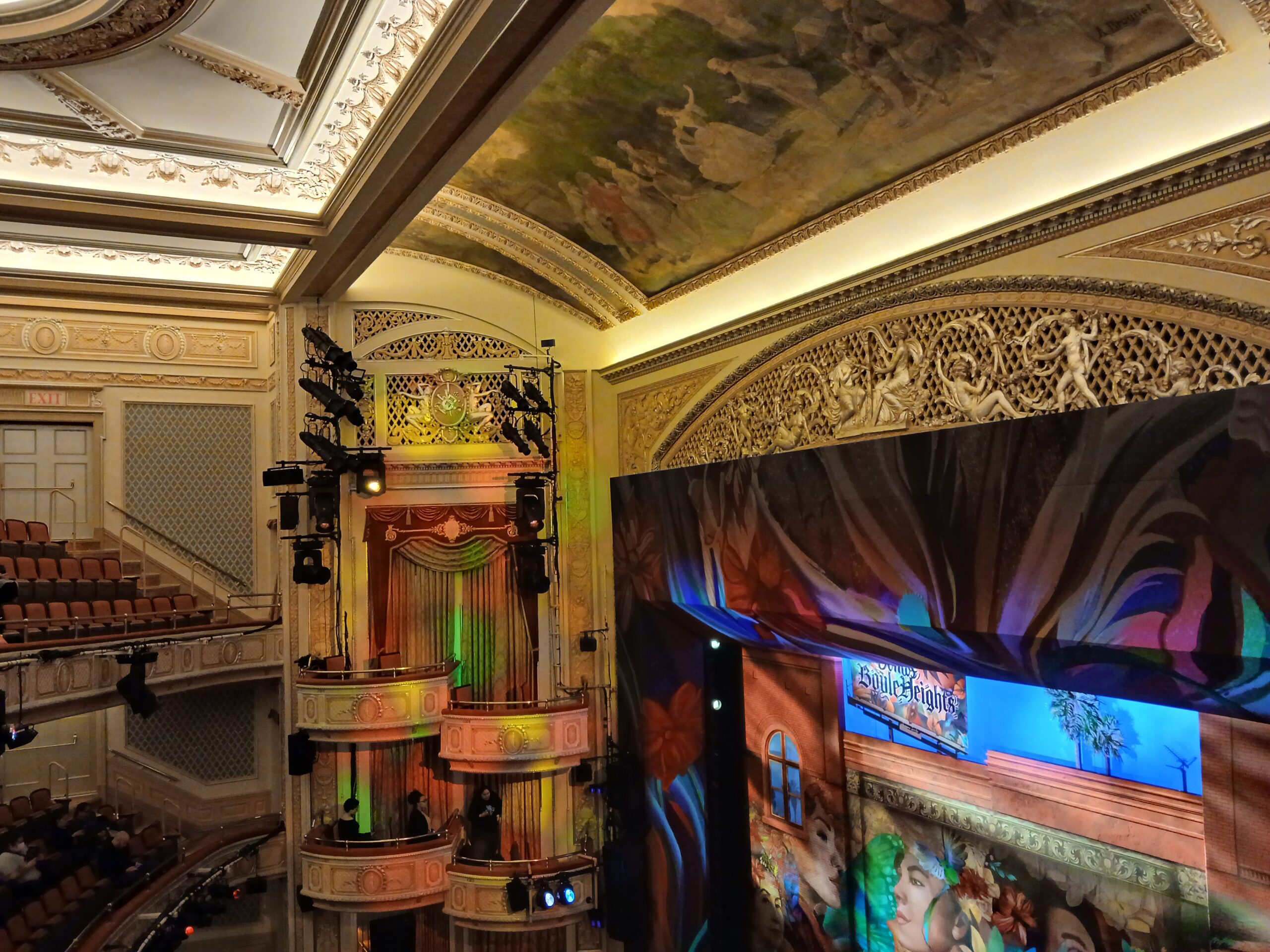
Seating Chart Overview — A Restored Historic House
The James Earl Jones Theatre — originally built as the Cort Theatre in 1912 and renamed in 2022 to honor James Earl Jones, who made his Broadway debut here in 1958 — is a mid-size Broadway house with approximately 1,092 seats across three levels. The orchestra holds approximately 502 seats; the mezzanine (first balcony) approximately 264; the balcony (second balcony) approximately 263. The theater is a New York City designated landmark inside and out.
The $47 million renovation completed in 2022 added a significant annex on the west side of the building, containing an elevator to all levels, accessible restrooms on every floor, new lounges, dressing rooms, and rehearsal space. Before this renovation, the upper levels were reachable only by stairs — the elevator access is genuinely new and a meaningful improvement in the theater’s accessibility profile.
The elevator at the James Earl Jones reaches the Mezzanine and Balcony levels. But once you arrive at each level, individual rows within those sections still involve approximately 2 steps down per row, with handrails at the end of each stepped row. Wheelchair seating is available on all three levels at designated locations — those specific seats are fully accessible via the elevator. Non-wheelchair mezzanine and balcony seats are accessible by elevator to the level, but internal row steps remain. If any steps of any kind are a concern, book Orchestra.
Step-free, centered, best performer detail, and the most versatile choice for most visitors. No internal row steps.
Full-stage elevated perspective — good for staging, choreography and ensemble work. Elevator available. ~2 steps per row inside; wheelchair seating in Row G.
Most affordable option. Elevator available. Steep, cramped, ~2 steps per row inside. You’ll follow the story; close-up detail is what you give up.
No steps to any orchestra seat. Step-free from the 48th Street entrance. Wheelchair seating in rows N and P.
Elevator reaches level. Then ~2 steps down per row inside the section. Handrails at every row end. Entrance behind orchestra Row H.
Elevator reaches level. Then ~2 steps down per row inside the steep section. Handrails at row ends. Entrance behind mezzanine Row F. Limited legroom.
Orchestra Seats — The Main Floor
The orchestra is the James Earl Jones’s main floor and the most reliable section for most visitors. It’s step-free from the 48th Street entrance throughout, houses all the wheelchair seating, and delivers the most immediate version of whatever is on stage — the leads’ faces and voices in a musical, the small silences in a play.
Center Orchestra, Rows D–K — The Sweet Spot
This range is consistently cited as the strongest all-around position at the James Earl Jones. Far enough from the elevated stage to see the performers comfortably without looking upward, close enough to read facial expressions and register the emotional detail of a performance. SeatPlan reviews cite rows E through J in center orchestra as offering “a good view of the stage at a decent and comfortable distance” and note these as well-priced relative to the premium front rows.
Rows D through G are the closer end of this sweet spot — immersive and detailed. Rows H through K provide more breathing room with nearly the same view quality, and a slightly wider frame for a large company. For first-time visitors and anyone who wants the safest, most versatile seat, center orchestra D–K is the answer.
Front Orchestra, Rows AA–C — Close and Intense
The front rows at the James Earl Jones bring you very close to the performers. For some visitors, that immediacy is exactly the experience they want. For others — especially at a full-company musical, where you may be looking up and turning your head to follow action across the stage — a few extra rows of distance provides a more comfortable vantage.
Rows AA through B are the most immediate in the house. Row C and D begin to feel less under-the-stage and more part of the audience. If you’re choosing between AA–B and center orchestra D–E, the distance from the action is less than it sounds in a theater of this scale.
Side Orchestra — Center Stays the Priority
Inner side orchestra seats — close to the center section — can be reasonable value at this theater. The James Earl Jones isn’t as wide as the larger musical houses, which limits but doesn’t eliminate side-angle concerns. Even a moderate angle can mean you see one side of the stage more clearly than the other in scenes that use the full width.
Outer side orchestra seats warrant more caution. Center rear orchestra usually beats closer outer side orchestra at this house.
Rear Orchestra — Practical and Step-Free
Rear orchestra is step-free throughout, houses the theater’s wheelchair and transfer seating, and offers a comfortable distance from the stage without the balcony’s height and steepness. For mixed-mobility groups, for visitors who want step-free logistics with no elevator dependence, or for anyone on a tighter budget who wants to stay on the main floor, rear orchestra center is a reliable choice. In a 1,092-seat theater, rear orchestra is closer than it would feel in a larger house.
Center orchestra rows D through K is the safest, most reliable choice in the house — step-free access, direct centered sightline, and the right distance to see both the leads and the company around them.
Mezzanine Seats — A Genuine Elevated Alternative
The Mezzanine — the first of the two upper levels — is reached either by elevator (from the annex) or by two flights of stairs via the theater’s traditional staircase. The entrance to the mezzanine seating area is behind orchestra Row H. Once inside, there are approximately two steps down per row, with handrails at the end of every stepped row. Wheelchair seating in the mezzanine is available in Row G at specific designated locations accessible via the elevator.
Front Mezzanine Center, Rows A–D — A Strong View at a Typically Lower Price
Front mezzanine center is one of the better values at the James Earl Jones — consistently rated alongside the premium front orchestra seats for sightline quality. Row A center mezzanine in particular offers a full-stage elevated view that reveals blocking and staging composition clearly, and the theater’s moderate size means you don’t lose performer detail the way you might in a larger house.
For a large-cast musical like WANTED, the front mezzanine center is where choreography and ensemble patterns read as a whole — a legitimate first choice for visitors who care about the full stage picture, not only a fallback from the orchestra. It typically costs less than equivalent center orchestra seats.
The important caveat: approximately two steps down per row within the mezzanine. The elevator gets you to the level; verify your specific seat’s interior access if any steps are a concern before purchasing.
Side Mezzanine — Inner Works, Outer Develops Angle
Inner side mezzanine seats can be reasonable at the right price — close enough to center that the angle is moderate rather than severe. Outer side mezzanine develops more pronounced horizontal angles, compounded by height, which can cut off part of the stage picture. Center is strongly preferred within the mezzanine at any price point.
Rear Mezzanine — More Distant, Still Workable
Rear mezzanine center can work at this theater’s scale — it’s a budget middle ground: farther than front mezzanine, but elevated enough that sightlines remain generally clean. Rear mezzanine side is where the combination of distance, height, and horizontal angle becomes most challenging.
Balcony Seats — Budget Option, Distance Is Real
The Balcony is the uppermost level, reached either by elevator or by three flights of stairs via the theater’s traditional staircase. The entrance to the balcony is behind mezzanine Row F. Approximately two steps down per row inside the section, with handrails at every row end. The balcony at the James Earl Jones is notably steep and compact — reviewers consistently note limited legroom, particularly for taller visitors.
Center Balcony can work for budget buyers who accept the distance. The elevator makes the level physically reachable, and the center positions give you a straight-on view of the stage. From up here you’ll follow the story and hear the score clearly; what you give up is close-up detail — facial expressions and the small moments between the leads.
Side Balcony seats add a horizontal angle to the steep elevation and distance — the most challenging combination in the house. If budget forces a balcony booking, center placement is essential.
Center Balcony is a viable budget option with elevator access, but distance and a steep rake are the trade — know what you’re giving up in performer detail and legroom before you buy.
WANTED — Seating Strategy for This Production
WANTED is a new original musical at the James Earl Jones Theatre, beginning previews October 15, 2026, with official opening night on November 8, 2026. Book and lyrics by Angelica Chéri, music by Ross Baum, directed by Stevie Walker-Webb. Starring Solea Pfeiffer as Mary Clarke and Liisi LaFontaine as Martha Clarke, with Grammy winner Ledisi as their mother, Tallulah. Runtime: about 2 hours 15 minutes, including one 15-minute intermission. Recommended for ages 10 and up. Children under 4 not admitted.
The production notes thematic elements of violence and Western adventure. Details can change during previews — this section will be updated once staging-specific seat notes are confirmed.
WANTED follows Mary and Martha Clarke, Black twin sisters in 1893 Texas who pass as white and turn outlaw to save their family’s home, with the Kinfolk — a chorus of their ancestors — telling the story around them. That shape matters for seating: the key relationships play out between the two leads, but the full company frames nearly everything.
The seating priority is a balance between two good options. Center orchestra puts you close to the sisters and to Ledisi’s Tallulah; front mezzanine center shows the ensemble and choreography as a whole. Until previews begin, anyone claiming exact sightlines for this specific staging is guessing — so the advice below is based on the house, not on unconfirmed production details.
Center Orchestra, Rows D–K — The Recommended Position
Close enough to read the leads’ faces and voices, far enough back to take in the company around them, and step-free. For most visitors, this is where WANTED will land best.
Front Mezzanine Center — The Full-Company View
For visitors who want the whole stage picture — ensemble movement, choreography, the way a large company fills a mid-size stage — front mezzanine center is a strong first choice. You’ll lose some facial detail but gain the complete composition, usually at a lower price than center orchestra.
For budget tickets: no official WANTED rush or lottery program had been announced as of September 25, 2026. Many new musicals announce one close to or during previews — see the rush and lottery guide and the WANTED show guide for updates.
Best Seats by Visitor Type
Step-free, centered, reliable. The safest choice for any visitor who wants a strong view without overthinking the decision.
For the leads’ performances in close-up without losing the spatial context of the staging.
Orchestra for the sisters’ story at close range. Mezzanine for choreography and the Kinfolk ensemble as a whole. Both are legitimate choices; elevator access is available for mezzanine.
Center orchestra for an immersive premium experience. Front mezzanine center for a slightly elevated view at potential savings.
Orchestra is the cleanest access-safe choice — no steps anywhere on the main floor. If upper-level wheelchair seats are needed, the elevator reaches all levels; confirm your specific seat and route with Shubert Audience Services (212-944-3700) before booking.
Elevator available. ~2 steps per row inside. Steep and compact. Check for rush or lottery programs before settling on the balcony.
Front mezzanine center provides a comfortable elevated perspective. Rear center orchestra stays on the main floor with no steps and a bit more breathing room from the stage.
At this house, a centered seat in row J is almost always better than a side seat in row D — you see the whole stage evenly instead of favoring one side.
Accessibility — The Best Access Profile on This Guide
The 2022 renovation transformed the James Earl Jones from one of Broadway’s most accessibility-limited older houses into one of its more welcoming ones. The key additions: an elevator to all three seating levels, accessible restrooms on every floor, and wheelchair seating on all three levels. This is meaningfully better than the majority of Broadway’s older houses, where upper levels remain reachable only by stairs.
The important nuance to carry through to your seat purchase: elevator access to the level is not the same as step-free access to every seat on that level. Both the Mezzanine and Balcony have approximately two steps down per row within the section. The designated wheelchair seating locations on those levels are fully accessible by elevator — they’re designed for it. For non-wheelchair upper-level seats, the elevator gets you to the door of the section but doesn’t eliminate interior row steps.
- Step-free entrance from 48th Street via automatic double doors to the ticket lobby, then attended doors to the orchestra
- All parts of the orchestra accessible without steps — no steps to designated wheelchair seating locations
- Orchestra wheelchair seating: rows N and P — up to 7 wheelchair spaces with companion seats (rows N and P specific locations per Shubert page)
- Orchestra aisle transfer seats with folding armrests: rows M, N, O, and K
- Elevator available in the 2022 annex — reaches lower lounge, mezzanine level, and balcony level
- Mezzanine: elevator OR 2 flights of stairs to reach the level; ~2 steps down per row inside; entrance behind orchestra Row H; handrails at every stepped row end
- Mezzanine wheelchair seating: Row G — designated accessible locations confirmed by Shubert (G21, G3, G18, G22); companion seating available
- Mezzanine aisle transfer seats: Row G (G101, G112, G2)
- Balcony: elevator OR 3 flights of stairs; ~2 steps down per row inside; entrance behind mezzanine Row F; handrails at every stepped row end; notably steep and cramped
- Balcony wheelchair seating: Row G — designated locations confirmed by Shubert (G19, G20); companion seating available
- Balcony aisle transfer seats: Row G (G101, G114, G2)
- Accessible restrooms: lower lounge level (via elevator or 19 steps down); mezzanine level (via elevator or 25 steps up); balcony level (via elevator or 55 steps up)
- Infrared assisted listening devices: 10+ available per performance; no advance reservation needed; driver’s license or ID with printed address required as deposit; call 212-582-7678 to reserve in advance
- GalaPro app for audio description and captioning — available on personal devices beginning 4 weeks after official opening
- Handheld captioning and audio description devices also available 4 weeks after opening (contact audienceservices@shubertorg.com for earlier access)
- Shubert Audience Services kiosk at every performance
What to Avoid at the James Earl Jones Theatre
- Do not assume all Mezzanine or Balcony seats are step-free because an elevator exists. The elevator reaches the level; approximately 2 steps per row remain inside both upper sections. If any interior row steps are a concern, book Orchestra.
- Do not book upper-level seats for visitors with mobility sensitivities without first verifying their specific seat location and interior access with Shubert Audience Services. The designated wheelchair spaces are fully accessible; non-wheelchair upper seats have interior steps.
- Do not prioritize side seats over centered seats. A side angle tilts the view toward one side of the stage; for a show built around two leads and a full company, center placement is the key variable at this theater.
- Do not choose far side Balcony if center Balcony is available. Adding horizontal angle to the Balcony’s steep elevation and distance creates the most challenging viewing position in the house.
- Do not cut arrival close. The balcony and mezzanine take more time to reach than the orchestra — budget time for the elevator or stairs if seated on an upper level.
- Do not overpay for front far-side orchestra if centered mid-row alternatives are available. A centered seat in row H usually sees more of the stage than a side seat in row C.
- Do not skip the age guidance. WANTED is recommended for ages 10 and up and the theater does not admit children under 4 — check both before buying family tickets.
How to Choose Between Two Similar Prices
The Seat-Picking Formula
- Best overallCenter Orchestra rows D–K — step-free, centered, right distance for most shows
- Performer detailCenter Orchestra rows D–J — faces, timing, emotional register at close but comfortable range
- Full staging viewFront Mezzanine Center rows A–D — elevated, compositional, often lower priced; elevator available
- Cleanest accessOrchestra only — step-free throughout; no elevator needed; all wheelchair seating here
- WANTEDCenter Orchestra D–K for the leads; Front Mezzanine Center for the full company
- BudgetCenter Balcony — elevator available, accept steep rake and distance; check for rush or lottery first
- No interior stepsOrchestra only — Mezzanine and Balcony have ~2 steps per row inside even with elevator access
- Avoid all riskStay center, verify upper-level access with box office, arrive early
FAQ — James Earl Jones Theatre Seating
For most visitors, center orchestra rows D through K is the strongest all-around choice — step-free access, direct centered sightline, and the right distance to see both the leads and the company around them. Front mezzanine center rows A through D is an excellent alternative offering a full-stage elevated view at typically lower pricing, with elevator access to the level. The right pick depends on whether you want performer proximity, staging perspective, or clean step-free logistics.
Orchestra is the cleaner access choice — step-free throughout, all wheelchair seating, no elevator needed. It’s also better for close performer detail. Mezzanine center is excellent if internal row steps are manageable — front mezzanine center rows A and B are consistently rated as premium sightlines with a full-stage elevated view, which suits choreography and large-ensemble staging. Elevator access is available to reach the mezzanine level. Both levels are legitimate choices for most visitors; the key variable is whether any steps are a concern.
Center Balcony can work for budget visitors, but the caveats are real. The balcony is notably steep and compact with limited legroom, and reviewers consistently note these comfort limitations. You’ll follow the story and hear the score clearly, but close-up performer detail is harder to see from that distance. Elevator access is available to reach the level; interior row steps (~2 per row) still remain within the section. Check for rush or lottery programs before paying for balcony seats.
Not too far to enjoy the show, but it’s a real trade. WANTED is a large-cast musical, so the story, score and ensemble still read from the balcony — what you give up is close-up detail on the two leads and their mother. Center orchestra or front mezzanine center serve the production better if budget allows. Seat notes specific to this staging will be added once previews begin on October 15, 2026.
Yes — the 2022 renovation added an elevator in the new annex that reaches the lower lounge, mezzanine, and balcony levels. This is a significant upgrade from the theater’s pre-renovation configuration, when both upper levels were reachable only by stairs. The elevator makes all three seating levels physically reachable for patrons who cannot use stairs. The important nuance: the elevator reaches the level, but approximately two steps down per row remain within the mezzanine and balcony seating areas. Designated wheelchair locations on those levels are fully accessible via the elevator.
No. The elevator reaches the Mezzanine and Balcony levels, but approximately two steps down per row remain within the seating areas of both sections. The designated wheelchair seating locations on each level are fully accessible by elevator — they are specifically designed and positioned for elevator access. Non-wheelchair mezzanine and balcony seats are accessible by elevator to the level but involve interior row steps. If steps of any kind are a concern, book Orchestra.
Yes, meaningfully so — one of Broadway’s better older-house accessibility profiles since the 2022 renovation. The 48th Street entrance is step-free, the orchestra is step-free throughout, and wheelchair seating with companion seats is available in the orchestra (rows N and P), the mezzanine (row G), and the balcony (row G). Elevator access reaches all levels. Accessible restrooms are on every level. For all wheelchair arrangements, contact Shubert Audience Services at 212-944-3700 or audienceservices@shubertorg.com before your visit to confirm your specific seat, level, and access route.
Center orchestra rows D through K is the recommended range — close enough to read the leads, Solea Pfeiffer and Liisi LaFontaine, with the full company still in frame. If you care most about choreography and the ensemble as a whole, front mezzanine center rows A through D is a strong alternative with elevator access to the level. Avoid outer side seats where you can; a centered view matters more than a few rows of closeness. WANTED begins previews October 15, 2026, and staging-specific notes will be added once previews begin.
Approach with caution: outer side orchestra (particularly in forward rows, where the angle favors one side of the stage), far side Balcony (distance plus elevation plus angle), and any upper-level seat for visitors for whom interior row steps of any kind are a concern. Do not book based solely on the elevator’s existence at this theater — it reaches the level but doesn’t eliminate interior row steps in the Mezzanine or Balcony.
Inner side seats at the orchestra level can be workable, particularly in mid-range rows. The theater is not as wide as the largest Broadway musical houses, which limits — but doesn’t eliminate — side-angle concerns. A centered seat in mid-orchestra almost always serves a show better than a closer side seat, because it keeps the whole stage evenly in view.
Yes — it’s a beautiful restored house with a strong modern access profile, and its mid-size scale means most seats feel relatively close. Center orchestra mid-rows is the safe recommendation for a first visit. The next production, WANTED, is recommended for ages 10 and up, and the theater does not admit children under 4.
The theater was built in 1912 as the Cort Theatre, named for producer John Cort. The Shubert Organization acquired it in 1927 and operated it as the Cort for nearly a century. In September 2022, following a $47 million renovation and expansion, it was renamed the James Earl Jones Theatre in honor of the late actor, who made his Broadway debut at the venue in the 1958 production of Sunrise at Campobello. Jones passed away in September 2024. Some visitors searching for a Cort Theatre seating chart are looking at this same venue — the layout and row numbering carried over from the Cort era.
It depends mainly on level and whether you’re centered. Center orchestra rows D through K gives a clean, direct view with no obstruction. Front mezzanine center rows A through D looks down at a comfortable angle that reveals the full stage picture. Side seats on any level introduce some angle — moderate for inner side seats, more pronounced toward the outer edges. Balcony seats are straight-on if centered but distant, with the steep rake adding a downward angle. For a specific seat, cross-reference the row against the section notes above, or contact Shubert Audience Services if you want to confirm sightlines before buying.
Plan the Night Around the Performance
The James Earl Jones is one of Broadway’s most thoughtfully restored older houses — the renovation’s access improvements are real, and a mid-size room keeps even a full-company musical like WANTED feeling close. Center orchestra D through K for the leads up close. Front mezzanine center if the full stage picture matters more than proximity. Arrive early if you’re headed upstairs.
Choose the Seat — Then Confirm the Route
The James Earl Jones is a rare restored Broadway house where elevator access reaches all three levels — but the exact row still matters. Use these guides to connect the seating decision to WANTED, accessibility, dinner, hotels, transit, and the full 48th Street night.
James Earl Jones Theatre Guide
Go deeper on the restored historic house: West 48th Street location, Cort Theatre history, accessibility upgrades, arrival details, and theater-night context.
Open Theater Guide Previews Oct 15WANTED Guide
Plan the show around the seat choice: tickets, cast, previews vs. opening, runtime and age guidance for the season’s first new musical.
Open Show GuideMore Seating & Ticket Strategy
Seats · Timing · ValueBroadway Seating Guide
Compare orchestra, mezzanine, balcony, boxes, side seats, premium zones, and obstructed-view listings across Broadway houses.
When to Buy Broadway Tickets
Know when buying early matters, when waiting can work, and how timing changes for plays, limited runs, weekends, and strong seat inventory.
Last-Minute Broadway Tickets
TKTS, same-day listings, rush, lottery, and practical ways to compare late options without choosing awkward seats blindly.
Broadway Rush and Lottery Tickets
How discount systems work, what tradeoffs to expect, and why cheap seats can be great — or risky — depending on the view.
First-Time Broadway Guide
For visitors choosing their first show or first theater: seats, arrival, timing, intermission, dress, and Theater District basics.
Best Broadway Shows for Date Night
Compare shows by tone, dinner pairing, mood, pacing, and how the whole night feels beyond the ticket itself.
Plan the James Earl Jones Theatre Night
Dinner · Hotels · TransitRestaurants Near Broadway
The James Earl Jones sits slightly north of the densest 44th–45th Street crush, with Theater District, Times Square, and Hell’s Kitchen dining all close by.
Pre-Show Dining Guide
Plan reservation timing, walking buffer, check arrival, and post-show movement so dinner and theater work together.
Best Pre-Theater Restaurants NYC
Use this when you want stronger restaurant choices around Broadway rather than only timing and logistics advice.
Hotels Near Broadway
Compare Theater District, Times Square, Midtown West, and Hell’s Kitchen hotel zones for a Broadway-centered trip.
How to Get to a Broadway Show
Subway, walking, rideshare, and arrival timing for Theater District shows, including the West 48th Street houses.
Parking Near Broadway
When driving makes sense, when it does not, and how to avoid turning a Broadway night into a Midtown garage problem.
Nearby Neighborhood & Theater Guides
48th Street · Theater District · Nearby HousesTheater District
The practical guide to Broadway’s center: theaters, crowds, hotels, restaurants, walking routes, and first-time visitor logistics.
Times Square
Best when convenience, subway access, and being right in the center matter most — especially for short Broadway trips.
Midtown West
A useful broader Midtown base for hotels, restaurants, transit, and walking routes around the north Theater District.
Palace Theatre Guide
A nearby Times Square landmark useful for comparing theater scale, restored-house context, and Midtown arrival logistics.
Lyceum Theatre Guide
Another historic Broadway house nearby, useful for comparing older-room character, play-focused productions, and seat choices.
Winter Garden Theatre Guide
A larger nearby Broadway house that gives helpful contrast against the James Earl Jones’ actor-forward restored-room feel.