

Parking Near NYC Baseball Venues — The Decision Guide
Whether you should drive to Yankee Stadium or Citi Field — and what the right parking strategy looks like when you do.
The question most people ask before a New York baseball game is “where do I park?” The more useful question is whether they should be parking at all. Both Yankee Stadium and Citi Field have parking — that’s not the issue. The issue is that driving to an MLB game in New York City adds costs, timing obligations, and postgame friction that transit doesn’t, and for a significant share of visitors, especially those based in Manhattan, it makes the night measurably worse rather than better.
That said, driving makes genuine sense for plenty of people: suburban visitors who are already in a car, families with kids and gear, Long Island fans heading to Citi Field, and anyone whose starting point is genuinely underserved by transit. This guide helps you figure out which side of that line you’re on — and if you’re driving, what the right parking strategy actually looks like at each park.
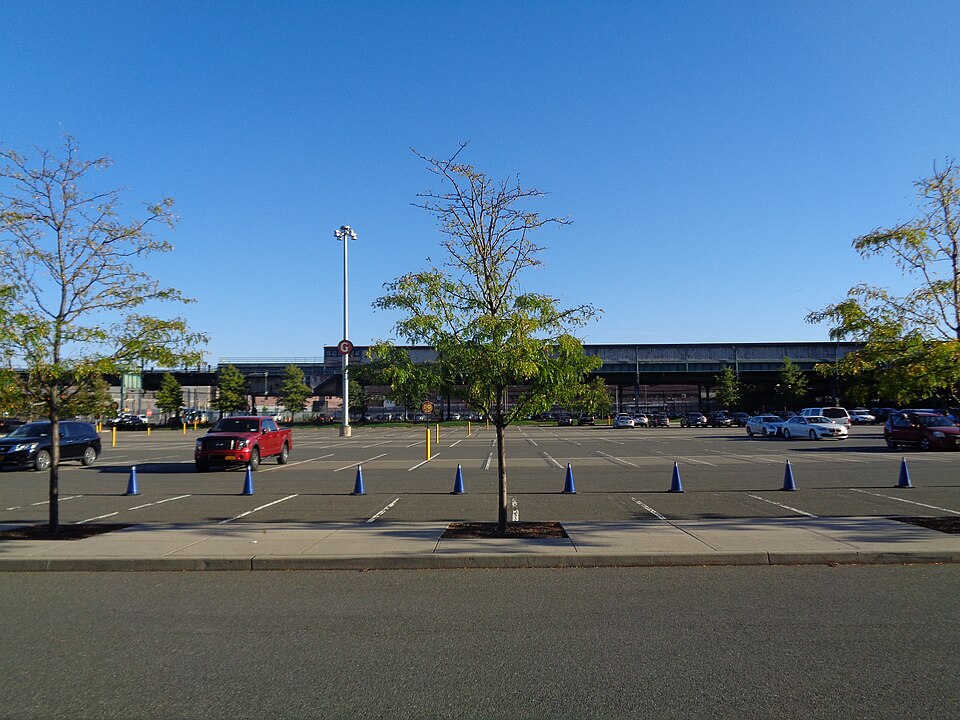
Citi Field’s lot-based setup is one reason it often feels like the more natural drive-and-park baseball night in New York, especially for Queens, Long Island, and family visitors.
How Yankee Stadium and Citi Field Parking Differ
These are not the same parking situation wearing different uniforms. The physical setup, the approach, the offsite options, and the postgame exit feel are all different — and knowing which kind of experience you’re signing up for changes how you plan.
Parking around Yankee Stadium is a tight urban grid of garages and lots managed by City Parking on behalf of New York City — the Yankees themselves neither own nor operate these facilities. There are over 9,000 spaces across seven garages and lots surrounding the stadium, but on high-attendance nights those fill, approach traffic gets compressed, and the postgame exit onto the Major Deegan Expressway can be genuinely slow. Pre-booking is the right approach, not a nice-to-have. Official prepaid parking starts at $49 per vehicle through City Parking.
Citi Field operates more like a traditional stadium parking campus: a set of lots within and just outside the fence line, clear signage, and a team that actively coordinates offsite discount options in Downtown Flushing. Official lots are cashless — credit cards, debit cards, Mets Gift Cards, and mobile pay only; no cash accepted at any booth. Pre-paid parking is $40 per car for regular season games. Drive-up parking, if available at all, runs $50. Offsite options including Skyview Mall and Flushing Commons are a 10-minute walk or a one-stop 7 train hop away and often cost considerably less.
The practical upshot: Yankee Stadium parking is more of a pre-planned commitment in a dense urban setting. Citi Field parking is more of a structured lot experience with a secondary offsite economy that gives drivers real flexibility if they’re willing to plan ahead. Neither venue rewards improvisation on a busy game night.
When Driving to Yankee Stadium Makes Sense
Yankee Stadium parking works — when it’s the right call for the specific visitor making the trip. The honest list of people for whom it usually is the right call is narrower than many first-timers assume.
Who it generally makes sense for
Suburban visitors arriving by car from Westchester, Connecticut, Rockland County, North Jersey, or the outer boroughs who are already driving and have no easy transit anchor near their starting point. Families traveling with kids, strollers, or a lot of gear — the added cost of parking often trades favorably against the logistics of managing the whole group through the subway. Visitors pairing the Yankees game with another stop in the Bronx or upper Manhattan, for whom the car is already part of the day’s plan. Anyone who strongly prefers the predictability of having their car versus the uncertainty of managing rail connections.
Who it usually doesn’t make sense for
Manhattan-based visitors with easy access to the 4 train, the D, or Metro-North. Visitors staying near Grand Central who can ride Metro-North’s Yankee Clipper directly to the stadium for less than the cost of parking, with a seat both ways. Anyone who is already anxious about tight postgame timing — the Major Deegan Expressway after a 40,000-person game is not a comfortable environment for people who need to be somewhere at a specific time. Visitors who are not familiar with the South Bronx road network and are counting on GPS to navigate it in heavy event traffic.
Pre-book through City Parking before you arrive. Official prepaid parking starts at $49 and is available at cityparking.nyc/yankee-stadium/events. Third-party apps like SpotHero list additional nearby options, sometimes at lower prices, with varying distances from the gates.
Do not plan to find parking on arrival on a busy game night. The combination of road closures, event traffic, and converging crowds makes improvised parking at Yankee Stadium a gamble that tends to go badly. The Yankees’ own official gameday guidance explicitly encourages fans to prebook before arriving in the Bronx.
For venue details, seating advice, and full game-day planning, see the Yankee Stadium guide and the Yankee Stadium seating guide. If transit is a better fit, the how to get to Yankee Stadium guide covers the full rail and subway picture.
When Driving to Citi Field Makes Sense
Citi Field is the more natural driving ballpark of the two — and by a meaningful margin. The lot-based setup, the access roads off the Whitestone Expressway and Grand Central Parkway, and the team’s active promotion of structured offsite options all point toward a venue that expects a significant share of its fans to arrive by car. That’s a different design philosophy from Yankee Stadium, and it shows in how the experience feels.
Who Citi Field parking works especially well for
Long Island fans — who represent a large share of the Mets’ fanbase — for whom driving to Flushing Queens is often a shorter and more direct trip than any transit option. Queens-based visitors who are already within the borough and not trying to navigate Manhattan transit. Families with kids, especially for day games when the Grand Central Parkway is not at its worst. Visitors who do not want to build the evening around train schedules and would rather have the flexibility of their own car throughout the day. Anyone combining the game with dinner in Flushing before or after, where having a car already parked nearby simplifies logistics.
The two-track parking story at Citi Field
Citi Field has a clearer parking ecosystem than most visitors realize. The official lots within and just outside the stadium fence line are the main option, with pre-paid parking at $40 per car (regular season) and drive-up parking at $50 if available at all — the Mets have moved to a pre-paid model and drive-up spaces may not be available at all games given ongoing construction activity around the stadium. Separately, the Mets actively coordinate with Downtown Flushing parking operators to offer offsite discount options at Skyview Mall, Flushing Commons, and Flushing Plaza. These are typically a 10-minute walk across the Roosevelt Avenue bridge or a single 7 train stop away, and they often cost significantly less than official stadium lots.
The Mets’ official discount parking page lists three Downtown Flushing locations — Skyview Mall (a 10-minute walk across the Roosevelt Avenue bridge), Flushing Commons (adjacent to the Main Street–Flushing 7 train station for a one-stop return), and Flushing Plaza (also near Main Street). These are not unaffiliated random lots; the Mets coordinate with the operators on pricing and signage, though they note they do not control these facilities or guarantee availability. For fans who want to save meaningfully on parking and are comfortable with a short walk or a single subway stop, this is a genuine option and not a stretch. Check the Mets’ official discount parking page for current booking details before game day.
All Citi Field lots are cashless. Cards, Mets Gift Cards, Apple Pay, and Google Pay are accepted. If you only have cash, you can park temporarily in Lot G at no charge and use the reverse ATM outside the Jackie Robinson Rotunda entrance to get a prepaid card. Lots open one hour before stadium gates, which themselves open 90 minutes before first pitch. Arrive earlier on high-demand games — pre-paid spots can sell out, and the parking guidance is clear that drive-up availability is no longer guaranteed.
For full Citi Field planning details, see the Citi Field guide and the Citi Field seating guide. If transit is the better move for your trip, see the how to get to Citi Field guide.
When Manhattan Visitors Should Leave the Car Out of It
This deserves its own section, because a meaningful share of the people who end up in bad parking situations at NYC baseball games are Manhattan-based visitors who defaulted to driving without thinking through the alternative. Often they have a rental car, or they’ve been using the car around the city for other reasons, and the game just gets added to the itinerary. That’s the scenario that tends to go wrong.
For a Manhattan visitor attending a Yankees game, the math is usually clear: the 4 train or a Metro-North Yankee Clipper gets you there faster than driving, costs a fraction of parking, and removes the postgame exit stress entirely. The Major Deegan after a full Yankee Stadium is not a calm place to be if you’re trying to get back to Midtown. Adding $49 or more in parking to a night that already has ticket, food, and transit costs built in, for the privilege of a slower and more stressful experience, is a trade that rarely wins on inspection.
Citi Field is somewhat more forgiving for Manhattan drivers than Yankee Stadium — the lot setup is cleaner and the approach feels less congested — but it still doesn’t automatically make sense for Manhattan visitors who are already near a 7 train or a Penn Station LIRR connection. The LIRR from Penn Station to Mets–Willets Point takes about 19–20 minutes. Driving from Midtown Manhattan to Flushing Queens at game-time typically takes longer than that, plus parking, plus the postgame lot exit. The transit advantage is real.
If you’re staying in Manhattan and your transit options are solid — meaning you’re near the 4 or D for Yankees, or near the 7 or Penn Station for Mets — leave the car out of it. Transit will almost certainly produce a faster, cheaper, lower-stress round trip. The car should only come back into the picture if your starting point genuinely doesn’t connect well to the right trains, or if you have a specific reason (family, gear, post-game plan) that makes driving worth the tradeoff.
For a fuller picture of the transit options, see the how to get to NYC baseball venues guide, which covers subway, Metro-North, LIRR, and starting-point strategy for both parks.
Best Parking Approach by Traveler Type
Skip the car — take transit
The subway and rail options outperform driving for almost every Manhattan starting point. Reserve the car for situations where transit genuinely doesn’t work.
Drive to Citi Field — pre-pay or use Flushing offsite
Citi Field is purpose-built for this trip. Pre-pay the official lot or use Downtown Flushing offsite options. This is one of the cleaner baseball driving experiences in the metro area.
Metro-North Clipper first; driving a reasonable alternative
Metro-North’s Yankee Clipper is genuinely excellent for this starting point. If you’re driving anyway, pre-book City Parking well in advance. Don’t improvise.
Drive to either park — but plan the whole trip
NJ transit-to-subway involves more steps than most families want. Driving is reasonable, but pre-book at both parks and plan for a longer postgame exit than you expect.
Default to transit — add parking only with a clear reason
Transit removes the variable of navigating NYC event traffic as an unfamiliar driver. First-timers almost always report the subway experience at both parks was easier than they feared.
Driving often makes sense — plan early arrival
The car simplifies logistics, especially with strollers and gear. Arrive well before first pitch so lots aren’t full and kids aren’t waiting in traffic. Citi Field is usually easier for this than Yankee Stadium.
Transit usually wins — commuter rail for a premium feel
Parking and driving adds stress that doesn’t fit a date-night tone. Metro-North Clipper to Yankee Stadium or LIRR to Citi Field gives you a cleaner, more relaxed experience in both directions.
Pre-book and arrive early — that’s the whole plan
Totally valid. Pre-book through City Parking (Yankees) or the Mets official site (Citi Field). Arrive 90 minutes before first pitch at minimum. Don’t leave lot selection to chance on game night.
Official Lots vs. Offsite Options vs. Just Finding Something
Every NYC baseball driver faces some version of this choice. Here’s how to think about it at each park.
Official lots — the case for them
Pre-booked official parking at both venues offers the clearest arrival experience: you know where you’re going, you know what you paid, and the lots are staffed. At Yankee Stadium, City Parking operates seven garages and lots around the stadium — prepaid spaces start at $49 and can be reserved at cityparking.nyc/yankee-stadium/events. At Citi Field, official pre-paid lots are $40 per car for regular season games, with drive-up (if available at all) at $50. These are the highest-cost options but the lowest-uncertainty ones, which is worth something on a high-attendance game night.
Offsite lots — especially strong at Citi Field
At Citi Field, the offsite parking story is unusually good. The Mets actively list and coordinate with three Downtown Flushing options: Skyview Mall (10-minute walk across the Roosevelt Avenue bridge), Flushing Commons (adjacent to the 7 train’s Main Street–Flushing station for a one-stop return), and Flushing Plaza (similar location). These typically cost less than official lots. The tradeoff is a walk or a single subway stop, and slightly less certainty about availability — the Mets coordinate with operators but don’t control or guarantee these spaces. Book through the link on the Mets’ official discount parking page rather than showing up and assuming they’ll have room.
At Yankee Stadium, third-party lots and garages in the surrounding blocks vary in quality and distance. Apps like SpotHero list options at various prices and distances. The further from the stadium, the cheaper — but the longer the walk, and some of the deeper-discount options are a significant distance away. If you’re going the third-party route at Yankee Stadium, verify the exact address before you go and account for the walk time in your arrival plan.
Just finding something on arrival
This is the weak move at both venues, and especially at Yankee Stadium. Street parking in the residential blocks surrounding Yankee Stadium is extremely limited on game days — many curbs convert to no-standing or police-only during events, towing is enforced, and the spaces that exist fill hours before first pitch. At Citi Field, the Mets have noted that drive-up parking may not be available at all for some games given the ongoing transformation of the area around the stadium. “Figure it out when I get there” is not a parking strategy for either venue on a busy night — it’s a recipe for circling blocks in event traffic while the game starts without you.
Decide where you’re parking before you leave home, book it before you leave home, and arrive before the lots fill — at minimum 90 minutes before first pitch, earlier for high-demand games. The entire structure of event parking in New York City rewards advance planning and punishes arrival-time improvisation.
Postgame Exit Reality — The Part Most People Underplan
Getting into the lot is the easy half. Getting out of it, past 40,000 other people trying to do the same thing, is where the parking decision really reveals itself.
Leaving Yankee Stadium by car
The postgame exit from Yankee Stadium is one of the more consistently stressful parts of driving to a Yankees game. The Major Deegan Expressway is the main artery, and it compresses heavily after games. Depending on the game’s timing, day of week, and where you’re going, the time from leaving your seat to being clear of the stadium area can vary from 20 minutes to well over an hour. There’s no single trick that eliminates this — it’s a function of geography and volume. The most reliable mitigation is accepting it as part of the trip and not making commitments that require you to be somewhere at a specific time immediately after the game. Waiting out the first 15–20 minutes of the crowd dispersal inside the stadium, rather than rushing to the lot, sometimes helps; sometimes the lot itself is the bottleneck regardless.
Leaving Citi Field by car
The Citi Field postgame exit is better organized than Yankee Stadium’s, but it is not fast. The Grand Central Parkway becomes the choke point for the majority of drivers heading toward Manhattan or points east. Fans heading to Long Island often have a slightly cleaner path once they’re past the immediate stadium area. Fans heading back toward the city face a sustained slowdown. The structured lot system at Citi Field means the exit from the actual lot is generally more orderly than the Bronx equivalent — the problem is the road, not the lot. As with Yankee Stadium, waiting 15–20 minutes inside before heading to your car can improve the experience at the cost of some additional time. Fans using the Flushing offsite lots face the added step of the walk or subway hop back to their car, but often find the parking exit itself less congested.
A cheaper lot that traps you in a dead-end exit queue is a worse deal than a slightly pricier lot with a cleaner exit path. When comparing parking options at either venue, look at exit routing, not just distance from the gate or sticker price. If you can determine whether a lot exits toward the highway you need or toward a congested cross-street, that’s useful information. Pre-booking and reading lot descriptions carefully is how you figure this out before game day rather than after.
Common Parking Mistakes Worth Avoiding
Defaulting to driving from Manhattan out of habit. Having a rental car doesn’t mean driving to the game is the right call. For most Manhattan starting points, the transit options are faster, cheaper, and less stressful. Evaluate it specifically for your trip before committing to parking.
Not pre-booking Yankee Stadium parking. The Yankees’ own official guidance says to prebook before arriving. This is not bureaucratic boilerplate — it reflects real capacity constraints on busy game nights. Book through City Parking at cityparking.nyc/yankee-stadium/events before you leave home.
Assuming drive-up parking will be available at Citi Field. The Mets’ own guidance now specifies that drive-up parking may not always be available given the ongoing transformation of the Willets Point area. Pre-paid is the reliable move. Don’t plan around showing up and paying cash at the gate — Citi Field doesn’t accept cash anywhere, including parking booths.
Underestimating postgame traffic at both venues. Every first-time driver to both stadiums underestimates this. The postgame exit from Yankee Stadium and from the Grand Central Parkway after a Mets game adds real time to the return trip. Build it into your plan; don’t get surprised by it.
Ignoring Citi Field’s offsite Flushing options. The Mets actively promote these and coordinate with the operators. Skyview Mall is a 10-minute walk. Flushing Commons is adjacent to the 7 train for a one-stop return. These are real, usable alternatives to paying full stadium lot prices — not a last-resort fallback for people who didn’t plan.
Treating both venues’ parking situations as basically the same problem. They’re not. Yankee Stadium is a dense urban pre-book situation with a challenging exit on a major expressway. Citi Field is a more structured lot campus with an active offsite economy and a Queens road exit that’s bad but differently bad. The planning approach is different for each.
Not factoring parking into the rest of the night’s plan. Driving to a game affects what time you need to leave for dinner, how long you can stay postgame, and when you realistically get back to your hotel. If you’re planning a pre-game dinner near the stadium or a post-game stop somewhere, the car either helps or complicates that plan depending on where those places are. Think through the full night before committing to a parking approach.
Frequently Asked Questions
For Manhattan visitors: usually not. The transit options — particularly the 4 train and Metro-North’s Yankee Clipper — are fast, affordable, and eliminate postgame exit stress. For suburban visitors from Westchester, Connecticut, Rockland, or North Jersey who are already in a car and don’t have a clean transit path: yes, driving can make sense, but pre-book through City Parking before arriving and build extra postgame time into your plan. Families with kids or gear are often the clearest case for driving regardless of starting point.
Generally, yes — by a meaningful margin. Citi Field has a more structured lot-based setup, a clearly promoted offsite parking ecosystem in Downtown Flushing, and an access road approach off the Grand Central Parkway and Whitestone Expressway that feels more organized than the dense South Bronx street approach to Yankee Stadium. That said, the postgame Grand Central Parkway exit isn’t fast, and drive-up parking is no longer guaranteed. Pre-pay is the right move at Citi Field just as it is at Yankee Stadium.
The official City Parking network is the primary option — seven garages and lots surrounding Yankee Stadium, prepaid parking starting at $49. Book through cityparking.nyc/yankee-stadium/events before game day. Third-party apps like SpotHero list additional nearby lots at varying prices and distances; the further from the stadium, generally the cheaper, but verify the walking distance and the exit routing before committing. Do not plan on street parking on game nights — curb restrictions and towing are enforced, and available spots fill hours before first pitch.
Official pre-paid lots at Citi Field are $40 per car for regular season games. Pre-pay through the Mets’ official site — drive-up parking at $50 may not be available at all games given ongoing area construction. If you want to spend less, the Mets’ own discount parking page lists Downtown Flushing options including Skyview Mall (10-minute walk across the Roosevelt Avenue bridge) and Flushing Commons (adjacent to the 7 train’s Main Street station for a one-stop return). Book these through the link on the Mets’ official discount parking page, not by showing up. Citi Field is fully cashless — no cash accepted at any parking booth.
In most cases, no. The 4 train and Metro-North Clipper to Yankee Stadium, and the 7 train or LIRR to Citi Field, offer faster and less stressful round trips than driving from most Manhattan starting points. Parking costs $40–$50 or more at both venues, and the postgame exit by car at both parks adds meaningful time. The decision changes if you have kids, significant gear, or a specific post-game plan that requires a car — in those cases, driving may well be the right call, but plan and pre-book before leaving home.
Often yes — particularly the Downtown Flushing options the Mets actively promote. Skyview Mall is a 10-minute walk across the bridge. Flushing Commons puts you right next to the 7 train’s Main Street–Flushing station, from which it’s one stop back to Mets–Willets Point. These options typically cost less than official lots and aren’t significantly less convenient if you don’t mind the short walk or a single subway hop. The key is booking through the Mets’ official discount parking page in advance, not assuming you can show up and find a spot.
Yes — the Yankees’ own gameday guidance says to prebook before arriving in the Bronx. Official prepaid parking goes through City Parking at cityparking.nyc/yankee-stadium/events. This is not just a convenience recommendation — on high-attendance nights, arrival-time improvisation around Yankee Stadium means circling in event traffic with no guaranteed spot. Pre-booking is how you remove that variable.
Citi Field, generally. The lot setup is more structured, the approach roads are more organized, and the offsite parking ecosystem in Downtown Flushing gives drivers real alternatives to official lot prices. Yankee Stadium can work well for drivers coming from the right starting points, but the dense urban approach and challenging postgame Deegan exit make it the harder of the two to drive to cleanly. For Long Island visitors especially, Citi Field is one of the more accessible ballpark drives in the metro area.
The Short Version
Citi Field is the more natural driving ballpark of the two — better lot structure, cleaner approach, and a genuinely useful offsite parking economy in Downtown Flushing. Yankee Stadium parking works, but it requires more intentional planning and comes with a more challenging postgame exit. Manhattan-based visitors should think twice before defaulting to either option: the transit alternatives are fast, cheaper, and eliminate the parts of the evening that tend to go sideways.
Pre-book at both venues. Arrive earlier than you think you need to. Build postgame exit time into your plan. Don’t assume drive-up availability at Citi Field. And if the transit case for your specific starting point is solid — take the train.
For deeper planning on either venue, see the Yankee Stadium guide, the Citi Field guide, and the full head-to-head comparison. For the transit picture, see the how to get to NYC baseball venues guide.
Drive Only When the Whole Night Works Better
Yankee Stadium and Citi Field both have parking, but they are not the same kind of parking night. The Bronx is tighter, more urban, and more dependent on pre-booking. Queens gives drivers a cleaner lot setup and real Flushing offsite options. Use these guides to compare the car against transit, pick the right ballpark strategy, and build the full baseball night around restaurants, hotels, neighborhoods, and the postgame exit.
How to Get to NYC Baseball Venues
Compare the 4, B/D, Metro-North, 7 train, LIRR, rideshare, and driving strategy before locking into a parking plan.
Open Transit Guide Build the NightRestaurants Near NYC Baseball Venues
Use food planning to decide whether the car helps or hurts: Bronx pregame, Flushing dinner, hotel base, or train-first night.
Plan Food NearbyCore NYC Baseball Parking & Transit
Parking · Rail · BallparksHow to Get to NYC Baseball Venues
Subway, Metro-North, LIRR, rideshare, parking, and starting-point strategy for both Yankee Stadium and Citi Field.
How to Get to Yankee Stadium
4 train, B/D, Metro-North, Bronx arrival flow, rideshare, driving, and why many visitors should skip the car.
How to Get to Citi Field
7 train, LIRR, Flushing Meadows flow, Queens driving routes, rideshare, and when Citi Field parking makes sense.
Parking Near Yankee Stadium
City Parking, Bronx garages, pre-booking logic, street-parking warnings, and the Major Deegan postgame reality.
Parking Near Citi Field
Cashless official lots, prepaid parking, drive-up cautions, Flushing offsite options, and Queens postgame exit flow.
NYC Transportation Hub
Subway, commuter rail, parking, rideshare, walking, and post-event return planning across NYC events.
Yankees, Mets & Baseball Planning
Teams · First-Timers · HubNYC Baseball Hub
Start here for Yankees, Mets, baseball night planning, first-timer help, family outings, and ballpark comparison logic.
New York Yankees Guide
Yankees planning, Bronx arrival strategy, game-day feel, first-timer notes, and when driving actually makes sense.
New York Mets Guide
Mets planning, Flushing arrival strategy, Long Island fan logic, family-friendly nights, and Citi Field driving notes.
Yankees vs Mets for First-Time Visitors
Compare the two NYC baseball nights by vibe, transit, parking, neighborhood, tourist ease, and first-game feel.
Best Parking Approach by Traveler
Manhattan tourists, Long Island Mets fans, Westchester Yankees fans, NJ families, date nights, and suburban drivers.
When Manhattan Visitors Should Skip Driving
The cleanest section for hotel visitors, rental-car users, and anyone near the 4/D, 7 train, Metro-North, or LIRR.
Restaurants, Hotels & Neighborhood Support
Food · Stay · AreaRestaurants Near NYC Baseball Venues
Compare Bronx and Queens food planning around baseball nights, transit routes, hotel bases, and postgame flexibility.
Restaurants Near Yankee Stadium
Pregame and postgame food near the stadium, Bronx routes, transit-friendly choices, and parking-aware meal timing.
Restaurants Near Citi Field
Flushing food, pregame dinner, postgame choices, offsite parking overlap, and 7-train-friendly meal planning.
Hotels Near Yankee Stadium
Bronx, Upper Manhattan, Midtown, and transit-first hotel bases that can make parking unnecessary for Yankees nights.
Hotels Near Citi Field
Queens, Flushing, airport-area, and Manhattan hotel bases for Mets nights, with car vs train planning built in.
Yankee Stadium Area Guide
The Bronx game-day area, transit flow, food context, postgame movement, and what to know before choosing a car.
Citi Field Area Guide
Flushing, Willets Point, offsite parking context, restaurants, 7 train movement, and the Queens ballpark feel.
Choose the Right Parking Decision
Drive · Train · ExitThe Real Question
Before asking where to park, decide whether parking improves the night at all for your starting point and group.
How the Two Parking Situations Differ
Yankee Stadium is denser and more urban; Citi Field has a cleaner lot campus and useful Flushing offsite options.
When Driving to Yankee Stadium Makes Sense
Suburban drivers, families, gear-heavy visits, pre-booking rules, and who should use the 4/D or Metro-North instead.
When Driving to Citi Field Makes Sense
Long Island fans, Queens drivers, families, official lots, cashless parking, and Downtown Flushing offsite options.
Official Lots vs Offsite Options
City Parking, Citi Field official lots, Flushing offsite locations, third-party garages, and why improvising is weak.
Postgame Exit Reality
Major Deegan friction, Grand Central Parkway flow, cheaper-lot traps, waiting out the first wave, and realistic return timing.
Helpful On-Page Planning Jumps
Use While ReadingBest Approach by Traveler Type
Manhattan tourists, Long Island Mets fans, Westchester Yankees fans, NJ families, first-timers, and date nights.
NYC Baseball Parking FAQ
Quick answers on Yankees parking, Mets parking, Manhattan visitors, Citi Field offsite options, and pre-booking.
NYC Night Out Guide
Restaurants, hotels, transportation, neighborhoods, Broadway, concerts, sports, and full-night planning in one place.