

How to Get to NYC Baseball Venues — The Right Way
The smartest route to Yankee Stadium or Citi Field depends on where you’re starting, not just which train happens to be closest. Here’s how to figure it out.
Most people planning a New York baseball game ask “what train do I take?” when the smarter question is “what kind of trip am I taking?” Yankee Stadium and Citi Field are both easy to reach by transit — they’re two of the most transit-connected ballparks in the country — but they’re transit-connected in completely different ways. The Bronx is an uptown subway ride with a Metro-North option layered on top. Flushing is an eastbound 7 train or a quick LIRR hop depending on where you’re anchored. Your best route isn’t a fixed answer. It’s a function of where you’re staying, where you’re coming from, and whether the game is your whole day or one stop in a bigger itinerary.
This guide is for people who want to understand the difference, not just memorize a station name. It covers both venues, by starting point, including the postgame wrinkles that most planning guides skip entirely.
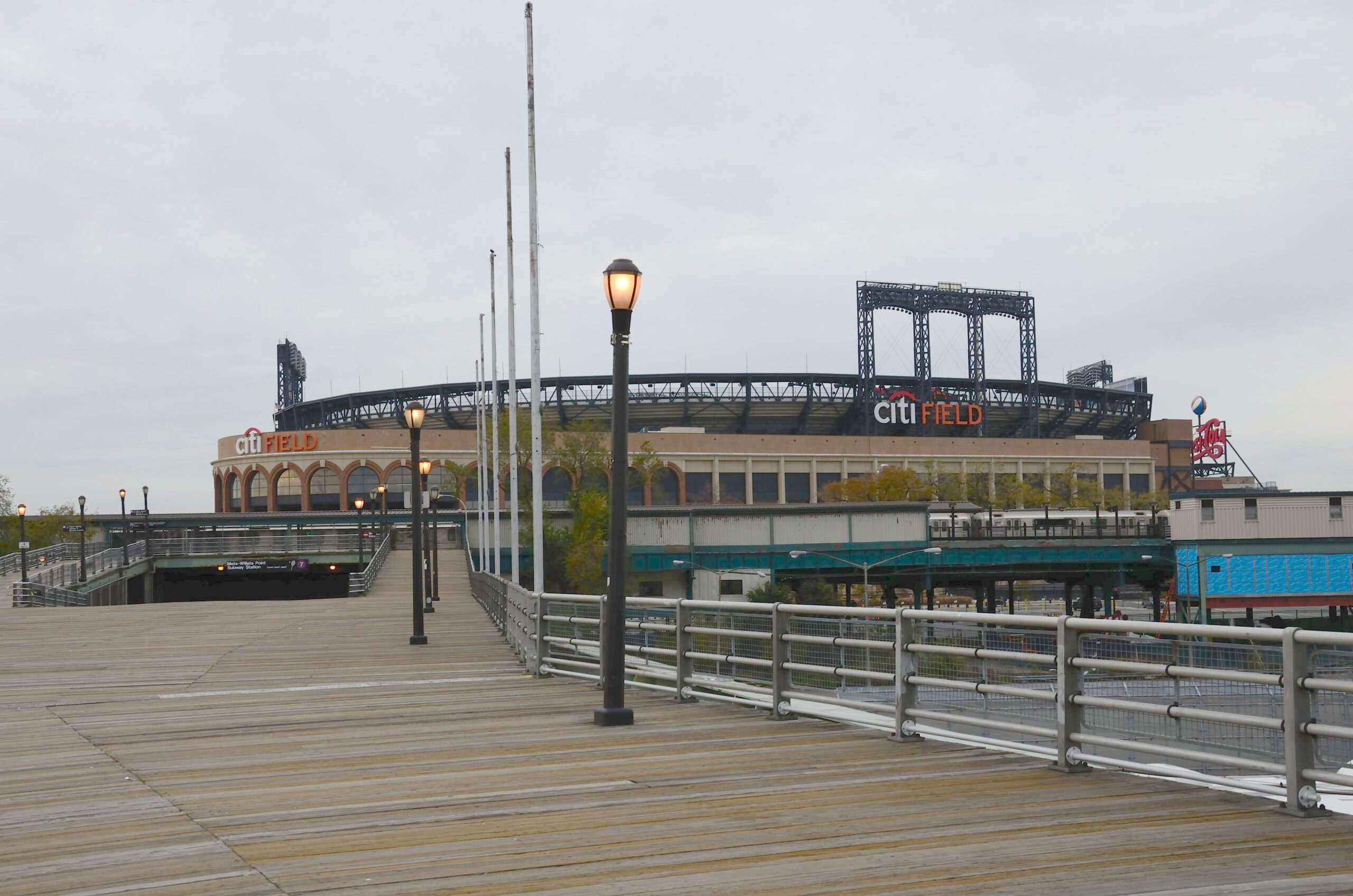
Mets–Willets Point is one of the clearest visual symbols of the Queens side of NYC baseball transit, linking the 7 train, rail access, and the Citi Field game-night approach in a single frame.
The Real Decision — Yankees vs. Mets Transit Isn’t the Same Trip
The biggest mistake in NYC baseball transit planning is treating both parks as interchangeable. They’re not. Getting to Yankee Stadium is a Bronx subway story with Metro-North as the premium upgrade. Getting to Citi Field is a Queens rail story where the LIRR is actually the faster option from Manhattan for many visitors, not the exotic one.
A classic uptown subway ride on the 4 or D, or a Metro-North train that feels like a premium version of the same trip. Strong for Manhattan visitors anchored on the East Side or Upper Manhattan. Metro-North makes it unusually clean for Westchester, Connecticut, and Long Island fans.
The 7 train runs straight there from Times Square and Grand Central. The LIRR Port Washington Branch is faster — about 19–20 minutes from Penn Station or Grand Central Madison — and a genuine alternative, not just a tourist splurge. Long Island, Long Island City, and Midtown East visitors often have a cleaner Citi Field story than they expect.
The real question is which park fits your transit anchor. If you’re in Midtown near Grand Central and can think in terms of Metro-North, Yankee Stadium has a compelling rail option. If you’re near Penn Station or Midtown East and you know the LIRR runs to Flushing, Citi Field can feel almost effortless. If you don’t know either of those things yet, this guide will make them feel obvious by the time you’re done.
Both parks are transit-first venues. Neither one is a drive-there situation for anyone staying in Manhattan or the inner boroughs. The difference between them isn’t “easy vs. hard” — it’s which transit system makes your specific starting point feel natural. Yankee Stadium is tuned for the subway and commuter rail from the north. Citi Field is tuned for the subway and commuter rail from the east and south.
Once you know your anchor, the right route tends to be obvious.
Getting to Yankee Stadium — By Starting Point
Yankee Stadium sits in the South Bronx at 161st Street and River Avenue. The 161 St–Yankee Stadium station is right at the corner of the building. Metro-North’s Yankees–E 153rd Street station is across the street from the stadium’s main entrance. Both put you within steps of the gates. The choice between them depends almost entirely on where you’re coming from.
Take the 4 train to 161 St–Yankee Stadium
The 4 runs local to 161st Street at all times — no schedule uncertainty, no transfer, no app to check. From Grand Central it’s a straightforward uptown ride of roughly 25–30 minutes depending on conditions. If you’re anchored near Lexington Avenue anywhere between 42nd and 86th Street, the 4 is your line and this is a clean trip. Alternatively, from Grand Central you can connect to Metro-North’s shuttle or Hudson Line service for the roughly 15-minute ride to Yankees–E 153rd Street — particularly useful if you like a seat and air conditioning on the way in.
Take the D train, or connect to the 4 via the B or D at 59th
The D train stops at 161 St–Yankee Stadium, though its schedule at the stadium varies: D trains run there during rush hours and at varying frequency midday. For evening games starting before the rush-hour window fully clears, the D is generally running and useful. The B also serves the stadium during weekday rush hours. From Times Square, the 4 is accessible via a short cross-platform transfer at 59th Street–Columbus Circle, or by walking east to the 4/5/6 platform at Grand Central. For Penn Station arrivals, the easiest path is usually to take the A, C, or E toward Midtown, connect to the 4 or D, and proceed north — or to walk to Grand Central for a Metro-North connection on game days with Clipper service.
You’re closer than anyone — the 4 or D is minutes away
If you’re staying or dining in the Upper West Side, Upper East Side, Washington Heights, or Harlem, you’re already most of the way there. The 4 from 86th Street takes under 15 minutes. The D from 125th Street Harlem is a short ride north. Upper Manhattan is genuinely the best base for a Yankees game if you want a short transit trip in both directions, and it’s often overlooked by visitors who default to Midtown hotels without thinking through the game-night math.
Metro-North Yankee Clipper — the cleanest commuter rail option in baseball
For evening and weekend home games, Metro-North runs special Yankee Clipper trains on the Harlem and New Haven Lines directly to Yankees–E 153rd Street. This is a one-seat ride from stations across Westchester and Connecticut straight to the stadium’s door. Harlem Line fans can also connect at Harlem–125th Street for Hudson Line shuttle service. If you’re coming in from Metro-North territory, this is the obvious move — comfortable, direct, and with extra postgame service back. Check the MTA TrainTime app for current schedules and fares; off-peak fares typically apply for game travel.
LIRR to Grand Central Madison, then Metro-North or the 4
Grand Central Madison — the new underground LIRR terminal — connects directly with the upper level of Grand Central Terminal, from which you can catch Metro-North to Yankees–E 153rd Street or the 4 train uptown to 161st Street. Either option gets you to the stadium in under 30 minutes from Grand Central. Long Island fans coming to a Yankees game have a genuinely good rail story that wasn’t available before Grand Central Madison opened, and it’s worth knowing about.
NJ Transit to Penn Station, then connect to the 4 or D
NJ Transit gets you to Penn Station, from which you connect to the subway uptown toward the Bronx. The path is workable — take the A, C, or E to connect with the 4 or D, or cross-platform to the 1/2/3 and transfer — but it involves more steps than the ideal trip. New Jersey fans attending Yankees games face the longest transit chain of any common starting point, which is worth knowing when weighing a parking-and-bridge approach versus transit. Transit still typically wins on postgame exit stress, but the case is closer for NJ fans than for Manhattan visitors.
For venue-specific details — including seating, parking options, and what to do before the game — see the Yankee Stadium guide and the Yankee Stadium seating guide. For parking specifically, the parking near Yankee Stadium guide covers your options if you’re driving in.
Getting to Citi Field — By Starting Point
Citi Field is in Flushing, Queens — at Mets–Willets Point, which is both the 7 train stop and the LIRR station. The platforms are adjacent. Walk off either one and you’re at the stadium. The choice between the 7 train and the LIRR is worth thinking through, because the LIRR is faster than most Manhattan visitors realize, and from some starting points it’s the better call even if the subway seems like the default.
One current note: as of the 2026 season, the Mets’ official transit guidance notes that ongoing construction work at the 61st Street–Woodside stop means 7 train express service — including the postgame “Mets Super Express” — is not running between Queensboro Plaza and 74th Street–Broadway. Local 7 service is still running to Mets–Willets Point throughout the season. Verify current 7 train status before your game.
7 train from Times Square — about 45 minutes, no transfers
The 7 runs straight from Times Square–42nd Street to Mets–Willets Point. Walk to the platform, board a Flushing-bound train, arrive at the stadium. About 45 minutes, no transfers, trains run frequently on game days with extra service. This is the default transit answer for anyone in the Times Square corridor, and it works well. The 7 also picks up at Grand Central–42nd Street and at Hudson Yards–34th Street, so the catchment is wide across central Midtown.
LIRR Port Washington Branch — 19–20 minutes, one seat, a seat
The LIRR Port Washington Branch stops at Mets–Willets Point, and from Penn Station or Grand Central Madison it’s roughly 19–20 minutes to the ballpark. Two stops from Penn Station, per the Mets’ official transit guidance. You get a seat, faster travel, and a calmer experience than the subway — the tradeoff is that trains run on a schedule rather than continuously, so you need to check the MTA TrainTime app and plan your departure. The Mets offer discounted LIRR Adult Day Pass fares for ticketholders, so check the Mets’ official site for the current promo before you go. For Penn Station arrivals from Long Island, New Jersey, or anywhere that feeds into Penn, this is often the better option over the 7.
7 train from Grand Central, or LIRR from Grand Central Madison
From Grand Central–42nd Street, the 7 platform is directly in the station. Board a Flushing-bound train and you’re at Citi Field in under 45 minutes without leaving the MTA subway system. If you prefer the LIRR, Grand Central Madison (the lower level of Grand Central Terminal) connects to the Port Washington Branch for the 19–20 minute ride. Either works. The 7 is more frequent; the LIRR is faster and more comfortable. If you’re buying tickets ahead of time and want a seat, the LIRR is worth the extra step of checking the schedule.
7 train — your closest rail neighbor to Citi Field in the whole metro area
If you’re staying in Long Island City, Astoria, or anywhere along the Queens waterfront, you’re on the 7’s natural turf. From Long Island City’s Court Square, it’s a short ride east. Long Island City specifically is an underrated base for Mets fans — you’re in Queens, you have easy Manhattan transit access, and Citi Field is closer than it would be from most Midtown hotels. Worth knowing if you’re choosing where to stay for a game-centered visit.
LIRR Port Washington Branch or transfer at Woodside
Long Island fans have arguably the best transit setup for any NYC baseball venue. The Port Washington Branch runs directly to Mets–Willets Point from stations on the North Shore of Nassau County — about 17 minutes from Great Neck, 28 minutes from Port Washington, per the Mets’ official guidance. Fans on other LIRR branches can transfer to the 7 train at Woodside (five minutes from the stadium) or connect via the Port Washington Branch. For many Long Island fans, this is a shorter and less stressful trip than a Manhattan-based visitor might expect.
NJ Transit to Penn Station, then LIRR or 7 train
New Jersey fans take NJ Transit to Penn Station, then either pick up the LIRR Port Washington Branch (roughly 20 minutes direct to Mets–Willets Point) or transfer to the E train and connect to the 7 at 74th Street–Jackson Heights. The LIRR option from Penn is generally cleaner and faster — two stops, about 20 minutes, no additional transfers. It’s the recommended path for NJ fans coming to Citi Field.
Metro-North to Grand Central, then 7 train or LIRR connection
Metro-North Harlem or New Haven Line trains bring you to Grand Central, from which you board the 7 or connect to Grand Central Madison for the LIRR. The 7 is the simpler path for Westchester fans who aren’t thinking about the LIRR connection. Total trip from White Plains or Stamford is typically 60–70 minutes including the subway leg, which is workable for a committed Mets fan — but Yankee Stadium is a noticeably shorter and more direct trip from the same starting point, which is worth acknowledging honestly.
For full details on Citi Field’s layout, seating, and what’s changed around the park in 2026, see the Citi Field guide and Citi Field seating guide. For parking, see the parking near Citi Field guide.
Where You Stay Changes Everything — Manhattan, LIC, and Commuter Rail Territory
Most visitors default to Midtown Manhattan without thinking through whether it’s actually the best base for their specific games. For a trip built around a Yankees game or two, Midtown works fine — but so does Upper Manhattan, which is shorter to the Bronx and costs less. For Mets fans coming specifically for baseball, Long Island City in Queens is worth knowing about.
Manhattan is still the all-around default
For visitors weaving baseball into a broader NYC trip — sightseeing, Broadway, restaurants, multiple neighborhoods — Midtown Manhattan is the right base. Both parks are accessible, and you’re not optimizing for one venue at the expense of the rest of the trip. The transit trips to both Yankee Stadium and Citi Field from Midtown are under an hour and manageable.
Upper Manhattan is the underrated Yankees base
If the Yankees are the primary reason for the trip and you’re spending multiple nights, a hotel in the Upper West Side, Upper East Side, or even Harlem dramatically shortens the subway ride and keeps you in genuinely interesting neighborhoods. Harlem to the stadium on the 4 is about 10–15 minutes. This is common knowledge for New Yorkers and almost unknown to most tourists, which is exactly why it’s worth stating plainly.
Long Island City is the underrated Mets base
Long Island City has become one of NYC’s most visitor-friendly outer neighborhoods — good hotel options, a short subway ride into Midtown, and a position in Queens that makes Citi Field feel like a neighborhood ballpark rather than a trek. The 7 runs east from Long Island City to Flushing, and Mets–Willets Point is just a few stops along. For a Mets-focused trip, it’s worth considering.
The commuter rail advantage is real and often ignored
New York is unusual among baseball cities in that two different commuter rail systems serve two different ballparks, and both are genuinely good options — not just for locals but for visitors who happen to be near the right terminal. Metro-North from Grand Central gives Yankee Stadium access that feels premium relative to the subway. The LIRR from Penn Station or Grand Central Madison gives Citi Field access that’s faster than the subway and surprisingly underused. These options don’t require living in the suburbs. They just require being near the right station when it’s time to go.
If your rail anchor is Grand Central (or anywhere Metro-North reaches), Yankee Stadium is particularly accessible via Metro-North. If your rail anchor is Penn Station or Grand Central Madison (or the LIRR), Citi Field via the Port Washington Branch is surprisingly fast and comfortable. These two facts together explain a lot about why some fans have dramatically better game-day transit experiences than others.
For a full head-to-head comparison of both venues across multiple dimensions — not just transit — see the Yankee Stadium vs. Citi Field guide. If you’re weighing which game to choose for a first-time visit, the Yankees vs. Mets for first-time visitors guide covers the full picture.
Driving, Rideshare, and Why Transit Still Wins
Driving to either ballpark is not impossible, but transit beats it in most scenarios for anyone coming from the city or the close-in suburbs. The reasons aren’t abstract — they’re specific to how postgame exits work at both venues.
At Yankee Stadium, the stadium is in the South Bronx surrounded by a road network that was not designed for 47,000 people trying to leave at the same time. Postgame traffic on the Major Deegan and surrounding streets can be brutal. Stadium parking is limited and expensive. If you’re driving from Manhattan or Westchester, you will almost certainly spend more time in the car after the final out than the transit alternative would have taken for the entire trip.
At Citi Field, parking is available (currently $40 for regular season games, per official venue guidance — verify before going) and the lot setup is more organized than Yankee Stadium, but Grand Central Parkway postgame is a known bottleneck. The 20–30 minutes to exit the lot is a consistent reality, not just a bad-day anomaly.
Surge pricing after games at both venues is common, wait times are long when 40,000 people all open their apps at once, and the traffic conditions that make driving painful also apply to your Uber. Rideshare is reasonable for getting to the game if transit is inconvenient from your starting point. For the return trip, transit is almost always the faster and cheaper option.
If you’re definitely driving — either by necessity or because you’re coming from somewhere transit doesn’t serve well — the parking near NYC baseball venues guide covers the options and trade-offs at both parks.
Postgame Exit Strategy — The Part Everyone Underplans
Getting to the game is usually the easy half. Getting home after 40,000 people try to do the same thing at the same time is where the planning pays off.
After a Yankees game
The postgame subway crush at 161 St–Yankee Stadium is real. If you need to leave immediately after the final out, expect to wait for a train or to stand in a crowded car — both are manageable but worth knowing about. The better approach, if the score allows, is to wait 10–15 minutes after the game ends. The crowd disperses faster than most people expect, and a short wait at the stadium (grab a last drink, let the concourse thin out) often translates to a notably less crowded train ride. Metro-North typically runs extra postgame service back to Grand Central and to Harlem–125th Street on game nights, so Clipper users generally have a smoother exit.
After a Mets game
Mets–Willets Point has two platforms serving the same exit point, which concentrates the crowd more than Yankee Stadium’s setup. The same 10–15 minute wait logic applies — the platform is noticeably less jammed 15 minutes after the final out than immediately after. The LIRR holds trains at the platform after games to let passengers board, so if you’re on a Port Washington Branch return, wait for the boarding signal rather than rushing to the first train out. The 7 local is your alternative when express service isn’t running due to current construction — it takes a little longer but it runs and it works.
Whether you’re at Yankee Stadium or Citi Field: if waiting 10–15 minutes feels comfortable given your plans, wait. A beer at a concourse bar, a slow walk out, or just watching the stadium clear — any of those beats being packed into the first wave of the postgame exit crowd. Both transit systems handle the full crowd volume. They just handle it more comfortably a few minutes after peak pressure.
Best Route by Traveler Type
Default to the 4 (Yankees) or 7 (Mets)
The subway is the simplest answer for most first-timers. Frequent service, no schedule to check, MetroCard or OMNY tap at the turnstile. Start there, and add the commuter rail options once you know the city better.
LIRR to Citi Field; 4 to Yankee Stadium
The LIRR to Citi Field gives you seats, a short trip, and less platform chaos than the 7 during peak game-day surges. The 4 to Yankee Stadium is direct and accessible. Avoid the B and D if you’re uncertain about schedule timing with kids in tow.
4 train or D train (Yankees); 7 train or LIRR (Mets)
You have good options for both parks. The choice between LIRR and 7 for Citi Field comes down to whether you want a seat and a faster trip (LIRR) or maximum schedule flexibility (7). Both work.
NJ Transit to Penn, then LIRR to Citi; subway to Yankees
For Citi Field: LIRR Port Washington from Penn is your cleanest option. For Yankee Stadium: subway from Penn Station is workable but involves more steps — this is one scenario where the driving-and-parking math gets somewhat more competitive.
Yankee Clipper to Yankee Stadium; Metro-North + 7 to Citi
Yankee Stadium via the Clipper is as good as game-day transit gets anywhere in the country. Citi Field from the same starting point works but involves more steps — you’re not in Mets territory geographically, and the trip reflects that.
LIRR Port Washington to Citi Field — your home-team advantage
Citi Field may be the most accessible major league ballpark for Long Island fans of any team. Grand Central Madison connections also make Yankee Stadium more reachable than it used to be from LIRR territory.
Metro-North Clipper (Yankees) or LIRR (Mets)
The commuter rail options are the more comfortable and relaxed choices for a date night. A seat on the way there, a seat on the way back, less jostling at the turnstile. Worth the slight extra coordination of checking the schedule.
Manhattan base, subway to whichever park you chose
If baseball is one stop in a day that also includes other neighborhoods and attractions, optimize for your hotel location, not the game. Both parks are a reasonable subway ride from anywhere in central Manhattan. Don’t move hotels for a single game.
Common Mistakes Worth Avoiding
Assuming the closest hotel means the easiest game-day trip. A hotel in the Financial District may be cheaper than Midtown, but it adds transit time and complexity to both parks. Where you stay matters for game-night logistics. Upper Manhattan for Yankees games and Long Island City for Mets games are both underused options.
Treating all Midtown-to-stadium routes as equal. The 4 from Grand Central to Yankee Stadium is not the same trip as the A from Penn to the 4 to Yankee Stadium. Both work, but one involves more steps, more time, and more room for error. Know which line runs from your hotel’s nearest station before game day.
Underestimating the postgame transfer burden. Getting there is usually fine. Getting home through two or three transfers while tired and with children — or after a long night game — is where people hit friction. Simpler routes are worth slightly more time in the planning stage.
Driving “because it seems easier.” It almost never is, for anyone coming from the city. Traffic in and traffic out adds unpredictability, parking adds cost, and the postgame exit from both stadiums is a known delay. Transit wins on reliability and total trip time for the vast majority of city-based visitors.
Confusing the best Yankee Stadium route with the best Citi Field route. They are not interchangeable. If you figured out how to get to one park last season, don’t assume the same logic applies to the other. The transit networks are different, the directions from common starting points are different, and the commuter rail options are different.
Not checking the 7 train express status before a Mets game. As of the 2026 season, express service on the 7 between Queensboro Plaza and 74th Street–Broadway is suspended due to ongoing construction. Local service is running. This affects postgame express options. Check the Mets’ official transit page and the MTA site before you go.
Frequently Asked Questions
The 4 train to 161 St–Yankee Stadium is the default answer for most Manhattan visitors. It runs at all times, stops right at the stadium, and requires no schedule checking or transfers from the East Side. From the West Side, the D train also serves the stadium — check service patterns for the time of day you’re traveling, as the D’s stops at 161st Street vary by time. Metro-North is worth considering if you’re near Grand Central and prefer a seat; the Yankee Clipper trains on the Harlem and New Haven Lines run directly to the stadium for evening and weekend games.
The 7 train from Times Square or Grand Central–42nd Street to Mets–Willets Point is the most straightforward option — no transfers, runs frequently, about 45 minutes from Midtown. If you’re near Penn Station or Grand Central Madison and want a faster trip, the LIRR Port Washington Branch runs directly to Mets–Willets Point in about 19–20 minutes. The LIRR requires checking the schedule and costs a few dollars more than the subway, but it’s worth it for the speed and comfort.
Both work, and both have LIRR connections that get you there in around 20 minutes. Penn Station offers the Port Washington Branch directly, and Grand Central Madison (the LIRR level under the main terminal) also connects to the Port Washington Branch. Grand Central’s upper level has the 7 train platform as well, so you have two options from the same location. Either terminal is fine — use whichever one your travel plans naturally take you through.
Depends on your starting point and your preference. The 4 train is more frequent, costs less, and requires no schedule planning. Metro-North — particularly the Yankee Clipper service on the Harlem and New Haven Lines — is faster, more comfortable, and direct to a station across the street from the stadium’s main entrance. For visitors near Grand Central who are willing to check the TrainTime app, Metro-North is the better experience. For everyone else, the subway is reliable and fine.
In most cases, no. Both stadiums are transit-connected, and both have challenging postgame exit conditions by car. Transit is faster for the full round trip for the majority of NYC-based visitors, and it removes the stress of traffic and parking. If you’re coming from somewhere genuinely underserved by transit, see the parking near NYC baseball venues guide for options at both parks.
Yes — it’s probably the best base in the metro area for Mets fans who aren’t living in Queens already. You’re in Queens, the 7 train runs east toward Flushing, and Citi Field is just a few stops from the Long Island City area stations. You also have fast access to Midtown via the 7 and the E/M. Hotel options in Long Island City are solid and often less expensive than comparable Midtown properties.
Both are excellent by transit. If you’re staying in or near Midtown Manhattan and have no particular commuter rail anchor, Yankee Stadium on the 4 is marginally more straightforward — the 4 runs constantly, it goes directly there, and the timing is predictable. Citi Field on the 7 is equally manageable, with the LIRR as an upgrade option if your starting point connects to Penn or Grand Central Madison. Neither park is a difficult transit destination by the standards of major league baseball.
Yes — Seastreak operates game-day ferry service between Citi Field and Highlands, NJ, as well as Staten Island, for select home weekends. Weekend service to Stamford, CT was also added for the 2026 season. Ferries depart roughly 2–3 hours before first pitch and leave Citi Field approximately 45 minutes after the final out. It’s a fun option for the right trip — check Seastreak’s site for the current schedule and ticketing before making plans around it.
The Short Version
Both Yankee Stadium and Citi Field are transit-first venues — two of the best-connected ballparks in the country. Getting there without a car is not a compromise; it’s the default right answer for anyone staying in or near New York City.
The decision between them isn’t about which one is “easier” in the abstract. It’s about which one fits your starting point. If you’re in Metro-North territory or anchored near Grand Central, Yankee Stadium’s commuter rail option is genuinely excellent. If you’re near Penn Station or Grand Central Madison and the LIRR connects where you’re going, Citi Field can feel like a 20-minute trip from the middle of Midtown. Both transit systems reward a little advance thought over just showing up and hoping.
Plan the route the night before. Check the app once. Then enjoy the game. The getting there is the easy part.
For the full baseball planning picture — including which game to choose for a first visit, how to pick seats, and how to plan dinner around a game night — see the NYC baseball planning hub and the Yankees vs. Mets first-time visitors guide.
Plan the Whole NYC Baseball Night
Getting to the game is only half the move. Use these guides to compare Yankees vs. Mets logistics, choose the better ballpark night, plan food and hotel strategy, avoid parking mistakes, and make the postgame exit smoother.
Yankee Stadium Transit Guide
Use this for Bronx subway routes, Metro-North strategy, rideshare caution, parking backup plans, and how to leave without getting trapped in the thickest postgame crush.
Open Guide 7 Train · LIRRCiti Field Transit Guide
Use this for Queens arrival timing, 7 train vs. LIRR decisions, Flushing Meadows flow, rideshare pickup planning, and the cleanest way out after the final out.
Open GuideBaseball Strategy Guides
Teams · Subway Series · First TimersNYC Baseball Guide
Start here for Yankees vs. Mets planning, first-timer decisions, family game nights, tourist strategy, and broader baseball-night logistics.
New York Yankees Guide
Plan the Bronx side of the night with team context, stadium basics, neighborhood flow, and where transit fits into the full experience.
New York Mets Guide
Plan the Queens side with Citi Field context, Flushing-area logistics, and how the Mets night differs from a Bronx baseball trip.
Eat Before the Game
Pre-Game FoodRestaurants Near Yankee Stadium
Use this for pre-game food, drinks, and practical restaurant planning around the Stadium area.
Restaurants Near Citi Field
Use this for Flushing and Citi Field food planning before or after a Mets game.
Restaurants Near NYC Baseball Venues
Compare Yankees and Mets food strategy in one place when the group has not picked a ballpark yet.
Hotels and Neighborhood Flow
Stay · Area GuidesHotels Near Yankee Stadium
Use this when you want a simpler Yankees night with easier access to the Bronx or nearby transit.
Hotels Near Citi Field
Useful for Mets games, Queens stays, airport-adjacent plans, and easier late-night exits.
Yankee Stadium Area
Get a better feel for the blocks around the ballpark, arrival timing, crowd movement, and postgame choices.
Citi Field Area
Understand the Queens-side flow around Citi Field, Flushing Meadows, transit, food, and the postgame exit.
Driving, Parking, and Exit Plans
Use CarefullyParking Near Yankee Stadium
Driving can work, but the exit plan matters. Use this for lots, garages, timing, and postgame traffic expectations.
Parking Near Citi Field
Plan Queens parking, lot flow, rideshare alternatives, and when transit is the cleaner move.
Leaving Yankee Stadium
Review the subway, Metro-North, walking, and pickup choices before the ninth inning starts.
Leaving Citi Field
Choose between the 7 train, LIRR, walking flow, rideshare, and car exits before the crowd moves.