

Citi Field Tickets & Concerts: Schedule, Box Office & Venue Guide
Find Citi Field tickets and concerts, check the current schedule and box office, then plan seating, transit, parking, weather and the full Queens concert night.
Citi Field is not a regular concert venue that happens to be big. It is an open-air Queens stadium that accommodates roughly 40,000-plus people for major shows depending on the concert configuration, and attending a concert here is a fundamentally different experience from going to a Madison Square Garden show or a Barclays Center night. The scale is different, the logistics are different, the Queens setting is different, and — perhaps most importantly — the seat you choose matters more than it does at most smaller venues. Done well, a Citi Field concert is one of the better large-scale live music experiences the city offers. Done without planning, it is a long evening in a bad seat with a difficult exit.
This guide covers what the venue is actually like for live music, how to think about seating before you buy, what the Queens setting adds to the night, how to get there and get home, and how to build the full outing around it. Whether you are comparing venues, already have citi field tickets and want to maximize the night, or trying to decide whether this stadium is right for your show, this is the planning information that makes the difference — and citi field stadium tickets for the right section make more of a difference here than at almost any other New York venue.
Citi Field Tickets: Concert Tickets, Official Event Listings & Buying Tips
Citi Field tickets and Citi Field stadium tickets are broad searches that can mean Mets baseball, concerts, tours, or other special events. Stage & Street keeps this page concert-first: if you are here for live music, start with the concert schedule below, then compare the event-specific seating configuration before you buy.
For primary concert inventory and official event details, use the concert page linked from the Mets’ official Citi Field Concert Series. Stage & Street’s ticket buttons are separate marketplace links, so compare the exact date, section, row, stage configuration and full checkout total before purchasing.
Do not use the generic baseball seating map as your final concert reference. Citi Field concert layouts can add a GA pit or reserved floor, move production positions, and close or open side-stage sections. Use the event-specific map first, then use our Citi Field concert seating guide for the actual seat-choice decision.
Citi Field Concerts, Upcoming Events & What’s at Citi Field Today
Searches for Citi Field concerts, concerts at Citi Field, Citi Field upcoming events, and Citi Field events today overlap heavily because this is both a baseball stadium and a major outdoor concert venue. This page stays focused on concerts, while the official Citi Field calendar is the final source for whatever is actually happening at the stadium on a particular date.
Citi Field Concerts 2026
The official 2026 Citi Field Concert Series included Noah Kahan on July 18–19, Fuerza Regida on August 7, and My Chemical Romance on August 9. Those dates have already passed as of September 22, 2026. Check the official Citi Field Concert Series for newly announced concerts, current ticket links, parking times, gates, and show-specific entry information.
Citi Field Concert Today or Tonight
Queries such as Citi Field concert today, Citi Field concert tonight, and concert tonight at Citi Field are date-sensitive. Confirm the same day’s event on the official calendar before traveling. Citi Field hosts Mets games and other events in addition to concerts, so a generic “Citi Field event tonight” result does not necessarily mean live music.
Citi Field Box Office & Ticket Office
The Citi Field box office and Citi Field ticket office are centered around the exterior ticket windows on the third-base side of home plate near the Jackie Robinson Rotunda. Citi Field also uses satellite exterior windows near the Left Field Gate and Bullpen Gate for select events.
The Mets Ticket Services Office itself has permanently closed, but ticket-service needs are handled at the exterior third-base-side windows on event days and by phone at (718) 507-TIXX. Current non-game-day and offseason phone hours are Monday through Friday, 9 a.m.–5 p.m.; the physical box-office windows are closed on those non-event days. Concert-day window hours can vary, so verify the specific concert page before making a special trip.
Where Is Citi Field? Flushing, Queens, New York City
Citi Field is at 41 Seaver Way, Flushing, NY 11368, in Queens, New York City, next to the Mets–Willets Point subway and LIRR stations and beside Flushing Meadows–Corona Park. It is the home ballpark of the New York Mets and one of New York City’s major outdoor concert venues.
For concertgoers, the Queens location is a major part of the night. The 7 train gives direct service from Midtown Manhattan to Mets–Willets Point, while the LIRR Port Washington Branch provides direct service from Penn Station, Grand Central Madison, Woodside and points on Long Island. The transit section below keeps the full arrival and exit strategy.
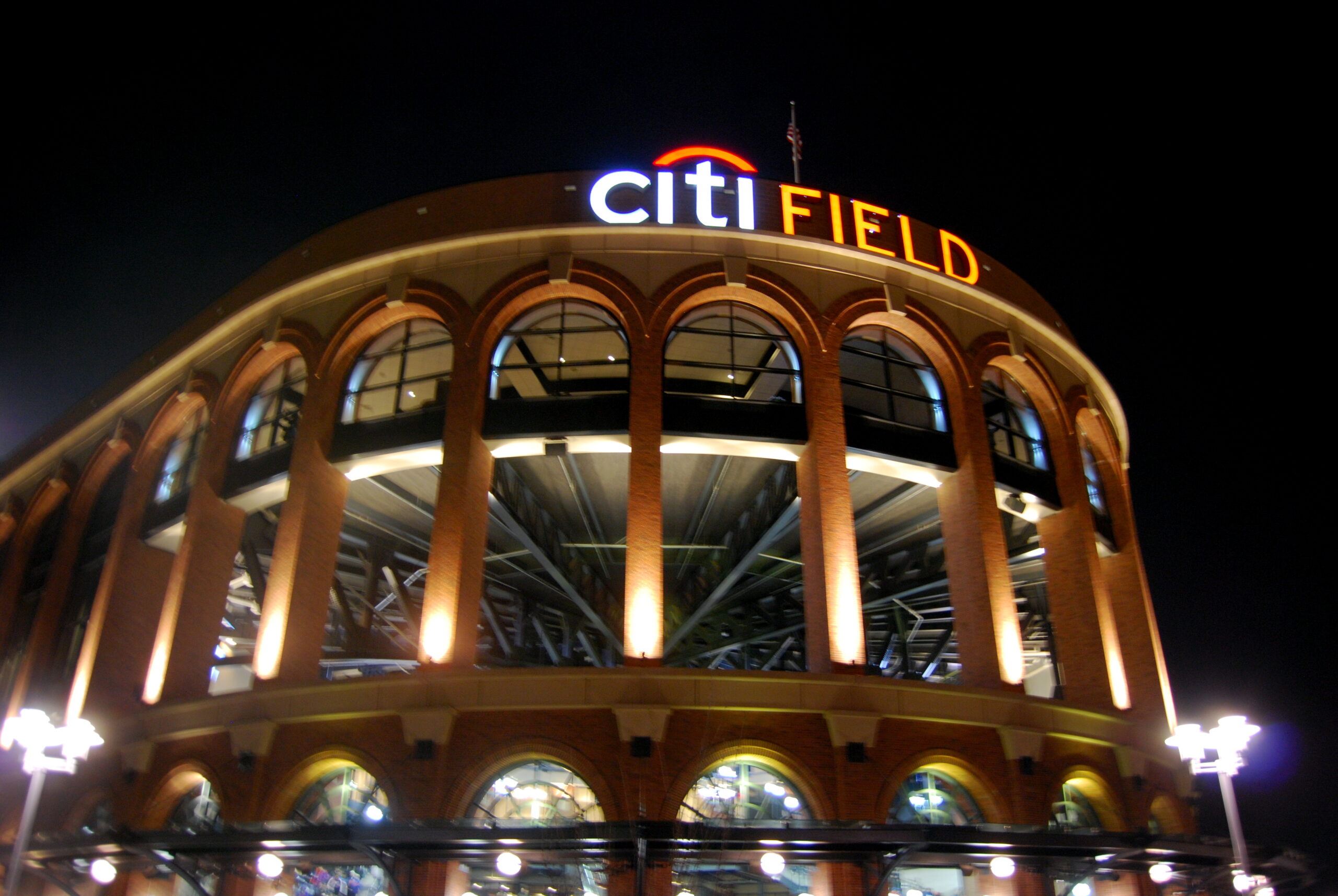
Citi Field under the lights in Queens, where major stadium tours play through the summer concert season.
What Citi Field Is Like as a Concert Venue
Citi Field opened in 2009 as the New York Mets’ home ballpark and has since established itself as one of New York City’s primary outdoor stadium concert destinations. Whether you’re planning a concert at Citi Field or a concert in Citi Field — same venue, two common ways of phrasing it — the venue sits inside Flushing Meadows–Corona Park in Queens, which means arriving here feels like arriving somewhere — not just crossing a street from your hotel — and the surrounding open air, green space, and stadium scale shape the night before you even reach your seat.
As a concert venue, the defining characteristic of Citi Field is its open-air configuration. There is no roof. The stage typically faces the field from the outfield end, which means the bowl — from field level through the upper promenade — wraps around the performance space. On a clear summer night, this setup is genuinely excellent: the sky above, the scale of the bowl, the full-stadium energy of a 40,000-plus crowd. On an uncertain weather night, the open-air format introduces a variable that indoor arenas never have to manage.
Citi Field works best as a concert venue when the show itself is designed for stadium scale: elaborate production, a floor that fills with energy, a performer whose catalog turns 40,000 people into a single singing organism. It works less well as a drop-in event where the seat or the night does not matter much. The venue rewards planning more than most, and the gap between a well-planned Citi Field night and a poorly-planned one is wider than at most other New York concert venues.
The Jackie Robinson Rotunda at the main entrance is worth noting as an arrival landmark — it is one of the more architecturally distinct entry points at any New York stadium venue, and it gives the arrival experience a moment of intention that purely functional stadiums rarely manage. For visitors who have never been to Citi Field, entering through the Rotunda sets a different tone than walking into a standard sports or concert arena.
What the open-air format means in practice
The most important practical implication of Citi Field’s open-air design is weather. Check the forecast before you go. Summer concerts in New York can run into afternoon thunderstorms that clear by showtime, or evening storms that arrive mid-set. The venue has hosted shows that were cut short by lightning, and it has hosted thousands of shows under a perfect July sky. There is no way to predict exactly — but knowing that weather is a genuine variable for any Citi Field outing changes how you approach the day. Bring layers for night shows even in summer; the temperature in an open stadium at 10pm can be significantly cooler than an indoor venue at the same time.
Citi Field Concert Seating — How to Think About the Room
This main venue page keeps seating at the decision-summary level. For seat maps, section-by-section concert angles, best seats, floor strategy and view-from-my-seat intent, use the dedicated Citi Field concert seating guide.
Stadium concert seating requires different thinking than arena seating, and Citi Field requires more thinking than most because the stage configuration changes by show. The setup that works for one artist’s production is not identical to the next, and sections that are ideal for one show may be side-stage for another. Always check the event-specific citi field concert seating chart when you buy — not the generic baseball map, and not a generic concert map from a different year. The active show’s map on your ticketing platform is the only reliable guide to your citi field concert view and where you will actually be relative to the stage for that performance.
With that caveat in place, here is how to think about the main seating zones at Citi Field for concerts:
For most concerts, the field becomes either a general admission standing area or a sectioned floor with reserved seats. GA floor puts you closest to the stage and in the most energetic crowd zone, but you stand for the duration and sightlines depend entirely on your position within the pit. Best for fans who want to be fully inside the show. Worst for anyone who wants a clear sightline without working for it.
The lower bowl sections wrapping the field offer seated views at close-to-field elevation. Center sections behind the floor pit are typically the premium reserved option — close, with a strong sight angle to the stage. Side sections in the 100s that angle toward the outfield can offer surprisingly good views depending on stage placement but verify on your event map before buying.
The mid-tier level. An elevated perspective that often delivers better full-stage sightlines than lower bowl seats. Center mezzanine sections are frequently undervalued — they sit above the action but with a broader, cleaner view of the production design. For shows with elaborate staging, lights, and visual production, this level can deliver more of the full spectacle than being close at field level.
The highest sections. Furthest from the stage and most exposed to weather. For production-heavy stadium shows where the full visual picture matters — elaborate light rigs, screens, pyrotechnics — the upper level can still deliver a strong experience because the show is designed to be read at distance. For more intimate or acoustic performances, the distance is harder to overcome.
At stadium concerts, far side sections — those that angle significantly away from straight-on stage view — can range from perfectly serviceable to genuinely poor depending on the show’s stage orientation. Always verify side section angles on the event-specific map. A side section at 45 degrees from the stage is very different from one that is nearly parallel to it.
Citi Field’s suite and club inventory — including Fiserv Suites, Empire Suites, Porsche Suites, and club-level options — offer premium amenities, private sightlines, and a fundamentally different kind of stadium concert experience. Best for groups, corporate events, or anyone for whom comfort and service matter as much as proximity to the stage.
At a stadium this size, the question is not simply “how close am I to the stage?” It is “what do I want from this night?” Floor GA puts you in the energy but removes the sightline guarantee. Center lower bowl puts you in a reliable view with less physical effort. Center mezzanine puts you in the best overall production view for a visually ambitious show at a significantly lower price. Upper level puts you in the scale and communal experience of a full stadium at the lowest cost. None of these is wrong. Each is a different kind of concert night. Know which one you want before you buy — because at Citi Field, the wrong seat for your goals is a long way from the right one.
Best seats by intent
Best for fans who want physical proximity and the energy of the crowd around the stage. Requires standing throughout and accepting variable sightlines based on position. Arrive early to get a good spot if GA.
Strong sightline, seated, close enough to feel the show without the uncertainty of GA. Typically the most in-demand and highest-priced seated option. Worth it for most shows.
The elevated perspective that reveals the full stage picture — lights, screens, set design — in a way that lower seats often cannot. Frequently underpriced relative to the experience it delivers. Strong choice for visually ambitious productions.
The most affordable entry point for a real view of the stage. Works well for spectacle-driven shows where the production is designed to read at distance. Less effective for understated performances where artist detail matters more than spectacle.
Groups benefit from seated sections where everyone is together and the view is consistent. Mezzanine blocks are easier to keep together than floor GA. Suites offer the ultimate group experience with service and privacy.
For anyone managing mobility needs, traveling with young children, or wanting to move freely during the show, mid-bowl aisle seats balance access with a solid view. Verify accessibility provisions directly with the venue when booking.
The Queens Setting — Why It Changes the Night
Citi Field is in Flushing, Queens, at the edge of Flushing Meadows–Corona Park. This is not a Manhattan drop-in venue. Getting to a Citi Field show requires a real transit trip — about 30 minutes on the 7 train from Times Square — and the surrounding area has its own character that is distinct from anything near Madison Square Garden or Barclays Center.
The upside of the Queens setting is significant. The venue sits in open parkland, which means arrival does not involve fighting Midtown pedestrian traffic or navigating a dense Brooklyn neighborhood. The approach to the stadium has room to breathe. And directly accessible from the same train line, the Flushing neighborhood — one of the city’s most celebrated food destinations — offers a pregame dinner option that no other major New York concert venue can match for sheer variety and quality.
The tradeoff is that post-show options near the venue itself are limited. Unlike neighborhoods around MSG or Barclays, there is not a dense cluster of bars and restaurants that you can walk to after the show ends. The 7 train handles post-show crowds reasonably well, but it is crowded immediately after a large event. Planning your exit — whether that means staying in the stadium for 15 minutes after the final song, taking the LIRR rather than the 7, or having a plan for where you are going after — improves the end of the night significantly.
Treat the Queens setting as an asset, not a logistical inconvenience. Dinner in Flushing before a show — proper soup dumplings, hand-pulled noodles, or a full meal along the Main Street corridor — is a genuinely exceptional pregame option that turns a concert ticket into a full evening. The 7 train takes you from Flushing’s restaurant blocks to the stadium in two stops. No other major New York concert venue gives you this kind of food-forward pregame option within the same transit trip.
Getting to Citi Field — Transit and Arrival
Mass transit is the right answer for almost every Citi Field concert. The 7 train to Mets–Willets Point deposits you at the stadium entrance directly — the station exit and the stadium gates are steps apart. The Port Washington Branch of the Long Island Rail Road also serves the same station, making it a strong option for visitors coming from Penn Station or Long Island who want to avoid the 7 train post-show crush.
One thing stadium concerts require that arena concerts often do not: significantly more arrival buffer time. Security screening at a 40,000-plus-capacity outdoor concert can create lines that take 20 to 30 minutes to clear at peak arrival windows. Building in 60 to 90 minutes before showtime — not doors-open time, but the actual scheduled start — is not overcautious. It is the difference between arriving relaxed with time to get food and find your section, and arriving stressed with a security line still ahead of you when the opener starts.
For full transit directions, driving routes, rideshare pickup locations, and detailed arrival strategy, see the complete guide to getting to Citi Field. For parking options and pricing, the Citi Field parking guide covers the stadium lots and surrounding options.
When 40,000 people exit a stadium simultaneously, the 7 train platform fills immediately. Having a plan — whether that is waiting in the stadium for 15 minutes, taking the LIRR, using the current rideshare pickup in the Stadium View East parking area just north of the Shea Road and Boat Basin Place intersection, or heading to Flushing for a late meal — makes the end of the night work. Without a plan, the exit is the least enjoyable part of the evening.
The Real Tradeoffs of a Citi Field Concert Night
Stadium concerts are not for everyone and not for every show. Being clear about what Citi Field delivers and what it does not is more useful than generic enthusiasm.
Open-air summer spectacle that indoor arenas cannot replicate. Scale that matches artists who have earned stadium tours. A Queens setting that rewards exploring Flushing before the show. Strong transit access. A capacity that creates full-stadium energy when the house is sold out. Production design — lights, screens, stage sets — that benefits from distance and a full bowl.
Weather is a genuine variable — shows get cut short. Entry and exit take longer than any arena. Seat selection matters more and the gap between a good and bad seat is wider. Limited walkable after-show options near the venue. The best experience requires more planning effort than a Manhattan arena show. Sound quality in the open air can vary by section and wind direction.
Citi Field vs Other NYC-Area Concert Venues
The right venue for a concert in New York depends on the show, the artist, and what kind of night you want. Citi Field is not the right answer for every question.
Best for: major summer tours, stadium-scale spectacle, artists whose shows are designed for outdoor production. Queens setting rewards a full-day outing. Needs planning. Weather dependent.
Best for: year-round shows, easier logistics, post-show walkability, midsize arena energy. 20,000 capacity feels more intimate. The default answer for most NYC concert decisions.
Best for: Brooklyn-based nights, modern arena experience, strong transit access from lower Manhattan. Similar capacity to MSG. Good post-show neighborhood.
Best for: the very largest tours that need 80,000+ capacity. More logistically complex than Citi Field. Requires NJ Transit planning. Bigger but not necessarily better for the show experience.
The show is specifically sold here and not at MSG. The artist’s production is designed for outdoor stadium scale. You want the open-air experience. You are building a full Queens night around it. Or the Citi Field ticket is simply the better value for the same show.
Best for: Long Island residents and visitors; LIRR-accessible from Penn Station. More suburban in feel than Citi Field’s urban-adjacent Queens setting. New facility with strong production infrastructure.
Building the Full Night Around Citi Field
A Citi Field concert works best as an outing, not just a ticket. The Queens setting, the transit options, and the Flushing food scene all reward treating the night as something to build rather than just show up for.
Before the show — dinner in Flushing
The Flushing neighborhood, one stop east on the 7 train from the stadium, is one of the city’s best food corridors — a dense concentration of Chinese, Korean, Taiwanese, and broader Asian cuisine that has no real equivalent near any other major New York venue. Arriving in Flushing 90 minutes before a show, eating properly, and then taking the one-stop train to the stadium is the best pregame option available at any New York concert venue. It is worth planning around.
Getting there and back
The 7 train is the primary answer for most visitors. The LIRR Port Washington Branch is the stronger post-show option for anyone coming from Penn Station or heading to Long Island, since it avoids the post-show subway crush. For full details, see the how to get to Citi Field guide.
Parking
If you are driving, the stadium has dedicated parking lots accessible from the Grand Central Parkway and Northern Boulevard approaches. Booking in advance where possible is recommended for sold-out shows. See the Citi Field parking guide for current options and pricing.
Restaurants and hotels near Citi Field
For restaurant recommendations near the venue and in the Flushing area, the restaurants near Citi Field guide covers the full range from pre-show dining to post-show options. For overnight stays, the hotels near Citi Field guide covers the best options in the area for visitors combining a concert with a night or weekend in Queens.
Common Mistakes to Avoid at Citi Field Concerts
Using the baseball seating map to buy concert seats
The baseball configuration of Citi Field is not the concert configuration. Stage placement, floor setup, and which sections face the performance directly all change by show. Always use the event-specific map on your ticketing platform for the actual show you are buying — not the generic stadium layout.
Arriving too close to showtime
Security lines at a 45,000-capacity outdoor concert are not the same as walking into MSG. Allow 60 to 90 minutes of buffer before the scheduled showtime — not doors-open time. Showing up 30 minutes before the headline act on a sold-out night means a security line, a concession queue, and finding your section while the first song plays.
Not checking the weather forecast
Citi Field is fully open-air. Check the forecast for the day. If there is a significant storm system in the evening forecast, know that shows can be delayed or in rare cases shortened. Bring a light layer regardless of the daytime temperature — open stadiums at night cool down faster than indoor venues.
Not planning the post-show exit
When 40,000 people leave at the same time, the 7 train platform is immediately overwhelmed. Having a plan — waiting 15 minutes in the stadium, taking the LIRR, using a rideshare pickup on Shea Road — makes the difference between a smooth exit and a 45-minute platform wait. Think about it before the show, not as the final song plays.
Skipping the Flushing pregame
The Flushing food corridor is one of the best pregame dining options at any New York concert venue. Not building it into the plan — even a single meal before the show — means missing one of the genuine advantages of Citi Field’s location over every Manhattan or Brooklyn venue.
Buying far side sections without checking the stage angle
Stadium concerts orient the stage in one direction. Far side sections that face the outfield rather than the stage can range from serviceable to poor depending on where the stage is positioned for that specific show. Always verify your section’s angle relative to the stage on the event-specific map before you finalize the purchase.
Frequently Asked Questions
Use the official Citi Field concert page for primary event information and ticket links, or compare verified marketplace listings for sold-out and resale inventory. Before buying, confirm the exact concert date and event-specific seating map because the field, pit, stage and side-section configuration can change by tour.
Citi Field is at 41 Seaver Way in Flushing, Queens, New York 11368, next to the Mets–Willets Point 7 train and LIRR stations. It is the home of the New York Mets and also hosts major outdoor concerts and special events.
Yes — for the right kind of show and the right kind of buyer. Large-scale summer stadium tours with elaborate production, a full house, and a clear night are what this venue does best. The open-air format, the Queens setting, and the scale of the bowl all contribute to a live music experience that indoor arenas genuinely cannot replicate. It requires more planning than MSG or Barclays, and the seat you choose matters more, but done well it is one of the better large-scale concert experiences in New York.
It depends on what you want. Center lower bowl (100s, center) is the best for proximity and a clear sightline. Center mezzanine (200s/300s) is often the best overall value — elevated, full stage view, lower price than the lower bowl. Floor/GA is best for energy and closeness if you are willing to stand. Always check the event-specific map for your show, since stage placement varies and determines which sections are actually facing forward.
The 7 train to Mets–Willets Point is the primary option from Manhattan — approximately 30 minutes from Times Square, directly to the stadium entrance. The Port Washington Branch of the LIRR also serves the same station, which is a particularly good post-show option. For full transit directions, driving routes, and arrival strategy, see the how to get to Citi Field guide.
Fully outdoors and open-air. There is no roof. Weather is a genuine factor for any Citi Field event — check the forecast, bring a light layer for evening shows, and know that the venue has hosted shows affected by summer storms. This is the most important single fact to understand before attending a Citi Field concert.
60 to 90 minutes before the scheduled showtime is the right target for a sold-out or near-sold-out show. Security screening, the walk to your section, and getting food all take longer at a 45,000-person outdoor stadium than at an arena. Arriving at doors-open time if Monument Park is on your agenda — that does not apply to concerts, but arriving early enough to avoid the security rush does.
Eat in Flushing. The Flushing neighborhood — one stop east on the 7 train from the stadium — is one of New York City’s best food destinations, with a dense concentration of Chinese, Korean, Taiwanese, and broader Asian cuisine along the Main Street corridor. Arriving in Flushing 90 minutes before a show, eating properly, and taking the train one stop to Citi Field is the best pregame option available at any major New York concert venue. For specific recommendations, see the restaurants near Citi Field guide.
Concerts at Citi Field run on a summer-heavy schedule rather than a year-round one, so whether there’s a citi field concert tonight or a citi field concert today depends entirely on the current tour calendar. Check the venue’s official schedule or your ticketing platform directly for same-day listings — there isn’t a fixed weekly pattern the way there is with the Mets’ home games.
The main Citi Field box-office windows are on the exterior third-base side near the Jackie Robinson Rotunda, with additional exterior windows near the Left Field and Bullpen Gates for select events. The Mets Ticket Services Office itself is permanently closed; phone assistance is available at (718) 507-TIXX. Concert-day window hours vary by event. Citi Field stadium tours are a separate product from concert tickets and are scheduled independently.
Different in almost every meaningful way. MSG is an indoor arena in Midtown with 20,000 capacity, year-round availability, no weather variable, and walkable surroundings. Citi Field is an open-air stadium in Queens with roughly 45,000 capacity, a summer-focused concert calendar, weather as a real factor, and a Flushing food scene that MSG’s neighborhood cannot match. The right choice depends on the show — if it is at Citi Field specifically, the outdoor stadium scale and the Queens setting are the reasons why.
Citi Field — The Right Venue for the Right Night
Citi Field concerts reward planning more than almost any other major New York venue. The seat you choose, the time you arrive, the plan you have for getting home, and whether you build the Flushing food scene into the night — all of these variables add up to a meaningful difference between a great evening and a frustrating one.
When those variables are managed well, Citi Field can deliver one of the best large-scale outdoor live music experiences in the city: a summer night in Queens, a full stadium, a show designed for the scale of the room, and the kind of communal energy that 40,000 people creating the same moment can produce. There is nothing quite like it in New York’s indoor venues, which is exactly why the stadium shows that land here sell out.
Use the planning guides below to build the full night, check the concert venue guide to compare options, and see the concerts hub for current shows and broader NYC concert planning.